Our dogs are in thrall to us.
We decide where they live, where they sleep, when they can go out, when they eat, who they play with, what they do - almost every minute of the day.
Their comfort, security, diet, exercise, health, intellectual stimulation … it’s all down to us.
They’re slaves!
Willing slaves, it’s true. We only have to look at how dogs became domesticated in the first place to know that they chose the benefits of living with us, and were prepared to take the curb to their freedom in exchange. (Read the Coppingers’ excellent book Dogs listed below in Resources.)
But within this framework - which is necessary in this day and age, to care responsibly for our animals - there is a lot of room to give them more freedom.
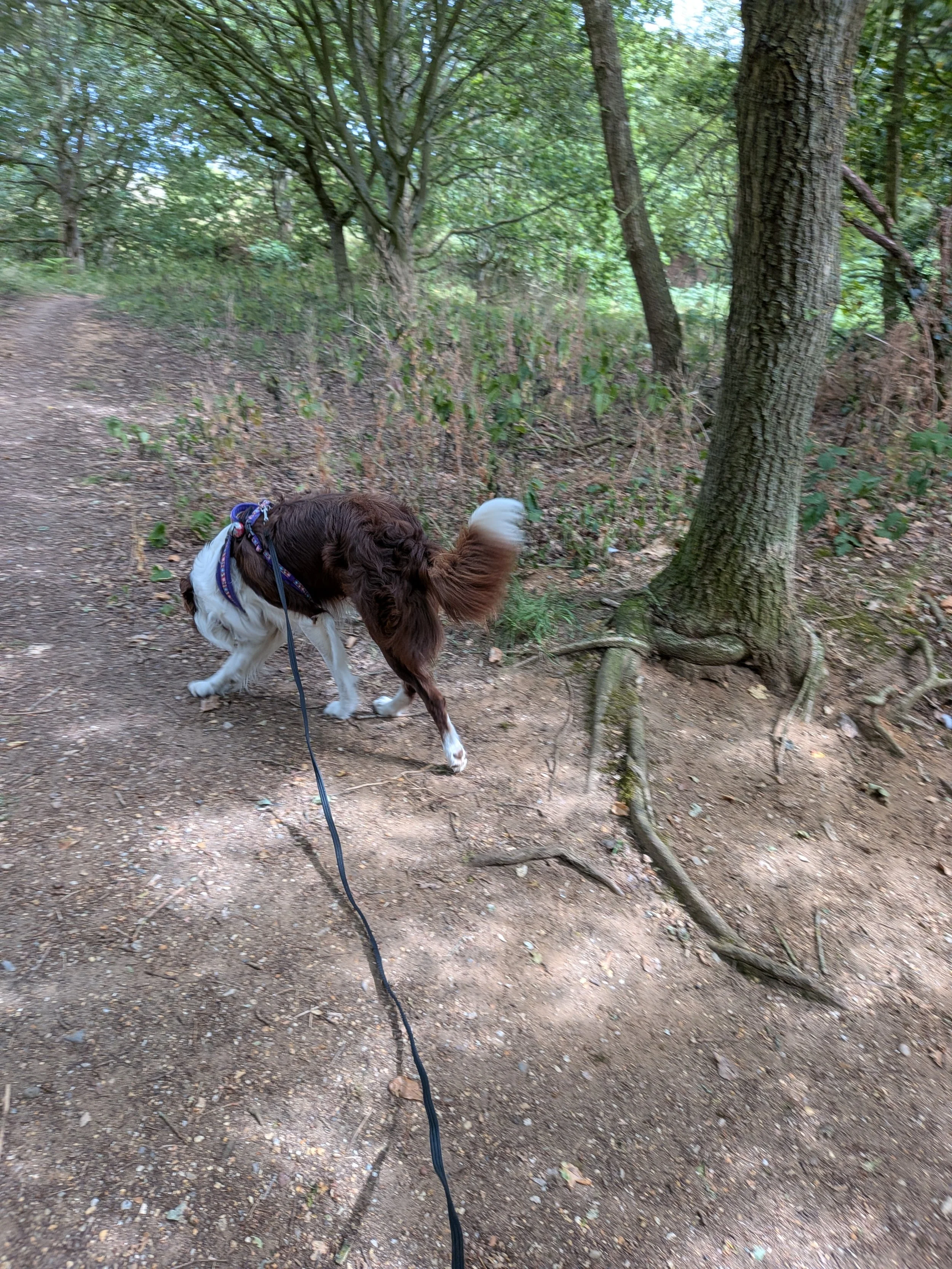
Take a walk, for instance. You may choose roughly where you’re going to walk, but why not let your dog decide on the direction? He’ll be following his nose, and we can follow him!
In this image, I don’t mind where in these beautiful woods we go - I let Yannick decide.
Food for your dog
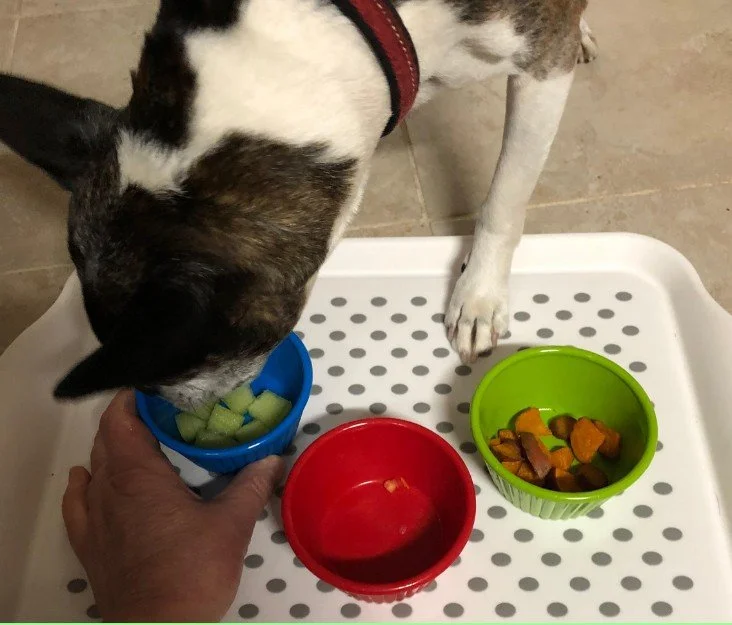
And while you may have ideas about what your dog should eat, based on budget, convenience, health concerns, and so on, you can still give her a choice within those constraints.
Try offering a tray with different morsels of the food you want to feed, spaced out. Then watch carefully! Your dog will go for the best things first, and gradually keep going till the tray is clean (hopefully she likes everything you’ve offered!).
Now you know what she likes best . . . a bit . . . and not at all. Give her what she wants!
Bedtime
Most people seem to think that all dogs like the same type of bed. Think again!
My “hot” dogs (Border Collies, English Shepherds, for instance, with a good coat and a history of living in rugged conditions) like a flat comfy bed AND the hard floor. They switch between the two as the temperature decrees.
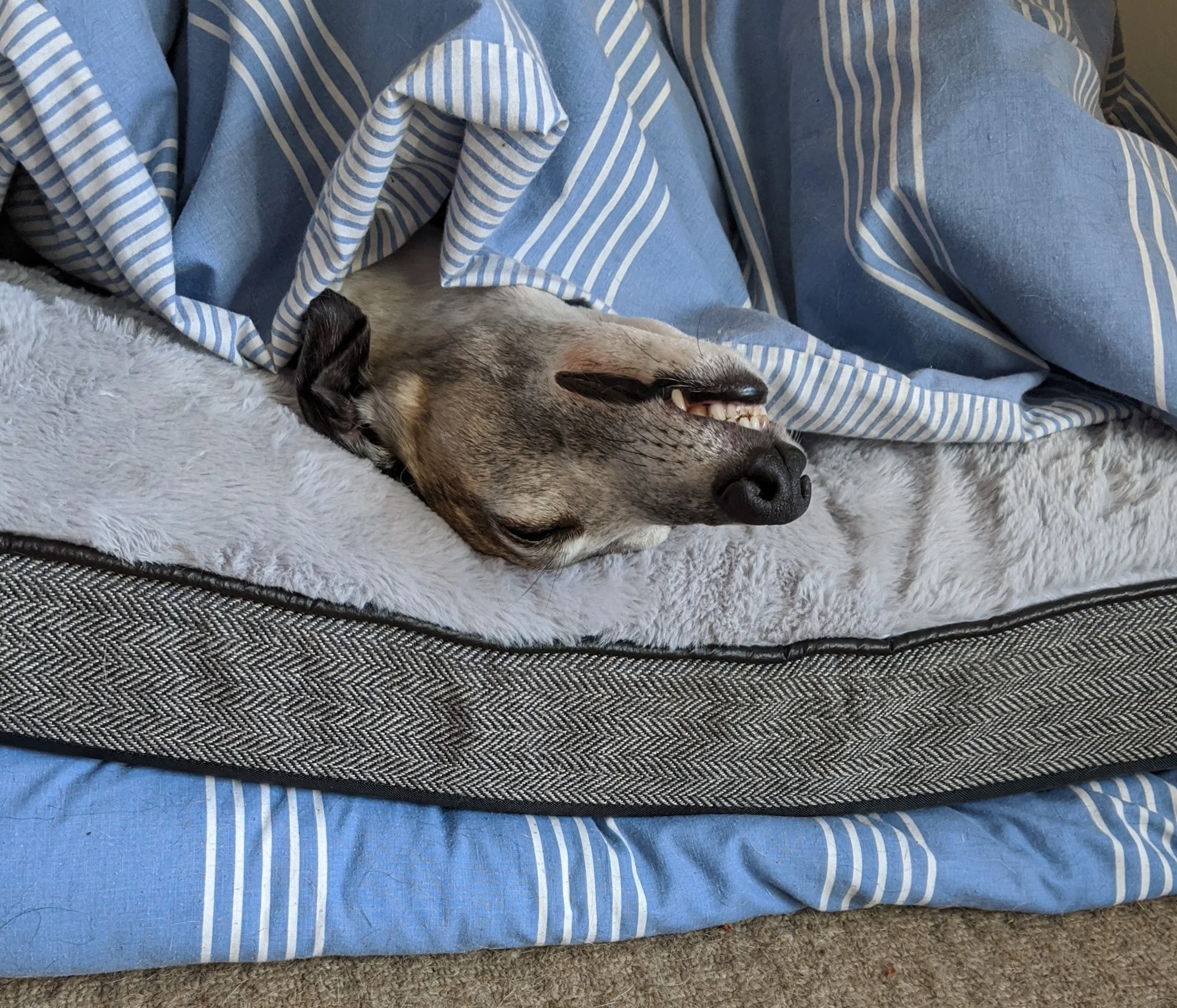
“Cold” dogs (and that would definitely include ALL the sighthounds, small terriers, dachshunds - anything with a thin skin and sparse coat) love to tunnel. You can give them heaps of blankets on a soft bed and let them dig in for themselves, or make it easy with a special tunnel bed.
Cricket the Whippet had a tunnel bed downstairs and duvet bed upstairs. It was a flat bed laid on the bottom half of a single duvet. The top half of the duvet lay on top of the bed, and she became expert at diving in and snuggling under the warmth of the duvet. (Tip - this is the very best bed for a tunnelling dog - and incredibly cheap and easy to launder!)
Coco Poodle seems to favour beds with sides - donuts, beds on legs, and the traditional ‘dog-bed’ bucket shape.
Freedom to roam (at home)
Puppies and new-to-you dogs need to always be in the same space as you unless they are in their crate or playpen. First you need to teach them how to behave in your home, and you don’t give them free rein till you know for sure that they know what they may chew and where they may do their business.
Once my dogs are ‘trusties’, in the summer the doors to the garden stay open all day. They can come and go as they please.
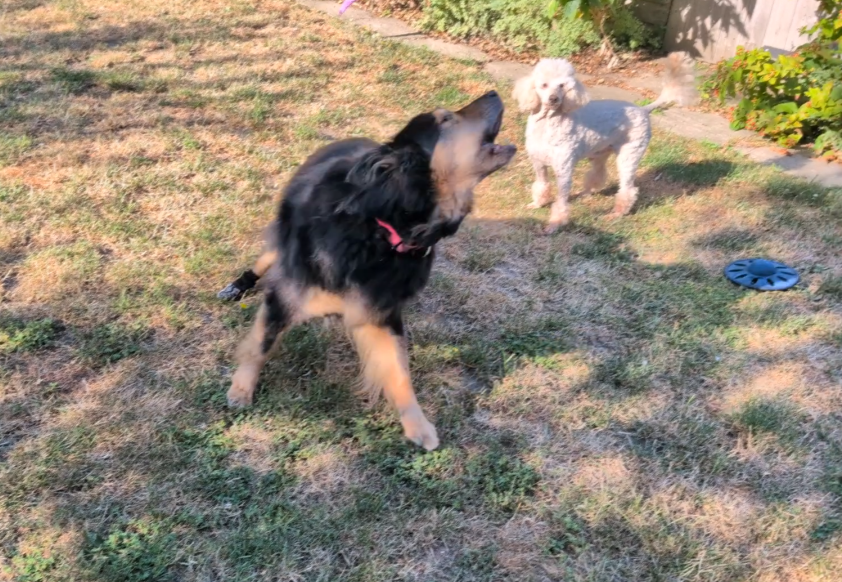
BUT if they contravene my laws about fence-barking (which is never allowed), they come straight in again!
They know the score, and on the whole only extreme provocation will get them barking. And yes, I even include the poodle in this! But for Lacy, the freedom to bark is an essential part of her being.
When we go to an empty beach I encourage her to get all the woofs out!
Intellectual stimulation
The last thing on my list - intellectual stimulation - is possibly the most important.
We owe it to our captive pets to give them scope to develop their minds.
This can be through training - daily manners, competition obedience, tricks, dancing with dogs, scentwork, mantrailing, tracking, agility - and so on.
You can use options, by offering a choice of two items and letting them choose by giving the relevant hand a bop. This can then be extended to hands not holding anything but representing Yes and No.
Try it!
Yannick and I have developed such a strong relationship with him able to express his emotions (happy, sad, worried, safe, love you ..) through his buttons.
You’d be surprised how easy it is to get started (and hooked!) with this. Start here
All-Day Training
And if you want to find out how I teach my dogs painlessly, easily, all day long (but only a minute or two at a time) check out all the resources at my.brilliantfamilydog.com