
If you’re working with a dog who is so hyper-aware of his surroundings that he can’t spare you any attention when you’re out, take a look at your rewards -
what?
And, critically!
how often?
It can be easy to fall into a trap of, “He can’t pay attention to me, let’s not push it.”
When, in fact, “I’m going to make it worth his while to keep checking in with me!” is the far better strategy!
Here’s a surprise ..
You see, your dog has to learn to take treats.
Really!
It’s taken up to eight months of age before I can get my more anxious pooches to pause long enough to take a treat when we’re out. Keep shovelling them in - even if they don’t appear to notice - because once it becomes an automatic response, you’re away!
So you need frequent treats -
for every check-in,
for every considered pause
for every non-reactive glance at something alarming (dog, person, you-name-it)
and for every 30 seconds
This will increase his attention to you, and his ability to detach from what is alarming him.
Whatever your dog finds rewarding - that’s what you do.
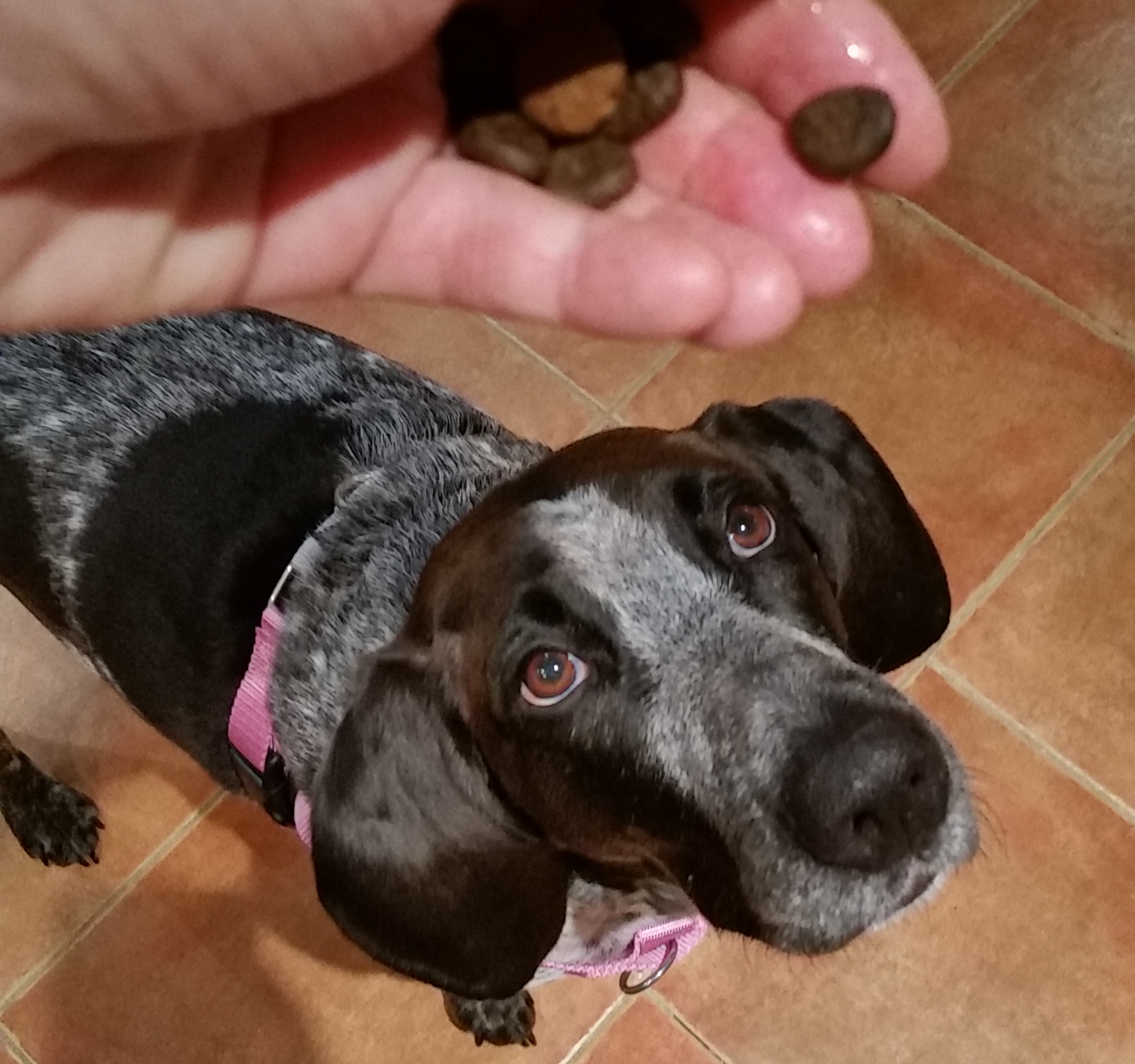
Zoe is waiting attentively for the next treat to drop into her mouth!
My dogs will now always take treats when we’re out. It took a surprisingly long time to establish this with the reactive ones.
Toy play when out of the house is out of the question still, for my youngest.
But words and touch also rate fairly highly with him, along with treats.
You want to use anything that makes a connection between you.
Making a change for your reactive dog
If you’re used to trudging solo behind or beside your distracted dog, give this a try - and report back!
Combine it with the “pause before you start” strategy in this post: Slow your anxious dog down!
If your dog is happy to play outside the house - then this can definitely be one of your rewards! Need a super high-value toy? Check out our Dog Toys page