Can my dog’s behaviour be affected by me?

When people have a problem with their dog, they tend to see it as a problem with their dog. 

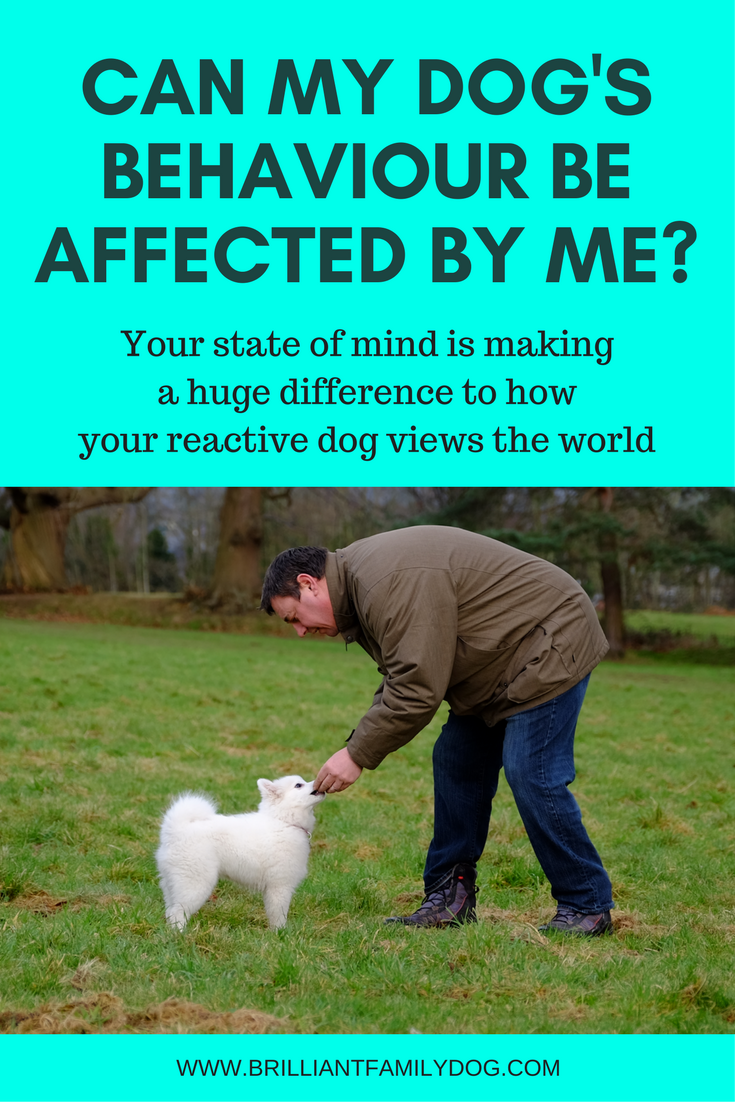
But it takes two to tango! And if your dog is presenting “problem behaviour” you can bet your boots that you have something to do with it.

Yes - it may start with your dog, but it quickly becomes enmeshed with what you do. And sometimes we can make things worse - when we really, really want to make things better. 

An interesting study was published recently, linking the owner’s hormone levels with the hormone levels of the dog in their charge. We’re talking here about Cortisol, known as the “stress hormone” because it’s released during stress. It operates the same way in the dog as in us.

The study, which you can see here, goes into great scientific detail about the links between our anxiety and the anxiety of our dog. Suffice it to say, that if you’re worried, your dog will be worried. And if your dog is worried, then you will be worried. An unholy vicious circle that causes poor behaviour to escalate.

That is, until you know how to handle the situations which have up to now been stressful for you. Once you know what to do, and how to lessen the stress for your dog, your own stress levels will automatically fall. 

Training people and their dogs together

What I find fascinating is how strong the link is between owner and dog. Never be tempted to say “Oh, it’s just a dog.”

This bond between dogs and humans is what enables the astonishing feats which we are beginning to take for granted - an assistance dog being able to predict an impending attack in an owner who suffers from certain conditions, for example. Seizure Alert Dogs help many people manage their epilepsy. And there are other diseases which cause dangerous imbalances which these dogs can anticipate, giving their owner the time to find a safe place and take their medication.

So if this link is so strong between us and our pooches, it brings into question the idea of having someone else train your troublesome dog for you.

The best trainers (by that I mean enlightened force-free trainers who understand the science of Learning Theory and what actually makes beings tick) spend a lot of time training the owner to view their dog differently. Some of my private training sessions, for instance, focus almost entirely on the owner’s state of mind. Any training I do with the dog is there to help the owner understand how to relate to their dog, rather than me training the dog for them.

And this calls into question the popularity of residential training for dogs - sending the problem dog away to a trainer who will fix the dog for you. It may be effective insofar as the dog can be taught new ways to respond to what he previously found overstimulating or frightening. But if handed back to an owner who has not had the benefit of this training - for themselves, not for the dog - there is not going to be very much change.

A quick handover session is not going to be enough to fundamentally change how a person views their dog - or their dog’s supposed “problem behaviour”. It’s no use doing magical training with the dog if the person the dog has to live with has not changed.


For your dog to change, you need to change


Learning to cope with a dog’s “problem behaviour” - often the dog’s inability to function freely in our world, manifested as reactivity or anxiety or aggression - needs a fundamental shift in the owner’s perception. If you don’t understand why your dog is kicking off at the sight of an advancing person, or a piece of litter on the ground, you will be caught unprepared and unable to change the situation. That’s enough to make anyone anxious! 


Want to learn what Lacy learnt? Get our free e-course here and get started!

THIS E-COURSE IS A BONUS FOR YOU WHEN YOU SIGN UP TO RECEIVE EDUCATIONAL EMAILS AND OCCASIONAL OFFERS FROM ME. YOU CAN UNSUBSCRIBE AT ANY TIME.
Privacy Policy

Control is not understanding

In society, our response to someone misbehaving is to put more controls on them. Restrict them, restrain them, prevent them. And so when confronted with a problem with our dog, we can have a knee-jerk reaction and follow the same process. 

But more control is not the answer!


I don’t want to have to control my dog - I want my dog to control herself.


Teaching your dog to control herself is going to require understanding from you - understanding what the problem is exactly (it may not be what you think it is - dogs are not humans) and why your dog is doing what she’s doing. Only then are you in a position to effect a change.

Most of us have busy lives. We got our pet as a companion to make our days more enjoyable, not to make them harder! So perhaps the easiest way for you to make the changes you may feel are necessary, is to find yourself a first-class, well-qualified, force-free trainer who will be able to teach the both of you. 


All “trainers” are not created equal

You’ll need to do some research to find someone reliable - but they are  there. You’ll find a list at the end of this post which will get you going in the right direction. Avoid anything that talks of Pack Theory, Dominance, or (the worst deception of the lot) “Balanced training”, which effectively means that they reward with one hand and punish with the other. 

And if you’re naturally an anxious person - think how learning how to alleviate your dog’s anxiety will help you to relax and feel better able to cope. Now your dog really will be fulfilling the role of companion and helper! You can both forge forward together.


You can start off looking for help with a free email course here, and you’ll find some very accessible books (no science or jargon!) right here.

As ever, add your thoughts in the Comments below, or contact me direct here.


Is your dog throwing up more challenges than you anticipated? Watch our free Masterclass and find how to change things fast!

For your dog to change you need to change
I don’t want to have to control my dog: I want my dog to control herself

Books to help Growly, reactive, fearful, and aggressive dogs


I'm excited to be able to announce the release of my new book series! 

Essential Skills for your Growly but Brilliant Family Dog

Many of you have been waiting for quite a while - so now your patience is rewarded. You can read all about them under the Books tab at the top of the page.


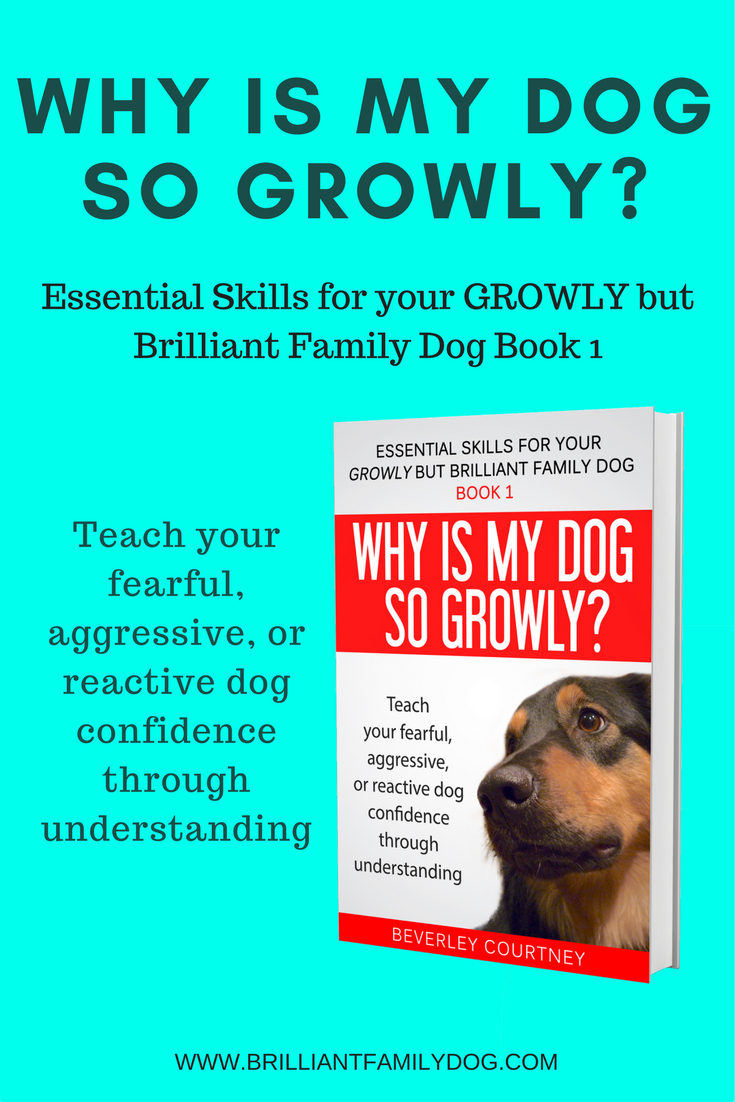
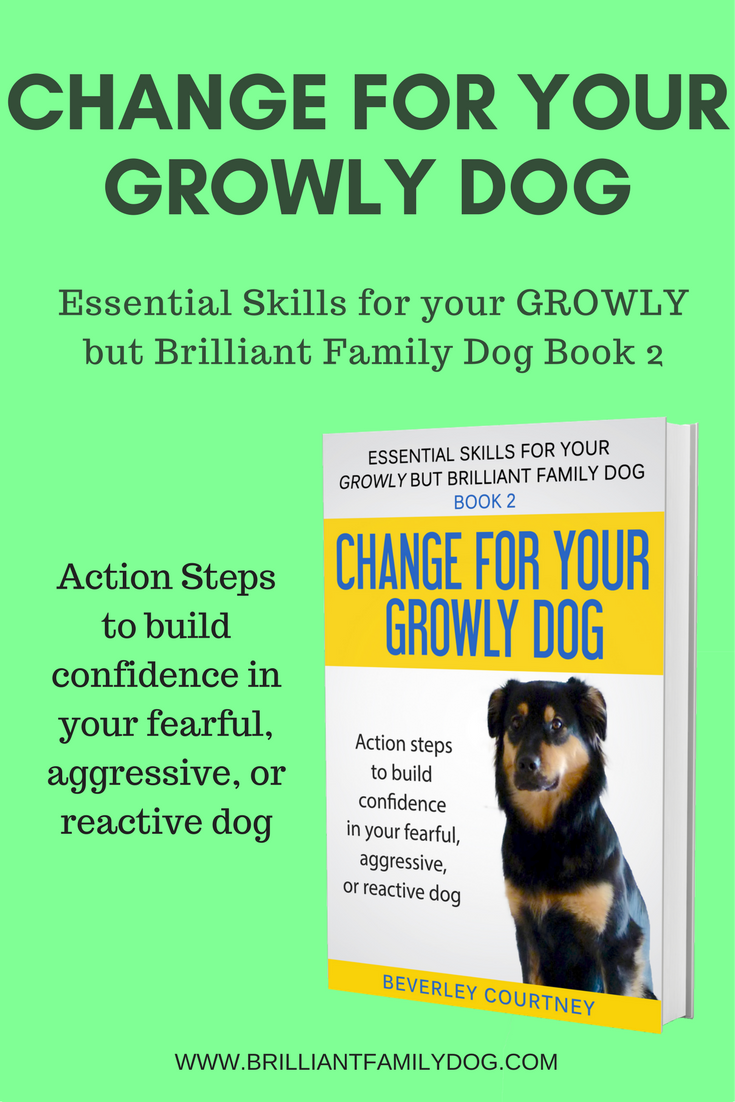
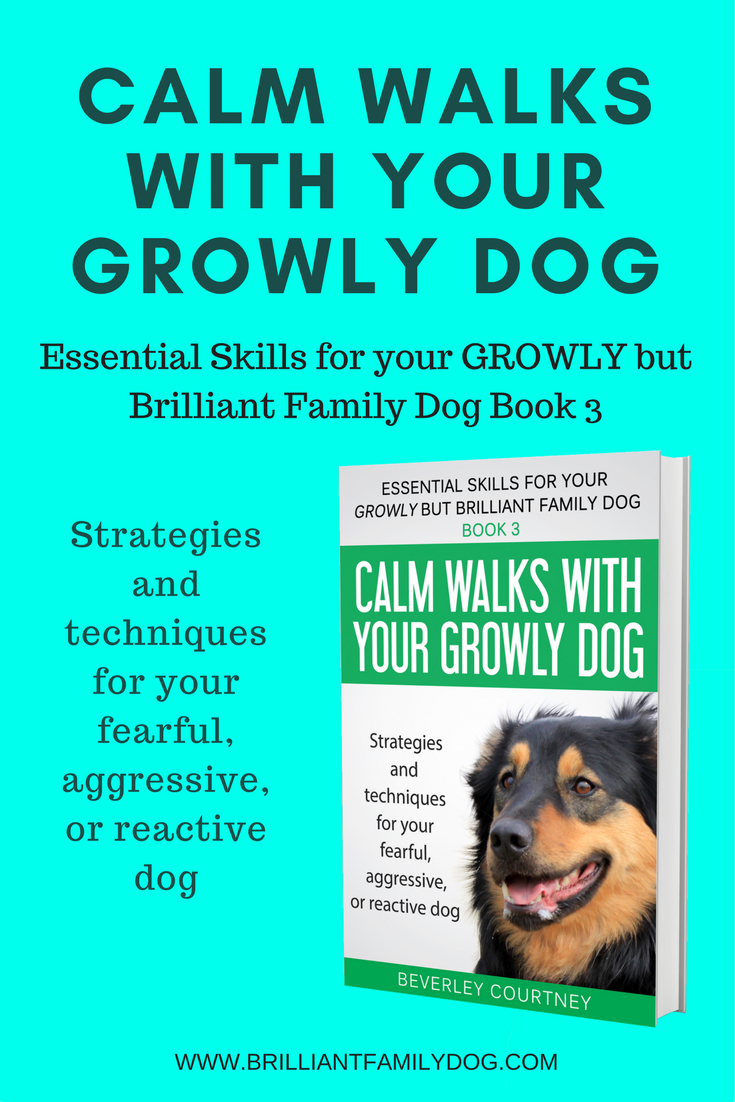
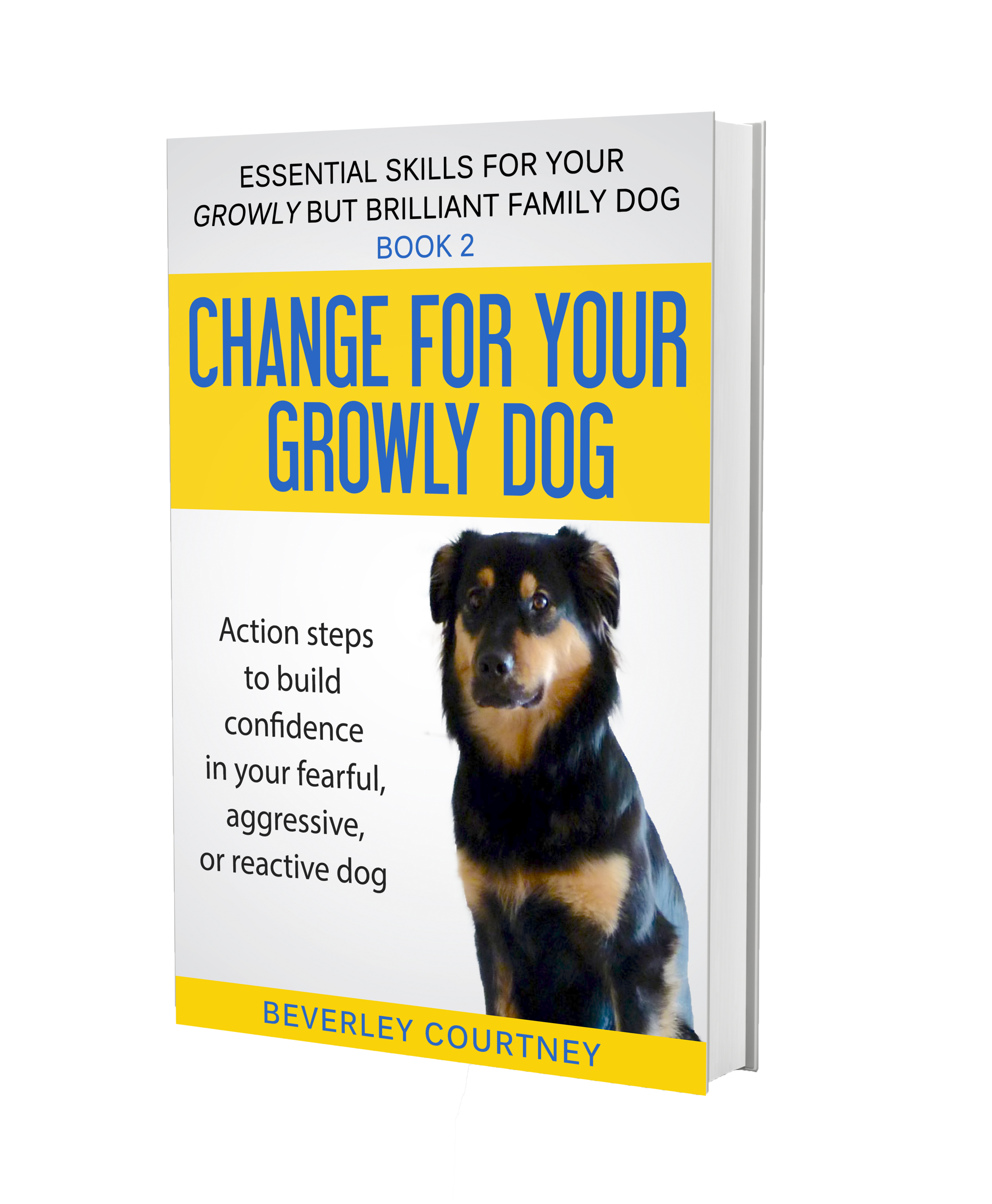
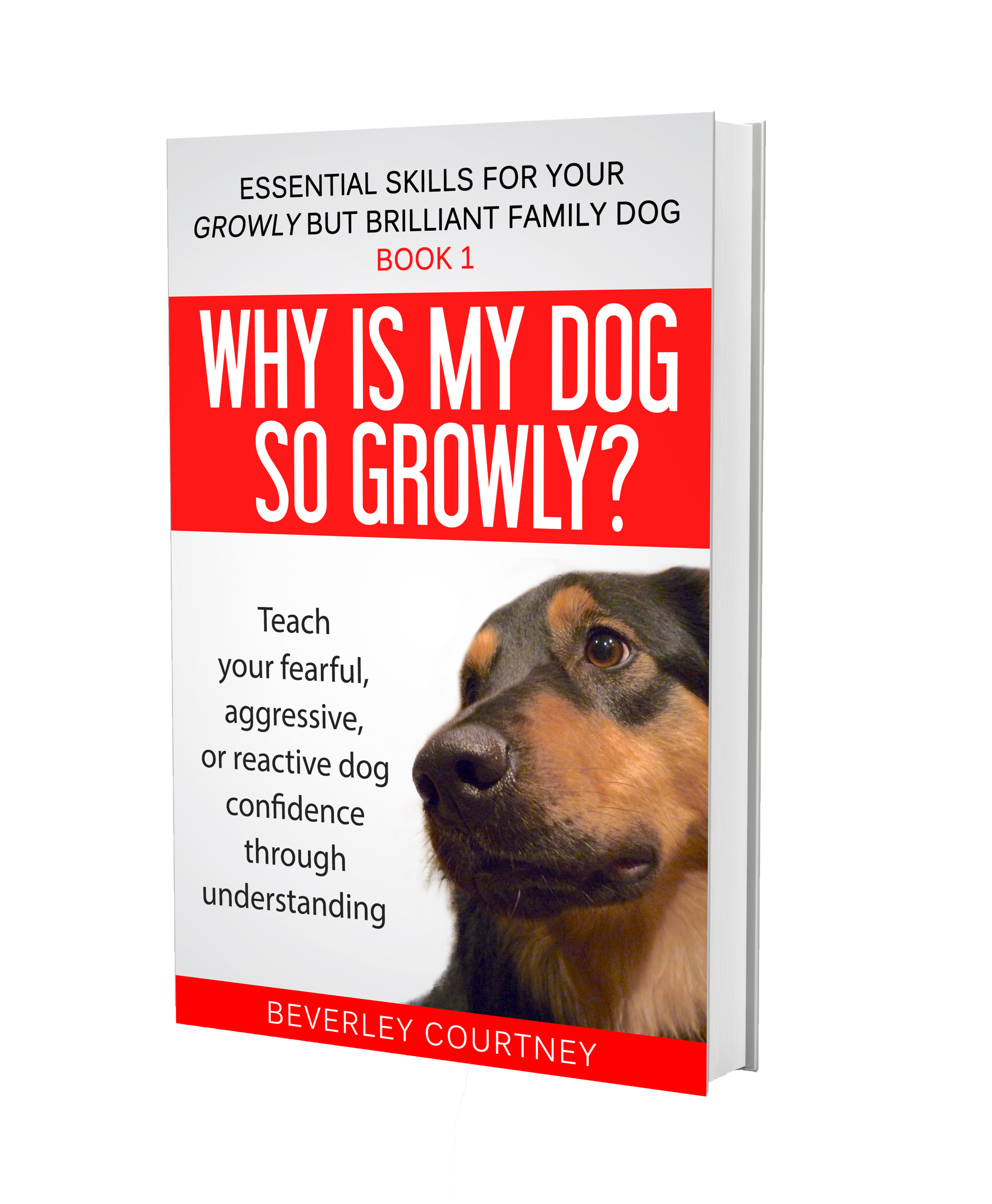
You'll see just how they can help you understand your Growly Dog - why she's doing what she's doing (that's all in Why is My Dog So Growly? Teach your fearful, aggressive, or reactive dog confidence through understanding (Essential Skills for your Growly but Brilliant Family Dog, Book 1) - and how you can change things simply and fast - Book 2 is called Change for your Growly Dog! The third book in the series Calm Walks with your Growly Dog gives you solid techniques for making your walks calm and joyful once more.


You can get them in e-book or paperback format - and no, you don't need a special gadget to read them. Check out Amazon for their free Kindle app which enables you to read any e-book on any device.


They were carefully "tested" on people just like you - who have a dog they love dearly, who is a pet inside the house, then grows horns as soon as you go out!


Have a look at what these readers thought: 


I found the books remarkably accurate with respect to the behaviours that you have outlined. It was like you have been living here and observing our dogs’ behaviour! The way you explain how to train the dogs is in a no-nonsense way that doesn't preach but actually empathises with the problem at hand.

Nazia and her five dogs


I am thoroughly enjoying the books and learning a lot. Really felt as if you were personally talking to me.

Carolyn and Jess


I have enjoyed reading your growly books, and I have learnt an awful lot about dog behaviour. There is so much information in these books that I can see I will be reading them again and again.”

Debbie


I'll let the books speak for themselves


Essential Skills for your GROWLY but Brilliant Family Dog - Book 1
Essential Skills for your GROWLY but Brilliant Family Dog - Book 2” /></div>


<div style= Essential Skills for your GROWLY but Brilliant Family Dog - Book 3

Can my dog be stressed? Part 2

This post was first published on positively.com and is reprinted here with permission.

Here is the second of three articles based on excerpts from my book, Essential Skills for your Growly but Brilliant Family Dog, Book 1: Why is my dog so growly? - which points out an area which will be affecting your dog mightily. Read the first excerpt here.

While you’re doing your best to improve the situation and you take a look at what may be making things worse, you cannot overlook stress.

  • Stress causes reactions to be exaggerated

  • Stress causes us to snap

  • Stress wears us out

Here’s another area of your dog’s life that may be building stress that may surprise you.

2. Not enough sleep

This one floors so many people! Adult dogs need to sleep 17 hours a day for mental and physical stability. 17 hours a day! Is your dog getting anywhere near 17 hours a day? If your dog paces and runs, chews and barks, jumps and dives, plays and chases all the time at home, he is not living the carefree life you may imagine! I have seen the dramatic improvements that result from getting this one right.

The ability to switch off, to relax and restore, is much sought after by people with enormously busy schedules and responsibilities. The most successful build naps and quiet time into their day as a matter of course - and that downtime is inviolable! They have learnt its importance.

Teaching your dog how to switch off is essential to his mental wellbeing. Some dogs don’t need to learn this! Cricket the Whippet is happy to spend 22 hours a day under a duvet, reserving her activity for mealtimes and short bursts of awe-inspiring speed. But she has an even temperament and no hang-ups over other dogs or people. Nothing even startles her!

But it’s a sure bet that your reactive and anxious dog will keep pacing and worrying and staying on guard-duty all day, unless rest-time is enforced.

Relaxation and sleep

If ever a dog needed its rest and restorative sleep, it’s the growly, fearful, or reactive dog.

Think how you feel when you’re short of sleep and have a challenging day ahead with the family, or at work! You start off on a short fuse, and that may get shorter as the day goes on.

Ensuring your dog gets enough downtime is critically important. It’s often at the root of her troubles. Once she’s getting enough restorative sleep she’ll be better able to cope with all the trials and tribulations of life. As indicated above, dogs need a massive 17 hours of sleep a day for optimal stresslessness. Is your dog getting anything like that? If not, you need to help him into a comfortable routine which does not involve endless pacing and activity.

A quick case study

Have a look at Tim, the rescue Border Collie, who I was visiting to work on his dog reactivity outside the house:

While I was there, it became clear that this hyperactive dog was wearing himself out. For the first twenty minutes of my visit he never stopped. He raced in and out of the room, jumped up my front, my back, chewed my hair, poked the other dog, ran off again, paced … never rested.

So I quickly amended my training plan to include some relaxation work straight away. After some active games to get Tim to engage with me, I started teaching him to slow down and relax. After just five minutes of this, his owner expressed amazement at seeing her frantic dog actually lying down still for more than ten seconds at a time!

When I finished the short session and released him, what did he do? Do you think he went straight back into busybusy mode, panting and racing?

Nope. He just slid onto the floor beside us, and as he lay there his head started to loll, his eyelids drooped, and he was … asleep! To the total astonishment of his owner, who had never seen him sleep in the day.

Want to know what I did to achieve this blissful calm state? See the first book in the Essential Skills for a Brilliant Family DogCalm Down! Step-by-Step to a Calm, Relaxed, and Brilliant Family Dog  to get the exact program. Quite apart from the usefulness of this skill for any dog, anywhere, your reactive dog will hugely benefit.

It's about changing your dog's mental state

Watchpoint: teaching calm and relaxation is not teaching a stay exercise (although you will get a solid stay as a result) with the traditional stern shouting and finger-waving. The object is quite different - to change your dog’s mental state, not to anchor his physical position.

Learning how to switch off can also help with Separation Anxiety. And, of course, your dog will be better able to cope with the challenges he’ll meet outdoors if his nerves aren’t jangling.


Did you find this excerpt interesting? Here's what Book 2 looks like! 

For a free e-course to help remove the stress from your life, and your dog’s life - and news about the new book! - go to www.brilliantfamilydog.com/growly


Can your dog be stressed? Part 2

Can my dog be stressed? - Part 1

This post was first published on positively.com and is reprinted here with permission.

Those of us who have a reactive, anxious, or fearful dog, work very hard to make life easier for them (and us!).

We try this idea and that technique, perhaps with distressingly little success. Some days our dog just seems worse!

Here is the first of three articles based on excerpts from my book Essential Skills for your Growly but Brilliant Family Dog, Book 1 Why is my dog so growly? - which points out an area which will be affecting your dog mightily.

While you’re doing your best to improve the situation and you take a look at what may be making things worse, you cannot overlook stress.

  • Stress causes reactions to be exaggerated

  • Stress causes us to snap

  • Stress wears us out

And there are some areas of your dog’s life that are building stress that will really surprise you.

1. Too many walks

“What!” you squawk! “I thought I had to take my dog out for a walk every single day! I thought I was doing the right thing!”

Well, like so much in life, that depends. It depends on how your dog is experiencing these walks.

A happy-go-lucky dog who loves meeting people and other dogs will relish his daily walks. But that’s not the dog you have, or you wouldn’t be reading this.

It may be that your dog gets sick with anxiety at the very thought of a walk. The walk may consist of you getting upset or telling him off while he runs the gauntlet of narrow paths, fence-running dogs, squealing children, dog walkers walking their dog straight towards him, traffic noises, people wanting to pat his head …

This is not an enjoyable walk for an anxious, shy, or reactive dog!

There are two reasons for walking your dog. One is for exercise. The other is for socialisation. Clearly the second reason here is a fail. So cut your losses, exercise your dog with vigorous play in the garden or on solo walks in a relatively dog-free zone - a forest trail, for instance - and save road walks for when your dog is calm and you can avoid most of the hazards.

Energy-burning games

Dog training, new puppy, puppy training, dog behavior | Training your new puppy in challenging activities - how to reduce stress | FREE EMAIL COURSE | #newpuppy, #dogtraining, #puppytraining, #dogbehavior | www.brilliantfamilydog.com

There are great games you can play with your dog to exercise him - without ever having to leave your home. Free running and jumping about till your dog’s sides are heaving, his tongue lolling, and his eyes shining, are what you want for exercise.

If you have outside space you can play with balls or frisbees, reinforcing the connection between you all the while. Tug is a game that uses a load of energy - and you can really go to town on harnessing your dog’s instinctive drives by playing with a flirt-pole.

The joy of these games is that you can use them to build your dog’s impulse control at the same time. He’ll learn never to jump up or snatch the toy from your hand in Tug. And the flirt-pole teaches the collection and restraint needed for a successful bunny-hunt.

And no, it won’t turn your dog into a predatory nightmare. I used the flirt-pole to build Cricket the Whippet’s impulse control around small furry things, with the result that I can call her off rabbits. I have known dogs who were so full-on in their play that their owners had to wear thick gloves to play with them and stay in one piece! Once the dog learns the rules of the game, it becomes rewarding for both parties - and no more need for gloves.

If you have no outside space, you can rely on Tug to tire your dog out - especially as you’re getting him to use his brain in this puzzle too.

Using wobble cushions and planks will help to build muscles and balance that your dog didn’t know he had. Walking down the stairs, then walking up again backwards, step by step, is a skill which uses lots of brain and brawn.

Hide and Seek is always a popular, tiring, and satisfying, game, especially if you have children to join in. My boys used to love rolling themselves up in their duvets and waiting to be found - which didn’t take long with all the squealing going on!

Choose a good time for an outing

Once your dog is rested from having to face the daily challenge of a walk, you should see some calmness entering the picture.

Then when you feel ready, you can take him out. The aim of Puppy Socialisation is to expose your pup as much as possible to all the experiences of our world - while the puppy enjoys the experience. The same goes for your older dog. Taking him places where he is scared or uncomfortable is just tormenting him without any good resulting: in fact this could make him more fearful.

So find a quiet time when you can take your dog out for a walk, and be flexible with your plans! You can turn away from anything your dog finds upsetting.

The garbage truck is collecting and making a huge noise? Just turn and go the other way. There’s a school outing of excited children heading towards you? Go! Heavy rain is making the traffic very noisy? Head home.

Resist the temptation to say “I always go this way,” and go right, then left, through the street market, across the railway bridge … Your walk can just be the same 100 yards in front of your house repeated several times!

As long as your dog is viewing this as a positive experience, then you are succeeding. Know that you can assess the benefit of the walk - to both of you - and give yourself permission to decide where to walk your dog, and whether to walk at all.

What is the result we want?

We’re focussing on the outcome here - calm walks with a happy and relaxed dog. If your daily walks are not a step in this direction, then you need to cut them right back.


Read the second excerpt here.

Did you find this excerpt of interest? This is what Book 1 looks like.

Click here for a free e-course to help remove the stress from your life, and your dog’s life - and news about the new book!


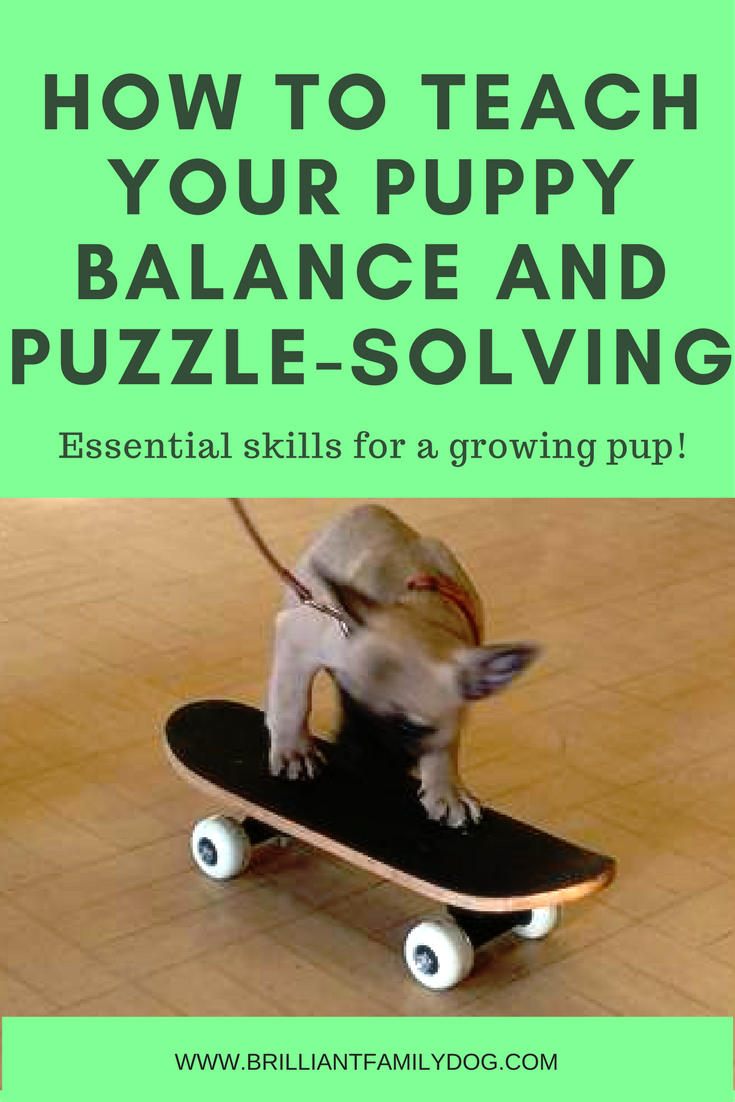
How to teach your puppy balance and puzzle-solving

The thorny subject of daycare and dog walkers

An excerpt from the Chapter on Stress in the forthcoming books, Essential Skills for your Growly but Brilliant family dog This article was first published on positively.com and is reprinted here with permission.

You’re invited to a family wedding for the weekend - great! But what will you do with your dog?

There’s always going to be a time when you need your dog to be minded for a period. Maybe you have some days when you can’t get away from work in the middle of the day to tend to her, perhaps you have to go away for a day for work or family reasons, or maybe you yearn for a holiday abroad.

(You may be missing a trick here! Holidaying with your dog, exploring your own country’s wonderful forests, moors, and beaches with your dog is an absolute delight. You need some preparatory training in place, then you’re away!)

But having a back-up minder who you’ve already checked out and approved is a good move, in case of an urgent absence from home.

The first place people tend to think of is a Doggy Daycare, or Boarding Kennels as they used to be known. They are assured by non-dog-owning friends - and the kennels - that their dog will be “fine!” and that they’re worrying too much.

In my experience, people don’t worry nearly enough! So anxious are they to solve their problem that they’ll buy into anything they’re told by the kennels.

Daycare or a dogwalker?

I am not going to tar all daycares and dogwalkers with the same brush. There are some excellent ones with committed, dedicated, and educated staff. But I will say that it’s very hard to find one convenient to you which is truly a safe place for your dog to learn and develop. 

Think of the skills you need as a parent to prevent open warfare in your own household! Then picture a gang of dogs being thrown together for a walk - or all day in a confined area - in the care of people who frequently have no dog training or behaviour qualifications whatever.

“I love dogs” may help, but it’s not a qualification.

And given how long it takes us to learn how to care for our own species - and that a lot of what people think about dogs is wrong - you’re going to be lucky to find somewhere safe for your dog.

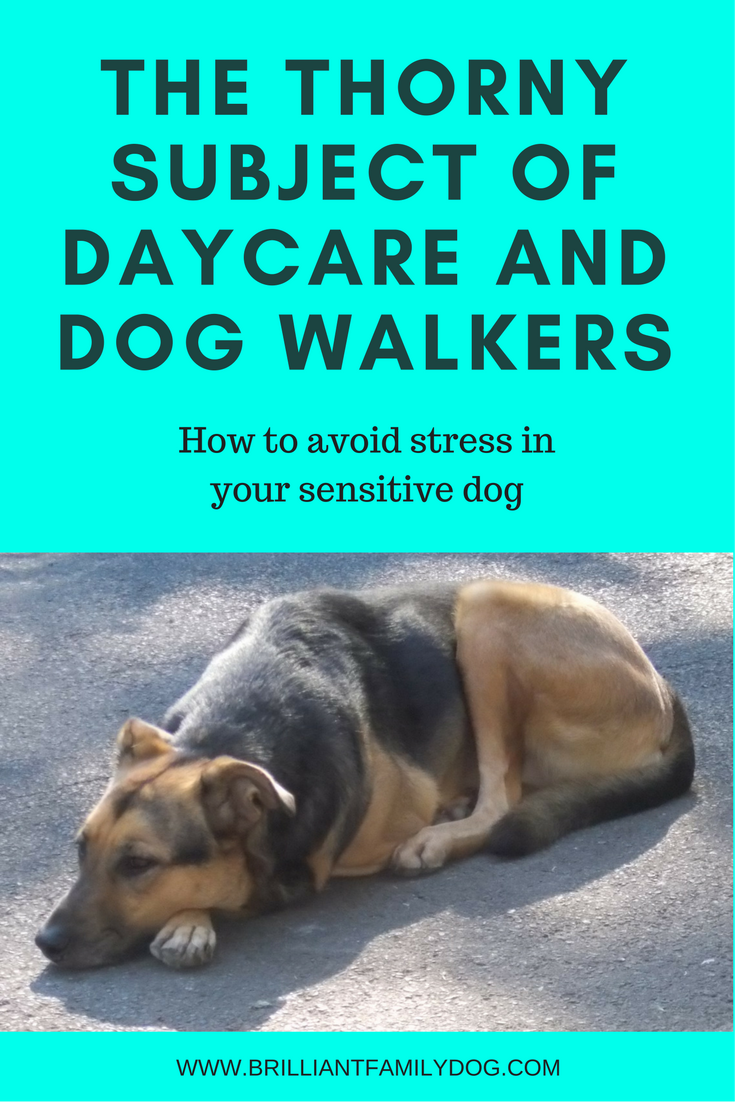
I was recently shown a promotional video for a daycare by someone who’s been sending her very reactive German Shepherd pup there for months. Even in this 30-second video - meant to show how wonderful the place was - I could see bullying and intimidation of this pup by other dogs, and no-one going to her aid. Imagine what this sensitive puppy is subjected to for ten hours a day, five days a week! No wonder her reactivity is already extreme at only six months of age.

What the owner thought of as being “perfectly happy at daycare” was in fact a dog that spent all day trying to avoid the other dogs (quite impossible with those numbers of loose dogs) - shut down, in other words. Not fine at all.

Keep in mind also that it seems to be common practice in many establishments for dogs to be dished out aversive “corrections” - from lead-snaps to water sprays, rough handling,  and much shouting.

A holiday camp?

For me, being transported to a holiday camp would be a nightmare! For many dogs, daycare is viewed with the same suspicion I view that holiday camp. A very perceptive reader sent me this query recently: “My question is, what do you think of daycare for dogs? Are the dogs actually happy about it, or do dog owners just like to imagine they are?”

My personal solution to an enforced absence from home is to have someone I trust to come in to let the dogs out in the garden and play with them for a while during the day. If I were leaving them for a longer time, I’d look into booking a house-sitter with the necessary knowledge to deal with reactive dogs - and that would be hard to find. I would not have my reactive dog walked out of the house - no harm in her getting her exercise in garden play for a short while.

If anything goes wrong in a daycare or with a dogwalker, you will be paying for that for years - possibly the rest of your dog’s life. It may or may not have been their fault, but it happened.

Think hard, and do a lot of homework, before going for that option.


For news about the release of these new books, go to www.brilliantfamilydog.com/growly and join us. You'll find all the information about my first four books here.


The thorny subject of daycare and dogwalkers

Give your dog an instant safe haven on walks

This post of mine first appeared on positively.com and is reprinted here with permission. More than two thousand readers liked it enough to share it on Facebook. So I thought you'd like to see it too!

We’ve all seen a small child clinging to Mom’s neck while he safely views the world from under her hair.

A little puppy has the same need for a safe haven.

You may have seen your own puppy hurtle in from the garden when there’s an alarming noise, and dive into her bed. Plunging into the den at speed is an important instinctive survival mechanism for vulnerable pups.

Gradually your whole home will become a safe haven for your dog, a place she can always feel comfortable and relaxed.

But what about when you’re out and about?

A Safe Haven in the Big Bad World

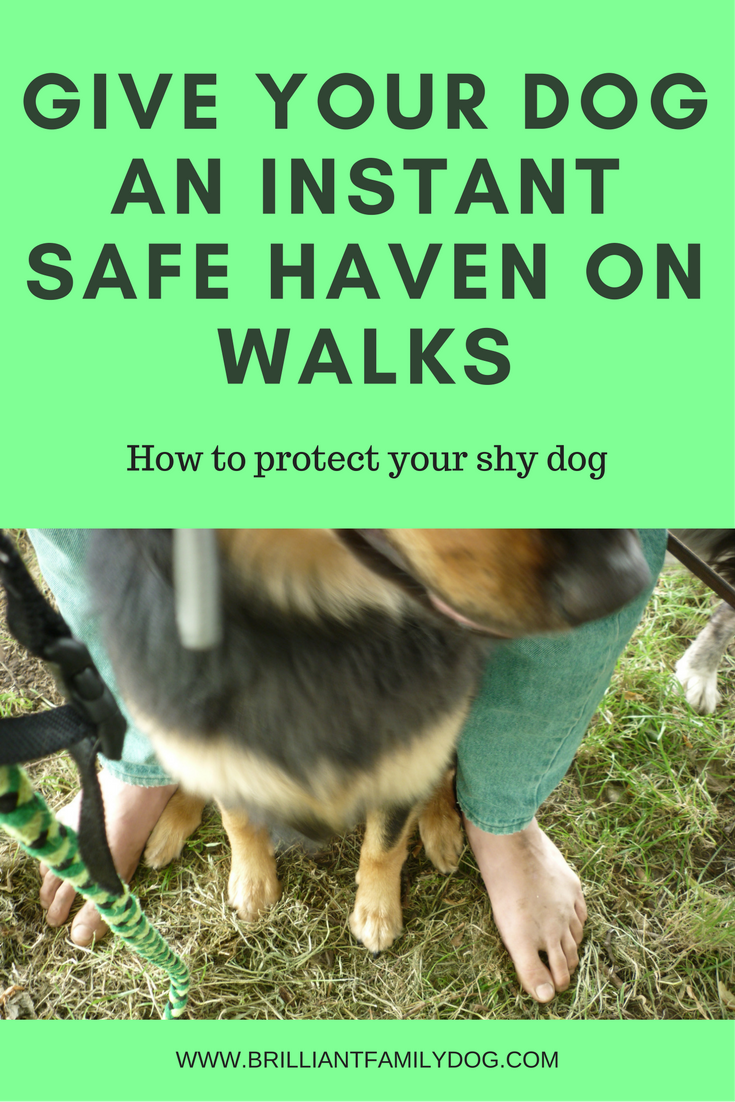
For a puppy, your safe haven will be between your feet. You should always protect your puppy from incursions from other eager puppies or dogs (or children, shopkeepers, parades with oompahs, sheep, noisy trucks …). If she backs herself between your feet she needs reassurance that she can safely watch the world from there.

Don’t worry - she’ll come out in her own good time, as she gains the confidence you can give her. Forcing her to confront her fears will only make them stronger, so give her time.

Quite a few puppies start puppy classes from under their owner’s chair! That’s fine, if that’s what makes them feel less vulnerable. By week 2 or 3 those same puppies are out and about exploring. Letting the pup choose when to venture forth is key.

All Grown Up

But once your dog is grown and bigger, what do you do?

You’re walking your dog on a leash and something appears that worries her. Now for many dogs a quick glance and appraisal of the situation is enough, and on you go.

But what if your dog is fearful or reactive? A dog who is always surprised by anything new appearing in her environment, and whose first response is often to bark to get it to go away?

If that’s your dog, then you need to know that with a reactive dog, Distance is your Friend. The first thing you need to do is get further away from whatever it is that’s alarming her (big dog? paper bag? person talking on their phone?).

But sometimes that’s not so easy!

If you’re walking on the street and someone approaches you with cries of “Oh what a lovely dog!” “Hallo doggie doggie!” “Dogs like me!” etc, you need something quicker - and perhaps more socially acceptable! - than turning on your heel and walking smartly away.

Distance, Close Up

Here are some actions I’ve found helpful for Lacy - a very pretty dog who attracts attention, but doesn’t want it!

1. Talk to the hand! As someone is approaching and just ready to dive on Lacy, I step side-on in front of her, hold up my hand like a traffic cop, and say “Hang on!” This normally brings the approaching hazard to a full stop and gives me time to organise the next step.

2. Carwash

New Puppy? Shy dog? | A safe place for your dog when worried | FREE EMAIL COURSE | #newpuppy, #puppypottytraining, #puppytraining | www.brilliantfamilydog.com

This is where Lacy runs back round my right leg and dives between my legs from behind. She’s now sitting in her safe haven between my feet. I can squeeze my legs softly on her shoulders to make her feel more secure. She’ll often put herself there if worried, without me having to say “Carwash!”

There are three huge advantages to this position.

•    One is that as Lacy goes round my leg her leash is now behind that leg. So even if the “oncoming hazard” still bends over, she can’t lunge forward to intercept them.

•    But this second one’s a winner: Very few people are going to make so bold as to bend over right in your personal space and reach down between your legs to touch your dog! Success!

•    And the third one is to lighten the social mood a little. Once Lacy is in Carwash, I can lift my hand in greeting saying, “Say Hi!” Lacy will lift her paw in a big high five swipe.

So she’s still “said hello” to the persistent hazard, without having had to risk her life by emerging from her safe haven.

I can hear some of you mumbling … if your dog is very large and you are not - what can you do? You don’t want to end up astride your dog!

Try a simple Get Behind. Send your dog round you so that, again, your leash is behind your legs, and your dog is peeping out by your hip. If your oncoming nuisance is unusually persistent, you can move slightly to body block them. Eventually they’ll get the message that they’re welcome to chat to you, but not to your dog, who has taken a vow of silence when it comes to strangers.

But All Dogs Love People: Really?

There’s a lot of social pressure on us to have a dog that conforms to the popular view that all dogs are friendly and welcome cuddles. But, of course, like people, some just “want to be alone”.

It’s not our dog’s job to provide cuddles and dogginess to the general population. In the same way that strangers don’t reach down and scoop your baby up from his stroller saying “I love babies!” - imagine! - they also don’t have the right to touch your dog without permission from you (and her).

If your dog likes nothing more than chatting to new people, then go for it, and enjoy her enjoyment. But if your dog is shy, allow her to retire to her safe haven without having to interact with scary strangers.

She’ll thank you for it.

Have you found a good strategy for keeping your scaredy-dog calm? Let us know in the Comments below!

And for more ideas for helping your anxious dog, get your free e-course My Dog Doesn’t Like Other Dogs: How to Stop the Barking and Lunging


Is your dog or your little puppy throwing up more challenges than you anticipated? Watch our free Workshop and find how to change things fast!

 A safe haven for your dog when out