The barking dog in the garden at no.11

Getting your anxious dog past gardens bristling with menacing, stamping, frothing, barking dogs is hard enough.

But if you have to run that gauntlet every day to get anywhere from your home, your dog’s anxiety will build and build.

Prompted by a question from a reader, I’m giving you today an excerpt from my forthcoming books devoted to improving the life of the Growly Dog: Essential Skills for your Growly but Brilliant Family Dog.

As my correspondent put it:

“Some days going out is a noisy, barking, snarling (from one of the other dogs), tugging mess.”

If a friend wanted you to come to the edge of a 200-foot cliff to admire the view out to sea, you may be filled with terror at the thought. If he grabs you and drags you even one step nearer the edge you’re going to panic, shout, pull back from him. If he lets you go and allows you to get on your hands and knees, perhaps you may crawl a little closer to the edge.

Perhaps you’ll get a glimpse of the beautiful view, and feel able to crawl a yard nearer the next day. This is a gradual process. Maybe that’s as near as you’ll ever get to the cliff-edge (you certainly wouldn’t get me standing at the edge!) and that will do.

This type of fear will never get better on its own

It will tend to grow and grow till quite possibly your dog resists having her harness and lead put on, as she knows she has to do the “terror run” as soon as you leave the house. I would suggest giving your dog a holiday from this stress, by taking her to your walking place in the car for a few days.

Once her hormones have settled and she’s not filled with dread at the front door, you can start giving her some control over the walk, by letting her make the decisions.

The only decision she can’t make is to join in the noise and dancing. If that happens it will mean you’ve got too close and you’re undoing the benefit of the few walkless days.

So you’re going for a walk around your neighbourhood and you decide that today is the day you’re going to work on passing the Barking Dog in the Garden at No.11. Usually you can only get past no.11 while dragging your screaming dog with you.

Your aim is not going to be to breeze past no.11 in a happy cloud (though that will come later - really!) but to give your dog time, at a comfortable distance, to assess the Barking Dog. Keeping mindful of traffic on this road, give your dog a good length of lead and let her just stand and watch no.11.

When she breaks off and looks to you for guidance on where to go next, allow her to wander a few steps. If she’s going towards no.11 slow-stop her and wait, with soft hands.

Empower your dog!

Let her make the decisions about when and where she wants to move, and only intervene if you can see things are going pear-shaped.

During this session you may get within a couple of houses of no.11 without any bad reaction from your dog, the Barking Dog barking all the while. Maybe that’s enough for today?

Make a note of the tree or fence you reached, and start a bit further back from that tomorrow. Maybe then you’ll get a good few yards further without incident.

And yes, one day you’ll be able to walk past no.11 - probably on the other side of the road - with happy smiles and a carefree manner from both of you! I am always pleased and proud when I walk my four past a yapping gateway we have to pass. My group of four includes two reactors. They cast a glance towards the yappers and carry on trotting by.

Takeaways

The essence of this system is to

  1. make haste slowly - progress at a pace which allows your dog to stay comfortable

  2. give your dog the power to make her own decisions

  3. mark good decisions enthusiastically

  4. allow your dog time to assess the situation - it’s often way longer than you expect!

  5. remember your object is not to get past no.11 but for your dog to stay calm and feeling in control


Remember the clifftop and your friend’s enthusiasm to share his pleasure in the beautiful view?

The view is not beautiful if you are terrified.


This is an edited extract from my forthcoming books Essential Skills for your Growly but Brilliant Family Dog

 

Is your dog throwing up more challenges than you anticipated? Watch our free Masterclass and find how to change things fast!

Why is my dog barking and lunging at other dogs?

“She’s such a lovely dog at home!”

And that’s normally the case. Just because a dog has an issue with other dogs does not mean she’s a bad dog in every way.

You know what a smashing dog she is at home - a Brilliant Family Dog! - and you’d like others to see what you see.

Instead of what they see: A fury of teeth, claws, and noise, who looks as though she wants to kill them, their children, and their dog.

I know just how you feel, because I’ve been there! And changing the way Lacy views the world has been a fascinating journey that has resulted in being able to help lots of other Lacys and their ragged owners.

Lacy is deeply suspicious of everyone and everything on the planet. Her response? To shriek at it to go away; to look her most ferocious; to keep things out of her space by leaping and lunging at them. The most adorable and affectionate (and intelligent) dog at home - with a great sense of humour - she was viewed by everyone else as some kind of deranged monster. But she's come on so much that she is now able to help me working with other reactive and fearful dogs.

It will help you to know from the outset that this type of behaviour is normally the result of fear. Not nastiness, aggression, “dominance”, or any of those other labels. Just plain tail-wetting fear.

Your dog is afraid of the oncoming dog. She needs to keep it away!

So she bares her teeth, makes herself look bigger, and shouts at him.

It’s likely that you get upset and try and rein her in or drag her away. It’s likely that the oncoming dog’s owner is alarmed (and probably looking down their nose at you). And it’s quite likely that the other dog will say “Who’re you lookin’ at?” and join the barking party.

The whole episode is upsetting and exhausting.

You start to walk your dog at the Hour of the Difficult Dog, late in the evening, when everyone is trying to avoid everyone else.

Is this why you got a companion dog?

Let’s have a look at what you can do to change things.

1. First thing is to stop walking your dog

What??? Let me explain.

Can you imagine that you had to walk along a narrow and uneven cliff path with a 200 foot drop. There is nothing to hold on to. The ground is crumbly and sometimes you skid and dislodge a lump of rock that bounces down the cliff and splashes silently into the sea below.

For most people this would be a living nightmare, a “terror run”. You would be desperate to get out of the situation. Your hormones would be racing through your body.

You eventually get home and begin to calm down.

The next day you have to walk the path again.

And the next day …

Quite soon you’re in a state of permanent panic. You dread the cliff path.

You need a break from this terror. Your hormones need to settle so you can see the world clearly. As does your dog.

You won’t stop walking your dog for ever. Just give her a few days’ break so that she can get back to normal. You can play great games at home to give her some exercise.

As neither of you is enjoying the walk, nobody will miss it.

After that, this bit is easy:

2. Teach her that she never has to meet another dog ever again (until she wants to)

And by this I don’t mean you are sentenced to the Hour of the Difficult Dog for ever.

Back to you and your terror run again: rather than staying at home for ever, you have a companion who can guide you. As you approach the cliff path, he turns you away from it and says, “Let’s go this way,” and heads right away from the edge.

Can you imagine the relief you feel? No need to plead with him and say, “Please don’t make me go on the path!” He guides you away to safer ground every time he sees a dangerous path. Your trust in him grows. You begin to enjoy your seaside walks.

So it is with your dog. The moment you see another dog or person heading your way, you give a cheery “Let’s go!” and head in the opposite direction. Your dog will enjoy the fact that she doesn’t have to get upset and go through the shouting routine.

You want to avoid narrow lanes where there’s no escape, so you may have to take a longer route to get where you want to go - or even drive till you are at an open space.

But you don’t want to avoid dogs.

She won’t learn what you want her to learn unless you do it, so eschew the Hour of the Difficult Dog and go out where you will see dogs - but at a safe distance.

These two things alone will make a huge difference to your dog, your walks, your relationship with your dog, and your enjoyment of life with her. If you did nothing else, this will improve the situation dramatically.

But this is just a start: naturally there are lots more things you will be able to do! There are techniques which I’ll show you. But the first thing you need to do to a wound is to stop it bleeding. Only then can you start the healing process.

First, realise that your dog is afraid, and is as uncomfortable as you are. Reasoning with her will not work. Until you can get help from a force-free professional, avoidance is the short-term answer.

Second, remember that you are her guardian and protector - give her the help she needs to cope with our world.

No idea how to start?  This free e-course will get you going: 

THIS E-COURSE IS A BONUS FOR YOU WHEN YOU SIGN UP TO RECEIVE EDUCATIONAL EMAILS AND OCCASIONAL OFFERS FROM ME. YOU CAN UNSUBSCRIBE AT ANY TIME.
Privacy Policy

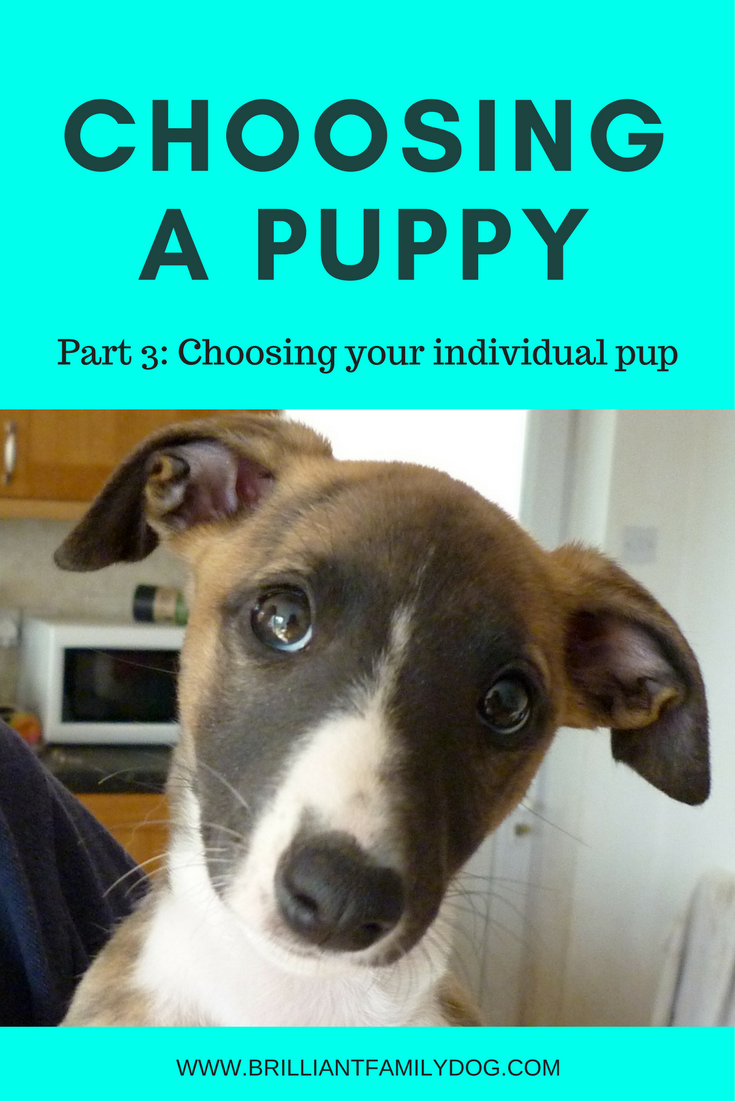
Choosing a Puppy, Part 3

Part 3: Here’s the fun bit!

And for the big challenge!

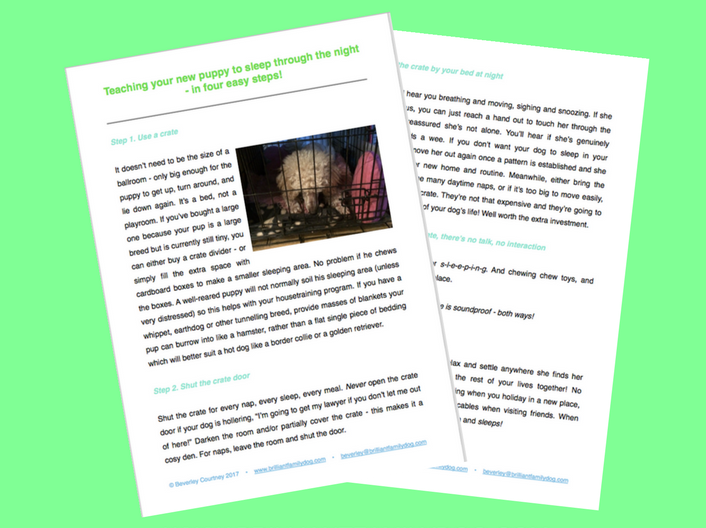
Learn how to get a good night's sleep from your puppy's first night with this cheatsheet

THIS GUIDE IS A BONUS FOR YOU WHEN YOU SIGN UP TO RECEIVE EDUCATIONAL EMAILS AND OCCASIONAL OFFERS FROM ME. YOU CAN UNSUBSCRIBE AT ANY TIME PRIVACY POLICY

New Puppy? Want to get some sleep?! | FREE GUIDE | #newpuppy, #puppypottytraining, #puppytraining | www.brilliantfamilydog.com

Your carefully-chosen breeder will help you here. She’s a fanatic for her breed, usually totally devoted to her own dogs and her own line that she’s working hard to improve. She will have spent many hours with this litter of pups. While everyone else thinks they look identical, she’ll have given them all nicknames and can tell them apart at a glance. She knows their fads and foibles, their faults and failings. She also knows their best points.

Of course, the breeder of a carefully-reared crossbreed from a much-loved pet in a family home will also know her puppies well and be able to advise.

While you’re entitled to see the whole litter together, the breeder will bring out for you the pups that are available - and which she considers suitable for your family and experience.

It’s a good idea to visit them twice if possible. The first time they could be half-asleep and dopey and give you a wrong impression. Puppies who appear to be bullying their siblings at 6 weeks will have been taught some manners and bite inhibition by their littermates by the time you see them again at 8 weeks.

Have fun choosing your puppy

I like to play with the puppy and see how interested he is with my toys. I’ll bring several different sorts. Interacting with toys at this early age is a good indicator of a strong retrieve later on (great for playing ball on the beach …) and general teachability.

Unless you are of a shy and retiring disposition yourself, don’t feel sorry for the shyest puppy (unless the breeder considers this is the one for you: shyness in a litter is relative!).

And all that homework you did? This is the moment of the great pay-off! Because you don’t have to consider all those other very important questions any more, you are free to follow your heart.

Spend some time with the puppies the breeder is offering you … and see which one you fall in love with.

Follow your heart.

Just let yourself fall in love.

And something surprising might happen

When I went to choose Cricket the Whippet, I’d spent several months narrowing down the type of whippet I wanted, the breeder (who had the same concerns about breed health as I had), and the mating. The breeder kept me updated with photos and info - first about the dam’s pregnancy and whelping, and then about the pups’ personalities.

I wanted a bitch. There were three bitches. The breeder was going to choose her favourite for her showing and breeding program, and I had first pick of the other two. I first visited them at 5-6 weeks.

All three puppies - Poppy, Daisy, and Hannah - were delightful. Poppy outgoing and friendly, Daisy energetic and comical, Hannah sweet and shy.

It was Daisy who “spoke to me”. She was the one I really wanted. The breeder had told me she was going to decide between keeping Poppy and Daisy at 7 and a half weeks.

So I told her I’d really like Daisy, but would be perfectly happy with Hannah if Daisy had been chosen by them. The funny thing was that I just didn’t relate to Poppy at all. Nothing at all wrong with Poppy, she was a lovely puppy - it just wasn’t love at first sight for me.

As it turned out, Poppy was the pup they chose to keep, I got Daisy who became “Cricket”, and Hannah went to the delighted third person who had been waiting patiently for us to decide.

Now get this - I had actually wanted a solid colour (same colour all over) which Hannah was, and Daisy was a brindle with white markings. But the heart ruled the head and Cricket is very much loved, adored, and admired.

You just don’t know!

But getting all the thorny questions about breeding and health ironed out first gave me complete freedom when I met the pups.

Now you know what to do: go choose your lovely new companion!

Get everything ready in advance with our free email course.

You can find the first post in this series here.

For some lessons to get you started as soon as your puppy arrives with you, check out our Wild Puppy mini-course here


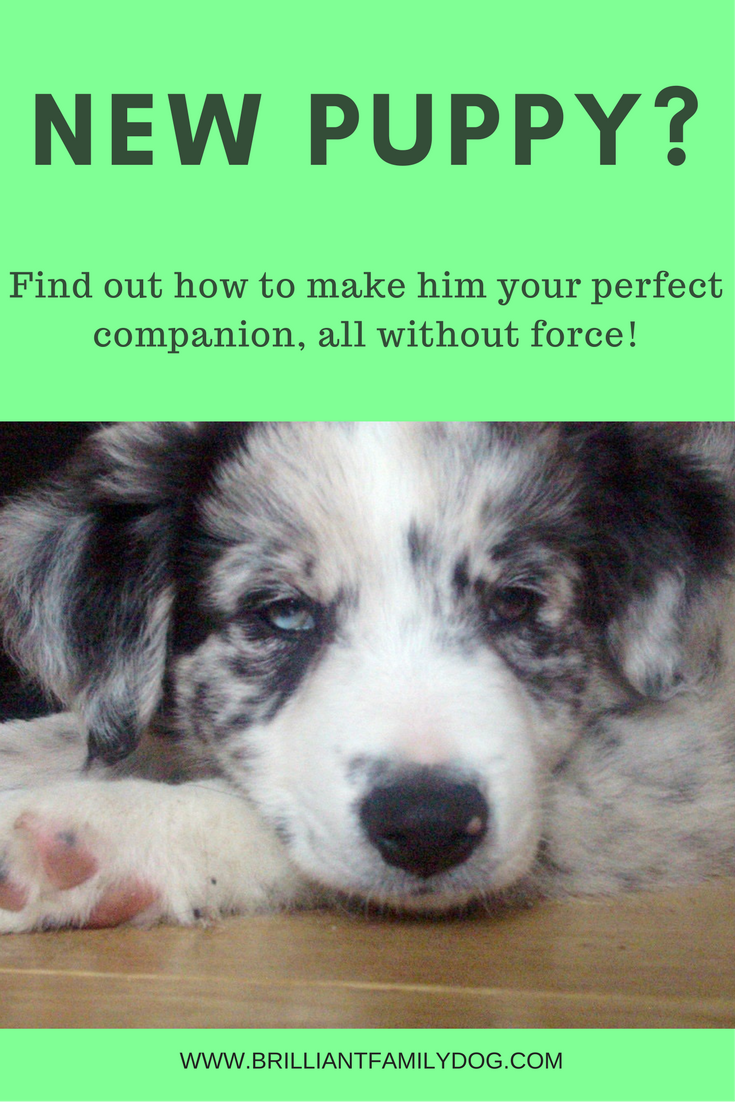
New Puppy?

Watch our free Workshop and learn how to communicate effectively with your dog or your new puppy, right from the start!

 Choosing a Puppy, Part 1

 Choosing a Puppy, Part 2

Is there hope for my growly dog?

People sometimes approach me for help when they’ve just about reached the end of their tether. They’ve tried this trick and that idea - usually things that their next-door neighbour suggested, or something they saw on one of the more sensational dog-training programs on tv - and their dog is getting worse.

It’s a shame they’ve let things go on for so long, as just like us and our piano lessons - practice makes perfect! The more your dog is allowed to do the thing you don’t like, the more he’ll do it.

But I’m usually able to cheer them up and show them that there is hope for their dog! I have never yet come across a fearful, anxious, reactive, growly (choose your name) dog that does not improve with force-free training.

And usually the change is dramatic.

People find that not only is there light at the end of the tunnel, but the tunnel itself is much shorter than they thought.

Once they understand why their dog is acting as she is, that she’s not all bad but that she just has difficulties in some areas of her life, and that what they do can have an enormous impact on their dog’s confidence, they happily launch into the training offered.

They start seeing results immediately. Suddenly they’re able to rejoin the human race! They can take their dog on outings, perhaps for the first time ever; they can enjoy picnics again; they no longer have to hide from other people and dogs like a vampire cowering from the sunlight.

Don’t be afraid to ask for help

So if you are despairing of your dog’s anti-social behaviour, seek help now. Don’t wait till there’s much more to undo, when your dog’s confidence may be at rock-bottom. There’s no time like the present, and - as long as you’re working with an experienced, qualified, force-free trainer - you will get results.

If the problem is reactivity to strangers or other dogs, a Certified Behavior Adjustment Training Instructor is what you want. There may not be one in your area, but many will work remotely, using video and Skype for their sessions.

While anyone can call themselves a dog trainer (and then appear on tv spouting dangerous advice), the true professional trainer or behaviourist has spent years, and lots of money, on studying and qualifying in their chosen field. They will belong to an organisation which has a clear code of practice to adhere to, and they will be continually studying, learning, and growing their knowledge and understanding. Many professionals who work with reactive or growly dogs have learned because of having a growly dog of their own - so they are very sympathetic. No-one will look down their nose at you and your dog!

Be ready to put in plenty of work yourself. The trainer - however good - cannot wave a magic wand over your dog! It’s you who lives with your dog, so it’s you who needs to work with her. But you will get a carefully-crafted program with plenty of resources to help you succeed.

You are not alone! And just that realisation goes a long way. As one correspondent wrote to me:

“When my amazing, cuddly, lovable dog starting acting very reactive on the leash, I felt totally alone! I would watch other people walk their dogs calmly down the street, passing people, kids on bikes, other dogs, and I was so jealous of them. Everything you write about describes my dog perfectly and it is so nice to know that a) There are many other people dealing with this, and b) There is hope!”

Your dog’s behaviour may mystify you, but there is help out there. Your first stop? Get our free email course for Growly Dogs

And for an in-depth, guided online course with masses of support, start with this free Masterclass

Resources:

Free 4-part Growly Dog e-course

CBATI Directory

Pet Professional Guild

Association of Pet Dog Trainers UK

Association of Pet Behaviour Counsellors UK

Karen Pryor Academy

Is your dog throwing up more challenges than you anticipated? Watch our free Masterclass and find how to change things fast!


Why is my lovely dog so aggressive on walks?

Choosing a Puppy, Part 2

Part 2: Where should I get my puppy from?

You’ve got an idea from the last post of what type, size, sex, and age of dog you’re looking for. Now, in Choosing a Puppy, Part 2, you can source your puppy.

• Breeder

Super critical! 

There are some fantastic breeders, dedicated to the improvement of their breed, and fanatical about rearing the best puppies possible. They invest a lot of money in genetic testing to ensure their puppies do not suffer from inherited problems (e.g. Hip Dysplasia, Eye diseases, temperament issues). They devote three months of their life to each litter. They really earn their money! They will give you a detailed Puppy Pack, with pedigree, registration forms, medical history, diet history, breed-specific advice, and so on.

• Then there are those who have a pet dog who has pups. If there is enough hybrid vigour in the mix you may get away with the absence of genetic testing, as long as the puppies are reared right. These puppies are often reared in the home with lots of love and attention from family and friends, so can be a good bet temperamentally. This would be the old-fashioned household mongrel dog, now sadly disappearing through over-zealous neutering programs. You may be taking pot-luck on size, type, and health.

• Sadly there are many people who I refer to as greeders. Their interest is in getting as much as possible for as little investment of time and money as possible. They often focus on the most popular breed of the time - currently the troubled brachycephalic breeds like Pugs and French Bulldogs - or more often the fashionable “designer breeds”. Greeders usually focus on small dogs, as they can pack more into their sheds and they cost less to feed. They may try and offload the puppies at 6 weeks for some spurious reason (the real reason is laziness - this is the most labour-intensive stage of puppy-rearing). No genetic testing is usually done. In my experience it’s not uncommon for dogs from these greeders to develop chronic conditions like Hip Dysplasia within their first six months of life, necessitating lifelong medication or surgery. This suffering is appalling when it could so easily have been avoided. These people couldn’t care less.

• The worst of these greeders are the puppy farms aka puppy mills, who have lots of tricks to fool you into buying something that was reared in a filthy cage in a cellar or shed, with no human contact. The poor, overbred bitches live a life of loneliness and misery till they’re thrown out as spent. Often these puppies are much older than is claimed. They even charge a lot of money for them! You’ll soon be paying much, much, more for behavioural and veterinary help to try to partially repair the damage these monsters have inflicted. A disproportionate number of dogs bought off the internet classified listings die within their first year. Do NOT feel sorry for the puppy and take it, even knowing or suspecting its background. You will pay for the whole of the dog’s life. Worse, you are giving money to help further this cruel trade.

As one otherwise intelligent businesswoman said to me, as she regarded her puppy who had clunky hips, wonky teeth, and was afraid of his own shadow, “I can’t believe I fell for those tricks”.

• You’ll find advice about all this through your national kennel club. Here’s the UK Kennel Club’s page. Many kennel clubs have a breeder assessment scheme.

Meeting your prospective puppy

• Your first viewing

Very important

When you first visit a litter, do NOT take the family with you. You’d be better taking a friend who hates dogs and will not be beguiled by the cute little fluffy puppies! Decide on your priorities before you go in, and interview the breeder carefully. Ask penetrating questions and require thorough answers with written proof. A genuine breeder will be interviewing you at the same time, to see if you are a suitable owner for their precious puppies.

The pups should be spotlessly clean and smell sweet, with no tangles or mats, no sticky bum, no runny eyes. Their mother should be interested but not concerned at you handling her pups. (This is an important pointer to the litter’s temperament later on.)

• Buying

Oh so critical!

On no account agree to a puppy on your first visit. You are looking at a commitment for the next 12-17 years: be fully prepared to WALK AWAY.

• Beware of a breeder who wants you to take a bitch and rear puppies from it for them. It’s your choice what you do with your dog. It’s not uncommon for a breeder to prevent you being able to register progeny at your national kennel club without their permission. They are trying to protect the health and standards of the breed and protect their puppies from those greeders.

Now you have some concrete issues to research. See how this will all pay off in the next post.

Thinking ahead - enrol in our free e-course on how to change the things you may not appreciate in your new puppy into the things you like - all force-free, of course!

RESOURCES:

dogstrust.org.uk/buyeradvice

Get your free guide to Errorless Housetraining and have it all done in a week or two!

THIS GUIDE IS A BONUS FOR YOU WHEN YOU SIGN UP TO RECEIVE EDUCATIONAL EMAILS AND OCCASIONAL OFFERS FROM ME. YOU CAN UNSUBSCRIBE AT ANY TIME.
Privacy Policy

Choosing a Puppy, Part 1

Part 1: Narrowing down the choice

The time has come at last! You’ve decided that you are going to get a puppy for your family. Excitement is running high, ideas are fantastical.

Your older boy sees this new dog as a companion in his muddy adventures. Your younger girl views it as something to love and cuddle, brush and comb. You have fantasies about a dog curled up at your feet when your work is done and you at last hit the armchair. And perhaps your partner thinks of something butch and manly to show off at the pub from time to time.

How on earth can you combine all this into one dog?

The truth is that while different breeds have different mindsets and hard-wired behaviours, the individual dog will have his own ideas.

Just like when you have children you get what you’re given, so with puppies. It doesn’t matter how carefully you choose your puppy, he’s still going to have a mind of his own.

So you’re going to need to do a bit of educating your family so that everyone is not disappointed with the new arrival! Find out what it is they are expecting, and guide them to more realistic expectations.

But choosing the right breed or type in the first place is a huge help!

The right dog for your family

You’ll need to consider these points:

• Size

Critical

The larger the dog the more expensive he’ll be to feed, house, and take to the vet. Small dogs can be more inclined to jump up and scrabble (small child hazard). Very large dogs need very large beds, very large cars, very large floorspace. (Deerhounds traditionally live in castles …)

• Coat-type

Importance depends on your time and housekeeping standards

Double-coated dogs can shed year-round in our heated homes. Fluffy dogs will need a full groom every six weeks or so. (You can easily do this yourself - the groomer’s bills will add up alarmingly.) Long coats get muddy and tangled. Very fine-coated dogs get cold and need a jumper in the winter.

• Gender

Not terribly important

When you’ve decided on your breed or type, you’ll find that either dogs or bitches of that breed match your family better. They have very different characteristics, and of course size can vary a lot between the sexes. If you have an open mind you will have more choice in the litter.

• Original purpose of the breed

Critical

Hunting dogs (e.g. labradors, beagles, spaniels) will go all day long in any weather. Lapdogs (Shih Tsus, Chihuahuas) will expect a lap and as little weather as possible. Sighthounds (e.g. Whippets) want to sprint for ten minutes then sleep for 23 and a half hours. Jack Russell Terriers think they are German Shepherds. If your family is an outdoorsy one all year round, then you can get a dog used to striding over moors and mountain. If going to the shops is a big adventure for you, then something happy to mooch about at home is required. Be very honest about this.

Whatever the breed, familiarise yourself with the genetic health issues pertaining to each breed or type (your Kennel Club should be able to guide you here) and look for breeders who perform the relevant tests. You can never guarantee anything, but you can sure stack the odds in your favour by doing this essential research.


You'll find a handy download about breed characteristics to be aware of here:

THIS FREE ECOURSE IS A BONUS FOR YOU WHEN YOU SIGN UP TO RECEIVE EDUCATIONAL EMAILS AND OCCASIONAL OFFERS FROM ME. YOU CAN UNSUBSCRIBE AT ANY TIME.
Privacy Policy


• Age

New Puppy? | Choosing a puppy Part 1 - See your chosen puppy early, at 5-6 weeks old | FREE EMAIL COURSE | #newpuppy, #puppypottytraining, #puppytraining | www.brilliantfamilydog.com

Absolutely critical

Your pup should be 7-8 weeks when he comes home with you. I would not take a puppy a day older. I’d walk away empty-handed - that’s how important I consider this. And you should not take a puppy younger than 7 weeks, for any reason.

Visit your puppy at least once before you finally decide. 5-6 weeks is a good age to visit.

Your puppy’s primary socialisation window slams shut at 14-16 weeks. You can never get this time back again. Do not listen to any sob stories or cajoling from the breeder of the pups. See written proof of the dog’s age. WALK AWAY if you are not convinced.

• Rearing

Critical

How has this puppy been reared so far? In a shed? in the house? Some dogs will manage to overcome a poor start in life because of the resilience of their personality. Sadly, many never fully recover from a poor start. Family pet puppies should be reared inside the house - in the busiest part of the house. They should have an enriched environment with lots of different things to interact with. Here’s an example of a thoughtful breeder’s set-up for her puppies. These pups have been given the best chance to grow up with no fear and anxiety problems rearing their ugly heads later on.

• Price

Irrelevant

The “running costs” of the dog will very quickly overtake any significance in the cost price. I tend to forget to ask the price till I’ve chosen the puppy. Proper, caring breeders are not looking to fleece you.


Chew over these points till next time, when I’ll give you more detailed advice on how to find your puppy.

You'll need to get your name down for the free e-course on common puppy problems.

Check out Errorless Housetraining page too - this free cheatsheet will get you started fast when the time comes!

Meanwhile, arm yourself with good, force-free puppy-training info. You’d be surprised if I didn’t direct you to my books now, wouldn’t you? So I won’t surprise you. Go to my Books page where you’ll find years of experience with young puppies and their new families distilled into four how-to books, and see how you can get the first two books completely free!

Is your dog or your little puppy throwing up more challenges than you anticipated? Watch our free Workshop and find how to change things fast!