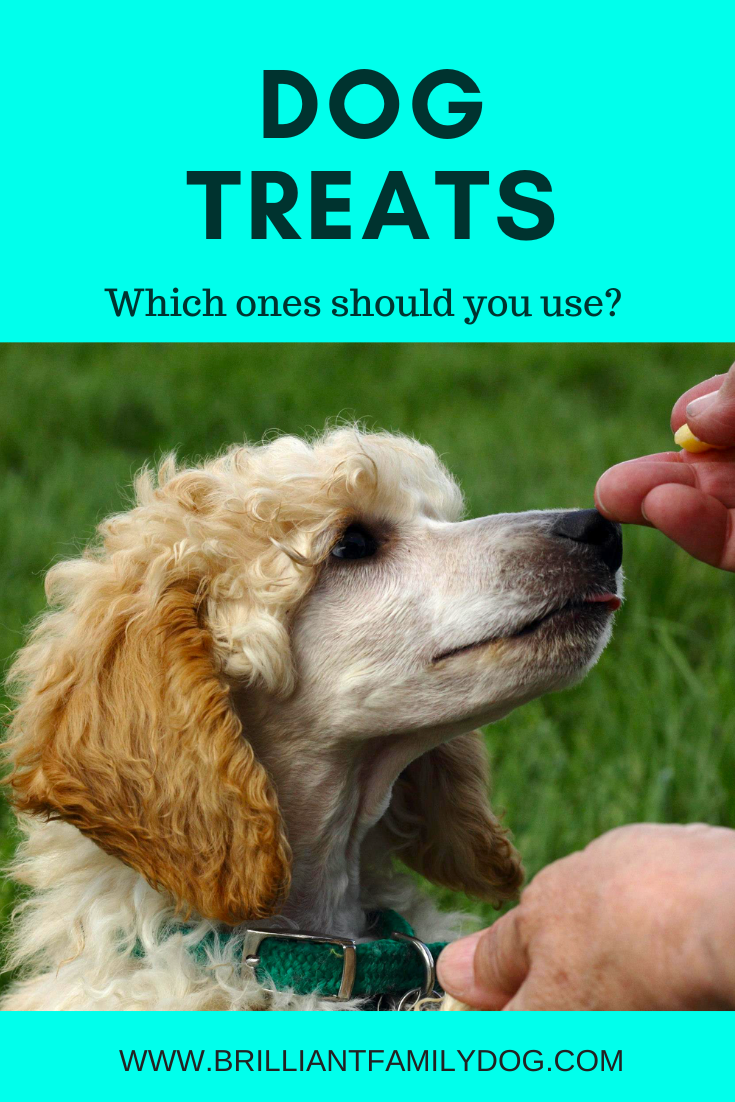
I’ve had you all looking carefully at what you feed your dog, on a regular basis. You have to combine budgetary restrictions, convenience, health of your dog, poo clean-up, into one answer.
To get help with this, take a look at www.allaboutdogfood.co.uk Look at the score for what you’re feeding now (hope that’s not too much of a shock!) and then look at the feeds that score 80%+ and see if you can make a change.
[You don’t live in the UK? No worries - not only are many brands international, but you can list ingredients from your food and get a rating.]
But what about treats?
But you need to look at everything you feed your dog! Not just what goes in his bowl.
Treats!
If you’re actively training your dog, you probably get through a mountain of these. All good. You reward what you like with a small, tasty treat and your dog gives you more of that.
So what’s in these treats?
Some commercial treat ingredients lists look like part of the telephone directory - and make as much sense.
Just like with our own food, try and avoid ingredients you don’t recognise and wouldn’t have in your own pantry.
A lot of these are to prevent deterioration - these packets stay on the shelves for literally years! And while the manufacturer must say if they’re using additives, they’re not obliged to declare what those additives are.
Use real food!
Wherever possible, use real food:
Cheese, cut into tiny cubes
Sausage
Hot dog
Cooked chicken/beef etc
Dehydrated meats/fish (e.g. dried sprats)
Fruit and veg (if your dog will take them!)
Meat/fish pate
Yes, I know there are additives in commercial sausages, but we’re talking about tiny quantities in the day. Who can put their hand up that they never have cake, or alcohol?
A little of what you fancy, my grandma told me, does you good!
There’s also squeezy cheese, which is definitely processed, but can be administered one tiny lick at a time.
What do I use?
I do use some commercial treats. Sometimes I need something hard that will roll or bounce. Sometimes it’s what I have in my pocket - you need a pouch for cheese etc!
But in the main I use real food.
I’m limited at the moment with my young dog. He’s the first food-fusspot I’ve ever had! Every other one of my dogs has fallen on anything I offer them as if they’ve been starved.
Not Yannick.
He will sniff the offered food slowly and critically. And unless it’s cheese, chicken, or beef, he won’t eat it.
There are some commercial treats he will eat, so I can still carry some in my pocket. There’s never a time when my dogs cannot earn a treat if they do something I like - requested or not. So some hard treats are handy.
Many commercial treats are massive, and not useful for constant use in training. I’ve been known to find a good quality treat, tip them all out and cut them in three or four pieces before using them.
One of my dogs’ favourites would be the Naturally Tasty Lamb Treats - they like the duck and the beef ones too. These have “no nasties”, containing only natural products. Be sure to follow this link first, to get you some free goodies!
Skippers do all fish training treats They’re the perfect size, and pocketable. Check out the special offer for Skippers in the Resources below.
Once more, you can visit www.allaboutdogfood.co.uk and see how treats rate. There are some very good ones - some of which are very expensive, and some very good ones for the more budget-conscious.
Those treats you see on every supermarket shelf? They rate from 30% down to 10% in nutritional value. 😳
But there’s a big BUT here. If you break them up small (and your dog will eat them - crucial point!) and they form only a small part of their daily intake … you can get away with it. (Remember that cake and alcohol reference?)
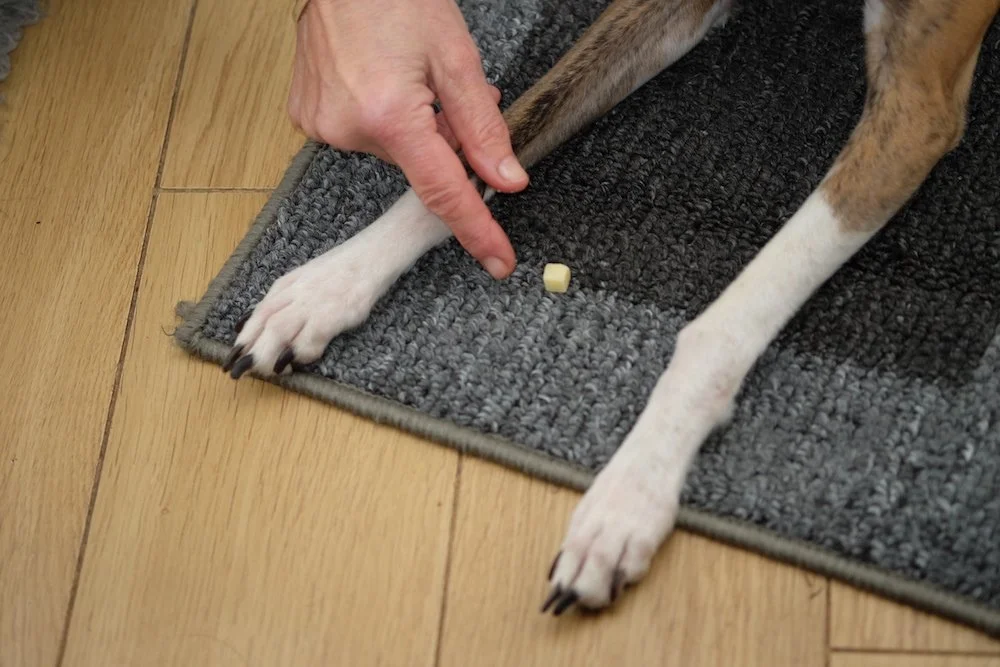
Here, good food is an essential to teaching successful matwork! Check out my book Calm Down!
But for the best, consistent, results from your dog, use the heavy artillery!
That’s the natural, real, unadulterated foods.
Safety note: If you’re handling raw meat, remember to wash your hands after your training session.
RESOURCES
Commercial dog treat comparison
Butternutbox (free supply of food!)
Some of these links are affiliate links, meaning I earn a little from your purchase. But rest assured, I ONLY recommend products I use and love myself.