Dog training treats

Dog treats - what gives THE best results?


I’ve had you all looking carefully at what you feed your dog, on a regular basis. You have to combine budgetary restrictions, convenience, health of your dog, poo clean-up, into one answer.  

To get help with this, take a look at www.allaboutdogfood.co.uk Look at the score for what you’re feeding now (hope that’s not too much of a shock!) and then look at the feeds that score 80%+ and see if you can make a change. 

[You don’t live in the UK? No worries - not only are many brands international, but you can list ingredients from your food and get a rating.]

But what about treats? 

But you need to look at everything you feed your dog! Not just what goes in his bowl. 

Treats! 

If you’re actively training your dog, you probably get through a mountain of these. All good. You reward what you like with a small, tasty treat and your dog gives you more of that. 

So what’s in these treats? 

Some commercial treat ingredients lists look like part of the telephone directory - and make as much sense. 

Just like with our own food, try and avoid ingredients you don’t recognise and wouldn’t have in your own pantry.

A lot of these are to prevent deterioration - these packets stay on the shelves for literally years! And while the manufacturer must say if they’re using additives, they’re not obliged to declare what those additives are. 

Use real food!

Wherever possible, use real food:

  • Cheese, cut into tiny cubes

  • Sausage

  • Hot dog

  • Cooked chicken/beef etc

  • Dehydrated meats/fish (e.g. dried sprats)

  • Fruit and veg (if your dog will take them!)

  • Meat/fish pate

Yes, I know there are additives in commercial sausages, but we’re talking about tiny quantities in the day. Who can put their hand up that they never have cake, or alcohol?

A little of what you fancy, my grandma told me, does you good!

There’s also squeezy cheese, which is definitely processed, but can be administered one tiny lick at a time. 

What do I use? 

I do use some commercial treats. Sometimes I need something hard that will roll or bounce. Sometimes it’s what I have in my pocket - you need a pouch for cheese etc!

But in the main I use real food. 

I’m limited at the moment with my young dog. He’s the first food-fusspot I’ve ever had! Every other one of my dogs has fallen on anything I offer them as if they’ve been starved. 

Not Yannick. 

He will sniff the offered food slowly and critically. And unless it’s cheese, chicken, or beef, he won’t eat it. 

There are some commercial treats he will eat, so I can still carry some in my pocket. There’s never a time when my dogs cannot earn a treat if they do something I like - requested or not. So some hard treats are handy. 

Many commercial treats are massive, and not useful for constant use in training. I’ve been known to find a good quality treat, tip them all out and cut them in three or four pieces before using them. 

One of my dogs’ favourites would be the Naturally Tasty Lamb Treats - they like the duck and the beef ones too. These have “no nasties”, containing only natural products. Be sure to follow this link first, to get you some free goodies!

Skippers do all fish training treats They’re the perfect size, and pocketable. Check out the special offer for Skippers in the Resources below. 

Once more, you can visit www.allaboutdogfood.co.uk and see how treats rate. There are some very good ones - some of which are very expensive, and some very good ones for the more budget-conscious. 

Those treats you see on every supermarket shelf? They rate from 30% down to 10% in nutritional value. 😳

But there’s a big BUT here. If you break them up small (and your dog will eat them - crucial point!) and they form only a small part of their daily intake … you can get away with it. (Remember that cake and alcohol reference?)
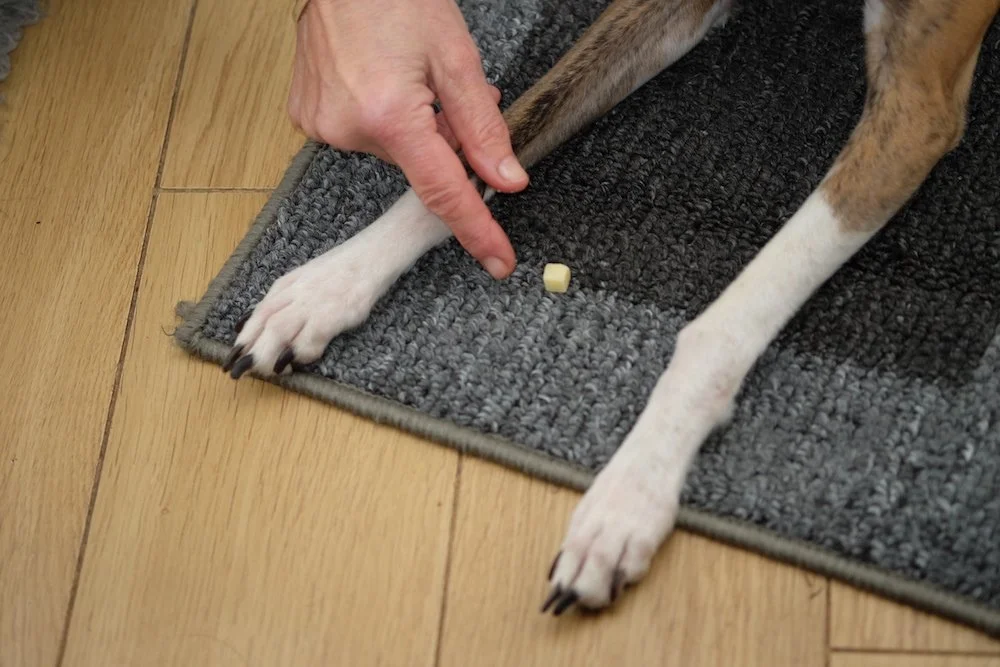
But for the best, consistent, results from your dog, use the heavy artillery!

That’s the natural, real, unadulterated foods. 

Safety note: If you’re handling raw meat, remember to wash your hands after your training session. 

RESOURCES

Commercial dog treat comparison

Butternutbox (free supply of food!)

Skippers (30% off)

Some of these links are affiliate links, meaning I earn a little from your purchase. But rest assured, I ONLY recommend products I use and love myself.
 

What are the most effective dog treats?


We receive thousands of marketing messages every day. We’re exhorted to buy foods which have “value added”, i.e. processed, ready-to-eat, convenience foods.

We KNOW (really! We all know!) that fresh foods are w-a-a-a-a-y cheaper to purchase, and are w-a-a-a-a-y healthier - without all those preservatives, additives, treatments. But they need a bit of work to turn into meals.

So it’ll be no surprise to the discerning reader that the same thing happens with dog foods. We’re bombarded with marketing messages and glossy images of glossy dogs bouncing all over the place. I talk about how to choose an appropriate diet for your dog here and here.

But the same marketing bombardment happens with dog treats.

Not only do you have to be equally discerning about what you put inside your dog in terms of nutrition, but there are other considerations.

Unless you’re just dishing out treats for no reason, you need to choose your dog treats carefully!


Training treats

And nowhere is this more important than the treats you choose to use in training your dog.

There are various factors you have to consider. And I outline most of them for you in my books. But for those of you who are yet to discover the joy of these books (seriously - people LOVE them! Just look at the hundreds of reviews on Amazon), here is an excerpt for you from Essential Skills for your Growly but Brilliant Family Dog: Books 1-3: Understanding your fearful, reactive, or aggressive dog, and strategies and techniques to make change

Chapter 2

Rewards - what, how, when?

Rewarding your dog with something he really likes is essential to this easy method of training. This may be with a game of chase, tugging with a toy, racing after a ball, being given his dinner bowl, a cuddle, or a tasty treat. It’s up to you to find out just what your dog likes (as opposed to what you think he likes) and reward him appropriately when he makes a good choice.

Treats are not a moral issue. They are a means to an end. The end is your dog responding to you and working with you. If employing a few bits of cheese means that my walks are enjoyable and my dog is calm and happy, then that seems a good deal to me. I only give my dogs a treat when they’ve done something I like: I aim to get through a lot of treats every day!

The treats need to be very tasty - your dog has got to really want them! And you don’t want her chewing and chomping on a biscuit for so long that she forgets what she earned it for. So the treat needs to slip down quickly and make your dog think, “Wow! How can I get some more of that?” Your dog needs to know what you like and what does not work with you.

So every time she does something you like, you can mark it by saying, “YES!” and giving her a treat. There is no need for your dog to sit in order to receive a treat. Some dogs think that sitting and begging is the only way to earn a treat, so they sit and beg and annoy at every opportunity. If you are crystal clear about what your dog is doing that is earning the reward (by saying YES), then he will know what actions to repeat, and what doesn’t pay. The sitting, begging dog has no idea what causes these random treats to appear.

When you mark an action, you want to mark as the dog is doing it. If you are marking a Sit, for instance, you need to say Yes as the bum is going to the floor. If you wait till your dog has already sat, she’s now gazing out of the window and thinking of something else. That’s not what you want to mark! As the sheepdog trainer John Holmes told us, you need to catch your dog with his mind down the rabbit-hole, not wait till he is down the rabbit-hole, when it’s too late. You want to catch your dog thinking about sitting.


Good treats

  • Cheese

  • Sausage

  • Ham

  • Chicken

  • Frankfurter

  • Salami

  • Homemade sardine, tuna, or ham cookies

  • Freeze-dried 100% meat treats

  • Dried sprats

  • Dehydrated liver, heart, lung, etc

.. real food in other words. Ideally, they slip down quickly so your dog wants more. Cut them into small, pea-size treats.

OK treats                    

  • High-quality grain-free commercial treats

Fairly rubbish treats

  • Your dog’s usual kibble - She gets it anyway. Why should she have to work for it?

  • Cat biscuits

  • Dog biscuits

  • Stuff of unrecognisable composition sold as pet treats

  • Anything you wouldn’t put in your own mouth

Do you work more enthusiastically for £60 an hour or for 50p an hour? Quite so. Your dog is the same. Be sure the treats you’re offering are worth working for!


So you can see it’s not just the quantity of treats you dish out (huge number when you’re working on something new or working against fear), but the quality is critical!

And before you suggest this may work out more expensive - think again! Look at the pack of commercial treats you are thinking of buying, and look at the weight vs the price. There is no contest with fresh foods!

So not only will you be making your training more effective - for which your fearful dog will profoundly thank you - but you’re making a tiny dent in your wallet!

Choose wisely.

And to get started with helping your Growly - reactive, anxious, fearful - dog, watch our free Masterclass here. Lots of lessons to get you started on a new path!


By the way, for English readers, here’s a load of money off a super food I regularly use and here’s another where you can get a big discount using this link - they provide high-quality fishy treats and foods, which are firm favourites with my crew!