puppy training

The Old Dog


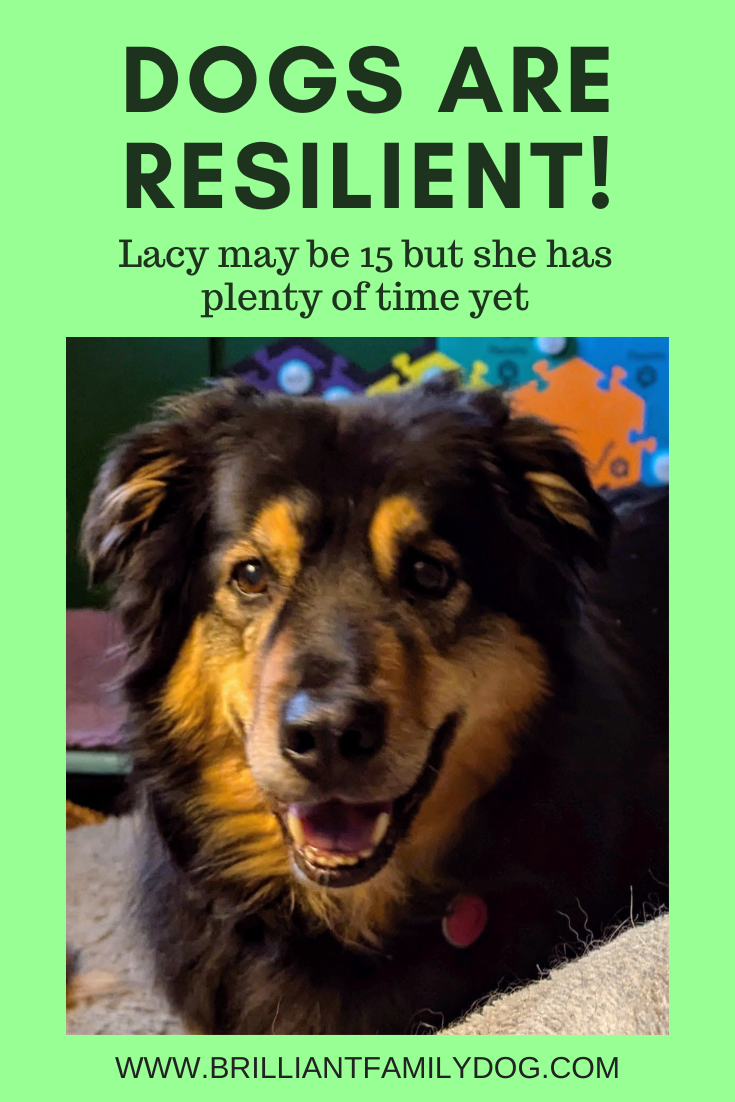
My Lacy is 16½ now. ’Tis a good age!

And, she’s very well.

  • She still loves her walks

  • She still loves her bed

  • And she definitely still loves her grub!

I want to share with you some of the things I have learned about keeping my old dogs fit and happy for as long as possible.

Walks for the older dog

You play this completely by ear - there’s no hard and fast rule. But I know that if we walk for more than about 45 minutes, Lacy is lagging behind on the way home.

Accordingly, most of our walks are shorter than that. Half an hour’s happy snuffling off-lead on a path she’s familiar with works wonders. And when she’s paused to inspect a particularly interesting scent, she’ll happily trot - or even run - to catch up with me.

And as you can see here, her BARKING is untroubled by 16½ years of heavy use, and she still enjoys racing about!


Sleep for the older dog

Older dogs sleep a lot. So all I need to do here is ensure she has a choice of comfy beds, and hard floors when that’s what she wants. She usually starts the night crashing onto the hard floor. But she’s almost always on her comfy bed when I wake in the morning.

Stimulation for the older dog

This is super-important! They can’t do crossword puzzles or all the things they tell old people to do to keep sane. But as long as you’re feeding a natural diet - processed foods and ready meals are as bad for dogs as they are for us! And in the case of humans have positively been connected to brain ageing - then that will give them a puzzle to solve daily.

Mine get a lot of raw chicken carcases, and chomping through those takes application.

Yannick frequently presses his PUZZLE button, so I make puzzles for them all.

🐶 Sometimes these are lickimats with paté spread on them.

🐶 Sometimes they’re feeders like kongs.

🐶 And more often I wrap treats in screws of paper, and stuff them into cardboard boxes or packets for them to rip and shred and munch. They love these “puzzles”!

Yes, there are a lot of cardboard and paper shreds to clear up before bed, but - so what? It keeps them very happy for quarter of an hour.

Old dog health

Like my previous old dogs, Lacy’s hearing has almost gone. I stamp on the floor to rouse her in the evening before bedtime, rather than spook her by touching her. Sometimes she can hear a high-pitched whistle, but banging on a door or cupboard will often penetrate her silent world.

I’m so sorry that she can no longer hear me chattering to her. I wonder if she thinks I’ve given up on that? So I make a point to talk animatedly to her when she’s right in front of me. The connection is strong, and must be maintained!

She doesn’t wear the “Deaf Dog” vest I had for Rollo. She tends to walk just behind me, while Rollo was always out front. So Lacy doesn’t need it.

Old dog grooming

Just because she’s old with failing hearing and eyesight, doesn’t mean that her coat stops growing! It has changed a bit, becoming longer and wispier, so it needs careful brushing. Lacy’s always had a dense coat, looking like a black bear, and it’s still just as dense. Trousers need attention for mats or very occasional stains.

She has various small lumps and bumps here and there on her head and body, but nothing that needs veterinary intervention. It would have to be deadly serious for me to risk an anaesthetic for her! But to me she is still just as beautiful as ever.
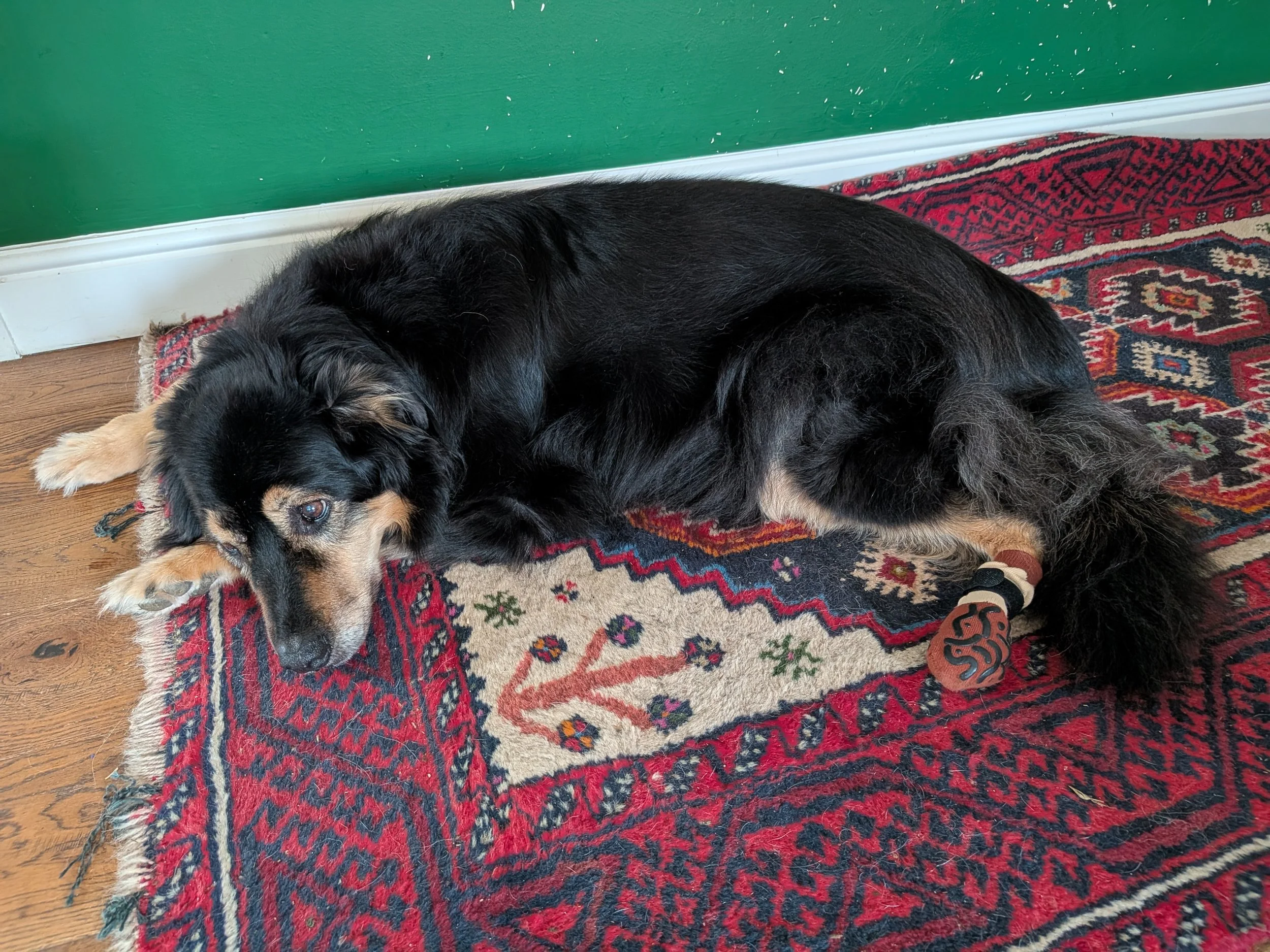
I’ve always kept claws well-trimmed, and I clip the hair between the pads. I also have mats at strategic corners in the house, to prevent slipping.

But I’ve found one great addition - sticky socks for dogs! I put these on Lacy’s back feet and since I’ve been using them (about four months now) she hasn’t once slid her back feet apart and flumped to the floor (distressing for both of us). So I reckon they’re a great success.

You do need to keep the middle two claws well-trimmed and filed though, or you’ll spend a lot of time darning your dog’s socks! I use a grinder for best, quickest - and most pain-free - results.

As an Amazon Associate, I earn from qualifying purchases

A peaceful old age for my dog

Lacy was a bit quiet the other day. I began to be concerned. But three things worked splendidly well to reassure me:

1. I opened the fridge door. (She may be deaf, but some things she just knows ..)

2. I tossed her a mini pork pie (caught, chomped, and swallowed in one).

3. I took the frisbees to the garden to play with the younger two. (Much woofing and dancing about.)

She was fine!

The old dog can still learn

Lacy still enjoys going through her repertoire of tricks, though I’m careful which ones I ask of her. When she’d had a stroke (she’s had three now, over the last five years) I wouldn’t ask her to spin, as she’d simply have fallen over!

When the others are racing for frisbees, I toss her one right in front of her nose. Sometimes she can catch it, and is very happy.

Perhaps what I’m saying is that you can keep including your old dog in everything you’ve always done together, though some things will have to be adapted. An agility dog, for instance, may be happy just to be asked to go round a pole. And sniffer dogs can always sniff. That sense seems to stay strong for ever …

RESOURCES:

The Old Dog: 5 secrets for keeping him young

Old dogs are the best!

Celebrate your Dog while you still have her

My blog is reader-supported. When you buy through links on this site, I may earn an affiliate commission - but you’ll get the best deal!

To learn more about how I manage my multi-dog household, old and young alike, go to https://my.brilliantfamilydog.com
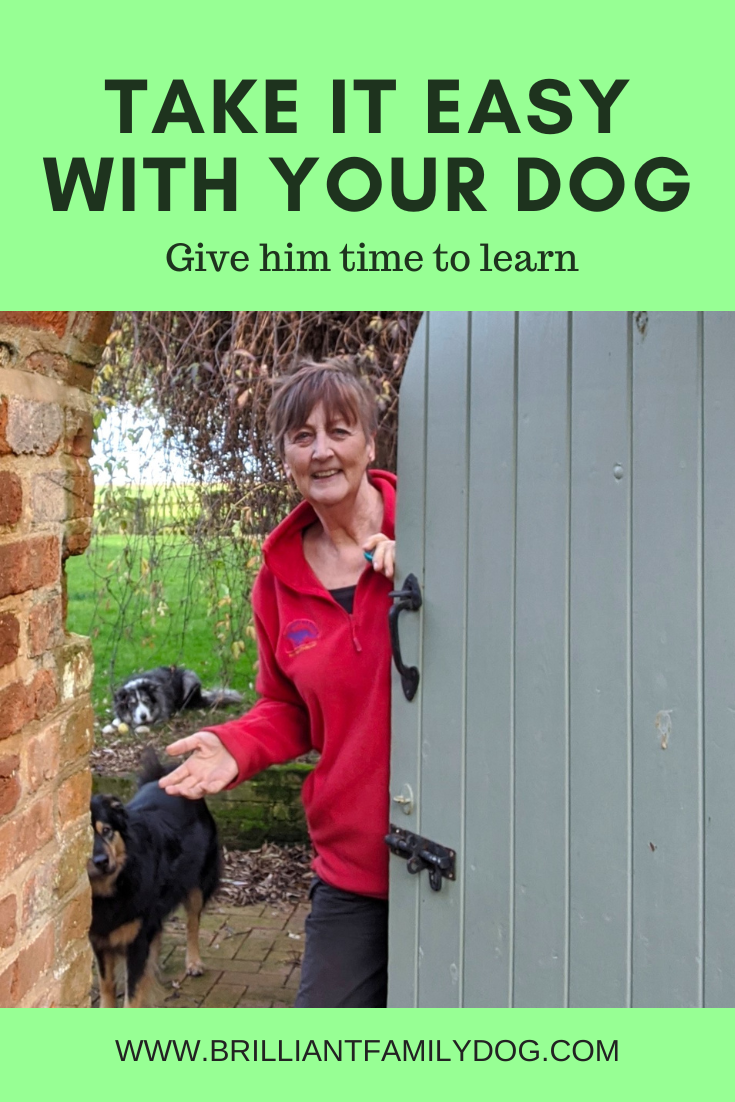


Take it easy with your dog

Fools rush in where angels fear to tread - Alexander Pope

That is so true when it comes to dog training! 

We get an idea of what we want our dog to do - respond as we’d like to a knock on the door, manage fireworks calmly, walk beside us on a loose lead … whatever it is, we say, “That’s what I’ll teach today!”

Come the end of the day - a frustrating day, to be sure - and you say, “I tried that and it didn’t work.”

Imagine your three-year-old attempting a PhD dissertation! 

We can’t develop new behaviours in a day … why should our dog? 

Slow and steady for your dog

Slow and steady wins the race - Aesop’s Fables

Leads on, now we wait patiently at the door

That’s another saying we can call to mind. 

The tortoise used craft and guile to beat the fast, agile, hare.

Let’s look at the sort of craft and guile we can employ when training our dogs! And I’ll use one example, and break it down.


Calm when the doorbell rings

The mad, barking, leaping, response to a knock on the door may be an entrenched behaviour by now. In that case, all the more reason to teach slowly, step-by-step, what it is you’d like your dog to do instead.

You see, dogs can’t not-do. They have to do

He can’t freeze mid-air and wait silently for you to go to the door.

You have to teach him what you’d like instead.

Let’s say you want him to lie down, quietly, on his bed.

So you’ll start, when no-one is around, just sending him to his bed and rewarding him.

Next you’ll add a little duration, so he relaxes into the bed, rather than staying on his toes, ready to leap.

Once this is established, you can start randomly sending him to his bed at any time, from any place in the house. Take this s-l-o-w-l-y. First succeed in sending him from one place, then another in the same room, and so on. 

You’ve taught the ‘down on your bed’ and now you’re consolidating. You can take a long time on this stage. 

Once your dog is happy to play this game with you at any time, you can stand by the front door and send him. Once ready, the next step is to knock on the door and send him, go outside and knock from the other side of the door, and so on. Always reward heavily for each correct response. 

If you have a doorbell, you can play around with a remote doorbell and move quite quickly forward. 

Finally, you can take it a step further. Ideally with a friend who will come and knock on the door, knowing he’ll never be let in. It may take quite a while to get your dog calmly onto his bed, and it’s crucial to solidify this. 

For my dogs, it’s the clank of the gate latch that sets them off. So your stooge person will need to start out at the gate!

What you want your dog to do is the variable here. 

Maybe you’d like him to accompany you to the door. In that case, have him come to you to clip on his lead, and first work through the door manners system in this post and video: Does your dog crash the door??

Once you’ve taught this, you are guaranteed sanity every time you touch any door handle, anywhere. 

Don’t forget, if your dog’s favourite reward is a quick game with a toy, be sure to check out the super, long-lasting toys here and don’t miss out on your special discount! 

It takes time to shape your dog’s behaviour

So you can see, it takes time. It’s not something you can change in an afternoon.

And also, you have to break it down into steps. Most things we want our dog to do are a series of steps.

A recall needs response to the call (maybe away from something as intoxicating as a bunny chase), a smart return, at least a pause when he arrives with you - possibly a sit. This requires teaching the several steps separately.

Walking nicely on lead needs the dog to know exactly where you want him to be when on lead, then to keep that position regardless of your speed or direction. This takes time! Especially with a dog who naturally wants to charge ahead, nose down. 

Getting your dog relaxed during firework season. This needs Desensitisation and Counterconditioning, as you’re working against fear. He isn’t deciding to get in a state, it’s not a voluntary action. So take your time, take it as slowly as you can - then a bit more slowly. 

Read: Counterconditioning doggy fears!

Want more dog training tips? 

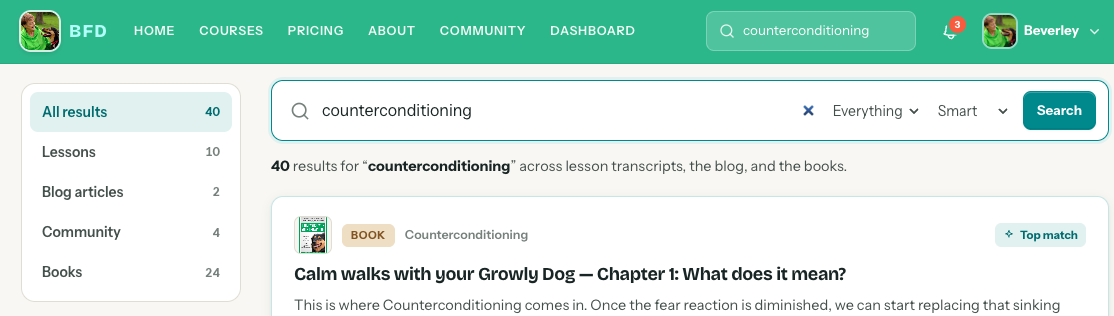
Head over to my.brilliantfamilydog.com and look for the Search box at the top of the page. Here’s an example of what you’ll find:


This is an amazing resource. See all the results it brought up, over on the left?

Whenever you find yourself thinking, “What would Beverley do now?” this is where you’ll find out. 

It will search all my books, courses, blog articles, and community answers. 

Bob’s your uncle! 

The tech is ultra-fast. But for us hoomans and our dogs, sometimes it’s better to be the tortoise than the hare.

RESOURCES: 

Find quick answers by searching everything I’ve written here: 

https://my.brilliantfamilydog.com/search


Rewarding your dog

If you’re working with a dog who is so hyper-aware of his surroundings that he can’t spare you any attention when you’re out, take a look at your rewards -

  • what?

And, critically! 

  • how often?

It can be easy to fall into a trap of, “He can’t pay attention to me, let’s not push it.”

When, in fact, “I’m going to make it worth his while to keep checking in with me!” is the far better strategy!

Here’s a surprise ..

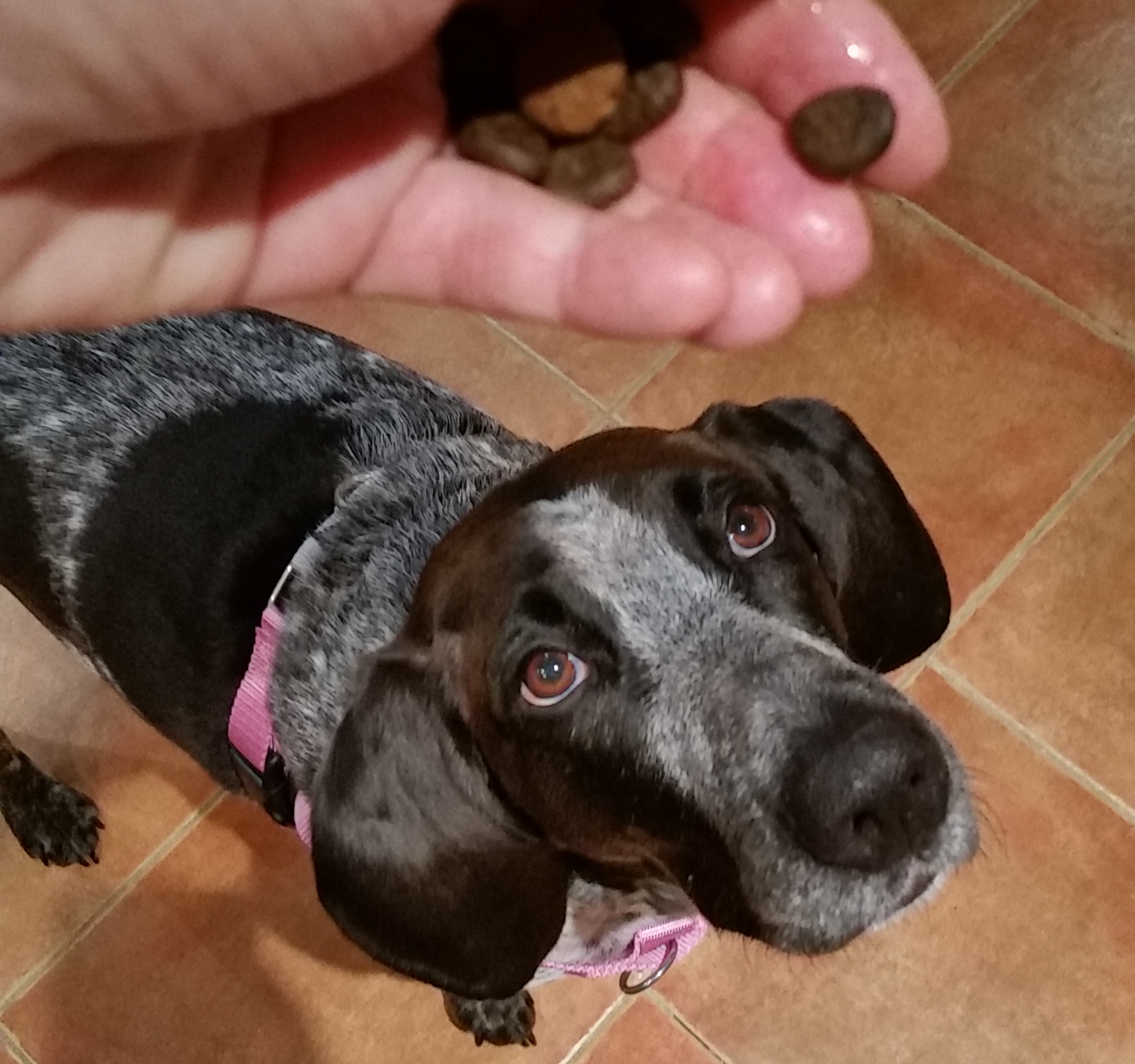
You see, your dog has to learn to take treats. 

Really!

It’s taken up to eight months of age before I can get my more anxious pooches to pause long enough to take a treat when we’re out. Keep shovelling them in - even if they don’t appear to notice - because once it becomes an automatic response, you’re away! 

So you need frequent treats - 

  • for every check-in, 

  • for every considered pause

  • for every non-reactive glance at something alarming (dog, person, you-name-it)

  • and for every 30 seconds

This will increase his attention to you, and his ability to detach from what is alarming him.

Whatever your dog finds rewarding - that’s what you do.

Zoe is waiting attentively for the next treat to drop into her mouth! Brilliant Family Dog

Zoe is waiting attentively for the next treat to drop into her mouth!

My dogs will now always take treats when we’re out. It took a surprisingly long time to establish this with the reactive ones. 

Toy play when out of the house is out of the question still, for my youngest.

But words and touch also rate fairly highly with him, along with treats.

You want to use anything that makes a connection between you.

Making a change for your reactive dog

If you’re used to trudging solo behind or beside your distracted dog, give this a try - and report back!

Combine it with the “pause before you start” strategy in this post: Slow your anxious dog down!

If your dog is happy to play outside the house - then this can definitely be one of your rewards! Need a super high-value toy? Check out our Dog Toys page


Dogs are more resilient than we may think!

A friend had to rush her 7-year-old agility dog to the emergency vet recently. He had to stay in for loads of tests (I guess they’re insured!) and the vet was very glum about his prognosis.

Talking informally to a vet she does agility with, however, gave a very different story. That vet, giving a private opinion, reckoned her dog would be up and working again in no time.

And indeed he’s back home after a few days and the owner’s having difficulty keeping him quiet!

Vets are naturally gloomy, on the whole. The younger the vet, I find, the gloomier. Older, more experienced, vets have more actual history to draw on. 

This is partly because vets see a lot of sick dogs.

And it’s partly to do with their insurance and litigation fears.

But they do see the worst cases, with the worst outcomes.

Lacy had a stroke

My Lacy, who is now 15, had her third or fourth (I forget) stroke a few months ago. She could barely totter, head all crooked.

We didn’t trouble the vet.

10 days later she was trotting ahead of me on walks. And a few days after that she was able to do the stairs unsupervised. 

Dogs have their own agenda. 

They don’t worry ahead to how their life may change. 

They just know they want to get from here to over there, and they get on with it. 

Naturally we have to defer to our vet’s knowledge. If you ask their advice you should listen!

But take their gloomiest predictions with a pinch of salt.

Let nature decide.

And enjoy your dog while you can. 

Are you building dog memories for your children?

I was thinking about Simon recently. Don’t know what brought it to mind particularly, but there he was, in my mind. Clear as day.

Simon was my first dog.The same age as me. So when he died aged 11 I was shattered.

I wrote a long essay for a national competition, and so full of feeling was it that I got shortlisted and had to read my essay out to the whole school. 

Writing his story did help me mend, though.

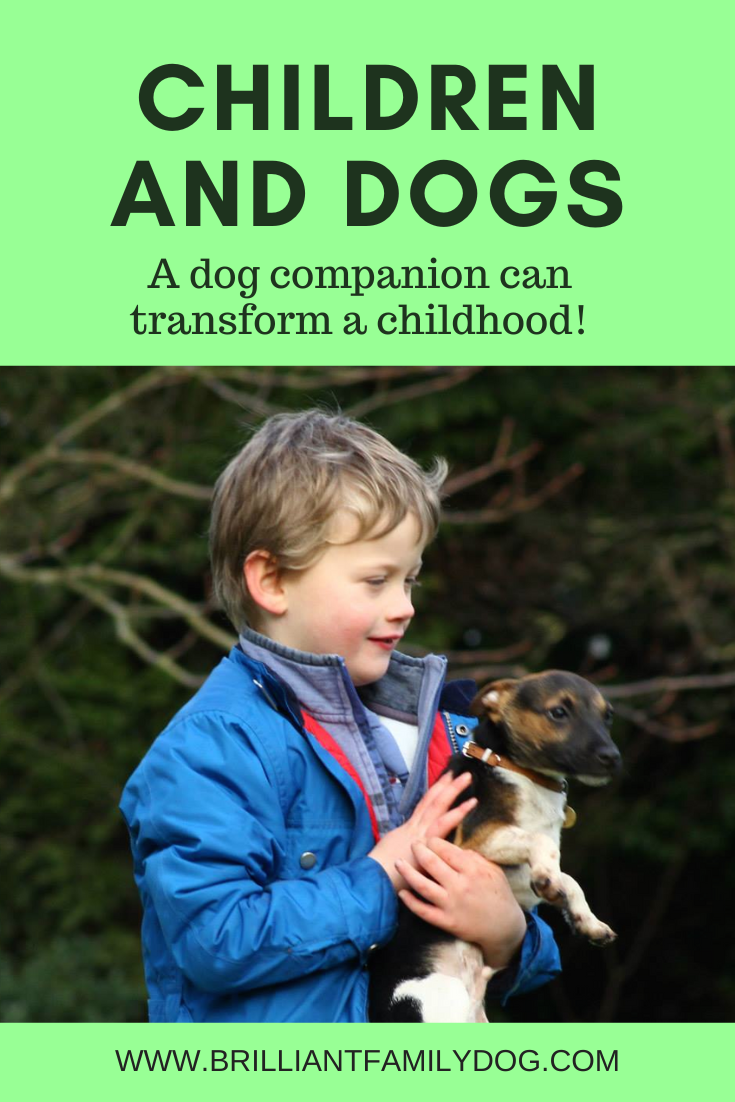
Childhood plus a dog!

What could be better than having a mate to accompany me on all my wanderings? Back in those days, child abduction was not in the front of everyone’s mind, so I had the freedom to go where I liked. Whether on my trusty red bike or on foot, Simon was always there.

Now I look back, it’s a great life for a dog - spending his time loafing about with unpredictable and always fascinating children! My brother and our friends would be with us too. 

Poor Simon had to sit in the back of my brother’s home-made go-kart and hurtle down our hill! I don’t remember him trying to escape, and he always enjoyed car rides, with his spaniel ears straight out behind him in the wind, so I’m guessing (hoping!) he enjoyed it..

Is this what you have for your kids?

So the question is, do you provide this companionship for your children? Do they have the joy of wandering, protected, with their comrade-in-arms? Ready to take on the world as long as their friend is at their side?

I’m sure I told Simon lots of things I woudn’t even have told my friends!

And, as you read above, it was an early introduction to grief for me. It was much worse than even my grandparents dying. 

Whether that shows that I value dogs over people ;-) or simply that long-distance relationships with grandparents (mine always seemed to be very old) were not so real to me, I don’t know. 

But this I do know: this early friendship was seminal. 


Want a child-friendly way to teach your child how to train their dog?
Explore our free and premium courses, where you'll find simple concepts, short videos and easy-to-follow lessons that children and grown-ups can enjoy together.


Change for you, change for your dog


Change. We all want change. We’re always asking for change.

And usually the change is all about us, or how things affect us.

Your dog’s not behaving as you’d like - let’s get that CHANGED.


🐾 Change what the dog is doing.

🐾 Change how he responds or fails to respond to you.

🐾 The dog has to change!


But look at it another way …

Wayne Dyer puts it perfectly:

“When you change the way you look at things, the things you look at change.”

Sometimes it’s not the thing you’re looking at that needs changing. 

Sometimes it’s looking at it in relation to yourself that makes the difference.

Why should your dog change?

Up to now, your dog has done certain things. Perhaps getting worse and worse on a daily basis.

And you’ve been letting this happen.

It’s not the dog who needs to change!

It’s you!

When you look at it all holistically, you’ll see that your input - or lack of it - is a major contributory factor to how your dog is.

🐾 When he was chewing those shoes, where were you?

🐾 When he was barking at the doorbell, were you barking at him to be quiet?

🐾 And when he didn’t respond to your call, had you been paying attention to exactly what he was doing? 

Dogs and us

We don’t exist in a vacuum. We interact with other people, things, and the world, and that influences how we feel and what we do.

Your dog? Just the same. 

And the most important interaction in his life is with you!

How to improve your dog’s behaviour

So next time he does something you’re not mad about, take up the mirror and see what you were doing! 

  • How did you contribute to this happening?

  • Did you contribute anything, or had you abdicated responsibility? 

  • How can your dog learn what you want from him if you’re not paying attention and actively teaching him what pleases you?

And if you think this approach has to include telling-off or punishment - no, it doesn’t. There’s no nagging or blaming.

For your dog to change, YOU need to change

Teach your dog what you want. Build that connection with him so he knows what will please you so he has a chance of knowing what action he should choose.

Then you can forget about changing your dog, and simply enjoy him! 


And to start making that change, explore our free and premium courses on teaching your dog to listen.