rescue dog

The Old Dog


My Lacy is 16½ now. ’Tis a good age!

And, she’s very well.

  • She still loves her walks

  • She still loves her bed

  • And she definitely still loves her grub!

I want to share with you some of the things I have learned about keeping my old dogs fit and happy for as long as possible.

Walks for the older dog

You play this completely by ear - there’s no hard and fast rule. But I know that if we walk for more than about 45 minutes, Lacy is lagging behind on the way home.

Accordingly, most of our walks are shorter than that. Half an hour’s happy snuffling off-lead on a path she’s familiar with works wonders. And when she’s paused to inspect a particularly interesting scent, she’ll happily trot - or even run - to catch up with me.

And as you can see here, her BARKING is untroubled by 16½ years of heavy use, and she still enjoys racing about!


Sleep for the older dog

Older dogs sleep a lot. So all I need to do here is ensure she has a choice of comfy beds, and hard floors when that’s what she wants. She usually starts the night crashing onto the hard floor. But she’s almost always on her comfy bed when I wake in the morning.

Stimulation for the older dog

This is super-important! They can’t do crossword puzzles or all the things they tell old people to do to keep sane. But as long as you’re feeding a natural diet - processed foods and ready meals are as bad for dogs as they are for us! And in the case of humans have positively been connected to brain ageing - then that will give them a puzzle to solve daily.

Mine get a lot of raw chicken carcases, and chomping through those takes application.

Yannick frequently presses his PUZZLE button, so I make puzzles for them all.

🐶 Sometimes these are lickimats with paté spread on them.

🐶 Sometimes they’re feeders like kongs.

🐶 And more often I wrap treats in screws of paper, and stuff them into cardboard boxes or packets for them to rip and shred and munch. They love these “puzzles”!

Yes, there are a lot of cardboard and paper shreds to clear up before bed, but - so what? It keeps them very happy for quarter of an hour.

Old dog health

Like my previous old dogs, Lacy’s hearing has almost gone. I stamp on the floor to rouse her in the evening before bedtime, rather than spook her by touching her. Sometimes she can hear a high-pitched whistle, but banging on a door or cupboard will often penetrate her silent world.

I’m so sorry that she can no longer hear me chattering to her. I wonder if she thinks I’ve given up on that? So I make a point to talk animatedly to her when she’s right in front of me. The connection is strong, and must be maintained!

She doesn’t wear the “Deaf Dog” vest I had for Rollo. She tends to walk just behind me, while Rollo was always out front. So Lacy doesn’t need it.

Old dog grooming

Just because she’s old with failing hearing and eyesight, doesn’t mean that her coat stops growing! It has changed a bit, becoming longer and wispier, so it needs careful brushing. Lacy’s always had a dense coat, looking like a black bear, and it’s still just as dense. Trousers need attention for mats or very occasional stains.

She has various small lumps and bumps here and there on her head and body, but nothing that needs veterinary intervention. It would have to be deadly serious for me to risk an anaesthetic for her! But to me she is still just as beautiful as ever.
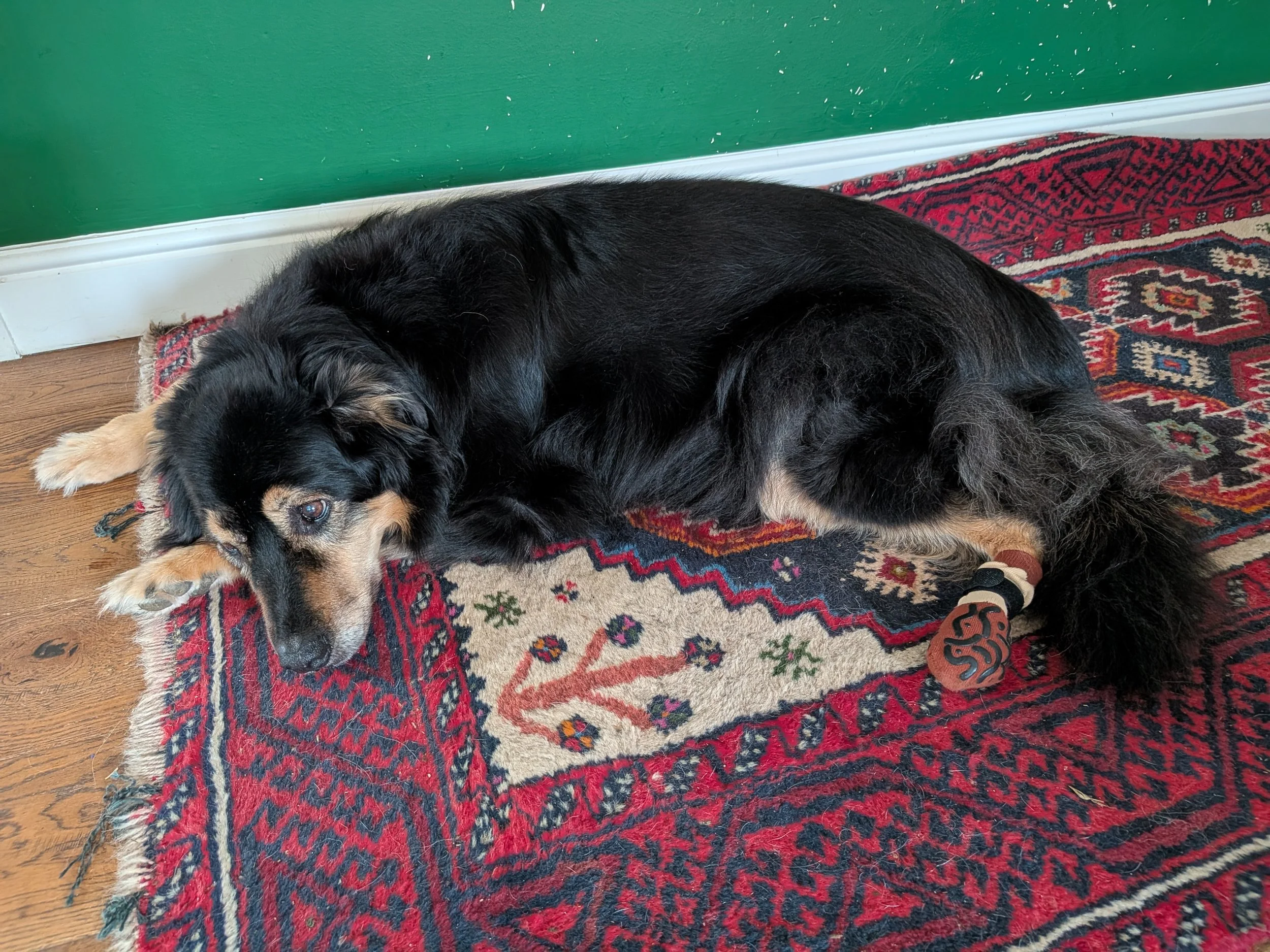
I’ve always kept claws well-trimmed, and I clip the hair between the pads. I also have mats at strategic corners in the house, to prevent slipping.

But I’ve found one great addition - sticky socks for dogs! I put these on Lacy’s back feet and since I’ve been using them (about four months now) she hasn’t once slid her back feet apart and flumped to the floor (distressing for both of us). So I reckon they’re a great success.

You do need to keep the middle two claws well-trimmed and filed though, or you’ll spend a lot of time darning your dog’s socks! I use a grinder for best, quickest - and most pain-free - results.

As an Amazon Associate, I earn from qualifying purchases

A peaceful old age for my dog

Lacy was a bit quiet the other day. I began to be concerned. But three things worked splendidly well to reassure me:

1. I opened the fridge door. (She may be deaf, but some things she just knows ..)

2. I tossed her a mini pork pie (caught, chomped, and swallowed in one).

3. I took the frisbees to the garden to play with the younger two. (Much woofing and dancing about.)

She was fine!

The old dog can still learn

Lacy still enjoys going through her repertoire of tricks, though I’m careful which ones I ask of her. When she’d had a stroke (she’s had three now, over the last five years) I wouldn’t ask her to spin, as she’d simply have fallen over!

When the others are racing for frisbees, I toss her one right in front of her nose. Sometimes she can catch it, and is very happy.

Perhaps what I’m saying is that you can keep including your old dog in everything you’ve always done together, though some things will have to be adapted. An agility dog, for instance, may be happy just to be asked to go round a pole. And sniffer dogs can always sniff. That sense seems to stay strong for ever …

RESOURCES:

The Old Dog: 5 secrets for keeping him young

Old dogs are the best!

Celebrate your Dog while you still have her

My blog is reader-supported. When you buy through links on this site, I may earn an affiliate commission - but you’ll get the best deal!

To learn more about how I manage my multi-dog household, old and young alike, go to https://my.brilliantfamilydog.com


Take a new look at your dog!

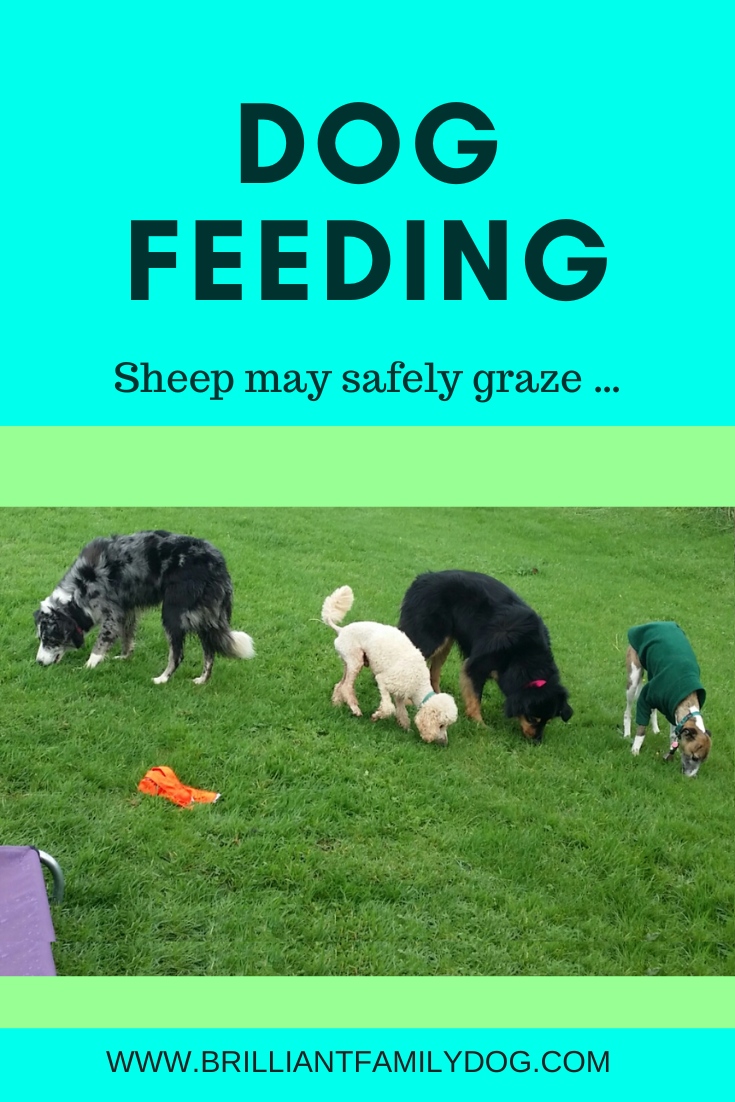
I consider feeding one of the most important things for my dogs’ long-term health and longevity. 

So I review their diets frequently.

Back in the day, I always used to feed my dogs once a day, in the evening. But they also had training treats, plates to lick, bones left lying around, the occasional foodtoy, and so on. 

Then when I started taking them on camping trips and we walked so much,

I’d scatterfeed kibble in the grass beside the van for them to snuffle up in the morning, while I got washed and dressed.

Then I started to scatterfeed outside at lunchtime, at home.

This was largely to get Cricket the Whippet out to do her business - I didn’t like her to stay in an armchair for hours and hold it! 

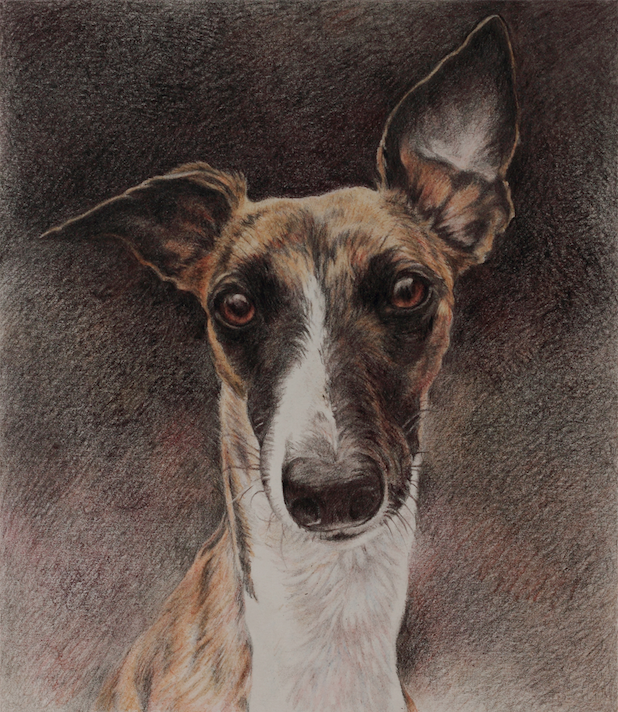
Portrait in coloured pencil by Beverley Courtney

So then, one year, Cricket started to get panic attacks.

She’d be shaking, panting, gasping, her eyes on stalks, desperate to get on my lap … These epidosdes could last for an hour, and they were getting more frequent … 😳

I did a little detective work 🕵🏻‍♀️ - and realised that these attacks happened only in the morning!

Aha! 

So I started to give Cricket a handful of food first thing in the morning.

Immediately, the panic attacks stopped, and we never had another.

What a simple solution!

How can I adapt this discovery to my dog management?

The moral of this story?

We change.

Our dogs change.

We need to observe and adapt.

And not just always do the same as we’ve always done, or what’s always worked for previous dogs. 

“Every dog is a study of one.” - Grisha Stewart

Just as we’re all different, so our dogs are all different. 


For our special dogs …

And it got me thinking about how we could be seeing things in our reactive dogs that could easily be changed by attending to diet and timing.

Along with all the other considerations, of course, such as sleep (you know how I’m always harping on about sleep!), exercise - type and quantity, mental stimulation, and all the rest. 

When did you last look closely at what may have become a comfy habit in caring for your dog? 

It’s so easy to drift along, saying, “This is how it’s always been,” and not noticing that things are changing - for the worse.

It’s like when someone sees your children for the first time in ages and says, “How they’ve grown!”. 

Well, duh, of course they’ve grown! But being with them every day, we don’t notice things that are changing. (And I don’t just mean that their jumpers are too tight.) We change all the time .. all the time.

Experiment with your dog!

So it’s time to start experimenting! Look critically at your daily doings with your dog - especially your reactive dog.

🐶 Would it help to move his walk from the morning to the afternoon?

🐶 Would it be better if he only had walks 3-4 days a week, and another stimulating activity on the other days?

🐶 Should I change his feed, or his feeding schedule (always make dietary changes gradually).

🐶 Should he have more interaction with people and dogs, or less? 

🐶 What new thing can I teach him, to liven up our training sessions? 

🐶 How much deep sleep is he having? (If less than 17 hours deep sleep a day, you need to make changes!)

Our dogs are in our hands. We owe it to them to make their lives the best they can be.

Find out what works for you and YOUR dog!

Dog play for fun and learning!

Playing with your dog is the most important thing you can do.

There - I’ve said it!

It’s not “training”, “correcting”, fighting to get his attention … It’s a way for your dog to see you as the most exciting thing going.

You can be relied upon to respond to him with a game at any time - and this builds adulation in your dog!

How to play with your dog

Now, there are do’s and don’t’s of play.

Endlessly chucking a ball will gradually destroy your dog’s shoulders and can bring on early arthritis.

And we don’t waggle a toy in our dog’s face and expect him to join in. Would you - if I waggled a toy in your face?

What we do is get our toy to behave like prey - that’s what’ll get your dog fired up and engaged!

That’s why I love chaser toys and flirt poles. They’re irresistible to dogs - and they’re a wonderful way to teach impulse control.

After all, your dog won’t be catching any rabbits if he simply flies off whenever he sees one. There’s stalking to be done, stopping still, eying the prey, then - when the time is right - explosive running and a grab.

Now, while you’re twitching your toy about in the grass, as it looks for all the world like a furry creature, you want your dog to WAIT till the right moment. In this case, you decide when that moment is, you give your release word (Gettit! Is mine) and your dog can start the chase.

Here’s a video that shows you the level of impulse control you can build into even the most excited dog by using a chase toy.

You’ll see that the dogs mostly stay in position on the picnic table, can release the toy (Cricket the Whippet finds this hard!) and are fully engaged with the toy when it’s their turn.

You can also see Coco Poodle becoming more thoughtful as racing after the toy fails to work. He develops a new strategy of waiting for the right moment - and that works!

What sort of dog toy?

Chase and tug toys are great for

  • Harnessing instinctive drives

  • Using the strong hunt-kill sequence to teach self-control

  • Focus in high arousal

  • Start ‘em young - very young puppies can learn fast

  • Exercise!

  • Turn-taking to avoid scraps in multi-dog households

.. and it so happens that I’ve found the best chase toys available and arranged a discount for you!

Go to Dog Toys and watch some more detailed videos of me using high-quality toys to teach my dogs, and see how you can do this yourself. (And snatch your discount!)

You’ll see in these videos how fast and furious a “training session” can be - and how much you can achieve in a very short time.

Lessons for you

And for step-by-step lessons that build on everything you've learned here, explore our free and premium courses and discover how to bring out the very best in your dog.

Why is my dog reactive?

It’s natural for people to question things.

And especially when that “thing” is having a major unwanted effect on their life!

So “Why is my dog reactive?” is a question I hear often.

And the questioner often furnishes what they think the answer may be. These “reasons” can range from:

He’s a rescue dog

I think he was beaten

He missed out on socialisation

He was over-socialised

He was attacked as a puppy (“attacked” can mean anything from being stared at to being torn apart, I have learnt)

He had a bad breeder / bad breeding / bad start

We went to a bad puppy class

He never went to puppy class

.. and so it goes on.

Now whether any of those things are true, and - more to the point - whether they have any bearing on how your dog is now, can never be quantified.

Keen to learn more to help your Growly Dog? Get our free e-course here and get started!

It’s been proven that fears can be hereditary. Even that the position in the womb can affect a puppy’s mindset! And while all the research goes on - you have a dog to look after.

The fact is that your dog is reactive!

.. or anxious, nervous, shy, “aggressive” …

This is what we know, for sure - so why not start there?

Start from where you are

It really doesn’t matter why your dog is reactive or fearful. He just is.

A family may have two or more children who are poles apart in character. Same parents, same genes, same environment, same diet, same everything.

And yet they are totally different. We all know families like this - maybe even have a family like this!

Perhaps one child is brave and fearless and dives into everything.

While another is shy and reserved, lacks confidence, and prefers to be a wallflower.

Thing is - we get the children we’re given! We don’t have too much say in the matter.

And we love them just the same.

Choosing your dog

So why not view your dog the same way?

Maybe you went to great lengths to choose a breed you thought would suit you, the gender that seemed right for you. You hunted till you found a good breeder, checked the lines, made your choice.

Or perhaps you took pot luck - picking a dog from a shelter, or inheriting a dog from someone else.

I can tell you now, that there is more variation between individuals than there is between breeds.

In other words, two dogs of the same breed - even from the same litter - will be individual. Not clones. Individual.

Your collie may be afraid of things that run fast, your spaniel may have no interest in using his nose, your GSD may be sound-sensitive, your lapdog may hate laps …

So, to some extent, no matter how carefully you choose, you are taking a gamble.

First of all, be kind

Your dog can’t help how he is. He didn’t choose to be afraid. He just is.

And fear of some kind, whether inbred or acquired, is at the bottom of most reactivity.

So let’s cut him some slack.

He may not be the dog you had hoped for.

He may never be a good agility dog, or working dog - which is why you got him.

He may never be comfortable in strange places, or with strange people or dogs.

But that’s not his fault!

It’s just the way it is!

No need for whywhywhy - it just is.

You chose him.

So you need to do what you can to make his life with you the best it can be. If that limits what you can do with this dog, then so be it.

More love on offer

Just about all the reactive dogs I have ever known are wonderful family pets. They are utterly devoted to their people. They are fun to have around - at home.

I’d go so far as to say there is no bond like the bond between your reactive dog and you.

You have to put so much work in to keep him - and you - happy.

And in so doing, you understand him so much better. You build his confidence, slowly but surely (this can take years).

And your dog knows (once he’s no longer a terrified screaming furry blob on a walk) that you love him and will protect him.

What better pet could you wish for?

Want some help with your challenging dog? Explore our free and premium courses for growly dogs, where you'll find practical, force-free training to help you understand your dog better and enjoy calmer walks together.


Can dogs have ADHD?

So many people say their dog has ADHD, or is autistic, or something else.

And what they really mean is that in some way it’s the dog’s fault that he is as he is.

After all, it’s much easier to say that your dog behaves badly because of some obscure medical condition - rather than lack of proper nurturing - as in poor food, lack of exercise, lack of stimulation.

Far easier to say that, than to admit that you’ve fallen down on training and can’t manage your dog!

While dogs don’t have autism or ADHD, there is a thing. It’s called Hyperkinesis, and it’s VERY VERY RARE in dogs.

I only came across it myself for the first time recently.

It involves complete inability to settle, inappropriate responses (sometimes aggressive), chaotic behaviour, from puppyhood on.

You’d know if your dog had that - you’d really know!

This diagnosis is only given after extensive testing. And I was interested to read that in addition to medication it is universally recommended to use non-aversive reward-based training.

We already know that!

What about my hyper dog?

Some of us have very active dogs, some of us have shut down dogs, but very, very, few people in the world have hyperkinetic dogs.

This is good news!

So what do you do if you have an apparently uncontrollable, mad, dog who never seems to settle and seems to want to defy you all the time?

Double down on the training - especially All Day Training!

What’s All Day Training? It’s those little things you teach and expect all the time, like waiting patiently at doors, standing still to have a harness put on, sitting for a visitor, and so on.

It’s not a formal training session. Rather like we teach our children, it’s just little reinforcements of good behaviour - All Day Long.

And we must always 

🐶 be clear

🐶 be consistent

and it’s helpful to have set routines so your dog knows what’s going to happen next. He knows when he’s going to be fed, he knows when it’s playtime, he knows when it’s bedtime - throughout the day.

Enable your dog to tell you what he needs!

First … CALM!

Something that helps a lot of people is teaching their dog how to relax. Fully. Anywhere.

“I have been teaching my dog the Magic Mat technique from your Calm Down! book, and it's been great! Thanks for writing such a great and helpful guide!” JS

“Thank you, I've just read through the first 4 chapters of Calm Down! and I'm feeling excited to get started tomorrow, I love the way you write and explain everything!” WR

“Thank you so, so much for the Calm Down! book. It's already going brilliantly, it's like you're a dog mind-reader, you really know your stuff!” LN

By the way, if you are medicating your dog you must always combine this with a behaviour modification program designed by an expert in force-free training. This would ideally be a Veterinary Behaviourist, who can manage the dosing at the same time as the training.


Am I clear to my dog?


An old man is teaching his grandson about life. “A fight is going on inside me,” he said to the boy.

“It is a terrible fight and it is between two wolves. One is evil – he is anger, envy, sorrow, regret, greed, arrogance, self-pity, guilt, resentment, inferiority, lies, false pride, superiority, and ego.” He continued, “The other is good – he is joy, peace, love, hope, serenity, humility, kindness, benevolence, empathy, generosity, truth, compassion, and faith. The same fight is going on inside you – and inside every other person, too.”

The grandson thought about it for a minute and then asked his grandfather, “Which wolf will win?”

The old man simply replied, “The one you feed.”

This bit of wisdom is attributed to the Cherokees, but, in fact, it’s not known where it came from.

And what possible relevance does this have to me, and my dog, you ask?

It’s all a question of focus.

What you focus on is what you get.

What you reward will, inevitably and without any doubt, be repeated.

It’s a basic tenet of Learning Theory, in which our modern dog training is grounded.

I sum it up in my mantra, which I give to all my students and hope they learn by heart so they can recite it to themselves at any moment:


Reward what you like

Ignore what you don’t like

Manage what you can’t ignore

[Manage? That simply means arranging things so that the thing you don’t like is very unlikely to happen - like keeping sharp things out of a baby’s reach, keeping the street door firmly shut, and so on.]

Now this is the most simple way to train your dog - or anyone else, for that matter!

Don’t rise to the things you don’t like. As you will know and admit, that only makes things worse.

This can apply to things that are as basic as .. the dog peeing in the wrong place. Pointing to the offending patch on the carpet is not going to help your dog understand where he’s meant to relieve himself!

And heaping on praise, for anything that you do like, is going to speed up your puppy’s understanding of the house rules in this strange new human world he’s found himself in.

But is this what we do?

Sadly, no.

Most people harp on the bad thing and almost forget to teach the new, desired, thing!

Complaining to your dog about what he does “wrong” is only going to focus his attention on it.

As Dan Millman says, in his book Socrates,

“The secret of change is to focus all of your energy

Not on fighting the old

But on building the new”

It really is simple when you look at it like that.

And remember - this doesn’t only apply to dogs! Oh, nonono! Look at yourself and your dealings with everyone in the same light.

Your child brings his plate back to the kitchen? Thank him profusely, rather than complaining about having to pick up plates from all over the house when he doesn’t do it.

Your chaotic co-worker turns up on time for once? Buy him a coffee, rather than grouse next time he arrives late.

Speaking of coffee - as I often do …


.. if you want to reward me for all the info I give you freely, here’s your chance!

And if your dog pauses while pulling on the lead and looks back at you, TREAT! And remember to brush up on your loose lead training as soon as you get home again.

Focus on the good

Thing is, focussing on the good makes your child/colleague/dog feel better and more inclined to repeat the good thing.

And, importantly, it makes you feel better too!

We aren’t here for long. Let’s make our stay a pleasant one.

Want to know more about how to interact with your dog to get the results you want? Take a look at our free and premium courses you might just discover a whole new way of seeing life with your dog.