Choosing a dog

My next dog will be … an individual!

Some of my friends had to give me sad news recently, about the loss of a dog. This is always hard to recover from - in fact, I don’t think we ever really do. 

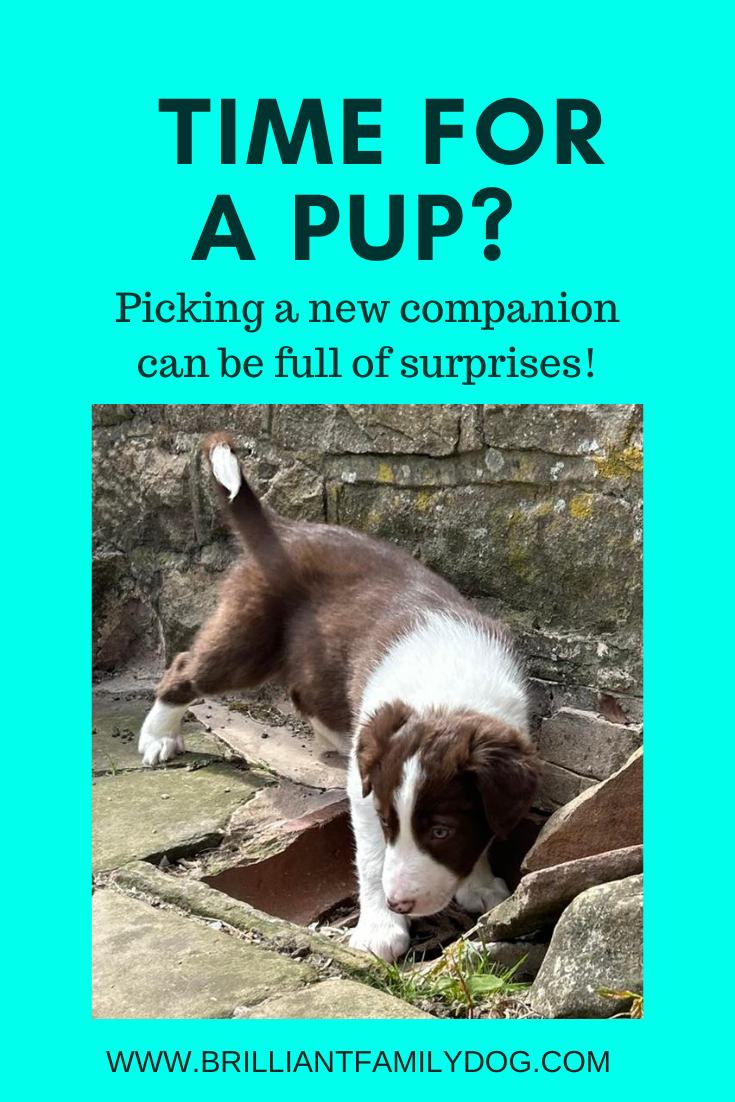
But as one door closes, another opens, and I’m one of those people who’s always thinking about their next puppy! 

Not straight away, of course. But plans start to slide into place after a couple of months. Then there’s all the research needed to narrow down the perfect puppy.

You can research as much as you like, find the perfect breeder, study the lines … or you can take pot luck.

But just like with children, you get the one you’re given - not necessarily the one you wanted, hoped for, or expected!

What puppy research should I do? 

I would definitely recommend checking the parents’ test certificates. This could save you many thousands of pounds in just a year or two.

What certificates? You can check with your national Kennel Club. They’ll have a listing of all the tests recommended for each breed, as the breeds all have their own tendency to certain ailments or problems. 

I’m sure you’ll agree that the best gift you can give to your new puppy is good health and freedom from pain. 

This means carefully checking out his/her ancestry. Any reputable breeder will have gone to the immense trouble and expense of getting these tests done for their bitch, and only using a stud dog with similar qualifications. 

(I know you had a wonderful Heinz 57 dog once, who lived to a hundred with never a day of illness - but you were lucky!)

I’ve heard too many accounts from my students of expensive procedures being necessary to make their dog’s life liveable. Expense they would have been spared with a bit of study and research. 

Which dog breed?

This is very much an individual thing. Try not to be swayed by fashion. I always look for a dog that looks more like a wolf - long nose, long limbs, slim rangy body, a coat that doesn’t need endless clipping. (So how did I end up with Coco Poodle, who despite his long nose and long limbs, still has to be shorn and shaved every 3-6 weeks?? 😳)

Why do I choose that type of dog?

Because dogs with squashed noses, short legs, and squat bodies tend to have a lot of problems with breathing, movement, weight-gain, and so on. 

For more detail on how to choose the right breed or type for your family, check out Choosing a Puppy 1. There are three posts for you on this critical subject, showing you what really is important and what really isn’t. 

The most important aspect of your puppy

But the key thing to remember is that your dog is an individual.

There is more difference between individual dogs than between breeds.

It doesn’t matter how carefully you choose your new pet, he’ll be his own individual self. 

He may not be at all like others of his breed: he may be from an active breed but is a couch potato; he may be a guard breed who’s afraid of his own shadow; he may be a lap dog who hates cuddles. 

Thing is … he’s yours now! And developing a meaningful relationship with this new person in your life will result in a long-lasting devotion between the two of you. 

And it will also change you forever. 
Why is my dog reactive?

It’s natural for people to question things.

And especially when that “thing” is having a major unwanted effect on their life!

So “Why is my dog reactive?” is a question I hear often.

And the questioner often furnishes what they think the answer may be. These “reasons” can range from:

He’s a rescue dog

I think he was beaten

He missed out on socialisation

He was over-socialised

He was attacked as a puppy (“attacked” can mean anything from being stared at to being torn apart, I have learnt)

He had a bad breeder / bad breeding / bad start

We went to a bad puppy class

He never went to puppy class

.. and so it goes on.

Now whether any of those things are true, and - more to the point - whether they have any bearing on how your dog is now, can never be quantified.

Keen to learn more to help your Growly Dog? Get our free e-course here and get started!

It’s been proven that fears can be hereditary. Even that the position in the womb can affect a puppy’s mindset! And while all the research goes on - you have a dog to look after.

The fact is that your dog is reactive!

.. or anxious, nervous, shy, “aggressive” …

This is what we know, for sure - so why not start there?

Start from where you are

It really doesn’t matter why your dog is reactive or fearful. He just is.

A family may have two or more children who are poles apart in character. Same parents, same genes, same environment, same diet, same everything.

And yet they are totally different. We all know families like this - maybe even have a family like this!

Perhaps one child is brave and fearless and dives into everything.

While another is shy and reserved, lacks confidence, and prefers to be a wallflower.

Thing is - we get the children we’re given! We don’t have too much say in the matter.

And we love them just the same.

Choosing your dog

So why not view your dog the same way?

Maybe you went to great lengths to choose a breed you thought would suit you, the gender that seemed right for you. You hunted till you found a good breeder, checked the lines, made your choice.

Or perhaps you took pot luck - picking a dog from a shelter, or inheriting a dog from someone else.

I can tell you now, that there is more variation between individuals than there is between breeds.

In other words, two dogs of the same breed - even from the same litter - will be individual. Not clones. Individual.

Your collie may be afraid of things that run fast, your spaniel may have no interest in using his nose, your GSD may be sound-sensitive, your lapdog may hate laps …

So, to some extent, no matter how carefully you choose, you are taking a gamble.

First of all, be kind

Your dog can’t help how he is. He didn’t choose to be afraid. He just is.

And fear of some kind, whether inbred or acquired, is at the bottom of most reactivity.

So let’s cut him some slack.

He may not be the dog you had hoped for.

He may never be a good agility dog, or working dog - which is why you got him.

He may never be comfortable in strange places, or with strange people or dogs.

But that’s not his fault!

It’s just the way it is!

No need for whywhywhy - it just is.

You chose him.

So you need to do what you can to make his life with you the best it can be. If that limits what you can do with this dog, then so be it.

More love on offer

Just about all the reactive dogs I have ever known are wonderful family pets. They are utterly devoted to their people. They are fun to have around - at home.

I’d go so far as to say there is no bond like the bond between your reactive dog and you.

You have to put so much work in to keep him - and you - happy.

And in so doing, you understand him so much better. You build his confidence, slowly but surely (this can take years).

And your dog knows (once he’s no longer a terrified screaming furry blob on a walk) that you love him and will protect him.

What better pet could you wish for?

Want some help with your challenging dog? Hop over to our free Masterclass for Growly Dogs, which gives you practical techniques you can use straight away to make your your dog - and your walks - calmer