Why does my dog bark at some dogs and not others? (4 steps to calmer dog walks!)

“I can be walking along the road and pass five dogs without my dog saying a word. But along comes the sixth and she goes mad! It can be a big dog or a small one - I can’t work out a pattern. Why?

This is a very observant question - and one which causes people a lot of puzzlement.

Why do some dogs wind up my dog - and not others?

What’s happening is a combination of rising hormone levels - known as Trigger Stacking.

Trigger Stacking is the name given to the heaping up of things that worry your dog, till she becomes overwhelmed. It could be an approaching dog + a child running by + a bang or scream … 

Maybe she could cope with these things one at a time, but all at once or in quick succession is too much.

If you were working against the clock to prepare dinner and the doorbell rang - you could cope with the interruption and carry on. Supposing while you were going to answer the door, the phone started ringing - and then your saucepan boiled over - Aaargh! Too much! You are now fraught and frazzled. The next person you speak to will get snapped at! This is trigger stacking for us.


Hormones - don’t you love ‘em!

We are driven by our hormones, as are our dogs. 

Fear is the driving force here, and that builds up the cortisol levels in the body. 


The more afraid your dog gets, the more afraid she will get.


So you’re walking along the road and you pass a dog coming the other way. Your dog may get a bit antsy, or she may just put her head down and get past without even looking at the dog.

Phew! We got past!

Now another one is coming! This time your dog glances at it and then looks away. Perhaps you give her a treat for ignoring it.

Now there’s another! Oh no - and another!

Your dog is by now getting quite tense. How long can she hold it together?

The next dog that comes along happens to be a bit “on his toes”. Perhaps he’s a young dog with few social skills, so stares at your dog and bounces around on his lead. Perhaps he lowers his head and starts walking slowly and deliberately.

Whatever it is, your dog has reached her limit.

This dog is the last straw!

So she barks and lunges on the end of the lead in an attempt to keep the other dog away.

Between your embarrassment and the other owner’s alarm, this probably works! Either the other dog goes away, or you do. Remember,


Dogs do what works


And if the barking and lunging did the trick this time, your dog now has a way to keep other dogs away. Until we give her some better strategies.


So what can I do?

When we are blessed with a fearful and anxious dog, our main focus should be on keeping her calm. 

For this to work, you need to keep yourself calm too! If, for instance, your dog gets upset by dogs 20 yards away, be sure to keep them at least 21 yards away - by anticipating and moving away yourself.

That may interfere with your accustomed walking pattern. But if your walks are punctuated by outbursts which always catch you out, wouldn’t it be worth making some changes to improve matters?

A walk may become 50 yards this way, then 10 yards that way, followed by 30 yards another way, then back to the first direction for 100 yards … and so on. You’re not trying to get anywhere, your objective is to keep your dog calm. 

While it is true that the more afraid your dog gets, the more afraid she will get, the opposite is also true:


The calmer your dog stays, the calmer she’ll be.


Want some help getting this right? Watch our free masterclass and spot the three mistakes you may be making - without realising it! - which cause your dog to act up worse

Four steps to changing this

1. Keep your distance

Distance is very important to dogs. If they’re uncomfortable about anything, the best thing to do is to put some space between you and whatever it is they’re worried about. The stress of being too close can build in your dog till it reaches the level where it overflows.


2. Avoid Tunnels

Remember that a narrow path or roadway lined with trees, hedges, walls, parked cars, is a tunnel to your dog, with no escape possible. Always ensure there is plenty of space around you, and note possible turning points so you can dodge out of the way when you see another dog coming, and give him plenty of space.


3. Take a dog’s-eye view

Reactive dog, aggressive dog, fearful dog, dog behavior | Why does my dog bark at some dogs and not others? | FREE EMAIL COURSE | #aggressivedog, #reactivedog, #dogtraining, #growlydog | www.brilliantfamilydog.com

Sounds: Traffic noises - especially in the rain. Big lorries clattering by? Children shrieking? People shouting? Dogs barking? Builders banging and whacking? Rubbish blowing about in the wind? Thunder? Cyclists speeding by?

All these things can build stress in a young or fearful dog. 

Once you get good at noticing these “triggers”, you’ll start to develop a sixth sense about what is going to be the last straw for your dog, and take early evasive action, while you’re still on straw no.1 or straw no.2.

Sometimes you could just sit on a bench, and watch the world go by without having to fight your way through it. Lots of tasty treats posted into your dog’s mouth will help to calm him and change his view of the world as being a scary place. As you see him begin to relax and stop scanning the environment and focus more on you, you’ll be ready to set sail again.


4. Keep your hands soft on your long comfortable lead

It’s very easy to react yourself before your dog does! If you clutch the lead tight and start breathing fast, your dog will be saying “What? Where? Who have I got to bark at?”

Sometimes you can turn and walk away happily. In this case be sure not to pull or yank the lead, which will only add to the stress and probably trigger an outburst even sooner! Practice holding the lead as if it were attached to a baby, and use only gentle and soothing actions.

Giving your dog freedom on lead - instead of shortening the lead and keeping him close up against you - will allow him to express his own body language to the oncoming dog. It’s hard to look nonchalant and friendly if your head is being held up in the air. The freedom to look away at the crucial moment can be all that’s needed to defuse a simmering situation.


What are these dogs saying to each other?

To go back to the first five dogs who did not appear to upset your dog, there is another reason why they didn’t elicit an outburst.

They probably had more relaxed body language.

Dog Body Language is a fascinating subject. It’s how dogs communicate in the absence of the words that we humans have.

Here are a couple of videos which give you an idea of the huge range of language dogs have:


http://www.youtube.com/watch?v=bstvG_SUzMo

http://www.youtube.com/watch?v=00_9JPltXHI


Watch these carefully and you’ll be armed with information that will help you decide whether 21 yards distance from an oncoming dog will be enough, or whether this is the moment you about turn and head off happily in another direction.
If we’re going to communicate with someone from another country who has no English, we’re going to need to learn their language. And as for another species without any verbal language - we need to make the effort to understand their clear signals. Some of these signals are subtle to the point of vanishing, but they are clear enough to another dog. 

A lot of doggy mysteries will be explained to you once you understand what your dog is trying to tell you! So be sure to watch those brief videos - your crash course in Dog - and see what a difference it will make to your dog’s happiness and your walks.

Meanwhile, head here and get your free email course to help change your Growly Dog's walks for good!

And there’s lots of help for you in the Essential Skills for your Growly but Brilliant Family Dog book series.

For a thoughtful, kind, and dog-friendly way of working with the dog in front of you (rather than the one you think you wish you had!) check out the books here.
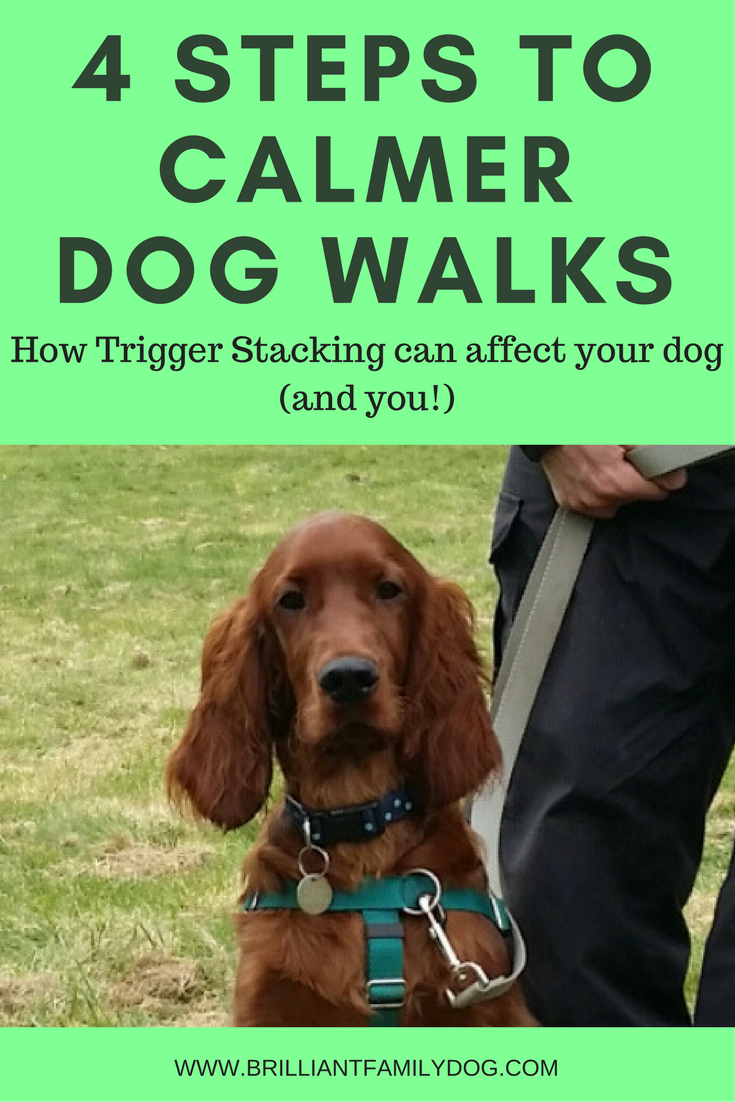
4 steps to calmer walks

Keen to learn more to help Growly Dog? Get our free e-course here and get started!

THIS E-COURSE IS A BONUS FOR YOU WHEN YOU SIGN UP TO RECEIVE EDUCATIONAL EMAILS AND OCCASIONAL OFFERS FROM ME. YOU CAN UNSUBSCRIBE AT ANY TIME.
Privacy Policy

How close is too close for your dog?

Let’s think of ourselves first.

  • How close is too close to your child?

  • How close is too close to your friend?

  • How close is too close to your postman?

  • How close is too close to a stranger asking directions?

  • How close is too close to a drunk, shouting in the street?

Clearly, you’ll have a different answer for each question. Our personal space requirements vary from situation to situation. They also vary across the planet.

Get your free email course here!

THIS E-COURSE IS A BONUS FOR YOU WHEN YOU SIGN UP TO RECEIVE EDUCATIONAL EMAILS AND OCCASIONAL OFFERS FROM ME. YOU CAN UNSUBSCRIBE AT ANY TIME.
Privacy Policy

The Japanese, for instance, prefer a larger personal space than many Westerners are used to, and it may not be breached by touching! That is the height of insolence.

So the personal space we have which is an essential survival mechanism can also be affected by culture and learning.

Our dogs are just the same!

What’s sauce for the goose is sauce for the gander

Dogs too have a personal space. 

But because dogs are so fast, their personal space is much larger than ours. And the cultural differences come in too, in the form of breed characteristics. 

Companion dogs who have been bred to stay close to their owners will tend to manage with a smaller space. If you have a guarding or guardian breed - then they alert to anything that shouldn’t be on or near their “patch”. Their space is huge. 

These are factors you need to keep in mind when out and about with your dog.

What is an acceptable space for you to pass someone on the street, may not be acceptable to your dog. You will have to teach her that the passing person has been assessed by you as non-threatening, and does not need to be jumped up on, barked at, or grabbed while passing.

Fitting into our way of life is not straightforward for our dog. We kind of assume they’ll just come ready-programmed to respond the same way we do. But we have been learning for twenty years (or many more!) how to relate to our fellows, and have a headstart by virtue of the fact that we are the same species. 

Teaching your dog the social skills necessary to fit in with our world is essential. But it shouldn’t go against your particular dog’s natural instincts. You chose that breed because of her characteristics. So you need to work with them to achieve a dog who is comfortable in the places we take her.

And how about other dogs?

When it comes to your dog’s personal space with regard to another dog, then that space is bigger again! 

So passing someone on the street within your personal space may work for your dog. If that person has a dog with them, it may change things entirely! 

If your dog tends to shoot first and ask questions later, then changing your response to passing people with dogs will make your walks infinitely more comfortable and stress-free. You need to develop a kind of radar scanner on the top of your head, which will pick people and dogs out at a great distance, giving you time to plan your getaway. While your dog is seeing the oncoming dog, you can post some quick treats into her mouth, then with a cheery “Let’s go!” turn and head along your escape route, giving more treats all the while. 

You can simply cross the road, wander down a side-road or driveway, or even turn and go the other way till there is sufficient space to pass. Playing a quick focus game with your dog will help.

As any tension we feel in a situation rapidly passes down the lead to our dog, then minimising our stress levels will help to lower hers. So, instead of seeing a dog approaching, hoisting the lead up to your chest and winding it six times round your hand as you gasp - sure to get your dog saying “Who? Where? What have I got to bark at?” - try doing the exact opposite:


When you see a dog coming, your first response will be to relax your shoulders, relax your hands, and breathe out,


Just this new habit alone will make a tremendous difference to your walks. It’ll help to keep your dog calm, and when your dog is calm - you can be calm. And when you are calm - your dog can be calm! It’s a virtuous circle you want to get into, and it starts with you changing your response to an oncoming dog.

That response is totally understandable, if in the past an oncoming dog has resulted in your dog reacting - barking, lunging, as if her life depended on it. But, while understandable, it’s not helpful!

Maybe your walk will take a little longer with these detours. As long as you’re both enjoying it - who cares?


For some solid advice on how to manage your reactive dog so that walks are less stressful all round, get your free email course here.

And there’s lots of help for you in Essential Skills for your Growly but Brilliant Family Dog: Books 1-3: Understanding your fearful, reactive, or aggressive dog, and strategies and techniques to make change


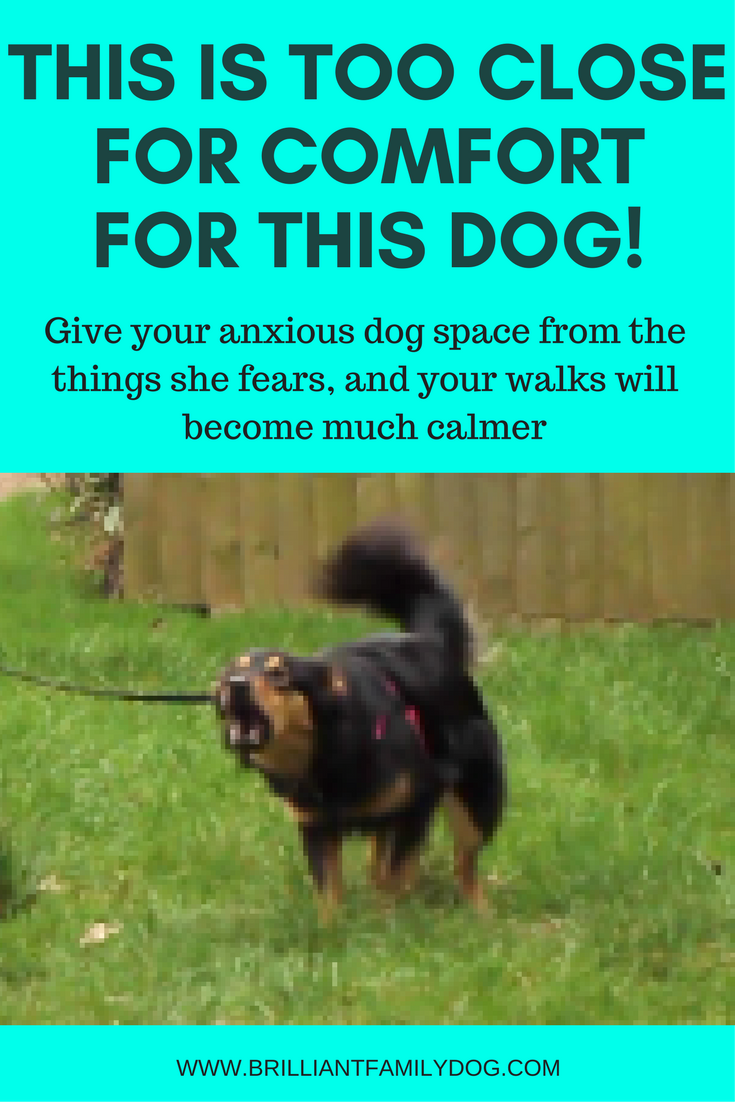
This is too close for comfort for this dog

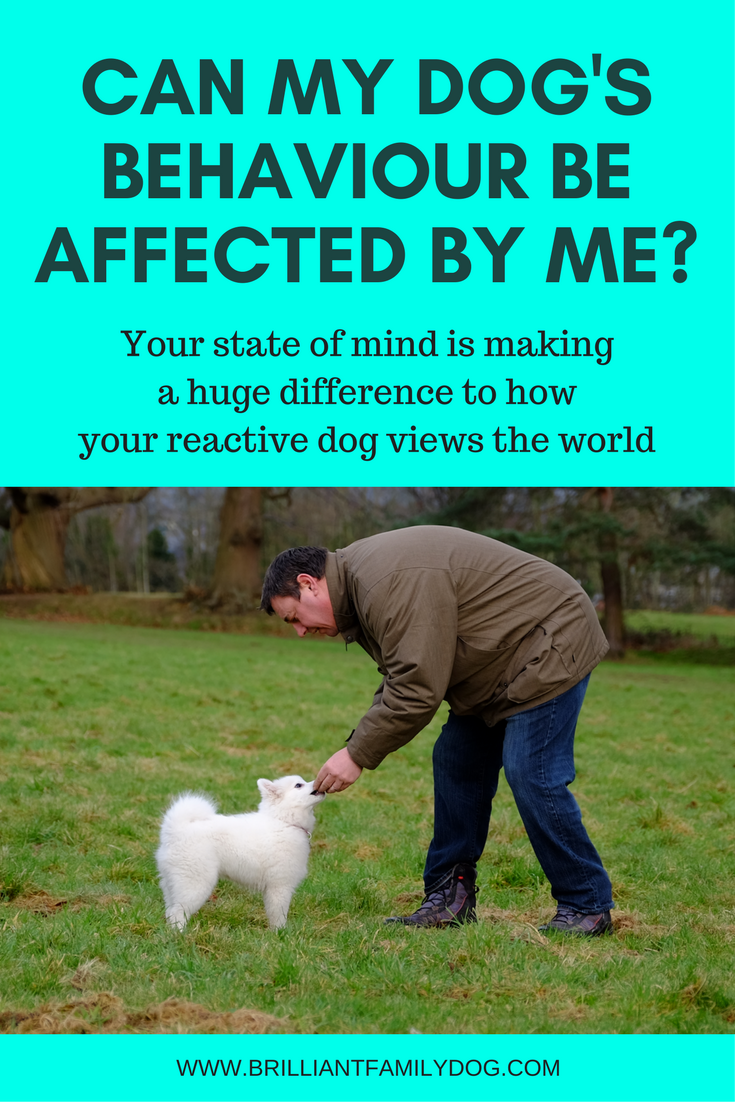
Can my dog’s behaviour be affected by me?

When people have a problem with their dog, they tend to see it as a problem with their dog. 

But it takes two to tango! And if your dog is presenting “problem behaviour” you can bet your boots that you have something to do with it.

Yes - it may start with your dog, but it quickly becomes enmeshed with what you do. And sometimes we can make things worse - when we really, really want to make things better. 

An interesting study was published recently, linking the owner’s hormone levels with the hormone levels of the dog in their charge. We’re talking here about Cortisol, known as the “stress hormone” because it’s released during stress. It operates the same way in the dog as in us.

The study, which you can see here, goes into great scientific detail about the links between our anxiety and the anxiety of our dog. Suffice it to say, that if you’re worried, your dog will be worried. And if your dog is worried, then you will be worried. An unholy vicious circle that causes poor behaviour to escalate.

That is, until you know how to handle the situations which have up to now been stressful for you. Once you know what to do, and how to lessen the stress for your dog, your own stress levels will automatically fall. 

Training people and their dogs together

What I find fascinating is how strong the link is between owner and dog. Never be tempted to say “Oh, it’s just a dog.”

This bond between dogs and humans is what enables the astonishing feats which we are beginning to take for granted - an assistance dog being able to predict an impending attack in an owner who suffers from certain conditions, for example. Seizure Alert Dogs help many people manage their epilepsy. And there are other diseases which cause dangerous imbalances which these dogs can anticipate, giving their owner the time to find a safe place and take their medication.

So if this link is so strong between us and our pooches, it brings into question the idea of having someone else train your troublesome dog for you.

The best trainers (by that I mean enlightened force-free trainers who understand the science of Learning Theory and what actually makes beings tick) spend a lot of time training the owner to view their dog differently. Some of my private training sessions, for instance, focus almost entirely on the owner’s state of mind. Any training I do with the dog is there to help the owner understand how to relate to their dog, rather than me training the dog for them.

And this calls into question the popularity of residential training for dogs - sending the problem dog away to a trainer who will fix the dog for you. It may be effective insofar as the dog can be taught new ways to respond to what he previously found overstimulating or frightening. But if handed back to an owner who has not had the benefit of this training - for themselves, not for the dog - there is not going to be very much change.

A quick handover session is not going to be enough to fundamentally change how a person views their dog - or their dog’s supposed “problem behaviour”. It’s no use doing magical training with the dog if the person the dog has to live with has not changed.


For your dog to change, you need to change


Learning to cope with a dog’s “problem behaviour” - often the dog’s inability to function freely in our world, manifested as reactivity or anxiety or aggression - needs a fundamental shift in the owner’s perception. If you don’t understand why your dog is kicking off at the sight of an advancing person, or a piece of litter on the ground, you will be caught unprepared and unable to change the situation. That’s enough to make anyone anxious! 


Want to learn what Lacy learnt? Get our free e-course here and get started!

THIS E-COURSE IS A BONUS FOR YOU WHEN YOU SIGN UP TO RECEIVE EDUCATIONAL EMAILS AND OCCASIONAL OFFERS FROM ME. YOU CAN UNSUBSCRIBE AT ANY TIME.
Privacy Policy

Control is not understanding

In society, our response to someone misbehaving is to put more controls on them. Restrict them, restrain them, prevent them. And so when confronted with a problem with our dog, we can have a knee-jerk reaction and follow the same process. 

But more control is not the answer!


I don’t want to have to control my dog - I want my dog to control herself.


Teaching your dog to control herself is going to require understanding from you - understanding what the problem is exactly (it may not be what you think it is - dogs are not humans) and why your dog is doing what she’s doing. Only then are you in a position to effect a change.

Most of us have busy lives. We got our pet as a companion to make our days more enjoyable, not to make them harder! So perhaps the easiest way for you to make the changes you may feel are necessary, is to find yourself a first-class, well-qualified, force-free trainer who will be able to teach the both of you. 


All “trainers” are not created equal

You’ll need to do some research to find someone reliable - but they are  there. You’ll find a list at the end of this post which will get you going in the right direction. Avoid anything that talks of Pack Theory, Dominance, or (the worst deception of the lot) “Balanced training”, which effectively means that they reward with one hand and punish with the other. 

And if you’re naturally an anxious person - think how learning how to alleviate your dog’s anxiety will help you to relax and feel better able to cope. Now your dog really will be fulfilling the role of companion and helper! You can both forge forward together.


You can start off looking for help with a free email course here, and you’ll find some very accessible books (no science or jargon!) right here.

As ever, add your thoughts in the Comments below, or contact me direct here.


Is your dog throwing up more challenges than you anticipated? Watch our free Masterclass and find how to change things fast!

For your dog to change you need to change
I don’t want to have to control my dog: I want my dog to control herself

Books to help Growly, reactive, fearful, and aggressive dogs


I'm excited to be able to announce the release of my new book series! 

Essential Skills for your Growly but Brilliant Family Dog

Many of you have been waiting for quite a while - so now your patience is rewarded. You can read all about them under the Books tab at the top of the page.


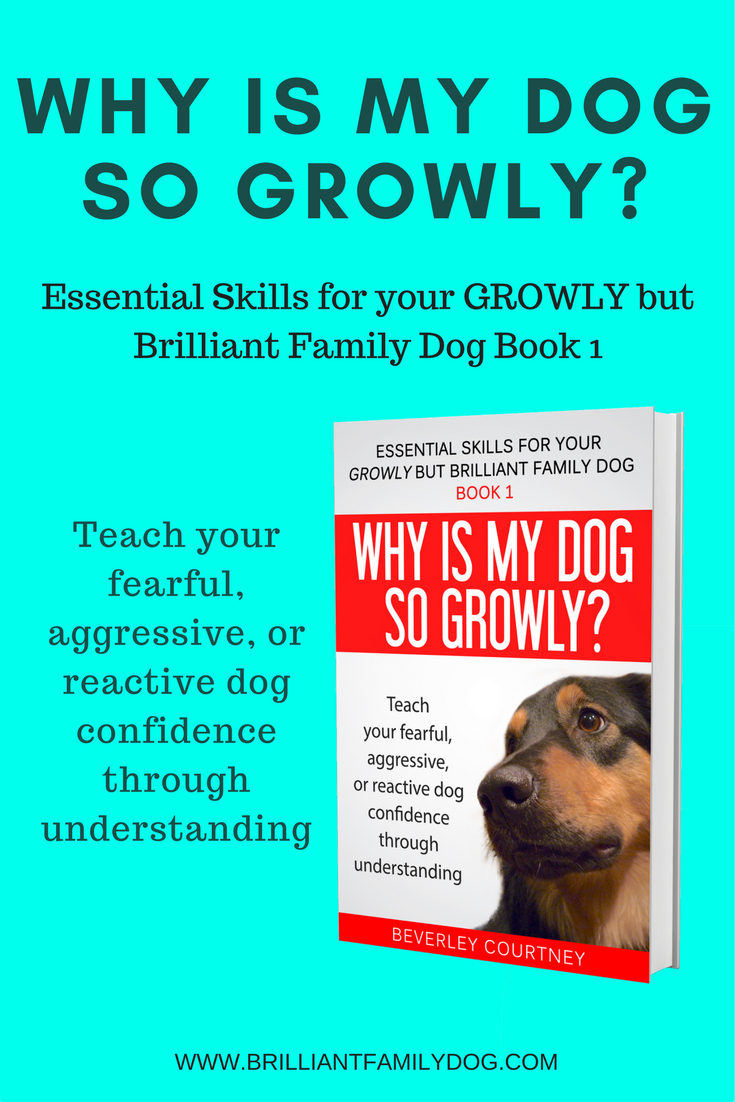
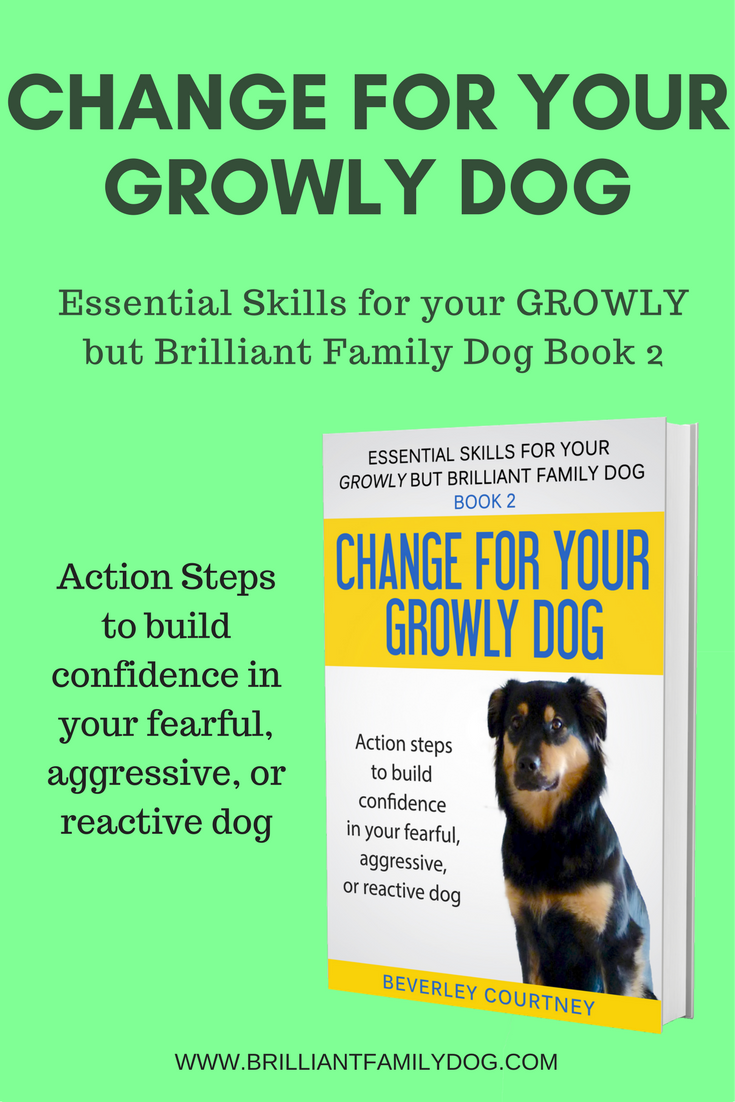
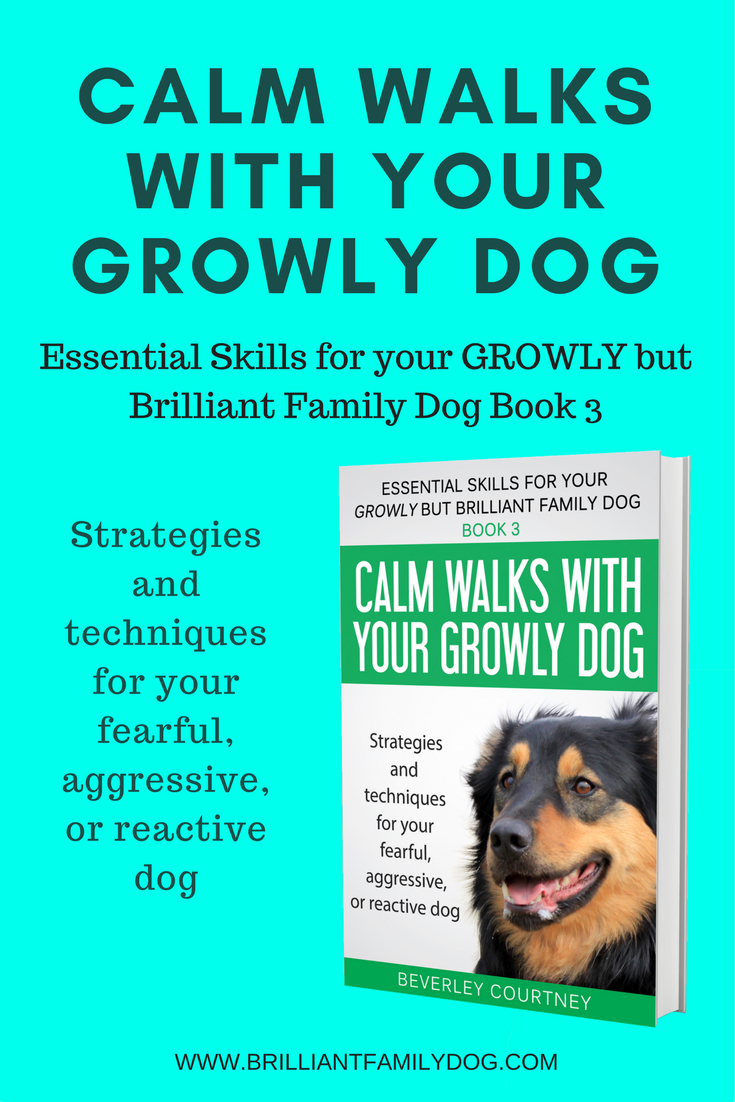
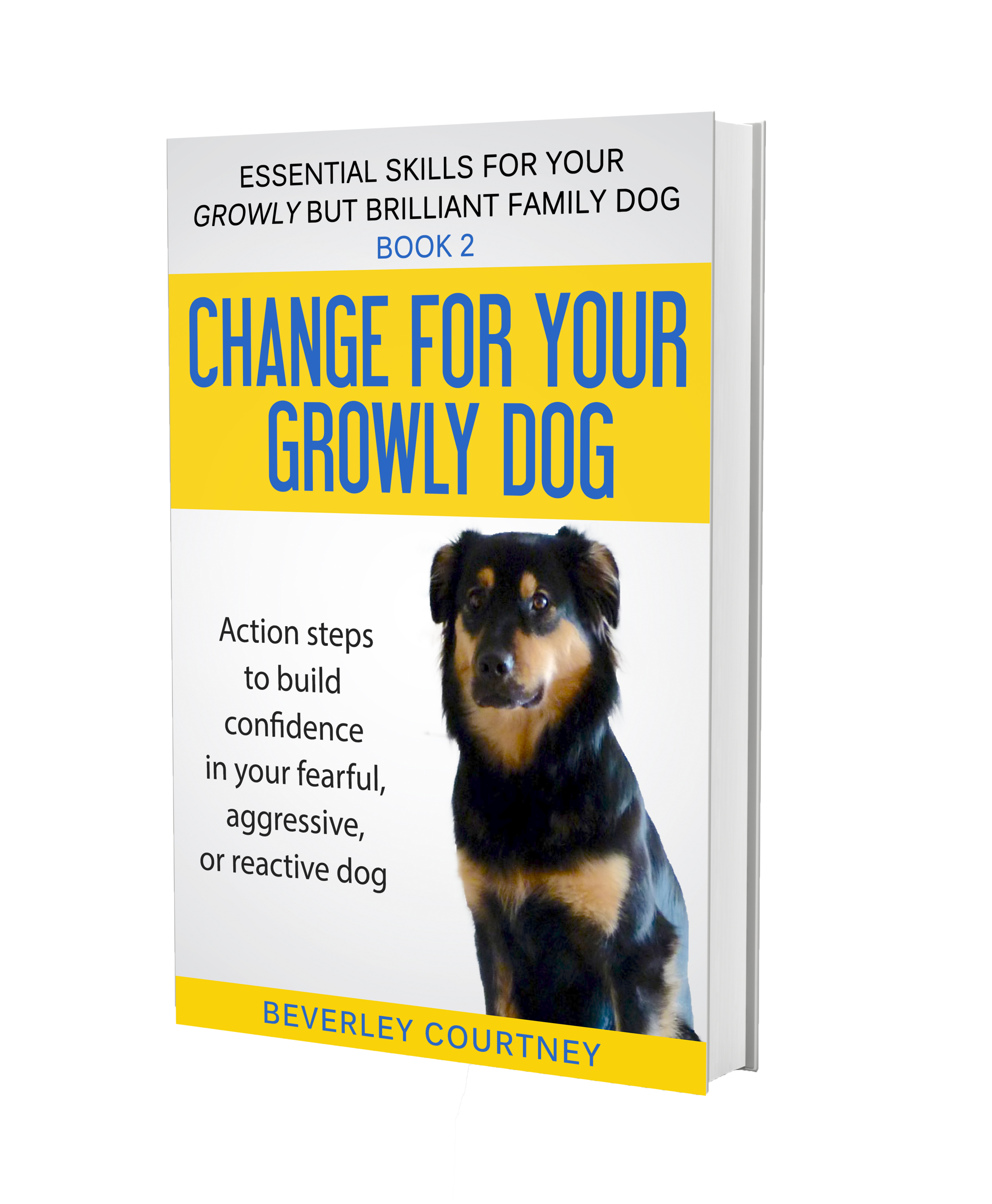
You'll see just how they can help you understand your Growly Dog - why she's doing what she's doing (that's all in Why is My Dog So Growly? Teach your fearful, aggressive, or reactive dog confidence through understanding (Essential Skills for your Growly but Brilliant Family Dog, Book 1) - and how you can change things simply and fast - Book 2 is called Change for your Growly Dog! The third book in the series Calm Walks with your Growly Dog gives you solid techniques for making your walks calm and joyful once more.


You can get them in e-book or paperback format - and no, you don't need a special gadget to read them. Check out Amazon for their free Kindle app which enables you to read any e-book on any device.


They were carefully "tested" on people just like you - who have a dog they love dearly, who is a pet inside the house, then grows horns as soon as you go out!


Have a look at what these readers thought: 


I found the books remarkably accurate with respect to the behaviours that you have outlined. It was like you have been living here and observing our dogs’ behaviour! The way you explain how to train the dogs is in a no-nonsense way that doesn't preach but actually empathises with the problem at hand.

Nazia and her five dogs


I am thoroughly enjoying the books and learning a lot. Really felt as if you were personally talking to me.

Carolyn and Jess


I have enjoyed reading your growly books, and I have learnt an awful lot about dog behaviour. There is so much information in these books that I can see I will be reading them again and again.”

Debbie


I'll let the books speak for themselves


Essential Skills for your GROWLY but Brilliant Family Dog - Book 1
Essential Skills for your GROWLY but Brilliant Family Dog - Book 2” /></div>


<div style= Essential Skills for your GROWLY but Brilliant Family Dog - Book 3

Can my dog be stressed? Part 2

This post was first published on positively.com and is reprinted here with permission.

Here is the second of three articles based on excerpts from my book, Essential Skills for your Growly but Brilliant Family Dog, Book 1: Why is my dog so growly? - which points out an area which will be affecting your dog mightily. Read the first excerpt here.

While you’re doing your best to improve the situation and you take a look at what may be making things worse, you cannot overlook stress.

  • Stress causes reactions to be exaggerated

  • Stress causes us to snap

  • Stress wears us out

Here’s another area of your dog’s life that may be building stress that may surprise you.

2. Not enough sleep

This one floors so many people! Adult dogs need to sleep 17 hours a day for mental and physical stability. 17 hours a day! Is your dog getting anywhere near 17 hours a day? If your dog paces and runs, chews and barks, jumps and dives, plays and chases all the time at home, he is not living the carefree life you may imagine! I have seen the dramatic improvements that result from getting this one right.

The ability to switch off, to relax and restore, is much sought after by people with enormously busy schedules and responsibilities. The most successful build naps and quiet time into their day as a matter of course - and that downtime is inviolable! They have learnt its importance.

Teaching your dog how to switch off is essential to his mental wellbeing. Some dogs don’t need to learn this! Cricket the Whippet is happy to spend 22 hours a day under a duvet, reserving her activity for mealtimes and short bursts of awe-inspiring speed. But she has an even temperament and no hang-ups over other dogs or people. Nothing even startles her!

But it’s a sure bet that your reactive and anxious dog will keep pacing and worrying and staying on guard-duty all day, unless rest-time is enforced.

Relaxation and sleep

If ever a dog needed its rest and restorative sleep, it’s the growly, fearful, or reactive dog.

Think how you feel when you’re short of sleep and have a challenging day ahead with the family, or at work! You start off on a short fuse, and that may get shorter as the day goes on.

Ensuring your dog gets enough downtime is critically important. It’s often at the root of her troubles. Once she’s getting enough restorative sleep she’ll be better able to cope with all the trials and tribulations of life. As indicated above, dogs need a massive 17 hours of sleep a day for optimal stresslessness. Is your dog getting anything like that? If not, you need to help him into a comfortable routine which does not involve endless pacing and activity.

A quick case study

Have a look at Tim, the rescue Border Collie, who I was visiting to work on his dog reactivity outside the house:

While I was there, it became clear that this hyperactive dog was wearing himself out. For the first twenty minutes of my visit he never stopped. He raced in and out of the room, jumped up my front, my back, chewed my hair, poked the other dog, ran off again, paced … never rested.

So I quickly amended my training plan to include some relaxation work straight away. After some active games to get Tim to engage with me, I started teaching him to slow down and relax. After just five minutes of this, his owner expressed amazement at seeing her frantic dog actually lying down still for more than ten seconds at a time!

When I finished the short session and released him, what did he do? Do you think he went straight back into busybusy mode, panting and racing?

Nope. He just slid onto the floor beside us, and as he lay there his head started to loll, his eyelids drooped, and he was … asleep! To the total astonishment of his owner, who had never seen him sleep in the day.

Want to know what I did to achieve this blissful calm state? See the first book in the Essential Skills for a Brilliant Family DogCalm Down! Step-by-Step to a Calm, Relaxed, and Brilliant Family Dog  to get the exact program. Quite apart from the usefulness of this skill for any dog, anywhere, your reactive dog will hugely benefit.

It's about changing your dog's mental state

Watchpoint: teaching calm and relaxation is not teaching a stay exercise (although you will get a solid stay as a result) with the traditional stern shouting and finger-waving. The object is quite different - to change your dog’s mental state, not to anchor his physical position.

Learning how to switch off can also help with Separation Anxiety. And, of course, your dog will be better able to cope with the challenges he’ll meet outdoors if his nerves aren’t jangling.


Did you find this excerpt interesting? Here's what Book 2 looks like! 

For a free e-course to help remove the stress from your life, and your dog’s life - and news about the new book! - go to www.brilliantfamilydog.com/growly


Can your dog be stressed? Part 2

Can my dog be stressed? - Part 1

This post was first published on positively.com and is reprinted here with permission.

Those of us who have a reactive, anxious, or fearful dog, work very hard to make life easier for them (and us!).

We try this idea and that technique, perhaps with distressingly little success. Some days our dog just seems worse!

Here is the first of three articles based on excerpts from my book Essential Skills for your Growly but Brilliant Family Dog, Book 1 Why is my dog so growly? - which points out an area which will be affecting your dog mightily.

While you’re doing your best to improve the situation and you take a look at what may be making things worse, you cannot overlook stress.

  • Stress causes reactions to be exaggerated

  • Stress causes us to snap

  • Stress wears us out

And there are some areas of your dog’s life that are building stress that will really surprise you.

1. Too many walks

“What!” you squawk! “I thought I had to take my dog out for a walk every single day! I thought I was doing the right thing!”

Well, like so much in life, that depends. It depends on how your dog is experiencing these walks.

A happy-go-lucky dog who loves meeting people and other dogs will relish his daily walks. But that’s not the dog you have, or you wouldn’t be reading this.

It may be that your dog gets sick with anxiety at the very thought of a walk. The walk may consist of you getting upset or telling him off while he runs the gauntlet of narrow paths, fence-running dogs, squealing children, dog walkers walking their dog straight towards him, traffic noises, people wanting to pat his head …

This is not an enjoyable walk for an anxious, shy, or reactive dog!

There are two reasons for walking your dog. One is for exercise. The other is for socialisation. Clearly the second reason here is a fail. So cut your losses, exercise your dog with vigorous play in the garden or on solo walks in a relatively dog-free zone - a forest trail, for instance - and save road walks for when your dog is calm and you can avoid most of the hazards.

Energy-burning games

Dog training, new puppy, puppy training, dog behavior | Training your new puppy in challenging activities - how to reduce stress | FREE EMAIL COURSE | #newpuppy, #dogtraining, #puppytraining, #dogbehavior | www.brilliantfamilydog.com

There are great games you can play with your dog to exercise him - without ever having to leave your home. Free running and jumping about till your dog’s sides are heaving, his tongue lolling, and his eyes shining, are what you want for exercise.

If you have outside space you can play with balls or frisbees, reinforcing the connection between you all the while. Tug is a game that uses a load of energy - and you can really go to town on harnessing your dog’s instinctive drives by playing with a flirt-pole.

The joy of these games is that you can use them to build your dog’s impulse control at the same time. He’ll learn never to jump up or snatch the toy from your hand in Tug. And the flirt-pole teaches the collection and restraint needed for a successful bunny-hunt.

And no, it won’t turn your dog into a predatory nightmare. I used the flirt-pole to build Cricket the Whippet’s impulse control around small furry things, with the result that I can call her off rabbits. I have known dogs who were so full-on in their play that their owners had to wear thick gloves to play with them and stay in one piece! Once the dog learns the rules of the game, it becomes rewarding for both parties - and no more need for gloves.

If you have no outside space, you can rely on Tug to tire your dog out - especially as you’re getting him to use his brain in this puzzle too.

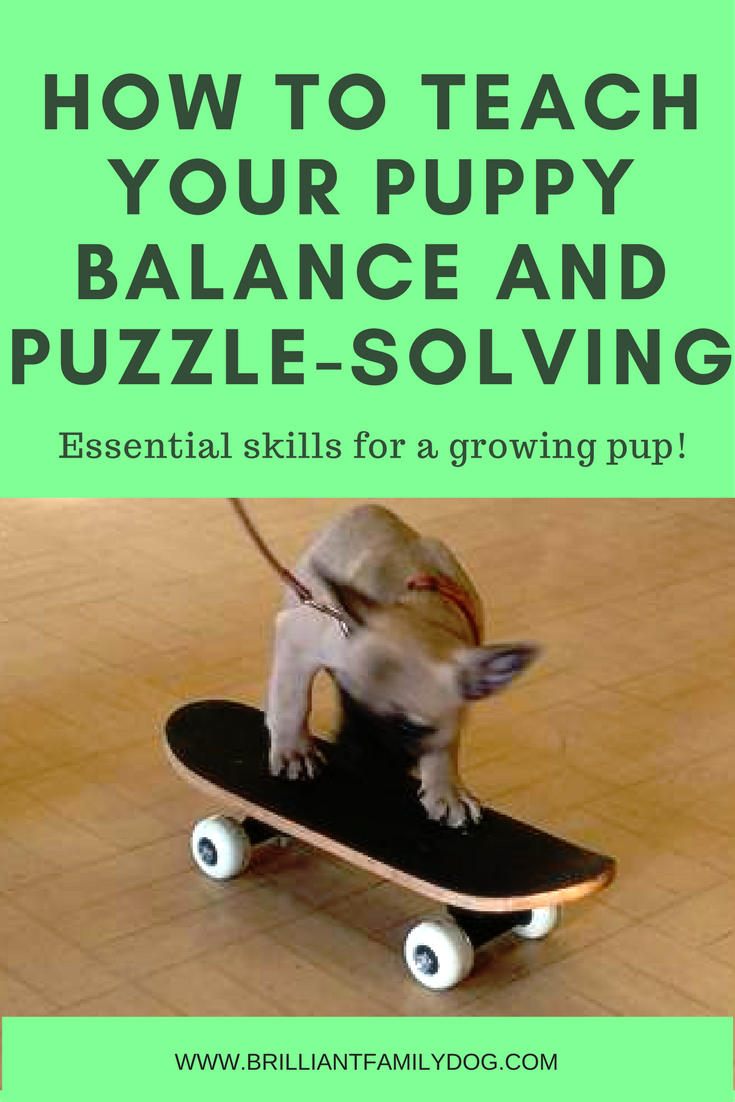
Using wobble cushions and planks will help to build muscles and balance that your dog didn’t know he had. Walking down the stairs, then walking up again backwards, step by step, is a skill which uses lots of brain and brawn.

Hide and Seek is always a popular, tiring, and satisfying, game, especially if you have children to join in. My boys used to love rolling themselves up in their duvets and waiting to be found - which didn’t take long with all the squealing going on!

Choose a good time for an outing

Once your dog is rested from having to face the daily challenge of a walk, you should see some calmness entering the picture.

Then when you feel ready, you can take him out. The aim of Puppy Socialisation is to expose your pup as much as possible to all the experiences of our world - while the puppy enjoys the experience. The same goes for your older dog. Taking him places where he is scared or uncomfortable is just tormenting him without any good resulting: in fact this could make him more fearful.

So find a quiet time when you can take your dog out for a walk, and be flexible with your plans! You can turn away from anything your dog finds upsetting.

The garbage truck is collecting and making a huge noise? Just turn and go the other way. There’s a school outing of excited children heading towards you? Go! Heavy rain is making the traffic very noisy? Head home.

Resist the temptation to say “I always go this way,” and go right, then left, through the street market, across the railway bridge … Your walk can just be the same 100 yards in front of your house repeated several times!

As long as your dog is viewing this as a positive experience, then you are succeeding. Know that you can assess the benefit of the walk - to both of you - and give yourself permission to decide where to walk your dog, and whether to walk at all.

What is the result we want?

We’re focussing on the outcome here - calm walks with a happy and relaxed dog. If your daily walks are not a step in this direction, then you need to cut them right back.


Read the second excerpt here.

Did you find this excerpt of interest? This is what Book 1 looks like.

Click here for a free e-course to help remove the stress from your life, and your dog’s life - and news about the new book!


How to teach your puppy balance and puzzle-solving