How Can You Be So Kind to People and So Unkind to Your Dog?

Dog training, new puppy, puppy training, dog behavior | Your dog is sensitive! Treat your dog as kindly as you would any other member of your family | FREE EMAIL COURSE | #newpuppy, #dogtraining, #puppytraining, #dogbehavior | www.brilliantfamilydog…

It saddens me. So much. 

We see people who are perfectly polite to their fellow humans, who hold doors open and help people with their coats; people who say please and thank you, who don’t interrupt others; who laugh politely at lame jokes and encourage small children. 

All these people are pillars of society, shining examples of the better side of humanity, admired and respected …

Or are they? 

Give them a dog’s leash to hold and you may see another side of them.

They half-throttle their puppy, they’re holding the leash so tight. They yank and jab the leash when the pup is sitting perfectly still. They decide to move so they haul her along behind them. They bark rapid-fire commands at the dog: “Sit. Sit! I said SIT! Off! Down! Siddown!” and when the confused dog sits they say nothing. 

Where have all the pleases and thankyous gone?

I think a lot of this boorish behavior comes from a lack of confidence. 

Somewhere along the line, they’ve seen or heard something about having to show your dog who’s boss. If the dog moves a quarter-inch to the left or the right it must be pushed and pulled (punished, in simple English) to make sure it knows its place.

Their puppy is some kind of alien who must be continually stamped on to prevent it taking over the universe. 

Or perhaps just to stop their dog getting a toehold in their heart?

There’s huge social pressure for your dog to “behave nicely”. And there is an equally huge social pressure in appearing to be in control when the pup misbehaves. To be seen to be doing something masterful. To be the “leader”.

And nowhere is this pressure stronger than in the case of the Growly Dog. You need only remember that your Growly Dog is not kicking up a fuss because he’s stubborn, or obstinate, or nasty, or aggressive. He’s trying to keep away from something he fears. And there are some very simple quick fixes you can put in place to start to change things straight away, and - suddenly appear to be the socially acceptable owner with the socially acceptable dog!


Science vs. Folklore

There’s a lot of mediaeval claptrap talked about how to treat dogs. 

And sadly people who really should know better, listen to it.

It has been proven scientifically over the last eighty-odd years, without any shadow of doubt or question, that the way to get the fastest and most durable results from any animal, humans included, is to work through positive reinforcement. 

Simply put - reward what you like.

Killer whales will happily put their chin on the edge of the pool and hold their mouth open to have their teeth brushed; rhinos will place their hip against the bars of their cage so that a vet can draw blood safely from outside; chickens will perform elaborate “agility-style” routines or act as wartime spotters in aircraft. All for an appropriate reward - a fish or a smidgin of grain.

And we’ve all seen dogs doing amazing things - finding earthquake victims, guiding blind people, doing dance displays, being “ears” for a deaf person, detecting drugs, warning their owner of an impending medical crisis - even flying planes. (Yes, really. Flying planes.) 

These dogs are not different, specially-abled dogs - they’re just dogs - often rejected, rescue, dogs. They’re the same as your dog. Your dog can do so much more than you may imagine!

Where’s the Integrity in this?

So these people who are kind to their family and harsh on their dogs are acting out of character. 

There is a dichotomy between their approach to people and their approach to dogs. (Sometimes they are only polite and friendly to people they know, and strangers fall into the sad camp of animals and aliens.) 

This chasm between the two extremes must cause conflict within.

But there’s an easy way to resolve it.

Give your dog the same respect and understanding you extend to your family and friends.

Your dog has a brain too! And she has feelings! Work with her instead of seeing her as something to be opposed and contained. 

That doesn’t mean you put up with poor behaviour. You need to teach your pup what you want, and reward her when she makes the right choices. If you involve your dog in what you want her to do, she’ll happily oblige - removing the need for the master-slave approach and moving towards a friend-friend relationship. 

The lesson here? Follow your own instincts. There’s no need to listen to tv personalities who tell you otherwise. Don’t have anything to do with so-called trainers who want to hurt or intimidate your dog.

Are we meant to be kind while we’re here? 

If we’re meant to put out kindness, perhaps we are meant to put it out universally, and not just to a select few.
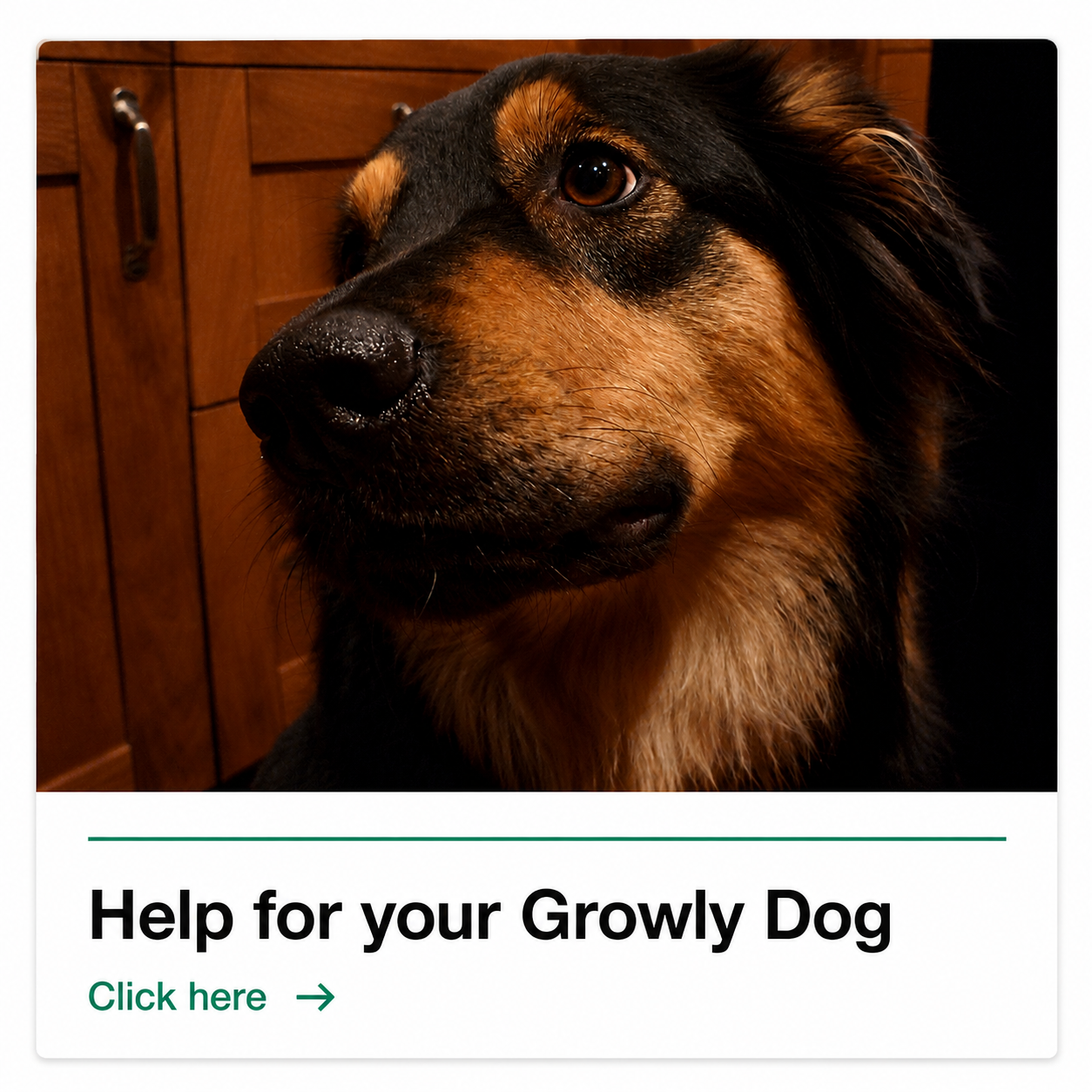


 I can help you so much with your dog! Those of you with difficult, reactive, anxious, aggressive - Growly - dogs will get a great start with our free Masterclass


And here’s where you’ll find a free four-part email course to help you with your Growly Dog.

THIS E-COURSE IS A BONUS FOR YOU WHEN YOU SIGN UP TO RECEIVE EDUCATIONAL EMAILS AND OCCASIONAL OFFERS FROM ME. YOU CAN UNSUBSCRIBE AT ANY TIME.
Privacy Policy

Are you as polite to your dog as to people?

THIS E-COURSE IS A BONUS FOR YOU WHEN YOU SIGN UP TO RECEIVE EDUCATIONAL EMAILS AND OCCASIONAL OFFERS FROM ME. YOU CAN UNSUBSCRIBE AT ANY TIME PRIVACY POLICY

Social Butterflies versus Wallflowers - over-friendly dogs vs. shy dogs

Dog training, new puppy, puppy training, dog behavior | Is your dog a super-friendly dog, or a super-shy dog? Find out how to manage him successfully here | FREE EMAIL COURSE | #newpuppy, #dogtraining, #puppytraining, #dogbehavior | www.brilliantfam…

“Go on. Go and say hello to Aunt Ermintrude. Give her a kiss. Go ON!” 

This last would have been accompanied by a sharp prod between the shoulderblades to propel you forward.

Can you remember this happening to you when you were a small child? You wriggled and squirmed and really didn’t want to have anything to do with this towering, bearded, overpowering aunt.

But if you’d been left to your own devices, curiosity would eventually have got the better of you and you would have started to engage with this strange, mountainous, figure.

So is it with many dogs. 

Some are bouncy, in-your-face, love-everybody, kind of dogs - not in the least bothered by the Aunt Ermintrudes of this world. But many more are quiet, retiring, worried about anything new. The key to this is to strike a balance


The Social Butterflies need to learn a little restraint and thoughtfulness, lest they leap up on the wrong dog and get bitten or terrorised. Or of course they may leap on a shy and worried dog who will think in terror that her last hour has come.

The Wallflowers must be allowed to be Wallflowers! If you give them time to assess from a safe distance, they will gradually start to explore nearer, on their own terms.


The funny thing is that we always seem to want the opposite of what we have! Those with the demented jumper-upper wish they had a calmer dog - continually snapping “Get down!” to their poor dog, who thinks that perhaps he needs to jump higher in order to please his owner. While those with a mouse-impersonator wish they had something more outgoing, and feel as if the world thinks they beat their dog. 


We always want to fit in with society’s view of being able to produce the perfect dog, without necessarily heeding what our dog has to say about it all.


Aren’t all dogs friendly?

This commonly accepted thought completely ignores the fact that dogs are all different! They are individuals, just as we are. Their breeding will influence their behaviour, but there’s huge variation within breeds and types. And we’ve all learnt - through the notorious breed-specific legislation - that you cannot tar all dogs of one breed with the same brush.

Because people notice the exuberant dog more than the shy one, they think that’s the norm. You can’t help but notice the bouncy Labrador with his tail thumping your legs (but there are many quiet, shy Labradors too). Or the half-crazed Poodle who thinks everyone must love him (Coco Poodle? Are you listening?). But In fact the quieter response is the more common one - and probably much better for survival in the wild situation that dogs were evolved in. 

Just because some dogs are in-your-face dogs doesn’t mean that this is how all dogs should be.

And what about responsibility for other people’s dogs?

Let’s say you have one of the bouncy dogs who thinks the world is his oyster and wants to greet everyone. Now imagine that instead you have one of the shy, retiring dogs. Maybe your dog desires only to be left alone, to have peace and quiet to enjoy her walk without interference. Your shy dog could be enjoying a tremendous game with you and your frisbee or ball, and the last thing she wants is someone muscling in on her prize. 

How would it be if you were enjoying a makeshift game of badminton with your family in your local park, and a load of louts came barging in, snatching the shuttlecock, knocking your children over and treading on them, wrecking your game - with their parents laughing at their antics all the while. Nice? I don’t think so.

So if your dog is the super-friendly one, don’t let him rampage all over the place, upsetting calmer, quieter, perhaps older, dogs.

It can take a shy dog several days to recover from an experience like this - really! They may have to stay indoors for days to allow their hormones to settle back down - just as you might if you were in a mild car shunt. It could be a few days before you were happy to get behind the wheel again. This dog’s owner may be upset and begging you to put your unruly dog on a lead. This request, sadly, is often greeted with derision and insults. 

Many owners of boisterous dogs assume that their dog’s behaviour is not only natural, but acceptable.

I’m here to tell you it’s not!

These owners seem to think they have more right to be out walking their dog than others with more challenging dogs. They form this opinion, I believe, because sometimes their unruly dog is greeted by a show of teeth and snarling from the other dog. They assume that this dog must be nasty - aggressive - and therefore to blame for whatever happens. They forget that that dog was quietly minding her own business until their dog landed on top of her! 

Sadly, this usually gives rise to more insults and abuse.

It doesn’t take much imagination to transfer this scene to a school playground. Some children will be playing happily together while others cruise the playground looking for entertainment - often found by annoying the quieter children. Of course, playgrounds are carefully “policed” by school staff, and unacceptable behaviour should be halted immediately, so that the boisterous children can learn some social skills, learn how to treat other people respectfully, and the quieter children can enjoy their quieter life. 

The school playground is like the park

Is this chase enjoyable for both dogs?

Is this chase enjoyable for both dogs?

We don’t have school staff in the park. We’re meant to be grown up enough to manage this ourselves. I know it comes as a surprise to many of the “My dog is friendly” persuasion to learn that many other dogs are not. They are instead nervous, anxious, possibly recovering from an unsolicited attack which - unsurprisingly - has made them suspicious of all dogs. Or they may simply by diffident and self-contained, and not disposed to talk to strangers.

And some of these bouncy-dog owners will be genuinely astonished to learn this! But once you have learnt it, let it inform your dealings with other dog-owners and their dogs. It’s not a dog’s fault if he was attacked. It probably wasn’t his owner’s fault either, but it can have a lasting effect on the victim. It’s equally not a dog’s fault if he was not properly socialised as a puppy, and if he was adopted after puppyhood it’s not his owner’s fault either. 

Most people are decent and honest (in my experience), and they really wouldn’t want to see a child hurt or humiliated by another child’s actions. All they need to do is realise that dogs are as different in temperament as children are, and that some sensitive ones can be seriously upset by another dog-owner’s thoughtlessness.

The quiet, shy dog doesn’t care whether the boisterous dog has good intentions or not. It doesn’t matter if “He just wants to play,” or whether he is intent on tearing the other dog’s throat out. The effect of the confrontation can be the same - causing the anxious dog to get more withdrawn, or - as can often happen - become proactive at keeping other dogs away by putting on a tremendous display of aggression.

How can I help my dog?

So watch your puppy or new dog carefully. Whether extrovert or introvert, be sure to protect them from bad experiences. Allow your boisterous pup to express himself in a way which suits him, while gently teaching him what we would prefer.

And let your quiet observer quietly observe. From behind your legs if that’s where she feels comfortable. When she’s ready, she’ll be able to take much more in her stride.

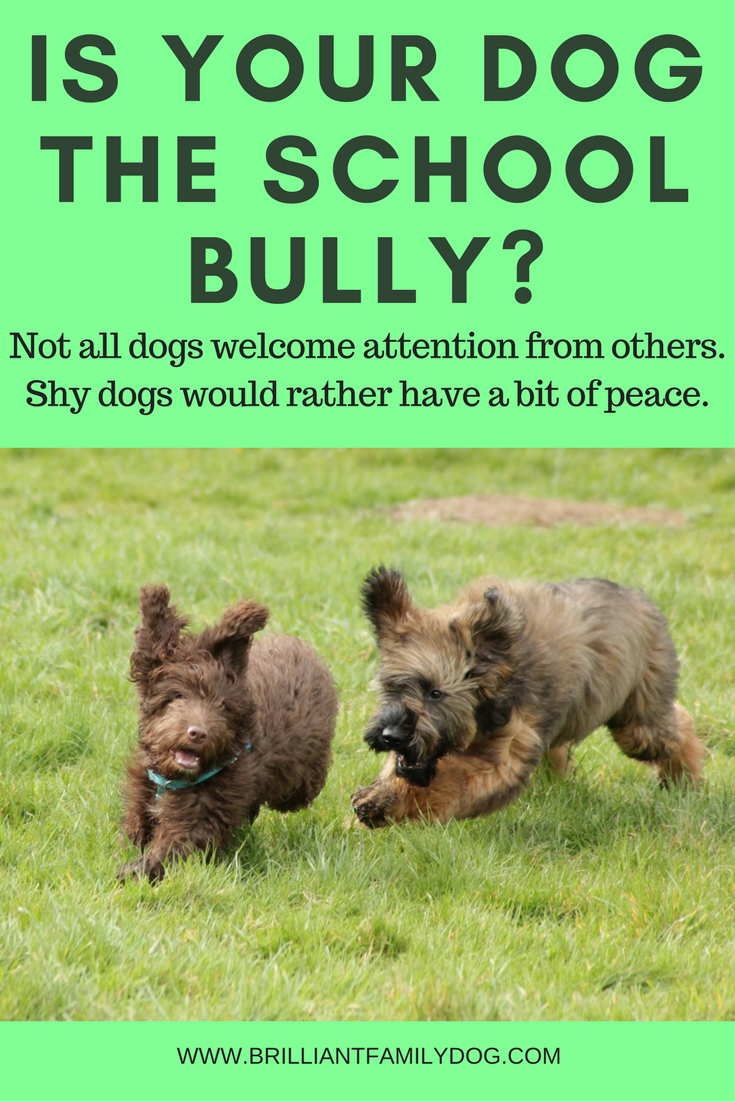
Is your dog the school bully?

And whether you’re the owner of the over-friendly dog or the shy and anxious dog, you’ll find great help in this free email course:

THIS E-COURSE IS A BONUS FOR YOU WHEN YOU SIGN UP TO RECEIVE EDUCATIONAL EMAILS AND OCCASIONAL OFFERS FROM ME. YOU CAN UNSUBSCRIBE AT ANY TIME.
Privacy Policy

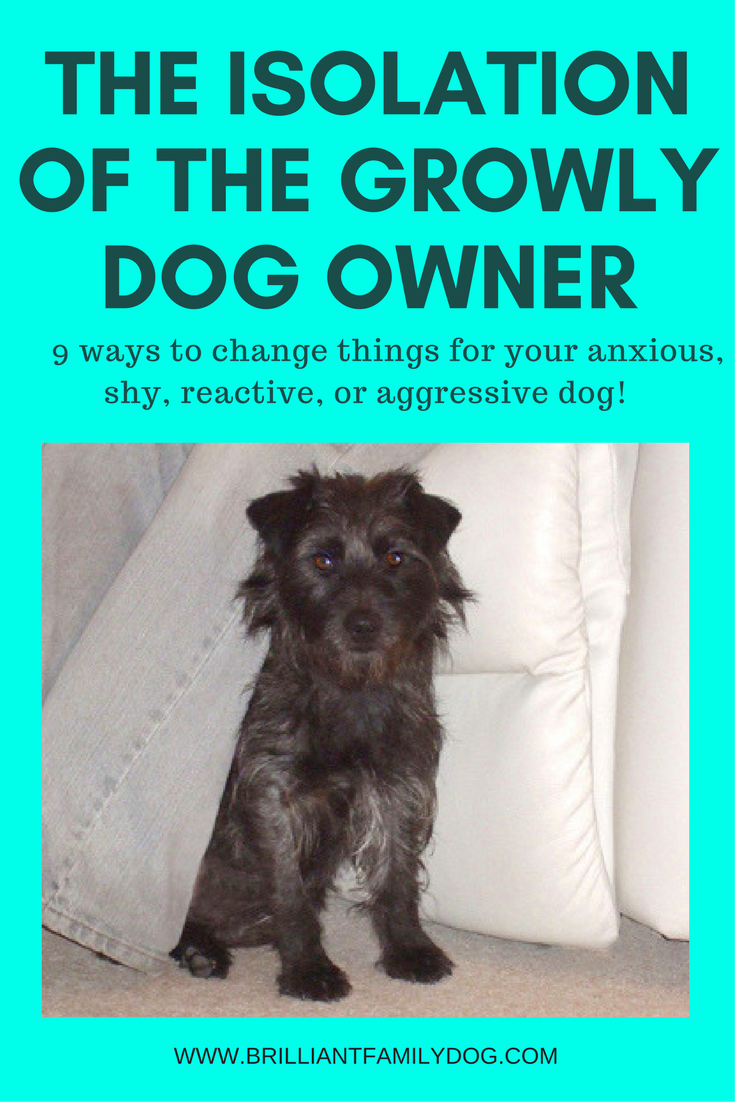
The isolation of the Growly Dog owner - 9 ways to change it all

Reactive dog, aggressive dog, fearful dog, dog behavior | Do you feel isolated with your Growly Dog? You are so not alone! | FREE EMAIL COURSE | #aggressivedog, #reactivedog, #dogtraining, #growlydog | www.brilliantfamilydog.com


  • Does everyone else seem to walk a calm, quiet dog?

  • Do you watch with envy as people walk their “good” dogs without a thought?

  • Do you wish you could go anywhere with your dog and not be embarrassed by her antics?

  • Do you feel a “useless dog-owner” because your dog doesn’t behave as people seem to expect her to?

  • Would you really like a trouble-free dog who you need do nothing with?

I tell you - we are the lucky ones. Those of us who have difficult dogs, growly dogs, aggressive dogs, shy, fearful, anxious dogs - we are the lucky ones. In learning about dogs, their language, their behaviour, we will gain huge insights into dogs in general, our own dog in particular, and the huge gap between what most humans think and what is actually true about dogs.

I feel so alone with this dog

Rest assured, you are not alone! There are many people around with dogs they struggle with. 

  • Some of them walk only at The Hour of the Difficult Dog, flitting furtively about like bats in the dark when they’re unlikely to meet another dog, or person, or cyclist .. or whatever it is that sets their dog off.

  • Some of them have given up and don’t ever walk their dog at all. And if it keeps them all happy, this is a good thing.

  • But there are plenty more who accept that this is the dog they have - not the one they hoped for - and they do their best to help their troubled dog.

Because a troubled dog is what you have. No, it’s not necessarily your fault (though you may have made mistakes along the way - as we all do - that has made it worse). But your dog is troubled all the same. Don’t fret over past mistakes, or wrong advice followed - start from where you are now.

You began with a puppy

However carefully you may have covered the socialisation, familiarisation, and habituation for your puppy up to the age of 14 weeks, something may have happened later (a car crash, a dog-attack, an explosion …) to make him reactive. Or it may just be the way he is. Guarding breeds in particular are bred to be alert to every movement and sound, and … despatch it! And herding breeds have extra sensitive hearing.

Possible complications with a rescue dog

Smidge in her safe place

Smidge in her safe place

It may be that you wanted to give an unwanted dog a home, and that is indeed a very good and laudable motive. But the dog you chose may have arrived with baggage from its previous life which you now have to deal with. What confuses some new rescue-dog-owners is that their dog seemed “fine” when he first arrived, and it was only a month or two later that he “became aggressive.”

There are two issues here. 

  1. It’s not aggression, it’s usually fear. More below.

  2. It can take 2-3 months for a dog to settle in his new home.

Before that he may be shut down and quiet, nervous of putting a paw wrong. Just like you would be if you moved into my house - it would be “Where does this cup go?” and “Is it alright if I sit here?” After a couple of months you’d have your feet on the table and be leaving cups all over the place! You’ve settled in and are behaving naturally. So that’s what your dog is doing - settling in and behaving naturally.

So why has my dog become aggressive?

This isn’t really the right question. “Being aggressive” is the interpretation you have put on her behaviour. What you want to look at is

  • why your dog does what she does,

  • when she does it, and

  • what you can do to change things so she doesn’t have to do it any more.

If something frightening approaches you, you have two choices - fight, or flee. If you are attached to someone else you are unable to flee, so you’re left with fight. So it is with your dog, who is on lead and unable to make the choice to scram. 

You (like your dog) may really not want to fight. Fighting is dangerous, can escalate quickly, and can maim or kill. So you’d probably use your voice first to try to keep the dangerous thing away: “Get away! Leave me alone! I’ve got a knife!” 

And your dog does the same: “Look! I’m ferocious! Keep away! You’ll get bitten!” and he does this by leaping about, raising his hackles, making himself look as big and tall as possible, swishing his tail up in the air, growling, snarling, and barking. 

Very often, this works for your dog. Either the other dog backs off, the other dog’s owner takes him away, or you - in your confusion and embarrassment - haul your dog away, quite possibly joining in with the barking by “barking” yourself.

Now you are upset, your dog is upset, (maybe the other owner is upset, but they may perhaps learn not to walk their dog straight at strange dogs in the future) and your walk has become a sorry mess.

Get your free email course here and get going with your new life!

THIS E-COURSE IS A BONUS FOR YOU WHEN YOU SIGN UP TO RECEIVE EDUCATIONAL EMAILS AND OCCASIONAL OFFERS FROM ME. YOU CAN UNSUBSCRIBE AT ANY TIME.
Privacy Policy

When you got your dog you envisaged happy walks in field and forest, you thinking about birds and poetry and sunshine, and your dog trotting at your heels, keeping you company. Or maybe you’re the social type who foresaw walks with other dog-owning friends, days at the beach with the family, visits to cafes to chat, your dog being admired for her good behaviour. 

Instead, you’ve got this maniac that makes walks a misery. 

And no doggy friends for you.

All is not lost! You can start making changes with your dog right away!

So instead of retiring hurt and licking your wounds, have a look at what you can do to change things right now.


1. Give your dog a total break from walks for 3-7 days. If every outing is as stressful as I described above, you’ll both welcome the chance to chill and resurrect your fun relationship together.


2. Be sure you are not using any aversive dog equipment (broadly speaking, you want to have your dog on a comfy harness with a double-ended lead attached at front and back). 


3. If you’re afraid your dog may bite, muzzle-train him slowly so he loves his muzzle. This will relax you enormously. Extra benefit: you’ll find this helps to keep people away.


4. Choose quiet places to walk him where you’re unlikely to meet his “triggers” (the things that set him off)


5. Look into hiring a private dog walking field near you - fantastic resource for the growly dog owner!


6. Seek out a force-free trainer to help you. Any use of aversive equipment, or training by intimidation and control will work against you and make your dog worse. You have been warned! I am frequently helping people whose dogs have been made worse by one of these so-called “trainers”.


7. Start learning about dogs, their behaviour, and - very importantly - their body language, which is sophisticated and as clear as day, once you can “speak” it. Beware the gaping maw of the internet, which can take you down many rabbit-holes! Find a force-free trainer and study their reading list.


8. Find out what your dog actually loves doing. This could range from lounging on the sofa with you, to playing Hunt the Toy in the garden, hide and seek with the children in the house, performing tricks, helping you about the house with tidying up … Look at what she’s telling you she likes!


9. Know that you are not a “useless dog-owner”. You have simply found yourself presented with a problem you didn’t know how to solve. But you do now! Onward and upward.


And, as I said above - we are the lucky ones. Those of us who have difficult dogs, growly dogs, aggressive dogs, shy, fearful, anxious dogs - we are the lucky ones.

For in our efforts to help our dog fit into our world, we will build a bond with our dog that can never be broken.


Start your new direction with this free email course that will take you through the steps for change - all force-free, of course, without intimidation or nasty gadgets.

Then hop over to take a look at the new online course that will take from where you are now to where you want to be with your dog.


Resources:

  1. Watch our free Masterclass to change life with your Growly Dog

  2. Online courses

  3. 2Hounds Freedom harness

  4. www.brilliantfamilydog.com/books

  5. www.brilliantfamilydog.com/growly-dogs

  6. www.xtra.dog 

  7. www.muzzleupproject.com 

  8. www.sue-eh.ca

  9. www.controlunleashed.net 

  10. www.grishastewart.com/cbati-directory

  11. www.apbc.org.uk/help/regions  

  12. www.apdt.co.uk/dog-owners/local-dog-trainers 

  13. www.petprofessionalguild.com/find-a-ppg-professional

  14. www.karenpryoracademy.com/find-a-trainer 

  15. www.imdt.uk.com/find-a-qualified-imdt-trainer

  16. www.ccpdt.org/dog-owners/certified-dog-trainer-directory


The Isolation of the Growly Dog owner

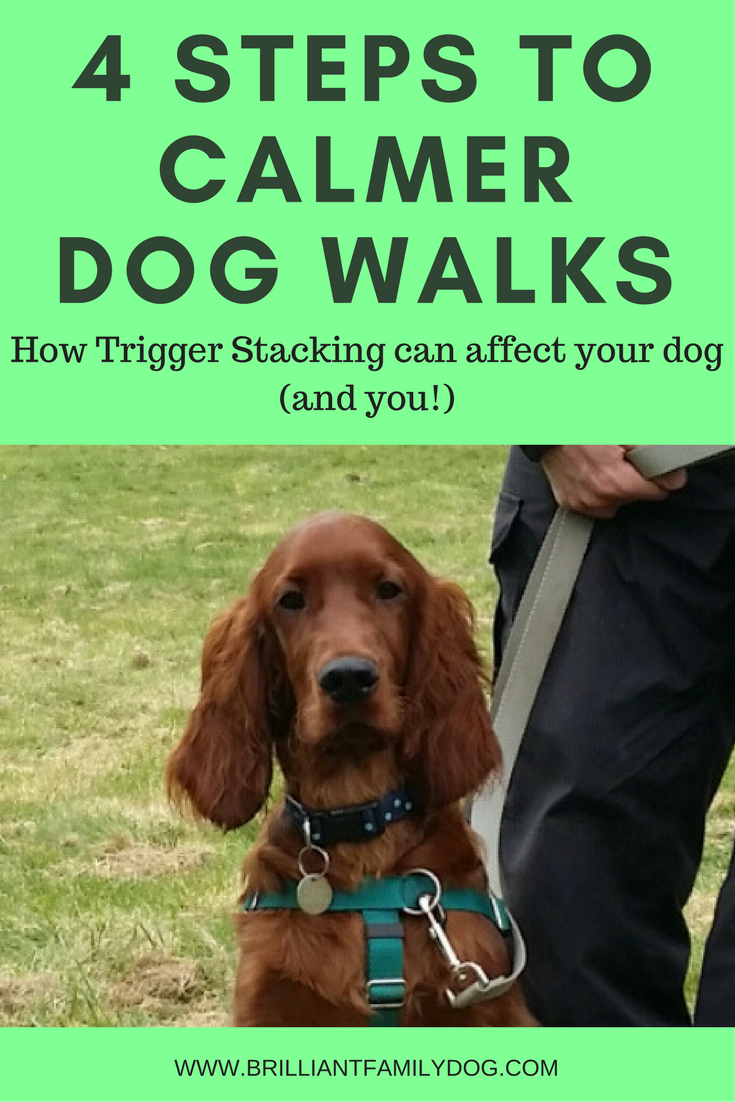
Why does my dog bark at some dogs and not others? (4 steps to calmer dog walks!)

“I can be walking along the road and pass five dogs without my dog saying a word. But along comes the sixth and she goes mad! It can be a big dog or a small one - I can’t work out a pattern. Why?

This is a very observant question - and one which causes people a lot of puzzlement.

Why do some dogs wind up my dog - and not others?

What’s happening is a combination of rising hormone levels - known as Trigger Stacking.

Trigger Stacking is the name given to the heaping up of things that worry your dog, till she becomes overwhelmed. It could be an approaching dog + a child running by + a bang or scream … 

Maybe she could cope with these things one at a time, but all at once or in quick succession is too much.

If you were working against the clock to prepare dinner and the doorbell rang - you could cope with the interruption and carry on. Supposing while you were going to answer the door, the phone started ringing - and then your saucepan boiled over - Aaargh! Too much! You are now fraught and frazzled. The next person you speak to will get snapped at! This is trigger stacking for us.


Hormones - don’t you love ‘em!

We are driven by our hormones, as are our dogs. 

Fear is the driving force here, and that builds up the cortisol levels in the body. 


The more afraid your dog gets, the more afraid she will get.


So you’re walking along the road and you pass a dog coming the other way. Your dog may get a bit antsy, or she may just put her head down and get past without even looking at the dog.

Phew! We got past!

Now another one is coming! This time your dog glances at it and then looks away. Perhaps you give her a treat for ignoring it.

Now there’s another! Oh no - and another!

Your dog is by now getting quite tense. How long can she hold it together?

The next dog that comes along happens to be a bit “on his toes”. Perhaps he’s a young dog with few social skills, so stares at your dog and bounces around on his lead. Perhaps he lowers his head and starts walking slowly and deliberately.

Whatever it is, your dog has reached her limit.

This dog is the last straw!

So she barks and lunges on the end of the lead in an attempt to keep the other dog away.

Between your embarrassment and the other owner’s alarm, this probably works! Either the other dog goes away, or you do. Remember,


Dogs do what works


And if the barking and lunging did the trick this time, your dog now has a way to keep other dogs away. Until we give her some better strategies.


So what can I do?

When we are blessed with a fearful and anxious dog, our main focus should be on keeping her calm. 

For this to work, you need to keep yourself calm too! If, for instance, your dog gets upset by dogs 20 yards away, be sure to keep them at least 21 yards away - by anticipating and moving away yourself.

That may interfere with your accustomed walking pattern. But if your walks are punctuated by outbursts which always catch you out, wouldn’t it be worth making some changes to improve matters?

A walk may become 50 yards this way, then 10 yards that way, followed by 30 yards another way, then back to the first direction for 100 yards … and so on. You’re not trying to get anywhere, your objective is to keep your dog calm. 

While it is true that the more afraid your dog gets, the more afraid she will get, the opposite is also true:


The calmer your dog stays, the calmer she’ll be.


Want some help getting this right? Watch our free masterclass and spot the three mistakes you may be making - without realising it! - which cause your dog to act up worse

Four steps to changing this

1. Keep your distance

Distance is very important to dogs. If they’re uncomfortable about anything, the best thing to do is to put some space between you and whatever it is they’re worried about. The stress of being too close can build in your dog till it reaches the level where it overflows.


2. Avoid Tunnels

Remember that a narrow path or roadway lined with trees, hedges, walls, parked cars, is a tunnel to your dog, with no escape possible. Always ensure there is plenty of space around you, and note possible turning points so you can dodge out of the way when you see another dog coming, and give him plenty of space.


3. Take a dog’s-eye view

Reactive dog, aggressive dog, fearful dog, dog behavior | Why does my dog bark at some dogs and not others? | FREE EMAIL COURSE | #aggressivedog, #reactivedog, #dogtraining, #growlydog | www.brilliantfamilydog.com

Sounds: Traffic noises - especially in the rain. Big lorries clattering by? Children shrieking? People shouting? Dogs barking? Builders banging and whacking? Rubbish blowing about in the wind? Thunder? Cyclists speeding by?

All these things can build stress in a young or fearful dog. 

Once you get good at noticing these “triggers”, you’ll start to develop a sixth sense about what is going to be the last straw for your dog, and take early evasive action, while you’re still on straw no.1 or straw no.2.

Sometimes you could just sit on a bench, and watch the world go by without having to fight your way through it. Lots of tasty treats posted into your dog’s mouth will help to calm him and change his view of the world as being a scary place. As you see him begin to relax and stop scanning the environment and focus more on you, you’ll be ready to set sail again.


4. Keep your hands soft on your long comfortable lead

It’s very easy to react yourself before your dog does! If you clutch the lead tight and start breathing fast, your dog will be saying “What? Where? Who have I got to bark at?”

Sometimes you can turn and walk away happily. In this case be sure not to pull or yank the lead, which will only add to the stress and probably trigger an outburst even sooner! Practice holding the lead as if it were attached to a baby, and use only gentle and soothing actions.

Giving your dog freedom on lead - instead of shortening the lead and keeping him close up against you - will allow him to express his own body language to the oncoming dog. It’s hard to look nonchalant and friendly if your head is being held up in the air. The freedom to look away at the crucial moment can be all that’s needed to defuse a simmering situation.


What are these dogs saying to each other?

To go back to the first five dogs who did not appear to upset your dog, there is another reason why they didn’t elicit an outburst.

They probably had more relaxed body language.

Dog Body Language is a fascinating subject. It’s how dogs communicate in the absence of the words that we humans have.

Here are a couple of videos which give you an idea of the huge range of language dogs have:


http://www.youtube.com/watch?v=bstvG_SUzMo

http://www.youtube.com/watch?v=00_9JPltXHI


Watch these carefully and you’ll be armed with information that will help you decide whether 21 yards distance from an oncoming dog will be enough, or whether this is the moment you about turn and head off happily in another direction.

If we’re going to communicate with someone from another country who has no English, we’re going to need to learn their language. And as for another species without any verbal language - we need to make the effort to understand their clear signals. Some of these signals are subtle to the point of vanishing, but they are clear enough to another dog. 

A lot of doggy mysteries will be explained to you once you understand what your dog is trying to tell you! So be sure to watch those brief videos - your crash course in Dog - and see what a difference it will make to your dog’s happiness and your walks.

Meanwhile, head here and get your free email course to help change your Growly Dog's walks for good!

And there’s lots of help for you in the Essential Skills for your Growly but Brilliant Family Dog book series.

For a thoughtful, kind, and dog-friendly way of working with the dog in front of you (rather than the one you think you wish you had!) check out the books here.

4 steps to calmer walks

Keen to learn more to help Growly Dog? Get our free e-course here and get started!

THIS E-COURSE IS A BONUS FOR YOU WHEN YOU SIGN UP TO RECEIVE EDUCATIONAL EMAILS AND OCCASIONAL OFFERS FROM ME. YOU CAN UNSUBSCRIBE AT ANY TIME.
Privacy Policy

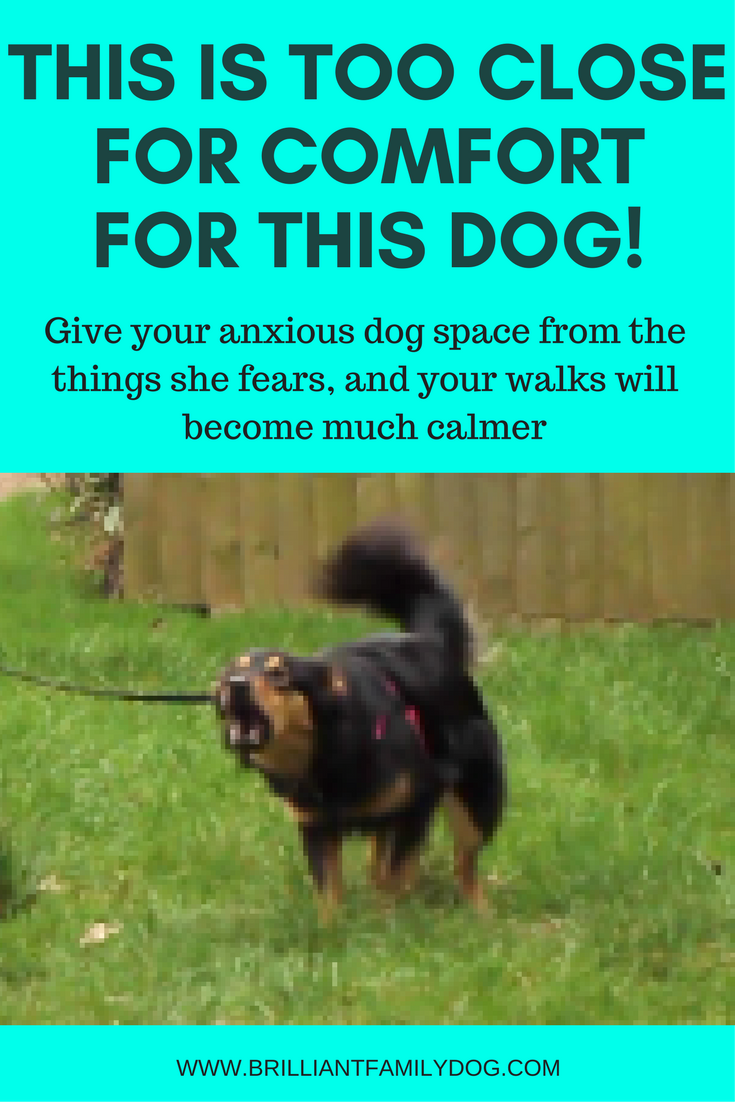
How close is too close for your dog?

Let’s think of ourselves first.

  • How close is too close to your child?

  • How close is too close to your friend?

  • How close is too close to your postman?

  • How close is too close to a stranger asking directions?

  • How close is too close to a drunk, shouting in the street?

Clearly, you’ll have a different answer for each question. Our personal space requirements vary from situation to situation. They also vary across the planet.

Get your free email course here!

THIS E-COURSE IS A BONUS FOR YOU WHEN YOU SIGN UP TO RECEIVE EDUCATIONAL EMAILS AND OCCASIONAL OFFERS FROM ME. YOU CAN UNSUBSCRIBE AT ANY TIME.
Privacy Policy

The Japanese, for instance, prefer a larger personal space than many Westerners are used to, and it may not be breached by touching! That is the height of insolence.

So the personal space we have which is an essential survival mechanism can also be affected by culture and learning.

Our dogs are just the same!

What’s sauce for the goose is sauce for the gander

Dogs too have a personal space. 

But because dogs are so fast, their personal space is much larger than ours. And the cultural differences come in too, in the form of breed characteristics. 

Companion dogs who have been bred to stay close to their owners will tend to manage with a smaller space. If you have a guarding or guardian breed - then they alert to anything that shouldn’t be on or near their “patch”. Their space is huge. 

These are factors you need to keep in mind when out and about with your dog.

What is an acceptable space for you to pass someone on the street, may not be acceptable to your dog. You will have to teach her that the passing person has been assessed by you as non-threatening, and does not need to be jumped up on, barked at, or grabbed while passing.

Fitting into our way of life is not straightforward for our dog. We kind of assume they’ll just come ready-programmed to respond the same way we do. But we have been learning for twenty years (or many more!) how to relate to our fellows, and have a headstart by virtue of the fact that we are the same species. 

Teaching your dog the social skills necessary to fit in with our world is essential. But it shouldn’t go against your particular dog’s natural instincts. You chose that breed because of her characteristics. So you need to work with them to achieve a dog who is comfortable in the places we take her.

And how about other dogs?

When it comes to your dog’s personal space with regard to another dog, then that space is bigger again! 

So passing someone on the street within your personal space may work for your dog. If that person has a dog with them, it may change things entirely! 

If your dog tends to shoot first and ask questions later, then changing your response to passing people with dogs will make your walks infinitely more comfortable and stress-free. You need to develop a kind of radar scanner on the top of your head, which will pick people and dogs out at a great distance, giving you time to plan your getaway. While your dog is seeing the oncoming dog, you can post some quick treats into her mouth, then with a cheery “Let’s go!” turn and head along your escape route, giving more treats all the while. 

You can simply cross the road, wander down a side-road or driveway, or even turn and go the other way till there is sufficient space to pass. Playing a quick focus game with your dog will help.

As any tension we feel in a situation rapidly passes down the lead to our dog, then minimising our stress levels will help to lower hers. So, instead of seeing a dog approaching, hoisting the lead up to your chest and winding it six times round your hand as you gasp - sure to get your dog saying “Who? Where? What have I got to bark at?” - try doing the exact opposite:


When you see a dog coming, your first response will be to relax your shoulders, relax your hands, and breathe out,


Just this new habit alone will make a tremendous difference to your walks. It’ll help to keep your dog calm, and when your dog is calm - you can be calm. And when you are calm - your dog can be calm! It’s a virtuous circle you want to get into, and it starts with you changing your response to an oncoming dog.

That response is totally understandable, if in the past an oncoming dog has resulted in your dog reacting - barking, lunging, as if her life depended on it. But, while understandable, it’s not helpful!

Maybe your walk will take a little longer with these detours. As long as you’re both enjoying it - who cares?


For some solid advice on how to manage your reactive dog so that walks are less stressful all round, get your free email course here.

And there’s lots of help for you in Essential Skills for your Growly but Brilliant Family Dog: Books 1-3: Understanding your fearful, reactive, or aggressive dog, and strategies and techniques to make change


This is too close for comfort for this dog

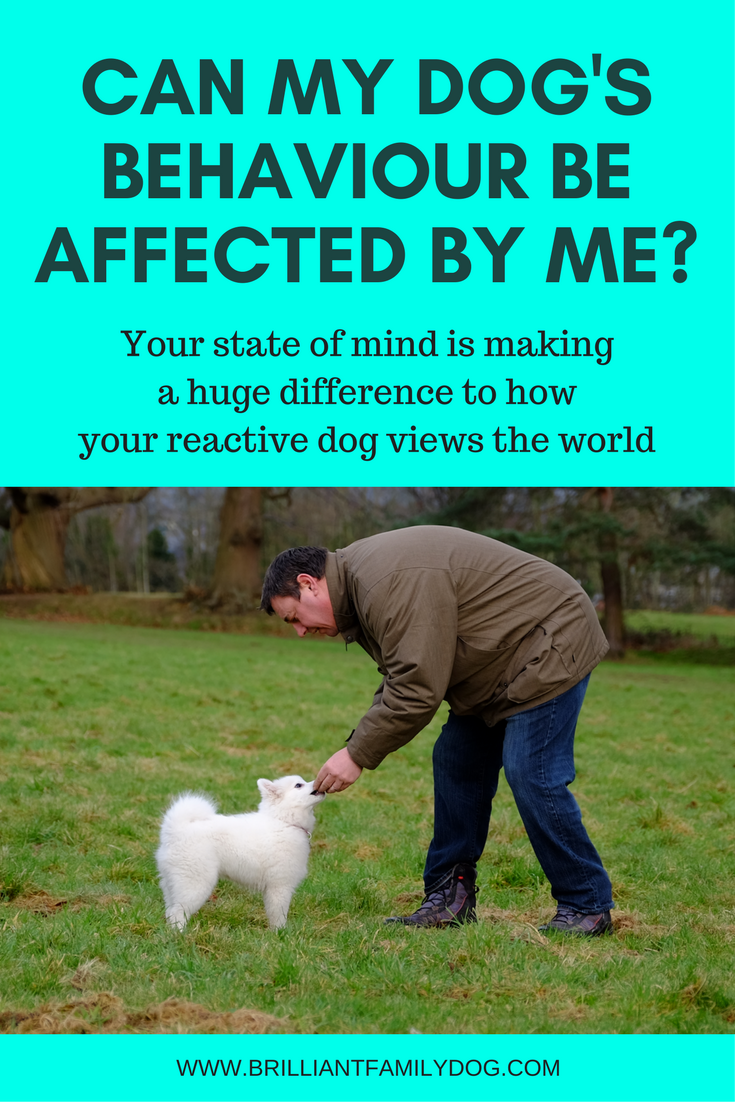
Can my dog’s behaviour be affected by me?

When people have a problem with their dog, they tend to see it as a problem with their dog. 

But it takes two to tango! And if your dog is presenting “problem behaviour” you can bet your boots that you have something to do with it.

Yes - it may start with your dog, but it quickly becomes enmeshed with what you do. And sometimes we can make things worse - when we really, really want to make things better. 

An interesting study was published recently, linking the owner’s hormone levels with the hormone levels of the dog in their charge. We’re talking here about Cortisol, known as the “stress hormone” because it’s released during stress. It operates the same way in the dog as in us.

The study, which you can see here, goes into great scientific detail about the links between our anxiety and the anxiety of our dog. Suffice it to say, that if you’re worried, your dog will be worried. And if your dog is worried, then you will be worried. An unholy vicious circle that causes poor behaviour to escalate.

That is, until you know how to handle the situations which have up to now been stressful for you. Once you know what to do, and how to lessen the stress for your dog, your own stress levels will automatically fall. 

Training people and their dogs together

What I find fascinating is how strong the link is between owner and dog. Never be tempted to say “Oh, it’s just a dog.”

This bond between dogs and humans is what enables the astonishing feats which we are beginning to take for granted - an assistance dog being able to predict an impending attack in an owner who suffers from certain conditions, for example. Seizure Alert Dogs help many people manage their epilepsy. And there are other diseases which cause dangerous imbalances which these dogs can anticipate, giving their owner the time to find a safe place and take their medication.

So if this link is so strong between us and our pooches, it brings into question the idea of having someone else train your troublesome dog for you.

The best trainers (by that I mean enlightened force-free trainers who understand the science of Learning Theory and what actually makes beings tick) spend a lot of time training the owner to view their dog differently. Some of my private training sessions, for instance, focus almost entirely on the owner’s state of mind. Any training I do with the dog is there to help the owner understand how to relate to their dog, rather than me training the dog for them.

And this calls into question the popularity of residential training for dogs - sending the problem dog away to a trainer who will fix the dog for you. It may be effective insofar as the dog can be taught new ways to respond to what he previously found overstimulating or frightening. But if handed back to an owner who has not had the benefit of this training - for themselves, not for the dog - there is not going to be very much change.

A quick handover session is not going to be enough to fundamentally change how a person views their dog - or their dog’s supposed “problem behaviour”. It’s no use doing magical training with the dog if the person the dog has to live with has not changed.


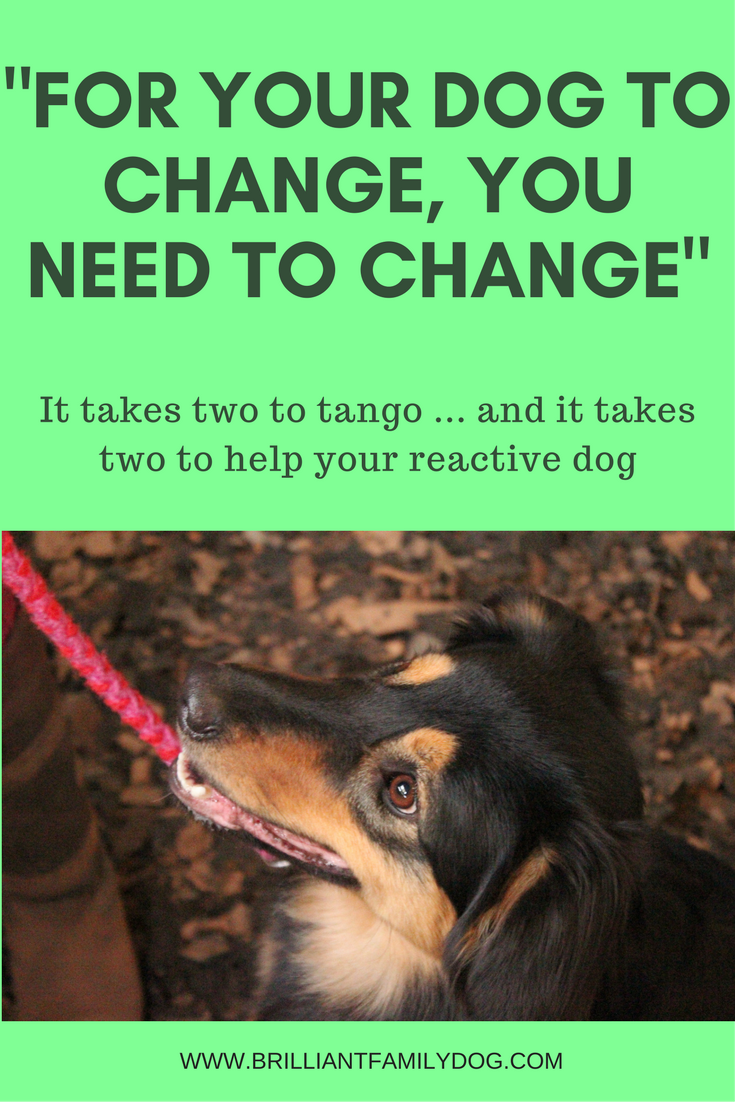
For your dog to change, you need to change


Learning to cope with a dog’s “problem behaviour” - often the dog’s inability to function freely in our world, manifested as reactivity or anxiety or aggression - needs a fundamental shift in the owner’s perception. If you don’t understand why your dog is kicking off at the sight of an advancing person, or a piece of litter on the ground, you will be caught unprepared and unable to change the situation. That’s enough to make anyone anxious! 


Want to learn what Lacy learnt? Get our free e-course here and get started!

THIS E-COURSE IS A BONUS FOR YOU WHEN YOU SIGN UP TO RECEIVE EDUCATIONAL EMAILS AND OCCASIONAL OFFERS FROM ME. YOU CAN UNSUBSCRIBE AT ANY TIME.
Privacy Policy

Control is not understanding

In society, our response to someone misbehaving is to put more controls on them. Restrict them, restrain them, prevent them. And so when confronted with a problem with our dog, we can have a knee-jerk reaction and follow the same process. 

But more control is not the answer!


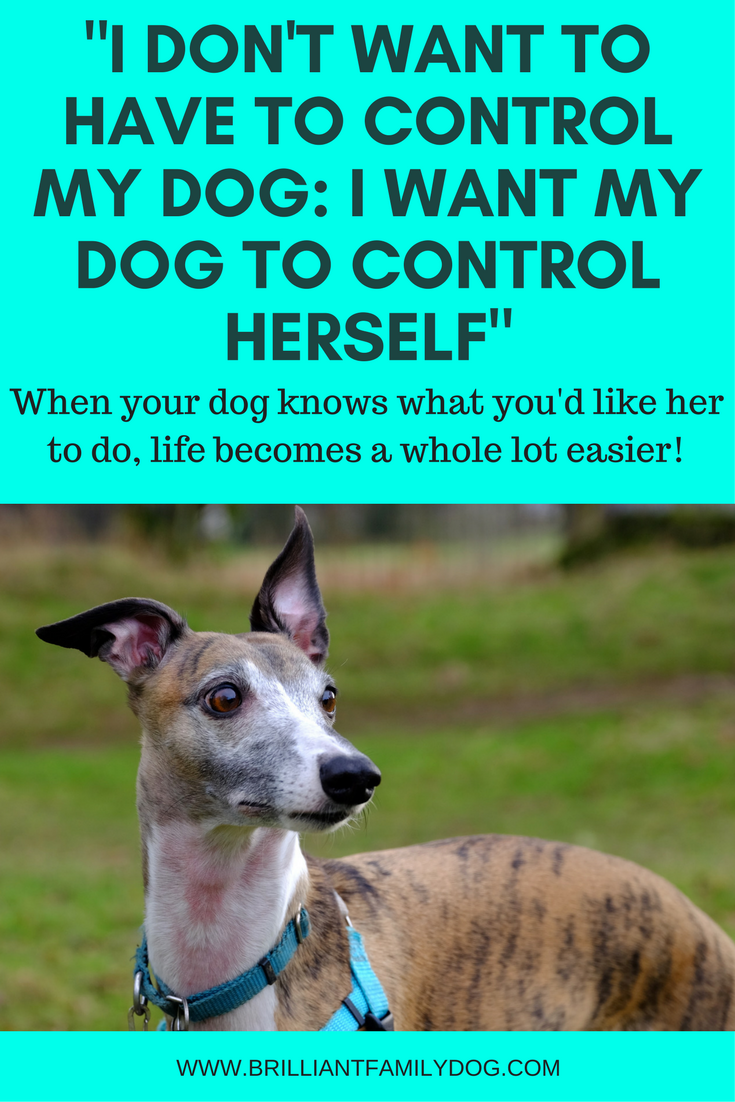
I don’t want to have to control my dog - I want my dog to control herself.


Teaching your dog to control herself is going to require understanding from you - understanding what the problem is exactly (it may not be what you think it is - dogs are not humans) and why your dog is doing what she’s doing. Only then are you in a position to effect a change.

Most of us have busy lives. We got our pet as a companion to make our days more enjoyable, not to make them harder! So perhaps the easiest way for you to make the changes you may feel are necessary, is to find yourself a first-class, well-qualified, force-free trainer who will be able to teach the both of you. 


All “trainers” are not created equal

You’ll need to do some research to find someone reliable - but they are  there. You’ll find a list at the end of this post which will get you going in the right direction. Avoid anything that talks of Pack Theory, Dominance, or (the worst deception of the lot) “Balanced training”, which effectively means that they reward with one hand and punish with the other. 

And if you’re naturally an anxious person - think how learning how to alleviate your dog’s anxiety will help you to relax and feel better able to cope. Now your dog really will be fulfilling the role of companion and helper! You can both forge forward together.


You can start off looking for help with a free email course here, and you’ll find some very accessible books (no science or jargon!) right here.

As ever, add your thoughts in the Comments below, or contact me direct here.


Is your dog throwing up more challenges than you anticipated? Watch our free Masterclass and find how to change things fast!

For your dog to change you need to change
I don’t want to have to control my dog: I want my dog to control herself