Should my dog wear a muzzle?

Should my dog wear a muzzle? I’m worried that people will think my dog is aggressive and I’m a bad dog-owner! Find out here how to teach your dog to love wearing a muzzle | FREE EMAIL COURSE | #aggressivedog, #reactivedog, #dogtraining, #growlydog, …

This is a question I get a lot. And it usually comes from people who really, deep down, know the answer. They just can’t bring themselves to take this step.

So first off - if your dog has bitten anyone or anything, or you fear he may bite - have sense and muzzle-train him. This is not only for safety, but also for the health of your heart-rate and possibly your bank balance, if things go badly wrong.

There are many useful occasions for a muzzle - a vet or groomer visit for an anxious dog is one. Far better for your dog to be used to his muzzle and arrive already wearing it, rather than be man-handled by staff putting a strange one on him. 

Then there’s the slug-muncher and stone-eater - and harvesters of other unmentionable stuff that some dogs take a fancy to! Rather than try and catch him and nag the whole time, just prevent it.

If you don’t want something to happen, don’t let it happen


Some dogs can cope with people outside the house, but visitors inside the house terrify him. Give yourself and your dog a break by muzzling him before your guests arrive. Once you relax a bit because you know your friends and family aren’t going to be shredded and spat out on the carpet, your dog will have a better chance of relaxing too. Of course the dog must be happy to be there - not just forced in on the basis that he’s no longer dangerous!


But people will think my dog is nasty!

Maybe they will. Maybe they won’t. (Maybe they do already.) If they’re strangers, do you really care? And if they’re friends, you can explain to them. 

One surefire thing about a muzzle is that it tends to keep people away - which is just what you want! They think your dog must be dangerous and therefore move their dogs and children aside, as well as themselves. It doesn’t seem to occur to them that your dog is actually the safest of all now! But this is a good outcome. Your anxious dog doesn’t need people/children/dogs in her face.

If you feel anxious yourself about muzzling your dog, think how you’ll feel if you relax your vigilance for a moment and your dog bites someone! Would that be worse? Definitely. Bite the bullet and just do it.


What sort of muzzle should I get?

There’s quite a variety of muzzles available. 

• Cloth muzzle: this is the sort that vets may put on a dog for a few moments while they treat her. It should never be on for long - or be put on an unsupervised dog - as it prevents the dog from panting or drinking, and is therefore dangerous. It’s also not advised for brachycephalic dogs (squashed-nose dogs, so popular at the moment) as they already struggle to breathe and these cloth muzzles have proved fatal in some cases for these dogs. So on no account get this one!

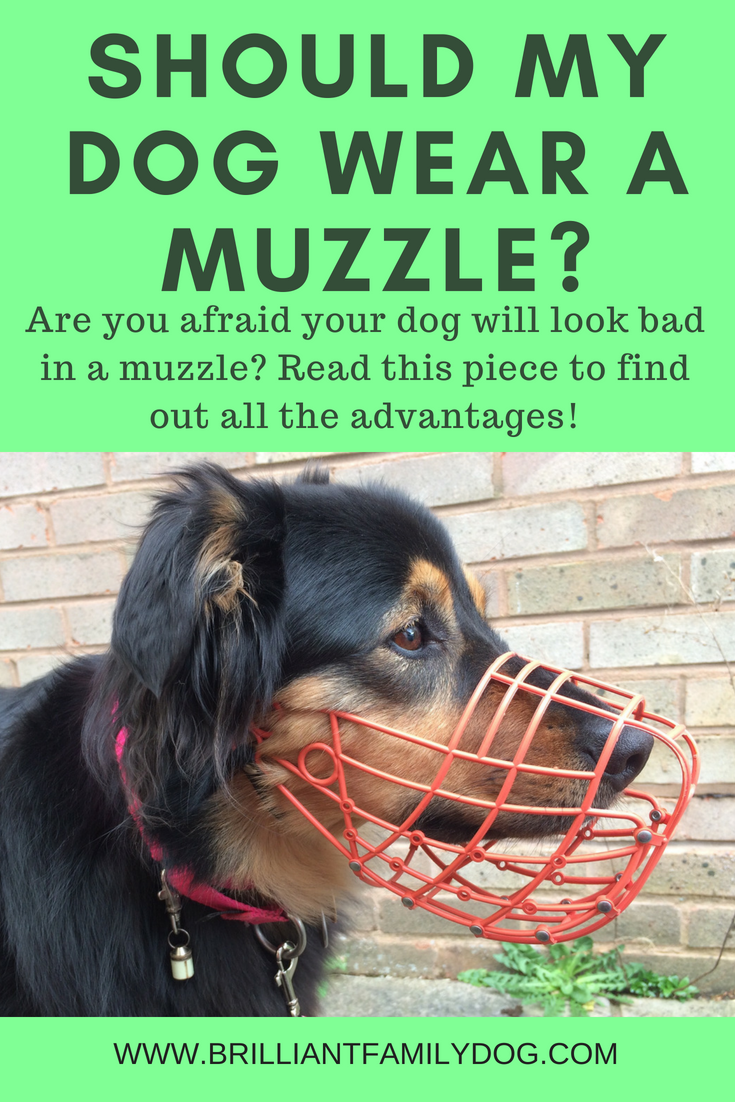
• Basket muzzle: what you need is a basket muzzle that allows your dog to open her mouth fully, to eat, drink, pant, and not feel constrained. But these vary hugely, and you need to get the right one for your dog.

Should I muzzle my dog? I’m worried that people will think my dog is aggressive and I’m a bad dog-owner! Find out here how to teach your dog to love wearing a muzzle | FREE EMAIL COURSE | #aggressivedog, #reactivedog, #dogtraining, #growlydog, #dogm…

• Baskerville muzzles: perhaps the commonest. They don’t allow full opening of the mouth. The inability to pant could have serious consequences for a dog who needs to lower her body temperature. 

• Baskerville Ultra muzzle: is often the go-to muzzle as it’s widely available. But this doesn’t mean it’s the right one for your dog! They have an optional head-strap which can be useful for keeping the thing on, but they are really designed for brachycephalic dogs and are too short for longer-nosed dogs. See Lacy in hers. She hated it - you can see that in the photo. Any larger and it would have fallen off her face. 

 • Leather custom-made colourful muzzles: very expensive and they look pretty constricting to me. It looks hard to get treats in at the right moment (essential if you’re working on counterconditioning an anxious or fearful dog). But I know some people like them.

• Racing greyhound muzzle: my favourite, and the one Lacy is wearing in the other pictures. Made to measure, available in loads of colours, incredibly lightweight, it allows full opening of the mouth for even a gasping racing dog, treats are easy to administer, and most important - Lacy is very happy to wear it. She comes forward and puts her face in, as opposed to running and hiding as she did when she saw the Baskerville Ultra.

Bottom line: your dog should find the muzzle comfortable, it should be easy to slip on, secure, and allow your dog to drink, pant, eat treats, and possibly play.


Muzzles are ugly

They don’t need to be! You can decorate your dog’s muzzle any way you like. You can see I “girlified” Lacy’s black muzzle, and I’ve added a little fleece to the top of her pink racing muzzle in case it chafed. It never did, but I felt it was kinder to cushion it as sometimes she will be wearing it for a couple of hours at a time. 

You can use paint, stickers, ribbons, sparkly stuff (make sure it can’t flake into your dog’s eyes or nose) - anything that shows that your dog is loved.


I tried a muzzle once and my dog hated it and kept scrabbling at her face!

Wouldn’t you? If someone slapped a cage on your face without asking? 

Just as with any bit of dog gear - harness, collar, coat - you have to acclimatise your dog to this slowly. The idea is to associate the new thing with a steady flow of treats until your dog can’t wait to put her nose in! 

Start by treating her for just looking at it; then for sniffing it, then for touching it with her nose … and so on. Those three steps alone may take you three days or more! Go at your dog’s speed, don’t try to rush. 

The key is that your dog should always have the choice to move forward to interact with the muzzle. You’re not grabbing her and whamming it on!

There is an excellent how-to video in the Resources below. Do watch it then work through it step-by-step. Once you’re at the stage of putting the muzzle on before a walk, your dog will associate it with treats and a walk. 

This is the perfect ending - as long as your dog likes walks! If not, then have a look at some of the other Growly Dog posts here.


There is no stigma in being a responsible dog-owner!
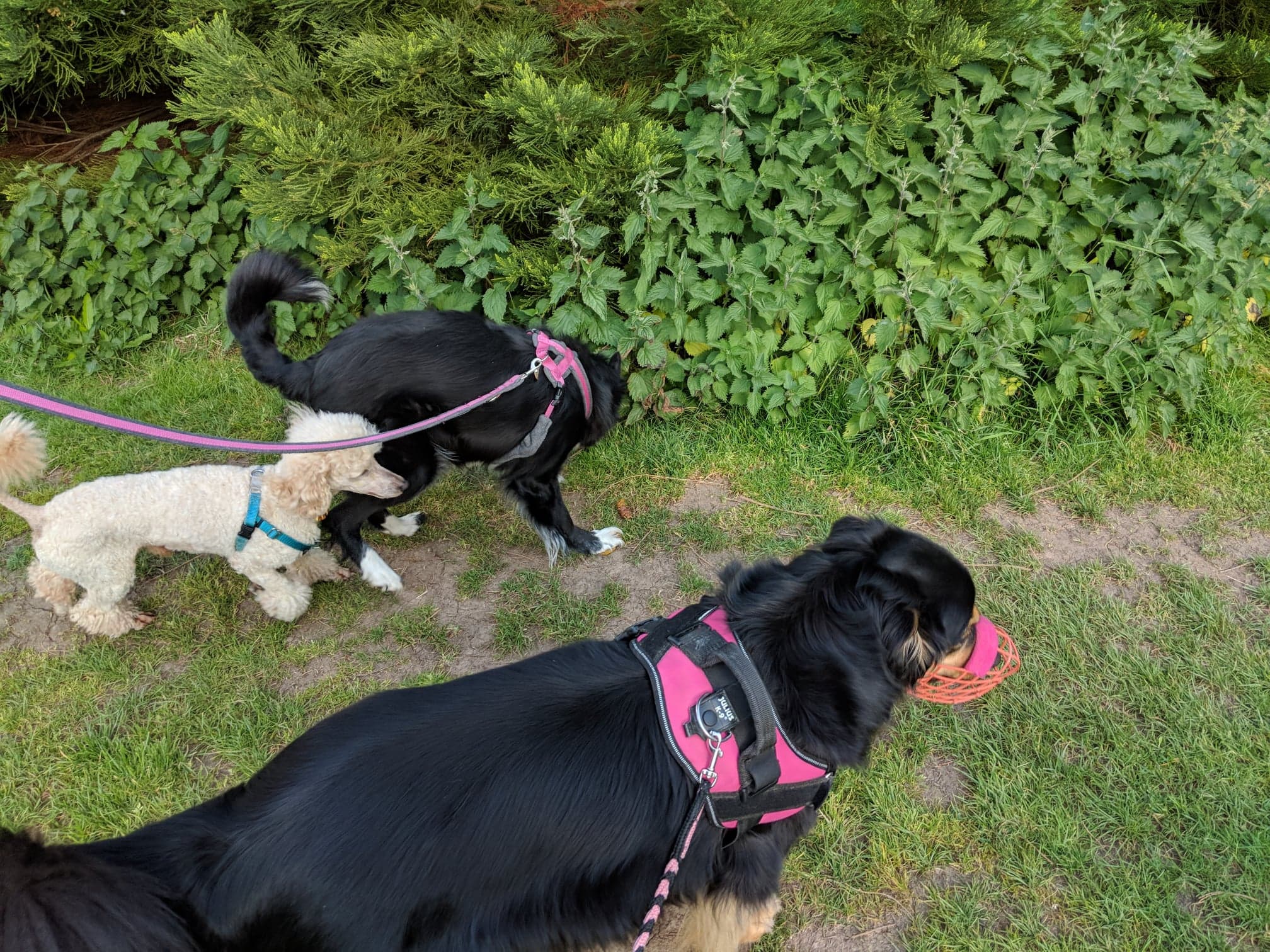
Your muzzled dog will be able to enjoy group walks again! Find out here how to teach your dog to love wearing a muzzle | FREE EMAIL COURSE | #aggressivedog, #reactivedog, #dogtraining, #growlydog, #dogmuzzle, #dogmuzzletraining | www.brilliantfamily…

Don’t think you are appearing a bad owner if your dog is wearing a muzzle! You are being a responsible owner! You are acknowledging that your dog has difficulties in certain areas of her life and you are aiming for the best possible outcome. Never be ashamed of this. 

Muzzling your dog may allow him valuable off-lead time. This does depend on the level of his anxiety and the amount of behaviour modification training you’ve put in place. You must always think safety first. 

As you can see in the photo, a group walk can be made possible for a muzzle-trained dog. Ensure your dog is happy with the space between her and the other dogs so she doesn't feel trapped.

And it doesn’t mean the end of fun for your dog! I know dogs who wear the same muzzle as Lacy who can still play with their beloved toys as they can press down on the ground and get a grip on its “handle”. So a ball on a rope is the ideal solution for the toy-mad dog who needs to wear a muzzle.

Store your dog’s muzzle in a prominent place near your leads and harnesses. Put it on your dog proudly! Be glad of how much relief it brings you. And know you’re doing the right thing.


Resources

Muzzleupproject
Teach your dog to wear a muzzle with Chirag Patel
Racing muzzles
Doglaw - excellent dog-specific legal advice for the UK

Free 8-part email course for your Growly but Brilliant Family Dog!

 

Want some help with your challenging dog? Hop over to our free Masterclass for Growly Dogs, which gives you practical techniques you can use straight away to make your your dog - and your walks - calmer

Do you make this mistake with your dog?

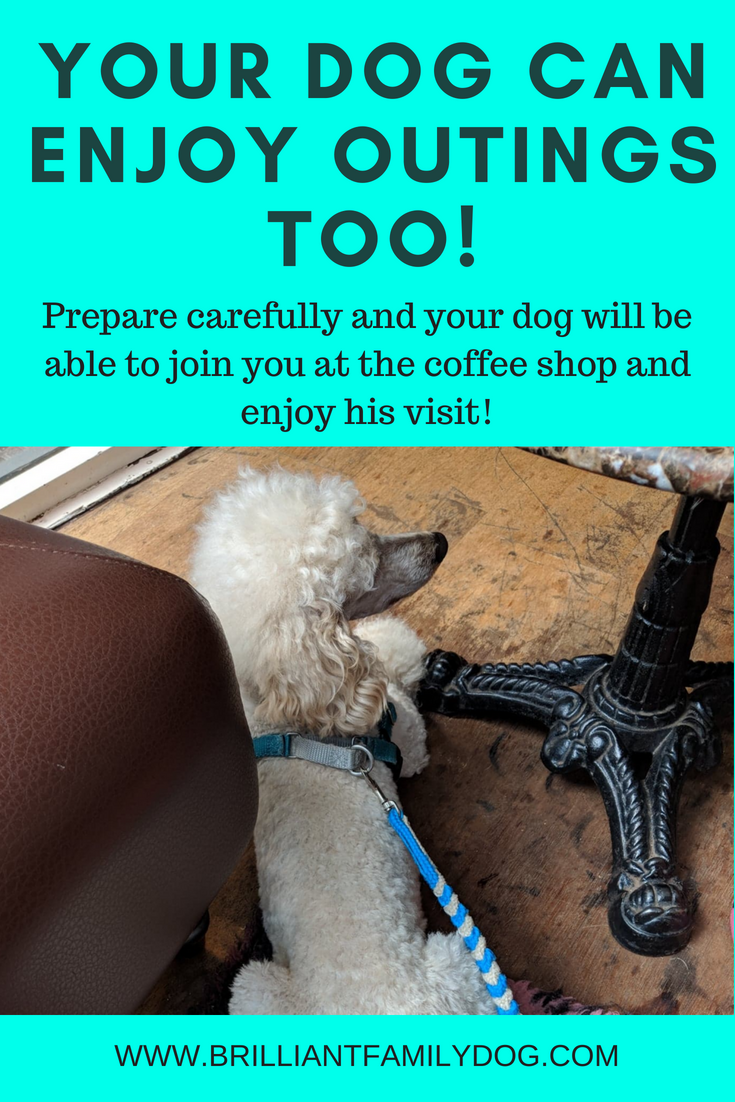
Want to take your shy dog to a cafe? You can! Follow the suggestions here and you can make it work, and really enjoy your family dog | FREE VIDEO COURSE | #problemdog, #reactivedog, #dogtraining, #growlydog, #puppysocialisation | www.brilliantfamily…

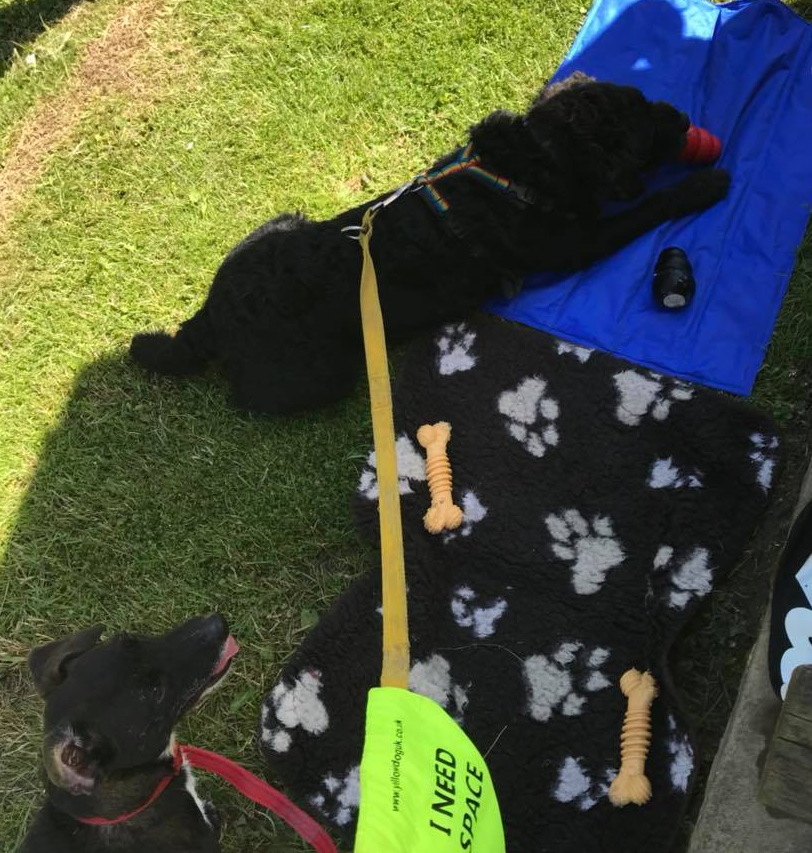
I was sitting in a cafe with Coco Poodle lying beside me on his mat, calmly watching the other visitors, with a chew to engage him too. 

I’d chosen a quiet place out of the way of foot traffic. He couldn’t get trodden on, and I know that he also enjoys being able to see out of the big windows.

Dog or Puppy problems? Get your free 8-lesson email course and solve them all painlessly!

THIS FREE ECOURSE IS A BONUS FOR YOU WHEN YOU SIGN UP TO RECEIVE EDUCATIONAL EMAILS AND OCCASIONAL OFFERS FROM ME. YOU CAN UNSUBSCRIBE AT ANY TIME.
Privacy Policy

At a table right in the middle of this cafe, a woman was reprimanding her small dog. He clearly felt uneasy with all the activity around him - people walking this way and that, almost treading on him - and was seeking security by trying to get onto her lap. 

“Get off!” “Down!” “No!” “Get down!!” she kept saying.

This did nothing to allay her dog’s anxiety, and her attention was simply fuelling his desire to climb up. 

Eventually he gave up. He was defeated and alone. He looked around him - worried - and sat.

And what did his owner say to this?

Absolutely nothing.


Want to take your shy dog to a cafe? You can! Follow the suggestions here and you can make it work, and really enjoy your family dog | FREE VIDEO COURSE | #problemdog, #reactivedog, #dogtraining, #growlydog, #puppysocialisation | www.brilliantfamily…

Consider your dog's comfort too

I thought it very sad that she had no thought of why her dog was trying to jump on her. She was only concerned about what people may think. Her barrage of commands was a knee-jerk reaction to the dog’s paws on her lap. 

She then compounded her error by nagging the dog repeatedly - and when he eventually complied (more by luck than by judgment!) she ignored him.

I’ve no doubt that this lady’s a kind and friendly person who thought she was doing the right thing to get her dog to behave in public. But unfortunately many people have no idea how to achieve this except by using bossy methods.

Sadly she’d got it quite the wrong way round!

What you focus on is what you get.

Drawing attention to what she didn't want was making it more likely that that was what she was going to keep getting!

So what would have worked better?

*If she had responded to his fears and need for reassurance he would have settled sooner.

• If she had ignored his clambering attempts then responded to him warmly when he stopped she’d have had far greater success at keeping his feet on the floor. 

• And if she had realised that the middle of the cafe was not the best place for her nervous little dog and chosen a better place to sit,

• given him a mat or blanket or her coat to lie on,

• dished out treats freely for him being quiet and calm, 

• responded by reassuring him that the floor was a safe place to be,

• and had come prepared with a foodtoy or chew for him to focus on, 

it would have been better again.


It’s a very small change - just a switch from being reactive to being proactive.


But it will change your dog’s state of mind in an instant.


Lots more ways to become proactive and stop nagging your dog in our free 8-part email course!

Get your free email course to sort out lots of puppy problems

THIS FREE ECOURSE IS A BONUS FOR YOU WHEN YOU SIGN UP TO RECEIVE EDUCATIONAL EMAILS AND OCCASIONAL OFFERS FROM ME. YOU CAN UNSUBSCRIBE AT ANY TIME.
Privacy Policy

>

Where are my spoons? Why your dog runs out of calmness

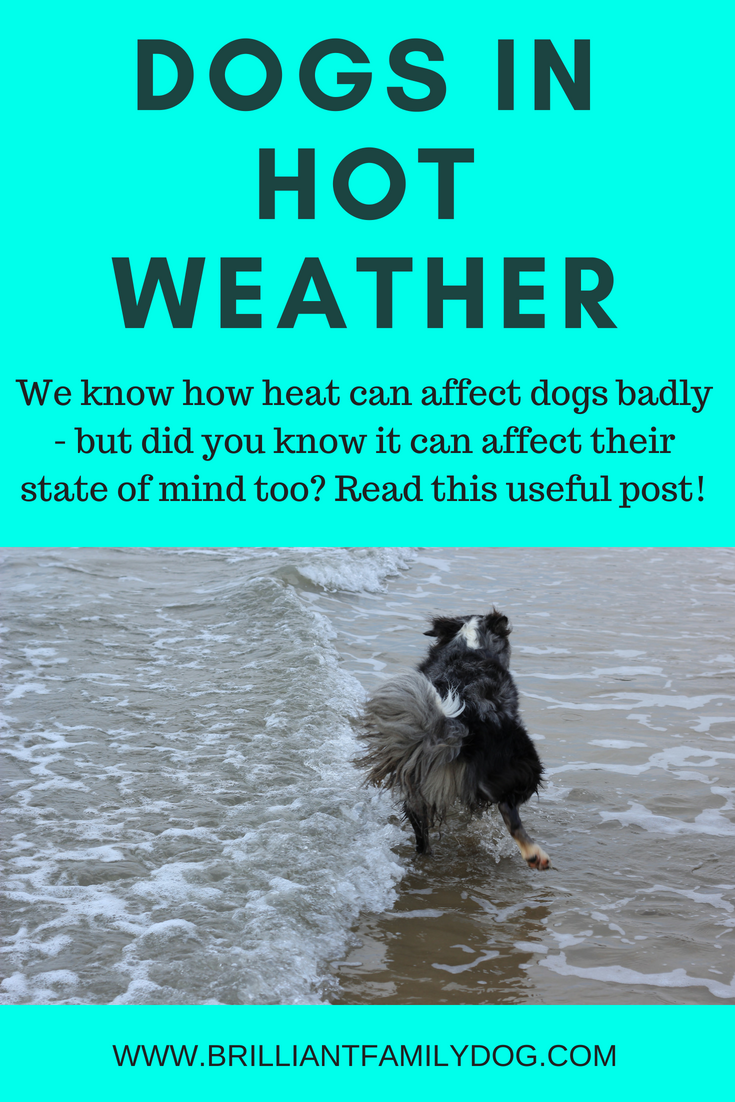
How does heat affect your dog? We all know not to leave a dog in a car - but have you thought how the heat can affect his psyche? Read this post for some eye-openers! | FREE VIDEO WORKSHOP | #anxiousdog #dogtraining, #newrescuedog, #puppytraining, #…

It’s a puzzle to so many people. Their dog is easygoing and tranquil, and out of nowhere he snarks at another dog - or snaps at a child - or even growls at you! 

Maybe your dog is not so easygoing and you have just learned to live with these “random” outbursts. You never know when he’s going to be in a good humour, and when he’s going to have a meltdown.

But you CAN know! 

If you’re aware of what’s using up your dog’s patience stores, you’ll be able to manage him so that he doesn’t run out entirely, and be left with no way to go except have an outburst.

What you need to learn about is known as Trigger Stacking. And at the moment we have a huge extra trigger that many people simply aren’t aware of.

Heatwave!

In the UK at the moment we are enjoying (or suffering!) extreme weather. Weeks of temperatures in the high 70s and 80s (that's the high 20s in new money) - we’re not used to it at all!

So spare a thought for your dog, who has to wear his full fur coat regardless of the weather. 

You doubtless know all the commonsense advice for dogs and hot weather: 

• Ensure plenty of fresh water is available

• Brush out the winter coat as far as possible, and trim and shear hairy beasties

• Cut back on walks - maybe none at all for a few days, and certainly only at the cool ends of the day

There’s more to keeping your dog cool in the summer than his physical comfort. It can also help with dog anxiety and general dog behavior. Read this post for some eye-openers! | FREE VIDEO WORKSHOP | #anxiousdog #dogtraining, #newrescuedog, #puppytr…

• Limit access to the garden UNLESS you have a paddling pool to entertain your dog, or unless he has enough sense to find a shady spot and stay there

• Check temperature of the ground with your hand. Have you seen people doing the hoppy dance on a hot beach when they have no shoes on? 

• Don’t leave your dog in a car, even with the windows open, without taking measures to keep it cool. This will include covering all the windows, ensuring a through draught, running an aircon, and - of course - parking in the shade.

• Consider a cooling mat for a double-coated breed, or a cooling shirt. A wet t-shirt will work well too, but you need to keep wetting it.

• Frozen food-toys may be popular

• Observe speed of panting and shape of tongue - a long spoon-shaped tongue means your dog is working hard to get rid of heat 


Heatstroke in dogs can be quick, and deadly. So please take the precautions above to ensure your dog is protected.

Hothead

But you also need to consider how this heat is impacting his mental state.

I’d like you to take a quick detour and bone up on Spoon Theory. This explains so well how limited stores of energy have to be farmed and managed carefully. The same applies for our dogs with their limited store of tolerance. 

Before you even step out of the door on a hot day, your dog is stressed. He’s already used up a boatload of spoons and may be running critically low. This could apply to the calmer dog as well as the “reactive” or growly dog.

You know how quickly you can get annoyed when you're uncomfortable - especially if you're not used to the heat? Think of airport rows and road rage in hot traffic jams.

There’s more to keeping your dog cool in the summer than his physical comfort. It can also help with dog anxiety and general dog behavior. Read this post for some eye-openers! | FREE VIDEO WORKSHOP | #anxiousdog #dogtraining, #newrescuedog, #puppytr…

Lots of people will be out and about in holiday mode, with dogs who are only walked on high days and holydays, and everyone will be hot and bothered.

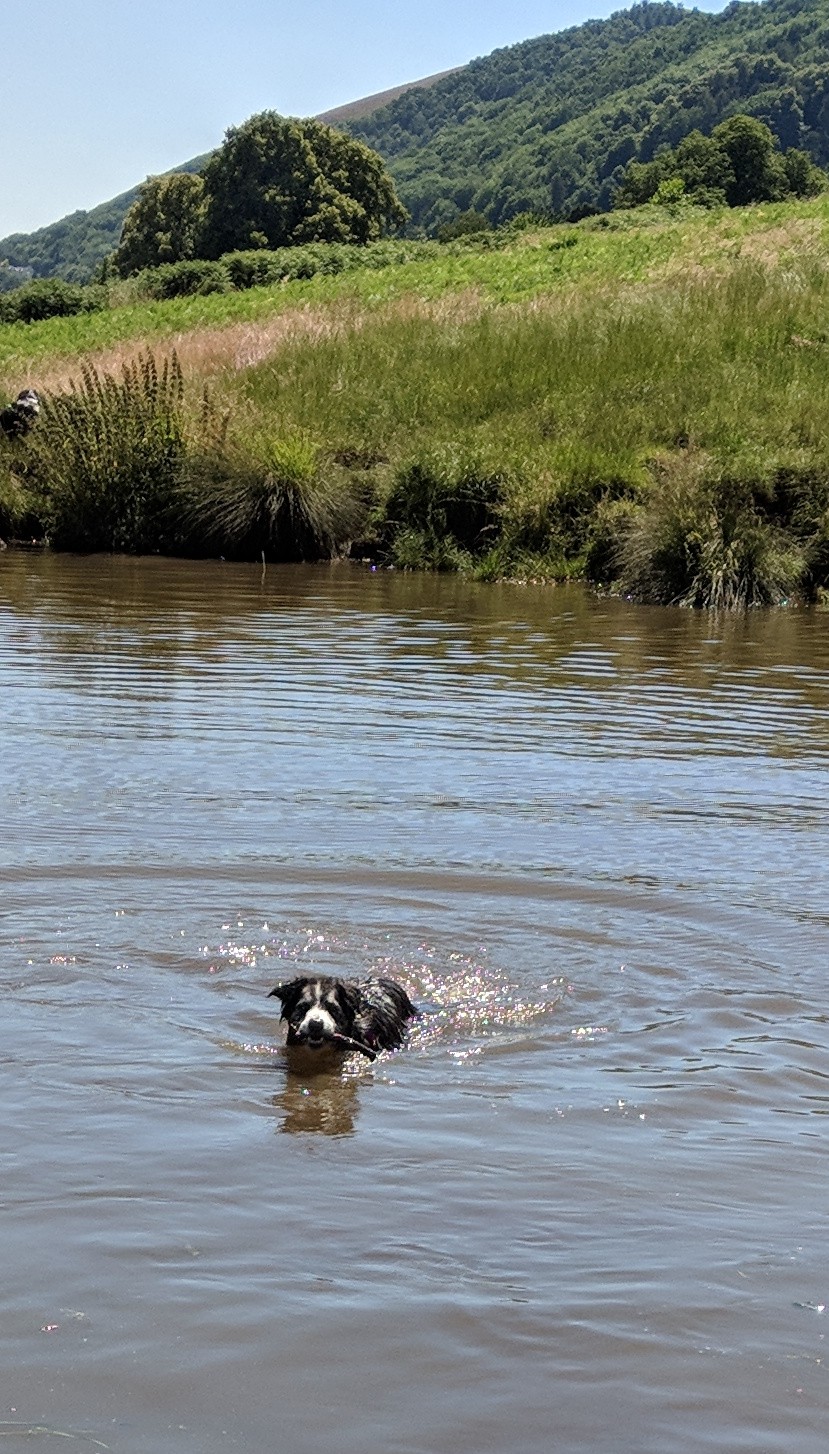
So seek out quieter walks, shaded walks - if you can find a place for your dog to swim, so much the better! - and cut out the ball-throwing till the worst of this heat is over. It will be over soon enough, and all us Britishers can go back to talking about the weather in disparaging terms! 

And if you live in a permanently hot place, you’ll have worked out your own ways of keeping your home cool, and strategies to get about outside without boiling. A reader from Texas told me that she can only take her dog out for 20’ at 5 am - after that it’s into the hundreds and impossible. 


Triggers, and spoons

Armed with this knowledge, you can now look at your dog in a different way. Hopefully a more understanding and tolerant way. He’s not being difficult - he’s struggling in circumstances he finds hard at the best of times, and may now be finding impossible.

In the greater scheme of things, it really doesn’t matter if your dog doesn’t go for a walk for several days - or even weeks. And contrary to what you may be thinking, you may be surprised to find that your normally hyper dog in fact gets calmer and more manageable, the less he’s walked!

Help him by managing his day carefully when outside influences are making it harder for him. He’s relying on you! 


Start the change with your reactive, anxious, aggressive - Growly - dog with our free Masterclass packed with ideas and strategies, all force-free


How training your dog can help you train people

How can you protect your dog from well-meaning people who want to pet him? Here are some easy dog training techniques to kindly control your dog and train your visitor! FREE VIDEO WORKSHOP | #shydog, #dogtraining, #newrescuedog, #puppytraining, #dog…

Some people are good at greeting dogs. And some are … not. It’s not a skill we’re born with (think how long it takes to teach children how to greet people politely!), so we have to teach those who approach us how to greet our dog - or, indeed, whether they may greet her at all!

If your dog is like Greta Garbo, who famously said, “I want to be left alone,” then no greeting is required. This is where you’ll have to use your dog training skills to prevent a quick lunge from the visitor, now wailing “But dogs like me!” as they jump back alarmed from a snap.

You may have dogs who lurve people and want to jump all over them. Yapping NO at your dog, flapping your hands and yanking the lead is not going to cut it. You need to teach your ebullient dog how to greet strangers - and for this you need the stranger’s co-operation!

So how can you get the people you meet to comply?

You can use the same mantra we use for our dogs - 

Reward what you like
Ignore what you don’t like
Manage what can’t be ignored

This means that if your visitor does what you ask, they earn the reward of greeting your dog. If they do inappropriate things (in your dog’s eyes) then you ignore their efforts as you focus on directing them to what you do want, and manage the situation so they can’t interfere with your dog.

Let’s have a closer look at this.


The shy, anxious, or fearful dog

Evasion skills for your shy or worried dog

How can you protect your dog from well-meaning people who want to pet him? Here are some easy dog training techniques to kindly control your dog and train your visitor! FREE VIDEO WORKSHOP | #shydog, #dogtraining, #newrescuedog, #puppytraining, #dog…
  • Carwash - teach your dog to run behind you and appear peekaboo-style between your legs. Few strangers will grope between your legs to get at your dog

  • Get behind - lurking behind your legs may work better for very large or very shy dogs

  • Down - can get them out of arm’s reach of invasion

  • Muzzle - If your dog has a tendency to lunge and snap, teach her to be happy in her muzzle. This will relax you as you’re not worried about damage, and does tend to keep people away. They think this dog is dangerous - in fact she’s safer than an unmuzzled dog


Where you can help

  • Get between your dog and the kindly visitor intent on grabbing her

  • Use your body to block the path to your dog, and keep moving as necessary to stay in the way

  • Asking the would-be greeter questions and taking control of the meeting, will distract them from their “Hello doggy” plans

  • Maybe just keep walking! With a quick “Morning!” as you pass

  • Or use the tried and tested policeman STOP hand signal. This is immensely effective at stopping people in their tracks, giving you time to arrange your dog where you want her, and allowing you to compose a suitable sentence to keep the person at a comfortable distance. You don't have to make excuses for your dog. Just think of a quick way of getting the person to do what you want. Practice this at home with a friend, so you feel brave enough to do it!

  • Talk to your dog quietly and politely - this may impress your would-be greeter that you don’t have to yell and grab this particular dog


The over-exuberant dog

If a meeting is appropriate, give clear instructions on how to greet your dog. You’ll train your dog how to do his part, using friends to help you. This means he’ll know this “game” when you want to use it in the wild.

Bouncy Goldie pup Alfie shows how to greet people

Greeting skills for a bouncy dog

  • Hand touch (your hand to start with)

  • Release cue (“Go say hi”, only when dog is sitting and calm)

  • Timing of reward (when he’s turned back to you)


Your clear instructions should be brief and simple. For instance, “just hold your hand down by your side so he can sniff it”. This tends to stop people leaning over your dog and grabbing or patting, ruffling or thumping. It also stops your dog leaping up to nose-dot them as they can inspect their hand instead.

By the time your dog has sniffed the hand to gain all the information he needs about the person, he’s already back with you for his treat. Job done.

Crowd control

Unless you know for a fact that the person wanting to chat to you and your dog will listen to you, follow your instructions, and understand what you’re doing - don’t let them near enough to cause trouble.

All this work you’ve put in to understanding how your dog’s mind works and how to get the best from her? It’s just the same with people! You can take a quick overview of the situation, remember my mantra above, make rapid decisions about whether a greeting should or should not happen, and take control of the meeting.

This way you won’t be caught out by those who think they know more about your dog than you do, and avoid the embarrassment of muddy pawmarks on the person’s clothes … or worse.

Remember if your dog thinks she has to defend herself against this invasive person, she’ll be more alarmed about the next person you pass, and may even consider a pre-emptive strike (leap out and snap) to keep them away.


Is your dog throwing up more challenges than you anticipated? Watch our free Masterclass and find how to change things fast!

I wish I could take my excitable dog on family outings!

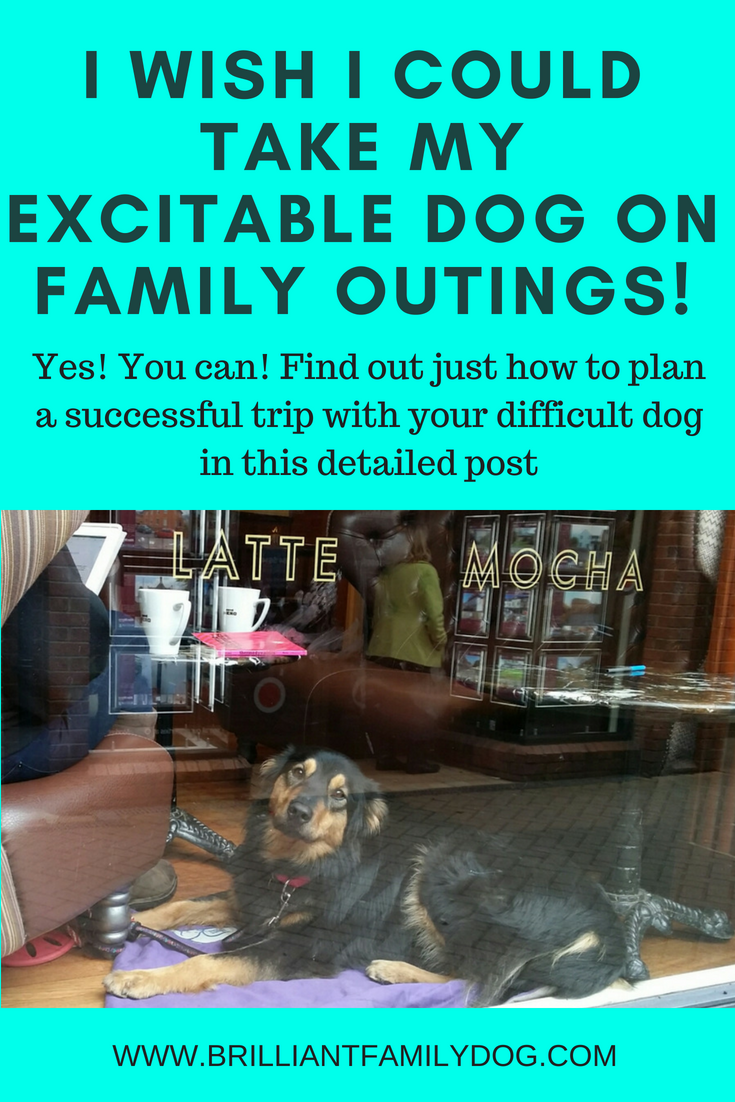
Do you long to take your tricky dog on family outings? You can! Follow the suggestions here and you can make it work, and really enjoy your family dog | FREE EMAIL COURSE | Reactive dog, problem dog, fearful dog, dog behavior | #problemdog, #reactiv…

Yes! You can!

One of the reasons you got a family dog was the enticing thought of outings - to the pub, the cafe, the beach, forest parks … What could be nicer than enjoying a walk in beautiful scenery, and ending the visit in congenial surroundings with everyone tucking in to good food and drink?

But the reality arrived in your fluffy bundle of puppyness, and you soon discovered that your family dog had other ideas about how life should work!

So you may have a dog who’s ebullient, boisterous, loves everyone, and you feel you can’t inflict that on a pubful of people wanting a peaceful refreshment stop. 

Or maybe your dog is reactive - shy, anxious, “aggressive” - and struggles to be in the same space as strange people and - worse - their strange dogs.

Your ideas of family outings with your dog have been put on hold for an indefinite period, until … until what? Until he gets to age 11 and calms down a bit? Until he suddenly decides he’s no longer afraid of people and dogs? Until he’s able to pass a dog on the path without a meltdown?

You could be waiting a long time!

So let’s speed this up - a lot. 

A portable parking spot

One game all dogs should learn is how to relax on their mat. Once your dog knows that if the mat is on the floor, then he should be on it, calmly waiting for you to reward him for staying there, then you can consider going out to places.

For precise, step-by-step, instructions on how to achieve this, go to my Books page where you’ll find that a whole book on calming your dog down is free! Yes, really …

Want to take your dog on a picnic? Follow the suggestions here to prepare, and you can make it work, and really enjoy your family dog | FREE EMAIL COURSE | Reactive dog, problem dog, fearful dog, dog behavior | #problemdog, #reactivedog, #dogtrainin…

I can’t tell you the number of students who have found this skill so useful - at home, when friends visit, in cafes, on trains, on buses, at training class, on holiday, at the shops, at friends’ houses, at the vet’s - the list is endless.

If you’re starting with a puppy, so much the better. This can all be part of her valuable socialisation program.

“We thought about delaying getting our new German Shepherd puppy because we had already arranged a short holiday with friends. Our breeder persuaded us that we shouldn’t wait and that a holiday was an ideal time to have our puppy bond with us. So we collected our 8 week old puppy and spent 2 weeks getting to know one another, then headed off with our friends by car and then ferry to the Isle of Skye. Before she was 11 weeks old, puppy Elva had been in the car, on a train, and on a ferry - and she took it all in her stride. People might worry about meeting enough people in the important socialisation phase in a puppy’s life but everywhere we went, she was a people-magnet with everyone wanting to pet her. She loved all the attention and we loved that she was interacting with so many people!

I’d had concerns about travelling with a puppy but we’d started crate training right away. Our travel crate was invaluable in the car and a great place for a tired puppy while we went out for dinner with our friends. By evening, she was more than happy to sleep quietly in her crate until we came back.”

Amanda and Elva, German Shepherd puppy

And Ellen travelled a lot with her Border Collie pup Selkie, even at only four months!

“The games have helped greatly with making puppy trips easier and laying the foundations of good communication. She's particularly great on her mat on buses, trains and in pubs!

 
Teaching your dog to lie on her mat is an invaluable skill for being able to go on family outings later | FREE VIDEO COURSE | Reactive dog, problem dog, fearful dog, dog behavior | #problemdog, #reactivedog, #dogtraining, #growlydog | www.brilliantf…

Mat is King!

So matwork will get you part of the way there - and may be all you need for your excitable dog. You also have to make life as easy as possible for your worried dog.

For this you need to work on techniques and strategies to help him adjust to our world - there are plenty here to get started on at Brilliant Family Dog

And the most important thing for your reactive dog is distance. So a good place to start would be an establishment with a large, open, garden where you can get away from other people and be out of their way. If you go to a crowded place and your dog surprises you by being “fine” with all the busyness, think again. It’s more likely that your dog is exhibiting a learned helplessness - he can’t escape, it’s all too stressful, so he shuts down and waits for it all to be over. 

So heading off on this type of outing can only be done when you know there’s a good chance that with all your preparatory training, your dog will be able to cope. 

Forward planning

Either way, you need to plan this trip! 

Here’s a wonderful example of just how effective this can be, from Kerina, one of the students on From Growly Dog to Confident Dog

“We had aimed to go to the pub today and had it planned out to the letter. If either of the dogs got too stressed we wouldn’t stay for lunch, just a drink. We plotted the route yesterday.

I was prepared, had packed toys for the dogs, frozen kongs, coolmat for Spud and blanket for Robin, water from home and some kibble and treats. We chose a table that was at the side, right by the river, and both dogs settled.”

Teaching your dog to lie on her mat is an invaluable skill for being able to go on family outings later | FREE VIDEO COURSE | Reactive dog, problem dog, fearful dog, dog behavior | #problemdog, #reactivedog, #dogtraining, #growlydog | www.brilliantf…


Later the dogs enjoyed more of their river walk and a swim. They couldn’t have had such fun from the day without the thought Kerina and her sister put into it.

It didn’t take much to take all this stuff with them - think how much a toddler’s family has to pack for a couple of hours! - but it paid off many times over.

An important part of Kerina’s plan was to abort the trip if things weren’t going well. Always be ready to get out of Dodge. If your dog is stressed it’s not going to be much fun for any of you. And if your dog’s having an exciting walk, with lots of running and sniffing, be sure to factor in plenty of downtime. That’s when those prepared foodtoys and the mat come into their own. 

So get everything ready, do all the training first, plan a trip, plan your exit strategy, and enjoy the family outings you were so looking forward to when you decided to get a dog to share your life. 

Yes, it can happen.


Is your dog throwing up more challenges than you anticipated? Watch our free Masterclass and find how to change things fast!

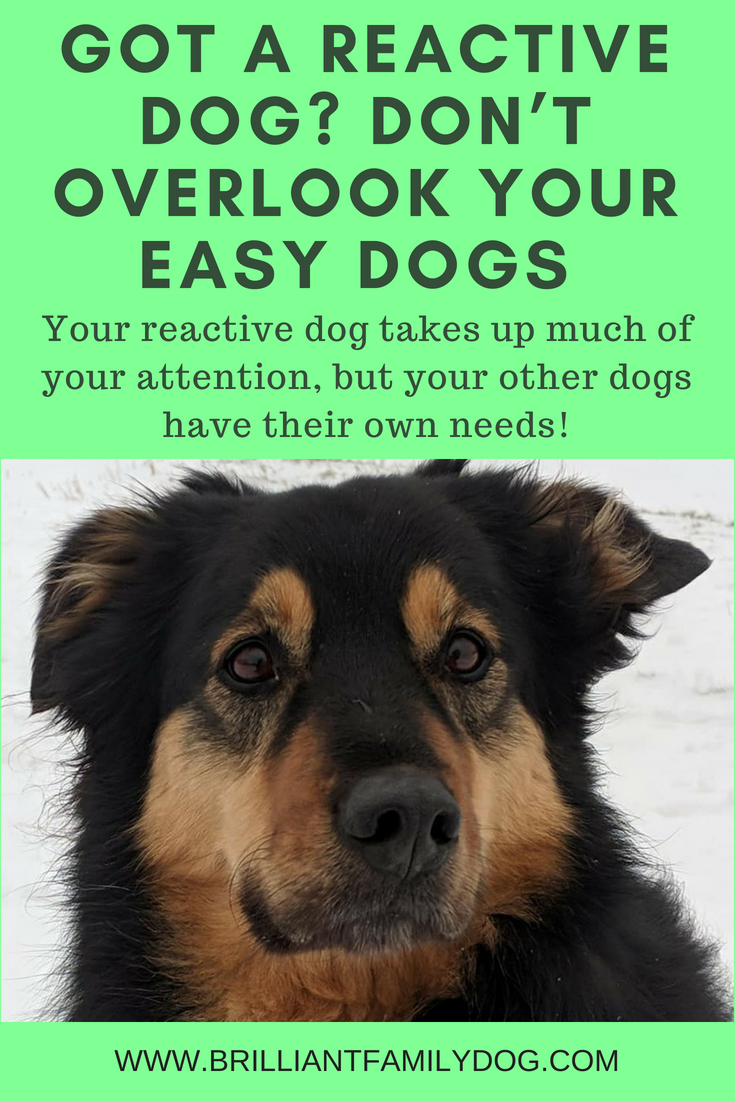
How does your reactive dog impact the rest of your doggy family?

How does your reactive dog impact the rest of your doggy family? You need to ensure you give each dog in a multi-dog household just what he or she needs | FREE EMAIL COURSE | Reactive dog, problem dog, fearful dog, dog behavior | #problemdog, #react…

It cannot be denied that if you have a reactive dog you have a completely different owner-dog relationship from the average pet-dog-owner. 

You have to invest time, maybe money, and much thought, into making life better for this little dog you have taken on. And in so doing you travel a road with him that most dog-owners don’t. This is why many people become devoted to their “special needs” dog, and fiercely protective of them. 

While this is a good thing - any deep relationship has the potential to be life-enhancing - sometimes your other family pets get elbowed out in favour of the special one, who gets the lion’s share of attention.

Reader Harriet made just this point to me recently, when she confessed that she felt her non-reactive dog was missing out: 

“She's the kind of 'no trouble’ dog it's easy to overlook when you are investing most of your energy in a more challenging one.”

Sometimes these feelings get mixed up with guilt - something most humans are SO good at! But really, there’s no point in blaming yourself, or the breeder, or the shelter, or another dog, or the stars … It is, as they annoyingly say, what it is. This is where we are, and blaming and guilt are not going to help you one jot!

  • Maybe you got your dog as a puppy and something happened to upset him.

  • Maybe you got him from rescue and the sum of his life experiences have made him reactive.

  • Maybe he ended up in rescue because his previous owners weren’t prepared to dedicate the necessary time to him. OR

  • Maybe your dog is just the way he is.

However it came about, it’s time to roll up your sleeves and get to work helping your dog.

But you don’t want to forget your easy-going dogs!

It would be easy to focus entirely on your neediest dog and let the other/s coast. But that would be as bad as neglecting your reactive dog and letting him get on with it. 

All the dogs in our care deserve equal respect and attention. But that doesn’t mean they all have to be treated the same!

The joy of a multi-dog household is the contrast in characters, the differences in likes and dislikes. You find the joy for each dog and give them what they need. 

In my own household I have four very different dogs! And they are each treated as individuals.

Rollo, the herder, gets to mind his chickens a lot of the day, usually with a large soft bear in his mouth. This harmless pastime employs his herding instincts, and keeps him happy. 

Lacy, the most challenging of my dogs, gets plenty of solo walks where we can work on changing her response to sudden environmental change, people who shouldn't be there, other dogs.

Cricket the Whippet has her physical comforts tended to ceaselessly! She loves warmth, so she has duvets, jumpers, access to squares of sunshine . . .

Make sure your easy-going dogs get as much attention as they need while you focus on your challenging dog! Juggling the needs of individual dogs in a multi-dog household takes skill and thought | FREE EMAIL COURSE | Reactive dog, problem dog, fearfu…

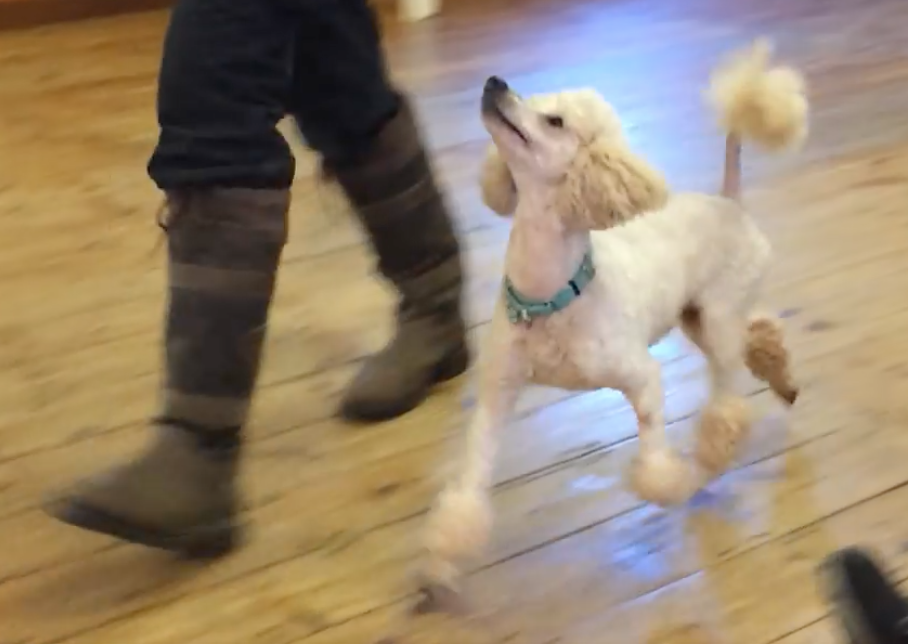
Coco Poodle gets precision Obedience Competition training (a bit like dressage for horses) as this gives his fertile brain very tricky puzzles to solve, and builds his much-needed impulse control. 


They all get frequent free-running, exploring walks where they are free to be dogs.

And, of course, all four dogs get similar individual training in general household obedience, and can all perform tricks for fun. Different tricks for the different characters.

One thing I have found helpful to keep track of all these dogs with their different needs, is to have a whiteboard with the following categories:

Solo Walks
Training/Outings
Group Walks

Each dog is ticked off for each activity as it happens. This means I never get to the end of the week and wonder when I last paid any attention to one of the quieter dogs!

Keeping the world at bay

Harriet again:

“I think what happens when you have a reactive dog - not only are you investing a lot of time and effort in behaviour change, there is also the emotional investment in defending them from the rest of the world which is labelling them a bad/aggressive dog (and often you as a rubbish handler!).”

It’s easy to slip into a defensive mode when you feel people are judging you and your dog. 

This is a corrosive frame of mind and will not move you forward!

When it comes down to it, other people’s opinions (and they are in the main uneducated opinions) count for nothing. While you don’t want to feel like Evelyn Waugh’s character “Sebastian contra mundum” (Sebastian versus the rest of the world) - and we certainly have to have consideration for our fellow-residents on this planet - this doesn’t mean we have to feel inferior, just because others don’t understand.

People can be very quick to judge when they don’t understand something. Because they don’t understand, they become fearful, Hence the awful gang attacks on “different” people. 

Parents of challenging children have to put up with this ill-considered judgy-wudgy attitude daily, from those who have no conception of what it is like.

Enjoy your easy dog!

So if you have an easy dog, you can enjoy a holiday from the stresses and strains you may be feeling at the moment with your reactive and sometimes trying dog. 

Take your easy-going, friendly, happy-go-lucky, untroublesome dog out alone with you on walks or outings - to a cafe, perhaps - where you can relax and enjoy not getting glared and stared at. Enjoy a bit of dog-therapy with her. Remember why you wanted a dog in the first place.

You never know, some of those judgers may see you and realise that perhaps you aren’t such a “rubbish handler” after all.


For help with your reactive, anxious, aggressive, “growly” dog, get our free email course here.

THIS FREE ECOURSE IS A BONUS FOR YOU WHEN YOU SIGN UP TO RECEIVE EDUCATIONAL EMAILS AND OCCASIONAL OFFERS FROM ME. YOU CAN UNSUBSCRIBE AT ANY TIME.
Privacy Policy