reactive dogs

Take a new look at your dog!

I consider feeding one of the most important things for my dogs’ long-term health and longevity. 

So I review their diets frequently.

Back in the day, I always used to feed my dogs once a day, in the evening. But they also had training treats, plates to lick, bones left lying around, the occasional foodtoy, and so on. 

Then when I started taking them on camping trips and we walked so much,

I’d scatterfeed kibble in the grass beside the van for them to snuffle up in the morning, while I got washed and dressed.

Then I started to scatterfeed outside at lunchtime, at home.

This was largely to get Cricket the Whippet out to do her business - I didn’t like her to stay in an armchair for hours and hold it! 

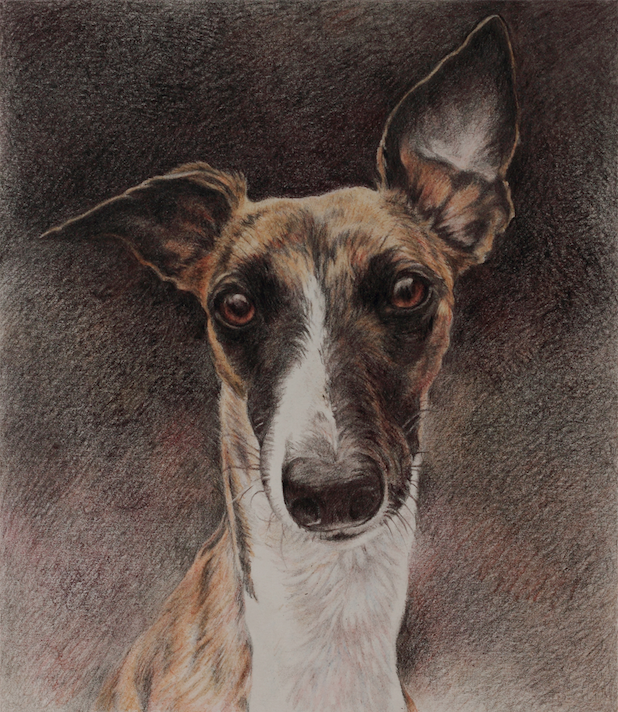
Portrait in coloured pencil by Beverley Courtney

So then, one year, Cricket started to get panic attacks.

She’d be shaking, panting, gasping, her eyes on stalks, desperate to get on my lap … These epidosdes could last for an hour, and they were getting more frequent … 😳

I did a little detective work 🕵🏻‍♀️ - and realised that these attacks happened only in the morning!

Aha! 

So I started to give Cricket a handful of food first thing in the morning.

Immediately, the panic attacks stopped, and we never had another.

What a simple solution!

How can I adapt this discovery to my dog management?

The moral of this story?

We change.

Our dogs change.

We need to observe and adapt.

And not just always do the same as we’ve always done, or what’s always worked for previous dogs. 

“Every dog is a study of one.” - Grisha Stewart

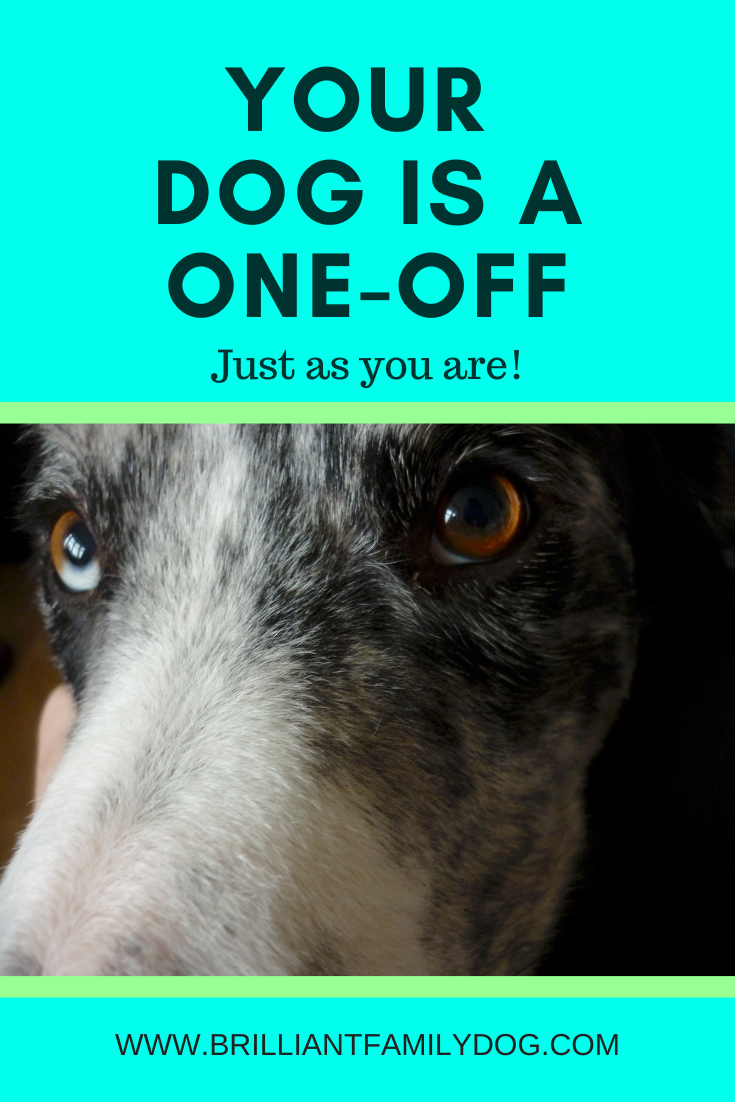
Just as we’re all different, so our dogs are all different. 


For our special dogs …

And it got me thinking about how we could be seeing things in our reactive dogs that could easily be changed by attending to diet and timing.

Along with all the other considerations, of course, such as sleep (you know how I’m always harping on about sleep!), exercise - type and quantity, mental stimulation, and all the rest. 

When did you last look closely at what may have become a comfy habit in caring for your dog? 

It’s so easy to drift along, saying, “This is how it’s always been,” and not noticing that things are changing - for the worse.

It’s like when someone sees your children for the first time in ages and says, “How they’ve grown!”. 

Well, duh, of course they’ve grown! But being with them every day, we don’t notice things that are changing. (And I don’t just mean that their jumpers are too tight.) We change all the time .. all the time.

Experiment with your dog!

So it’s time to start experimenting! Look critically at your daily doings with your dog - especially your reactive dog.

🐶 Would it help to move his walk from the morning to the afternoon?

🐶 Would it be better if he only had walks 3-4 days a week, and another stimulating activity on the other days?

🐶 Should I change his feed, or his feeding schedule (always make dietary changes gradually).

🐶 Should he have more interaction with people and dogs, or less? 

🐶 What new thing can I teach him, to liven up our training sessions? 

🐶 How much deep sleep is he having? (If less than 17 hours deep sleep a day, you need to make changes!)

Our dogs are in our hands. We owe it to them to make their lives the best they can be.

Find out what works for you and YOUR dog!

A new puppy PLUS a reactive dog: can it work?

I had this query from a reader recently, whose heart is clearly in the right place:


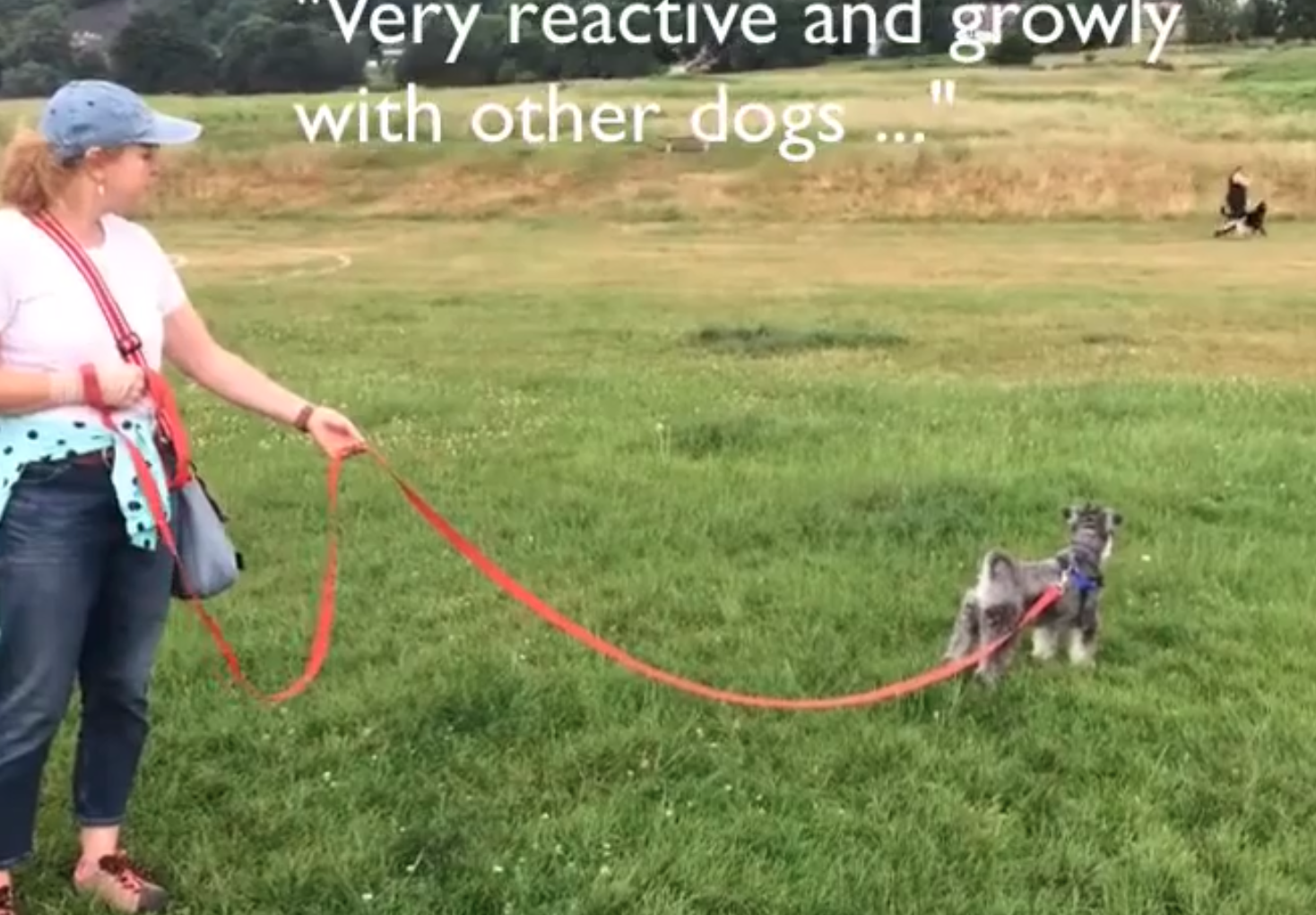
“I have a reactive/aggressive 8 year old I did not have from a puppy. As she has gotten older she has calmed down a bit however, we do not trust her around other dogs and do not even try to socialise her. She will cry, whine and sometimes growl which can be embarrassing.

I have longed for a dog that I can take everywhere with me and can get along with all dogs and people. I am considering getting another dog that is a little bit older than a young pup.

We do plan on introducing them slowly with the new dog being outside and our older dog inside watching through the window, then keeping them behind closed doors in the house etc.

One of my main worries is jealousy and the new dog picking up bad habits from the older dog. I also worry around the unfairness of walking them separately or is this something they will both quickly adjust to?

How do I make sure the new dog does not being aggressive also?”


Lots of questions here! And a few misconceptions too. Here was my reply to this caring owner:

“Well done on helping your dog get calmer - but don’t be embarrassed when your dog shows she’s uncomfortable! She’s giving you information. If others don’t understand, that’s not your problem - they will be impressed by your care.

New dog - I think you’d be better off with an 8wo pup. You’ll bring out the maternal instincts in your resident dog and she won’t see this baby as competition. Follow this article on introducing a puppy to a reactive dog to ensure a safe introduction and development.

Also, the young puppy will sleep so much that you’ll have plenty of time to give to your adult dog!

Walking separately is not unfair - most dogs prefer this undiluted time with their special person. I have four dogs and they all get their special times of solo walking with me.

There are a number of resources - from free to premium - on www.brilliantfamilydog.com/blog/how-best-can-you-help-your-dog-learn to help you. Do take advantage of them!”

As to how to introduce the older dog to the new puppy - and this goes for ANY older dog and puppy, not just a reactive dog - there is valuable information in that introduction article.

You can’t get a puppy and just chuck it into a multi-dog household and let it sink or swim. The outcomes are most unlikely to be what you’d like! There are plenty of parallels with children whose parents abdicate responsibility and the children rear themselves alongside their equally unguided peers. This can lead them down many unwanted paths . . .

So start as you mean to continue! Lots of 1-1 attention for each dog individually, and the puppy is reared more or less separately. After all, a puppy has a completely different physical timetable, with different requirements for training and exercising, so it makes sense.

Having a multi-dog household with the different characteristics of every dog within it is enchanting. They are so different!

And they need to be allowed to be. And not regarded as a pack.

Here’s a good place to start with your new pup:

Want a step-by-step guide to everything you need to know about your new puppy? Get New Puppy! here and start on the right paw!

Those early months are SOOOO important!

Let me know how you get on.


How often should I dose my dog?

There are ways to manage pests without poisoning the planet!  Brilliant Family Dog is committed to improving the lives of dogs and their harassed owners through books and online learning, all force-free and dog-friendly! | FREE WORKSHOP | #dogtrainin


Fleas! Ticks! Nasty beasties!

But there’s no need to get hysterical about them. Mankind has lived with them for aeons, so they ain’t disappearing any time soon.

I know that many dog-owners - especially first-time dog-owners - are guilted into signing up with their vet for monthly doses against invertebrates at large.

Monthly doses!

The logic behind this is, apparently, “To be sure, to be sure,” and “Just in case”.

So - do you take a headache pill every morning, just in case you get a headache?

Course you don’t! Most of us are averse to over-medication. Personally, it’s a last resort for me - only if absolutely necessary.

But I can see how this policy can make a nice income for the vet profession, and an even nicer one for the pharmaceutical companies behind it.

So apart from pumping unwanted chemicals into your dog, have a thought about what happens after the dose has washed off or gone through the dog’s system.

Where does the waste go? Into the water system and ultimately the ground. And what lives in the ground?

INSECTS!

Most of them highly valuable to keep our environment stable.

The last thing we need to be doing is using scorched-earth warfare against a few insects at the expense of the many - and ultimately ourselves.

Over 40% of insect species are threatened with extinction. And agro-chemicals including pesticides are a large driver of this decline.

Shockingly, just one spot-on treatment for a medium-sized dog contains enough pesticide to kill 60 million bees. There are estimated to be 15 billion honeybees in the UK, so if you dosed three dogs, that would account for 1% of them.

Think about that.


Use as indicated - or when needed?

My (super-healthy, long-lived) dogs and cats are treated only if fleas appear. I do it myself, having chosen a treatment that is not on the dangerous list (see Resources below).

And I only ever use half the recommended dose at most. It works perfectly well.

I’m convinced that the general health of the animal makes them resistant to parasitic invasions, hence they happen seldom here. I make a note of when I treat them. The last two times were 2018 and 2022 - both times when a visiting hedgehog was sniffed and a whole platoon of fleas hopped over.

[Hedgehog fleas can’t actually run their complete cycle on any animal but a hedgehog, so they would eventually have dropped off. But I didn’t want to spend weeks with us all scratching!]


Am I being eccentric?

And you may be thinking that I’m being eccentric or frivolous here. In which case you’ll be glad to know that these long-held opinions of mine are backed up by research.

This Position Statement from the British Small Animal Veterinary Association (BSAVA) is clear. One of their recommendations reads:

Concerns about the possible environmental impacts of small animal parasiticide products should be taken seriously by the veterinary profession, pharmaceutical industry, and animal owners.

“Animal owners” is us. We are part of the problem. We have to play our part in doing something about it.

Overuse can, of course, lead to resistance in the target population - as can be seen in agriculture where these chemicals are widely used.


This maybe sums up the BSAVA opinion: 

As part of their responsible prescribing measures, veterinary professionals should avoid blanket treatment and instead risk-assess use of parasiticides for individual animals.

Sledgehammers for nuts, anyone?


RESOURCES:

BSAVA Position Statements

BVA, BSAVA and BVZS policy position on responsible use of parasiticides for cats and dogs

Guide to Conventional Treatment Options for Fleas and Ticks

Choosing More All-Natural Tick Repellents

More Concerning News Regarding Flea and Tick Products for Companion Dogs and Cats

Worldwide decline of the entomofauna: A review of its drivers

Parasiticide use needs overhaul. Study


Do you hit your dog?

Read this post to see where you may unwittingly be demolishing your precious relationship with your dog!  Brilliant Family Dog is committed to improving the lives of dogs and their harassed owners through books and online learning, all force-free and

Of course you don’t hit your dog!

You wouldn’t be here in Brilliant Family Dog if you did!

But the thing is, you don’t need to actually hit someone for them to feel bad about you.

This is so for dogs as well as for people.


Different forms of punishment

So you may ignore your dog. Lots of “dog trainers” tell you to do that.

Now imagine how you’d feel if a loved one ignored you! Refused to speak to you!

🐕 Wouldn’t you creep and crawl inside?

🐕 Feel like a worm?

🐕 Wonder what you’ve done to upset them?

🐕 No idea how to put things right?

That’s just how your dog would feel!

I think that if I offended someone, I’d much rather they explained to me how I had done so, so that I could put it right in the future, and not repeat my mistake.

So you can do the exact same with your dog.

Just show him that what he did didn’t work. Ask him again, and when he gives the smallest hint of doing what you’d prefer, reward that - fast and fully!

Dogs are Doers. They are not Not-Doers.


Leaving your dog in a vacuum of silence will not help him understand one bit.


Old saws are not necessarily right!

There’s a saying: “Sticks and stones may break my bones, but words will never hurt me.”

I couldn’t disagree more!

How someone feels about you is so important to you! If someone is unkind to you, or unfair, doesn’t that hurt? With real pain?

If they say harsh things, wag a finger, shout in your face, isn’t that frightening?

Your dog is the same!


Punishment rewards the punisher

You see, punishment rewards the punisher.

The only person who benefits is the person doing the punishing, in whatever form - whether hitting, shouting, abusing, belittling - they are the ones who get a gratifying feeling. Some even get a visceral thrill.

While punishment does little good to the one being punished.

Yes - it may temporarily suppress behaviour (just long enough for the so-called trainer to cash your cheque) - in the presence of the punisher. But it’s not going to stop it, because there is no CHOICE involved on the part of the victim.

Giving your dog, or child, or friend, or colleague, a choice in how they respond is critical for them to learn and want to repeat that choice.


Losing your temper

Yep! I put my hand up, along with the rest of the universe! We can all lose our temper, get frustrated, reach the end of our tether.

But if you give in to the moment and - even just yell at your dog - how does it make you feel?

Do you feel proud of yourself?

Or do you realise that you have just taken a chunk out of your relationship with your dog, which will have to be restored double-quick?

And what if children were watching? What have they learnt, about you, about how to manage people, how to manage animals?

What if another adult was watching? What do they now think of you? Do you like what they’re thinking?

Looking at things from an outside point of view can help us see more clearly what we are doing!

Yes, we can all have uncharacteristic outbursts. But before you justify yourself to yourself by saying the dog was driving you mad, was not listening, was being deliberately difficult - keep in mind that your dog is from another species. He doesn’t understand verbal language (he associates sounds, sure, but not as we do).

We are honoured to be able to forge an unbreakable bond with the dog in our care.

We are blessed to have this learning every day - of working out why creatures (people or dogs) do what they do, and how we can get them to fit in with our plans without any coercion, force, or intimidation.


Gobbledygook!

And if this all sounds like outer gobbledygook, do watch my free Workshop here . It shows you what may possibly be a new way to relate to your dog.

As this correspondent says:


“Your teaching is a revelation! Honestly I’ve spent 40 years doing what I thought was right. Now, as soon as my new puppy chooses to do something I want she gets a reward. I hope - thanks to you - I’m getting it more right than I used to.” JP

And that dog-owner had learnt all that from my books! Want to see what you can learn too? Head over to this page. And we can both benefit from you buying direct from the author (that's me!)


Dog Reactivity after Lockdowns

I get frequent requests for help from folk who got a pandemic puppy without understanding the significance of the puppy socialisation period - which is from 3 to about 15 weeks.

It’s in this time that the dog’s brain forms its ideas about the world around it.

And it’s why a proper understanding of this is critical to your future life together with your dog.

See our post with a free Socialisation Guide at https://www.brilliantfamilydog.com/blog/our-familys-always-had-dogs-why-is-this-one-so-difficult

You see, what your very young puppy experiences in those critical first weeks will set the tone for how he sees the world for ever. If he enjoys children in this period for example, he’ll carry on enjoying them. If he gets to meet other (carefully chosen) dogs and the meeting goes well, he’ll adjust much better to meeting strange dogs of all shapes and sizes in the future.

It doesn’t mean he’ll breeze through the world with never a care - but it does ensure he’s getting the best start possible.

Same goes for noisy kitchen pans, car rides, train journeys, sheep, visits to the shops, wobbly or uneven surfaces, strange objects, loud noises, sparkly or shiny things … and so on.

Everything your puppy is likely to meet in his life he should be exposed to in a gentle manner at whatever distance is appropriate not to evoke a fear response - in those first few weeks.

So you can see that when you get a puppy, you have your work cut out to beat that deadline of 14-16 weeks of age!

And it’s why the best age to get a puppy is 8 weeks, as by then he’s experienced a couple of weeks in the litter with his littermates once the dam loses interest, and still has plenty of time to do his learning.


What if that time was missed?

It’s not your fault if you didn’t know this and the breeder didn’t know enough to tell you how to handle your new dog! (This underlines the importance of sourcing your puppy carefully - see Choosing your Puppy 1, 2, and 3

So if that time of getting out and about was missed because of lockdown restrictions you are now stuck with a dog who may be fearful or reactive to many things he should be able to take in his stride.

(Actually, socialisation in lockdown was possible within the law - if you’re determined enough anything is possible!)

But here you are, with a dog who is fearful. So what do you do?

First off, understand that you can never replicate that period in a puppy’s brain development. That’s closed. Over.

But you can do lots to help your dog adjust!

Your first consideration is to ensure you don’t overload your dog, overface him with what he is confronted with.

Fewer walks which are comfortable and enjoyable are hugely preferable to daily walks through fire and brimstone!


Work out exactly what upsets him, and make sure you don’t encounter those things at all for now, if humanly possible. This may mean driving to quiet places for walks.

Whether it’s chasing bikes that is the problem, or lunging at people or dogs, then you need to embark on a desensitisation and counterconditioning program (that just means changing his emotional response so he no longer needs to try and defend himself against them).

How to do this? We can show you, step by step, in the Brilliant Family Dog Academy.

This may be absolutely enough for you to see how you can manage walks and improve life for both of you.

Need more specific help?

Your dog is losing his mind when he encounters these things, appearing aggressive and dangerous? Check out From Growly Dog to Confident Dog where I and my experienced team of trainers will guide you through the changes you will make so you can both enjoy your time together - in the company of those who have succeeded and will cheer you on!


And for some starter lessons and an introduction to these programs, here’s where you go: 

You can check out the lessons and talk to us in the chat. We’d love to help you change all this!

As I said, in the strange and heady times of the pandemic it may not have been your fault that you were unprepared how to handle your new dog.

But getting things put right now is down to you . . .

Your dog can’t do it alone.


Is it my dog? Or is it me?

To change your dog’s behaviour, you’re going to need to change your own too! Shock! But life becomes so much more comfortable when you do! Brilliant Family Dog is committed to improving the lives of dogs and their harassed owners through books and o…

For your dog to change, you need to change!


This is the message emblazoned on our home page.

And some people will take one look at that and say, “No, I’m perfect: it’s my dog that’s all wrong!” And they’re gone.

That’s sad, because their dog is now denied the possibility that their owner might change!

But those with more perception, more thoughtfulness - you, obviously, as you’re reading this! - see that there is truth in this.

You see, dogs - just like us - are responsive, sentient beings. They don’t just DO. They respond.

Something happens; you do something; they do something. It’s like a game of ping-pong, where you bat things back and forth. If what you bat back to your dog is harsh, self-centred, punitive, you have alienated him and he’s not going to “play ball” any more.


But if you look at what happened, work out why your dog did what he did, and respond with encouragement or distraction or take it as a teaching moment, then you can engage your learner and make some solid progress!


“How can I stop my dog doing xyz?”


My inbox is full of these questions on a daily basis. If I responded harshly, saying that they’re approaching it all wrong, I would lose that person. They’d take offence and go off in a huff. Result: life doesn’t improve, dog stays in trouble!

But I take my own advice from the paragraph above, and make my reply a teaching moment!

These correspondents are repeating what they understand is necessary, what they’ve been told by others: that this creature is wilful and difficult, and needs to be controlled, prevented, contained, in order to have a peaceful home.

But in fact the reverse is true! The more choice you give your dog, the better result you will get.


More choice = more harmony!


To change your dog’s behaviour, you’re going to need to change your own too! Shock! But life becomes so much more comfortable when you do! Brilliant Family Dog is committed to improving the lives of dogs and their harassed owners through books and …

I’m pleased that someone has read what I wrote and sees me as someone trustworthy, who can help them. This is to be encouraged! I’m passionate about getting the word on force-free training out as far as is possible.

It’s just like tennis (I do love the summer tennis season!): you lose every point where you don’t hit the ball back in play.

So instead of alienating these readers by castigating them, I encourage them to view things differently and get the result they want.

I explain that instead of trying to stop your dog doing something, it’s infinitely more effective (and faster!) to teach him to do something else instead.


Can you catch yourself?

Sometimes, even an accomplished dog-owner can slip up! You may catch yourself having a knee-jerk reaction to your dog. Maybe because you’re tired, busy, flustered, embarrassed …

Be sure to catch those moments and see how you can change them for the better.

A little reflection, putting yourself in your dog’s paws, may show you why he did what he did, and how you can help him to make a better choice next time.

We all keep learning - dogs and people - every single day!

If you need help putting this theory into practice, be sure to watch our free Workshop on getting your dog to LISTEN, without nagging, cajoling, or bribery!


<