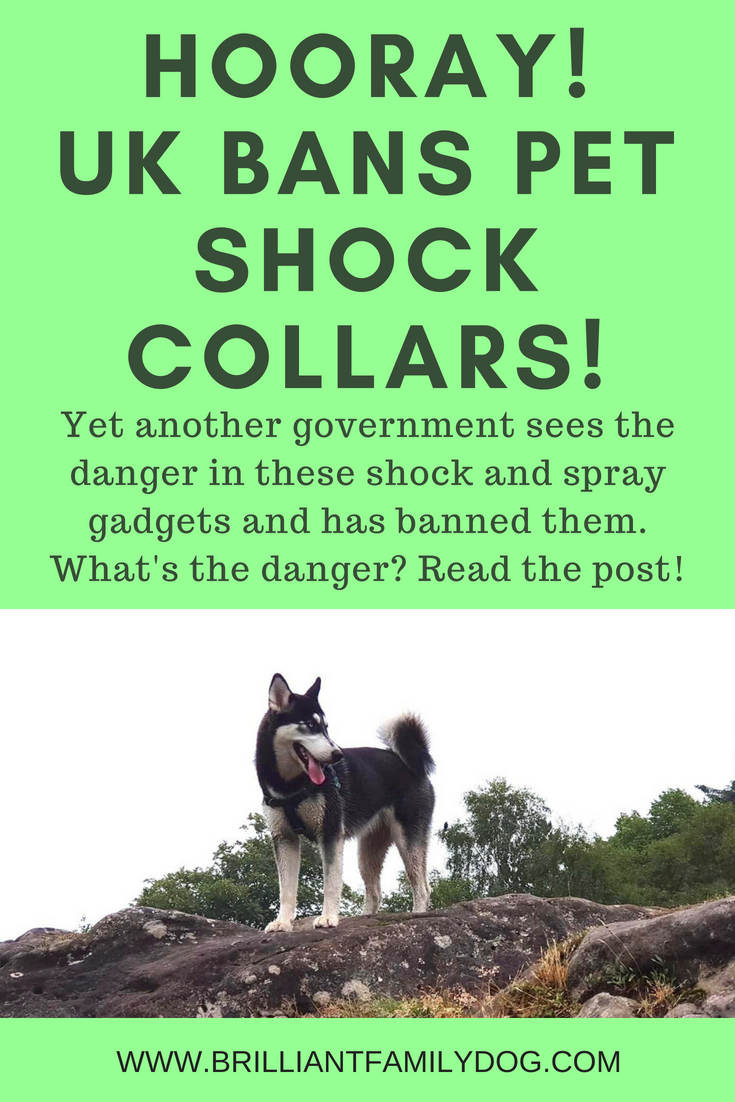
Hooray! Shock collars banned in UK!

More and more civilised countries round the world are banning shock collars - e-collars, electronic training collars, electronic spray collars| These gadgets are not only cruel but also harmful and can give you the exact opposite from what you wante…

I wish I could say that these inhumane torture devices were banned universally, but sadly that is unlikely ever to happen.

What I can say is that England has just now joined Wales and Scotland in banning the beastly things for cats and dogs. The details of the legislation haven’t been released yet. Sadly the British government stopped short of banning underground electric shock fences and their collars. Why one shock is allowed and another not, I don’t know.

Known as e-collars, shock collars, training collars, they can deliver up to 6,000 volts to the dog’s neck, directly into the holes made by the spikes in the collar, which can last up to 11 seconds. Factor in that some electronic gadgets are faulty, and there are collars that don’t turn off at all, and you truly have an instrument of torture.

Also banned are collars that make a painful noise in the dog’s sensitive ears, or squirt a nasty liquid into his face. Once squirted, this scent remains in the dog’s nose, making this a long and painful punishment.

The use of shock collars is now also banned in Denmark, Norway, Sweden, Austria, Switzerland, Slovenia, Germany, and in some territories of Australia - New South Wales and Southern Australia. 

So civilisation is slowly creeping over the world!

Why are they bad?

Science has proven without any doubt whatsoever, that associating good things with something has the effect of making that thing acceptable to an animal.

The opposite is true: associating bad things with something will make the dog more reactive or fearful of the thing.

Example: A dog is pulling on the lead. Just as the misguided owner administers an electric shock, the dog catches sight of a child. Now children are associated with pain and fear. How long before the dog takes matters into his own paws and bites a child to keep this dangerous thing away from him before he gets another shock? 

It’s simple science - not the rocket variety! 

Dog or Puppy problems? Get your free 8-lesson email course and solve them all painlessly!

THIS FREE ECOURSE IS A BONUS FOR YOU WHEN YOU SIGN UP TO RECEIVE EDUCATIONAL EMAILS AND OCCASIONAL OFFERS FROM ME. YOU CAN UNSUBSCRIBE AT ANY TIME.
Privacy Policy

What can you do to accelerate this change? 

Many people think that the collars are harmless and just give a tickle to the neck. If you believe this, try one on your toddler. Or your neighbour’s toddler if you haven’t got one. No? Thought not … 

And many people also think that it’s right to change an animal’s behaviour by torture and punishment. Have a look at Amnesty International and see what they think of that! If it’s wrong to do this to people - and I’m sure if you’re reading this post you agree with that! - then how can it be right to do it to animals?

Be aware that people who do use them have a raft of excuses ready to pour out to you. To me that smacks of “the lady doth protest too much”. They know it’s wrong, but they try to justify it to themselves and anyone else who will listen. 

What it comes down to is that people like to dominate others, including animals. Some think force is acceptable. And making their own life easier at the expense of others’ rights and dignity is ok by them. 


I was offered money to promote these

I’ve had a few emails recently from websites who promote these nasty devices, and other collars which I would consider cruel or aversive. They offered me money to advertise them on Brilliant Family Dog. How desperate are they? 

There’s no way I’d advertise them - “not even for ready money” as Oscar Wilde put it! 

You can rest assured that you will never find cruel or aversive, punishing devices or methods promoted here! We know that the results we want can all be achieved by kind and gentle methods. Yes - it sometimes may take longer, but we’re not just looking at the result: the journey itself is enjoyable.

With your own family it’s the daily give-and-take that creates the abiding love and comfort that drives us to make family groups. We don’t just want the perfect, finished, child (or husband!). We live the process daily and enjoy what it brings to our relationships. 

And that is what I do with my pet animals too (and my farm animals when I had them). It’s the process of training, growing understanding, mutual appreciation - love - that is what we want in a relationship with our animals. Taking a shortcut to the desired result cuts all this learning out.

What people miss by doing this!

Other nasty things

Would you use an electronic shock collar on your child? Of course not! So why use one on your defenceless dog? These gadgets are not only cruel but also harmful and can give you the exact opposite from what you wanted. | FREE ECOURSE | #shockcollar,…

Sadly man has devised other nasty things for the animals we choose to share our homes with. Reminiscent of the slave trade collars long since banned, the “prong” or “pinch” (what a euphemism!) collars are also promoted for a quick fix for any dog behaviour problems.

These collars have spikes on the inside that dig into the dog’s neck. “Oh, it doesn’t hurt him!” the deluded owner may say. Again - try it on someone you love. 

Keep in mind that dogs’ necks and throats are physiologically identical to our necks and throats. All the components are in exactly the same place as ours are. The only difference is a light bit of hair-covering, soon worn away by the use of these collars. 

If you need evidence that the people who use these collars actually know that they’re wrong and demeaning, know that there are now disguised collars available. From the outside it looks like a pretty collar. Inside are the rows of teeth. Despicable. 

What can I do instead?

So to end on a happier note - people are now realising how wrong this all is, and governments are taking action to ban their sale and use. 

What else can you use to get the results you want with your difficult or challenging dog? Check out our free courses and start learning a new way of working with your dog which is pleasurable for all parties. Watch your dog blossom!

You could start with this one which gives you simple kind and painfree "recipes" to change aspects of your dog's behaviour which you don't love.


Dog or Puppy problems? Get your free 8-lesson email course and solve them all painlessly!

THIS FREE ECOURSE IS A BONUS FOR YOU WHEN YOU SIGN UP TO RECEIVE EDUCATIONAL EMAILS AND OCCASIONAL OFFERS FROM ME. YOU CAN UNSUBSCRIBE AT ANY TIME.
Privacy Policy

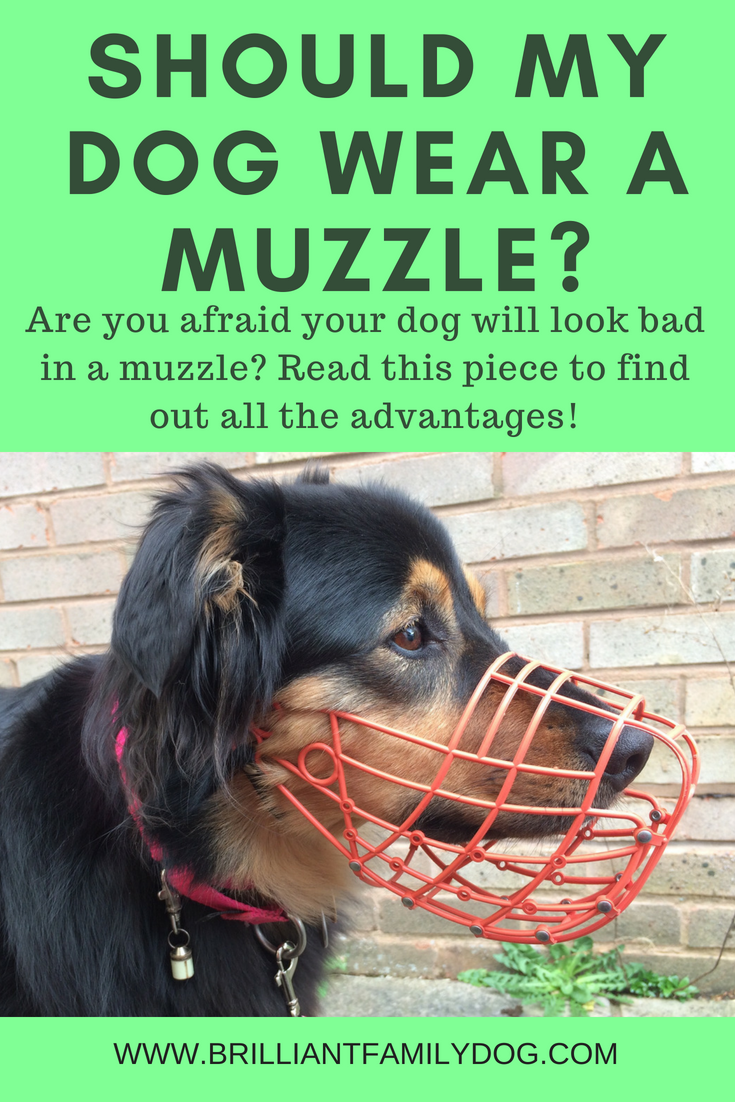
 

Should my dog wear a muzzle?

Should my dog wear a muzzle? I’m worried that people will think my dog is aggressive and I’m a bad dog-owner! Find out here how to teach your dog to love wearing a muzzle | FREE EMAIL COURSE | #aggressivedog, #reactivedog, #dogtraining, #growlydog, …

This is a question I get a lot. And it usually comes from people who really, deep down, know the answer. They just can’t bring themselves to take this step.

So first off - if your dog has bitten anyone or anything, or you fear he may bite - have sense and muzzle-train him. This is not only for safety, but also for the health of your heart-rate and possibly your bank balance, if things go badly wrong.

There are many useful occasions for a muzzle - a vet or groomer visit for an anxious dog is one. Far better for your dog to be used to his muzzle and arrive already wearing it, rather than be man-handled by staff putting a strange one on him. 

Then there’s the slug-muncher and stone-eater - and harvesters of other unmentionable stuff that some dogs take a fancy to! Rather than try and catch him and nag the whole time, just prevent it.

If you don’t want something to happen, don’t let it happen


Some dogs can cope with people outside the house, but visitors inside the house terrify him. Give yourself and your dog a break by muzzling him before your guests arrive. Once you relax a bit because you know your friends and family aren’t going to be shredded and spat out on the carpet, your dog will have a better chance of relaxing too. Of course the dog must be happy to be there - not just forced in on the basis that he’s no longer dangerous!


But people will think my dog is nasty!

Maybe they will. Maybe they won’t. (Maybe they do already.) If they’re strangers, do you really care? And if they’re friends, you can explain to them. 

One surefire thing about a muzzle is that it tends to keep people away - which is just what you want! They think your dog must be dangerous and therefore move their dogs and children aside, as well as themselves. It doesn’t seem to occur to them that your dog is actually the safest of all now! But this is a good outcome. Your anxious dog doesn’t need people/children/dogs in her face.

If you feel anxious yourself about muzzling your dog, think how you’ll feel if you relax your vigilance for a moment and your dog bites someone! Would that be worse? Definitely. Bite the bullet and just do it.


What sort of muzzle should I get?

There’s quite a variety of muzzles available. 

• Cloth muzzle: this is the sort that vets may put on a dog for a few moments while they treat her. It should never be on for long - or be put on an unsupervised dog - as it prevents the dog from panting or drinking, and is therefore dangerous. It’s also not advised for brachycephalic dogs (squashed-nose dogs, so popular at the moment) as they already struggle to breathe and these cloth muzzles have proved fatal in some cases for these dogs. So on no account get this one!

• Basket muzzle: what you need is a basket muzzle that allows your dog to open her mouth fully, to eat, drink, pant, and not feel constrained. But these vary hugely, and you need to get the right one for your dog.

Should I muzzle my dog? I’m worried that people will think my dog is aggressive and I’m a bad dog-owner! Find out here how to teach your dog to love wearing a muzzle | FREE EMAIL COURSE | #aggressivedog, #reactivedog, #dogtraining, #growlydog, #dogm…

• Baskerville muzzles: perhaps the commonest. They don’t allow full opening of the mouth. The inability to pant could have serious consequences for a dog who needs to lower her body temperature. 

• Baskerville Ultra muzzle: is often the go-to muzzle as it’s widely available. But this doesn’t mean it’s the right one for your dog! They have an optional head-strap which can be useful for keeping the thing on, but they are really designed for brachycephalic dogs and are too short for longer-nosed dogs. See Lacy in hers. She hated it - you can see that in the photo. Any larger and it would have fallen off her face. 

 • Leather custom-made colourful muzzles: very expensive and they look pretty constricting to me. It looks hard to get treats in at the right moment (essential if you’re working on counterconditioning an anxious or fearful dog). But I know some people like them.

• Racing greyhound muzzle: my favourite, and the one Lacy is wearing in the other pictures. Made to measure, available in loads of colours, incredibly lightweight, it allows full opening of the mouth for even a gasping racing dog, treats are easy to administer, and most important - Lacy is very happy to wear it. She comes forward and puts her face in, as opposed to running and hiding as she did when she saw the Baskerville Ultra.

Bottom line: your dog should find the muzzle comfortable, it should be easy to slip on, secure, and allow your dog to drink, pant, eat treats, and possibly play.


Muzzles are ugly

They don’t need to be! You can decorate your dog’s muzzle any way you like. You can see I “girlified” Lacy’s black muzzle, and I’ve added a little fleece to the top of her pink racing muzzle in case it chafed. It never did, but I felt it was kinder to cushion it as sometimes she will be wearing it for a couple of hours at a time. 

You can use paint, stickers, ribbons, sparkly stuff (make sure it can’t flake into your dog’s eyes or nose) - anything that shows that your dog is loved.


I tried a muzzle once and my dog hated it and kept scrabbling at her face!

Wouldn’t you? If someone slapped a cage on your face without asking? 

Just as with any bit of dog gear - harness, collar, coat - you have to acclimatise your dog to this slowly. The idea is to associate the new thing with a steady flow of treats until your dog can’t wait to put her nose in! 

Start by treating her for just looking at it; then for sniffing it, then for touching it with her nose … and so on. Those three steps alone may take you three days or more! Go at your dog’s speed, don’t try to rush. 

The key is that your dog should always have the choice to move forward to interact with the muzzle. You’re not grabbing her and whamming it on!

There is an excellent how-to video in the Resources below. Do watch it then work through it step-by-step. Once you’re at the stage of putting the muzzle on before a walk, your dog will associate it with treats and a walk. 

This is the perfect ending - as long as your dog likes walks! If not, then have a look at some of the other Growly Dog posts here.


There is no stigma in being a responsible dog-owner!

Your muzzled dog will be able to enjoy group walks again! Find out here how to teach your dog to love wearing a muzzle | FREE EMAIL COURSE | #aggressivedog, #reactivedog, #dogtraining, #growlydog, #dogmuzzle, #dogmuzzletraining | www.brilliantfamily…

Don’t think you are appearing a bad owner if your dog is wearing a muzzle! You are being a responsible owner! You are acknowledging that your dog has difficulties in certain areas of her life and you are aiming for the best possible outcome. Never be ashamed of this. 

Muzzling your dog may allow him valuable off-lead time. This does depend on the level of his anxiety and the amount of behaviour modification training you’ve put in place. You must always think safety first. 

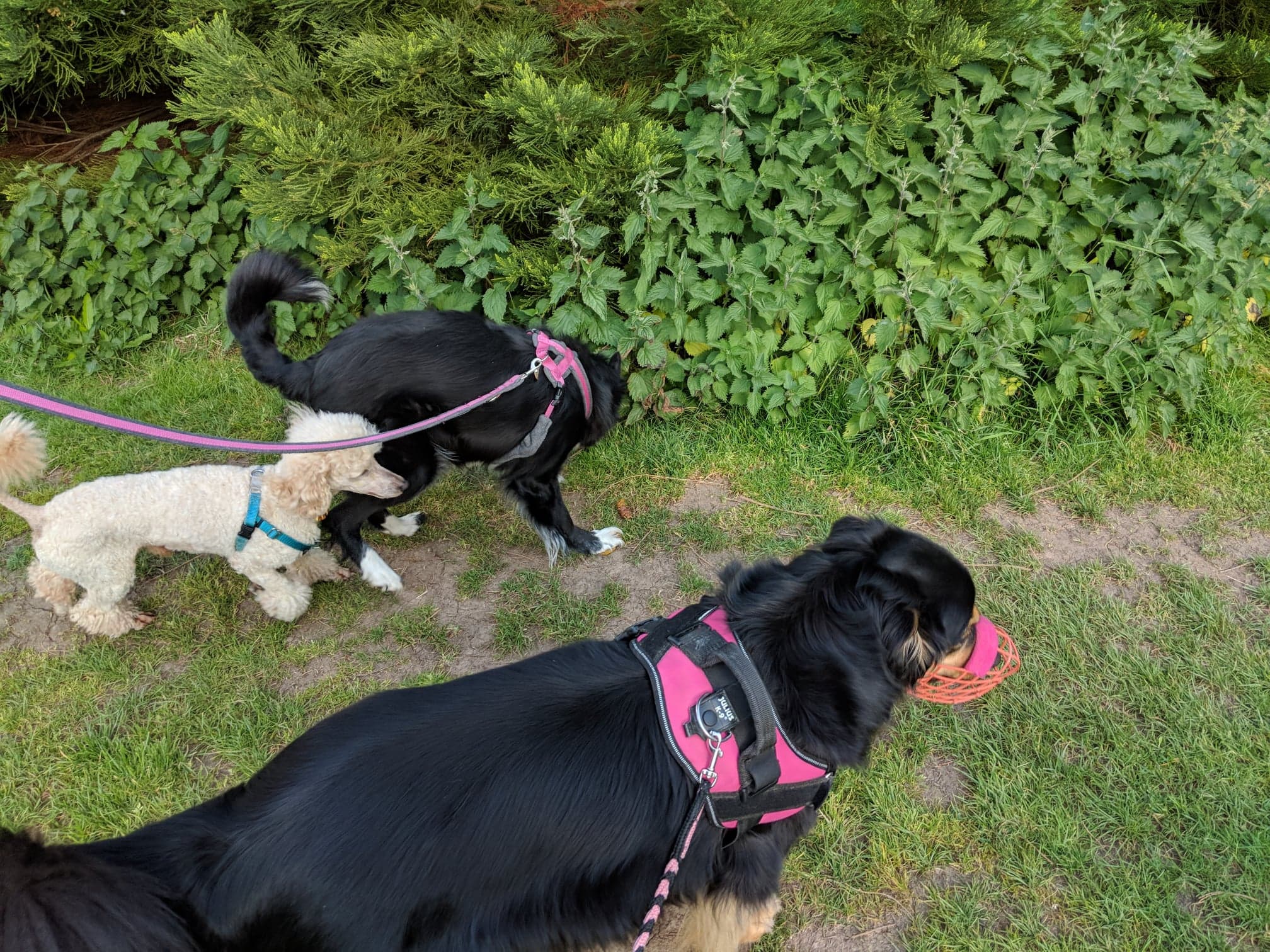
As you can see in the photo, a group walk can be made possible for a muzzle-trained dog. Ensure your dog is happy with the space between her and the other dogs so she doesn't feel trapped.

And it doesn’t mean the end of fun for your dog! I know dogs who wear the same muzzle as Lacy who can still play with their beloved toys as they can press down on the ground and get a grip on its “handle”. So a ball on a rope is the ideal solution for the toy-mad dog who needs to wear a muzzle.

Store your dog’s muzzle in a prominent place near your leads and harnesses. Put it on your dog proudly! Be glad of how much relief it brings you. And know you’re doing the right thing.


Resources

Muzzleupproject
Teach your dog to wear a muzzle with Chirag Patel
Racing muzzles
Doglaw - excellent dog-specific legal advice for the UK

Free 8-part email course for your Growly but Brilliant Family Dog!


Want some help with your challenging dog? Hop over to our free Masterclass for Growly Dogs, which gives you practical techniques you can use straight away to make your your dog - and your walks - calmer

Do you make this mistake with your dog?

Want to take your shy dog to a cafe? You can! Follow the suggestions here and you can make it work, and really enjoy your family dog | FREE VIDEO COURSE | #problemdog, #reactivedog, #dogtraining, #growlydog, #puppysocialisation | www.brilliantfamily…

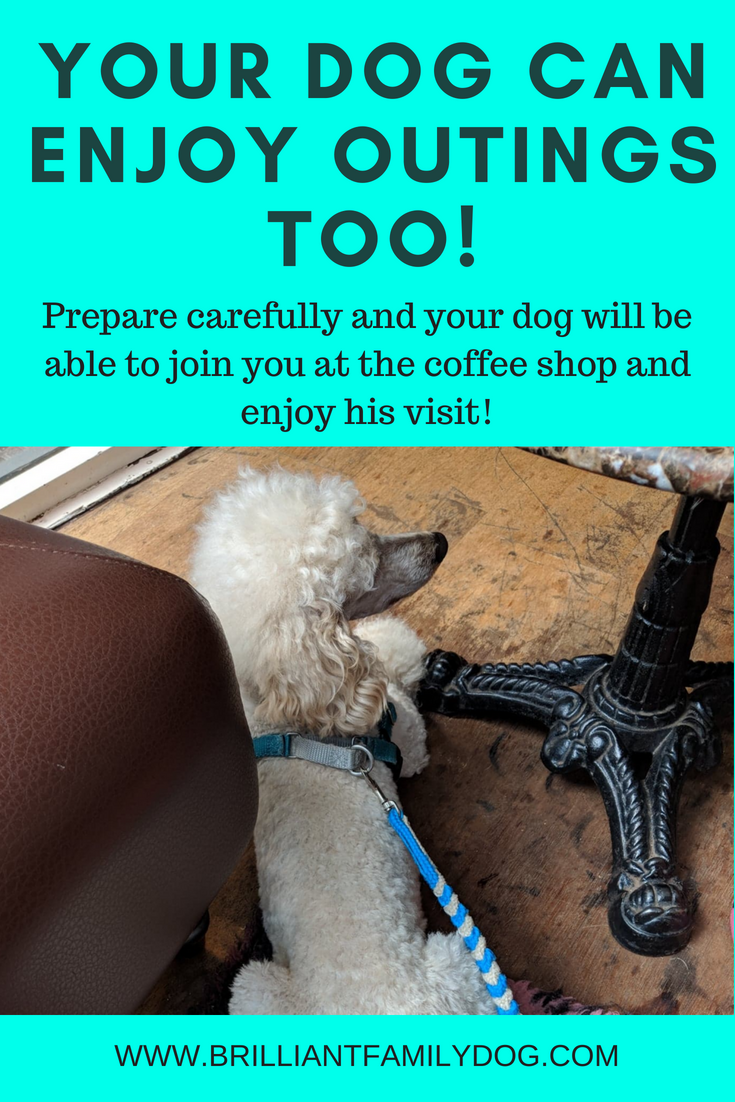
I was sitting in a cafe with Coco Poodle lying beside me on his mat, calmly watching the other visitors, with a chew to engage him too. 

I’d chosen a quiet place out of the way of foot traffic. He couldn’t get trodden on, and I know that he also enjoys being able to see out of the big windows.

Dog or Puppy problems? Get your free 8-lesson email course and solve them all painlessly!

THIS FREE ECOURSE IS A BONUS FOR YOU WHEN YOU SIGN UP TO RECEIVE EDUCATIONAL EMAILS AND OCCASIONAL OFFERS FROM ME. YOU CAN UNSUBSCRIBE AT ANY TIME.
Privacy Policy

At a table right in the middle of this cafe, a woman was reprimanding her small dog. He clearly felt uneasy with all the activity around him - people walking this way and that, almost treading on him - and was seeking security by trying to get onto her lap. 

“Get off!” “Down!” “No!” “Get down!!” she kept saying.

This did nothing to allay her dog’s anxiety, and her attention was simply fuelling his desire to climb up. 

Eventually he gave up. He was defeated and alone. He looked around him - worried - and sat.

And what did his owner say to this?

Absolutely nothing.


Want to take your shy dog to a cafe? You can! Follow the suggestions here and you can make it work, and really enjoy your family dog | FREE VIDEO COURSE | #problemdog, #reactivedog, #dogtraining, #growlydog, #puppysocialisation | www.brilliantfamily…

Consider your dog's comfort too

I thought it very sad that she had no thought of why her dog was trying to jump on her. She was only concerned about what people may think. Her barrage of commands was a knee-jerk reaction to the dog’s paws on her lap. 

She then compounded her error by nagging the dog repeatedly - and when he eventually complied (more by luck than by judgment!) she ignored him.

I’ve no doubt that this lady’s a kind and friendly person who thought she was doing the right thing to get her dog to behave in public. But unfortunately many people have no idea how to achieve this except by using bossy methods.

Sadly she’d got it quite the wrong way round!

What you focus on is what you get.

Drawing attention to what she didn't want was making it more likely that that was what she was going to keep getting!

So what would have worked better?

*If she had responded to his fears and need for reassurance he would have settled sooner.

• If she had ignored his clambering attempts then responded to him warmly when he stopped she’d have had far greater success at keeping his feet on the floor. 

• And if she had realised that the middle of the cafe was not the best place for her nervous little dog and chosen a better place to sit,

• given him a mat or blanket or her coat to lie on,

• dished out treats freely for him being quiet and calm, 

• responded by reassuring him that the floor was a safe place to be,

• and had come prepared with a foodtoy or chew for him to focus on, 

it would have been better again.


It’s a very small change - just a switch from being reactive to being proactive.


But it will change your dog’s state of mind in an instant.


Lots more ways to become proactive and stop nagging your dog in our free 8-part email course!

Get your free email course to sort out lots of puppy problems

THIS FREE ECOURSE IS A BONUS FOR YOU WHEN YOU SIGN UP TO RECEIVE EDUCATIONAL EMAILS AND OCCASIONAL OFFERS FROM ME. YOU CAN UNSUBSCRIBE AT ANY TIME.
Privacy Policy
>

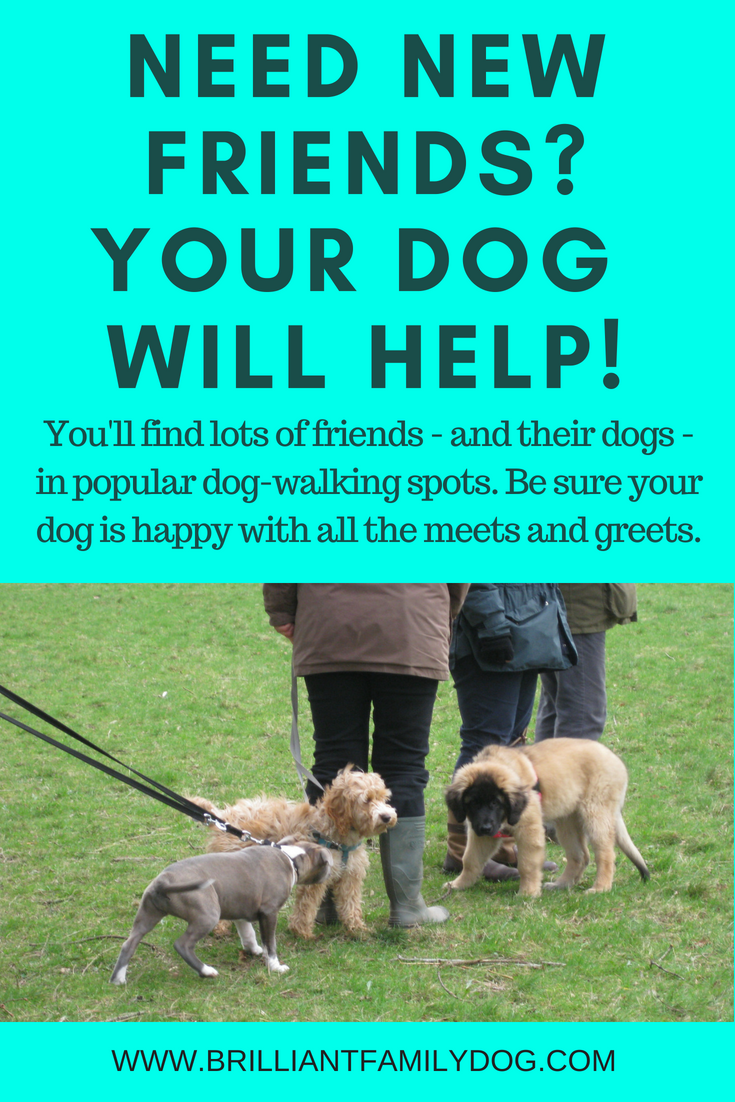
12 Ways Your Dog Can Make You New Friends

It’s just you and your dog now … how can you make new friends? 12 ideas here to meet other doggy people in your new life | FREE ECOURSE | #newpuppy, #dogtraining, #newrescuedog, #puppytraining, #dogbehavior, #dogfriends | www.brilliantfamilydog.com

You’ve retired, or just packed in work, or moved to a new area: your life has changed. In some ways so much better, but in others not so good: you just don’t get to see as many people these days. 

You’ve no interest in night clubs or bars, you’re not really that bothered about a “love interest”, and you’re shy of clubs and societies. But a few more friends to chat with about common interests would be nice. Trouble is, the less you see of people the harder it is when you do see them. 

But have you forgotten your dog?

Being out and about with your dog is a great way to start casual conversations with people who have at least one common interest. It’s a surefire way of filtering out all those who don’t like dogs: they won’t want to go near you!

And before you say, "But my dog's not friendly," you can still follow a number of these suggestions with success. You may find some very understanding new friends who have similar issues with their own dog - you can help each other to improve your dogs together!

Get your free email course to sort out lots of puppy problems

THIS FREE GUIDE IS A BONUS FOR YOU WHEN YOU SIGN UP TO RECEIVE EDUCATIONAL EMAILS AND OCCASIONAL OFFERS FROM ME. YOU CAN UNSUBSCRIBE AT ANY TIME.
Privacy Policy
Let's find some new friends!

1. Lots of people love puppies. If you’re in the happy position of having a puppy you’re away! This fits in nicely with the fact that your puppy should be going out from the day you get him, to meet as many people as possible, and see lots of dogs and other things in our world. Need to know more about this? Check out this post. If your dog hasn’t seen puppyhood for a good while, you may get away with calling her “Puppy” and provoking some Oohs and Aahs. People who can see she’s actually 7 years old will just consider you a little eccentric - which is attractive to many people, so no loss there.

2. Visit the Vet’s. There are vets, vet nurses and vet techs, and other pet-owners in the waiting room. You don’t have to be suffering from Munchausen By Proxy Syndrome - your dog doesn’t have to be sick! You can drop in to fix up for wormers or vaccination boosters - or just ask to weigh your dog on the scales or check their displays of toys. Here's a post to enjoy a good vet visit with your dog.

3. Take your dog and a book or e-reader to the Cafe. As I love coffee shops this is one of my favourite dog outings. Teach your dog to switch off and be calm on a mat and you can take him and his mat everywhere, reliably, along with some chews and other such doggy entertainment. If you’re open to it, you’ll hear people’s life stories over your coffee.

4. Walk in popular places in town as well as the country. (Essential for puppies) This works very well if you have a pretty dog. Your dog isn’t pretty? How about some ribbons on her collar, or some sparkly stars on his lead, or a pretty jumper for the cold weather? Look friendly and hang around as if waiting for someone and people will approach your dog and you.

5. Perform tricks in popular places. Instead of wasting your time sunbathing on the beach, teach your dog some tricks there. These can be very simple, like “Give me a hug” - sitting with both paws on your leg, or “Say Hi” - waving a paw. You’ll get a genuinely appreciative audience. And the funny thing is that they’ll think your dog is so clever - they won’t twig that it’s you who was clever enough to teach him!

How can you meet new people safely? Take your dog along! The best ice-breaker (after babies!) 12 ways to meet new people in this post | FREE ECOURSE | #newpuppy, #dogtraining, #newrescuedog, #puppytraining, #meetingdogpeople, #dogfriends | www.brill…

6. The dog park: if your dog comes reliably every time he’s called (hint: you can teach this!) people will admire you and want to talk to you to find out how it’s done. Walk in exciting new places. If you hit the trails with your dog in all weathers, you’ll find others who love the great outdoors - with or without dogs. 

7. Passing the local school on your walks. This is essential if you have a puppy - they have to get used to children shrieking and running. Your older dog needs to be child-friendly, of course. PC Warning: Gentlemen - take care! Probably only do this if you are a woman or have children with you. Meeting the local police is not on your agenda!

8. Dog classes: be sure to choose force-free classes that are dog-friendly. That may sound batty to you - looking for a dog-friendly dog training class - but sadly lots of classes are not in the least dog-friendly (and some of them aren’t people-friendly either!). So do some research first - if they don’t let you visit to watch, move on. There’s no need to treat your dog any differently than you would treat a three-year-old child, so there’s no room for nasty devices, shouting, intimidation, "dominance", being the pack leader, and other such nonsense. You’ll find other like-minded people there, who also love their dogs and don’t feel they have to boss them around to feel big themselves. 

9. Other dog walkers: you can fall into step with them for a few yards and see if you’d like to know them better. If you’ve gone through everyone who walks at your usual walk time, try another time or place and you’ll find a whole lot more people and dogs!

10. In the pet store. Nice outing for your dog to sniff all the toys and choose one, get up close to hamsters and budgerigars (as long as he’s not frightening them) and check out the cat toy section to find out what makes them tick.

11. The groomer, for fuzzy dog owners. Even better - the grooming class at your local education institute: lots of fellow students with similarly fuzzy dogs, and a cafeteria at break time where you can get to swap phone numbers for companionable fuzzy walks.

Take up a dog sport and you’ll make loads of new friends - for you and perhaps for your dog too! Lots more ideas in this post 12 Ways your Dog can make you New Friends | FREE ECOURSE | #newpuppy, #dogtraining, #newrescuedog, #dogsports, #meetingdogp…

12. Take up a dog sport - there’s Dancing Dogs (hey, guys, some of the best-ever Dog Freestylers are men!), Cani-cross - cross-country running (or walking) with your dog, Rally, Skijoring, Agility, Flyball, Nosework and Tracking, Search and Rescue, Earth Dogs (tunnelling for terriers), Lure Coursing (for speed kings). Or you could help people in hospitals and institutions by training your dog as a Pets as Therapy (PAT) dog. Some of these activities are fiercely competitive, some just for fun, and some are a help to the community and will earn you great respect.


Don't forget your free email course to sort out lots of dog behaviour problems

THIS FREE GUIDE IS A BONUS FOR YOU WHEN YOU SIGN UP TO RECEIVE EDUCATIONAL EMAILS AND OCCASIONAL OFFERS FROM ME. YOU CAN UNSUBSCRIBE AT ANY TIME.
Privacy Policy

Lost your car keys? Get your dog to find them for you!

Teach your dog to retrieve, fetch, and bring back - your keys! your phone! your purse! Step-by-step instructions to an enthusiastic retrieve | FREE GUIDE | #retrievetraining, #dogtraining, #searchdog, #puppytraining, #dogbehavior | www.brilliantfami…

You’ve sorted the lunch boxes, the kids are ready, the dog’s had a game, the breakfast table is sort of cleared. You’re rushing to get out of the house - and you’ve lost the car keys. Again. 

As my friend Susan - an always-busy farming mother - used to say, “It’d be easier to get out of Fort Knox with a bag of money on my back than to get out of this house on time!”

Instead of panicking and pulling the house apart, book by book, toy by toy, sock by sock, cursing the dog for being under your feet, why not employ said dog to help you?

We’ve all heard the astonishing stories of the power of dogs’ noses, searching for casualties in earthquake zones, detecting cancer on their owner’s skin, unearthing long-dead creatures to roll in …

So in this family of equal opportunities, let’s allow our dog to contribute her own special skills to solve the problem. She could find those keys for you in moments.


How could that possibly happen?

There’s a trick here, of course.

It’s not going to work if you yell at your dog in the midst of your rush and panic. You have to teach her first!

But it may surprise you how quickly she can learn to help you in this way.

Get your free guide to teach your dog a retrieve!

THIS FREE GUIDE IS A BONUS FOR YOU WHEN YOU SIGN UP TO RECEIVE EDUCATIONAL EMAILS AND OCCASIONAL OFFERS FROM ME. YOU CAN UNSUBSCRIBE AT ANY TIME.
Privacy Policy
You can start by getting some kind of soft or fluffy key fob, about tennis ball size would be good, a small soft bear would work - or you could plait some fleece to make a longer soft “handle”, perhaps with a knot on the end. You can even scent it with a tiny drop of vanilla essence to enhance its powers. If your dog is very mouthy and chewy you will do well to buy or make two or three of the same keyfobs, in case one gets over-enthusiastically loved to death

You’ll also need some sensationally good treats - tiny cubes of cheese or hot dog usually hit the spot.

Now you can play a game with your dog with this new toy. Keep the sessions very short - maybe one or at most two minutes - and FUN! 

Here’s your ten-step program to a retrieving wizard

Get your dog helping you about the house! Here’s a step-by-step instruction to an enthusiastic retrieve, whether of your keys, your phone, your socks … | FREE GUIDE | #retrievetraining, #dogtraining, #searchdog, #puppytraining, #dogbehavior | www.br…

1. Start by producing the key fob and holding it out to her - not in her face, just out in front of you. The second she so much as glances at it, say YES with delight (this is a game, remember!) and give her a small yummy treat. Put the toy behind your back again.

2. Repeat this peek-a-boo game until your dog is very keen to engage with this new toy and get her reward every single time it appears in view. By now you should have bright eyes and a swishing tail.

3. Hold the toy out to her. She’ll look at it and expect her treat. WAIT for just a moment, maybe waggle the toy a little, till she touches it with her nose. YES! Reward! If she bats it with her paw instead, ignore that and hold it much higher up.

4. After a couple of nose touches, WAIT for her to put her teeth on the toy. Maybe she’ll just give it a lick, or just maybe she’ll open her mouth a little. She may worry that she’s not allowed to touch it, so encourage her wildly and make your YES joyful with a particularly scrummy treat. End of first session. Have a game with her with one of her own toys, and put yours safely away.
[You may need to break this down into three brief sessions. Don’t push it - just get fun and a little progress each time.]

Next session, you can start again showing her the toy and rewarding her. Very quickly you can move the game forward to where you left off last time, with your dog touching the toy with some part of her mouth.

5.  Using the same method, keep saying YES! and giving a tasty treat every time she touches the toy with her mouth. You can gradually encourage her to take the toy in her mouth, with you still holding on to it. End of second session.

Step-by-step instructions to an enthusiastic retrieve, whether your keys, your phone, your socks … | FREE GUIDE | #retrievetraining, #dogtraining, #searchdog, #puppytraining, #dogbehavior | www.brilliantfamilydog.com

6. You’re going to advance this game, making it ever so slightly harder and ever so slightly more like a full retrieve every two or three treats. In other words, take it slowly!

7. You can start to let go of the toy, let her hold it a moment, then take it back - “Thank you!”  It doesn't matter if she drops it. Graduate to holding the toy nearer to the floor for her to take; holding it on your knee, dropping it by your shoe.

Fast forward: within a few sessions you’ll have a dog who gets excited at the sight of your fluffy, scented, key-fob, and who will pick it up when you drop it on the floor and smartly give it back to you to swap for her treat. Work very quickly and she won’t even think of chomping on it.

8. Start tossing the toy further away always rewarding her instantly for giving it back to you. Now you can add your words: “Where are my keys?” every time you toss it. Always put the toy away again after each session.

9. Finally, play hunt-the-toy games. Let her watch you push it slightly under the corner of a rug, then send her for it - “Where are my keys?” Hide it under a cushion on the sofa and send her for it. Find new places to hide it, always making sure she has success and brings it straight back to you to swap for her treat. Keep this really simple - we only want success! We’re not testing our dog, guys.

10. Attach your keys to the fluffy fob. Now you can show her the toy and avert her eyes or leave her in a different room while you go and hide the toy in one of the places she’s found it before. Keep it easy! She’ll search all the old places till she finds it. 

Get your step-by-step instructions to an enthusiastic retrieve, whether of your keys, your phone, your socks … | FREE GUIDE | #retrievetraining, #dogtraining, #searchdog, #puppytraining, #dogbehavior | www.brilliantfamilydog.com

Keep playing this game fairly regularly - don’t wait till you’re in full panic! You know the old saying, “Use it or lose it!” When you need her to find your keys you want this exciting game to be fresh in her mind. I frequently drop things on the floor (on purpose) and ask the nearest dog to “pick that up for me”. They love the opportunity to earn yet another reward!


Not only will your dog quickly learn this game of finding your keys without crunching them in her teeth - not good for electronic car keys! -  but you’ll be amazed how enjoyable it is teaching her. You’ll be watching the wheels go round in her head while she works out the new problem every time you move the goalposts. You’ll develop a new respect for your dog’s abilities. 

And she’ll love being a useful member of the family.

Now … what other things could your dog help you with?

Get your free guide to teach your dog a retrieve!

THIS FREE GUIDE IS A BONUS FOR YOU WHEN YOU SIGN UP TO RECEIVE EDUCATIONAL EMAILS AND OCCASIONAL OFFERS FROM ME. YOU CAN UNSUBSCRIBE AT ANY TIME.
Privacy Policy

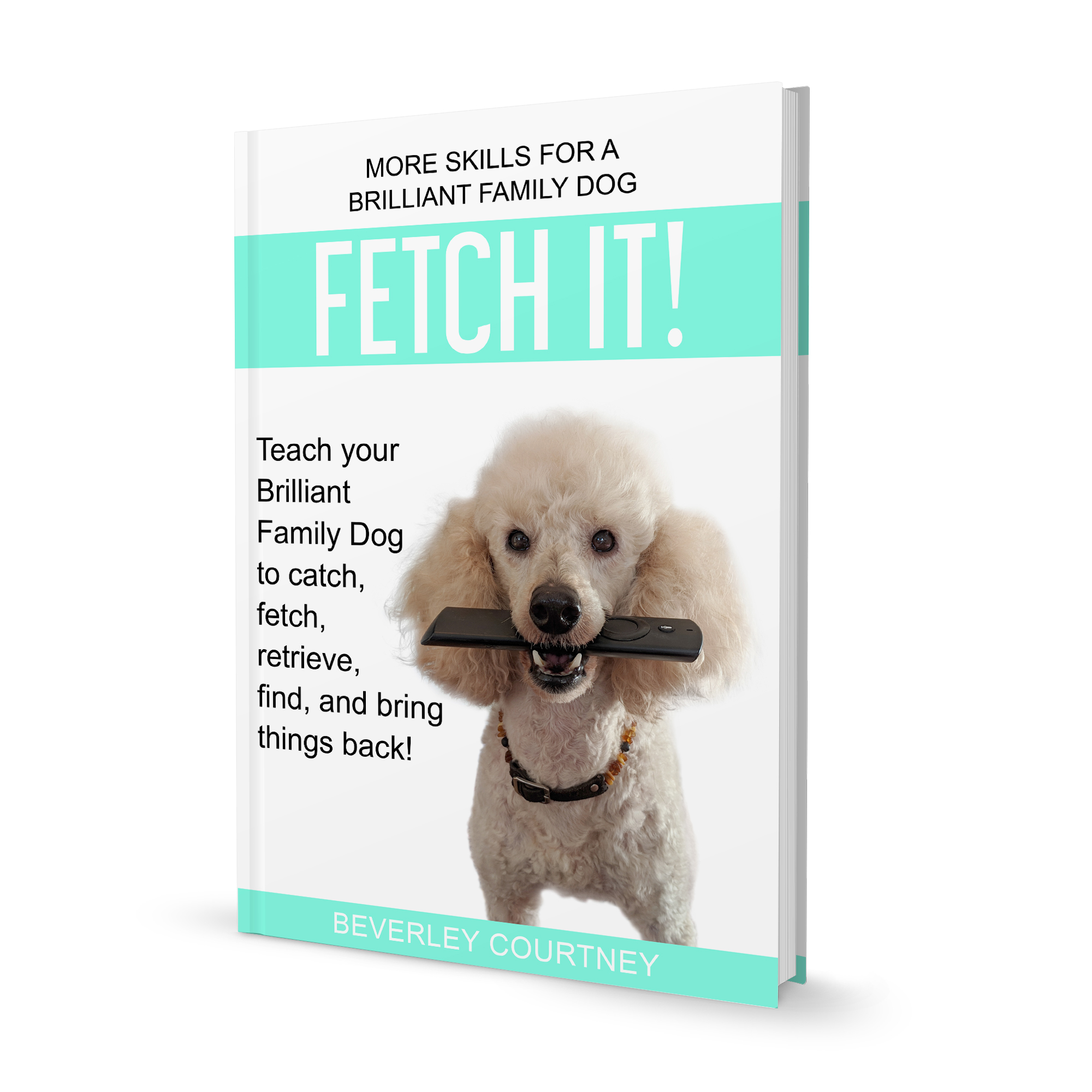
Want to turn your dog into a star retriever? Check Fetch it! Teach your Brilliant family Dog to catch fetch, retrieve, find and bring things back! and enjoy a new relationship with your dog.

Dog trainers and parents know the value of a playpen

Dog trainers as well as parents know the value of keeping your new puppy safe - from electrical wires, other dogs in the house - and keeping them safe from your puppy! Along with children, cats, and grannies | FREE GUIDE | #newpuppy, #dogtraining, #…

Many parents will know the joys of being able to park their crawler in a playpen from time to time and know that they’ll stay safe.

Puppies need to be protected from many of the same dangers as babies. 

But there’s someone that needs to be protected from the puppy!  And that’s your older dog.

Your older dog didn’t choose to get a puppy - you did. 

His opinion hasn’t been asked. There he is, enjoying his peaceful home, when suddenly a ball of fluff and teeth arrives and he is expected to be an unpaid childminder.

Quite soon the pup is ruling the roost. Your faithful older dog is jumped on and chewed mercilessly whenever the pup is awake. If he tells the pup off he gets told off himself. He can’t win.

Don’t abandon your old friend!

Your first dog needs to know that he is still special and has his own life. And a great way to ensure this is by using the playpen.

When it’s time for the pup to wake up and emerge from her crate, you’ll be taking her to the garden, on her own. So once peeing is done, the dogs may like to have a quick game together. Interrupt it as soon as it starts getting rough (even after two minutes if necessary) and divert them to something else - a game with you, perhaps. 

A doggy playpen has endless uses, on holidays and visiting friends as well as at home: read the post to get some ideas of what kind of puppy playpen you want, and how to use it for your new puppy and older dogs | FREE GUIDE | #newpuppy, #dogtraining…

Now is a good time for the pup to go into her playpen, with loads of things to chew and interact with (cardboard boxes, food toy, soft toys, plastic bottles, chews, bones …) while you get on with your work and Dog no.1 gets a break. 

And perhaps some personal time with you.

Not just dogs

The cat is safe from molestation as well, and I don’t have to shriek or grab the puppy to prevent disaster. 

You can zigzag it and divide a whole room, as I have in the puppy pictures on this page. 

I found this most useful - my puppy could be loose in the kitchen with me, the adult dogs could enjoy the freedom of going out to the garden or into the house and into the living room, and could see and interact with me. 

Oh, and if you pop the puppy into her pen when she’s still very young, she’ll never realise that jumping out is an option!

A doggy playpen has endless uses, on holidays and visiting friends as well as at home: read the post to get some ideas of what kind of puppy playpen you want, and how to use it for your new puppy and older dogs | FREE GUIDE | #newpuppy, #dogtraining…

You can get great pet playpens cheaply. The one I use is tall enough to be stable if a taller pup stands up with her paws against it. It has a door. It can be any shape from a hexagon to a rectangle or more creative shapes to fit between or around your furniture. It can be used indoors and out. It doubles as a barrier at an open door.

My puppy playpen also does service as a “balcony” when we’re camping in the van, so I can have the doors wide open and know the dogs aren't going to fall off a cliff. 


Resistance

So it seems strange to me that some people should resist using a playpen for their pup. Some don’t want to spend the (small) money for something they think they’ll only use for a few months. But that is a false economy! It will save you so much bother and moaning at your puppy. Your relationship could be damaged, and for what? 

I’ve used my playpen extensively even though my youngest “pup” is now 4. It really has paid for itself over and over again.

Everyone happy! (Especially Squeak the Cat …)


Check out this article for more ideas on containment, with a free guide to download.