I have a reactive dog - can I get a new puppy too?

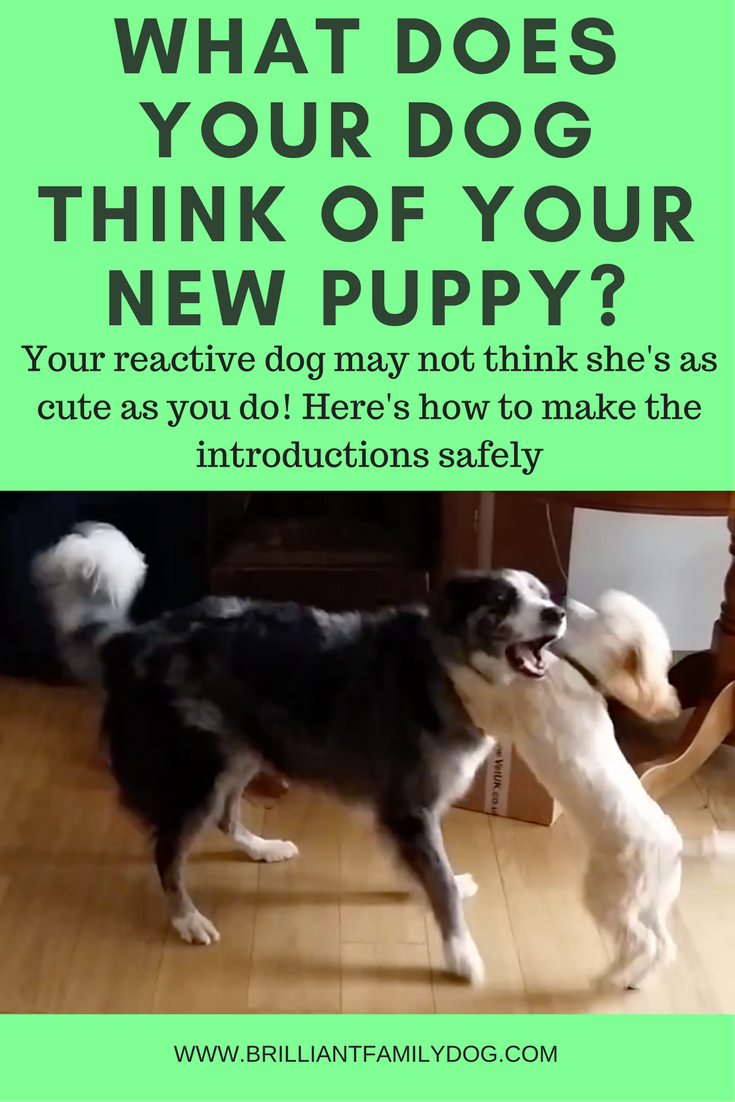
Rollo the Border Collie initiates play with Coco Poodle at 15 weeks - 7 weeks after he arrived!

Rollo the Border Collie initiates play with Coco Poodle at 15 weeks - 7 weeks after he arrived!

Many people who have a reactive dog - one who looks ferocious to strange dogs - wonder if they can ever have a puppy again. And they wonder if their reactive dog would accept the puppy or whether it would all end in tears. 

They may long to give their anxious dog a playmate. This is a nice reason - but quite a lot of dogs are not very interested in playing with other dogs. Even in my busy household, play between any or all of the dogs only happens occasionally - and fairly briefly - and when they’re already excited about something. There are lots of smaller interactions going on, of course, but not necessarily play.

Whether this is the right step for you is something you have to assess with your individual dog. Most adult dogs will - eventually - accept a puppy into the home. Some take a long time, while others are delighted and bond immediately with the newcomer, their behaviour perfectly appropriate and gentle. You can get an idea from your dog’s reaction to a very young puppy by allowing him to see one - but your first consideration here would be the safety and wellbeing of the puppy. Early bad experiences can be hard to erase. So possibly a puppy held in someone’s arms, behind a fence, while your dog observes from whatever is a safe and appropriate distance where he won't bark and frighten the pup. 

So assuming that passed off peaceably enough, actually introducing a young puppy into the home will present its own challenges! 

If your reactive dog is one of those who is not keen on puppies in his face - like my Border Collie Rollo - you’ll need to keep them largely apart for a long while.  But it can all come good in the end, and Rollo is now totally accepting of the three younger dogs in the household, and often initiates play with them. When he’s had enough, the game ends.

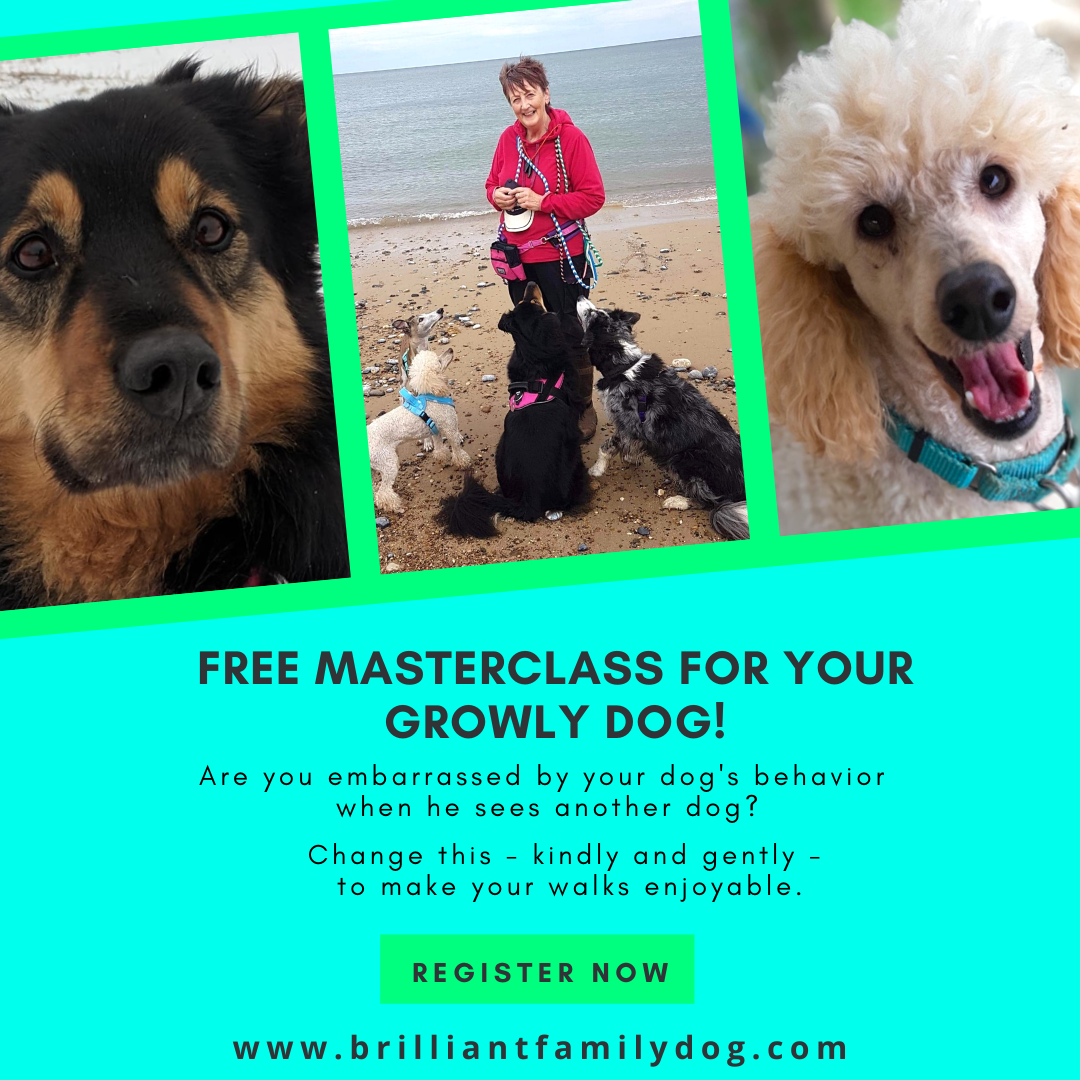
Start the change with your reactive, anxious, aggressive - Growly - dog with our free Masterclass packed with ideas and strategies, all force-free


“Puppy, meet Dog”

So you may be surprised - and delighted - at the success of the initial introductions. But this is only the beginning! I just want to give you a little guidance going forward.


  • You need to focus largely on your new puppy for the next 9 months or so. He’s only going to learn if you put in the flying hours!


  • New pups should be kept separate from older dogs most of the time. Yes - most of the time. You can’t just chuck ‘em in together and hope that it will all go swimmingly. It’s easy to keep them separate because your new puppy needs to sleep around 17+ hours a day, so all that sleeping time should be spent in his crate, in a playpen, or in a separate room. A playpen that opens out as a zigzag that will divide a whole room is really helpful for when the puppy is awake. Last time I had a puppy in the house, the playpen formed a long barrier across the kitchen. The older dogs could go in and out of the garden, upstairs, wherever they wanted, but I didn’t have to worry about the pup’s safety if he annoyed them. So the dogs were not excluded, and could study the new creature in the secure knowledge that they couldn’t be molested by the tiny fluffball!

    And here's a great post about how to use a playpen for best results


  • Remember that your older dog didn’t choose to get a puppy - you did!


  • The general rule of thumb is that your new puppy can play with your older dog for one third of the time he plays with you. So if you interact/train/play with your puppy for one hour a day, that means he gets twenty minutes playing with the older dog - preferably in 3-5 minute chunks through the day. People gasp when I tell them this, as I can see in their eyes that they’re reflecting on the fact that at the moment their dogs have 24/7 access and are forever playing roly-poly games on the carpet. But it’s something you have to do. These early weeks and months are such a valuable time for bonding with your new charge - don’t waste them!


  • If you leave the two dogs together all the time during this vital developmental stage, you’ll end up with a young dog who only listens to the other dog, and never listens to you. (Don’t be like the owner who said to me, “I wish I’d listened to you 6 months ago. Now we’ve just got two hooligans.”)


  • Take time developing play with your puppy. Our play is not as natural as dog-dog play, so you have to work at it. Tug is a great game that harnesses the puppy’s instinctive drive - which all types and breeds of dog have - to locate prey, stalk it, chase it, catch it, and kill it. Taught properly this game builds huge impulse control in your dog. (And uses up loads of energy - yay!)


  • Respect your older dog and make sure he always has space and is never pestered - especially if he’s not so agile any more. Imagine visiting a friend’s house and her children treat you as a climbing frame, poking fingers into your mouth and ears - no, you wouldn’t like it! Sooner or later your puppy will lose his puppy licence and your older dog will say, “That’s it! I’ve had enough!” and snap (or worse) at him. Ensure this can never happen.


  • Make sure to have lots of private time with your faithful older dog, alone. As he is reactive and has his own issues and worries, you’ll need to continue your program to make life easier for him when out. While your training focus should be firmly on your puppy, whose developmental stages will fly by if you’re not paying attention, you’ll find that two dogs does not equal half the work (as you may have thought) but at least twice the work!


  • Never leave the two alone together. Just never. Not just for their safety, but also because what may seem a bad idea to a lone dog (like shredding the cushions) may take on a different hue when a young ragamuffin says “Let’s! I dare you!” When you’re not with them, they should both be asleep.


  • Remember that your prime task right now is introducing your puppy to our world and everything in it, before he reaches the age of 14-15 weeks. The socialisation window gradually closes between 12 and 16 weeks and new things met after that can result in distrust or fear. Follow closely a good guide on Puppy Socialisation, Habituation, and Familiarisation, and ensure all novelty is experienced with a calm, happy puppy. You know a lot about dog body language by now from your reactive dog: watch your puppy like a hawk to learn his signals.


  • Don’t make the common and disastrous mistake of thinking that playing with your older dog at home is a substitute for thorough and careful socialisation! Your brand new puppy doesn’t have to meet dogs yet, but definitely has to see loads of them. All different activity types, colours, coats, ears - they’re all different and new pup needs to experience all of them. Carry him if he hasn’t had his jabs yet.


  • And NO group walks for now. Reactivity is highly catching, so you want to introduce your puppy to the outside world with no fears and poor examples to copy. I wouldn’t walk my new puppy with my reactive dog till pup is at least 6 months (depending on breed - larger dogs 9-12 months minimum).


You have the rest of your lives together to enjoy a great relationship - between you and your older dog, between you and your new dog, and between the two dogs themselves. Don’t hurry and skip any of these vital steps. The time will fly by much faster than you anticipate.


Anything you may regard as restrictive at first sight will be seen to be just plain ole commonsense - and will become an automatic part of your management plan for your household.


Want a step-by-step guide to everything you need to know about your new puppy? Get New Puppy! here, and start on the right paw!

Once your puppy is about 9 weeks old and has settled in with you, you can start working through the Brilliant Family Dog series of how-to e-books. Everything is broken down for you into little steps - and what’s more, check the calm down book! Go get it now.

And hunt around the Blog to find help with Housetraining, Sleeping through the Night, and so on.
Want help with your Growly Dog? Get our free e-course here and get started!

THIS E-COURSE IS A BONUS FOR YOU WHEN YOU SIGN UP TO RECEIVE EDUCATIONAL EMAILS AND OCCASIONAL OFFERS FROM ME. YOU CAN UNSUBSCRIBE AT ANY TIME.
Privacy Policy

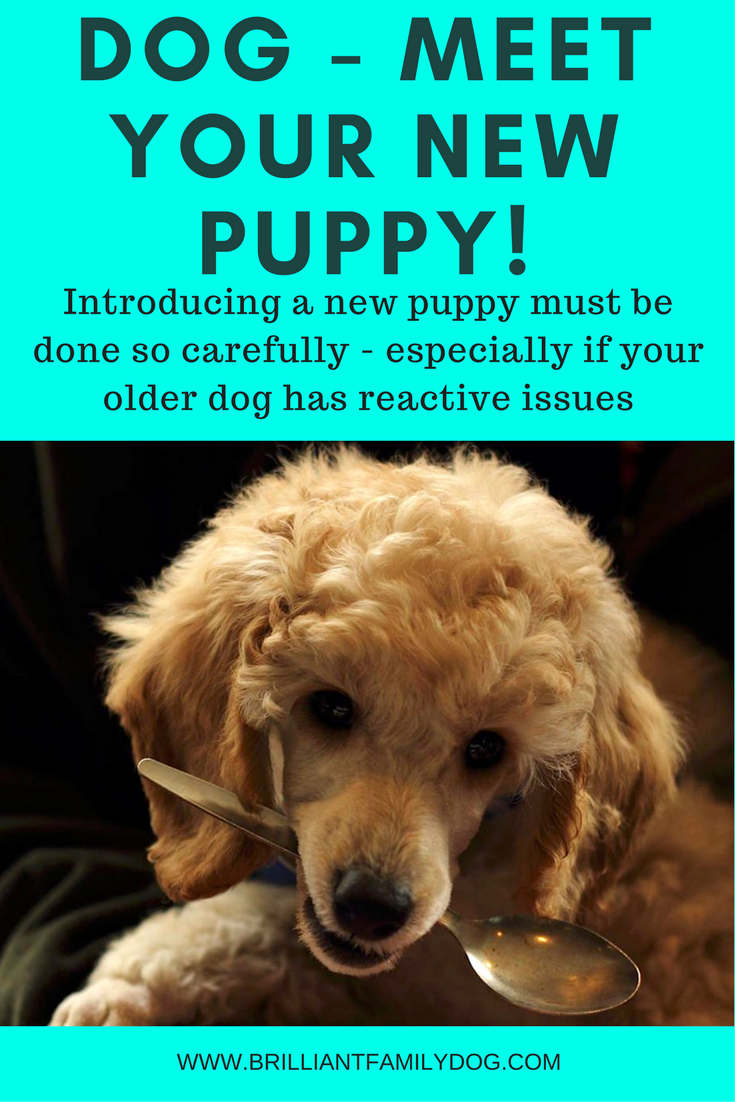
Dog - meet your new puppy

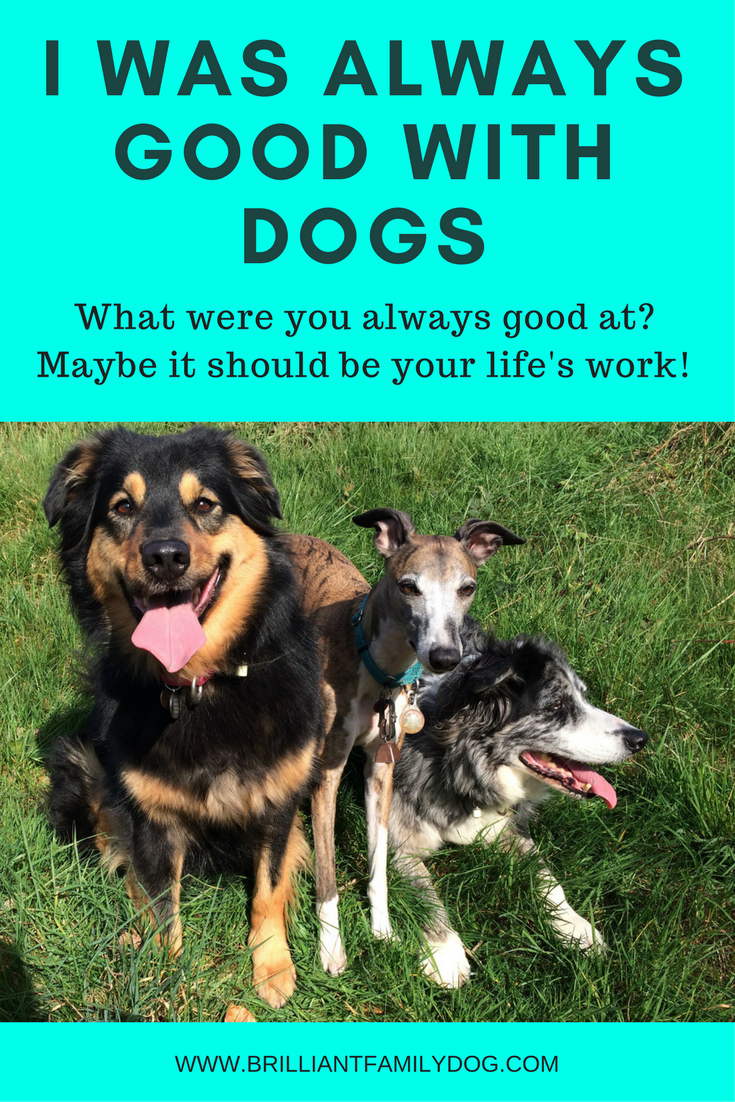
Were You Always Good at Something? I Was Always Good With Dogs

Dog training, new puppy, puppy training, dog behavior | If you’re great with dogs, maybe you should consider studying and making dogs your career? | FREE EMAIL COURSE | #newpuppy, #dogtraining, #puppytraining, #dogbehavior | www.brilliantfamilydog.c…

As a child I felt our family dog was my special friend. Only he understood me. Unquestioning, even when I did some beastly seven-year-old things to him, Simon gave me devotion and fun and companionship. I played at “showjumping” with him in the garden, over homemade jumps - many years before the great sport of Dog Agility was introduced. He went everywhere with me, on all my “explores”. He comforted me when I was down, and made everything more fun.

As I grew up, with the limited choices of a dependent teenager and young adult - i.e. school and bedsits, I missed contact with dogs. Until the happy moment when I graduated, left employment and started working for myself. 

My very first day of freedom was spent at London’s Battersea Dogs Home, sizing up possible soulmates.

And I found one! 

Get your free email course to sort out lots of puppy problems

THIS FREE ECOURSE IS A BONUS FOR YOU WHEN YOU SIGN UP TO RECEIVE EDUCATIONAL EMAILS AND OCCASIONAL OFFERS FROM ME. YOU CAN UNSUBSCRIBE AT ANY TIME.
Privacy Policy

Poppy was perfect. She was around three months old, thin, quiet but curious, and I instantly loved her. The day she became available for rehoming I was sitting on the cold London pavement at 6 a.m., waiting for the doors to open. I was three hours early, but I was at the front of the queue: no-one was going to get in before me and take my pup! 

As soon as we were let in, I raced to the area where “my” puppy was, and claimed her. She cost £9.80, including the collar and lead. After a few formalities I was out on that pavement again, this time carrying my precious new friend.

New Fun, a New Life!

That day marked the beginning of the rest of my life. Poppy came with me almost everywhere. She was sweet and friendly and popular. And it was her bright responsiveness that got her picked up by a talent scout for a local dog training club.

We joined a new world where dogs were regarded as important - a necessity - and accorded attention, respect, and understanding. 

Little Poppy clears the 9 foot long jump with ease at a competition.

Little Poppy clears the 9 foot long jump with ease at a competition.

Competing with Poppy in Agility, Obedience, and Working Trials was rewarding and - importantly - fun! We did well and won frequently. One judge wrote of Poppy, Flower of Battersea: “Such grace and elegance from humble beginnings as shown by her name.” She went on from those humble beginnings to qualify as a Champion, with yards of alphabet after that name. My little shelter pup became W.T.Ch. Flower of Battersea, C.D.Ex, U.D.Ex, W.D.Ex, T.D.Ex. She had more letters after her name than I did!

A proud win with my little waif and stray!

A proud win with my little waif and stray!

I was bitten by the dog-training bug - good-o! Poppy became the first of many dogs who I loved, lived with, and competed with. Down the years I’ve always had three or four dogs at a time - usually of varying breeds or types (I love exploring how different breeds think and function), so I have the daily stimulation of working with a multi-dog household of very different characters and breeds.

And it was the curiosity engendered by those differences that got me further and further into dog training until I qualified as a professional trainer myself. It was not something I had aspired to. But I found that people would ask me about all things dog-related, and that I actually knew more than they did! 

If I could help their dog, then I could help other dogs too. And it is changing the lot of dogs and how people interact with them that is my aim.

Our knowledge of how dogs learn has improved so dramatically over the years that I’m happy to say the more confrontational methods used in my early days are now totally discarded. Force-free training is the way to go - it is proven to work, with children and people, as well as with dogs!

More Dogs and Puppies!

I started with family-based puppy classes. Then people wanted help with their older dogs. They wanted to learn how to teach their dog tricks. So my school grew and started to spread online. 

One of my biggest jumps forward was when I acquired a dog who turned out to be fearful, suspicious, reactive - “growly”. To learn how to help her best fit into our world I had to do a lot more specialist study and take more exams. Finding how well this worked for her meant that I am now able to help other much-loved but growly dogs and their distraught owners. 

Working with puppies on the one hand, and difficult dogs on the other, gives me insights into how to give the puppies the best chance of not joining the problem dogs and becoming difficult themselves as they grow up. (No, I’m not shooting myself in the professional foot here! Sadly the flow of growly and fearful dogs is unabated.)

It’s immensely fulfilling work, and so rewarding when people write to me later - sometimes years later - to tell me how their lives have been enriched. 

This help for local dogs and puppies spread from www.goodfordogs.co.uk - my dog training school in Worcestershire - to here on www.brilliantfamilydog.com where I’m able to reach people from all over the world. One of the joys of doing Live Training Sessions, for instance, is to be able to greet people who are introducing themselves from all over the world.

My online course From Growly Dog to Confident Dog gives me the opportunity to work with people from different parts of the world. We’re all much the same really: we love our dogs and want to make their lives better. 

Publishing a series of books has also brought me to a new audience, and my inbox is daily filled with appreciative emails, and questions from people who are convinced I have all the answers! I do my very best to give them a response which will help with their most pressing problem straight away.

If Simon is on a cloud looking down on me, I hope he’ll feel proud of what he started!

What Were You Always Good At?

My story is yet another case of someone turning their passion into their livelihood. We get to a stage in our lives where what’s really important stands out clearly. 

Not doing it becomes more difficult than doing it.

And if you do it well - with passion and conviction - the people will come. 


Beverley Courtney

BA(Hons) • CPC • ELI-MP • CBATI-KSA • CAP2 • MAPDT • ABTC (Registered Animal Trainer) • UKCPS Silver

But I have to keep my dog on a short lead, or else … [insert disaster here]

Reactive dog, aggressive dog, fearful dog, dog behavior | How you handle the leash can make a huge difference to your dog’s reactions | FREE EMAIL COURSE | #aggressivedog, #reactivedog, #dogtraining, #growlydog | www.brilliantfamilydog.com

Your dog has lunged or leapt up at someone, has pulled towards another dog as if with evil intent, tugs you towards whatever he wants to sniff.

So you shorten the lead and keep a tight hold on it. 

I understand. I can see why this habit has developed.

But did you know that if you do the very opposite as soon as your dog sees something you think he’ll pull towards, he’ll actually relax and stop pulling?

Really!

Tightening the lead when your dog sees something that worries him triggers the “fight or flight” reflex. He’s trapped so he can’t flee. So his only option (he thinks, in his moment of fear) is to launch an attack. This is usually confined to noise and bluster and no damage is intended.

But it can result in a “redirected bite” where your dog’s frustration at being restrained causes him to grab the nearest thing - his lead, your hand, your leg …

(If your dog has actually bitten and caused damage, see note further down.)

The right tool for the job

Struggling to control your dog with a lead 3 foot or shorter is making life impossible for both of you.

Your dog only has to move an inch or two away from you to make the lead tight.

And if you have the lead wound six times round your hand and held in a vice-like grip, he is feeling pressure the whole time. When you walk hand in hand with a friend, you don’t grip their hand tightly and clamp it to your side. You don’t frogmarch them along the road without allowing them to pause and look at anything!

So give your dog some freedom, and relieve your shoulders of the ache.

Get a 6-8 foot long lead. Choose one made of Softex or other such material which is soft on the hands, with no sharp edges to cut or burn. 

Some of the best ones are called “training leads” and have a trigger clip at each end, with several rings down the length of the lead you can connect them to. This gives you three different lead lengths, and the ability to fix it round your hips or bandolero-style across your body, and have hands-free walking.

You can get them in lovely colours too! 

You can certainly have a leather lead if you prefer, but you may have to work it to soften it enough to be easy to gather and slide through your hands. A lead is only as strong as its weakest part, so check that metal parts are welded, stitching is sturdy, and there are no rough edges.

Now you can give your dog a bit of freedom! 


  • He can pause to sniff (wait a moment then suggest he comes with you)

  • He can assess people passing or dogs approaching without feeling trapped (keep your hold on the lead soft)

  • You will relax!

  • Your dog will relax!


If you need to keep your dog leashed when you’re in a larger area, away from the road, a 15 foot line is ideal. You don’t leave it trailing on the ground to get all muddy and wet and yucky, you gather it in your hands so that you can gently let it out and gather it in as necessary. There’s a safe way to do this, so that your fingers don’t get broken when your dog lurches forward, and you’ll find detailed instructions in the online course: From Growly Dog to Confident Dog which you can learn about in this free Masterclass for Growly Dogs!

Of course you must ensure the safety of others. So if your dog has bitten and caused damage you need to a) start teaching him to enjoy wearing a muzzle, and b) look for a force-free professional to help you.


Puppies

For a young puppy I like to use a “house line” - an 8-foot light line with no handle. This one can be left trailing in house or garden, and provides an easy way to capture your racing puppy! It's also great for roadwalks, to give your puppy the freedom she needs to explore her environment without being hauled about by the neck. 

So when your little pup plonks her bottom firmly on the pavement and says “Not moving,” you can wait at the end of the (slack) lead until she’s assessed the danger of the crocodile pit she thought she saw in front of her and decided to move again.

I had an email for help from a new owner, complaining about her 10-week-old puppy’s stubbornness when walking on the road. I suggested she re-read her email, replacing the words “stubborn” and “obstinate” with “fearful” and “worried”. She got the point straight away and started treating her little pup with the same kindness and patience as she already extended to her children. 


There’s no need to become the “master” of a dog

They are family, not staff.

I feel like crying whenever I see a puppy being dragged along the pavement - sometimes upside down. Yes, really. This happens.

Would you drag a frightened toddler along the pavement upside down?

Just give her a second or two …


Lead Skills are important for all dog-owners to learn. And if you have a shy, fearful, reactive, or aggressive, dog, it’s even more important that you can make the connection with your dog that a lead affords, and send only good messages down it! Think how soft-handed equestrian stars are. 


And to get started straight away with lessons to help your Growly Dog cope with our world, watch our

Free Masterclass for Growly Dogs

How Can You Be So Kind to People and So Unkind to Your Dog?

Dog training, new puppy, puppy training, dog behavior | Your dog is sensitive! Treat your dog as kindly as you would any other member of your family | FREE EMAIL COURSE | #newpuppy, #dogtraining, #puppytraining, #dogbehavior | www.brilliantfamilydog…

It saddens me. So much. 

We see people who are perfectly polite to their fellow humans, who hold doors open and help people with their coats; people who say please and thank you, who don’t interrupt others; who laugh politely at lame jokes and encourage small children. 

All these people are pillars of society, shining examples of the better side of humanity, admired and respected …

Or are they? 

Give them a dog’s leash to hold and you may see another side of them.

They half-throttle their puppy, they’re holding the leash so tight. They yank and jab the leash when the pup is sitting perfectly still. They decide to move so they haul her along behind them. They bark rapid-fire commands at the dog: “Sit. Sit! I said SIT! Off! Down! Siddown!” and when the confused dog sits they say nothing. 

Where have all the pleases and thankyous gone?

I think a lot of this boorish behavior comes from a lack of confidence. 

Somewhere along the line, they’ve seen or heard something about having to show your dog who’s boss. If the dog moves a quarter-inch to the left or the right it must be pushed and pulled (punished, in simple English) to make sure it knows its place.

Their puppy is some kind of alien who must be continually stamped on to prevent it taking over the universe. 

Or perhaps just to stop their dog getting a toehold in their heart?

There’s huge social pressure for your dog to “behave nicely”. And there is an equally huge social pressure in appearing to be in control when the pup misbehaves. To be seen to be doing something masterful. To be the “leader”.

And nowhere is this pressure stronger than in the case of the Growly Dog. You need only remember that your Growly Dog is not kicking up a fuss because he’s stubborn, or obstinate, or nasty, or aggressive. He’s trying to keep away from something he fears. And there are some very simple quick fixes you can put in place to start to change things straight away, and - suddenly appear to be the socially acceptable owner with the socially acceptable dog!


Science vs. Folklore

There’s a lot of mediaeval claptrap talked about how to treat dogs. 

And sadly people who really should know better, listen to it.

It has been proven scientifically over the last eighty-odd years, without any shadow of doubt or question, that the way to get the fastest and most durable results from any animal, humans included, is to work through positive reinforcement. 

Simply put - reward what you like.

Killer whales will happily put their chin on the edge of the pool and hold their mouth open to have their teeth brushed; rhinos will place their hip against the bars of their cage so that a vet can draw blood safely from outside; chickens will perform elaborate “agility-style” routines or act as wartime spotters in aircraft. All for an appropriate reward - a fish or a smidgin of grain.

And we’ve all seen dogs doing amazing things - finding earthquake victims, guiding blind people, doing dance displays, being “ears” for a deaf person, detecting drugs, warning their owner of an impending medical crisis - even flying planes. (Yes, really. Flying planes.) 

These dogs are not different, specially-abled dogs - they’re just dogs - often rejected, rescue, dogs. They’re the same as your dog. Your dog can do so much more than you may imagine!

Where’s the Integrity in this?

So these people who are kind to their family and harsh on their dogs are acting out of character. 

There is a dichotomy between their approach to people and their approach to dogs. (Sometimes they are only polite and friendly to people they know, and strangers fall into the sad camp of animals and aliens.) 

This chasm between the two extremes must cause conflict within.

But there’s an easy way to resolve it.

Give your dog the same respect and understanding you extend to your family and friends.

Your dog has a brain too! And she has feelings! Work with her instead of seeing her as something to be opposed and contained. 

That doesn’t mean you put up with poor behaviour. You need to teach your pup what you want, and reward her when she makes the right choices. If you involve your dog in what you want her to do, she’ll happily oblige - removing the need for the master-slave approach and moving towards a friend-friend relationship. 

The lesson here? Follow your own instincts. There’s no need to listen to tv personalities who tell you otherwise. Don’t have anything to do with so-called trainers who want to hurt or intimidate your dog.

Are we meant to be kind while we’re here? 

If we’re meant to put out kindness, perhaps we are meant to put it out universally, and not just to a select few.


 I can help you so much with your dog! Those of you with difficult, reactive, anxious, aggressive - Growly - dogs will get a great start with our free Masterclass


And here’s where you’ll find a free four-part email course to help you with your Growly Dog.

THIS E-COURSE IS A BONUS FOR YOU WHEN YOU SIGN UP TO RECEIVE EDUCATIONAL EMAILS AND OCCASIONAL OFFERS FROM ME. YOU CAN UNSUBSCRIBE AT ANY TIME.
Privacy Policy

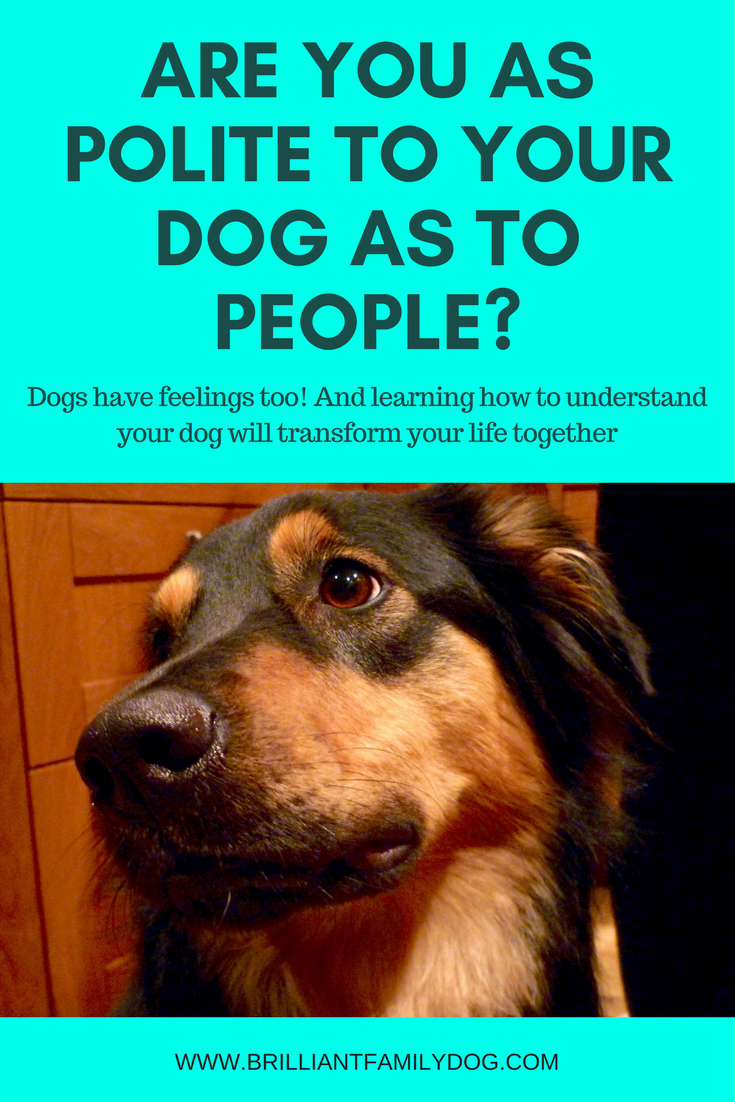
Are you as polite to your dog as to people?

THIS E-COURSE IS A BONUS FOR YOU WHEN YOU SIGN UP TO RECEIVE EDUCATIONAL EMAILS AND OCCASIONAL OFFERS FROM ME. YOU CAN UNSUBSCRIBE AT ANY TIME PRIVACY POLICY

Social Butterflies versus Wallflowers - over-friendly dogs vs. shy dogs

Dog training, new puppy, puppy training, dog behavior | Is your dog a super-friendly dog, or a super-shy dog? Find out how to manage him successfully here | FREE EMAIL COURSE | #newpuppy, #dogtraining, #puppytraining, #dogbehavior | www.brilliantfam…

“Go on. Go and say hello to Aunt Ermintrude. Give her a kiss. Go ON!” 

This last would have been accompanied by a sharp prod between the shoulderblades to propel you forward.

Can you remember this happening to you when you were a small child? You wriggled and squirmed and really didn’t want to have anything to do with this towering, bearded, overpowering aunt.

But if you’d been left to your own devices, curiosity would eventually have got the better of you and you would have started to engage with this strange, mountainous, figure.

So is it with many dogs. 

Some are bouncy, in-your-face, love-everybody, kind of dogs - not in the least bothered by the Aunt Ermintrudes of this world. But many more are quiet, retiring, worried about anything new. The key to this is to strike a balance


The Social Butterflies need to learn a little restraint and thoughtfulness, lest they leap up on the wrong dog and get bitten or terrorised. Or of course they may leap on a shy and worried dog who will think in terror that her last hour has come.

The Wallflowers must be allowed to be Wallflowers! If you give them time to assess from a safe distance, they will gradually start to explore nearer, on their own terms.


The funny thing is that we always seem to want the opposite of what we have! Those with the demented jumper-upper wish they had a calmer dog - continually snapping “Get down!” to their poor dog, who thinks that perhaps he needs to jump higher in order to please his owner. While those with a mouse-impersonator wish they had something more outgoing, and feel as if the world thinks they beat their dog. 


We always want to fit in with society’s view of being able to produce the perfect dog, without necessarily heeding what our dog has to say about it all.


Aren’t all dogs friendly?

This commonly accepted thought completely ignores the fact that dogs are all different! They are individuals, just as we are. Their breeding will influence their behaviour, but there’s huge variation within breeds and types. And we’ve all learnt - through the notorious breed-specific legislation - that you cannot tar all dogs of one breed with the same brush.

Because people notice the exuberant dog more than the shy one, they think that’s the norm. You can’t help but notice the bouncy Labrador with his tail thumping your legs (but there are many quiet, shy Labradors too). Or the half-crazed Poodle who thinks everyone must love him (Coco Poodle? Are you listening?). But In fact the quieter response is the more common one - and probably much better for survival in the wild situation that dogs were evolved in. 

Just because some dogs are in-your-face dogs doesn’t mean that this is how all dogs should be.

And what about responsibility for other people’s dogs?

Let’s say you have one of the bouncy dogs who thinks the world is his oyster and wants to greet everyone. Now imagine that instead you have one of the shy, retiring dogs. Maybe your dog desires only to be left alone, to have peace and quiet to enjoy her walk without interference. Your shy dog could be enjoying a tremendous game with you and your frisbee or ball, and the last thing she wants is someone muscling in on her prize. 

How would it be if you were enjoying a makeshift game of badminton with your family in your local park, and a load of louts came barging in, snatching the shuttlecock, knocking your children over and treading on them, wrecking your game - with their parents laughing at their antics all the while. Nice? I don’t think so.

So if your dog is the super-friendly one, don’t let him rampage all over the place, upsetting calmer, quieter, perhaps older, dogs.

It can take a shy dog several days to recover from an experience like this - really! They may have to stay indoors for days to allow their hormones to settle back down - just as you might if you were in a mild car shunt. It could be a few days before you were happy to get behind the wheel again. This dog’s owner may be upset and begging you to put your unruly dog on a lead. This request, sadly, is often greeted with derision and insults. 

Many owners of boisterous dogs assume that their dog’s behaviour is not only natural, but acceptable.

I’m here to tell you it’s not!

These owners seem to think they have more right to be out walking their dog than others with more challenging dogs. They form this opinion, I believe, because sometimes their unruly dog is greeted by a show of teeth and snarling from the other dog. They assume that this dog must be nasty - aggressive - and therefore to blame for whatever happens. They forget that that dog was quietly minding her own business until their dog landed on top of her! 

Sadly, this usually gives rise to more insults and abuse.

It doesn’t take much imagination to transfer this scene to a school playground. Some children will be playing happily together while others cruise the playground looking for entertainment - often found by annoying the quieter children. Of course, playgrounds are carefully “policed” by school staff, and unacceptable behaviour should be halted immediately, so that the boisterous children can learn some social skills, learn how to treat other people respectfully, and the quieter children can enjoy their quieter life. 

The school playground is like the park

Is this chase enjoyable for both dogs?

Is this chase enjoyable for both dogs?

We don’t have school staff in the park. We’re meant to be grown up enough to manage this ourselves. I know it comes as a surprise to many of the “My dog is friendly” persuasion to learn that many other dogs are not. They are instead nervous, anxious, possibly recovering from an unsolicited attack which - unsurprisingly - has made them suspicious of all dogs. Or they may simply by diffident and self-contained, and not disposed to talk to strangers.

And some of these bouncy-dog owners will be genuinely astonished to learn this! But once you have learnt it, let it inform your dealings with other dog-owners and their dogs. It’s not a dog’s fault if he was attacked. It probably wasn’t his owner’s fault either, but it can have a lasting effect on the victim. It’s equally not a dog’s fault if he was not properly socialised as a puppy, and if he was adopted after puppyhood it’s not his owner’s fault either. 

Most people are decent and honest (in my experience), and they really wouldn’t want to see a child hurt or humiliated by another child’s actions. All they need to do is realise that dogs are as different in temperament as children are, and that some sensitive ones can be seriously upset by another dog-owner’s thoughtlessness.

The quiet, shy dog doesn’t care whether the boisterous dog has good intentions or not. It doesn’t matter if “He just wants to play,” or whether he is intent on tearing the other dog’s throat out. The effect of the confrontation can be the same - causing the anxious dog to get more withdrawn, or - as can often happen - become proactive at keeping other dogs away by putting on a tremendous display of aggression.

How can I help my dog?

So watch your puppy or new dog carefully. Whether extrovert or introvert, be sure to protect them from bad experiences. Allow your boisterous pup to express himself in a way which suits him, while gently teaching him what we would prefer.

And let your quiet observer quietly observe. From behind your legs if that’s where she feels comfortable. When she’s ready, she’ll be able to take much more in her stride.

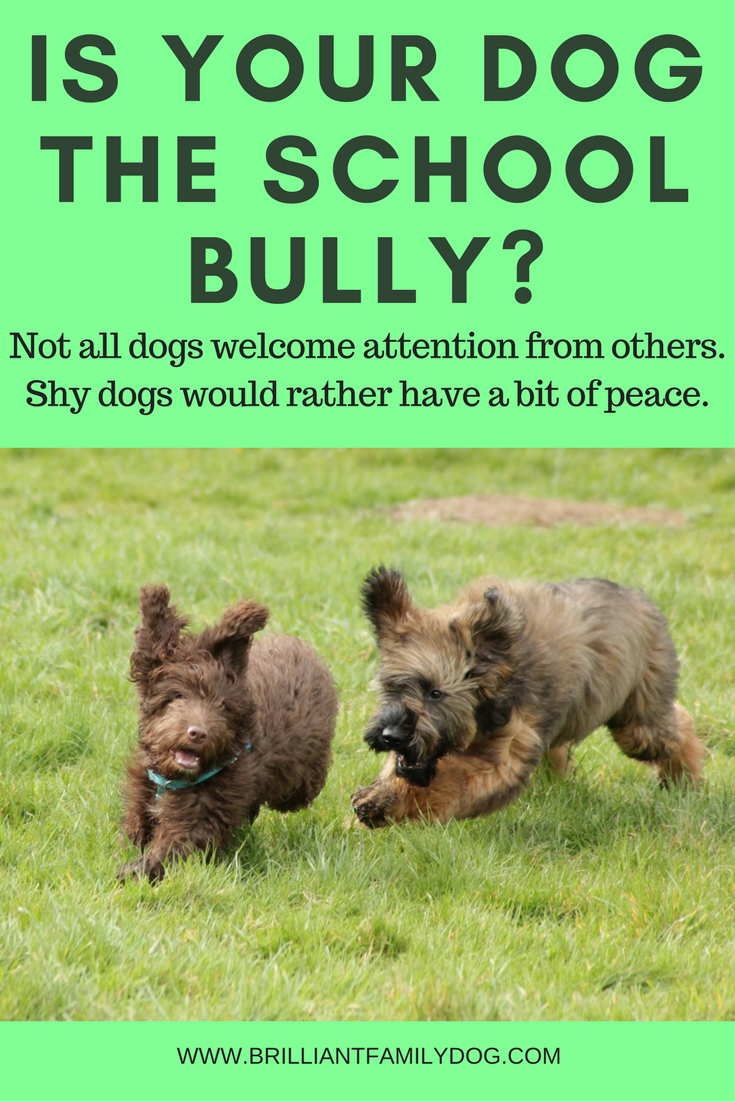
Is your dog the school bully?

And whether you’re the owner of the over-friendly dog or the shy and anxious dog, you’ll find great help in this free email course:

THIS E-COURSE IS A BONUS FOR YOU WHEN YOU SIGN UP TO RECEIVE EDUCATIONAL EMAILS AND OCCASIONAL OFFERS FROM ME. YOU CAN UNSUBSCRIBE AT ANY TIME.
Privacy Policy

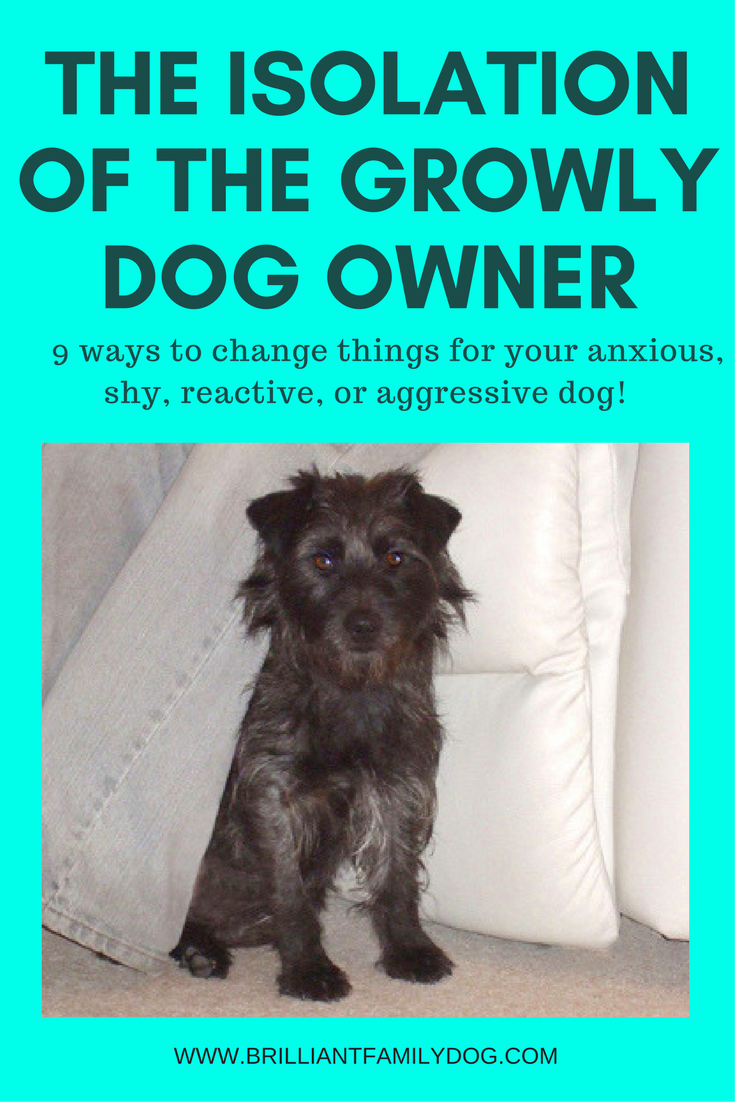
The isolation of the Growly Dog owner - 9 ways to change it all

Reactive dog, aggressive dog, fearful dog, dog behavior | Do you feel isolated with your Growly Dog? You are so not alone! | FREE EMAIL COURSE | #aggressivedog, #reactivedog, #dogtraining, #growlydog | www.brilliantfamilydog.com


  • Does everyone else seem to walk a calm, quiet dog?

  • Do you watch with envy as people walk their “good” dogs without a thought?

  • Do you wish you could go anywhere with your dog and not be embarrassed by her antics?

  • Do you feel a “useless dog-owner” because your dog doesn’t behave as people seem to expect her to?

  • Would you really like a trouble-free dog who you need do nothing with?

I tell you - we are the lucky ones. Those of us who have difficult dogs, growly dogs, aggressive dogs, shy, fearful, anxious dogs - we are the lucky ones. In learning about dogs, their language, their behaviour, we will gain huge insights into dogs in general, our own dog in particular, and the huge gap between what most humans think and what is actually true about dogs.

I feel so alone with this dog

Rest assured, you are not alone! There are many people around with dogs they struggle with. 

  • Some of them walk only at The Hour of the Difficult Dog, flitting furtively about like bats in the dark when they’re unlikely to meet another dog, or person, or cyclist .. or whatever it is that sets their dog off.

  • Some of them have given up and don’t ever walk their dog at all. And if it keeps them all happy, this is a good thing.

  • But there are plenty more who accept that this is the dog they have - not the one they hoped for - and they do their best to help their troubled dog.

Because a troubled dog is what you have. No, it’s not necessarily your fault (though you may have made mistakes along the way - as we all do - that has made it worse). But your dog is troubled all the same. Don’t fret over past mistakes, or wrong advice followed - start from where you are now.

You began with a puppy

However carefully you may have covered the socialisation, familiarisation, and habituation for your puppy up to the age of 14 weeks, something may have happened later (a car crash, a dog-attack, an explosion …) to make him reactive. Or it may just be the way he is. Guarding breeds in particular are bred to be alert to every movement and sound, and … despatch it! And herding breeds have extra sensitive hearing.

Possible complications with a rescue dog

Smidge in her safe place

Smidge in her safe place

It may be that you wanted to give an unwanted dog a home, and that is indeed a very good and laudable motive. But the dog you chose may have arrived with baggage from its previous life which you now have to deal with. What confuses some new rescue-dog-owners is that their dog seemed “fine” when he first arrived, and it was only a month or two later that he “became aggressive.”

There are two issues here. 

  1. It’s not aggression, it’s usually fear. More below.

  2. It can take 2-3 months for a dog to settle in his new home.

Before that he may be shut down and quiet, nervous of putting a paw wrong. Just like you would be if you moved into my house - it would be “Where does this cup go?” and “Is it alright if I sit here?” After a couple of months you’d have your feet on the table and be leaving cups all over the place! You’ve settled in and are behaving naturally. So that’s what your dog is doing - settling in and behaving naturally.

So why has my dog become aggressive?

This isn’t really the right question. “Being aggressive” is the interpretation you have put on her behaviour. What you want to look at is

  • why your dog does what she does,

  • when she does it, and

  • what you can do to change things so she doesn’t have to do it any more.

If something frightening approaches you, you have two choices - fight, or flee. If you are attached to someone else you are unable to flee, so you’re left with fight. So it is with your dog, who is on lead and unable to make the choice to scram. 

You (like your dog) may really not want to fight. Fighting is dangerous, can escalate quickly, and can maim or kill. So you’d probably use your voice first to try to keep the dangerous thing away: “Get away! Leave me alone! I’ve got a knife!” 

And your dog does the same: “Look! I’m ferocious! Keep away! You’ll get bitten!” and he does this by leaping about, raising his hackles, making himself look as big and tall as possible, swishing his tail up in the air, growling, snarling, and barking. 

Very often, this works for your dog. Either the other dog backs off, the other dog’s owner takes him away, or you - in your confusion and embarrassment - haul your dog away, quite possibly joining in with the barking by “barking” yourself.

Now you are upset, your dog is upset, (maybe the other owner is upset, but they may perhaps learn not to walk their dog straight at strange dogs in the future) and your walk has become a sorry mess.

Get your free email course here and get going with your new life!

THIS E-COURSE IS A BONUS FOR YOU WHEN YOU SIGN UP TO RECEIVE EDUCATIONAL EMAILS AND OCCASIONAL OFFERS FROM ME. YOU CAN UNSUBSCRIBE AT ANY TIME.
Privacy Policy

When you got your dog you envisaged happy walks in field and forest, you thinking about birds and poetry and sunshine, and your dog trotting at your heels, keeping you company. Or maybe you’re the social type who foresaw walks with other dog-owning friends, days at the beach with the family, visits to cafes to chat, your dog being admired for her good behaviour. 

Instead, you’ve got this maniac that makes walks a misery. 

And no doggy friends for you.

All is not lost! You can start making changes with your dog right away!

So instead of retiring hurt and licking your wounds, have a look at what you can do to change things right now.


1. Give your dog a total break from walks for 3-7 days. If every outing is as stressful as I described above, you’ll both welcome the chance to chill and resurrect your fun relationship together.


2. Be sure you are not using any aversive dog equipment (broadly speaking, you want to have your dog on a comfy harness with a double-ended lead attached at front and back). 


3. If you’re afraid your dog may bite, muzzle-train him slowly so he loves his muzzle. This will relax you enormously. Extra benefit: you’ll find this helps to keep people away.


4. Choose quiet places to walk him where you’re unlikely to meet his “triggers” (the things that set him off)


5. Look into hiring a private dog walking field near you - fantastic resource for the growly dog owner!


6. Seek out a force-free trainer to help you. Any use of aversive equipment, or training by intimidation and control will work against you and make your dog worse. You have been warned! I am frequently helping people whose dogs have been made worse by one of these so-called “trainers”.


7. Start learning about dogs, their behaviour, and - very importantly - their body language, which is sophisticated and as clear as day, once you can “speak” it. Beware the gaping maw of the internet, which can take you down many rabbit-holes! Find a force-free trainer and study their reading list.


8. Find out what your dog actually loves doing. This could range from lounging on the sofa with you, to playing Hunt the Toy in the garden, hide and seek with the children in the house, performing tricks, helping you about the house with tidying up … Look at what she’s telling you she likes!


9. Know that you are not a “useless dog-owner”. You have simply found yourself presented with a problem you didn’t know how to solve. But you do now! Onward and upward.


And, as I said above - we are the lucky ones. Those of us who have difficult dogs, growly dogs, aggressive dogs, shy, fearful, anxious dogs - we are the lucky ones.

For in our efforts to help our dog fit into our world, we will build a bond with our dog that can never be broken.


Start your new direction with this free email course that will take you through the steps for change - all force-free, of course, without intimidation or nasty gadgets.

Then hop over to take a look at the new online course that will take from where you are now to where you want to be with your dog.


Resources:

  1. Watch our free Masterclass to change life with your Growly Dog

  2. Online courses

  3. 2Hounds Freedom harness

  4. www.brilliantfamilydog.com/books

  5. www.brilliantfamilydog.com/growly-dogs

  6. www.xtra.dog 

  7. www.muzzleupproject.com 

  8. www.sue-eh.ca

  9. www.controlunleashed.net 

  10. www.grishastewart.com/cbati-directory

  11. www.apbc.org.uk/help/regions  

  12. www.apdt.co.uk/dog-owners/local-dog-trainers 

  13. www.petprofessionalguild.com/find-a-ppg-professional

  14. www.karenpryoracademy.com/find-a-trainer 

  15. www.imdt.uk.com/find-a-qualified-imdt-trainer

  16. www.ccpdt.org/dog-owners/certified-dog-trainer-directory


The Isolation of the Growly Dog owner