How to teach your dog to catch!

Dog training, new puppy, puppy training, dog behavior | Teach your dog to catch! | FREE EMAIL COURSE | #newpuppy, #dogtraining, #puppytraining, #dogbehavior | www.brilliantfamilydog.com

My dogs are great catchers. I get great pleasure from watching their athleticism and joy.

Sometimes people watching their frisbee acrobatics look sadly at their own dog and say “My dog is stupid - he can’t catch”.

He’s not stupid - you just haven't taught him how to do it yet! Mine didn’t come with catching installed: this skill was carefully nurtured and developed.

You’ll get a lot of entertainment from teaching your dog to catch - with a puppy it’s even more fun! And, of course, it’s a great way to use up lots of your dog’s energy - as long as you observe some safety rules.

Puppy Gym

Puppies arrive on the planet with a mouth (and eyes) .. and that’s about the extent of their self-knowledge. Helping them discover where all their component parts are is an essential part of puppy-rearing. (This is why I feature “Puppy Gym” prominently in my puppy classes.) Learning that legs can move independently, that they can move sideways and backwards as well as forwards, that they can climb on and off things safely, and that they can land safely when they jump is key to their development.

And you can add teaching your dog to catch to this list.

Don’t start teaching catch too young with your pup. A very young pup (up to 10 weeks or so) doesn’t spot or focus on things very quickly. I’d wait till 16 weeks or thereabouts - and preferably once he knows lots of games featuring treat-rewards as well as chasing down toys.

To teach him eye-mouth co-ordination, make it easy for him by always tossing your treat with the same arm movement. I favour the downward toss- i.e. you hold up your hand near your shoulder, wave it a bit to get pup’s attention, then slowly bring it downwards and release the treat so it loops down to the pup. Aim for the top of his muzzle, right where the nose leather begins. The more accurate your throws the faster he’ll get it.

This is the entertaining bit! To begin with the treats will bounce off his muzzle and he’ll scramble to get them off the floor. 

Eventually his mouth will start to open as the treat comes through the air. And after a lot of practice at this, he’ll actually catch one!

He’ll probably be more surprised than you and start hunting on the floor for it again, not realising it’s in his mouth!

You can make it a lot easier for him by using treats that are clear to see - so little cubes of cheese are good. With one particularly slow-to-catch-on adult dog I used popcorn (plain, of course). And while corn should not generally form part of a dog’s diet, an exception can occasionally be made to get what you want. The popcorn worked for that dog because it’s huge, white, and floats down slowly.

At this stage you could be feeding your dog’s whole dinner this way, one tossed piece of kibble at a time.

Once your dog can catch a flying treat aimed carefully at his mouth, you can start tossing them at different angles. An adult dog (especially a greedy one!) will become quite athletic getting his treats. Take care that he’s on a firm footing, not a slippery floor. And build up slowly towards jumping.

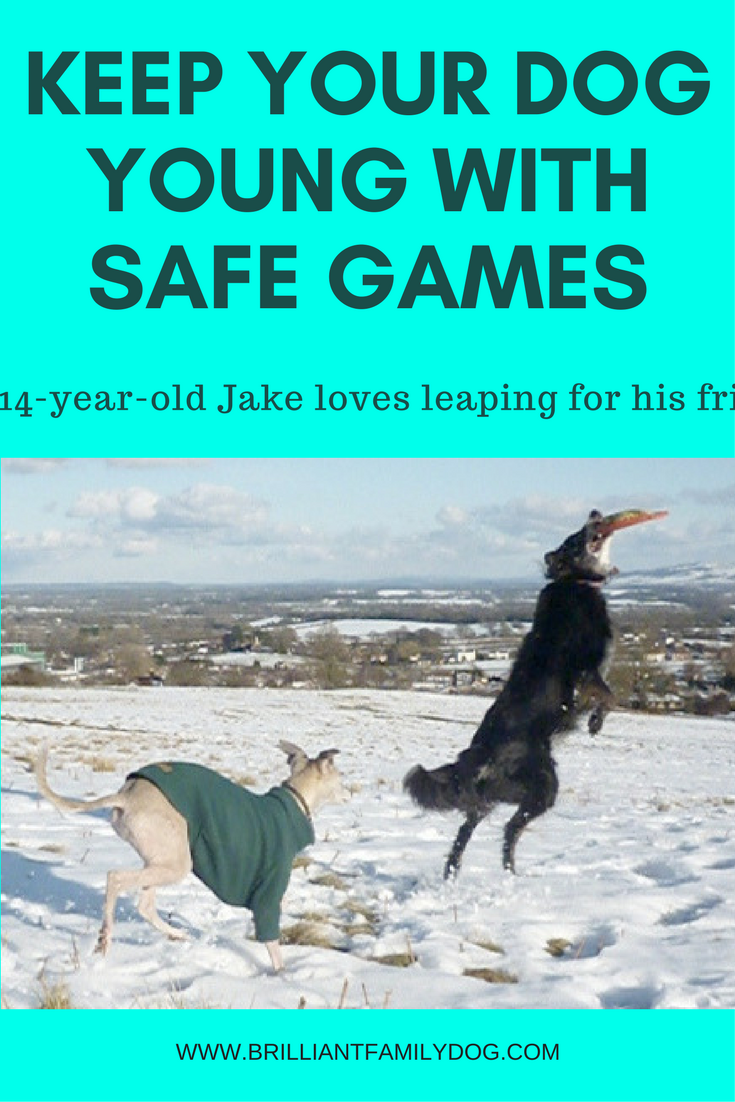
Now you’ve got the catch mastered, you can move up a gear and start teaching your dog to catch a frisbee. 

Jake showing his catching prowess on his 14th Birthday!

Jake showing his catching prowess on his 14th Birthday!

Now add your frisbee

You need a soft frisbee that is gentle on the mouth and teeth - one made for dogs. This is a good one. It’s soft on the mouth, easy to squash into a pocket, and floats beautifully in the air for controlled catching.

Now using the same idea as with the cheese, you float the frisbee towards your dog who is right in front of you. So we’re talking about a couple of feet from hand to nose. No distance yet. After a lot of failed attempts he’ll be catching the frisbee expertly by the rim.

If he’s not inclined to release the frisbee, or wants to run off with it, simply stand on his lead so he can’t, then swap it for a treat every time. Once he’s got that, you can change your reward from treat to instant throw. He’ll soon know that the routine of “catch then give” means you’ll throw it again immediately. So he’ll be anxious to hand it over straight away.

Now start adding a little distance - maybe a yard to start with. 

And gradually grade up. As you increase the distance, you’ll build your own skill with the frisbee. A flick of the wrist is what’s needed to spin it, rather than brute force. And one of the reasons I like those soft cloth frisbees is because they’re so easy to spin and send over large distances. 

Now you have a way to exercise your dog safely while enjoying the sight of him flying after his frisbee and catching it expertly, bringing it straight back to you and pushing it into your hand - to throw again!

Safety note

There are dogs who do amazing antics catching their frisbee in competitions. But I have to say these images and videos make me very uneasy. The gyrations and hard landings look to me as if they’d take their toll pretty quickly on these dogs. I like to take life easier, and I aim to float the frisbee over the dog’s head, so that he can leap through an arc to catch it, landing comfortably and carrying on running. 

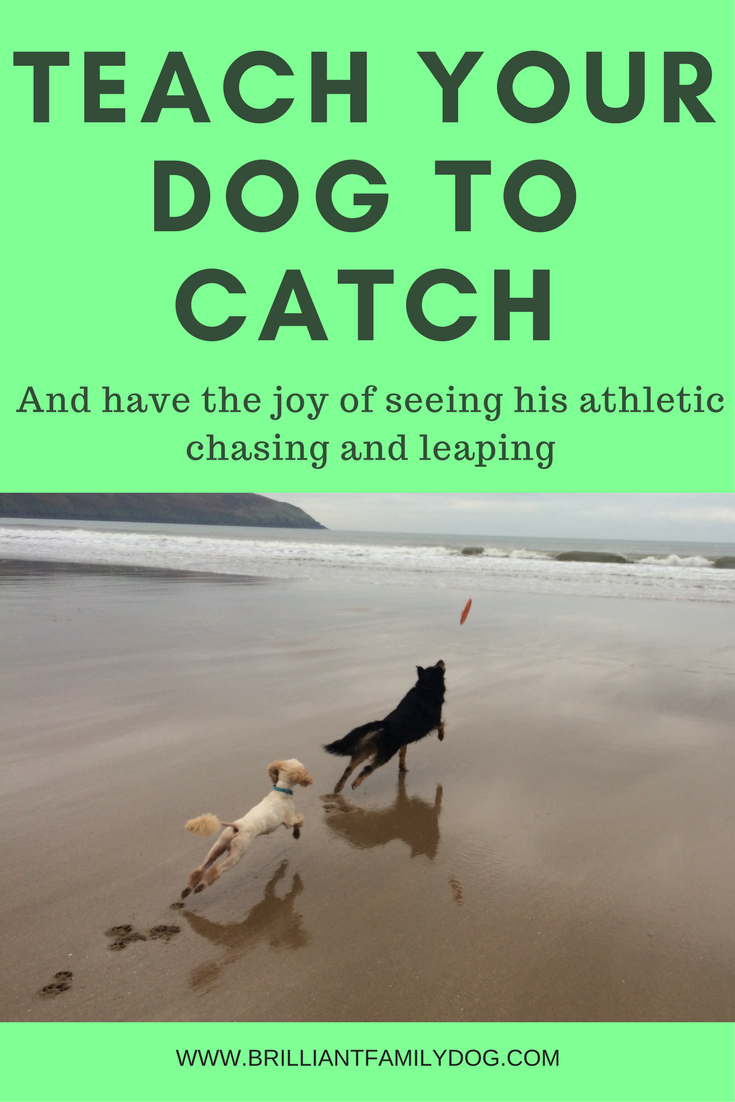
You’ll see in the photos illustrating this post that I look for fast running, an athletic leap, a soft landing - and I ensure that we’re not working on parched or frozen ground that would be too hard to land on. 

Remember this is another golden opportunity to teach some impulse control. Your dog will never get the frisbee by snatching it from your hand, or leaping up to mug you for it. He has to wait while you prepare to throw. You may want him to sit and wait, lie down and wait, or you may be happy for him to hurtle out twenty yards in the direction you’re about to throw it. Similarly, when you put out your hand for the frisbee to be delivered, it should be pushed into your hand - and not snatched away again!


Also on safety - don’t use sticks!


The only time I’d use a stick is if the dogs are in the pond and I know I can throw it far enough for it to be floating in the water by the time they reach it. Dreadful injuries happen (sadly quite frequently) to dogs who catch sticks in the air or on the bounce. The stick wedges itself against the ground and can impale the speeding dog with horrible results. So if you absolutely must throw a stick, ensure that it will land and be still long before your dog can reach it.

Multiple dogs?

Agile Coco Poodle loves his frisbee too

Agile Coco Poodle loves his frisbee too

Each of my dogs has his or her own frisbee. This means that

  1. I too get a great workout as my arms are going like a windmill, collecting and throwing frisbees one after the other, and

  2. There’s never a collision or scrap over possession of the toy. They only go for their own toys.

While my two older dogs will carry their frisbee for the entire walk without losing it, the two younger ones can get distracted and drop it somewhere. So teaching a search is also useful so that they find it instead of me spending ages looking for it. Rollo the Border Collie is brilliant at finding toys, and will lie down next to one (while his own is firmly clamped in his mouth) until it’s restored to its owner. 

Another supreme virtue of the dogs loving their frisbee: I can distract them very easily from incoming dogs to avoid confrontations. So if you have a reactive or growly dog, get him mad about retrieving as soon as possible!


So if you don’t as yet have a catching dog, get started teaching him this skill today. Enjoy!


Got any other things you'd like to get right

with your dog? 

Get our free email course to solve puppy and dog problems without force
THIS E-COURSE IS A BONUS FOR YOU WHEN YOU SIGN UP TO RECEIVE EDUCATIONAL EMAILS AND OCCASIONAL OFFERS FROM ME. YOU CAN UNSUBSCRIBE AT ANY TIME PRIVACY POLICY

Keep your dog young with safe games
Teach your dog how to catch

Zip it! And get a fast response from your dog

Dog training, new puppy, puppy training, dog behavior | Get a sparkling fast recall from your dog! | FREE GUIDE | #newpuppy, #dogtraining, #puppytraining, #dogbehavior | www.brilliantfamilydog.com


Are you a chatterbox? 

“Fido, Fido, FIDO, come, c’m’ere, Fido, over here, FIDO COME HERE, (**** dog), F I D O !!

We’ve all heard a frustrated owner calling this in the park. And what’s Fido doing all this while? Probably carrying on just as he pleases. When the torrent of yelling subsides he’ll look round to check his owners are still there. And if they start walking away, he just may come.

But this is isn’t what you’re wanting, is it? We’d all love to have a dog who spins on a sixpence as soon as he hears his name, and powers back to us at tremendous speed. We want people to see that our dog loves and respects us, and we certainly want to be sure he doesn’t make a nuisance of himself.

So how can you change this?

Only say it once!

The first thing to do is to change what you’re doing. Then you can change what your dog is doing. 

So when you say anything to your dog, you ONLY SAY IT ONCE. He gets one chance to get the reward from you. You have got a super high-value reward with you at all times, haven’t you? Sausage, or salami, hot dog - whatever your dog thinks is heavenly. If he ignores your ONE call, then the reward is gone. 

Ok, you’re saying, how is that going to get my dog back? Well, you start with this in the house - in an area where you have little distraction and you know that if he doesn’t respond you can go over to him. 

This isn’t a capitulation on your part. It’s expedient. We’re not looking at who’s the boss - that won’t make things any better. Dogs do not have a secret agenda to rule the world, your household, or you. Dogs do what works, and if it works - then that’s going to make you both happy.

So you say your dog’s name ONCE. He looks at you - YES! here’s your reward And as I explain elsewhere, a reward is anything your dog finds rewarding: food (top of the list), cuddles (fairly far down the list), game, dinner bowl, lead on for a walk, etc.

Dogs learn by repetition and patterning. So it’s a case of repeat, repeat, repeat. (But don’t repeat his name!) Just get into the habit of saying your dog’s name ONCE and rewarding his instant response. 

So say “Fido!” and zip it. Some people actually find it helps them to remember when they say something to their dog to put their hand over their mouth! Whatever works for you. 

I’ve heard some mothers complain that they call the family down to dinner and get “just coming” ten times before they all eventually appear at the table. If those mothers called the kids ONCE, then - after a suitable delay - tipped their dinner into the bin, I think the next day they’d start getting a faster response. 

What do you think?

What’s sauce for the goose is sauce for the gander (it works just the same with dogs)

Dog training, new puppy, puppy training, dog behavior | Get a sparkling fast recall from your dog! | FREE GUIDE | #newpuppy, #dogtraining, #puppytraining, #dogbehavior | www.brilliantfamilydog.com

This is the same principle. When I say your name, there is a reward on offer. You don’t respond? Reward is gone. Over time (not necessarily a very long time, either), your dog will leap to attention when he hears his name. He doesn’t want to miss that treat!

Once you’ve got that working well indoors, you can start trying it outdoors - in a distraction-free zone to begin with - and in an area where you can go to your dog if he doesn’t come to you. When you go to him, you are not arriving like Thor firing thunderbolts. Rather you just get right up next to your dog and call him once from there. Then you reward him! Why? Because he responded to you!

This is not the whole recall fixed. This is the beginning. This is opening up the channel so that you can stop yelling and start communicating. For a thorough step-by-step program to develop a stunning recall, check out Here Boy! Step-by-step to a Stunning Recall from your Brilliant Family Dog

To change your dog you need to change yourself first!

Watch our free Workshop and find out how to transform your “deaf dog” into a LISTENING DOG!


What do I do when it all goes wrong?

The simple answer to this is: go back to the drawing board and start in the house (where your dog cannot run off) and - critically - make it fun for your dog. If the sound of your dog’s name always means fun and games, why would he not come? 

You’ll need to ditch any ideas you may have had about being the boss, expecting instant obedience, punishing defiance, and so on. If you ask your partner or child to fetch something for you, do you expect them to leap instantly from their chair, abandon what they’re doing, and rush to obey? No! Much more likely you’ll get “In a minute,” or a slower heave out of the armchair. This is fine. This is normal. This is what we expect (and accept) from our housemates. Why should we expect something totally different from our dog?

By the way, ONLY SAY IT ONCE works with anything you say to your dog. So no more “Sit, sit sit, siddown, I said sit”, “Leave it, put it down, leave it, LEAVE IT!” and so on. This is a habit you’ll have to change in yourself before you can expect any change in your dog. For your dog to change - you have to change. So, discipline your mouth, be ready to cover it with your hand as soon as you’ve uttered, and practice saying things only once then zip it!

Focus on this for just five days this week. Every single time you address your dog, you’ll say something ONCE then zip it. See how soon the turning point arrives and your dog starts listening to you!


You can comment below and tell me when it happened for you.

Meanwhile, get your free download:

Nine Rules for a Perfect Recall 

9 Rules for a Perfect Recall
9 Rules for a Perfect Recall Free Download
9 Rules for a Perfect Recall

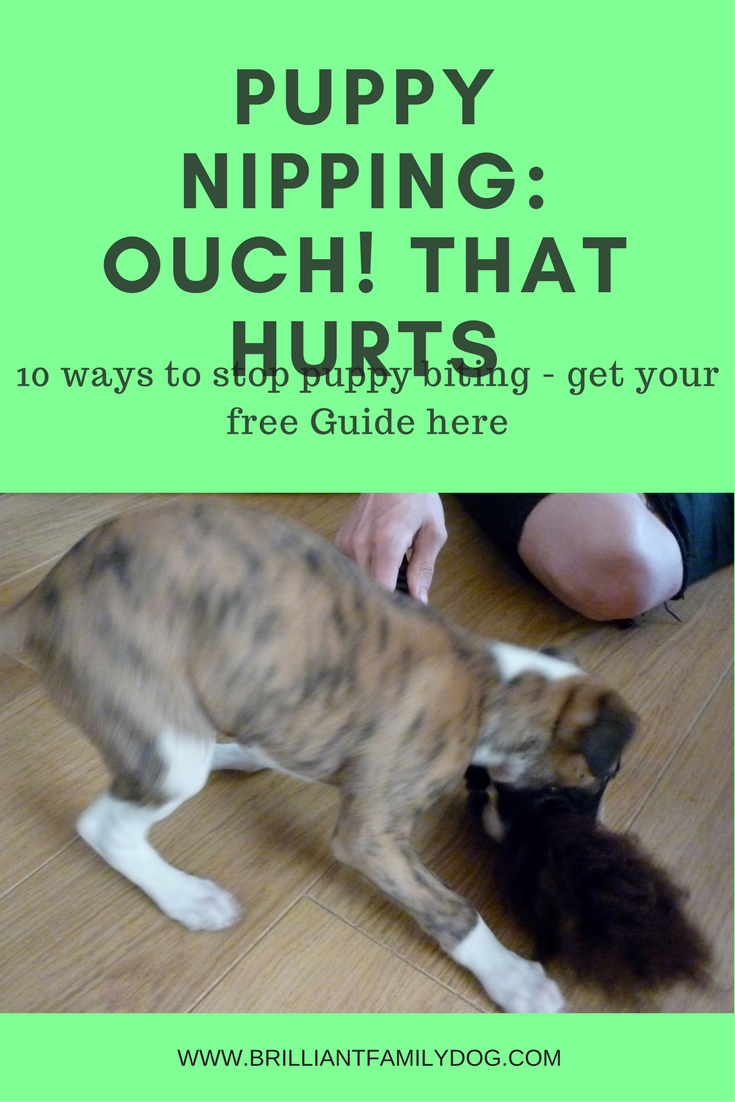
10 Ways to Stop puppy biting

Babies explore the world with their mouths, puppies do the same. The only difference is that babies have gums, while puppies have needles! 

Everyone seems to expect a bit of puppy nipping when they get a puppy. According to my oft-quoted maxim that “What you expect is what you get”, this can be a self-fulfilling prophecy. 

I can also add that “What you accept is what you get”! And I find many new puppy-owners accept a level of savagery from their puppy which astonishes me. I’m often shown arms covered with scratches and nasty bruises. And I’m here to tell you that this is totally unacceptable!


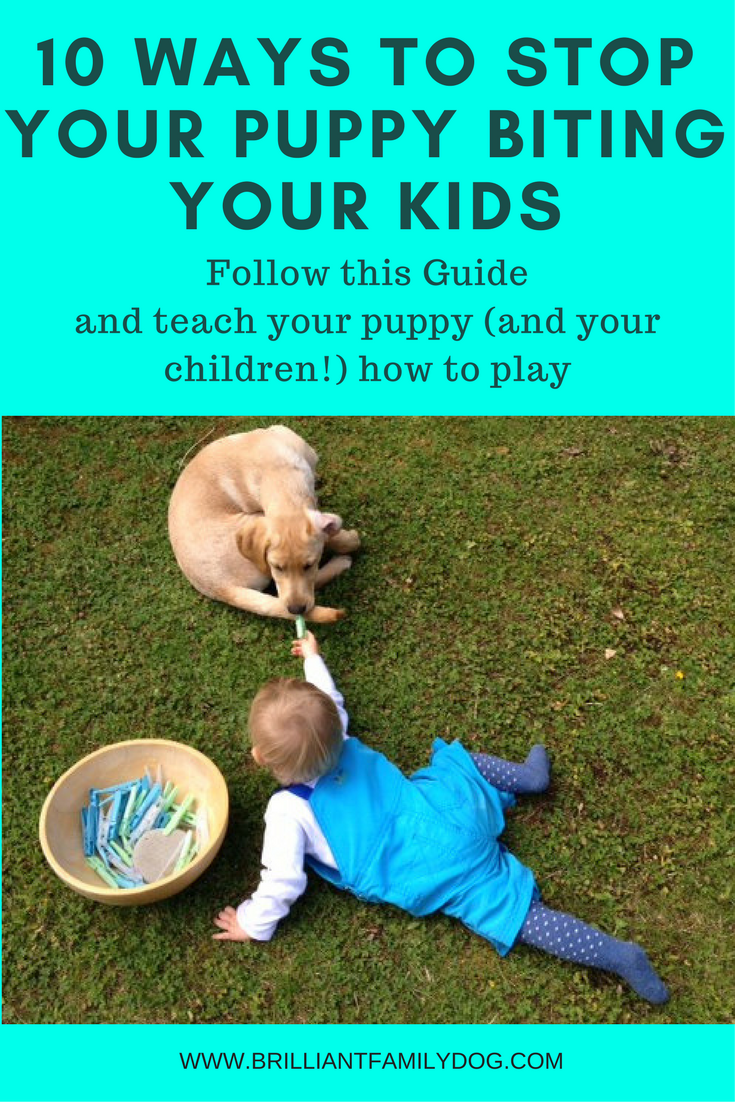
Help! My puppy thinks my toddler is another puppy!

GET YOUR FREE GUIDE TO STOP PUPPY BITING!

THIS FREE GUIDE IS A BONUS FOR YOU WHEN YOU SIGN UP TO RECEIVE EDUCATIONAL EMAILS AND OCCASIONAL OFFERS FROM ME. YOU CAN UNSUBSCRIBE AT ANY TIME.
Privacy Policy

This is a frequent cry from first-time puppy-owners - or first-time-since-they-had-children puppy-owners. The perfect family home - full of joy and laughter - that they anticipated when they brought a puppy into their midst is crumbling about their ears. They start to regard the puppy as the enemy, instead of a welcome friend. He’s a nuisance, and has to be kept under increasing control. This is not a good way to start any relationship.

When the puppy is very new and very tiny and wants to play roly-poly with their small child, this may elicit approving nods and smiles from the parents. But they soon learn that the puppy develops at a much faster rate than their baby, and is also armed with sharp claws, sharp teeth, and an astonishing ability to jump high! It’s only when their puppy hits teen-weeks (about fourteen weeks and up) and they realise these games are getting out of hand - when their toddler’s happy gurgles turn to wails of pain and fear - that they decide Something Needs To Be Done. And by now it’s all become a well-established habit. 

The answer is simple, but multi-faceted. There’s a lot going on here.

I can honestly say that my own puppies learn that dogs’ teeth never touch human skin - very, very fast. And they will never have been yelled at. Here’s how it’s done:


Ten ways to stop puppy nipping

1. The ideal age to get a puppy is eight weeks. There are many reasons for this, but for the purposes of this post we’ll focus on how this lowers the chances of the puppy nipping and biting us. By six weeks or so, the bitch has usually had enough of her pups and will often be separated from them for most of the time. But this doesn’t mean they’re not learning! The time from six to eight weeks of age is prime socialising time. They find out what works with their littermates and what doesn’t. Now puppies have a thick fur coat, so the immature jaw control doesn’t do them any damage. But a pup will soon tell his brother if the play got too rough, and the biting too hard. A puppy who is bullying his littermates will become Billy-no-mates until he learns to tone down his enthusiasm. He’ll learn this quickly - and what he’s learning is called Bite Inhibition. He can use his mouth with exquisite control - he can grip without biting, touch without ripping. This is one major reason for getting your puppy at the right age. 

2. Once he arrives with you, the puppy should have a safe den (a crate is ideal) where he can retire or be taken when tired, and which is totally out of bounds to children and other animals. A young puppy should be going down to sleep every hour or two throughout the day, and all night. To find out how to get your pup to sleep through the night from Day 1, read this post.


3. Never leave any child alone with any dog, not even for a moment. If you have to leave the room, take one of them with you. 


4. The same goes for any older dog in the household. They didn’t choose to get a puppy - you did. So to maintain harmony in the home, you need to protect your older dog from endless puppy attention. A general rule would be a maximum of twenty minutes a day of free play, which would be closely supervised, in five-minute bursts. The puppy is not free to pester people, children, or other household residents, whenever he feels like it. Protect older dogs, cats, and small children from too much attention. How much is too much? That depends on the victim. When they say it’s enough, it’s enough.

5. Supervision should be active, not simply a distracted presence in the same house. When puppy and child are both loose at the same time, this should be the parent’s focus. Clever manipulation of sleep and mealtimes may minimise these times a lot, and allow the adult to devote all attention to either the child or the puppy (or, occasionally, themselves!). You have to be sure that you spend time on your puppy and not just drop him into the mix as a tagalong: this puppy is not going to train himself!


6. Both child and pup need to learn manners and boundaries. In neither case is this done by shouting, saying NO, or scolding. Showing and encouraging is the way to go.

New Puppy? Puppy biting? New Rescue Dog? | 10 Tips to stop puppy biting | FREE GUIDE | #newpuppy, #newrescuedog, #dogtraining | www.brilliantfamilydog.com


7. No-one should ever play with the puppy without a soft toy in their hand. The pup should always be encouraged to play with the toy, down at floor level - not leaping up to grab it from the hand. Releasing the toy is rewarded with another quick game, or a treat if playtime is over. Teeth on skin causes the game to stop for a moment for all sides to regroup and remember the rules. Then the game can resume. If the puppy has gone wild and over the top, this is a sure sign that he’s tired and is no longer able to make rational decisions: an hour or two’s napping in his crate will restore equilibrium. And if your toddler is also screeching and squawking, it looks like you’re going to get a peaceful couple of hours while they both have a nap!


8. No-one may interact with the puppy at all unless all his four feet are on the floor. This gets easier as time goes by, and you’ll have a shorter and shorter time to wait before you can address your pup. Start on Day 1, at eight weeks old! No attention is given till feet are all on the floor. The split second the feet arrive on the floor you reward with attention - down at his level. He’ll learn very fast!


9. Teach the puppy which games or parts of games are acceptable. It’s quite possible for a dog to understand that they may chase something but not bring it down. Think Border Collie - these amazing dogs can replicate their instinctive hunting patterns by stalking, flanking, driving and chasing sheep, but they never close in for the kill. Friendly chase games in the garden are great for using up lots of energy from both the child and the dog. A very mouthy puppy can be encouraged to carry a soft toy in his mouth, so there’s no danger of grabbing. Teach your children to play statues the moment the pup gets over-excited and tries to grab a trouser-leg or sleeve. Once the “prey” is still, the hunt is over, and pup will let go - especially if a moving toy is whizzed past his nose. It goes without saying - but I’ll say it anyway - that such games must always be very closely supervised.


10. Practice makes perfect! The more you play controlled tug games with your puppy, the better he’ll get at instantly releasing the toy when you ask (to start with, just hold a tasty treat to his nostrils and wait for him to let go) and waiting patiently for the game to start again. He’ll learn that the opportunity to play is dependent on demonstrating impulse control.


You got a puppy for your family because you wanted your children to enjoy their childhood with a dependable friend - perhaps as you did when you were a child. But don’t toss natural safeguards out of the window!


In time your adult dog will be your growing children’s very best friend. But while he’s still a baby your puppy needs a lot of guidance and management. You can’t expect to toss the puppy into the family and let him sink or swim. You were already busy every moment of the day before your puppy arrived. So you’re going to need to carve out some time for playing with him and teaching him what he can do to please you, while still having a whale of a time being a dog.

If you haven’t been near a dog training school for years, you’ll be glad to know that many have changed beyond recognition! The very best schools now teach mostly through games, and they are entirely force-free. You should feel that you and your children are welcome at the class, and you should also feel confident that the trainer could “train” your toddler in the same way as they show you how to train your puppy, without you being concerned for your child. No doubt you teach your toddler with kindness and patience. There’s no need to act differently with your puppy - who’s merely another toddler in your family, and who has to be managed, and learn to follow the rules, just the same as the other children. 


You simply have to show him how.

If you want a step-by-step guide to everything about your new puppy, get New Puppy! the latest book in the popular Brilliant Family Dog series.


And don't go without your free Guide! 

10 ways to stop puppy nipping

Start the change with your puppy or dog with our free Workshop packed with ideas and strategies - all force-free!

register now
 

If your dog is bald you can skip this one

Dog grooming, dog behavior, choosing a puppy | Find out what you really need and don't need to groom your pet | FREE GUIDE | #doggrooming, #nrepuppy | www.brilliantfamilydog.com

Cricket is a whippet. That means that she has a very short, very fine, coat. The longest hairs on her body are what you may loosely describe as tail feathering. But you need a bit of imagination to detect the feather.

So she needs very little attention in the hair-trimming department. 

Not so for most dogs on the planet. Most of them need quite a lot of hair attention. 

Let’s have a look at the ways their lot can be improved by a pair of scissors (preferably very sharp hairdressers’ or groomers’ scissors), an electric hair trimmer, maybe dog-grooming clippers, and a haemostat.

Start at the front

First look at your dog. 

Can you see him? Good. 

Can he see you? Hmm.

Many breeds have hair covering their eyes. This may be from droopy eyebrows, hairs standing up on their muzzle, a shaggy fringe, a general mop of floppy curls. 

Whatever the cause, you need to get the hair out of their eyes! 

If they can’t see properly they will not be able to make good judgments about what they’re looking at. Getting their focus may be hard, and they will be continually surprised by things just outside their vision.

You can use hair gel (make sure it’s safely lickable), hair grips or bands, shaping with the scissors, trimming with the clippers - or a visit to the groomer. 

But make sure your dog can see clearly.

Check the lugholes!

Working back from the eyes, take a look at the ears. 

Dogs with floppy, hairy ears will suffer from knots and tangles, burrs and thorns, food dried on at the bottom of their ears, and mats tweaking the skin behind their ears (ouch!). 

These can all be fairly easily dealt with with your high-quality scissors. If they’ve got a lot of hair on the underside of the ear you could thin that too.

The vital thing you must check for - especially with the fluffies (all the poodle crosses and suchlike) - is inside the ear canal. If there’s hair growing down inside you must remove it before it harbours grass seeds, mites, and general dirt and junk leading to infections. 

This is where you need your haemostat. It’s shaped like scissors, but the two blunt “blades” clamp the hair instead of cutting it. It’s what surgeons use to clamp veins. You can see it in the Dog Grooming Essentials Guide download you can get below

It’s so much easier than using your fingers to pluck the hair out, reaches in far enough and does the job quickly and efficiently. Your dog doesn’t like it? No, that’s understandable, but he’d like the pain of an ear infection and red, swollen ears even less. So it’s just something that has to be did.


Get your free illustrated Dog Grooming Essentials Guide to show you what you need.

THIS GUIDE IS A BONUS FOR YOU WHEN YOU SIGN UP TO RECEIVE EDUCATIONAL EMAILS AND OCCASIONAL OFFERS FROM ME. YOU CAN UNSUBSCRIBE AT ANY TIME. PRIVACY POLICY

Paws, Knees, and Boompsadaisy

Underbelly: check that the genital areas are free of excess hair, enabling the dog to keep himself clean. 

If you have a fluffy - with constantly-growing hair - you’ll need to shave the area around the anus. Otherwise you’ll have a horrible dried-on mess to deal with!

Dogs with very soft wispy hair will get tight tangles in their armpits and groin, so you can trim the hair a bit shorter with scissors. In the summer they may be glad of much less hair on their belly.

Hold the hair between your first two fingers and keep your fingers between your dog and the scissors.

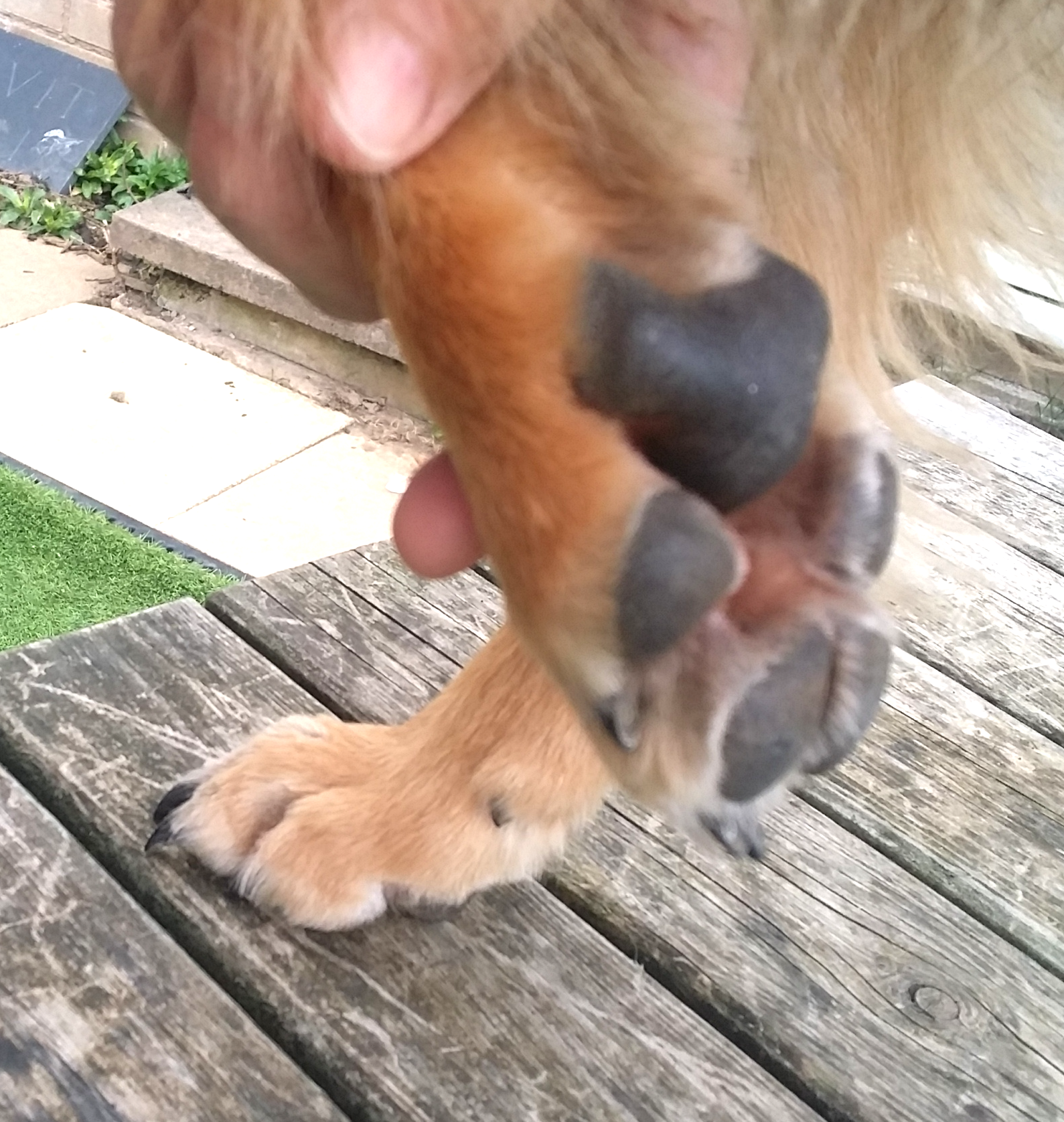
Lastly, have a look at your dog’s feet. Do they resemble floormops? If so, they’ll be slipping and sliding around when their feet are dry, and slopping mud and mess everywhere when they’re wet. 

Feet!

Lacy's feet before trimming

Lacy's feet before trimming

Transformation! Lacy's feet after trimming

Transformation! Lacy's feet after trimming

The tool de rigueur for this job is the trimmer. Often sold for beards, sideburns, etc. it’s safe and easy to use. You can’t snip the webs with it, and I find my dogs enjoy the gentle buzzing sensation it gives them. 

Work down and up between the pads, and finish with shaping the outside of the paw. 

Neat feet will prevent a lot of hazards - including mudpies between the toes, scalds, grass seeds, burrs and thorns. They’ll save you a lot of towelling dry and floor-cleaning. And your puppy will not slither and slip when you ask him to sit on the kitchen floor.

My Border Collies are regularly upside down on my lap having their feet trimmed. Coco Poodle has his feet shaven all over, and looks very trim and smart.

And even Cricket the Whippet has this one hair trimming treatment occasionally - her construction means that she props herself when she sits, so on a smooth floor her front feet slide away from her. So she doesn’t escape my ministrations entirely!

If all of this scares you rigid, find a good dog-friendly groomer and get her to do it. You may be surprised to hear me suggest a “dog-friendly” groomer! But - just like trainers - it’s the way they treat the dog that’s more important (to me) than their skill in trimming him neatly. You don’t want your dog regarding a trip to the groomer like some of us regard a trip to the dentist!

But these maintenance clips really are easy to do and you can quickly gain confidence and get good and efficient at it. Don’t try them all at once! One paw a day, or one ear, will be fine.

And seriously - if your dog is bald, you’ll need special care for his skin to keep it moist and healthy. And in our British winters, he’ll definitely need a woolly jumper!


And don't go without your free illustrated

Guide to Dog Grooming Essentials!

THIS GUIDE IS A BONUS FOR YOU WHEN YOU SIGN UP TO RECEIVE EDUCATIONAL EMAILS AND OCCASIONAL OFFERS FROM ME. YOU CAN UNSUBSCRIBE AT ANY TIME PRIVACY POLICY

Is my dog a reflection of me?


When we first visualise adding a dog to our lives, we conjure up an image, an impression, of what life will be like. 

You may have been looking at this project being super-rational, coldly calculating, rigidly sensible … until this image washed over you -

  • of striding across a rugged landscape with your trusty friend at your heels.

  • Or perhaps it was sitting knitting in front of an open fire, with your little fluffy pet on your lap.

  • It could be that you saw yourself racing round an agility ring with your perfect pooch flying over the jumps to much applause.

  • Or maybe you had an image of your friendly dog playing endlessly with the children, and the children’s friends, and their cousins, and their dogs.

Whatever it was you imagined, this dog was destined to enhance your life, to show off your natural talents as - an outdoorsy type, a homely comfortmaker, a sporty competitor, or the quintessential earth mother.

This is all great and wonderful, and for some of us that will have come true. 

We choose to have a dog to enrich our lives

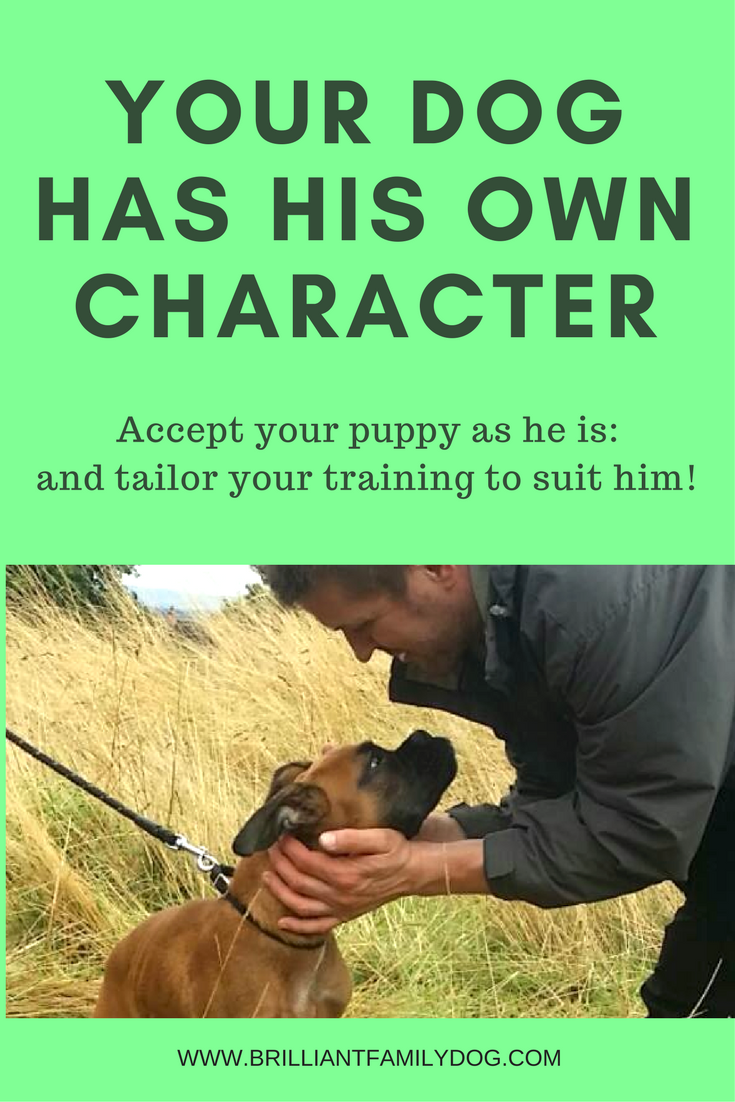
But as any parent will know, once the much-anticipated creature (whether baby or puppy) arrives, it’s a different story! This little person has her own character, her own history, and her own opinions. Shaping a baby to become the kind of adult we’d like takes us twenty years (“Only twenty?” I hear you cry!). Fortunately it’s a lot quicker with a dog. 

I’d expect my pup to arrive at the kind of dog I’m aiming for by the age of about three or four. Up to then you’re in teaching mode. 


It is a truism that your dog’s behaviour is a direct reflection of your training.


With dogs it’s very much a case of you get out what you put in. And to get the best from your dog you need to be open to his suggestions of what works for him. To have harmony in the home, with a pet who knows his boundaries, you’ll be investing plenty of time in early training.

Don’t wait till things are going wrong! By the time your puppy is adolescent (around 6-9 months) and running wild, it is too late. That is a common age for dogs to be given up for rehoming. It’s the dog’s behaviour that will dictate how he fits in with his family - and ultimately whether he lives or dies. Many more dogs die because of poor training (failure to recall near a road, apparently aggressive behaviour because of lack of early socialisation, boisterousness, impetuousness) than from the illnesses that people are so afraid of.


Spending time and effort on vaccinations is pointless if you don’t put the same care into your training program!


Fortunately it’s becoming increasingly easier to find a force-free trainer to help you start your new dog the right way. Look for one who belongs to the APDT (UK), or the Karen Pryor Academy, and who has credentials you can look up and study. Avoid anyone who talks of “Pack Theory” “Dominance” “Keeping your dog in his place” and, of course, anyone who uses nasty equipment. If you wouldn’t use it on your small child, then no-one should have it near your dog.

Happily ever after

Dog training, new puppy, puppy training, dog behavior | Train with kindness and your dog will repay you for the rest of his life | FREE EMAIL COURSE | #newpuppy, #dogtraining, #puppytraining, #dogbehavior | www.brilliantfamilydog.com

This will all pay off when your dog is mature, confident, knows exactly what goes down well with his family and what is best avoided. 

By then, you’ll have found out what you really want in your partnership. You can discard the glossy magazine images that paraded before you when you were planning your dog’s arrival, and factor in your dog’s character, your own character, and the nitty-gritty of daily life. 

Maybe you do go for those bracing hill walks; maybe you’re becoming an agility star; perhaps your dog is your rock and support; maybe she’s the perfect family dog.

But maybe not.

  • Maybe she got an injury which precluded her from being a performance dog.

  • Maybe she’s made it clear she’d far rather curl up and sleep than tramp across the moors.

  • Maybe she’ s had enough of noisy children and prefers peace and quiet - that’s her choice.

And you work with the dog you have, to ensure that she has the happiest life possible. So you may have to put your hopes and plans on the back burner and give this dog a life that suits her. 

How often do you see a child from a sporty family end up as a musician, or an accountant? How about the academic family who are frustrated because their children become hippies or horse trainers?

Our dogs, like our children, are individuals. We can nurture their talents and rejoice in their creativity. The only reflection of us we need to see in our dog is the love in those big brown eyes. The rest is an adventure.


RESOURCES:

Fix everyday dog problems fast - free email course

APDT(UK)

KPA

VSPDT

IMDT

CBATI

PPG


Your dog has his own character

Want to turn your dog into a star retriever? Check Fetch it! Teach your Brilliant family Dog to catch fetch, retrieve, find and bring things back! and enjoy a new relationship with your dog.

“He Understands Everything I Say!” 6 Pointers to Better Communication


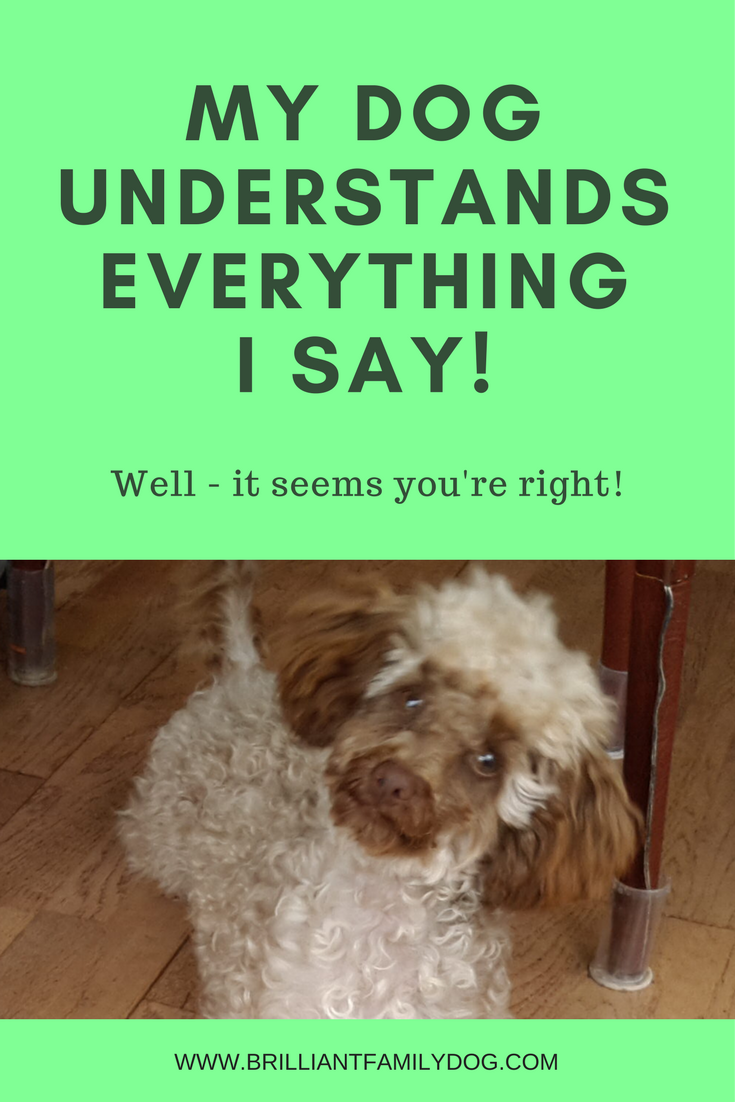
Our vision of the speaker is a fluffy old lady cuddling her equally fluffy old dog. We smirk as she says this - what a lot of nonsense!

But wait! Maybe not so nonsensical!

Recent research has shown that not only do dogs process speech in a similar way to the way we process speech, but they also process emotions in those sounds - just as we do. Their brains are actually wired for sounds the same way ours are - pointing to our common ancestry over 100 million years ago. Add that we have been sharing our lives with each other for the last 18 - 32,000 years and we’ve kinda got used to each other. 

Do you want to bark at your dog?

Many people think that to communicate with their dogs they have to give sharp, abrupt “commands”, eliciting instant compliance. They have been misled by waves of tv personalities who have encouraged this dysfunctional, one-sided, relationship.

While clarity is important to avoid confusion, switching to the sort of conversation we have with our friends and families - especially what we do with as yet non-verbal small children - actually conveys more information to your dog. 

"Dogs and humans share a similar social environment," says Attila Andics of MTA-ELTE Comparative Ethology Research Group in Hungary. "Our findings suggest that they also use similar brain mechanisms to process social information. This may support the successfulness of vocal communication between the two species." 1

If I’ve asked my dog to lie down, and after a while he forgets and moves off, rather than yell DOWN at him, I ask him in a quiet inquisitive voice, “What were you meant to be doing?” My dog pauses for a moment, processes both what he’s heard and the way it was said, and returns to lying down.

“The results do indicate that they don’t just pay attention to who is speaking and their tone of voice – they also, to some extent, hear the words we say.” says Victoria Ratcliffe, Doctoral candidate in Psychology at the University of Sussex. “So even if he doesn’t always respond, he is listening.” 2

We don’t yell single-syllable commands at people the same way we think we’re meant to yell at our dogs. We don’t say to our visitor, “Come in. I said Come in. Come IN! Get through that door NOW!” We focus on making the other person feel comfortable - and may smile, say “Come in,” make a welcoming gesture with our arm, perhaps make a whole body movement while we stand aside for them. It is the entirety of our communication that conveys information to our visitor. Standing rigid while barking abrupt commands would leave your guest confused and alarmed.

Good force-free trainers (not to mention millions of devoted dog-owners) know that speaking to your dog as a person is not only effective at getting your message across, but does it in a way that enhances your relationship while keeping your blood pressure down!

What do I do?

Here are a few steps you can take to change your approach to communicating with your dog.

1. Are you sure he knows what you mean?

Does your dog actually know what SIT means? People often expect their dog to arrive with a load of behaviours installed. Remember that when your new pup arrives, you are getting Dog 1.0 - the basic version, not the pre-programmed one. You have to provide all the add-ons and upgrades!

2. Pair your sound with his action.

The quickest way to teach a dog a word is to pair that word with his action. So you say SIT quietly while his bottom is going to the floor. You are labelling that movement as “sit”. Keep repeating this whenever he sits till he gets it, and you can say SIT and he’ll sit straight away. No need for wagging fingers or menacing body language. Just a soft voice will do.

3. Now you can sound like a human being and not a robot.

Once he’s got this, you can ask him to sit in a pleasant friendly way: “Would you sit over there?” “Sit down now, there’s a good boy.” “Come and sit beside me.” will now all work. I’m not saying he understands every word you are saying, of course, but he will certainly understand the gist and the underlying emotion. He may need to try a couple of things to see if that’s what you want. He may lie down instead of sitting. That’s ok - you’re not in an obedience competition.

4. Zip it!

Say it once, then zip it! Don’t rabbit on, repeating yourself. So if your dog is distracted when you ask him to sit, you don’t need to escalate your “sit, SIT, SIT!” and show frustration. Try a quiet “Did I ask you to sit?” or “What do you think you should do now?” It may amaze you, but you will most likely get a thoughtful response from your dog. Don’t forget to reward him warmly when he obliges!

5. Watch the Children.

Children can undermine your training by endlessly repeating your dog’s name. They like to roll words around in their mouths like fine wine and move into a sing-song litany. They may be “fighting” each other for the pup’s attention, or they may just have slipped into a habit of calling the dog without following through. Fran was continually calling her puppy’s name on one of our Puppy Walks, then ignoring the dog and wandering off. So I called her over and said “Fran,” “Fran,” “FRAN,” “Fran-NEE,” “Fran?” She grumpily said “What?!” It took her very little time to get annoyed and impatient with me, which demonstrated nicely what she was putting her dog through. She was expertly teaching him to ignore not only his name, but anything else she said!

6. Conflicting information.

Evidence that dogs take in the whole picture and not just an isolated sound is that if you make a sound and a signal simultaneously your dog will tend to miss the sound completely and follow the signal. As a non-verbal species dogs have a sophisticated body language to communicate with each other, so when there’s a conflict of information they will tend to choose what they see over what they hear. Hence in no.2 above, focus on the sound and don’t add extraneous body signals. If you always bend over or look like the Statue of Liberty when you say “sit”, your dog is going to be mightily puzzled when you say “sit” without your accompanying movements. You can always add hand signals later if you need them.

Was the Fluffy Old Lady Right?

You may not want to be a fluffy old lady or have a fluffy old dog, but at least that lady and her dog are happy and content with each other!  

Nobody wants to live in a war zone, and not many wish to live in a military bootcamp. More and more countries round the world are declaring dogs and other animals to be sentient beings, not property, and their laws are being changed accordingly. This is a huge advance for our so-called “civilised society”. (Here in the UK, dogs are still possessions, like a chair, or a teapot.)

Cast off the shackles of what some tv “trainers” have advocated, and behave like a friend to your dog, not a prison guard. 


For more insights into communicating with your dog, get our free email course which solves many common puppy and dog problems for you - all without force of any kind.

And if you’ve enjoyed this, you’ll love the ebook series Essential Skills for a Brilliant Family Dog


Is your dog or your little puppy throwing up more challenges than you anticipated? Watch our free Workshop and find how to change things fast!

Sources:

1. Attila Andics, Márta Gácsi, Tamás Faragó, Anna Kis, Ádám Miklósi. Voice-Sensitive Regions in the Dog and Human Brain Are Revealed by Comparative fMRI. Current Biology, February 2014 DOI: 10.1016/j.cub.2014.01.058

2. Victoria F. Ratcliffe, David Reby. Orienting Asymmetries in Dogs’ Responses to Different Communicatory Components of Human Speech. Current Biology, November 2014 DOI: 10.1016/j.cub.2014.10.030

My dog understands everything I say