There is more variation between individuals than between breeds.
Yes, it’s one of my favourite sayings.
And I can’t say it often enough.
Yes, it’s true that spaniels are in general more like each other than like say, huskies, or whippets. But you can find plenty of spaniels who don’t like hunting, huskies who are couch-potatoes, and whippets who can’t run for toffee.
The thing is, that humans and dogs are very similar in this respect.
Take your own family! I’m sure you’ll find there are siblings who had the same parents, the same upbringing, the same food, the same school … and yet who are totally different in many ways.
It’s one of the joys - and challenges - of parenthood, to find what works for each individual child. Lumping them all together will come to grief, sooner or later.
Same with dogs!
And it’s just the same with dogs. Just because they happen to be the same breed as your previous dog doesn’t mean they’ll be a carbon copy (copy/paste, or duplicate, for younger readers!).
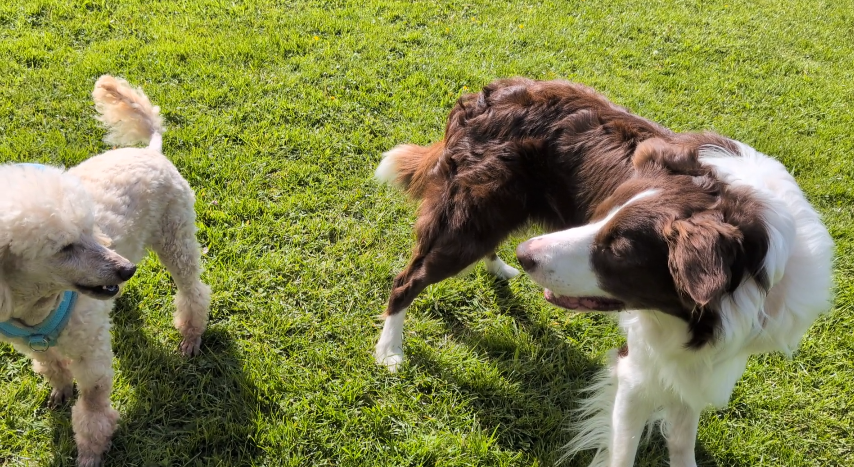
Even pups from the same litter show huge divergence in character from very early on.
Sarah Whitehead says: Behavioural scientists have been measuring these early differences for decades. Even at just eight weeks of age, puppies in a single litter vary in confidence, sociability, curiosity, activity levels and their responses to unfamiliar situations. (Wilsson & Sundgren, 1998; Fratkin et al., 2013).
Further, in a more recent study (Barnard et al, 2017) it was found that
“the effect of litter emerges as playing a stronger role than breed in modulating puppies’ behaviours … The large variability both within and across breeds found here, mirrors results with adult dogs.”
“The large within-breed variability found among a generic sample of breeders, highlights the importance of shifting the attention of future dog owners from just ‘breed selection’ to a more careful assessment of the pups’ characteristics. Relinquishment of dogs to shelters may be linked to failed expectations, which could be fuelled by an inadequate/misleading view of a specific breed. Hence, increasing public awareness of the importance of visiting the breeder, asking about breeding strategies, seeing the parents of the litter and assessing individual behavioural differences among littermates are key steps to engender informed buyers.”
Now, where have you heard all that before?? ;-)
See the resources below for clues.
And don’t go without checking out the massive resources for you at my.brilliantfamilydog.com which features an extensive search across all my work - including this post!
RESOURCES
Effects of weight, litter size and parity of mother on the behaviour of the puppy and the adult dog
I know he’s only a puppy, but … what you expect is what you get!