Why can’t I take my dog to the fair?

Here are some thoughts on how to enjoy an outing with your dog, just as you planned when you got your dog! | FREE EMAIL COURSE | #aggressivedog, #reactivedog, #dogtraining, #growlydog, #anxiousdog, #overfriendlydog | www.brilliantfamilydog.com

Well … maybe you can. Maybe you have a bombproof dog who loves everyone and likes nothing more than all the busyness, noise, and goings-on at your local summer fete.

Then again, maybe your dog is like most dogs, and finds traipsing round a hot and busy fairground, on a short lead, with children screaming, people laughing, smells of burgers, spilt chips in the grass you won’t let him eat, loudspeakers blaring - a complete nightmare.

You can’t put him back in the car as it’s way too hot. So your unhappy dog is stuck with this for as long as you choose to stay at the event. Hot, bothered, fed up.

Now this is where you’ll send me a photo of your dog on your last outing, quietly standing beside you. All the more surprising to you because your dog is usually wary of strangers and other dogs, and seemed to be “absolutely fine” in the midst of thousands of them.

“He’s fine!” you’ll assure me.

But it’s very likely that this change in behaviour was not down to him “being fine”, rather that he’s “shut down”. This is a coping mechanism we all employ when overwhelmed.

We become subdued, we stay quiet, make ourselves small. We hope not to be noticed, spoken to, or challenged.

It’s a form of learned helplessness.

We know that nothing we do will change the situation, so we give up. Surrender to our fate. But it doesn’t mean we’re enjoying it!

Your dog, as I so often say, is the exact same. He finds himself in a situation he can’t handle. With hundreds of people, children, dogs, in close proximity, he knows he can’t employ his usual methods of requesting space - barking, lunging, screaming, snarling - which work like a charm at removing the approaching thing from their path, or getting themselves removed by an embarrassed owner.

Watch and wait
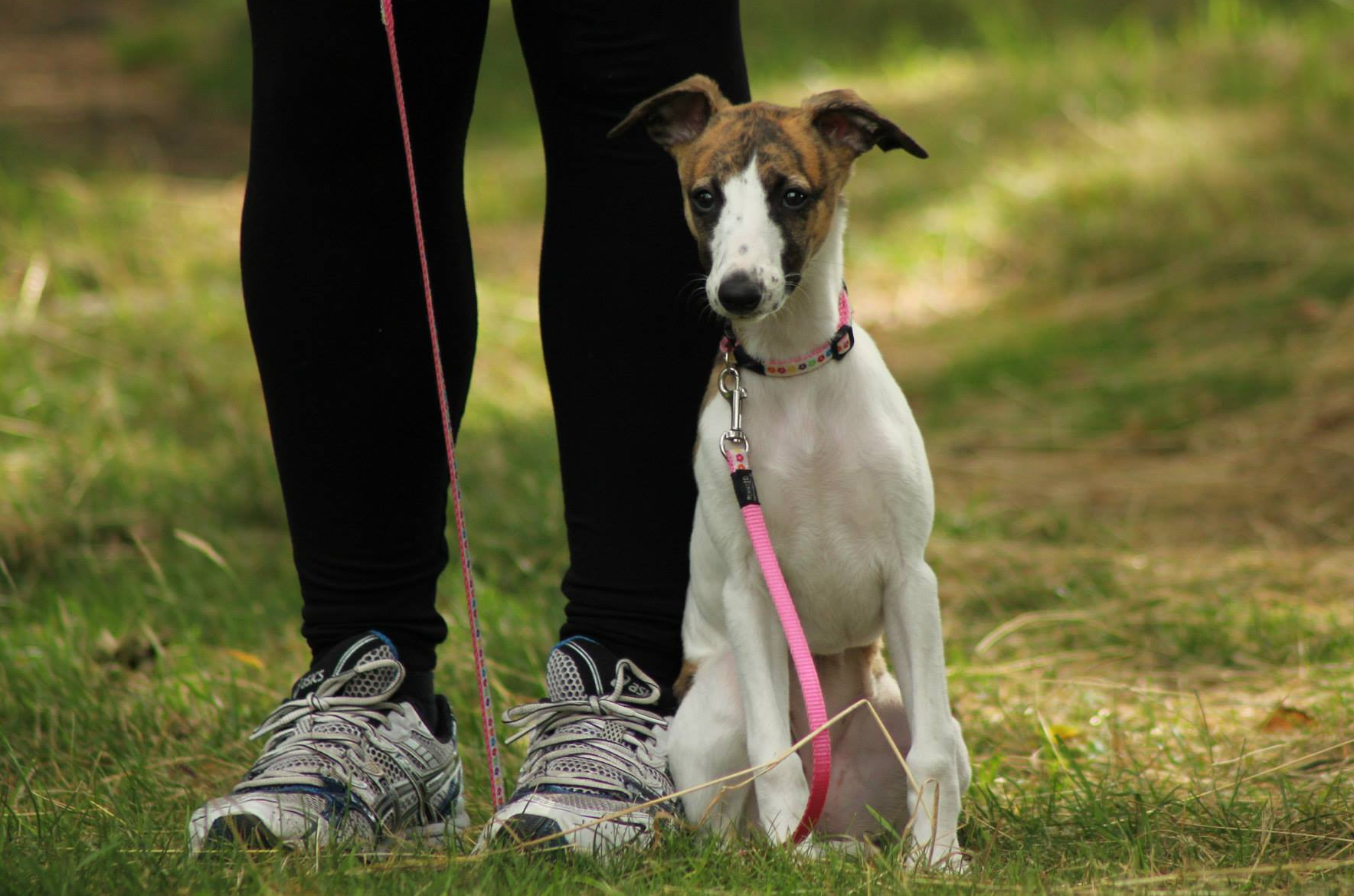
Put some planning into place when you are visiting an exciting event with your dog, so that it goes as smoothly as you planned when you first got him! | FREE EMAIL COURSE | #aggressivedog, #reactivedog, #dogtraining, #growlydog, #anxiousdog, #overfr…

Some dogs will be much happier out of the thick of things, on the sidelines where they can safely observe what’s in front of them without having to scan the full 360° (see there’s nothing behind this puppy in the picture - she only needs to check in front of her).

He will also appreciate you watching how he is (soft mouth, soft ears and shoulders, no gasping panting, head not dropped, no twitchiness or slinking about) and removing him from the situation after maybe as little as three minutes. And yes, you can’t plonk him in the hot car or you’ll have a worse problem! Take him home.

You may be surprised that even your very friendly dog finds a busy outing a bit too much. Continually being restrained from jumping all over a thousand new friends who must want to meet him, will wear him out!

If you’re planning on visiting a big event, put your dog in training for the occasion. You can start with a walk past the local shops, sitting at the other end of a school road at school-out time, a shopping centre car park on a quiet day, a busier day, a Saturday …

Don’t plunge him into a new and strange environment, which could cause him distress, without finding out beforehand how he’s going to manage.

Then you can amend your plans accordingly. We can enjoy our family outings, but we don’t necessarily need to take our dog.

Here are some more articles which will help you understand just what’s going on with your dog when you’re out and about:

How to get calmer dogwalks

How heat can affect your dog’s coping skills

How to plan a successful day out with your dog

Need more help understanding your Growly Dog? Get this free e-course

THIS FREE ECOURSE IS A BONUS FOR YOU WHEN YOU SIGN UP TO RECEIVE EDUCATIONAL EMAILS AND OCCASIONAL OFFERS FROM ME. YOU CAN UNSUBSCRIBE AT ANY TIME.
Privacy Policy

How Lacy helps other dogs

Learning how my reactive dog thought made all the difference to how she acted. The relationship blossomed and our lives changed | FREE EMAIL COURSE | #aggressivedog, #reactivedog, #dogtraining, #growlydog | www.brilliantfamilydog.com

This article was first published on 4knines.com and is reprinted here with permission.

Even as a young puppy Lacylu scared people. They would cling to each other and cross the road when they saw her coming.

She looked like a brown bear cub. In no way was she a petite or cute pup, though she did have a very pretty face – still does.

But it was clear from very early on that she was going to struggle in an urban world, full of people, other dogs, things that go bang in the night …

As she matured Lulubelle became more, not less, difficult. She reckoned that she needed to protect the 3,000 acres around us, starting at my feet. Anyone or anything that hove into view prompted ferocious barking - and if she was able she would chase them away.

For help with your reactive, anxious, aggressive, “growly” dog, get our free email course here.

  THIS FREE ECOURSE IS A BONUS FOR YOU WHEN YOU SIGN UP TO RECEIVE EDUCATIONAL EMAILS AND OCCASIONAL OFFERS FROM ME. YOU CAN UNSUBSCRIBE AT ANY TIME.
Privacy Policy

I know just what it’s like to be a pariah. I’ve had the wrath of ignorant people rain down on me when my dog has barked and lunged toward them. If only they could understand what a gentle and loving dog she really is!

And this is where my lessons began

I’d been training dogs for competition for many years, and after lots of study, I had opened my dog training school the year before, at an age when many people are slowing down and switching off – not studying, sitting exams, learning about SEO, public indemnity insurance, and payment systems!

So Lulu arrived at a very good time for me (and, I think, for her).

I started learning about fearful dogs, anxious dogs, aggressive dogs, Growly Dogs; guardy dogs, nervous dogs, barky dogs (Lacy loves to bark); people’s fears, people’s reactions, people’s emotions.

Learning how my reactive dog thought made all the difference to how she acted. The relationship blossomed and our lives changed | FREE EMAIL COURSE | #aggressivedog, #reactivedog, #dogtraining, #growlydog | www.brilliantfamilydog.com

I was voracious – all the available methods were scrutinised and run past my personal ethos. Many were dismissed out of hand as being harsh or even cruel. Some were hard to assimilate into everyday life. Some were ineffectual. Finally I found the best of the best and focused my energies on developing my skills there, and building my own system.

  • I learnt why anxious dogs behave as they do

  • I learnt kind techniques that put a worried dog at ease – CLUE: the first step is always distance!

  • I learnt how to keep people away without causing them to panic

  • And – most important – I learnt how to help other people with their “growly” dogs

Lacy’s now able to look at a strange person or dog and move on. She logs their position carefully, just in case they should try anything … but she can pass them peacefully. (She’s never bitten anyone.)

My fluffy bear cub has come so far in a few years – and is helping others like her to gain confidence and give their owners at the other end of the lead a bit of peace. Both dog and owner learn new coping skills together.

Helping my dog get over her fears has led to a better life for so many more dogs!

Once the poor harassed owners learn that their much-loved dog is not nasty or vicious a new life opens up before them.

It certainly did for me!


Your first step towards your new life with your growly dog is in this free e-course


  THIS FREE ECOURSE IS A BONUS FOR YOU WHEN YOU SIGN UP TO RECEIVE EDUCATIONAL EMAILS AND OCCASIONAL OFFERS FROM ME. YOU CAN UNSUBSCRIBE AT ANY TIME.
Privacy Policy


My dog knows he's done wrong

Dogs don’t do things for no reason - learn their language! | FREE EMAIL COURSE | #aggressivedog, #reactivedog, #dogtraining, #growlydog, #puppytraining, #dogbodylanguage | www.brilliantfamilydog.com

No he doesn’t!

He has no idea!

All he knows is that you are cross and he has not got a clue why!

So he runs through a series of appeasing behaviours to show that he’s no threat. This may include lowered head, looking away, lowered body posture, creeping, slinking away, screwing up his eyes and grinning, licking his lips, yawning, walking in slow motion silently, licking you, jumping on you, nudging you, burying his head in you. A young puppy can even lose bladder or bowel control in his distress.

All the while you are wagging your finger, shouting or yelling - or worse (as anyone who had a vicious headmistress like I did will know!) going very, very, still and quiet and saying “What. Do. You. Think. You’re. Doing?”

He doesn’t know. Really. He’s a dog.

Dog Body Language

More commonsense tips to be found in this free 8-lesson email course to get you started with your dog


  THIS FREE ECOURSE IS A BONUS FOR YOU WHEN YOU SIGN UP TO RECEIVE EDUCATIONAL EMAILS AND OCCASIONAL OFFERS FROM ME. YOU CAN UNSUBSCRIBE AT ANY TIME.
Privacy Policy

Dogs express themselves largely through their body language. While most people see nothing - just a dog - it’s in fact a sophisticated language which is very clear, once you learn it.

As a dog-owner it’s your duty to learn Dog Body Language!

You wouldn’t adopt a child from another country and refuse to listen to anything she said until she could express herself fluently in your language. It’s such nonsense when you look at it like that!

So know that you have to observe your dog, look out for every ear-twitch, every sideways glance - what’s his head doing? what’s his movement telling me?

There are some good resources online for learning these movements. Here’s a good one from the amazing artist Lili Chin, of the Body Language of Fear in Dogs

Dogs don’t “look guilty” - learn their language and communicate better with your pet!  | FREE EMAIL COURSE | #aggressivedog, #reactivedog, #dogtraining, #growlydog, #puppytraining, #dogbodylanguage | www.brilliantfamilydog.com

Do you recognise some of these from your own dog? Start looking! You’ll see them all, in time …

So why does he look so “guilty”?

All this is telling you that telling your dog off and assuming that because he slinks or cowers or looks away, he understands what you’re on about, is mistaken! (That’s polite-speak for WRONG!)

Dogs don’t “look guilty”, or “know they’ve done wrong”. Something a few correspondents have been trying to tell me this week.

Those awful videos that get circulated online - of dogs “looking guilty” - are horrible. Anyone who actually understands dogs knows that the dog is deeply unhappy and distressed by the hostility her owner is demonstrating. Having no idea of the cause, all she can do is grovel. Setting these situations up and videoing them is cruelty, no less.

What can you do instead when something you don’t like has happened?

The first thing to do is to look at why the thing happened. And very often you’ll find the finger is pointing at … yourself!

Dogs don’t “look guilty” - learn their language and communicate better with your pet!  | FREE EMAIL COURSE | #aggressivedog, #reactivedog, #dogtraining, #growlydog, #puppytraining, #dogbodylanguage | www.brilliantfamilydog.com

◆   Who left the dog alone with the kitchen waste bin?

◆   Who left the door open so that your curious dog went out through it?

◆   Who failed to follow a force-free housetraining program and now has a confused dog who doesn’t know where to relieve herself?

◆   Who left valuable yet chewable items within reach of a puppy who has as yet no boundaries?

So if you come home to find a mess, just clear it up quietly, while resolving to change your own habits so that it can’t happen again.

Our dogs have it hard enough living in our strange world without being told off for breaking rules they didn’t know existed! If you follow this path, you’ll have a hard time ever gaining her trust.

My dog knows when he's done wrong


Fluffy Puppy turned into a snarking monster? 5 steps to enjoying walking your dog again

This article was first published on 4knines.com and is reprinted here with permission.

Pins Maxx Payne.pngCan you enjoy walks with your reactive dog again? Change some of the things you’re doing and see the change in your dog! | FREE EMAIL COURSE | #aggressivedog, #reactivedog, #anxiousdog, #fearfuldog, #dogtraining, #growlydog | www.…

That sweet pup who at a couple of months old was so adorable that you wanted to show her off to everyone, has gained half a year and grown horns!

She barks and lunges at every dog or person she sees – and you wouldn’t want anyone to see your dog now … So you only walk her at The Hour of the Difficult Dog. You’re embarrassed. Confused. What have you done wrong?

What she’s showing is a fear reaction which can appear in adolescence.

It may have resulted from not meeting enough dogs and people in her first few weeks with you; it may be that some time another dog or person gave your pup a fright; it could just be that she’s cautious and fearful by nature.

It’s not wrong or bad – it’s just the way she is. And you still love her to bits!

So how can you improve this and get your fluffpup back again?

For help with your reactive, anxious, aggressive, “growly” dog, get our free email course here.


  THIS FREE ECOURSE IS A BONUS FOR YOU WHEN YOU SIGN UP TO RECEIVE EDUCATIONAL EMAILS AND OCCASIONAL OFFERS FROM ME. YOU CAN UNSUBSCRIBE AT ANY TIME.
Privacy Policy

1. Understand

Your dog is not aggressive or nasty - she’s afraid. The reason she’s barking and lepping about on the lead when she sees another dog or person or bike is that she’s trying to keep them away! Quite often this apparently aggressive display will do the trick, and either the other walker heads off, or you drag your dog away in embarrassment and confusion. Once she’s upset and the hormones are flying around her body, she’ll be quicker to react to the next frightening thing she sees.

2. Make Distance

If your child had a fear of spiders you wouldn’t keep confronting him with the wiggly beasties. So, for the time being, avoid confrontations with other dogs. Walk where you won’t have dogs “in your face”. Turn and go the other direction when a dog is walking towards you along the street. Just knowing that she never has to meet another dog or person will take a lot of the pressure off your dog and allow her to keep calm.


3. Get rid of any gadgets or collars that hurt her

It stands to reason that if, every time you saw a red van someone choked you with a prong or chain collar or – worse still – gave you an electric shock, you would soon get very anxious about red vans. You would try to get away from them, and if you saw one coming you’d probably start to scream in fear of the anticipated pain. So ditch all those things that people tell you are the answer, and just have your dog on a comfortable, soft, flat collar and a good length lead so she can move freely.


It’s not the dog that has to change! Change your own mindset and change your dog!  | FREE EMAIL COURSE |  #aggressivedog, #reactivedog, #anxiousdog, #fearfuldog, #dogtraining, #growlydog | www.brilliantfamilydog.com

4. Change her Perception of Dogs and People

Before you set out on your walk, load your pockets with tasty treats that you know your dog will sell her soul for. Tiny cubes of cheese or hot dog will do the trick, or high-quality grain-free treats may work. Every time you see something coming, pause - and post treats into your dog’s mouth as she watches them. Treat, treat, treat … very fast. Be sure you keep beyond the distance at which she usually gets worried. Stop feeding once the hazard has gone away. If you are consistent with this, she’ll soon see a strange dog or person, turn to you and say, “Where’s my treat?” Result!


5. Still afraid your dog may bite?

You need to find a certified force-free trainer who understands how to help fearful dogs. Be aware that using any sort of force or punishment in this situation will make things worse. If your dog has already bitten or you’re really afraid she will, you can acclimatise your dog gently to a basket muzzle. Use the system at no.4 above so that she is delighted at the sight of her muzzle. The muzzle has the added benefit of keeping people and their dogs at a distance – just what you want for now!

Follow Steps 1 – 4 above and you’ll start to build your dog’s confidence and be able to enjoy your walks again.


For help with your reactive, anxious, aggressive, “growly” dog, get our free email course here.


  THIS FREE ECOURSE IS A BONUS FOR YOU WHEN YOU SIGN UP TO RECEIVE EDUCATIONAL EMAILS AND OCCASIONAL OFFERS FROM ME. YOU CAN UNSUBSCRIBE AT ANY TIME.
Privacy Policy


Can Choice Training help my Reactive - Growly - Dog?

Training your dog with choice is much easier and more effective than you may have thought | FREE EMAIL COURSE | #newpuppy, #dogtraining, #newrescuedog, #puppytraining, #dogbehavior | www.brilliantfamilydog.com

One of the interesting things I’ve observed recently is how much simple Choice Training changes life for those of us blessed with a Growly Dog - a reactive, anxious, aggressive, dog.

Of course, I always knew that! But it’s great to hear it come back from students and folk on my recent Workshop. That was all about Choice Training - training your dog by offering him a choice instead of telling him what to do.

And the results have been remarkable for many people!

They were surprised - and delighted! - to find that their growly dog was much better able to cope after only a couple of days of trying this new approach. Well, it was new for many of them …

For help with your reactive, anxious, aggressive, “growly” dog, get our free email course here.


  THIS FREE ECOURSE IS A BONUS FOR YOU WHEN YOU SIGN UP TO RECEIVE EDUCATIONAL EMAILS AND OCCASIONAL OFFERS FROM ME. YOU CAN UNSUBSCRIBE AT ANY TIME.
Privacy Policy

How can a few simple games change my reactive dog?

What happens is that - through offering your dog a choice and not continually “commanding” him what to do - you build a completely new relationship with your pet!

No longer are you yelling and dancing, coaxing and cajoling, to try and get what you want. Instead you have a happy companionship where your dog is keen to do what you want because it’s what he wants too!

What I love about this way of training is that the dog doesn’t have to “be trained” at all. So how does the change happen? By you, the OWNER, changing!

Simple as that! Once you change your ways, your dog will just change with you.

And while you’re building up this amazing new bond between you, your anxious dog is getting less anxious, your reactive dog is able to cope much better with his fears, and your aggressive dog finds that - with you on his side - he doesn’t need to be aggressive any more.

I love my dog but …

Training your dog with Choice Training is much easier and more effective than you may have thought | FREE EMAIL COURSE | #newpuppy, #dogtraining, #newrescuedog, #puppytraining, #dogbehavior | www.brilliantfamilydog.com

Many people come to me saying “I love my dog to bits, but …” What’s happening is that they undoubtedly do love their dog, but they don’t actually understand why he’s doing what he does. They know there’s a disconnect there, but are unaware how to fix it.

Once they start using Choice Training, things change fast. They become a team with their dog. They can now love him with understanding and empathy.

When I’m working with Growly Dogs specifically, I use a lot of strategies and techniques to achieve the desired change in the dog’s behaviour. But these are all based in giving him a choice and letting him decide on a good course of action.

When you have very young children, you have to show them and teach them all the time. Once your child is older, you’re no longer saying “do this, do that,” but you are backing them up in the informed choices that they are now able to make. This is what I aspire to for my Growly Dog students. That they can work together with their challenging dog to get the results they want.

One of the best things about Choice Training is that you can start it with your new puppy when he comes through the door at 7-8 weeks old. People used to say (some unenlightened people still say …) that you can’t train a puppy till it’s 6 months old. Why? It’s simply that the type of training they’re thinking of - harsh, punishment-based training involving physical pain - would be too tough on a puppy.

Why use it on any dog??? It’s quite unnecessary, as you’ll see from any of the 130-odd articles on this site, not to mention the many books, the audiobooks, and my free - as well as paid - programs.

And if a training technique won't work for a toddler, then it likely won't work for a dog —Stanley Coren

Take a look at this post which goes into the whole subject in great detail. There are some academic resources listed there for those of you who want to dig deep!

The fact remains, if you can treat your dog with the same courtesy, kindness and respect that you give to any toddler, then you’ll get the results you want!

For help with your reactive, anxious, aggressive, “growly” dog, get our free email course here.


  THIS FREE ECOURSE IS A BONUS FOR YOU WHEN YOU SIGN UP TO RECEIVE EDUCATIONAL EMAILS AND OCCASIONAL OFFERS FROM ME. YOU CAN UNSUBSCRIBE AT ANY TIME.
Privacy Policy


Is it possible for a dog to be reactive to the unexpected?

Do dogs like surprises? Their job is to spot surprises and alert us | FREE EMAIL COURSE | #newpuppy, #dogtraining, #newrescuedog, #puppytraining, #dogbodylanguage, #dogbehavior, #reactivedog | www.brilliantfamilydog.com

I had a great question recently:

“Is it possible for a dog to be reactive to quiet and ‘the unexpected’?”

The person who posed this question was puzzled that their dog seemed able to cope with busy or noisy situations, but would react violently to any sight or sound when the environment was otherwise empty or quiet. The owner was worried that his dog may be unusual or wrong in some way.

As I answered, it became clear that quite a few owners of reactive dogs are puzzled by this. So I’m giving you my answer as it may answer a question that you have too!


This is a good question! It baffles and misleads a lot of people.  

Picture this: you are visiting your local shops. It’s afternoon, the shops are busy, there are mothers with pushchairs, delivery vans, people with shopping bags, boys on bikes … How do you feel?

Absolutely fine and comfortable, I’d bet.

Now imagine you go there at 1 in the morning. The place is deserted. You hear footsteps getting louder, and peering into the gloom you can just make out a figure heading towards you. How do you feel?

Most of us would be on high alert at the very least, possibly really alarmed.

The same man ambling through the crowds in the afternoon probably wouldn’t have bothered you at all.

There is a technical name for this - it’s SEC or Sudden Environmental Change.

Dogs are designed to spot things which are different, things which shouldn’t be there. They can single out something amiss and focus intently on it. This is one reason why they have earned their place in our homes down the ages. They are alarm sensors!

So your dog is behaving absolutely normally.


Want to learn more? Check out this free email course that will give you lots of Aha moments about your reactive, aggressive, anxious - Growly - dog!


  THIS FREE ECOURSE IS A BONUS FOR YOU WHEN YOU SIGN UP TO RECEIVE EDUCATIONAL EMAILS AND OCCASIONAL OFFERS FROM ME. YOU CAN UNSUBSCRIBE AT ANY TIME.
Privacy Policy

Sudden Environmental Change? Wha’?

There is a reason so many of our working dogs are so useful in their work. Take German Shepherds for instance, who can spot an intruder or an escaping criminal in a split-second, and take action.

Border Collies, those wonderful sheep-herders, can instantly spot a ewe whose ear is twitching in the wrong direction, indicating that she’s about to break and take the flock with her. The Collie can get round in an instant to block the ewe and make sure she keeps going in the right direction.

In the image at the top of the page, young Coco Poodle just has to check out this strange sign in an otherwise green and empty landscape.

Do dogs like surprises? Their job is to spot surprises and alert us | FREE EMAIL COURSE | #newpuppy, #dogtraining, #newrescuedog, #puppytraining, #dogbodylanguage, #dogbehavior, #reactivedog | www.brilliantfamilydog.com

Sighthounds can spot the tiniest movement in a still place at a huge distance. Something moving in the landscape could well be dinner!

Dogs searching for evidence may not have a specific scent or object in mind - they’re just looking for something that shouldn’t be there.

And this is why your dog may react dramatically to the doorbell, or a car door slamming outside your home.

WHO IS THIS?

WHAT ARE THEY DOING HERE?

ARE WE UNDER THREAT?

For this ability alone, dogs have earnt their place by our fireplaces for so many thousands of years - it’s about 30,000 years, in fact.

Dogs’ gifts

The fact is that the hearing and sight capabilities of the dog so far outweigh our own. When it comes to their noses, they are unparalleled, and are the reason dogs are an important tool for the police, and in airports and ports worldwide. They’re far quicker at discovering evidence and identifying contraband than much of the sophisticated machinery also in use!

Is it possible for a dog to be reactive to quiet?


Is your dog throwing up more challenges than you anticipated? Watch our free Masterclass and find how to change things fast!