HOW CAN YOUR WILD PUPPY BECOME YOUR BRILLIANT FAMILY DOG? 8 steps to success

What can you do to make this love affair start fast and last long? Read this post of 8 how-to’s to build a lasting bond. Brilliant Family Dog is committed to improving the lives of dogs and their harassed owners through books and online learning, al…

First published on positively.com and reprinted here with permission

You’ve decided now is the time to get a dog for your family. Excitement is running high! Expectations are through the roof. Plans are being laid.

But how realistic are these expectations? How near to reality are the plans?

I find that new puppy-owners tend to fall into two camps - those who expect too much too soon, and those who expect too little for too long! Let’s have a look at this more closely:

1. Expecting too much too soon

When you get your puppy at seven or eight weeks old, he is a baby. His eyes have only been open for six weeks. Everything is new to him - everything. He has to learn to trust you as his guardian and protector first. So shouting SIT SIT SIT at him is mystifying and frightening! There will be plenty of time for learning to sit on cue - but there’s only a short time for so much else that needs to be learnt first.

We have very short memories (why do women give birth to more than one child? If they remembered what they went through the first time they probably wouldn’t!) So remembering how good our old dog was is not helpful. What you’re probably remembering is when he was twelve and fitted your home comfortably like an old pair of slippers. You’ll have forgotten the mayhem and mess of his early weeks and months. Perhaps your old dog grew up in a noisy, busy family, with endless entertainment and learning. Now your home is quieter, but your pup will need the same level of stimulation and novelty.

2. Expecting too little for too long

Then there are those who appreciate that their puppy is a baby - but forget that their development is many times faster than that of a human infant. A pup of six months is something similar to a child of twelve years old in terms of maturity. You have a lot to pack in those first four months with you!

Fortunately young puppies are sponges. They soak up learning. It’s so easy to teach them what you want before they’ve discovered what they want. And like children, they accept the status quo. If feeding is always done in their crate followed immediately by a visit to the garden, this will be the accepted pattern which they will put on autopilot.

3. Start ‘em really young!

It used to be thought that puppies couldn’t start training until they were six months old or more. Imagine teaching absolutely nothing to your child until he reached twelve! The mind truly boggles at what you’d be up against. But with the revelation that force-free training is quicker and more efficient than traditional punitive methods, and that it develops an unbreakable bond between dog and owner, puppy training can start at around five weeks. The pup is still in the litter, of course, but he’s learning! This is where the importance of a conscientious and knowledgeable breeder comes in. Why not let him learn early on that people are good news and interacting with them is to his advantage?

Trainers in the vanguard of scientific thought do much of their teaching through games - every game designed to achieve one key skill. You want to find one of those excellent, thoughtful, kind trainers for your puppy!

4. All things to all men?

Your dog can’t be everything. He can’t fulfil all the roles that dogs are able to perform. Each dog is an individual. He may be unsuited to some activities, sports, ways of life, on account of his size or conformation. He may be temperamentally unsuited: he may be a social butterfly - or he may be a party pooper. While you can improve his perception of the world, tempering his excesses and building his confidence, you have to accept that maybe this dog won’t be your world class agility dog; maybe not the one to go on transalpine treks; perhaps not a cuddly lapdog or people-pleaser.

You can load the dice in your favour by researching your chosen breed and breeder minutely before you make your choice. But there’s still an element of the “luck of the draw”. How many people do you know who are quite unlike their parents? Your challenge will be to find where your dog does shine and develop that to his fullest potential.

5. Give time for the bond to grow

What can you do to make this love affair start fast and last long? Read this post of 8 how-to’s to build a lasting bond. Brilliant Family Dog is committed to improving the lives of dogs and their harassed owners through books and online learning, al…

As you go through the early weeks and months, there’s no place for frustration or loss of temper, which will serve only to damage your relationship with your dog. Your puppy is not doing what he does out of stubbornness, naughtiness, defiance. He’s doing it because he’s a dog. And you haven’t yet shown him what you’d like him to do instead.

Punishment rewards the punisher - makes them feel better, more in control through having lost control. It doesn’t help the one who is punished.

It makes them evasive, resentful, untrusting. It won’t change their behaviour - they’ll just make sure you’re not around when they do it. Confusion reigns: think of the puppy who is told off for weeing in the house (who’s in charge of the feeding schedule and the doors here?) then makes sure to leave his next puddle behind the sofa where you can’t catch him and chastise him again.

6. The gift of time

Give your dog the time he needs to learn with you. Your days were already full before your puppy arrived, so you have to make time. Give him time - and undiluted, focussed attention. This is especially important when you already have a dog in the household. Your puppy needs that individual attention you lavished on your first dog if he’s to develop the same bond with you.

7. Expand your dog’s mind

Brainwork - as we all know! - is tiring. Use up some of that boundless energy by getting your puppy to think, to make choices, to assess situations and make good decisions. In order to think and choose, we have to have the freedom to make mistakes. Encourage and welcome those mistakes, which show that your dog is thinking and trying things. Choice-based training means that when your dog makes a poor choice nothing happens, good or bad. When he makes a good choice he gets excitement, treats, games, fun. Which do you think he’s going to choose again?

8. Don’t forget to enjoy your puppy!

Remember why you wanted a dog in the first place. Don’t get bogged down by worrying about whether your puppy is learning quickly enough, whether he’s showing you up at puppy class, whether you look inadequate if he doesn’t come when he’s called. Take the broader view and see it as a giant learning curve for both of you. Enjoy this time - it speeds past!


Find out how to avoid some of the pitfalls of early training in our free Workshop on getting your dog to LISTEN!

Check out our many articles on puppies starting with this one and use the search to find specifics for your new pup!


The Evolution of the Dog

Why do we warm to dogs so? Read this post which explains how it all happened. Brilliant Family Dog is committed to improving the lives of dogs and their harassed owners through books and online learning, all force-free and dog-friendly! | FREE COURS…

The earth trembled and a great rift appeared, separating the first man and woman from the rest of the animal kingdom. As the chasm grew deeper and wider, all other creatures, afraid for their lives, returned to the forest - except for the dog, who after much consideration, leapt the perilous rift to stay with the humans on the other side. His love for humanity was greater than his bond for other creatures, he explained, and he willingly forfeited his place in paradise to prove it.

Native American folk tale

Although many dog-lovers will warm to this tale and find it quite believable as they admire the faithful companion on their hearthrug, it didn't actually happen like this!

From the time of the dinosaurs there has been a continual evolution of new life forms, some superseding their forebears, some living alongside them. This development has taken place over vast, unimaginable, tracts of time. Picture this: if dinosaurs arrived one day ago, humans would have only appeared in the last 43 seconds - and dogs in the last 6 seconds!

As bears developed from hyenas, viverids, and cats, so dogs developed from the canids which followed 10 million years later. But which of the seven canids was the forerunner of the dog?

It is now clear that dogs evolved from wolves around 15000 BP (more recent research suggests it may be as long ago as 30000 years). With the same 78 chromosomes, and DNA that varies by only 0.02 %, they are without doubt closely related.

The theory propounded by Raymond Coppinger in Dogs in 2001¹, states that dogs evolved through natural selection from wolves who were able to eat in the presence of humans.  This modification of the normal fear and flight instincts meant that these wolves could take advantage of the food waste lying around the villages being developed by man. Their undoubted use as alert dogs, guard dogs, scavenger- and cleaner-dogs - thereby reducing disease - ensured they found a place round the campfire. As they became more at ease around man, they became tamer and more sociable, until they became the indispensable companion and workmate of the present day.

Jessie Zgurski, in The Origin of the Domestic Dog, Canis familiaris², says

“Fossil bones of dogs have been found along with human remains in caves around the world. Arguments have been made that dogs first became domesticated in the Middle East, Europe, or Southeast Asia. The time frame, however, has not been controversial. The fossils at the proposed sites all date from between 10,000 and 20,000 years ago, times that slightly predate the origins of agriculture.”

It is likely that, as Homo sapiens developed in one area and spread round the world, so the dog spread round the world with his new partner - man. 

Why do we warm to dogs so? Read this post which explains how it all happened. Brilliant Family Dog is committed to improving the lives of dogs and their harassed owners through books and online learning, all force-free and dog-friendly! | FREE COURS…

The distribution indicates that dogs spread from the Far East. Many of the land bridges were still in place about 14000-12000 BP, most notably that between Asia and North America. The wolf and the fox adapted best to different climates and habitats. The more limited distribution of Dingo, Jackal, African Wild Dog, and Raccoon Dog indicate an inability to diversify, although it is thought that the Carolina Dog in the USA may be a direct descendant of some well-travelled Dingos.

It was from the more adaptable wolf that the very successful dog emerged, now to be found in virtually every corner of the world. Though wolves have remained largely unchanged over 5 million years, dogs have shown amazing diversity in their short 15000 years of existence. Dogs now show the greatest size range of any mammal.

A fascinating experiment took place at a Russian Fox Fur farm from 1900-1920. Dmitri Belyaev, a Russian geneticist, wanted to artificially select foxes for tame-ability, simply for ease of handling at the farm. “After only eighteen generations, Belyaev had come up with naturally tame animals that had many of the behavioral traits of a domestic dog.” (Coppinger)¹.

What Belyaev had not anticipated though, was that along with the tamer behaviour came other changes: droopy ears, oestrus twice a year instead of once, doglike sounds, and - unfortunately for the fur farm! - piebald coats.

This is a perfect example, under controlled and documented conditions, of a “saltation”, or evolutionary leap from one species to the next.


Bibliography

  1. Coppinger R and Coppinger L (2001) Dogs – A Startling New Understanding of Canine Origin, Behavior and Evolution. New York, Scribner

  2. Zgurski J, The Origin of the Domestic Dog, Canis familiaris. (Powerpoint presentation). https://www.nrem.iastate.edu CanidaeProcyonidae, accessed 29.3.21


The right dog bed for your dog, and you!

So rather than fit the dog bed with YOUR decor, make sure it’s a bed your dog will love and be happy to spend time in! And, of course, make sure it’s washable. Brilliant Family Dog is committed to improving the lives of dogs and their harassed owner…

Some dogs like luxurious dog beds, some are more Spartan. Some dogs like to burrow into their beds and make a nest, others are happier dozing on top of the kennel with a layer of snowflakes covering them . . .

I know because I have a Whippet who thinks almost exclusively about her own comfort, and Border Collies who have coats designed to keep them warm in a blizzard on a Scottish mountainside.

Want more tips like this for everyday living?

THIS FREE ECOURSE IS A BONUS FOR YOU WHEN YOU SIGN UP TO RECEIVE EDUCATIONAL EMAILS AND OCCASIONAL OFFERS FROM ME. YOU CAN UNSUBSCRIBE AT ANY TIME.
Privacy Policy

You need dog beds that are serviceable and easy to wash for the working dogs in the family and beds that are cosy and warm for the lapdogs (for when there is no lap available!).

The advantage of having a dog bed that your dog actually likes is that you can position the bed where you want your dog to be when he’s switched off, then you don't have to be tripping over him every time you turn round.

I have beds under one of the worksurfaces in the kitchen instead of cupboards. That's where the crate goes too, when we have a new dog in the household.


Keep it clean

I think the most important factor of a dog bed - from the owner’s point of view - is its cleanability. You don't want nameless stains showing up on your carefully laundered bed! That's where a patterned finish is handy. A removable machine-washable cover is ideal, and I find the fleece that you can buy by the yard is excellent. You can bio wash it or hot wash it in the machine, and it dries in no time. Great beds for dogs who like to bundle them up, carry them to their preferred spot, and hide their toys in them. You can easily fit them into a car crate too.

I have hard floors downstairs, so the 2-metre lengths of fleece double as beds and non-slip walkways. These can be very useful at corners where puppies and old dogs in particular are likely to slip in their haste. This can cause serious ligament damage.

Also in the car you can have tough plastic-backed blankets or even fully fitted dogproof seat covers. Just imagine how much time that's going to save you picking up hairs and mud! But your best option for the car is washable beds inside a fitted crate. See this post for more info.


It all depends on the dog

Tunnelling dogs will appreciate a cosy bed to dig down into. They tend to be thin-coated dogs, like Terriers and Whippets. Cricket the Whippet took some time to learn how to get herself under her duvet without needing help every time she wanted to get into her bed. But now she’s a pro and can whoosh herself in and under in seconds.

Such dogs often like to sleep in heaps. A pair of noses peeping out from a pile of lambskins is very appealing, as you can see here with Sky and Bolt.

So rather than fit the dog bed with YOUR decor, make sure it’s a bed your dog will love and be happy to spend time in! And, of course, make sure it’s washable. Brilliant Family Dog is committed to improving the lives of dogs and their harassed owner…

As to the wicker basket so beloved of artists and birthday card designers . . . well, they may look good, but don't put your dog in one till you're quite sure he won’t chew it to shreds. Not only will it make a mess of your costly bed, but lengths of willow are not easily digested!

Instead, get one of those hardshell dog beds which are easy to sweep out and hose down. They can take up a lot of space but are excellent for keeping the dog’s bedding in one place.


That’s MY bed!

The important thing about your dog’s bed is that it’s his! He must know that he can rest there in peace without being trodden on, badgered by children, hugged by affectionate toddlers, or shoved off it onto the floor by another dog (or cat!). He needs somewhere he can relax and treat as his den.

Make sure it’s a bed your dog will love and be happy to spend time in! And, of course, make sure it’s washable. Brilliant Family Dog is committed to improving the lives of dogs and their harassed owners through books and online learning, all force-f…

If you have multiple dogs be sure you've got a bed per dog plus one extra so you never get arguments over beds. It’s easy enough to teach them to share - either to share a bed together, or move round to a different bed - though this can result in some comical sights when the cat commandeers the big dog bed and the big dog tries to squish into the cat donut!

In my own household of four very different dogs, we have flat memory foam beds for the hot dogs (Collie and English Shepherd), and heat-reflective bed with duvet for Cricket the Whippet - along with tunnel beds and soft cushionbed-on-armchair for her, so her majesty can select the right bed at the right time! Coco Poodle is happy in his fleece-lined bucket bed at night, and chooses to perch on lambskin-covered footstools in the day.

At the last count there were 14 dog beds here and 3 cat beds, though these are often shared.

What bed do you find best for your dog?


Do You Dream Of Your Dog Flying Back To You Every Single Time You Call? Start Here!

First published on positively.com and reprinted here with permission

What would it mean to you if you could give one call, and your dog zoomed in and arrived at your feet? Every time!

Hard to imagine? Maybe.

Possible? Most definitely!

Fun? Very much so. (If it’s not fun, your dog won’t do it. So there’s lots of fun!)

Little by little

The problem is that many people think their dog comes with a recall installed.

No! Whether a puppy or a rescue, you’re getting Dog 1.0 - the basic version. Upgrades are installed through hours of fun and games, aka force-free dog training.

When your new little puppy arrives, you may be tempted to think she has a great recall because she quickly finds you. This is just her infant clinginess.

Like a lamb at foot, the young puppy tends to keep close to her minder. Once she starts to grow a bit, in confidence as well as in size, you’ll find that infant clinginess will evaporate.

And if that’s what you’ve been relying on, you are now up the creek without a paddle.

So you need to get in early, ensuring that you use that time when your puppy wants only to be with you, to build a thumping good recall. Naturally, with a puppy of a few weeks old you’re only going to teach through games!

The secret is to keep those games going as your dog gets older, so they will always choose you over the distraction they were about to hurtle towards.

Old School training

In days gone by (thankfully), people didn’t start teaching dogs till they were six months old or so - the reason being they had to be tough enough to stand up to the harsh treatment meted out to them.

What a trick they missed!

All those early weeks and months when your puppy is like a sponge soaking up new information!

Why on earth let your pup run wild for months learning to do all kinds of things you don’t want her to do - then say, “Right, now I expect you to behave differently.”?

So with your new puppy, start the day she arrives.

With a new rescue dog you may have a lot of history to work against. The easiest way to achieve what you want is to imagine this is a new puppy and teach the exact same way.

First things first

There are two things you need to be clear on before you start:

1. If you don’t want your dog to do something, then don’t let it happen

So if you have any suspicion your dog may run off and not come straight back - highly likely in a new rescue dog - then you need to learn how to use a long line safely (not an extendable lead) while you teach your super instant recall.

This does not mean you never let your puppy off-lead! This will not teach her anything except to want to get away from you.

Your dog must be free in order to make a choice to come back. But only let her off-lead in an enclosed area. Gradually your dog will earn her freedom in larger areas.


2. Everyone on the planet listens to the same radio station: WII fm

WII fm? That’s “What’s in it for me?”

Your dog will be making a choice whether to hare after the distraction or shoot back to you. What’s in it for her?

You need to make your recall games such fun that her response becomes automatic. And an easy way to train in any kind of knee-jerk reaction - so that her recall goes onto auto-pilot - is to use rhythm and patterning in your games.

Step by step

When you were learning to read, you were not given a copy of James Joyce’s Ulysses and told to get on with it!

You were taught shapes of letters or words and their sounds, gradually slotting those jigsaw pieces together till you could hit a line of text running, read it and understand it.

So letting your dog wander off then calling her and expecting her to know what to do is just as mad as giving your toddler Ulysses.

The very first thing your pup needs to learn is that her name means good things, and only good things. You should never use your dog’s name if you are frustrated or annoyed with her. Any other word! - but not her name.

Here’s a simple game to get you started. Watch out for other family members as well as yourself. You may be surprised at how much negativity is being attached to your dog’s name on a daily basis!

1. Say dog’s name once

2. When she responds - by raising an eyebrow or hurtling towards you and crashing into your legs - reward her with something good

3. Repeat at every opportunity throughout the day

4. Enjoy your dog

What should her reward be? That’s something that you should be finding out if you don’t already know!

What does she like?

🐾  A run and laughter?

🐾  A piece of cheese?

🐾  A game with you and a toy?

🐾  A game of chase?

Whatever “is in it for her” is what you use to reward her response to her name.

One day her willing and instant response to her name may save her life. Be sure to take time building that response.

And for a step-by-step guide to a lightning-fast recall - every time - go and take a look at Here Boy! Step-by-step to a Stunning Recall from your Brilliant Family Dog, the fourth in the series of Essential Skills for a Brilliant Family Dog, available in ebook, paperback, and audiobook. Go now, and you can be reading it within minutes!

Picture this: your dog is racing towards another dog, you call her name - once - and she spins and races back to you at the same speed, arriving with a smile on her face and a happy waving tail, saying, “Didn’t I do well?”

This can be you and your dog!


Want to teach your dog to LISTEN?

Enjoy our free Workshop here


Where did Brilliant Family Dog begin?

If everyone’s first dog were as amazing as mine was, they would never be without a dog again.  Brilliant Family Dog is committed to improving the lives of dogs and their harassed owners through books and online learning, all force-free and dog-frien…

I can remember it as if it were yesterday.

It was 6.30 in the morning, and I was sitting on the cold pavement outside Battersea Dogs Home, London’s most famous animal shelter. Today was the day the puppy I had chosen became available for re-homing, and I was up - about three hours earlier than usual! - to be sure of getting her.

I was the first there, and I looked anxiously at the others waiting in line. We talked to each other and said which dog we wanted. Nobody else wanted “my” puppy, so I relaxed and focused on keeping warm.

Eventually 9 o’clock came round and I and the handful of other dedicated dogseekers were let in. Everyone rushed to the area they knew “their” dog was in, anxious to be there first. I reached the puppy pens and there she was, sweet and beautiful and ready for the adventure.

A few forms later, and I was out on the street again, this time clutching my precious new puppy to me. Precious, but not materially. She cost all of £9.80, including the collar and lead!

That was how I came to have Poppy. And that’s where my adventure began! There had been dogs at home where I grew up, but Poppy was the first I could call mine.

Want to make the most of your new dog?

Watch our free Workshop on Getting your Dog to Listen! and learn new ways to communicate with each other.


Life with Poppy

Fresh from the streets … thin and anxious

Fresh from the streets … thin and anxious

Poppy nearly died over the next few days, having caught some nasty puppy disease, probably on the streets before the Home picked her up. But, showing the spirit for which she would become known, she pulled through and we started our 16-year love affair. The adoration was mutual.

A few months later when I moved from London to rural Ireland, Poppy helped me make new friends. In fact her bright and endearing nature and endlessly-wagging tail got her talent-spotted by a dog training club instructor.

Now a whole new world opened up before us - Obedience, Working Trials, Agility. Oh, the miles we travelled - all over the British Isles - the friends we made, the rosettes we won, the fun we had!

Poppy flies over the 6 foot scale!

Poppy flies over the 6 foot scale!

The high point of our competition career was when my little Battersea stray became Working Trials Champion Flower of Battersea, CDEx, UDEx, WDEx, TDEx. Why, she had more letters after her name than I did!

Here she is scaling a 6 foot barrier in terrific style! She also held the Irish High Jump record at one stage, clearing 3 foot 6 inches.

What a long way from those London pavements! As one Obedience Judge put it: “Such grace and elegance from humble beginnings as shown by her name.”


Poppy loved everybody

… adults, children, dogs, puppies, cats, chickens, geese, goats, sheep, cows, donkeys - everyone she came across. She “didn’t have a bad bone in her body,” as my Irish neighbours would say.


Of course I don’t think any dogs have bad bones in their body, but that was rather forward-thinking in a time when blaming the dog for the owner’s shortcomings was the standard. And sadly still is, for many folk.


So I tried one dog, then I got another … and another - the story of addiction! There was no stopping me.

Since then I have had many dogs. Mostly Border Collies, but also others including Whippets - linking back to Poppy: one of her 57 varieties was definitely Whippet!

And for many years I competed with all of them - largely in Working Trials (that’s based on nosework and tracking), but also Obedience, Agility, Heelwork to Music. And we carried on the learning - scent discrimination, searching, lots of different types of retrieving, tricks …


But how did Poppy influence Brilliant Family Dog?

I decided to put pen to paper, or rather fingers to keyboard, because I wanted other people to experience some of the immense pleasure I have had from sharing my life with dogs. I started with Good for Dogs, which also served my dog school students in Worcestershire. Then graduated to Brilliant Family Dog, with all its online courses, books, audiobooks, and over 300 articles! Check the navigation bar above.

This site is more than a dog-training resource, it’s a dog-living and dog-loving site - a dog-celebration, you may say!

And it all started with my little Battersea waif, who introduced me to a new world.


Want to teach your dog to LISTEN?

Enjoy our free Workshop here


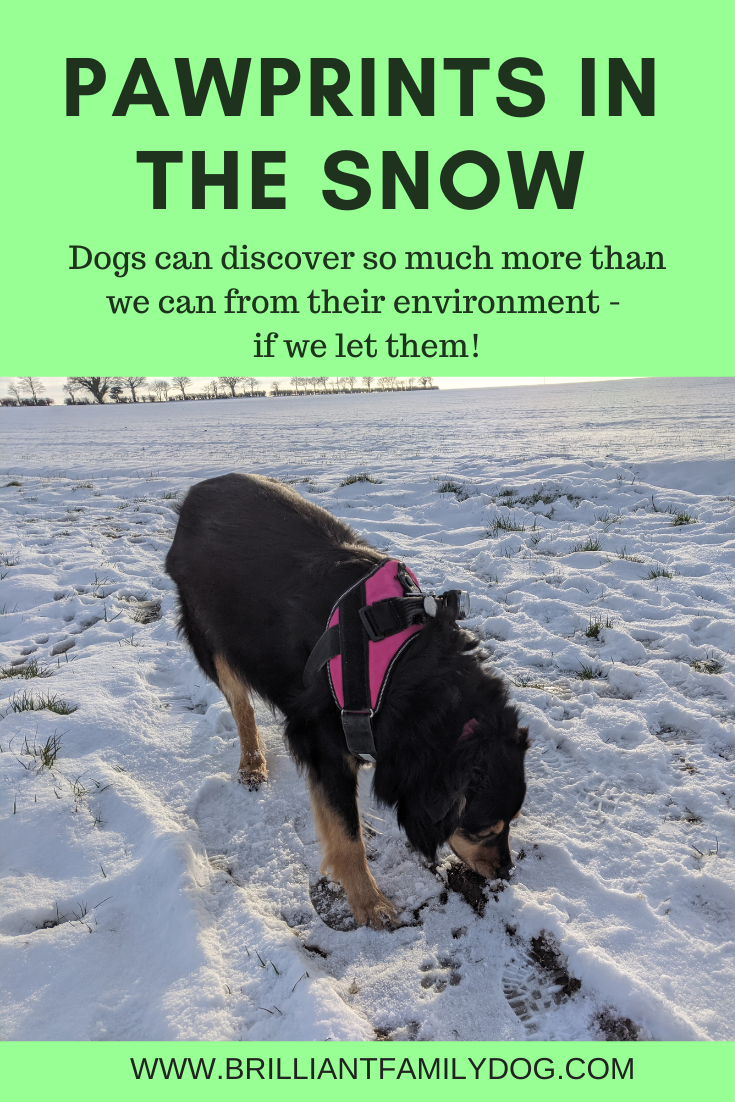
Pawprints in the snow

The dog’s nose is majestic - so much more powerful than ours. It’s important to allow your dog to use his nose as much as he wants!  Brilliant Family Dog is committed to improving the lives of dogs and their harassed owners through books and online …

As humans we have a tendency to think that we know best.  

But when it comes to working with a dog we don't know best!

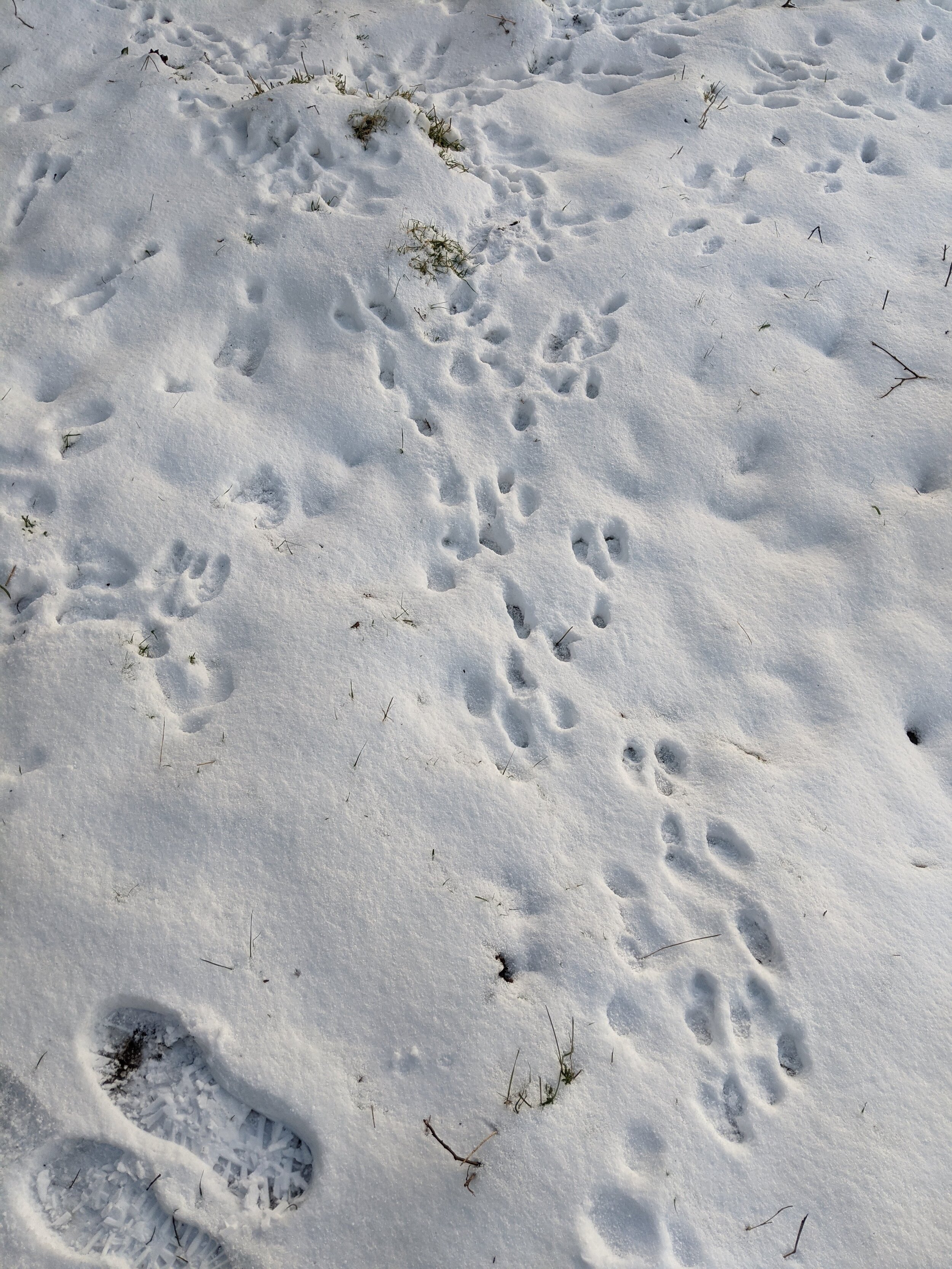
They have powers way beyond ours! When there’s snow on the ground you can see all these footprints. They are something that we don't normally see, but your dog is aware of them all the time - snow or no snow.

When he's sniffing and wants to pull over to somewhere and you say “There's nothing there - come on, let's go,” he's right and you're wrong!

bunny prints in the snow.jpg

You can see here that there’s been a late-night bunny party, heaven for your dog to check out. But normally we have no idea of all this activity. Your dog, though, can “see” this every single day.

Scent in the dog’s brain

Did you know that a third of the dog’s brain is taken up with processing scent? 😳

And look at the size of their hooter compared with ours! (That’s a normal-shaped dog’s nose - not one squashed and altered by designer breeding.)

That nose is meant to work! And in many cases it’s put to work for our benefit.

There are dogs for medical alert and seizure detection, drug dogs, customs dogs, police tracking dogs, hunting dogs, cancer detection dogs, search and rescue dogs, quartering dogs, flushing dogs.

So many useful applications of that wonderful scenting ability!

But there’s also the fun stuff. Scent discrimination in Obedience competitions is highly sophisticated, but taught - or should I say refined - for fun.

And Working Trials is a terrific way for the layperson to enjoy high-performance tracking. In the higher levels of Trials, you and your dog are confronted by upwards of 30 acres of empty space with just a pole to indicate the start of the track. The track will be three hours old, and have three tiny articles (think key, matchbox, metal bolt) somewhere along its half-mile length. In all weathers!

And with dedication and application - and a lot of hard work! - a dog from the humblest beginnings can excel. My little Battersea foundling Poppy became WTChampion Flower of Battersea CDEx UDEx WDEx TDEx.

That’s a very high level of expertise to be exhibited by both dog and handler. It’s genuine teamwork, where the dog is the expert.

Nosework in the home

It’s not necessary to walk the legs off your dog (and you) every day with a view to tiring them out. Using their brains is much more tiring!

Hunting for your lost keys, socks, or wallet is a great way to partner up with your family dog to make life easier for you, and definitely more fun for her!

Just playing hide and seek in the house is a great start.

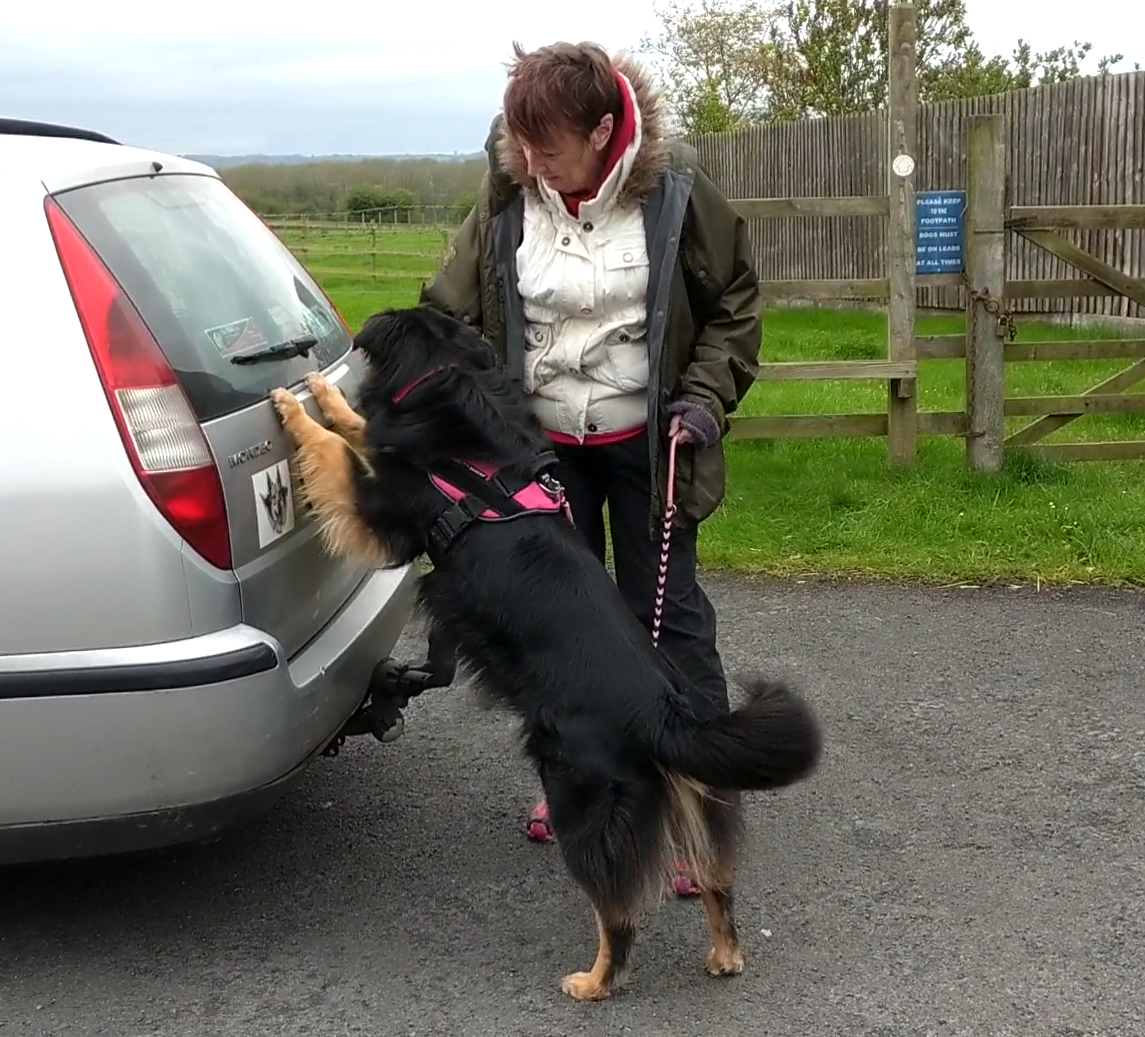
Here you can see Lacy searching a car for hidden “contraband”. In this case it was a toy rat. You can scent this with a tiny drop of innocuous essential oil, or just with your hands. Even in this still photo, you can see her tail was swishing with excitement as she got into her task.

The dog’s nose is majestic - so much more powerful than ours. It’s important to allow your dog to use his nose as much as he wants!  Brilliant Family Dog is committed to improving the lives of dogs and their harassed owners through books and online …

This post is designed to get you thinking about what your dog can do better than you can - and how you can enhance both your lives by working with your dog, and not against her.

There's so much we can actually learn from our dog if we're prepared to open our minds and look . . . and it's not only about dogs.

If you take off your blinkers (what are they called in America? Blinders!)  you'll begin to see an awful lot in the world that you didn't know was there.

 So start now by incorporating some scent games into your lives!


Need some ideas for getting the best from your dog?

Get our free email course and solve common problems without conflict!

THIS FREE ECOURSE IS A BONUS FOR YOU WHEN YOU SIGN UP TO RECEIVE EDUCATIONAL EMAILS AND OCCASIONAL OFFERS FROM ME. YOU CAN UNSUBSCRIBE AT ANY TIME.
Privacy Policy