Are you a Firefighter or a Planner?

Dog training, new puppy, puppy training | Dog Training: are you a firefighter or a planner? It’s easier to teach your dog first then treat problems retrospectively | FREE EMAIL COURSE | #newpuppy, #dogtraining, #newrescuedog, #puppytraining, #dogbeh…

I get so many emails along the lines of 

      • “How can I stop my dog doing xyz?”

      • “Every time x happens, my dog does y”

      • “My dog does xyz out of the blue.”

      • “My dog always does xyz - I say NO, but he doesn’t seem to learn and does it again next time.”


Let’s take these one by one.

1. “How can I stop my dog doing xyz?”

Far, far, easier than stopping your dog, is to ensure he doesn’t start!

It may be that you’re new to living with a dog, and you can’t foresee what’s likely to happen. Once you have a few dogs “under your belt” you get much quicker at spotting hazards in advance. So, if your dog already has an established behaviour pattern that you don’t like (and if he was re-homed with you, he may have come with this habit already well-learnt), you want to look at what causes that action to happen. 

Once you know the precursor, you have a chance to change the outcome

Perhaps your dog jumps up on visitors. What happens before he jumps?

1. Visitor arrives at house and knocks at door (huge excitement!)
2. Visitor is admitted (excitement unparalleled)
3. Maybe visitor tries to greet the dog, in self-defence (dog is massively rewarded for lunatic activity)

So you have three clear points there where you could make changes. 

1. When visitor arrives, or - if expected - before visitor is due, settle your dog in his crate or another room with a chewtoy or stuffed foodtoy.
2. As the visitor is admitted to the house, your dog is either safe in his crate or other room, or is on lead beside you with your foot on the lead, and cannot jump.
3. If visitor wants to greet dog (preferably when you ask them to) dog has to stay sitting in order to earn this mighty reward.

So there you have three easy fixes to a nuisance behaviour with little effort - just a little advance planning.


2. “Every time x happens, my dog does y”

This is along similar lines as the first point, but this time my correspondent has picked up on the fact that something happens first, then the dog reacts. So we’re ahead already!

Sometimes the full question may read:

“Every time another dog walks towards us on the street, my dog lunges and barks.”

What’s happening here?
1. Strange dog (and probably strange person) are advancing towards your dog
2. Your dog is afraid of this incursion
3. Your dog is on lead and cannot exercise the “Flight” part of “Fight or Flight”, so he puts on an aggressive display to frighten away the intruder
4. Other dog and owner turn and go, or hurry past, or you turn and go (Result! The threat has gone! The barking and lunging worked!)

So we want to change this to:

Get lots more help for growly dogs in this free 4-part email course

THIS E-COURSE IS A BONUS FOR YOU WHEN YOU SIGN UP TO RECEIVE EDUCATIONAL EMAILS AND OCCASIONAL OFFERS FROM ME. YOU CAN UNSUBSCRIBE AT ANY TIME.
Privacy Policy

1. Strange dog/person advancing - turn and go the other way, or cross the road
2. Demonstrate to your dog that he needn’t be afraid, you will take care of him
3. Keep hands soft on the lead so he doesn’t feel trapped, and make distance
4. The other dog has gone without the need to be shouted at!


3. “My dog does xyz out of the blue.”

So you can see by now, that your dog never does stuff out of the blue. Unless your dog has dementia, there’s always a reason, just like there is for anything we do. 

The trick is in identifying the reason so we can fix it at that stage, without waiting for the full bad thing to happen.

And one of the commonest times I hear this statement is in regard to dogs reacting - perhaps leaping up and snapping. There’s always a reason!

Perhaps the dog is resource guarding - a speck of food, his owner, a shred of tissue, a toy - and someone got too near. Perhaps he felt another dog was threatening him, too close. Perhaps someone leant over and scratched his bum without permission! (How would you feel if a stranger scratched your bum without so much as a “by your leave”?)

Dogs always run through a sequence of calming signals before biting. Granted, they may run through it pretty fast, especially if they do it a lot. But they do do it. Just as you’d be unlikely to spin round on that stranger and pull a knife: rather, you’d fix him with a frosty glare and maybe say something loud enough for others to hear. 

Kendal Shepherd's Canine Ladder of Aggression

Kendal Shepherd's Canine Ladder of Aggression

So the dog who bit “out of the blue” will probably have tried to turn away, gone still and stiff, shown the whites of his eyes, given a stare, wrinkled his lip, mumbled a growl, swished his tail stiffly, maybe snapped - all steps ascending the Canine Ladder of Aggression - before he felt forced to bite. Fighting is dangerous for all parties, and is not entered upon unless it’s the only choice. 

By the way, dogs are so much faster than us, that if a dog is going to bite you, you are going to get bitten. There is no “He nearly bit me but I moved away in time.” If you are genuinely threatened by a dog, your best course of action is to avert your gaze and posture, keep your arms still, and stop being a threat. 

Teaching children to “be a tree” when confronted by a dog they don’t know is an essential skill: 

  • Plant your roots (keep your feet still)

  • Fold your branches (fold your arms across your body)

  • Watch your roots grow (look at your feet)

A child running away screaming and flapping arms and legs is a great target for a chasing dog!


4. “My dog always does xyz - I say NO, but he doesn’t seem to learn and does it again next time.”

Here we have a combination of acting too late to affect the outcome, and using punishment to try and fix the situation. Both are doomed to failure.

We’ve seen above that you have to identify the precursors to an action if you want any chance of changing it. If your dog “always” does whatever it is, this means it’s a firm habit which you are allowing to happen every time. Change something! Find out what the sequence is and interrupt it. 

If you wait till he’s done it and punish, he’s already been rewarded and you are too late

And as for saying NO, this really is not going to help. Saying NO gives the dog no information about what you do want, and just tells him that you are angry with him and adversarial. You’re not on the same side as him any more, so he can’t expect any help from you. This is exactly what we don’t want in our relationship with our dog! 

Instead, decide on what you want him to do instead, teach him how to do that, reward his response enthusiastically, and you now have a new go-to action for that situation. 

Let’s revisit the first example above:

1. Your dog jumps up on a visitor (fun - visitor dances and flaps hands)
2. You shout NO (more fun! You’re joining in with him now!)

How about, instead:

1. You ask your dog to sit on lead as visitor arrives (you have taught and rewarded this endlessly)
2. Dog sits as you welcome your visitor
3. Dog is rewarded - either with a treat, or by being allowed to greet the visitor calmly

Dog training, new puppy, puppy training | Dog Training: are you a firefighter or a planner? It’s easier to teach your dog first then treat problems retrospectively | FREE EMAIL COURSE | #newpuppy, #dogtraining, #newrescuedog, #puppytraining, #dogbeh…


No firefighting!

A lot of these “beginner” mistakes can easily be avoided or changed with a little foresight. Don’t expect your dog to be a small hairy version of a civilised human brought up with our society’s values. 

He’s a dog.

So think of how he sees the situation - get inside his head and think like a dog - then you can pick out the turning points where you can directly influence the outcome, with a happy dog!

You have to be proactive, not a firefighter. This is true of life in general, and never more true than in developing the magical bond with your dog.

Lots more help can be found in other articles here at Brilliant Family Dog, and specific “recipes” to change things you don’t like can be found in our free 8-part email course.

THIS E-COURSE IS A BONUS FOR YOU WHEN YOU SIGN UP TO RECEIVE EDUCATIONAL EMAILS AND OCCASIONAL OFFERS FROM ME. YOU CAN UNSUBSCRIBE AT ANY TIME.
Privacy Policy

How to speed up your dog training - 6 tips for making your sessions fun and fruitful

Dog training, new puppy, puppy training | How to speed up your dog training: 6 DOG TRAINING TIPS to make your training fast, fun, and efficient | FREE EMAIL COURSE | #newpuppy, #dogtraining, #newrescuedog, #puppytraining, #dogbehavior | www.brillian…

A question I get a lot is this one, from Debbie, a couple of weeks ago: “I’m loving your books, but should I work through one book at a time before starting on the next? Or should I do them all at once? How would I go about that?”

Good question, Debbie. And here are a few thoughts, which I hope will add up to a good answer!


1. Variety

One key thing to remember when you're training - whether a puppy, a new dog, or a dog you’ve had for years - is variety. Dogs, like us, are easily bored. So you want to keep sessions short, be unpredictable, and move fast through your training. 


2. Planning

This means you’ll need to do some planning. Some people like to keep a detailed training planner and diary going, while some prefer a more inspirational approach. This is fine if it works, but you may spend half your allocated time dithering and wondering what to do next. So a little tiny bit of planning goes a long way. A simple way to do this would be to list the things your dog knows, and then list the things you want to teach, broken down into tiny steps. You can see where these overlap (teaching a down stay requires … a Down!) and then pick one from each column for your session. 

You can start off doing a few lightning fast reps of something your dog knows (I hope I don’t have to add “and enjoys” - should be part and parcel of the training), then move into teaching one little step of the new thing. You can vary your rewards - perhaps kibble for the thing he’s already good at, and top treats (cheese, sausage, etc) for the new thing. Always end with a game - even just “Chase me round the garden” is a good game - and make sure your session was very, very short. For a young puppy, ten treats or one minute is plenty; for a more experienced dog you could extend that to three minutes. But not more.

Having some good food ready chopped up in the fridge will make spontaneous sessions much easier. We all live very busy lives - there's no need to make a big deal of a little training session. Most of my training takes place in short, spontaneous bursts wherever I happen to be when the humour takes me. My dogs are always ready to have a game with me, and there is never a time when they cannot earn a reward for something I like - so they’re up for the challenge!

And if you like checklists, you can put a big tick next to what you’ve done. How boring would training become - for both you and your dog - if you always did the same thing? Keeping with our Variety theme, you can choose a different pair of things to train next time, till all your items have a number of ticks by them. Now it’s time to make a new, revised pair of lists!


3. Be unpredictable

Even a very young puppy can learn to enjoy an exciting game with you. Loki is 10 weeks old.

Even a very young puppy can learn to enjoy an exciting game with you. Loki is 10 weeks old.

Along with Variety goes Unpredictability. Who wants to do the same old thing over and over again? And if you stick to doing the same step and never advance it, you’re in danger of your dog getting stuck at that stage and thinking that’s the whole deal. So while you want to keep known actions going, and allow your dog to enjoy knowing what comes next, you also want to pique his interest by keeping him guessing, always pushing on a little bit towards the finished action or trick (it’s all tricks to them).

One day you may be training in your kitchen. Another day you do the same session in the garden. Harder? I’ll say! Your dog has to learn that what earnt him a reward in the kitchen is also guaranteed to work in the garden, or on a walk, or at a friend’s house, and so on. This is called “Generalising the behaviour” if you want to get technical, and it shows your dog, in Sue Ailsby’s words, that “Gravity still applies” even in a different place.

One day you’ll be calm and quiet; another day wildly excited and exciting. One day you work only with food; another day mainly toy-play. Remember to keep it fun and keep your dog guessing and happily anticipating more fun: 

“All work and no play makes Jack a dull boy.”


4. No confusion

If you were to work on two tricks - say a Spin, and a Roll over - in the same session, there is a danger of thoroughly confusing your dog, to the extent that you end up with a kind of twisting rotation in the fourth dimension, where he muddles up all the actions. So choose two tricks that align with each other perfectly (a Down leading on, after a break, to a Roll over, for instance) or two tricks that totally contrast and cannot be muddled up (maybe a Sit Pretty and Take a Bow).

A common complaint at class is that the dog sits, then immediately lies down. Clever dog! This is the direct result of teaching a Sit followed by a Down. Your dog is just anticipating the next step and getting there first. Dogs love knowing what comes next! So actions like this should always be taught separately. A fast sequence of “Down, Sit, Sit Pretty, Down, Stand, Down, Stand, Spin” but always varying the order, will teach your dog to listen to what you’re saying and watch the signal you’re making, and not just guess or anticipate. 

And what if the dog does anticipate you and make a mistake? This is a bit like the children’s game of “Simon Says”. The dog isn’t wrong - he’s just not right! So ask him “What should you be doing?” and see if he can put himself right. If that’s too hard, just toss a treat away for him, use it as a re-set button, and try again. He missed a treat when he gave the undesired response, so if your timing is right he’ll now be dying to get it right and earn his reward!


5. Step by little step

Remember that you need to break everything down into its separate parts. You can’t teach a dog an accurate, fast, trick all at once, in one session. Parts are going to be woolly and unsure, and it’s getting every part accurate that results in a firm understanding that will keep your trick alive and correct for ever. Whirling fast through it all will result in insecurities, and the trick will break down. Much easier to go slow and get it right - at every stage - from the start. 

So “Patience, Grasshopper”! Make haste slowly, be fussy about precision, and ensure each corner is negotiated with understanding before finalising the whole sequence. 


6. The best teachers ..

The best teachers combine a little of a few things, to keep the student alert, and to demonstrate that they can incorporate their former learning into new things. So the schoolteacher may design a project which requires the student to plan, make choices, write, do some calculations, and maybe construct something. As your dog’s repertoire grows you’ll be able to do similar things. You may start your session with some exciting play with impulse control, followed by a bit of attentive loose lead walking, a sit, then a thrilling fast recall. 

Keep your dog guessing!


Back to the question at the top

So to go back to Debbie’s good question of whether to teach things one at a time or all at once, the answer is … BOTH! 

Ideally you are building up your dog’s knowledge by working on several different, unconfuse-able, areas (hence my books cover four essential but totally different skills), but you are doing this in baby steps, moving each thing forward a little at each training session. As the understanding gained from learning to keep still in Calm Down! will inform the thoughtfulness needed to Leave It!, and the focus needed for Let’s Go! will spill over into your dog waiting attentively to hear his precious name being called (Here Boy!) it’s a win-win all the way.

As your dog learns more of these skills, you’ll find training more fun, more challenging, more rewarding, and your relationship with your dog will build and build!

Watch our free Workshop and learn how to communicate effectively with your dog or your new puppy, right from the start!

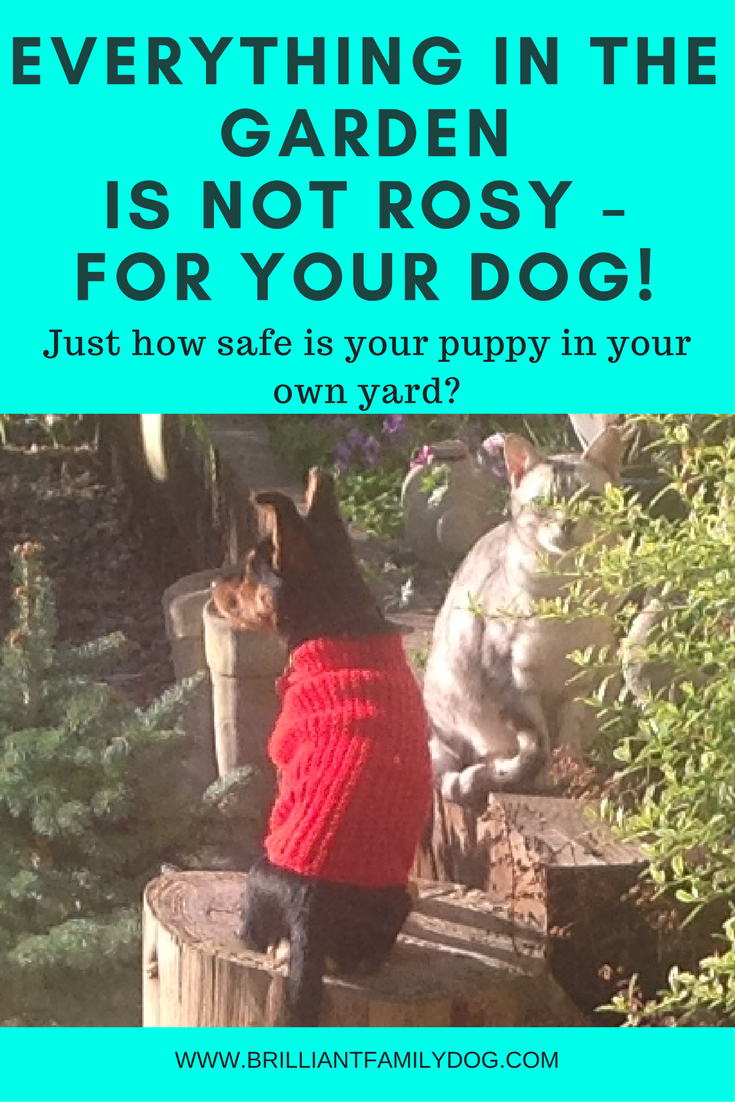
Everything in the garden is not rosy

Dog training, new puppy, puppy training, dog health | How safe is your garden or yard for your dog? | CHECKLIST AND RESOURCES | #newpuppy, #dogtraining, #newrescuedog, #doghealth, #dogbehavior | www.brilliantfamilydog.com

Your garden is perfect - safe for your family and your pets - or is it?

In fact there are a number of garden hazards you need to protect your pet from - things that may not have occurred to you when you cheerfully tipped your puppy into your back yard!

Many of these will be the same as the ones which can endanger our children, but some are specific to dogs. Dogs will want to test with their mouths things which even toddlers would balk at! And some substances are ok for humans but can be fatal for dogs. So it’s important for you to read on and find out which these are.

The easiest time to teach your dog what he may and may not interact with in the garden is when he’s a puppy. So ensure that he’s never left alone in the garden. A simple way to do this is to have a puppy playpen. You can buy metal ones which fold up for storage, open out into a long zigzaggy wall for making a barrier, or make an enclosed space for containment. They’re great in the house too - or if you’re handy you can rig up some temporary fencing to do the job. If you put your puppy in a pen when he’s still very young he will believe that he can never jump out. 

Get your free email course to sort out lots of puppy and dog behaviour problems

THIS FREE ECOURSE IS A BONUS FOR YOU WHEN YOU SIGN UP TO RECEIVE EDUCATIONAL EMAILS AND OCCASIONAL OFFERS FROM ME. YOU CAN UNSUBSCRIBE AT ANY TIME.
Privacy Policy

Now you can run into the house to get something without your puppy getting into trouble.

Always have lots of outdoor toys lying around that he can sink his teeth into - empty plastic bottles with the cap removed are a great standby. So his exploring can be limited to what you want him to sample and chew.


Here are some things you need to watch out for:

    •    Slugs, snails, and any bait to kill them


    •    Rodent bait and dead rodents. If you have a rodent problem you can put the poison into the centre of a long 3-4” pipe and site it on the rat run, well weighted with concrete blocks


    •    Small stones or pebbles from paths. Make sure your puppy doesn’t swallow them or you may become one of those headlines: “Vet finds 149 pebbles in puppy’s stomach”


    •    Cocoa mulch


    •    Cat poo: you’ll need to clear up after your cat or any visiting cats - though the arrival of the puppy will probably deter them from visiting your garden any more. Cats love freshly-turned soil for their latrine, so check those areas carefully. Apart from transferring parasites to your pup, there’s a possibility of you contracting Toxoplasmosis via your puppy’s mouth. This is of course very dangerous for pregnant women - so have someone else perform this task for you.


    •    Water features: make sure they’re fenced or covered with netting so pup can’t fall in


    •    Swimming pool - should have shallow steps so that any creature falling in can climb out again. A friend in the South of France made sure to have these built into his pool, as trying to fish a distressed wild boar out of your pool early in the morning is no fun.


    •    An old dog may need to wear a lifejacket in the garden if there’s a lot of water for him to topple into.

Rosie's found a safe place to snooze!

Rosie's found a safe place to snooze!


    •    Your fencing needs to be secure - no holes, no strangling or cutting hazard if your dog does try to burrow through or jump over. Small dogs have been stolen from gardens, so if there is public access to the back of your house, have tall, solid, fencing. I would split the garden with fencing, if it isn’t already divided, so that my dog had no access to the front of the house to develop the woeful habit of fence-running and barking at passers-by. Leaving your dog alone in the yard gives rise to the awful possibility of fence-running and boundary-barking. Not only will this drive you and your neighbours mad, but it will turn your flowerbeds into a trampled racetrack. Fence-running, once established, is hard to shift as the dog finds it so very, very exciting! As with everything else, it’s much easier to prevent what you don’t want from happening, rather than trying to mount a rearguard action and fix it after it’s been proven to be an exciting habit. 


    •    Garden chemicals: become an avid label-reader. Some are deadly to dogs


    •    Plants and trees: you'll find a list for your own country online. Here’s a good one for North America.  And here’s one for the UK.  This one covers woodland hazards. And here's a general one on common poisonous plants.


    •    Digging is not inherently dangerous for the dog - but will rapidly destroy your garden! Some dogs love to dig, some never bother. If you have a digger, choose an area of the garden where he may dig, loosen the soil and half-bury some outdoor toys there. If he starts digging anywhere else you can distract him and race to the digging place and start digging with him. Some people like to use a child’s sandpit with a cover.


    •    Insects, snakes, and other beasties: you'll know what these are for your locality. Ensure your pup doesn't snap a wasp - you may have to get anti-histamines into him fast to prevent his throat closing. The same applies to snakebites swelling the face - which is a common area to get bitten. Vet!


    •    When your pup is young you’ll need to keep him with you in the garden. Gradually he’ll earn his freedom as he demonstrates that he’s safe out there. This could take many months. Enjoy your garden trips - see them as a welcome break in a busy day.

Life is too short not to enjoy some quiet time with your dog in the open air


    •    Always know where your dog is, right now. If your garden runs to acres then limit him to the area you can see clearly from the house. This is not just for safety from garden things. Who knows what mischief he may be getting up to if he’s out of your sight! 


Exchange is no robbery

And if your dog has picked something up, there’s no need to go about yelling and shouting at him, grabbing his mouth and trying to force out what he has picked up. You wanting it so badly will escalate your dog’s perception of the object’s value, and probably guarantee that he’ll clamp his teeth firmly on it! And if you chase him he may well swallow the “thing” in his excitement. Which will entirely defeat the object!

Instead, teach him a simple “give”. You can do this with toys, as you swap with him - either for another toy or for a treat. As he releases the item into your hand you can admire it, and - as often as possible - give him back the thing he’s given you so he doesn’t feel aggrieved. Playing “Swapsy” should be an everyday game with your dog. Trying to snatch things away from him can precipitate Resource Guarding. Imagine how you would feel if you were studying a leaf you’d found on the ground in my garden, and I thundered over, shouted NO and grabbed the leaf out of your hand! You’d be careful to hide your find next time, and to block me or move away so I couldn’t snatch it.


Commonsense and constant early supervision will spare you any of the horrors of watching your dear pet slowly die as his organs shut down after ingesting poison, or having to be operated on to remove inappropriate items from his insides. Be especially careful if you visit the garden of a dogless friend, as they will be blissfully unaware of the dangers to your dog.

And here's your free 8-part email course to sort out lots of puppy problems kindly

THIS FREE ECOURSE IS A BONUS FOR YOU WHEN YOU SIGN UP TO RECEIVE EDUCATIONAL EMAILS AND OCCASIONAL OFFERS FROM ME. YOU CAN UNSUBSCRIBE AT ANY TIME.
Privacy Policy

What you expect is what you get - or, Be careful what you wish for!

Dog training, new puppy, puppy training | Difficult dog? Stubborn dog? Is this what you’re expecting of your new dog? Change this! | FREE EMAIL COURSE | #newpuppy, #dogtraining, #newrescuedog, #puppytraining, #dogbehavior | www.brilliantfamilydog.com


“He’s a terrier - he’s never going to come when he’s called!”

“You can’t teach a spaniel to listen. Their attention span is only a few seconds”

“My dog’s thick. It’s a waste of time teaching him anything.”


Really. People say these things. And they become self-fulfilling prophecies.

If you truly believe that your terrier will never come when he’s called, then guess what? He never will.

If you really think that your spaniel is incapable of focus, then you’ll never put in the work needed to build a team with him.

And if you truly think your dog is too stupid to learn anything, you have a cast iron excuse for never bothering to teach him.

Get-out clauses?

These are all lazy, get-out, clauses. You got a dog - you thought it would be a good idea - then found that it didn’t come with training and manners installed. You were expected to add these yourself? Oh no! Work required - application, dedication, education, understanding, patience … This all seemed too hard. Much easier to claim that your dog is untrainable and leave it at that.

Get your free email course here to learn how to teach your dog kindly and effectively.

THIS FREE ECOURSE IS A BONUS FOR YOU WHEN YOU SIGN UP TO RECEIVE EDUCATIONAL EMAILS AND OCCASIONAL OFFERS FROM ME. YOU CAN UNSUBSCRIBE AT ANY TIME.
Privacy Policy

I recently had an email which read: “I have two dogs, one is a perfect companion and the other is a challenge. She has many good points but does not take no for an answer and is very disobedient when she appears to be totally deaf.”

So her first dog is perfect, and the second is not. (I wonder how much this had to do with the individual attention that No.1 got, while No.2 was tossed into the mix to sink or swim?) Her dog is disobedient, she doesn’t listen, and won’t take no for an answer.

What a lot of labels in a couple of sentences! This poor dog is always going to struggle against her owner’s preconceived notion that she is difficult, stubborn, and uncaring. Whatever she does will be perceived as wrong, or potentially troublesome, while Dog 1 gets all the praise for being a goody-gumps. (Any of you younger children out there may recognise the same thing from your own family life, where there was one favoured child and one difficult one.) 

And it’s likely that when she does do something right it’s either not noticed or greeted with “For once! At last …”

This dog needs a program of training which caters to her own individuality, her own quirks and foibles. You cannot blossom when continually compared with someone else - you have to have a pride in your own achievements, done your own way.

So my reply to this owner was along these lines: 

“My dogs don't understand the meaning of NO either - why? I never say “no” to them. “No” doesn't give them any information about what you'd like them to do - only that you're cross with them. Try focussing only on what you do want, and rewarding that. Totally ignore what you don't want. Give it a week and see where you are!

This is what a puppy-owner said to me this week:

“Just thought that I would let you know that your brilliant idea of rewarding for the behaviour that we want has helped Odin to become a very calm and patient puppy when it's our dinner time. He will lie down nicely and play with his toys while we're eating. :)”

This took her about 10 days to achieve.

Come back to me in two weeks and tell me how you get on.”


Sadly I didn’t hear from her again. So I guess Dog no.2 is still being shouted at.


As the famous saying goes, “If you keep doing what you’ve always done, you’ll keep getting what you always got.”


There has to be change for change to happen. And the first change is in your mindset! All our dogs are capable of being trained, of learning new things, and of fitting into the household comfortably. Yes, it takes time, and all that dedication and self-education, understanding and patience, mentioned above. But is it worth it? What do you think?


But what about my terrier / spaniel / dumb dog?

Dog training, new puppy, puppy training | Difficult dog? Stubborn dog? Is this what you’re expecting of your new dog? Change this! | FREE EMAIL COURSE | #newpuppy, #dogtraining, #newrescuedog, #puppytraining, #dogbehavior | www.brilliantfamilydog.com


• To see just what terriers are capable of, take a look at Jesse the Jack Russell Terrier. You will be amazed! 

• Think of what spaniels are bred for - hours and hours of tireless work in the field, focussing on one thing only - finding birds. They are capable of laser focus - if the reward is right you can teach your spaniel to focus on anything you like!

• And as for our dumb dog … it’s true that some dogs are not blessed with as many brains as others. Cricket the Whippet will never beat Rollo the Border Collie in an initiative test, though if there is food to be found - she’ll find it! Her phenomenal speed is in her legs, not in the workings of her brain.  But she has plenty to offer, and once you’re on her wavelength you can teach her some very un-whippety things to do. Cricket - and Bolt, another whippet I know - have great retrieves.

Here’s Cricket showing off her amateur dramatics

You see? Her gift is in making us laugh!


To find your way into the workings of your dog's brain so you can teach her just what you want her to learn, get our free 8-part email course with lots of tips and tricks for getting fast results!

THIS FREE ECOURSE IS A BONUS FOR YOU WHEN YOU SIGN UP TO RECEIVE EDUCATIONAL EMAILS AND OCCASIONAL OFFERS FROM ME. YOU CAN UNSUBSCRIBE AT ANY TIME.
Privacy Policy

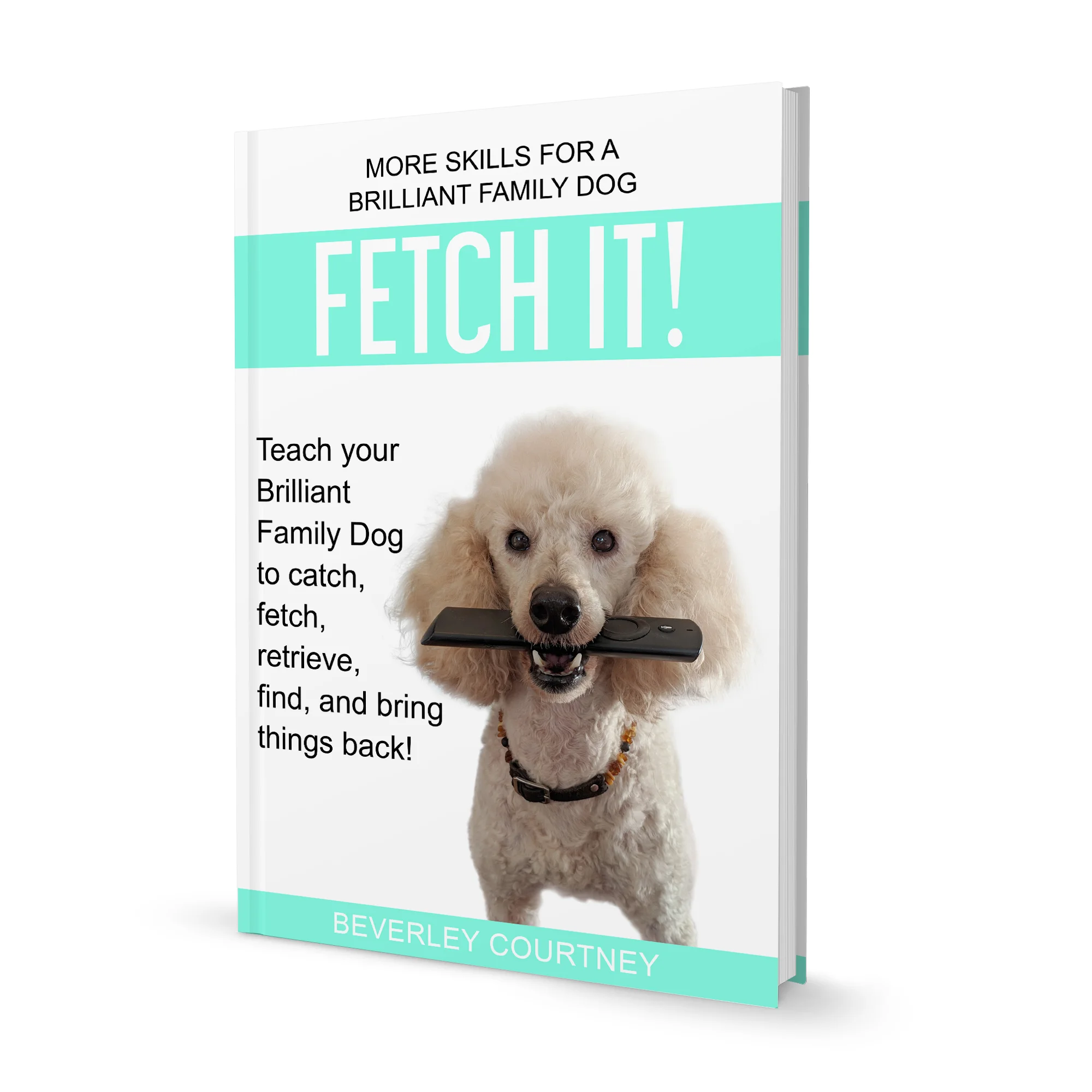
Want to turn your dog into a star retriever? Check Fetch it! Teach your Brilliant family Dog to catch fetch, retrieve, find and bring things back! and enjoy a new relationship with your dog.

Why is my friend's dog so easy when mine is so difficult? 7 tips to make life easier!

Dog training, new puppy, puppy training | Difficult dog? Stubborn dog? 7 DOG TRAINING TIPS to make life easier for both of you | FREE EMAIL COURSE | #newpuppy, #dogtraining, #newrescuedog, #puppytraining, #dogbehavior | www.brilliantfamilydog.com

It’s all a matter of perception.

Maybe, for a start, your friend is laid-back and easy-going. While you are wired and anxious by nature.

Perhaps your friend is the kind of earth-mother who can cope happily with a household of children and pets with no cares about being houseproud.

It could be that this is your first puppy, and your friend is on no.4.

Are you comparing apples with oranges? Your friend’s dog could be mature and settled, while yours is still a wild puppy. 

Or maybe … just maybe … the dogs are different, and yours is more challenging.

First puppy?

Is this your first puppy? Many people remark on how easy their second child is compared with their first. The unfortunate first child has to deal with all the expectations, hopes, and fears - not to mention the awkward and novice parenting - and of living up to everything her parent always wanted in a child. Your first pup suffers some of the same unrealistic expectations. Take it easy!

The breed or type of your dog will make a big difference too. Especially if you went for a dog that is bred principally for looks and not purpose or temperament. Many of the currently fashionable so-called “designer dogs” would fit into this category. What I mean by that is that if the breeder is selecting for looks, then temperament may not get much of a look-in. This is where the extreme importance of choosing the source of your puppy wisely comes in. You want to know that the parents’ temperaments have been assessed along with their looks. We’ve all met good-looking cads in our life! We don’t need a four-footed version in our home if we can possibly help it.

If you have chosen a breed or type of dog that has been bred for hundreds - or thousands - of years to do a certain thing, and do it very well, that behaviour will be inbred in the dog. It will be part of his instinctive drive and no amount of saying NO will change that. So you have to know what you’re up against. 

If you don’t want a dog with a strong prey-drive, you may want to avoid sighthounds. If you don’t want your dog to herd everyone into a corner, a herding dog may not suit you. And if you don’t appreciate your lap being filled with socks, twigs, and teddy-bears, maybe pass on a retriever. If you just want a quiet life, don’t choose a high-energy dog! 

Having said that, there is no doubt that ALL dogs are trainable. All dogs will respond to force-free training where they find out for themselves what works - and what doesn’t. But there isn’t any need to make the task harder by starting with more challenging material.

Adult rescue dog

You may have chosen to rescue a dog from a shelter - good for you! - but it's not necessarily roses all the way now. All adult dogs have established ideas and things that they do, desirable or undesirable. So there may be a certain amount of un-training to do while you re-train what you want.

Keep in mind also that a re-homed dog can easily take a couple of months to settle into his new home and know that it’s for keeps. I get lots of emails from people saying “He was great to begin with then after he’d been here two or three months he suddenly started doing xyz, out of the blue.” What was happening was that the new dog was scared to put a paw out of place when he first came, and chose to keep a low profile. Once comfortable and at home, the dog’s true nature is expressed - along with some things you’re not mad about, like reacting to other dogs or house-visitors, or hogging the bed. But don’t worry! A properly-qualified trainer will have the knowledge and experience to turn this around.

Different strokes for different folks

Get your free 8-part email course to sort out lots of puppy problems including jumping up on visitors

THIS FREE ECOURSE IS A BONUS FOR YOU WHEN YOU SIGN UP TO RECEIVE EDUCATIONAL EMAILS AND OCCASIONAL OFFERS FROM ME. YOU CAN UNSUBSCRIBE AT ANY TIME.
Privacy Policy

Your approach to training - indeed to life - could be very different from your friend’s. It’s a long slow process to teach a child not to put sticky fingers on prized possessions. It can be a long slow process to teach an enthusiastic puppy a new (and foreign) way to greet visitors that doesn’t involve flattening them. 


So a relaxed approach is far less stressful for everyone involved. Parents make their home as childproof as is convenient so they don’t have to be standing over their child all day, telling her what not to do. Employ the same strategy for your puppy, who comes equipped with splendid teeth and claws for optimal demolition work.


     1.  Be sure your puppy is in an area where both he and your home are safe, then relax!


     2.  Young puppies should be in the same room as you at all times - except for the large amount of time they’re asleep, when they can be in their crate. Your dog earns his freedom as he demonstrates that he is reliable in new areas. So he doesn’t get free access to the living room, or the garden, until he has proved that he will not dig, soil, bark, or chew, while you’re not watching. 

     3.  If your dog is an ardent chewer, invest in a doggie playpen and feed his habit with lots of chewable items. If his way of playing with the toys you give him is to rip them to shreds, then that’s his choice. Get cheap toys from the charity shop, or plait ropes out of old jeans, so you’re not invested emotionally in the state of the toy. It’s his toy - allow him to know best how to enjoy it. You can, of course, teach him interactive play with you with his toys, so he finds they’re more fun when you are hanging onto the end of them. 


    4.  Ensure your pup is getting the right amount of rest - this is around 17 hours a day for an adult dog. Yes, 17 hours a day. So, more for a puppy. “He never stops,” is always a red flag to me. I know there will be behavioural issues with a dog who can’t switch off. And people usually find their puppy’s behaviour improves dramatically - especially in relation to biting - once they’re getting enough sleep. And if your puppy is not yet giving you a peaceful night’s sleep, read this one.  


"I really want to learn how to please you!"

"I really want to learn how to please you!"

   5.  Tailor your expectations to your dog, his breed or type, his history, and your experience. We don’t expect our toddler, or our schoolboy, or our lovesick teenager, to behave like responsible adults. We educate, coax, and encourage them to reach this state of virtue - often ignoring the things they do which we don’t want repeated. Remember that “educate” means literally “lead out of”. So we are using our knowledge to lead our hooligan child or puppy out of the darkness of ignorance, and into the civilised world. This takes time!


   6.  A puppy of around six months old is developmentally somewhere near a child of 9-12. Don’t expect too much too soon!


    7.   Be careful what you draw attention to! What you focus on is what you get, so be sure you show your dog what you’d like him to do in any situation, rather than nag and complain when he doesn’t know. This article will give you some guidelines


Once you satisfy your new companion’s basic, instinctive, needs - and adopt a realistic view of the training task ahead - you’ll be able to put some boundaries in place so you can all get along in the same household without friction.

And start enjoying your dog’s individuality!
 

To change your dog you need to change yourself first! Watch our Free Workshop and find out how to transform your “deaf dog” into a LISTENING DOG!

 
Here's your free email course to sort out lots of potential problems with your new dog or puppy

THIS FREE ECOURSE IS A BONUS FOR YOU WHEN YOU SIGN UP TO RECEIVE EDUCATIONAL EMAILS AND OCCASIONAL OFFERS FROM ME. YOU CAN UNSUBSCRIBE AT ANY TIME.
Privacy Policy

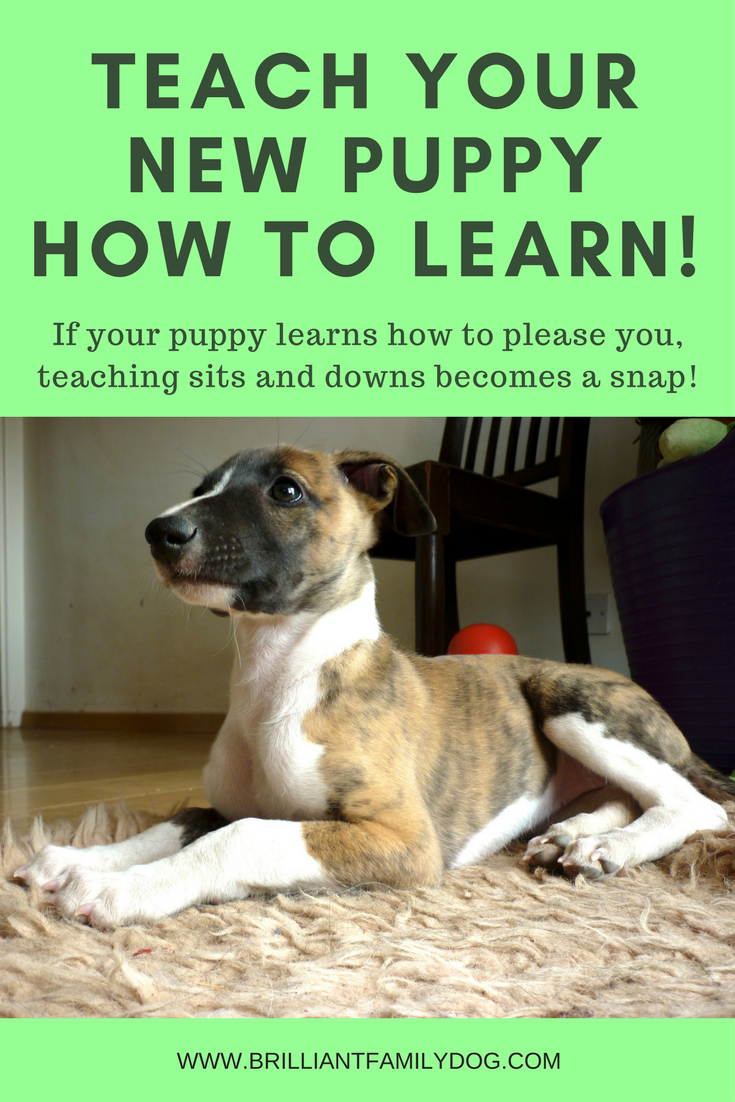
New Puppy? First teach her how to learn!

Puppy, New puppy, Puppy training, Choosing a puppy | Teach your puppy how to LEARN and make life easier for both of you | FREE EMAIL COURSE | #newpuppy, #dogtraining, #puppytraining | www.brilliantfamilydog.com

The minute you get your new puppy - she is learning! She's like a sponge, soaking up experiences, processing them, discovering the outcome, and learning whether that thing was good or bad.

So whether you like it or not your puppy is learning every moment she’s awake, and processing that learning while she’s asleep. 

What does that mean for you?

It means that you need to grab this opportunity and teach your puppy as much as possible while she’s in this absorbent, influenceable, state. Once she hits adolescence she’ll be developing ideas of her own, and they may not accord with what you’d like in your family dog!

Now, I’m not suggesting drills and route-marches, "don’t don’t don’t", and some kind of puppy bootcamp! 

If you focus on teaching your puppy how to learn, adding things like sits and downs are a snap

When’s the right age to start?

Get your free email course to sort out lots of dog and puppyproblems

THIS FREE ECOURSE IS A BONUS FOR YOU WHEN YOU SIGN UP TO RECEIVE EDUCATIONAL EMAILS AND OCCASIONAL OFFERS FROM ME. YOU CAN UNSUBSCRIBE AT ANY TIME.
Privacy Policy

In days mercifully gone by (mostly), puppies were given no training at all until six months or so. They were considered too soft to take the punitive methods then popular (and happily becoming less and less popular now). Of course they were! They were babies! But the good news is that there’s no need to use punitive methods at any age. In fact, they’re counterproductive.

These early weeks of your pup’s new life with you are, in fact, the best time of all to teach her how to learn.

What do I mean by that?

Instead of focussing on “commands”, “obedience”, and fighting the puppy’s “stubbornness”, focus instead on teaching her that being around you is good, being in your home is good, being with your family is good. And you do this by simply rewarding everything she does which you like! There isn’t any need for “No!” or “Stop that” or “Get down” or any of the other things that new puppy owners think they have to do to establish superiority. 

You don’t need to establish superiority! The puppy knows which side her bread is buttered, and all she needs is kindness and patience while she works out what has a good outcome and what has no outcome worth pursuing.

And to harness this great learning skill, you simply

Reward what you like
Ignore what you don’t like
and Manage what you can’t ignore

Rewards are anything the puppy finds rewarding - play, cuddles, laughter, tasty treats, dinner, toys, running, chews, garden - etc. Ensure that every action you like is marked and rewarded, and your youngster will soon learn to repeat the things that earn her a reward and not bother with the things that don’t.


Never say NO

There isn’t a place for NO in training babies, of any species. Love and encouragement are what works. But to ensure that you aren’t chasing round after a puppy trying to divert his attention from the electric cables and your favourite dining chair legs you need to set up a safe environment for your pup. 

I like to use crates and playpens or babygates to make a safe area with plenty of chew toys. You want to have the puppy always in the same room as you so you can monitor what he’s up to. Then when you’re busy you can pop him in his crate for some much needed sleep and processing time while you get on with the rest of your life without having to worry about what the pup is doing. And when he’s with you, loose, you can watch him exploring his environment without having to do any “No” or “Ah-ah” because you’re there to divert him if a sniff looks as though it’s going to turn into a nibble.

In general, let your puppy explore everything. Don’t be curbing his enthusiasm for the world he now lives in. While we explore our surroundings largely with our eyes, and babies with their hands and mouth, puppies work largely with their nose and mouth. Let him! You can intervene and distract if necessary, but people are often surprised how little it is necessary if they can simply pay attention to their roving puppy and provide him with plenty of chewables in his playpen or crate.

A cat may look at a king!


Look to your puppy’s physical needs

Puppy, New puppy, Puppy training, Choosing a puppy | Teach your puppy how to LEARN and make life easier for both of you | FREE EMAIL COURSE | #newpuppy, #dogtraining, #puppytraining | www.brilliantfamilydog.com

Think of Maslow’s Hierarchy of Needs which is much the same for dogs as for people.

If you cater for all your pup’s physical needs - shelter, security, food, sleep, exercise, warmth - you’ll then be free to work on her higher needs - companionship, love, self-confidence, and self-fulfilment. Everyone knows that continually nagging and chiding a child will destroy his self-confidence, and we naturally tend to encourage children in their efforts. Puppies are the same! Continual nagging and telling off will damage your puppy’s confidence in her coping abilities, which will seriously affect her ability to learn without second-guessing, fear, and anxiety.

Alongside all this is the necessity for appropriate socialisation. This does not mean thrusting your puppy into the face of every dog you see, or handing him round to strangers to touch. What it does mean is slowly and gently exposing your puppy to all the sights, sounds, tastes, and smells, of our world, and ensuring that all experiences are good ones.


What you expect is what you get

If you think that inviting a puppy into your home is inevitably going to lead to destroyed furniture, soggy carpets, scratched and bitten hands and arms, shredded clothes, and all the rest, then maybe that’s what you’ll get. 

If, on the other hand, you prepare well, supervise your puppy at all times - inside and outside the house - and work with rewards and patience, you’re setting yourself up for a life of harmony with a dog who knows how to please you, knows her boundaries, and is happy to learn whatever you ask her to. 

For an example of how this learning takes place, have a look at this article which gives you a simple recipe to follow to get the results you want - whatever you’re teaching. 

And if you want to know a bit more about the nuts and bolts of Learning Theory in dogs - exhaustively researched and proven over the last 100 or so years - see this piece by the marvellous animal trainer Bob Bailey. There was never any room for sentiment in Bob’s work, training animals and birds for astonishing wartime feats to change the course of history. His work, which guided much of what enlightened dog trainers do today, was based totally in science. 

We want our pups to grow up confident and ready to learn, able to manage new things and new experiences. Excise NO from your vocabulary and you’ll be making a great start!

Want a bible to help you through this stage?

Go to www.brilliantfamilydog.com/new-puppy book page and get New Puppy! in ebook, audiobook, or paperback.


Is your dog or your little puppy throwing up more challenges than you anticipated? Watch our free Workshop and find how to change things fast!


And if you’re just beginning with your precious new puppy - look at

Choosing a Puppy

Housetraining made easy

and

the very valuable cheatsheet on getting your puppy to sleep through the night! 

Got a dog already? Check out this article for successfully rearing a puppy in a multi-dog household.


Want a bible to help you through this stage?

Go to www.brilliantfamilydog.com/ new puppy book page and get New Puppy! in ebook, audiobook, or paperback.