So you want to rescue a dog? Read this first!

Reactive dog, rescue dog, aggressive dog, fearful dog, dog behavior | Has your rescue dog become very difficult when out? Read here how to get things running smoothly for both of you | FREE EMAIL COURSE | #aggressivedog, #reactivedog, #dogtraining, …

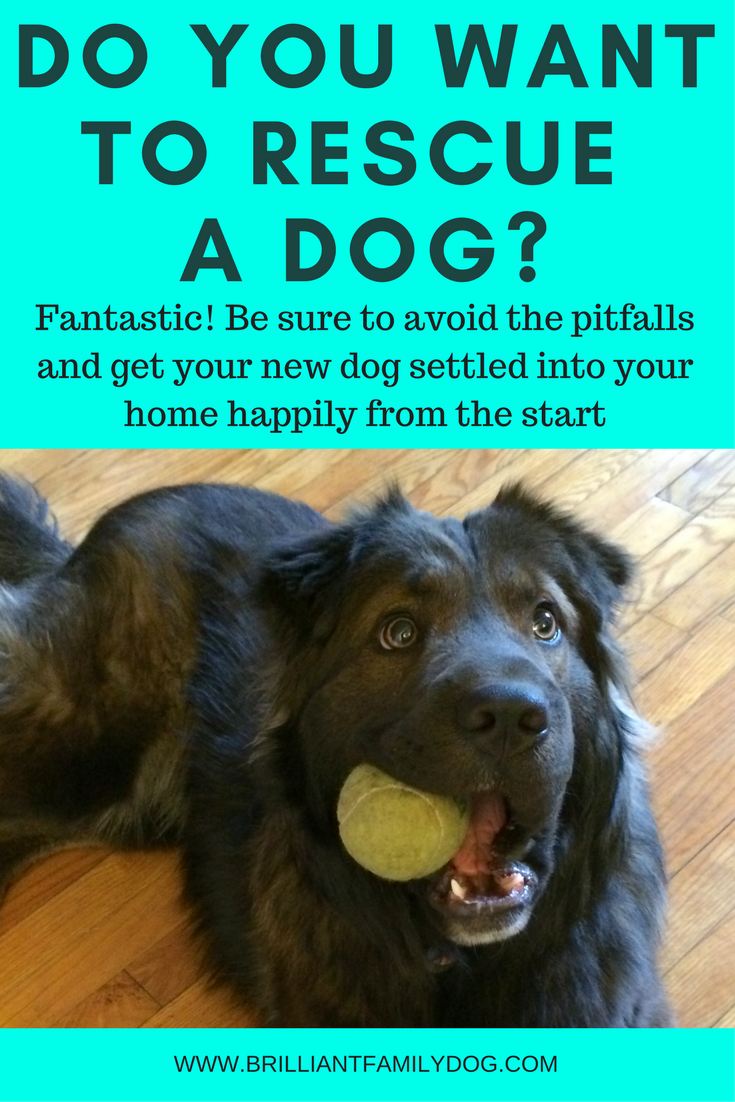
You want to rescue a dog - give a home to a poor neglected beastie who’s had a bad start in life? Good for you! 

There are so many stories of spectacularly successful adoptions, where the dog fitted easily into her new home from Day 1, had few issues and was easy to train. 

But this isn’t by any means always the way it goes. So you need to go into this with your eyes open.

Different dogs, different folks ...

Is your new dog struggling with the outside world? Get our free e-course here and get started!

THIS E-COURSE IS A BONUS FOR YOU WHEN YOU SIGN UP TO RECEIVE EDUCATIONAL EMAILS AND OCCASIONAL OFFERS FROM ME. YOU CAN UNSUBSCRIBE AT ANY TIME.
Privacy Policy

Do not allow sentiment to cloud your judgment! Most dogs up for rehoming (unless they’re very young puppies) come with baggage - of some sort or another. We all have baggage - life experiences that have formed our worldview - some good, some not so good. 

And not every dog is the perfect match for your life. Some will have been neglected; some will have been abused; some have lost an adoring owner through death or other catastrophe; some were just not given the right care. 

But they all have a history, good or bad. 

Same as you would, if suddenly transported to a new home where people do things differently. There’s scope for a lot of misunderstanding and confusion here - even which way you hold your knife and fork, or how to make coffee! So imagine how hard it can be for a dog to adapt to such a major change in his life.

Sometimes the dog settles into his new home seamlessly and easily, but sometimes this baggage takes a lot of work, some expense, and much dedication, to unpack. 

Love alone is not enough.

Backstory

Any reputable rehoming shelter will tell you the truth about your chosen pet. But sometimes they don’t know the truth themselves! If the dog was found straying there is no history attached. And a dog in even the best and kindest rescue centre can be completely shut down and depressed - or continually hyper and mad. Neither of these states will reveal the true dog. Only once your new dog has been in your home for as long as two or three months will you know what he’s really like, and what issues he may have. 

If I moved into your house, for example, at first I’d be saying “Is it alright if I sit here?” and “Where does this cup go?”. After a couple of months I’d be feeling at home and sitting where I liked and leaving cups any-old-where! This is when you’d see the natural me. So it is with your new dog!

“My dog was so quiet and easy, and now, two months on, he’s starting to steal things, bark, dig up the garden … what am I doing wrong?”

That's a fairly common question. My answer?

“Nothing! You’re doing it all right and your dog is making himself at home and behaving in a relaxed and natural manner and being a dog. Now the training begins in earnest.”

By the way, not all shelters are created equal. If you arrive at a place and it’s noisy, the dogs are all racing about their pens barking, showing repetitive behaviours like circling or jumping off the wall, and some dogs are lying deathly still and have completely opted out, then you will struggle to see what your selected dog is actually like in reality. Stress has taken over and made the original dog unrecognisable. It can take many weeks for this dog to unwind.

Think of those poor children in camps in war-torn countries: we would absolutely expect them to have substantial damage which would take many, many years to repair. Why do we assume a dog will just be fixed in an instant?

There are shelters with enlightened policies of taking in fewer dogs (though successfully rehoming more!), giving all dogs more space and distance, keeping things calm and quiet, not allowing public access to all the dogs - only the ones they select to offer a particular family. 

Check out these resources to locate a shelter which follows the latest guidance for giving rehomes the greatest chance of success:

www.nawt.org.uk/open-paw

You may be working against a difficult history

Reactive dog, rescue dog, aggressive dog, fearful dog, dog behavior | Has your rescue dog become very difficult when out? Read here how to get things running smoothly for both of you | FREE EMAIL COURSE | #aggressivedog, #reactivedog, #dogtraining, …

Keep in mind that if this dog were no trouble he may not have been abandoned by his owners. That’s not exonerating those owners - they should have thought before even getting a dog in the first place. Giving up on an animal through their own neglect and idleness is utterly wrong, and unfair. 

He may have developed habits through lack of adequate care or training, that caused his first owners to get rid of him.

•  Maybe he’d developed a habit of running off, because he was never taught a recall.  

•  Maybe he was left alone all day and chewed up the furniture. Not his fault, but this could be the reason he was thrown out. Or rehomed. So now you have to train recall and staying alone from scratch. Check out the articles here at brilliantfamilydog.com, the free e-course, and you can get started with this mini-course:

• Maybe he was never properly socialised as a puppy, and has a distorted view of strange dogs and people and things as a result. Here you’ll have an ongoing task - to help him cope with our world. And this is the one which may cost a lot of money and a lot of time, but which will repay you many times over in watching your dog change and develop and gain in confidence. Check out the resources for Growly Dogs, the free course and premium course

Love alone just isn’t enough

Love and nurturing will do a lot of healing, of course. But to deal with any difficult issues - such as inability to cope with the presence of other dogs on the planet without lunging, barking, or screaming, threatening to bite if approached, stealing and guarding stolen items ferociously - you need professional help. There’s no need to struggle on for months while the situation gets worse and worse and you regret your decision to get your dog! Get the help you need straight away. Once you understand why your dog is acting as he is, changing it becomes straightforward.

Finding a true force-free trainer is essential. Any aversive or coercive methods (shouting, throwing things, yanking the lead etc) will only compound the situation and make it far worse in the long run. You’ll find a list of useful organisations at the foot of this previous article

There are plenty of rehomed dogs who have turned into Brilliant Family Dogs! This may be by luck or by judgment, but is a great outcome. In my line of work I naturally tend to meet a lot of the rehomes that cause problems.

And I’m happy to be able to say that the situation can always be vastly improved. It’s a joy to see the dedication of the new owners as they work to rebuild their new dog’s shattered confidence.

Cast off the rose-tinted spectacles!

Matching a dog to your family is a delicate and difficult task. Be sure to remove your rose-tinted glasses before you make any decision. You and your family will be living with this dog for anything up to the next 15 years or so. The placement must be right for you and your dog, but also your children and your spouse too, not to mention your cat.

While you’re still looking for your perfect companion, do a bit of research into what you’ll need. Here’s your Action Step: While you can’t purchase a crate until you know your new dog’s size, you can certainly do your homework and narrow down the choice so you’re ready to get one as soon as you expect your dog to arrive with you. Don’t cut corners - go for the best and most robust that fits your budget. This crate is not for confining your dog to keep him under control - it’s to give him a safe haven where he gets all his meals and toys, which he’ll love, and which will help enormously with separation - both night-time and daytime absences. 

And don’t forget the essential training! You can’t expect your new dog - who may be very confused about what people want of him - to just know what you want. You have to teach him, step by step. And while some of those steps may feel uphill, most will be successful - if you follow a force-free training program. There are some excellent dog training classes around the world where the instructor is firmly grounded in force-free training, treating each animal as an individual (refer to that list above for umbrella organisations).

But if you’re in a force-free “black hole” and there’s no class around that you would countenance taking a dog flea to, never mind your precious new dog, take a look at the articles here at www.brilliantfamilydog.com

They follow the same style of teaching as my books, which have received over 150 5-star reviews from pet-owners, who enjoy their directness, simplicity, and effectiveness (and humour!). You may have a challenging new dog - but with a little help and support you can turn him into your perfect pet.

Happy hunting for your new companion, and may you be one of the great rehoming success stories! 


Want to get off to a flying start? Get our free e-course here and get started!

THIS E-COURSE IS A BONUS FOR YOU WHEN YOU SIGN UP TO RECEIVE EDUCATIONAL EMAILS AND OCCASIONAL OFFERS FROM ME. YOU CAN UNSUBSCRIBE AT ANY TIME.
Privacy Policy


>

Just like us, dogs never do anything for no reason

Reactive dog, aggressive dog, fearful dog, dog behavior | Dogs don’t do things for no reason - learn their language!  | FREE EMAIL COURSE | #aggressivedog, #reactivedog, #dogtraining, #growlydog | www.brilliantfamilydog.com

One of Lacy’s cute things is to wham her face between our knees and keep it there for a while as we stroke her ears and whisper sweet nothings to her. (This is not to be confused with crotch-sniffing, which she doesn’t do.)

We call it “Wigwam” (it just seemed to describe it well).

I know that she’s doing this to get reassurance. She needs to feel that we are her people, her protectors. She’s anxious by nature, and you can hear her sigh and see her whole body relax as she wigwams.

But it took me a while to make the connection which explains why she does it.

It’s the muzzle-grab

Get the lowdown on why your reactive dog does what he does, and how to start a major change!

THIS E-COURSE IS A BONUS FOR YOU WHEN YOU SIGN UP TO RECEIVE EDUCATIONAL EMAILS AND OCCASIONAL OFFERS FROM ME. YOU CAN UNSUBSCRIBE AT ANY TIME.
Privacy Policy

The muzzle-grab is what an older dog may do to a younger one, perhaps a puppy who is getting out of hand. They open their mouth wide, and wrap it right round the pup’s muzzle to keep it shut. The teeth are covered - it’s not intended as a bite. It’s a very clear way of saying “Keep your mouth shut near me,” is painless, and effective. 

They can also do this in play to a close companion (one living in the same house, usually). A dog who doesn’t enjoy these privileges will get a real snap or face-down. It’s a reprimand for the family, just as we have things we may say only to family members. (In my family growing up, “FLO” - when we had visitors - meant “Family lay off” or “Stop eating all the cakes!”) 

Those hippo jaws that dogs play with are a precursor to a muzzle-grab, if they can get in the right position.

Reactive dog, aggressive dog, fearful dog, dog behavior, dog play | Good dog play is full of lessons for us - learn how to speak dog!  | FREE EMAIL COURSE | #aggressivedog, #reactivedog, #dogtraining, #growlydog, #puppyplay | www.brilliantfamilydog.…

But here’s the key: sometimes a dog will solicit a muzzle-grab from an older dog or a companion. This is to be reassured that they are still part of the group, meriting the kind of action normally directed to a puppy. They are loved and cherished, in other words. They feel they belong. 

It’s a bit like a cat purring to provoke affection, or a puppy nuzzling a hand for pets. 

And this is what Lacy is doing to us. She is provoking a muzzle-grab by pushing her head between our knees. She is putting herself in this vulnerable position - her eyes covered, her head trapped - to seek that feeling we all need to experience regularly. To feel loved and protected.

I knew what Lacy was doing. It satisfies my curiosity to know why.

Dog Body Language

This is just a glimpse into the complex and sophisticated body language dogs employ. We - especially the British with our history of empire - tend to expect everyone else to learn our language. If they don’t get it the first time, we shout at them! And this is how many people treat their dogs.

They assume because their dog doesn’t understand their words she’s being deliberately obtuse, stubborn - or just plain stupid. This is so unjust!

If we can just take the time to learn our dogs’ sensitive body language, not only do we have a new way of communicating with them, but SO MANY misunderstandings will be avoided! It’s not difficult to observe and note what our dog is saying to us. But many dog-owners have no idea. They just don't see it. They prefer to act the sergeant-major and shout at their dog.

Understanding your reactive - growly - dog

It’s especially important to be able to understand your dog if she has reactive tendencies - fearful, anxious, shy, aggressive - a Growly Dog in short. Once you can understand how your dog actually feels in a situation, it makes it so much easier to get a good outcome. This is definitely not a time for yelling ever louder at your “thick” dog!

This is something I go into in great detail in my course for reactive dogs: From Growly Dog to Confident Dog, and which brings lots of “Aha!” moments to students, who begin to see a way forward, at long last. 

And to get started straight away with lessons to help your Growly Dog cope with our world, watch our

Free Masterclass for Growly Dogs

The Weekly Once Over can save you a lot of vet’s bills

Fluffy puppy, long-haired dog, dog grooming, dog health | The weekly once-over can save you a lot of vet’s bills! | FREE GUIDE | #hairydog, #doggrooming, #activedog | www.brilliantfamilydog.com

Run your hands over your dog’s body. It’s key to maintaining your dog’s health. Reach every nook and cranny! You want to check up for cuts, scratches, foreign bodies, hot areas, sore bits, tangles and mats.

You can do this methodically, once a week. Or you can do what a lot of people do - that is to use cuddle time as an opportunity to feel all over your dog and check him out. 

It’s surprising how many people miss this. It can lead to nasty problems, especially where ears and feet are involved. The fashionable fluffy dogs have lots of fluff-related problems. 

One fluffy dog I was boarding for the day was squatting to poo but nothing dropped to the ground. I checked him out. He had a basket of hair matted with dried poo covering his whole anal area. Yuk! Ten minutes with sharp scissors was all that was needed to remove this, trim the surrounding hair back neatly, wash him, and expose his very sore red bum to the air to heal. Fluffy dogs really need a lot of grooming to keep them healthy, and I think a lot of those who fall for these designer dogs don’t realise this before they purchase.

Did you know that an innocent-looking grass seed can become a time-bomb? If it penetrates the foot - and its pointed, torpedo shape makes this easy - it can actually work its way up the leg and reach the internal organs. That last is rare. But a rampant grass-seed loose inside your dog’s body can only lead to trouble. 

Hairy dogs have hairy ears, with hairs sometimes growing right down the ear canal. Did you know you have to pluck the hairs out? Untended, these ears can be a source of constant pain and infection.

There are lots of less dramatic things to check for, but they can all add up to a lot of discomfort and misery for the helpless dog. I met two cocker spaniels once, whose coats were so matted that they had dreadlocks and huge mats all over them. These mats were like large balls that swung as they walked. Their feet were like soup-plates. Where the hair had matted tightly, at armpits and round the ears, the skin was being pulled and pinched. What else was harboured in these mats doesn’t bear thinking about! These poor dogs were suffering constant pain and aggravation. The tragedy is that the owner just couldn’t be bothered. She had plenty of money to pay for a groomer, but couldn’t be bothered. These dogs needed to be completely shaven so their coats could start again. 

Even small mats behind the ears and between the legs can cause constant irritation. Some dogs’ hair is soft and wispy and very easily mats.

Ask for permission!

It’s important that your dog should be happy with this interference. If you’re starting with a puppy it’s standard practice to get them happy about being handled all over - lots of treats for standing still for a split second while you touch them. Time will gradually stretch out.

For an older dog, or a rescue who may have a history of fear of hands, you need to progress in the same way, but take your time. Ask permission to handle your dog, in the same way you would ask permission of a person to touch them - even if you were brushing a spider off their neck you’d still ask! So afford the same courtesy to your dog. Don’t just grab and yank and pull!

I’ll take you through a checklist here so you can ensure that none of these horrors ever befall your dog. 

The Weekly Once Over - how it’s done

I’ve alerted you to some of the dangers of neglecting the weekly once-over. So here’s how to do it.

Dog or Puppy problems? Get your free 8-lesson email course and solve them all painlessly!

THIS FREE ECOURSE IS A BONUS FOR YOU WHEN YOU SIGN UP TO RECEIVE EDUCATIONAL EMAILS AND OCCASIONAL OFFERS FROM ME. YOU CAN UNSUBSCRIBE AT ANY TIME.
Privacy Policy

Start with his mouth - especially the corners. Check there’s nothing jammed between his teeth or pressing into the gums, like shreds of a twig or bone shards. 

See that his eyes are clean and not runny. Trim excess hair from bushy eyebrows that may be poking into his eyes. Ensure he can see clearly. Don’t be a fashion victim!

Ears - these are very important - especially if you have a flop-eared dog, and/or one with a lot of ear feathering. Very hairy dogs, e.g. fluffy poodle types, will need to have the hair inside the ear removed from time to time, to prevent infection. The easiest way to do this is with a haemostat.

Fluffy puppy, long-haired dog, dog grooming, dog health | The weekly once-over can save you a lot of vet’s bills! | FREE GUIDE | #hairydog, #doggrooming, #activedog | www.brilliantfamilydog.com


Spaniels are notorious for getting ear problems. This is because their long hairy ears sweep up foreign bodies into the ear canal. The ear flap then clamps down and ensures a nice moist hotbed for triggering infections. So these busy little dogs, with their snuffling habit and love of deep cover, need their ears checked after every walk. 

The spaniel we had as our childhood family dog would go out foraging in the snow and be quite unable to get back through the fence gaps he’d gone out through. The snowballs which formed on his ears and flanks made him twice as wide and he looked like a Christmas tree! They had to be broken up and melted off before he could come back in the house and lie in front of the fire to dry.

Burrs, grass-seeds, insects, dirt, mud - all can create problems. So a quick once-over of the ears after every walk is a habit which will take no time and could prevent a lot of suffering. The best natural remedy I’ve found for this? Thornit. You’ll find it on Amazon. It will also dry up wet skin patches and helps to draw splinters. Invaluable.

Move further back

Keep working back down the neck. Check there’s no collar damage, and that his collar is still comfortable. We tend to put them on the dog and forget them till they drop off. Wear and tear can produce sharp bits which chafe. And has he got a bit tubbier since you last checked the fit?

Feel the ribs. You can feel them all? Good! That means your dog is not secretly gaining weight under his coat. 

If your dog regularly plays with other dogs, check over his flanks carefully. This is where grabs happen in a chase game. As it’s often only a skin-rip there may be no blood and no obvious sign without feeling for it. A dog’s skin is not like ours - it’s more like a loose-fitting overcoat - a breach in this protective layer can let infection in.

Check the tail for lumps and bumps. If your dog’s tail is magnificently feathered, you’ll need to hunt for twigs, bramble spines, thistles, thorns, burrs, and probably a mouse nest or two! Check anus is clean and trim the hair there if necessary.

Legs - run your hands down the legs firmly, checking for any reaction or flinching from your dog. Move the joints (only the direction they’re meant to move!) and see that there is freedom of movement. 

Feet - these should be clean, claws nice and short and blunt, the hair between the pads regularly trimmed away, and no mats or mud between the digits. This last can lead to painful “scalds” - chafed red sores between the knuckles which make walking painful. Once you remove excess hair from the pads you reduce the danger of thorns and grass-seeds penetrating the foot. These little torpedoes can actually travel up inside the leg. They may emerge again further up the leg, or in rare cases they can get into the bloodstream and cause havoc.

Best thing for trimming foot-hair? The little handheld gizmo your hairdresser uses to shave hair on the back of your neck. Very quick, very easy, no danger of cutting the webs.

My collies regularly have their feet shaven and neatened up. The poodle needs to be shaven regularly. The only one who escapes these ministrations is Cricket the Whippet who has fine hair and neat feet. Check this page for more info and some remarkable before-and-after photos on what you might consider a short-coated dog.

Underside: check his belly, armpits, genital area. Some dogs have very soft wispy hair on their undersides which mats in a moment, tweaking the skin painfully. So scissoring the wispy parts fairly short will prevent this.

All over: while you’re at it, part the hair in a few places (back of neck, rump, base of tail, for instance) and check for flea-dirts, spots, scabs, and any evidence of scratching.


This sounds a lot! But it actually takes a fraction of the time it takes to read all this. If you do this regularly this once-over should only take a minute. You can be towelling dry at the same time.

Anything you discover that needs fixing will take longer - schedule a time to deal with it the same day. A lot of things can be dealt with on a first aid basis. A stitch in time saves nine, and this regular once-over can save you a lot of vet visits! And there are natural remedies you can have always on hand. They work for the rest of the family too.


He may be reactive but he’s still a dog

Reactive dog, aggressive dog, fearful dog, dog behavior | A reactive dog is still a dog! Don’t forget to train him just the same way as any other. The relationship will blossom and life will improve | FREE EMAIL COURSE | #aggressivedog, #reactivedog…

Got a reactive dog? One who barks and lunges at innocent passers-by; grows fangs and a forked tail at the sight of another dog in the same parish; or maybe just melts with fear at the sound of a bicycle? 

I feel for you!

I’ve been working with reactive dogs for years, and I have my own two Growlies too. So I know just what you’re up against. 

Fortunately more people are becoming aware of the issues, and that means slightly more people are beginning to understand that it’s not your fault! You’re not a terrible owner, and you haven’t got a horrible dog. He’s just not fitting in with the popular perception of what a pet should be.

But, as you’ll know, your difficult dog is the perfect pet at home. You know how friendly, biddable, loving, and fun your dog is - once the fears that dance around her when out are removed. You know how to soothe her, how to play with her, how to stimulate her great brain so that she loves to do things for you.

Your dog’s still a dog

And it can be hard to remember, when you’re out and about and dealing with her demons, that at heart that’s what she is. She’s a dog. Maybe not the dog you expected when you took her on. Not the dog you’d be able to go on group walks with, not the dog to compete in agility with, not the PAT therapy dog you’d planned - visiting the old and the sick and charming them all.  

[Actually there’s a good chance you could do the group walks … in time … and you can seek out agility teachers who understand and make the necessary arrangements for your dog to feel safe. PAT dog? Just maybe … in time.]

Get our free e-course to make instant changes in your growly dog!

THIS E-COURSE IS A BONUS FOR YOU WHEN YOU SIGN UP TO RECEIVE EDUCATIONAL EMAILS AND OCCASIONAL OFFERS FROM ME. YOU CAN UNSUBSCRIBE AT ANY TIME.
Privacy Policy

We can get so taken up with all the slightly different things we have to do with our troublesome pooch - like dodging into driveways, muzzle-training, learning sharp emergency turns, never being out without a supply of tasty treats - that we can overlook the basics. Building the bond with your dog is what it’s all about.

Building an unbreakable bond

I’ve noticed recently that a number of students in my plain vanilla dog training course (not geared for reactive dogs, in other words) are reporting - with surprise - that their dog is much less reactive when out, faster to settle, less likely to kick off at the dogs on tv.

Reactive dog, aggressive dog, fearful dog, dog behavior | A reactive dog is still a dog! Don’t forget to train him just the same way as any other. The relationship will blossom and life will improve | FREE EMAIL COURSE | #aggressivedog, #reactivedog…

Working through the course lessons has turned them and their dog into a TEAM. The old acronym Together Everyone Achieves More, is never more clear than when you’re working with your dog - especially a challenging one!

And it’s wonderful to see how things improve - not with lots of work outdoors in the thick of it - but by just playing some simple but cunningly devised games with your dog on a daily basis. You can see the change within the first few minutes of them being introduced to the game. “Suddenly,” thinks your dog, “this person understands me!” And you are left open-mouthed, wondering at the speed with which your dog has learned the new games, and how eager he is to play them anywhere, any place, any time.

As Sophie said: “We are doing the training every day, a few times a day. It’s doing wonders for us at home and we are using it on walks too!”

Just for Reactive, Aggressive, Fearful - Growly Dogs

This is why, when I’m working individually with a reactive dog, I teach them these relationship-building games right at the start. Regardless of what happens outside, I want the dog and owner to get these under their belt straight away. And it’s a delight to see an owner change from trying to command their dog all the time, to allowing the dog to express his own opinion and make his own (good) decisions.

See my last two posts for more on this:

Little things DO matter - for your dog everything matters
Once you remove the friction everyone is happier

Of course, the reactive dog owner does need strategies and techniques to improve their outside life, possibly opening up more possibilities in terms of where they can walk, and whether they can enjoy a cafe stop with their dog, like everybody else seems to be able to do. These learnings are vital to the success of the training. And I’ll be going into these in huge detail in my upcoming Growly Dog Course. It’s been tested out by the first group of students, and their suggestions and requests have changed the shape of the course so that it’s now everything they wanted.

That vital bond!

But none of this will work if the relationship is not there in the first place! It may be that you’ve been focussing so much on the trickier areas of your dog’s life that you’ve let slip this vital bond. I do understand how this can happen. You can try so hard to work on what’s going on outside - when a step back into harmony inside can have far-reaching results.

As one Growly Course student put it: “Your generosity in sharing techniques and ideas about dog training in general, which is also part of our growly dog puzzle, is helpful, and much appreciated.”

She got that it’s about all the other stuff in your dog’s life with you - not just the apparently difficult parts.


Is your dog throwing up more challenges than you anticipated? Watch our free Masterclass and find how to change things fast!

Remove the friction and both dog and owner are happier

Dog training, new puppy, puppy training, dog recall training | Remove the friction from your dog training and both you and your dog will be happier! | FREE EMAIL COURSE | #newpuppy, #dogtraining, #newrescuedog, #puppytraining, #dogbehavior | www.bri…

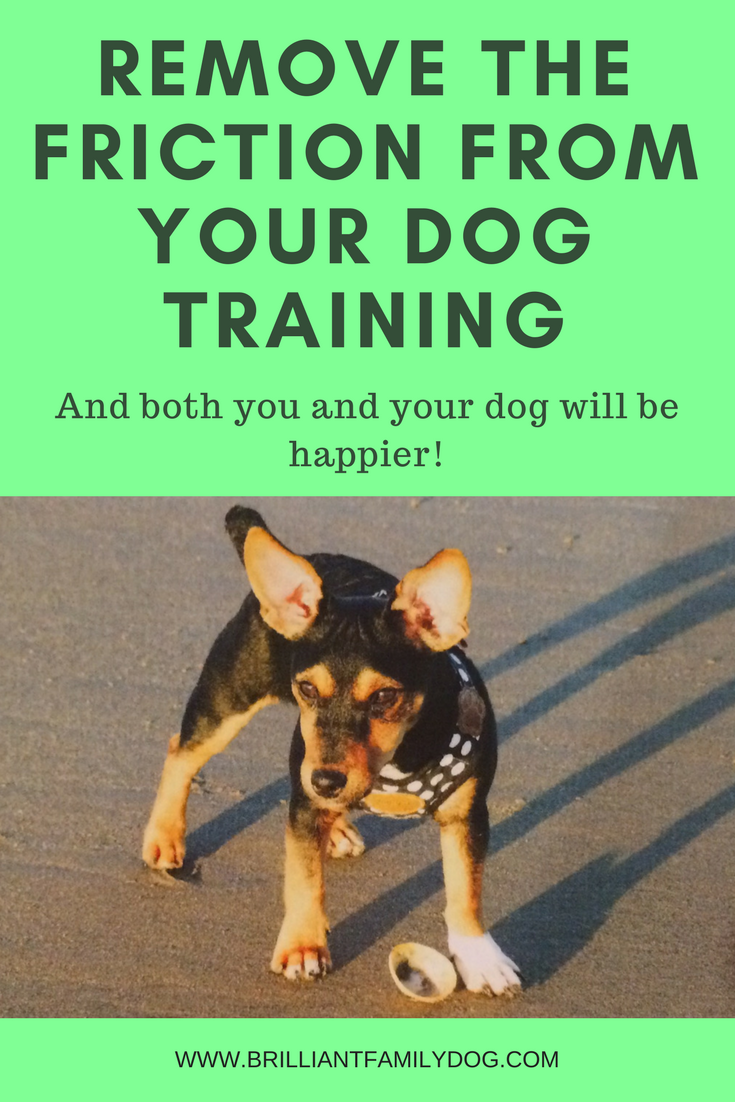
Who’d have thought the owner of a little dog like this wouldn’t be entirely happy with him?


Harry is a happy-go-lucky Jack Russell Terrier. His behaviour is pretty normal for a lively young dog.

But his owner finds some of the things he does a source of worry.


• She doesn’t know how to cope with him running round the garden barking at birds.

• She is driven mad by his standing six feet away from her ready to bolt when she calls him.

• And she’s fed up with him jumping up to steal food off the table.


So she called me in - to deal with “Harry’s problem behaviour”.

First address the dog's "problem behaviour"

Dog training, new puppy, puppy training, dog recall training | Remove the friction from your dog training and both you and your dog will be happier! | FREE EMAIL COURSE | #newpuppy, #dogtraining, #newrescuedog, #puppytraining, #dogbehavior | www.bri…

It was fairly simple to teach Harry some new things to do in the garden instead of barking at birds. (First stop is always to accompany the dog in the garden.) Having him enjoy running fast to his owner when called was a breeze. And sorting out the food-stealing didn’t take long.

No, I’m not a genius or a miracle-worker! There are some proven (scientifically proven) methods of reaching a dog’s mind that are powerful and quick.


What takes time, though, is reaching the dog-owner’s mind.

Get your free email course to sort out lots of dog (and owner!) problems fast and painlessly

THIS FREE ECOURSE IS A BONUS FOR YOU WHEN YOU SIGN UP TO RECEIVE EDUCATIONAL EMAILS AND OCCASIONAL OFFERS FROM ME. YOU CAN UNSUBSCRIBE AT ANY TIME.
Privacy Policy

And this is where the hard work came in! Working against a culture of “them and us” and “You’ll do it because I say so” is not so easy.


Second, address the owner's "problem behaviour"

Harry’s owner had to learn that it takes two to tango. Personal relationships are complex, and it’s never one-sided. 

So in order to change Harry’s behaviour, it was essential for her to change her own.


• The first thing to change was her expectations. A dog is a living being, with its own personality. It’s not a stuffed toy who never steps out of line or has an opinion.

• Next was to change her approach from barking out orders like a sergeant-major, and instead working with her dog to get the outcome she desired without conflict.

• She learnt to play interactive games with Harry which always involved choice and impulse control on Harry’s part.

And the hardest thing of all? 

• To switch her from NO to YES.

It would be “Harry NO,” “Harry STOP,” “Get down!”, “Get off!”, ‘HARRY!!”, etc, until Harry sat quietly in front of her, at which point she said … 

nothing! 

So Harry got lots of attention when he was doing something she didn’t like, and absolutely no attention at all when he did something she did like!


Once we’d fixed this final piece of the puzzle, life changed dramatically for both of them. 

Harry was able to carry on being a happy-go-lucky young terrier, but at last knew how to please his owner. 

She in her turn, learnt to give him great feedback, to appreciate his individuality, and to enjoy the companionship she craved when she first got her pup.

***********

LATER: Harry’s owner wrote to say, “I do feel a lot of progress has been made over the time you have been visiting us - and even more than that, I feel now that I have the tools to train Harry to be the kind of dog we know he can be.” 


Watch our free Workshop to get your dog to listen, and find out just how much of the learning is for you!

Once you change what you’re doing, your dog will automatically change. Exciting!


Little things DO matter - for your dog everything matters

Dog training, new puppy, puppy training, how dogs learn | Little things do matter in dog training - get the small things right and your dog will get it! | FREE EMAIL COURSE | #newpuppy, #dogtraining, #newrescuedog, #puppytraining, #dogbehavior | www…

“It’s only the dog - he won’t notice.” 

Yes.

He will.

Dogs notice so much more than we tend to. If you come home with your dog and someone’s left a parcel on the table - doesn’t your dog race over to inspect it immediately? Anything that’s different or out of place will be subject to scrutiny. 

The dog has your home all mapped out in his mind. He knows just where everything is - or where it should be. And reflecting on this will help you “clean up” a lot of the things you ask your dog to do.

Maybe when he first learnt them he seemed to do ok.

Maybe as time has gone by, his responses are slower and woollier.

And just maybe ... it’s not his fault?

“Dogs don’t generalise very well”

You may have heard that statement on your training journey with your dog. It means that if they learn how to sit, in the kitchen, with the oven on their left and the fridge on their right, they may struggle to sit when you ask for it somewhere else. “Where’s the oven? Where’s the fridge? Oh no! Where am I meant to be?” Dogs are, as I said above, very locationally-aware.

So it’s normal training practice to teach an action, then “generalise” it by doing it in lots of different places - the bedroom, the garden, beside the car, on a walk. Gradually your dog realises that Sit simply means placing his bum on the floor, immediately, regardless of where he is (this could be a lifesaver one day).

Get your free email course to help you sort out lots of puppy and dog problems

THIS E-COURSE IS A BONUS FOR YOU WHEN YOU SIGN UP TO RECEIVE EDUCATIONAL EMAILS AND OCCASIONAL OFFERS FROM ME. YOU CAN UNSUBSCRIBE AT ANY TIME.
Privacy Policy

While you’re doing this you’ll also be “proofing” his action, so he can do it whether you are sitting, standing, facing the other way, walking … 

This is the way to get an all-weather, instant, Sit.


“I’ve sat, now what?”

Similarly, learning to sit should also include learning when to release. So that “SIT” means “Sit till I tell you otherwise”. No need to yell “STAY STAY STAY Ah-ah!” with accompanying wagging finger, at your dog, if he knows that he only moves from his sit when released. This is a detail that most pet-owners forget to teach - or rather, they don’t know they need to teach it in the first place. But doesn’t it make a lot of sense once you think about it?

If you look at it from the dog’s point of view, is a Sit something you do for a split-second before jumping up again? Or is it a careful placing of the bum on the floor … till you feel like moving? Or does it mean what it says? “Sit.” Just sit!

There's a difference for us in whether we touch a button on our phone, or press it, or hold it down. We have different words to describe those actions, otherwise it would be very hit and miss.

If we’re not clear in what we understand and mean, we’re not going to be able to convey that information to our dog - who will be so happy to oblige once he knows what it is that you want!

Maybe you’re thinking that this is a fuss over nothing - that as long as when you say “Sit” your dog (eventually) parks himself, however briefly - you’re happy? But wouldn’t you and your dog both be much happier still if you were both clear about what you wanted - about what will earn your dog a reward, in other words?

“Whoever said the small things don’t matter has never seen a match start a wildfire”
Beau Taplin

It’s clarity that will transform your dog training from “you against him”, to a team, happily co-existing and walking this earth together. 

Knowing just what you mean when you ask him to do something, will enable your dog to hit the spot every time. He can anticipate your needs (that’s terrific … except in competition, where anticipation will lose you buckets of points!), and he now has a sure way to please you and earn a reward.

So do I have to keep feeding my dog all day long?

Dog training, new puppy, puppy training, how dogs learn | Little things do matter in dog training - and the first thing you need to know is exactly what your dog finds rewarding | FREE EMAIL COURSE | #newpuppy, #dogtraining, #newrescuedog, #puppytra…

Keep in mind that a reward is whatever your dog finds rewarding! 

For many dogs food of some kind will head the list, with tasty soft food (cheese, for instance, or sausage) way up at the top. But you need to find out what else your dog finds rewarding - Running? Going out to the garden? Sleeping in the sunshine? A cuddle on the sofa? Chasing a toy? Retrieving? Nosework? A car ride?

My own four dogs would list their favourite rewards in very different orders from each other. For Cricket the Whippet, snuggling under the duvet has got to be up there, while Rollo the Border Collie loves every opportunity to stalk and herd his chickens in the garden (don’t worry, he never touches or upsets them). For Lacy and Coco, my more worried dogs, proximity to me, and interaction with me, is highly-valued and a reward in itself.

Do I really need to train my dog all the time?

The easiest way to train your dog (and I’m all for easy answers) is what I call “All Day Training”. And while this doesn’t take up much time - seconds, in fact - it does require you to be clear about what it is you want. 

And keep in mind the sad fact that something you’ve taught, and that your dog does perfectly, will gradually deteriorate. Things don’t stay static, so your dog’s sit is either getting worse or getting better. Think about it - the last few times you asked your dog to sit, what happened? Be honest! Did it take several “Sit’s” for anything at all to happen? Did he jump up again as soon as you moved?

Dog training, new puppy, puppy training, how dogs learn | Little things do matter in dog training - get the small things right and your dog will get it! | FREE EMAIL COURSE | #newpuppy, #dogtraining, #newrescuedog, #puppytraining, #dogbehavior | www…

This sort of creeping disintegration of what you thought your dog knew happens to the best of us if we are not vigilant. I’m as guilty as you are! I noticed recently that while Coco Poodle has a nice instant drop at a distance … it was only most of the time, not all of the time, and he had a tendency to move as soon as I did. 

So back to the drawing board! It’s taken only a short time giving his instant down a bit of focus on walks for us to have his “drop on the spot and stay dropped” back in full working order again.

And whose fault was it that it had gone wobbly?

MINE.

I had not been clear in what I wanted, and in what was reward-able. Once I restored clarity to the action, it was easy for Coco to oblige and get it right.

Is it me or is it the dog?

So have a critical look at what it is YOU are doing with your dog. It’s so easy to blame the dog - when it’s ourselves we should be looking at!

Want a bit of help with this? See how pleased these students are with their progress through our premium online dog training course: 


Thanks, Beverley! She's really making huge strides. Amal & Neith, GSD mix

I really can see major progress especially with his being calm. Katherine & Oliver, Labrador

The biggest thing I have learnt on Beverley Courtney's course is the need for me to speak dog - understand how they think and tune in to that.
Christine & Stan, Cocker Spaniel


Get your free email course to help you sort out lots of puppy and dog problems

THIS E-COURSE IS A BONUS FOR YOU WHEN YOU SIGN UP TO RECEIVE EDUCATIONAL EMAILS AND OCCASIONAL OFFERS FROM ME. YOU CAN UNSUBSCRIBE AT ANY TIME.
Privacy Policy