Can you give your dog a choice?

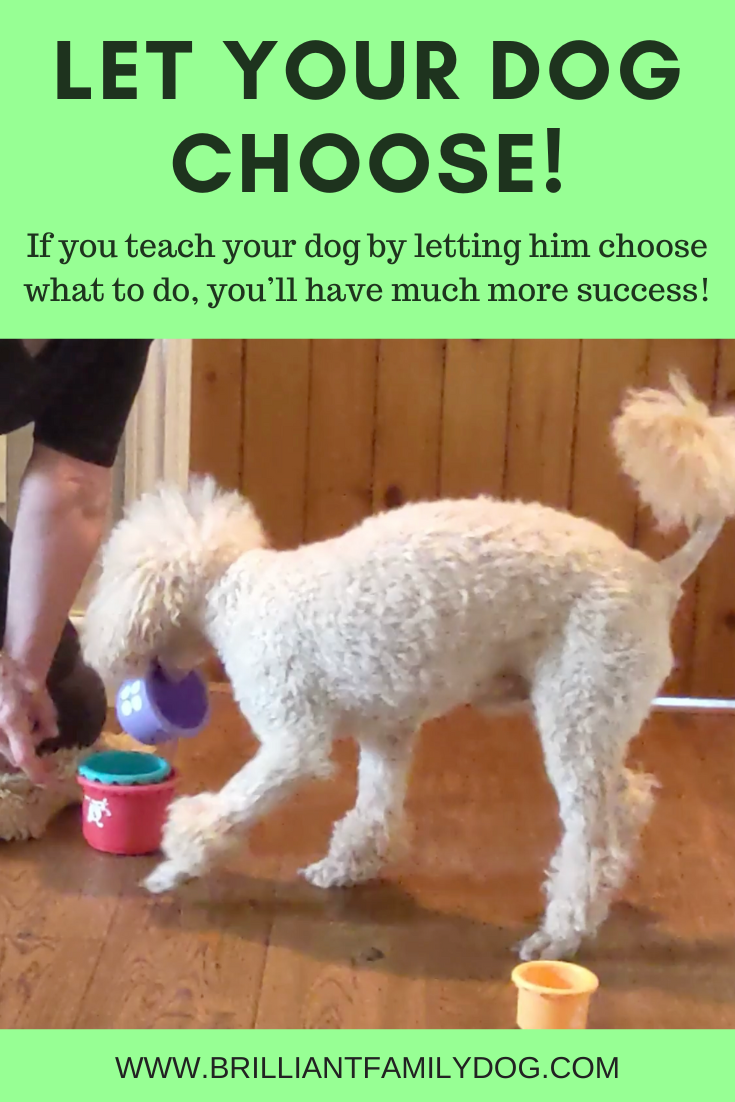
I had an unfortunate correspondence recently with a “dog trainer” who justifies the use of punishment in her “training” by implying that dogs that are given a choice will inevitably make the wrong choice.

How shortsighted!

As dog trainer I am an educator - a “dog coach” as someone recently described me!

And just as we don’t let our children run amok and expect them to make the right choices, we don’t do that with our animals either.

Guiding them to make a good choice is what it’s all about.

But it is essential for them to make that choice freely!

Getting someone to suggest a course of action themselves is a sure way to have them follow through. If they decide that’s what they want to do, then they’ll probably do it.

Dogs are no different!

They take pride in understanding what would be a good decision in the moment - even a moment that they would previously have found stressful. And they love to be reassured and praised for so doing.

Punishment?

Treating the dog as an automaton, which we switch on or off, means we always have to be in control

As I say so often,

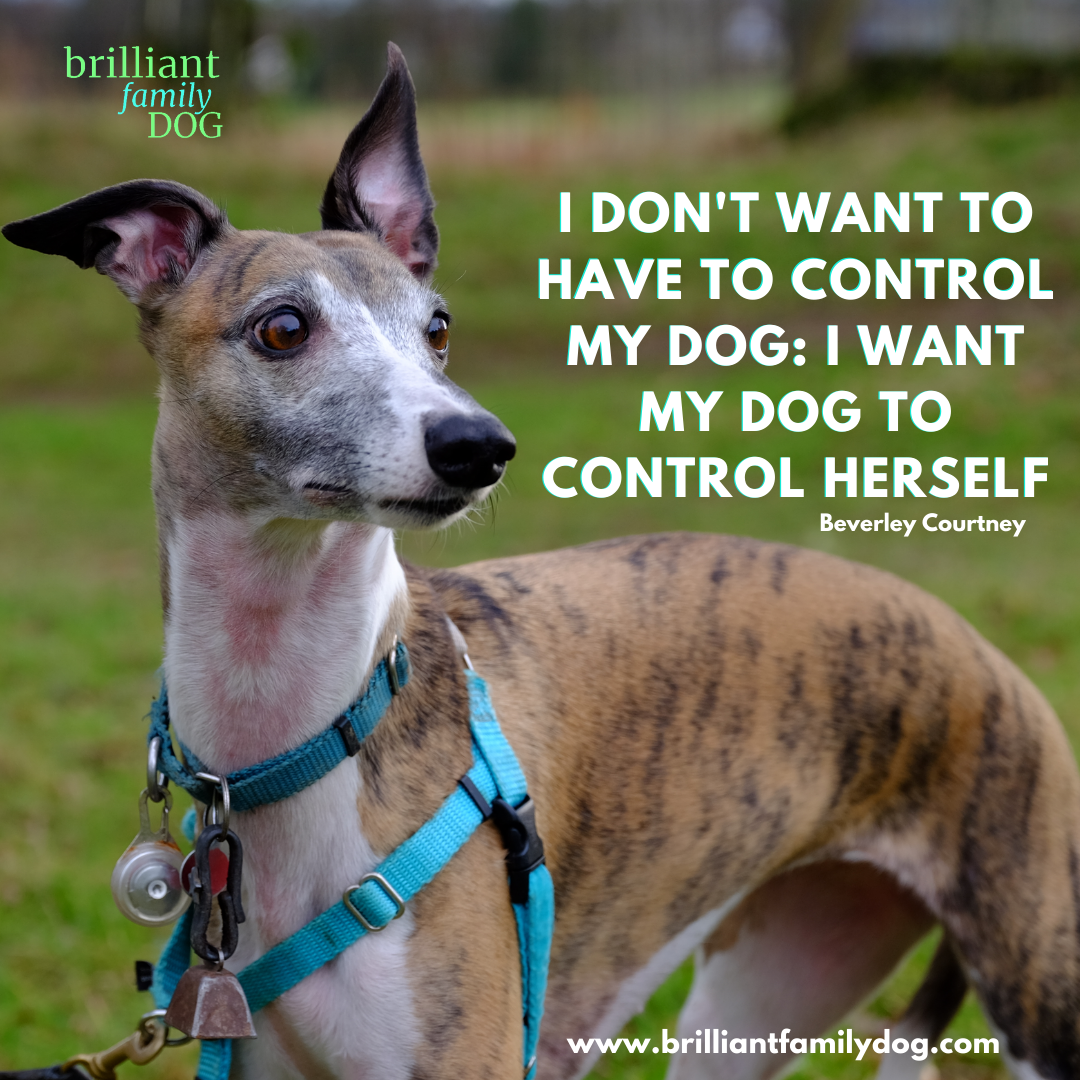
I don’t want to have to control my dogs: I want my dogs to control themselves.
 

The so-called dog trainer claimed that reactive dogs could only be managed through control and limiting choice. “Do what I say,” Kind of thing.

I have specialised in reactive and aggressive dogs for many years. I have had a dramatic success rate with my non-confrontational, choice-based, methods 

The more we treat the person, child, or animal, in our care with respect for their individuality, the better the result.

Punishment serves only to make the punisher feel good.

Choice Training makes everyone feel good!
Want to know how you can incorporate choice and respect into managing your dog? Start with our free Workshop here!


“How do I stop my dog doing xyz?”


I get a lot of emails every day, from people with questions about their dog.

And that’s great! Keep ‘em coming! I love to help people find a better way to do things.

But many of them - and I mean MANY of them - start like this: 

◆          “How do I stop my dog jumping up?”

◆          “How can I stop my dog chewing?”

◆          “My dog pulls on the lead - how do I stop this?”


Notice the common word?

STOP!

Now dogs are not automatons. You cannot switch them off. If they STOP doing one thing, they have to START doing another.

Even when they lie down peacefully to snooze - they STOP being awake and START sleeping.

They cannot exist in a vacuum!

Any more than we can.

So attempting to STOP your dog doing anything at all, without explaining to him what you’d like him to START doing, is not going to work!

If you choose to prevent one thing, you have to teach a substitute for that thing.

  • So instead of stopping your dog jumping up, you teach him how to express his joy in a different way.

  • Instead of stopping your dog chewing, you find out why he’s chewing so much, and offer him things he can chew.

  • And instead of stopping your dog pulling on the lead, you show him where you’d like him to be when you take a walk together.

Does that make sense to you?

Do you see how much easier it is to substitute a preferred behaviour with love, rather than trying to remove an unwanted one by force?

Want to learn more how to do all this?

I’d just love to show you!

If you like watching, start with the free Workshop here

Or if you prefer listening, try these audiobooks right now at a special price!

Or you’re happier curled up with a book? Here you go

And do keep those questions coming …


How do heatwaves affect dogs?

We’re having a heatwave! That is, we in England.  

Readers from warmer states and countries may be baffled by our excitement. But extreme weather is relatively rare in our temperate climate. Our homes, our lifestyles, and our infra-structure, are not designed for extreme heat or cold.

We’re always caught out in the very occasional winter blizzard, because it’s not worth the huge national investment to cope with just two or three days of deep snow.

Similarly, we’re not used to heatwaves, and this week they’re threatening 40°C - that’s 104°F - and that’s HOT!

So as a nation, what do we do? We jump in our boiling hot cars, and drag the whole family miles to a crowded beach, wear them out, then drag them all home in the same traffic jams.

Madness!

And especially mad if you have a dog in the mix.


Hot cars

We just about all know by now, that dogs die in hot cars (even with the windows open). So thankfully that doesn’t happen as much as it used to.

In fact, most heatstroke victims vets see now, are as a result of a walk in hot weather. If the dog is not used to walks anyway, and is suddenly whisked off for a huge long tramp in the blazing heat, this is a recipe for disaster.

At the moment we have a very cooling breeze where I live. But should the breeze drop and the temperature shoot up, my dogs will be skipping their regular walks.

But what if the worst happens and your dog is suffering early signs of heatstroke?

(If he’s actually collapsed - you need a vet fast. Less than 10% of dogs can be saved at this stage.)


It doesn’t have to be that hot

Surprisingly, perhaps, it doesn’t need to be that hot for a dog to suffer heatstroke. Wildly racing about in moderately warm weather can be enough to bring it on. Puppies - who can’t manage their thermostats at all well yet - are particularly vulnerable.

So what to do?

Here, straight from the horse’s mouth, aka the RSPCA, is some good info:


“Dogs suffering from heatstroke urgently need to have their body temperature lowered gradually for the best chance of survival.


Here's what to do:

◆   Move the dog to a shaded and cool area

◆   Immediately pour cool water (not cold water to avoid shock) over the dog. Tap water (15-16°C) has been found to be the most effective at cooling dogs with heat-related illnesses. In a true emergency, any water is better than nothing.

◆   Wet towels placed over the dog can worsen the condition, trapping heat. In mild cases towels can be placed under the dog, but never over, and in a true emergency water immersion or pouring water with air movement is ideal.

◆   Allow the dog to drink small amounts of cool water

◆   Continue to pour cool water over the dog until their breathing starts to settle, but not too much that they start shivering

◆   Dogs that have lost consciousness will stop panting, despite still having a very high temperature, these dogs require urgent aggressive cooling as a priority.

◆   Throughout the treatment of heatstroke try to avoid pouring water on or near your dog's head, as there is a risk of them inhaling water which could lead to drowning, especially for flat-faced and unconscious dogs.

◆   Once the dog is cool, take them to the nearest vet as a matter of urgency.”


They also point out that the dogs most vulnerable to heatstroke are the young, the old, those with thick coats, and short-nosed (brachycephalic) dogs.

Is your dog on that list?


Look out for water

If you do decide the temperature is safe to walk your dog, watch out for water sources on your route, in case you urgently need it.

By the way - a great tip for you: put your hand flat on the pavement. Too hot for your hand? Then it’s also too hot for your dog’s paws!

Enjoy your hot weather safely, by enjoying dozing and relaxing with your dogs in the shade. Your busy activities and long walks can be resumed as soon as the weather is back to normal.

Summer delights for your dog!


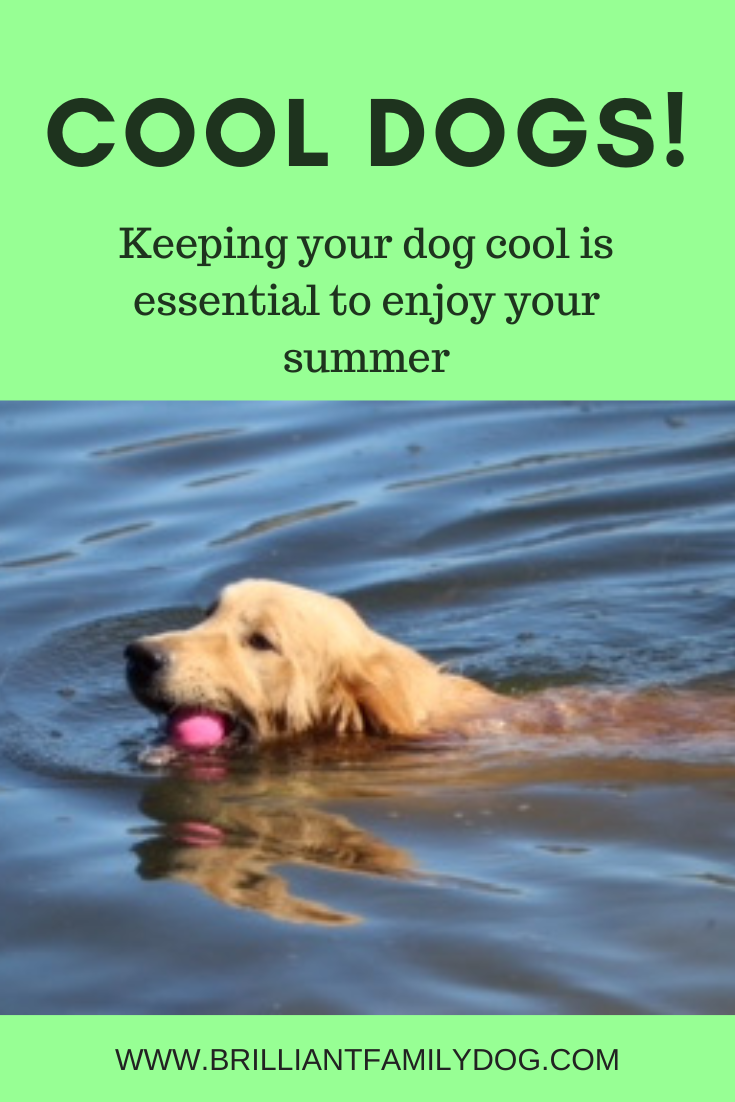
Summer has arrived for us in the northern half of the world! And with it comes fun, long lazy walks on the beach, cool shady walks in the forest, games in the garden, swimming for dogs who like it, and …

 😱 😱 😱

.. ticks, grass seeds, sunburn, snakes, heat exhaustion … you name it!

So I wanted to give you some summery tips to make things easier for you and your dog.

And as I set down to write, I remembered that I’d already given you some tips on this in previous summers.

No need to re-invent the wheel!

So here are the links for you, so you can find out just what you need to watch out for, whether your dog is a hairy monster or a sleek beastie.


Summer Dog Hazards

[Click the title above to read the post!]

We’re having quite a mixed bag of weather in the UK this summer! From the hottest July day ever to cool summer soakings. So it’s worth taking a look at how these hazards can affect your dog. We all know that cars can turn into killing ovens within minutes on a sunny day, whether the windows are open or not.

But there are other times dogs can get dangerously overheated …

Read more


Summer Grooming for your Dog!

[Click the title above to read the post]

Once you’ve done the thorough spring overhaul and got all the winter coat out, you may think you can take a break from brushing your dog for a while.

But NOOOOOO!

It’s especially important in summer!

This is when you can get all those ticks, cuts, matts, cleavers, twigs, grass seeds, and any other sticky passenger looking for a free ride …

Read more …

The Weekly Once-over can save you a Lot of Vets’ Bills

[Click the title above to read the post!]

Run your hands over your dog’s body. It’s key to maintaining your dog’s health. Reach every nook and cranny! You want to check up for cuts, scratches, foreign bodies, hot areas, sore bits, tangles and mats. 

You can do this methodically, once a week. Or you can do what a lot of people do - that is to use cuddle time as an opportunity to feel all over your dog and check him out.  

It’s surprising how many people miss this. It can lead to nasty problems, especially where ears and feet are involved. The fashionable fluffy dogs have lots of fluff-related problems …

Read more …


And to enjoy your dog running free, knowing that he’ll race back to you in a heartbeat as soon as you call - watch our free Workshop here, on getting your dog to LISTEN!


Can you take your dog everywhere?

It’s a lovely thought!

We get a dog to be our companion, to be with us all the time, to accompany us on trips to the cafe, the pub, the family, the local fair …

And then reality hits.

THIS dog, the one you’ve got, is not quite what you expected!

He doesn’t like noisy children, he finds strangers approaching him worrying, he’s anxious about other dogs, and as for the bangs and mock-fighting and hullabaloo at the historical re-enactment you were dying to go to - horrors!

Maybe you do have a super-sociable dog. Maybe he just loves everyone. But you still may reach his limit if you take him on a long excursion to a rowdy place.

You may be enjoying looking at those stands of goodies, but does he like being squashed between so many people’s legs? Down there at ground level where he can’t see a thing, possibly getting enthusiastic greetings from children or other dogs. You’re busy admiring the offerings at the market or fete, so it’s hard to notice this in time, and guard against anything untoward.

What’s sauce for the goose may well not be sauce for the gander!

“I want to be alone!”

Then you have to look at your dog who just plain doesn’t like crowds.

You did all the right things with socialising her, but she still doesn’t like some of the things you’d like to do with her.

Imagine that was you.

Imagine your family insisted on dragging you round somewhere you hated. A family member who’s mad about motorcycles dragging you off to Brands Hatch, Silverstone, or Mondello Park? The smells, the noise, the crowds … maybe you’d love it! Or maybe you’d hate it.

But you’d like to have a say!

We need to extend the same courtesy to our dogs.

Do they really want to be hauled around a showground on a short lead, hot, bothered, nowhere to lie down?

And just before you say, “My dog’s FINE!” I want you to consider that if a dog is in a stimulating environment and keeps close to you, quiet, “no trouble at all”, this dog is most probably “shut down”.

She can’t escape the situation, so she keeps her head down and hopes it will all go away.

It’s a form of learned helplessness. She can’t cope, there’s nothing she can do, so she submits to the torment.

Go without the dog!

The fact is, there are things you enjoy, there are things your spouse enjoys, there are things your dog enjoys.

If everyone isn’t enjoying the outing, then - why not leave them at home?

And enjoy the happy greetings when you return exhausted from your outing!


You get Dog 1.0 - the upgrades are up to you!

It always amazes me when readers write of their puzzlement that their new dog or puppy doesn’t seem to understand what’s wanted.

[Do keep your letters coming - here at Brilliant Family Dog we just love to help! And all queries are read and answered.]

🐾 Maybe they’ve been looking at a friend’s dog, who understands everything.

🐾 Or maybe they’re thinking of their last dog who they had for donkeys’ years, and they simply can’t remember all the teaching they had to do when he was new.

I can remember a new mother asking me when my children were young, “When do their teeth all arrive?”

My response: “I can’t remember, but they’ve got ‘em all now!”

We deal with what we need in the moment, then forget it.

Did you forget?

And maybe that’s what’s happened with your new dog? You’ve forgotten just how much time and attention your faithful old friend needed when he was brand new.

So … you’ll have to do the same with this one too 

An easy way to start your system upgrades :-) is to read any of our Brilliant Family Dog books that you’ll find here: www.brilliantfamilydog.com/books

Even easier? Watch our free Workshop and consider joining many other dog-owners in the Brilliant Family Dog Academy!

There’s a huge range of people and a huge range of dogs. Our oldest dog-student was 15, and our youngest 8 weeks. Our oldest human student is over 80, and we have plenty of people who involve their whole family - especially the children - in the training.

And you can get to meet all of them in our friendly private community!

Don’t soldier on alone! Things can get hard if you don’t know where to turn.

But with kind and compassionate help at hand, you never feel lost or alone on your journey with your precious pet.

Imagine … you can start applying those upgrades today!