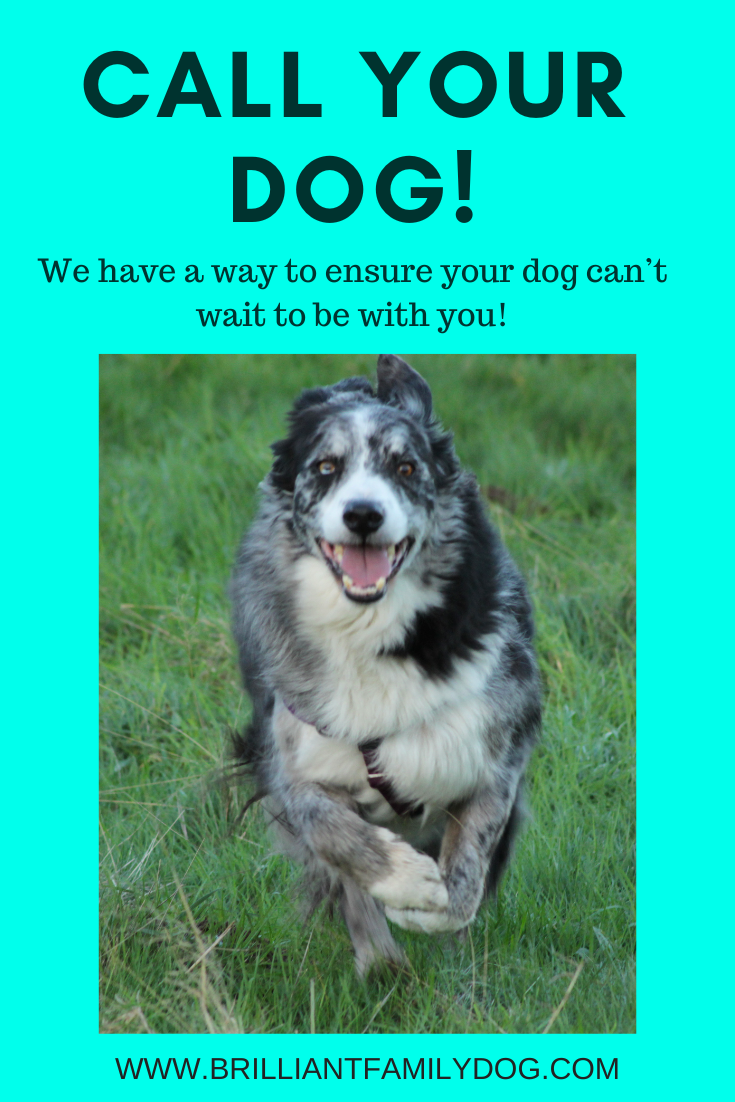
Want to teach your dog an instant recall?

Do you want an instant recall?

I don’t think there’s any sane dog-owner who’d say, “Er, no thanks, I don’t care whether my dog comes back or not.”

Everyone wants an instant recall!


And an instant recall is not hard to teach - in fact it’s great fun to teach! But the operative word here is TEACH.

Your dog does not arrive with an instant recall installed. Whether a tiny puppy or an older dog, he does not have any idea what you want … until you teach him!

So yelling his name, nicely or crossly, stamping your foot, blowing a whistle - none of this will work until you teach him what it means and why he will WANT to do it.

[HINT: if he doesn’t want to do it, you’re wasting your breath yelling and all the rest! This is a two-way thing.]


The first step

So how do you achieve this wonderful Nirvana state of calling your dog, just once, and having him thunder back to you with wild enthusiasm?

The very first step is to teach him that you are nice to be with, you are reliable, and it’s worth his while to keep a close eye on you, and respond when you ask.

This isn’t done in a soggy field, as your dog hurtles off, nose to the ground, on some chase or trail.

This happens at home. In your kitchen. Many times a day. It’s what I call “All Day Training”.


All Day Training

We want to teach our dogs to respond to us every time, not just when they feel like it, or when they have nothing better to do.

And that’s why we need to build up this deep history - that every time they respond to us, they get some kind of reward.

To start with, by far the easiest and most effective reward is to give a treat. Instantly, as soon as their head starts to turn toward you.

And the key is that this reward must be given EVERY time you ask, and they do.

No exceptions!

If you want it to work it has to work every time, without fail. As soon as you start to demand compliance with no semblance of a reward being forthcoming, you are starting to hammer nails into your Recall coffin.


The first step in detail
So your first step is to make your dog’s name precious. Whenever she hears her name, she stops in her tracks and responds to it - whether that means turning round in front of you, or racing back from 50 yards away.

And I go into detail into how you can precisely and positively make your dog’s name precious to her - in two places for your convenience!

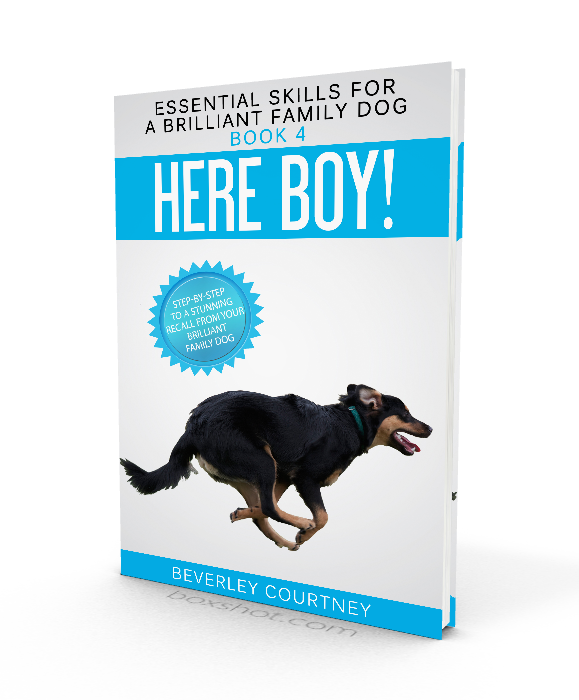
The first place is here in Here Boy! Step-by-step to a stunning recall from your Brilliant Family Dog which you can find in ebook or paperback at Amazon and in audiobook direct from the author right here.


And the second is here in our

free Workshop

on getting your dog to LISTEN!


Choose your poison! And let me know how this game transforms your relationship with your puppy or dog, and you can see it setting you on the road to having that stellar recall you’d love!
 

My dog is barking mad!

“My dog is barking - how do I stop him?” is a frequent request.

And while I’d love to say, “Do this, and your dog will be quiet,” it’s actually not possible without a lot more investigation. A diagnostic report is needed! To decode your dog, we need to find the error code!

So the first thing you need to do is note WHEN she’s barking. You need to keep a barking diary for a few days.

When you’ve got this down (and it may surprise you when you look into it) you can now note WHY she’s barking.

What triggers the barking?


Until you can work out WHY your dog is barking, there is no quick recipe for changing this.


Find some answers

Once you’ve found out WHEN your dog is barking, WHY she’s barking, and WHAT triggers the barking, now you’re in a position to find out how to change this barking into something you’d prefer. And that’s not necessarily silence!

If your dog is alarm-barking because they can hear an intruder, you don’t want to extinguish this practice! You probably want to be able to acknowledge it, thank your dog, and then for her to hand responsibility over to you, i.e. by shutting her mouth.

Keep in mind that some barking is very useful. I can ask my dogs to bark on cue, which may be just what’s needed to attract someone’s attention, or to communicate to my old, hard-of-hearing, dog.

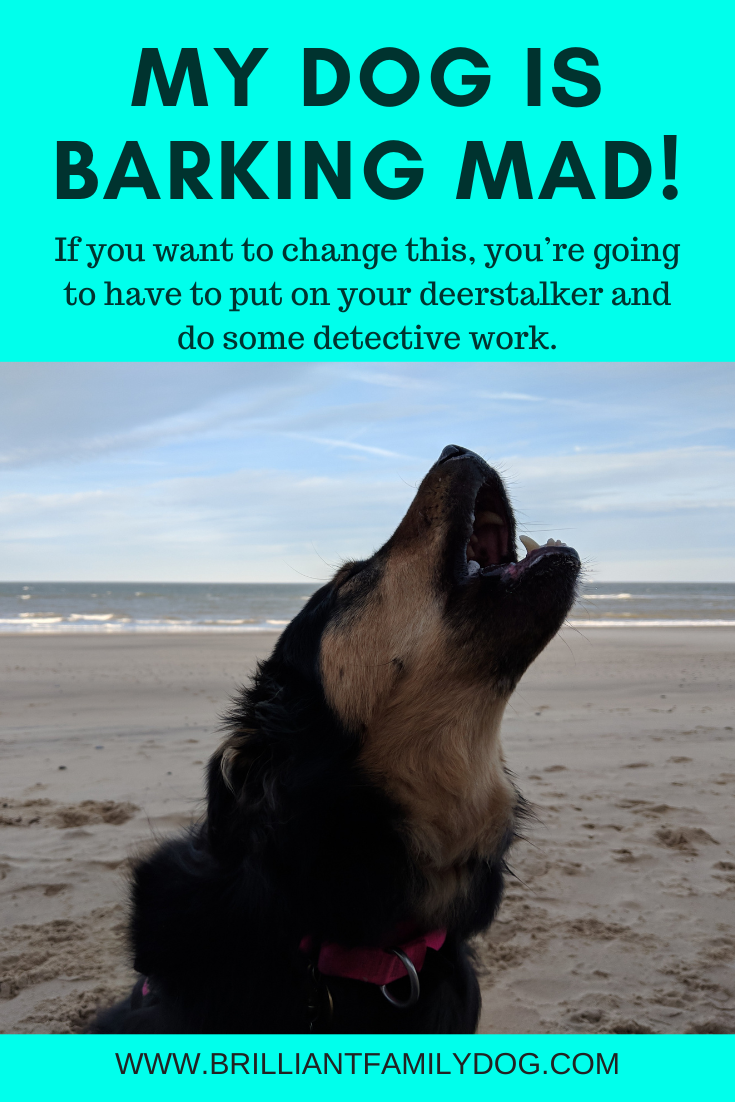
I can tell you that Lacy, pictured at the top, loves barking. So when we go to an empty beach or forest, she can fly about barking to her heart’s content. It’s how she expresses excitement and pleasure.

Barking isn’t RIGHT or WRONG. If a particular aspect of your dog’s barking does not please you, it may help to see it like we see weeds, as a flower growing in the wrong place!

And if your dog has been practicing this (annoying) barking for years - then you’re going to have to find the cause, and focus on eliminating either the cause, or the response. This may take time - it all depends on how much you want the change!

So, over to you: Find out what’s going on, then we can look at remedies together.


If you discover the barking is from Fear, or what you perceive as Aggression, then hop over to our free Masterclass for Growly Dogs here


And if it’s for anything else at all, this where you want to start:


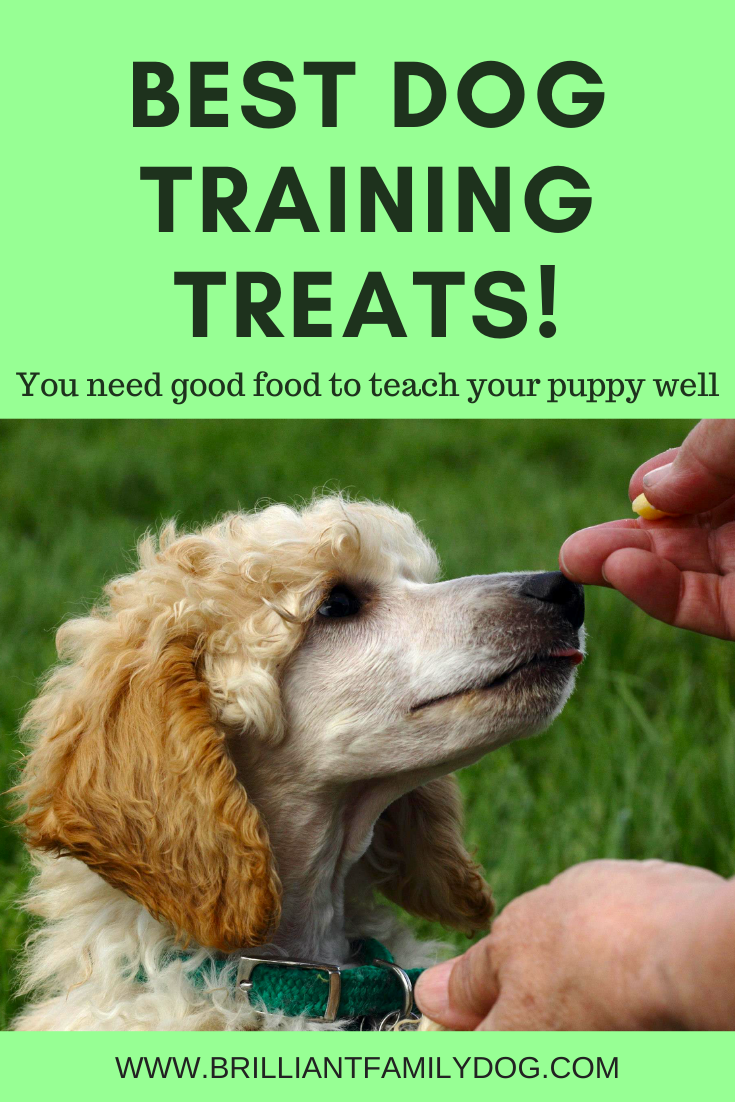
What are the most effective dog treats?


We receive thousands of marketing messages every day. We’re exhorted to buy foods which have “value added”, i.e. processed, ready-to-eat, convenience foods.

We KNOW (really! We all know!) that fresh foods are w-a-a-a-a-y cheaper to purchase, and are w-a-a-a-a-y healthier - without all those preservatives, additives, treatments. But they need a bit of work to turn into meals.

So it’ll be no surprise to the discerning reader that the same thing happens with dog foods. We’re bombarded with marketing messages and glossy images of glossy dogs bouncing all over the place. I talk about how to choose an appropriate diet for your dog here and here.

But the same marketing bombardment happens with dog treats.

Not only do you have to be equally discerning about what you put inside your dog in terms of nutrition, but there are other considerations.

Unless you’re just dishing out treats for no reason, you need to choose your dog treats carefully!


Training treats

And nowhere is this more important than the treats you choose to use in training your dog.

There are various factors you have to consider. And I outline most of them for you in my books. But for those of you who are yet to discover the joy of these books (seriously - people LOVE them! Just look at the hundreds of reviews on Amazon), here is an excerpt for you from Essential Skills for your Growly but Brilliant Family Dog: Books 1-3: Understanding your fearful, reactive, or aggressive dog, and strategies and techniques to make change

Chapter 2

Rewards - what, how, when?

Rewarding your dog with something he really likes is essential to this easy method of training. This may be with a game of chase, tugging with a toy, racing after a ball, being given his dinner bowl, a cuddle, or a tasty treat. It’s up to you to find out just what your dog likes (as opposed to what you think he likes) and reward him appropriately when he makes a good choice.

Treats are not a moral issue. They are a means to an end. The end is your dog responding to you and working with you. If employing a few bits of cheese means that my walks are enjoyable and my dog is calm and happy, then that seems a good deal to me. I only give my dogs a treat when they’ve done something I like: I aim to get through a lot of treats every day!

The treats need to be very tasty - your dog has got to really want them! And you don’t want her chewing and chomping on a biscuit for so long that she forgets what she earned it for. So the treat needs to slip down quickly and make your dog think, “Wow! How can I get some more of that?” Your dog needs to know what you like and what does not work with you.

So every time she does something you like, you can mark it by saying, “YES!” and giving her a treat. There is no need for your dog to sit in order to receive a treat. Some dogs think that sitting and begging is the only way to earn a treat, so they sit and beg and annoy at every opportunity. If you are crystal clear about what your dog is doing that is earning the reward (by saying YES), then he will know what actions to repeat, and what doesn’t pay. The sitting, begging dog has no idea what causes these random treats to appear.

When you mark an action, you want to mark as the dog is doing it. If you are marking a Sit, for instance, you need to say Yes as the bum is going to the floor. If you wait till your dog has already sat, she’s now gazing out of the window and thinking of something else. That’s not what you want to mark! As the sheepdog trainer John Holmes told us, you need to catch your dog with his mind down the rabbit-hole, not wait till he is down the rabbit-hole, when it’s too late. You want to catch your dog thinking about sitting.


Good treats

  • Cheese

  • Sausage

  • Ham

  • Chicken

  • Frankfurter

  • Salami

  • Homemade sardine, tuna, or ham cookies

  • Freeze-dried 100% meat treats

  • Dried sprats

  • Dehydrated liver, heart, lung, etc

.. real food in other words. Ideally, they slip down quickly so your dog wants more. Cut them into small, pea-size treats.

OK treats                    

  • High-quality grain-free commercial treats

Fairly rubbish treats

  • Your dog’s usual kibble - She gets it anyway. Why should she have to work for it?

  • Cat biscuits

  • Dog biscuits

  • Stuff of unrecognisable composition sold as pet treats

  • Anything you wouldn’t put in your own mouth

Do you work more enthusiastically for £60 an hour or for 50p an hour? Quite so. Your dog is the same. Be sure the treats you’re offering are worth working for!


So you can see it’s not just the quantity of treats you dish out (huge number when you’re working on something new or working against fear), but the quality is critical!

And before you suggest this may work out more expensive - think again! Look at the pack of commercial treats you are thinking of buying, and look at the weight vs the price. There is no contest with fresh foods!

So not only will you be making your training more effective - for which your fearful dog will profoundly thank you - but you’re making a tiny dent in your wallet!

Choose wisely.

And to get started with helping your Growly - reactive, anxious, fearful - dog, watch our free Masterclass here. Lots of lessons to get you started on a new path!


By the way, for English readers, here’s a load of money off a super food I regularly use and here’s another where you can get a big discount using this link - they provide high-quality fishy treats and foods, which are firm favourites with my crew!


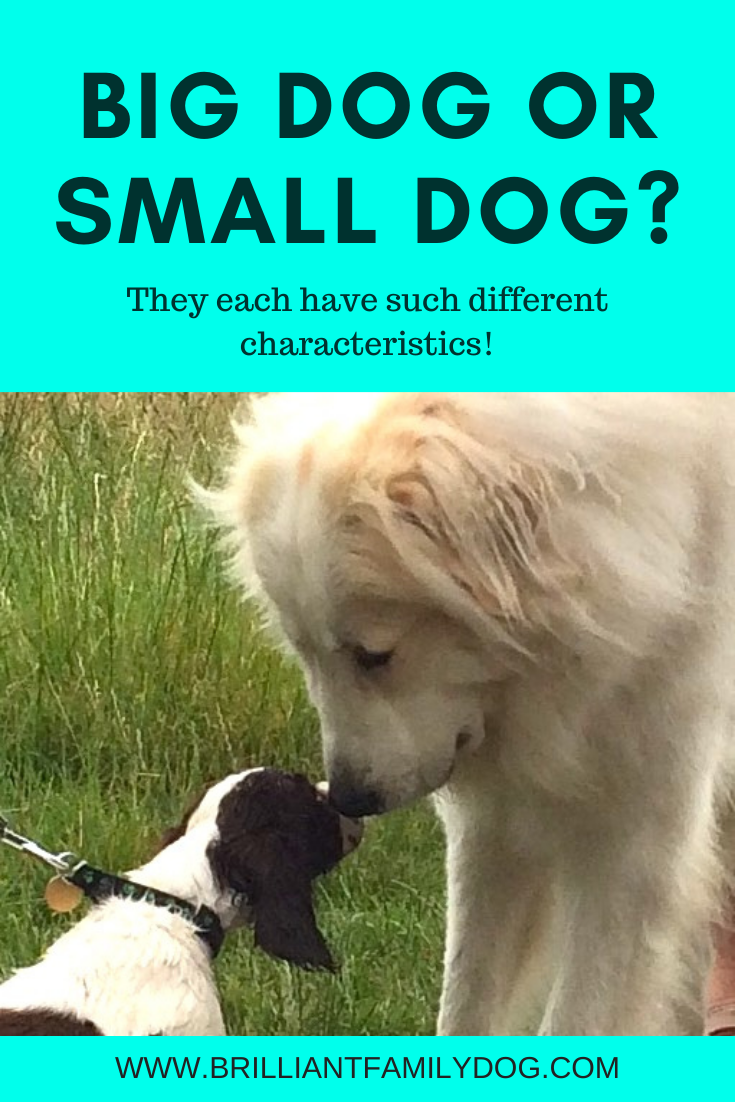
Big dogs or small dogs - which is easier?


There’s a great debate raging about whether small dogs or large dogs (or medium dogs!) are better. 

And all parties are convinced their dog is the best size!

Having had dogs from very large down to miniature, and a lot in between, I can say that each of them has HUGE good points (and some not-so-good) often having nothing to do with their size.

It really comes down to Horses for Courses.

If you want to do Search and Rescue, you need a robust dog who can walk for miles through difficult terrain = medium to large dog.

If you want to do small dog agility = small dog!

If you want a quiet easy-to-manage dog = usually the medium to larger end of the size scale.

You want a lap dog … depends on the size of your lap! 😊

And so it goes on - there’s no one size fits all! It really depends what you want.

“Small dogs yap!”

It’s true that when small dogs bark it tends to be a yap, and more sustained. They need to make up in volume what they lack in stature. And this noise can grate with many people, whereas a more manly woof is often more acceptable to our human ears.

So small dogs make great house alert dogs. And many are willing and able to follow through with their teeth!

Bigger dogs look more menacing by virtue of their size. And where the big dogs can block a path nicely, the medium to small dogs often win out on speed and manoeuvrability.

Big dogs need big space

Bigger dogs need bigger beds, bigger homes, bigger crates, bigger cars, bigger gardens, bigger food bowls and more food, and they cause bigger vet bills as meds are usually charged by volume.

And while the really big dogs need a large space to stretch out in, the ability of many medium-size dogs, like Border Collies, to curl up into a tiny ball - is remarkable.

Small dogs can fit in a shoebox

And, of course, small dogs have much fewer requirements - for food, housing, bedding, vet bills, and so on. And if you want a lap-dog - or as the ancient Chinese called them, “sleeve dogs” - then a small dog is what you’ll probably prefer.

But what about their character?

This is where the findings of a Lincoln University study are important to understand.

One of the key findings is that  

There is more variation between individuals than between breeds

In other words, breed or type - while giving clues to certain behavioural traits - does not necessarily define the dog.

You can get shy Jack Russell Terriers, Collies that have no herding drive, lazy Whippets, scared German Shepherds, quiet Pomeranians, plodding Working Cocker Spaniels.

They are the exceptions that can prove the rule! But they sure exist.

And if you choose a crossbred puppy, you’re taking pot luck! 

What it all boils down to is that you work with the dog in front of you, rather than the dog you wish you had.

This can lead to a measure of disappointment - especially if you got that dog specifically for its working ability, for agility or nosework for instance. It’s the same disappointment you may experience if your competition hopeful has a bad injury.

Thing is, that dog is a person. He is himself. And that’s who we love.

So when it comes to choosing a dog for your family, take everything into account, do your sums, brush up on Probability Theory, and follow your heart!


And for a kind and effective process that works with ALL dogs, regardless of shape, size, or temperament - watch our free Workshop on getting your dog to LISTEN!


Want to teach your dog tricks? Start here!


Dog tricks! They’re such fun - for you and your dog. 

And one of the main components of many things you’d like your dog to do is to pick things up.

So Pick up, Hold, Bring it to me, are so important - along with Catch, Fetch, and a formal retrieve.

You may have some learning to undo

If your dog has always been admonished for picking things up around the house and garden and on walks, you’re going to have to start from scratch teaching her that now you want her to pick them up!

Give her time to understand that the rules have changed.

You’ll need to teach your dog to hold with a soft mouth. So begin with things she can’t damage before graduating to your tv remote - which definitely would not appreciate being crunched enthusiastically or slobbered on!

Some dogs will squash soft and squishy things. So to encourage them to H-O-L-D gently, with a still mouth, you may find a firm, uncrunchable, tube good to start with. The sort of thing you come to in the centre of a roll of bags.

It needs to have some grip - so not shiny smooth plastic - and not mind getting wet.

As you can see from this picture, EVEN a sighthound can perform a cracking retrieve! (Can’t tell you how many times I was told that as Cricket is a Whippet she’d never be able to fetch. What’s a rabbit, if not a retrieve object?!)

Here’s how to get started!

Here’s an excerpt from Fetch It! Teach your Brilliant Family Dog to catch, fetch, retrieve, find, and bring things back! to get you going, and discovering that it really isn’t that difficult to turn your bored dog into an eager retriever!


Ready, get set, play!

The essence of this method is that it’s fun! It’s a game! So get your dog playing with you first. If she’ll tug, do that. If she’ll run after toys, do that - whether she brings them back or not. And if toys are not de rigueur yet, just run about and play chase and dodge with her. You want to get her heart rate up a bit so she doesn’t fall asleep when you want to work with her.

  1. Where you start this is important. Skip the busy kitchen or distracting garden. The best place to start is the study, spare bedroom, or bathroom or any other small room which is free of distraction.

  2. Kneel on the floor if you are able. This stops you looming over your dog, which many find very intimidating. Or you can sit so the dog is just in front of you.

  3. Animate your chosen toy - at ground level. You want to simulate a rat or rabbit moving fast, then stopping to twitch its whiskers, then darting forward again. A kind of figure of eight movement on the floor around you will work. Watch your dog - he’ll suddenly plug into this movement as his instincts wake up. Then he’ll start to chase it.

  4. He may start by pouncing on it, and using his feet to stop it. Keep it moving, jerking it away as he gets close, until he realises he can use his mouth for this. Let him catch it! And mark with a YES.

  5. And immediately reward him with a treat to his nostrils, removing the toy as he releases it (you were still holding on to it!)

  6. Repeat, repeat, repeat, till you are actually both holding the article for a moment before you ask for a release. This is your first session and will probably take you about three minutes. STOP! Don’t be tempted to carry on till your dog gets bored and loses interest! Remember we’re teaching, not testing. Put the toy away and have another go later.


What happens next? Ooh, you’ll have to nip over to Amazon and get the book! It goes into huge detail on catching, fetching, retrieving, tugging, how to start your assistance dog work, and even how to teach scentwork searches!

With plenty of reviews, it’s proving popular with people who want to have more fun with their dog. And it’s the basis of so many tricks, both fun and very useful.

Now, who’s going to fetch the car keys, pick up the post, and unload the washing machine for you?

Do you like to learn via video lessons? Check out the Brilliant Family Dog Academy where we get you going with some great tricks!


Do you have a rescue dog? Or do you have a *dog*?


Have a think.

When did you last describe your dog as a rescue dog?

Last week?

Yesterday?

Today??

Now, if you acquired your new dog just today, I can understand why you may feel the need to say this. You don’t need to, but we’ll come to that . . .

But if you rehomed your dog more than about five minutes ago, she is NOT a rescue dog! She’s YOUR dog!


Labels

We have a dreadful habit of applying labels to everything.

He’s a naughty child. They’re bossy people. That dog is stubborn.

The first thing to realise is that we’re labelling the PERSON because of their behaviour. Just because someone once did something should not colour our perception of them for ever!

The child was not naughty - he may have done something naughty, but that doesn’t mean you can add the label “naughty” so that you always regard his actions through the “naughty” lens.

Those bossy people maybe reacted poorly in a tricky situation. They didn’t handle it well. They’re not “bossy”. They just weren’t up to that task.

And as for the “stubborn” dog . . . if you’ve read any of my writings you’ll know that dogs are not stubborn. They simply don’t understand what you want of them, or don’t see the value in doing it. That means you haven’t taught them yet!

As the renowned Veterinary Behaviourist Karen Overall says (and I love this quote!),

“What we call something matters because it shapes how we think of it.”


Ditch the labels!

All this labelling is doing us - and the “labellees” a disservice. It is changing our perception of them, and alters our response to them.

If you’re told someone is a thief, you’re going to be very careful around them, watch your belongings, not leave them alone without supervision. It will totally govern how you are with them!

And if you label your dog a rescue - think why that is?

  • Are you wanting sympathy and a big “Aahh” when you say it?

  • Are you implying that anything your dog does is not your fault?

  • Are you abdicating responsibility for teaching this dog - something you can’t deny responsibility for with a puppy you got at 8 weeks?

Whatever it is, ditch that label!

Can you see how it’s not serving you or your dog?

So now, next time you speak to someone about your dog - how are you going describe her?


And for more help with your dog - get our free email course on common dog problems! Lots of help for you there.

THIS FREE ECOURSE IS A BONUS FOR YOU WHEN YOU SIGN UP TO RECEIVE EDUCATIONAL EMAILS AND OCCASIONAL OFFERS FROM ME. YOU CAN UNSUBSCRIBE AT ANY TIME.
Privacy Policy