The magical connection of your hand-touch

Teach your dog a hand-touch here at Brilliant Family Dog. This is just one of many force-free tips to increase the understanding between you and your dog. You can get free courses too! | FREE EMAIL COURSE | #newpuppy, #dogtraining, #newrescuedog, #p…

This article first appeared on 2houndsdesign.com and is reprinted here with permission.


Holding hands is our way of showing affection to our loved ones. Our hands should always build trust - you never want to see a child or a pet flinching away from a hand!

I’d like to show you a quick and easy way to instil confidence in your dog - while getting her to fit in with what you want.

It’s the Hand-touch.

And you can use it to ask your dog’s permission to handle her, to put on her harness, to fall in beside you when you’re walking, to teach her tricks, to bring you the thing she’s carrying - once you have the hand-touch in your toolbox you’ll find ever more uses for it!

How to teach it? Oh, so easy!

More commonsense tips to be found in this free 8-lesson email course to get you started with your dog

THIS FREE ECOURSE IS A BONUS FOR YOU WHEN YOU SIGN UP TO RECEIVE EDUCATIONAL EMAILS AND OCCASIONAL OFFERS FROM ME. YOU CAN UNSUBSCRIBE AT ANY TIME.
Privacy Policy

◆   Have a supply of small but tasty treats. Cheese or hot dog are always popular, just pea-sized pieces.

◆   Place a treat in the palm of your hand and hold it out to your dog at her nose-level to eat.

◆   Repeat a few times till she’s keen to engage in this hand-feeding game.

◆   Now, with the same rhythm you’ve just built up over several repetitions, offer her your hand without a treat in.

◆   She’ll smoosh her nose into your hand, look surprised to find nothing, then you instantly give her the treat with your other hand.

◆   No need to say anything much, except the odd “good girl,” or “Yay!”

◆   Repeat several times, till she’s pressing her nose to the palm of your hand, and even holding it there for a moment, before you give the treat.

◆   Keep this light, quick, and FUN!

◆   Once you’ve done a few sessions to consolidate the learning, you can move your hand slowly as your dog touches her nose to it - now you can have her follow your hand!

So how could you use this new hand-touch?

Teach your dog a hand-touch here at Brilliant Family Dog, build the bond of trust with your dog and teach lots of useful tricks too! This is just one of many force-free tips to increase the understanding between you and your dog. You can choose a fr…

✓   Putting on her harness: Loop your harness over your wrist, offer your hand, and while she’s touching your palm you can drop the harness over her head.

✓   Re-direct her attention: Have her follow your hand to get through a narrow gap without tripping you over, or to guide her away from a clamouring child or a glaring dog when you’re out.

✓   Make contact for reassurance: like sports teamies do, whether they’ve won or lost the point.  

✓   Body-care: Ask for a hand-touch to give you permission to start grooming your dog, or checking her feet. If she doesn’t want it done, she’ll turn away from your hand. Time for you to find out how to make grooming more of a two-way thing, and comfortable!

✓   Follow your hand: Teach the Stand and the Down - just by getting your dog to follow your hand with her nose.

Now, what can you come up with? Post your ideas in the comments below!

More commonsense tips to be found in this free 8-lesson email course to get you started with your dog

THIS FREE ECOURSE IS A BONUS FOR YOU WHEN YOU SIGN UP TO RECEIVE EDUCATIONAL EMAILS AND OCCASIONAL OFFERS FROM ME. YOU CAN UNSUBSCRIBE AT ANY TIME.
Privacy Policy

Why You Should Always Give Your Dog a Choice

Training your dog with choice is much easier and more effective than you may have thought | FREE EMAIL COURSE | #newpuppy, #dogtraining, #newrescuedog, #puppytraining, #dogbehavior | www.brilliantfamilydog.com

This article was first published on 4knines.com and is reprinted here with permission


The young boy in class adored his puppy!

It was a delight to see how proud he was of her, and how attentive he was to everything being taught.

Carl was 10 years old, and animals were clearly his passion. He was more diligent in his practice than many of the adults. And I was particularly impressed with how quickly he grasped this concept:

Don’t beg your dog!

Many of the owners were trying to coax their puppy to pay attention to them. They waved treats in front of their inattentive noses. They bent over and called their name repeatedly. Some even got down on the floor with their puppy in an attempt to get a response.

But young Carl had it licked!

More commonsense tips to be found in this free 8-lesson email course to get you started with your dog

THIS FREE ECOURSE IS A BONUS FOR YOU WHEN YOU SIGN UP TO RECEIVE EDUCATIONAL EMAILS AND OCCASIONAL OFFERS FROM ME. YOU CAN UNSUBSCRIBE AT ANY TIME.
Privacy Policy

He listened and followed the guidelines to the letter. He demonstrated to his little pup that he had food, then stood still and waited. He waited for the puppy to decide what to do, and as soon as she made a good choice, she got the treat!

He skipped all the begging, nagging, and cajoling that the others were doing.


Mine is a force-free class – in many other classes people would go further and yank the lead, shout, or poke the dog. Not in my school! Put yourself in the dog’s place – how would you respond to this treatment?

Give your dog a choice

There’s choice – and there’s choice! In Choice Training you give your dog a choice between doing something you like and earning a reward, and … nothing. So you weigh the chances in your favour of your dog choosing to do what you want. There is no punishment, no shouting or prodding – just patience.

“I have a treat – what would you like to do to earn it?”

So your dog will focus on you, maybe stand still, maybe sit, and keep trying things till she hits the spot. You keep the treat right out of the way until you get what you’re waiting for – no waving it about in the dog’s face!

What happens if you “lure” your dog with food is that you give your dog a free choice whether to pay attention or not.

“Come to me and get this treat I’m holding out,”

OR, more often:

“Carry on doing what you’re doing and get the treat afterwards (because I’m desperate to give it to you!)”

You’re saying to your dog: “You choose.”

Training your dog with choice is much easier and more effective than you may have thought | FREE EMAIL COURSE | #newpuppy, #dogtraining, #newrescuedog, #puppytraining, #dogbehavior | www.brilliantfamilydog.com

But you’re not limiting the choices to what you want. It doesn’t take a pup long to figure out that he can have his cake and eat it – he can sniff the floor or stare at the other puppies then come and get the treat. He can give a slow and dawdly sit and still get the proffered reward.

He’ll weigh up his choices – roll in this badger poo now or go and get a piece of kibble . . . hmm, which will I do? Later this will translate to – choosing to run off and chase things rather than choose to get a treat, pulling on leash rather than choose to have a treat. Then we hear “My dog is not interested in food.”

Bribing your dog with food is going to hand the reins to him. Rewarding him for making the choice you want keeps the power with you!

Young Carl inspired the others with his success.

Is your dog ignoring you?

Many of the puppies in that class were choosing to ignore their owners. All the time they were coaxing and calling, the pup knew they were there. There was no need to pay attention.

What Carl had grasped was that staying silent meant his puppy checked in with him very quickly, and earnt her reward. The onus was on the pup to pay attention. And she made the choice we wanted her to make.

Carl’s puppy quickly chose to face him all the time and watch out for clues for how she could earn the next reward. (The other owners got it later – especially when they saw the boy’s success.)

It occurred to me that Carl had also learnt a valuable life lesson. Begging people to do things for you is usually a fruitless endeavour. Inspiring them to act is a much better course.

Hopefully in a few years’ time, Carl will not be begging a girl to go out with him – rather the girls will be chasing him!


More commonsense tips to be found in this free 8-lesson email course to get you started with your dog

THIS FREE ECOURSE IS A BONUS FOR YOU WHEN YOU SIGN UP TO RECEIVE EDUCATIONAL EMAILS AND OCCASIONAL OFFERS FROM ME. YOU CAN UNSUBSCRIBE AT ANY TIME.
Privacy Policy

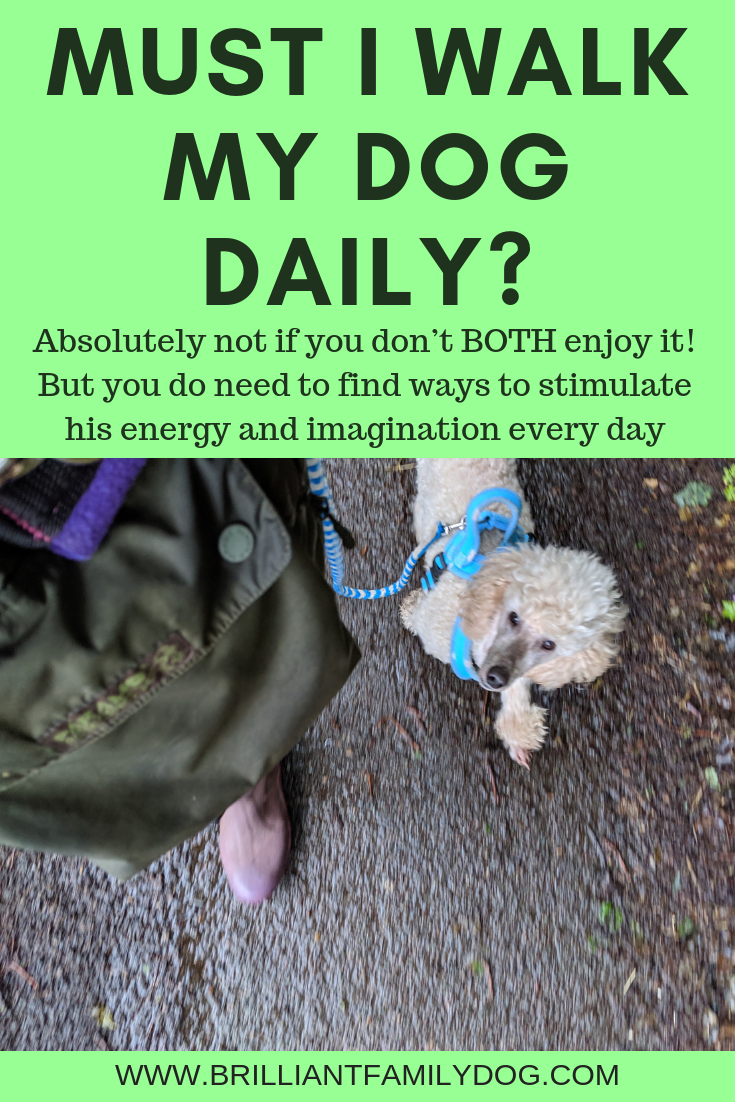
The Daily Dog Walk… Really? Do I Have To?

The Daily Dog Walk is a myth dreamt up by people who don’t understand how dogs tick | FREE EMAIL COURSE | #aggressivedog, #reactivedog, #dogtraining, #growlydog, #dogbehavior, #anxiousdog, #overfriendlydog | www.brilliantfamilydog.com

This article was first published on 4knines.com and is reprinted here with permission


You’re feeling guilty about your dog. You look at him and he gazes back with those patient brown eyes that can see right into your heart. You feel guilty because you’ve been so rushed today that you didn’t fit in a morning walk, and now it’s pouring with rain and you can’t face it. But have another look at those gorgeous brown eyes: what’s your dog trying to tell you?

He’s saying that what he wants is some time with you – some action, yes, to use up his huge store of energy – but mainly it’s time enjoying life with you that he wants.

So don’t fret over missing a walk. Here’s something for you to hang on to:

Dogs do not need to be walked every day.


“You mean I don’t have to walk him every day, whatever the weather?”

That’s right.

And for some dogs – fearful, reactive, or old and creaky – that comes as a great relief!

For help with your reactive, anxious, aggressive, “growly” dog, get our free email course here.

THIS FREE ECOURSE IS A BONUS FOR YOU WHEN YOU SIGN UP TO RECEIVE EDUCATIONAL EMAILS AND OCCASIONAL OFFERS FROM ME. YOU CAN UNSUBSCRIBE AT ANY TIME.
Privacy Policy

What’s the walk for?

Imagine you are afraid of spiders. And every day your friend insists on taking you along a spider-strewn walk, your face brushing past bushes draped with webs and wriggly beasties, seeing them scamper across the path in front of you.

Are you going to enjoy those walks?

I think not.

And if you have a dog who reacts to every dog he sees by barking ferociously and lunging towards it – shouting at it to go away – then he’s not going to enjoy that overmuch.

And your shoulders and wrists probably won’t either!

So choose times and places to walk your fearful dog when he has a chance of enjoying the outing, not having a procession of other dogs marching towards him along the road, in other words.

Your old and creaky dog can tell you when he’d like to join you for a slow amble. Pick up the lead and see what he says. If he starts a juddery dance with his stiff old legs, and comes to get the lead put on, then off you go. But if he turns his head away, or stays resolutely on his bed – leave him be. Of course he needs some exercise to stay as well as he can be, and to keep his digestive system moving. But a gentle game in the garden may fit the bill.

Your fearful dog would benefit from some sessions with a force-free trainer who can build his confidence so he doesn’t need to shout with fear at new dogs or people.

Your old dog may appreciate a joint supplement to loosen up those old bones a bit.

My dog is young and active!

Fearful and old dogs are the special cases.

But if your dog is young and active and has energy to burn, then you can exercise his body and his mind in far better ways than tramping along a hard road on a lead.

The Daily Dog Walk is a myth dreamt up by people who don’t understand how dogs tick | FREE EMAIL COURSE | #aggressivedog, #reactivedog, #dogtraining, #growlydog, #dogbehavior, #anxiousdog, #overfriendlydog | www.brilliantfamilydog.com

If you have a garden, however small, you can enjoy a fast and furious game with a ball or frisbee. Both of you will enjoy this, and both of you should be puffing by the end of it!

Your aim is for your dog to be panting with his sides heaving, his eyes sparkling. Your dog doesn’t play ball? Just start a running chase game with him – take turns at chasing and being chased.


Better yet - use his brain as well as his body.

Thinking – as we all know too well! – can be more tiring than doing. So see what rainy day fun you can have indoors.

Scent Games and Brain Games are great for this

  • Find the Lady

    using upturned beakers with a treat beneath one of them, for instance.

  • Hide and Seek

You can hide a favourite toy, one of the children, or yourself! Hiding may just involve rolling someone up in a duvet and letting your dog dig them out (protect faces from scraping claws). Or the family could scatter and hide under beds or in cupboards. This was always a favourite game with my children!

  • Practicing your superfast recall

Inject excitement into this game to get your dog’s speed up, calling him from one end of the house to the other – for a game or a treat.

  • Teach your dog to tidy up!

Show him how to put his toys back in his basket, or pick up his empty food bowl and pass it to you (for another treat to be dropped into it, of course!). He could even put it on the shelf in the cupboard, if it’s at the right height for him.

  • Have him fetch the mail,

or bring his lead when you’re going out, act as an alarm clock for the teenagers by leaping onto their beds and snuffling their sleeping faces!


These games are all so much more fun than clomping around a cold dark street!

Yes, your dog does need to go out and see and experience the world, and run free over field or beach.

He just doesn’t have to do it every day


Lots more ideas here to help with your charming but growly dog with our free email course here.

THIS FREE ECOURSE IS A BONUS FOR YOU WHEN YOU SIGN UP TO RECEIVE EDUCATIONAL EMAILS AND OCCASIONAL OFFERS FROM ME. YOU CAN UNSUBSCRIBE AT ANY TIME.
Privacy Policy


Why can’t I take my dog to the fair?

Here are some thoughts on how to enjoy an outing with your dog, just as you planned when you got your dog! | FREE EMAIL COURSE | #aggressivedog, #reactivedog, #dogtraining, #growlydog, #anxiousdog, #overfriendlydog | www.brilliantfamilydog.com

Well … maybe you can. Maybe you have a bombproof dog who loves everyone and likes nothing more than all the busyness, noise, and goings-on at your local summer fete.

Then again, maybe your dog is like most dogs, and finds traipsing round a hot and busy fairground, on a short lead, with children screaming, people laughing, smells of burgers, spilt chips in the grass you won’t let him eat, loudspeakers blaring - a complete nightmare.

You can’t put him back in the car as it’s way too hot. So your unhappy dog is stuck with this for as long as you choose to stay at the event. Hot, bothered, fed up.

Now this is where you’ll send me a photo of your dog on your last outing, quietly standing beside you. All the more surprising to you because your dog is usually wary of strangers and other dogs, and seemed to be “absolutely fine” in the midst of thousands of them.

“He’s fine!” you’ll assure me.

But it’s very likely that this change in behaviour was not down to him “being fine”, rather that he’s “shut down”. This is a coping mechanism we all employ when overwhelmed.

We become subdued, we stay quiet, make ourselves small. We hope not to be noticed, spoken to, or challenged.

It’s a form of learned helplessness.

We know that nothing we do will change the situation, so we give up. Surrender to our fate. But it doesn’t mean we’re enjoying it!

Your dog, as I so often say, is the exact same. He finds himself in a situation he can’t handle. With hundreds of people, children, dogs, in close proximity, he knows he can’t employ his usual methods of requesting space - barking, lunging, screaming, snarling - which work like a charm at removing the approaching thing from their path, or getting themselves removed by an embarrassed owner.

Watch and wait

Put some planning into place when you are visiting an exciting event with your dog, so that it goes as smoothly as you planned when you first got him! | FREE EMAIL COURSE | #aggressivedog, #reactivedog, #dogtraining, #growlydog, #anxiousdog, #overfr…

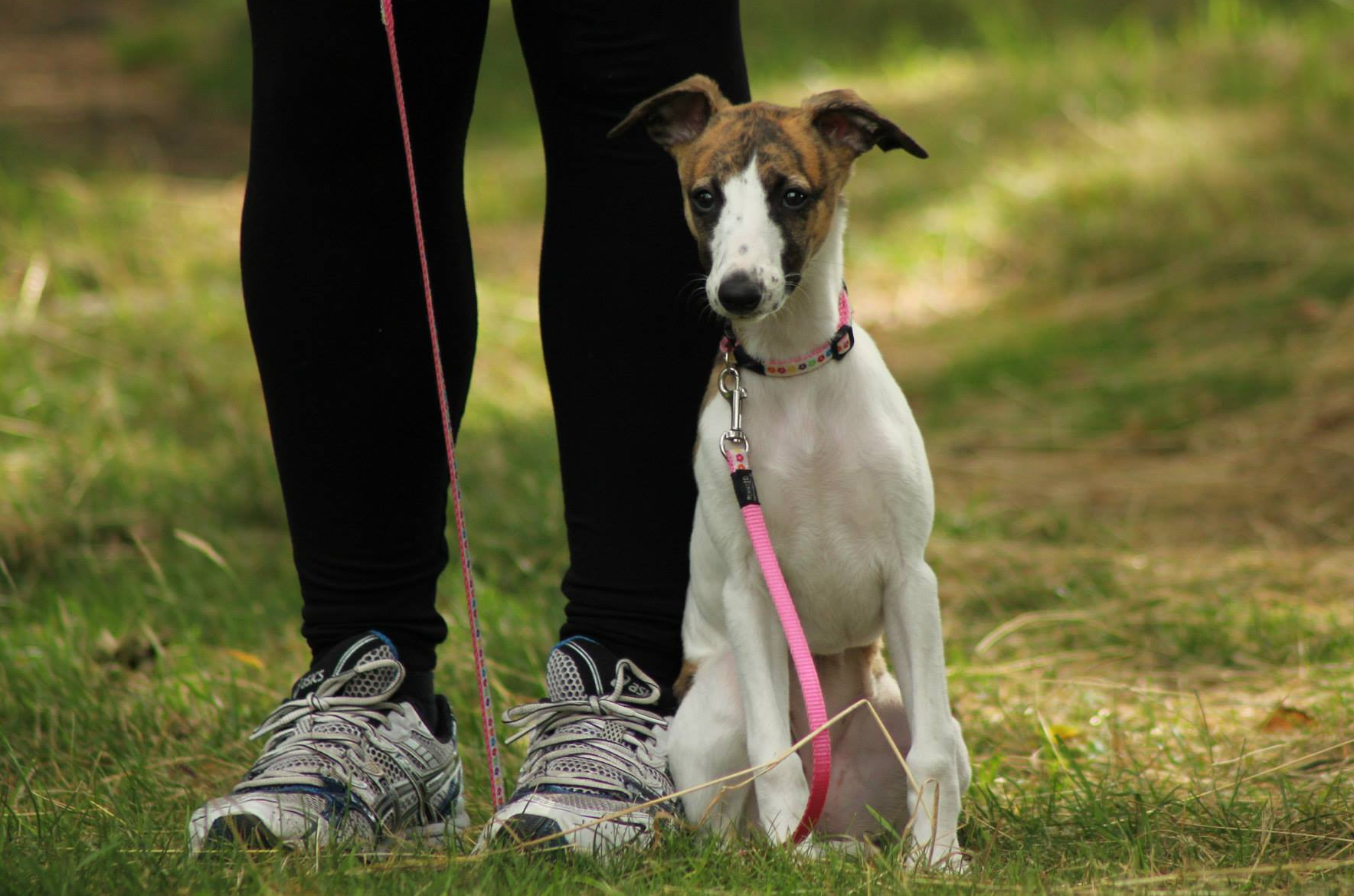
Some dogs will be much happier out of the thick of things, on the sidelines where they can safely observe what’s in front of them without having to scan the full 360° (see there’s nothing behind this puppy in the picture - she only needs to check in front of her).

He will also appreciate you watching how he is (soft mouth, soft ears and shoulders, no gasping panting, head not dropped, no twitchiness or slinking about) and removing him from the situation after maybe as little as three minutes. And yes, you can’t plonk him in the hot car or you’ll have a worse problem! Take him home.

You may be surprised that even your very friendly dog finds a busy outing a bit too much. Continually being restrained from jumping all over a thousand new friends who must want to meet him, will wear him out!

If you’re planning on visiting a big event, put your dog in training for the occasion. You can start with a walk past the local shops, sitting at the other end of a school road at school-out time, a shopping centre car park on a quiet day, a busier day, a Saturday …

Don’t plunge him into a new and strange environment, which could cause him distress, without finding out beforehand how he’s going to manage.

Then you can amend your plans accordingly. We can enjoy our family outings, but we don’t necessarily need to take our dog.

Here are some more articles which will help you understand just what’s going on with your dog when you’re out and about:

How to get calmer dogwalks

How heat can affect your dog’s coping skills

How to plan a successful day out with your dog

Need more help understanding your Growly Dog? Get this free e-course

THIS FREE ECOURSE IS A BONUS FOR YOU WHEN YOU SIGN UP TO RECEIVE EDUCATIONAL EMAILS AND OCCASIONAL OFFERS FROM ME. YOU CAN UNSUBSCRIBE AT ANY TIME.
Privacy Policy

How Lacy helps other dogs

Learning how my reactive dog thought made all the difference to how she acted. The relationship blossomed and our lives changed | FREE EMAIL COURSE | #aggressivedog, #reactivedog, #dogtraining, #growlydog | www.brilliantfamilydog.com

This article was first published on 4knines.com and is reprinted here with permission.

Even as a young puppy Lacylu scared people. They would cling to each other and cross the road when they saw her coming.

She looked like a brown bear cub. In no way was she a petite or cute pup, though she did have a very pretty face – still does.

But it was clear from very early on that she was going to struggle in an urban world, full of people, other dogs, things that go bang in the night …

As she matured Lulubelle became more, not less, difficult. She reckoned that she needed to protect the 3,000 acres around us, starting at my feet. Anyone or anything that hove into view prompted ferocious barking - and if she was able she would chase them away.

For help with your reactive, anxious, aggressive, “growly” dog, get our free email course here.

  THIS FREE ECOURSE IS A BONUS FOR YOU WHEN YOU SIGN UP TO RECEIVE EDUCATIONAL EMAILS AND OCCASIONAL OFFERS FROM ME. YOU CAN UNSUBSCRIBE AT ANY TIME.
Privacy Policy

I know just what it’s like to be a pariah. I’ve had the wrath of ignorant people rain down on me when my dog has barked and lunged toward them. If only they could understand what a gentle and loving dog she really is!

And this is where my lessons began

I’d been training dogs for competition for many years, and after lots of study, I had opened my dog training school the year before, at an age when many people are slowing down and switching off – not studying, sitting exams, learning about SEO, public indemnity insurance, and payment systems!

So Lulu arrived at a very good time for me (and, I think, for her).

I started learning about fearful dogs, anxious dogs, aggressive dogs, Growly Dogs; guardy dogs, nervous dogs, barky dogs (Lacy loves to bark); people’s fears, people’s reactions, people’s emotions.

Learning how my reactive dog thought made all the difference to how she acted. The relationship blossomed and our lives changed | FREE EMAIL COURSE | #aggressivedog, #reactivedog, #dogtraining, #growlydog | www.brilliantfamilydog.com

I was voracious – all the available methods were scrutinised and run past my personal ethos. Many were dismissed out of hand as being harsh or even cruel. Some were hard to assimilate into everyday life. Some were ineffectual. Finally I found the best of the best and focused my energies on developing my skills there, and building my own system.

  • I learnt why anxious dogs behave as they do

  • I learnt kind techniques that put a worried dog at ease – CLUE: the first step is always distance!

  • I learnt how to keep people away without causing them to panic

  • And – most important – I learnt how to help other people with their “growly” dogs

Lacy’s now able to look at a strange person or dog and move on. She logs their position carefully, just in case they should try anything … but she can pass them peacefully. (She’s never bitten anyone.)

My fluffy bear cub has come so far in a few years – and is helping others like her to gain confidence and give their owners at the other end of the lead a bit of peace. Both dog and owner learn new coping skills together.

Helping my dog get over her fears has led to a better life for so many more dogs!

Once the poor harassed owners learn that their much-loved dog is not nasty or vicious a new life opens up before them.

It certainly did for me!


Your first step towards your new life with your growly dog is in this free e-course


  THIS FREE ECOURSE IS A BONUS FOR YOU WHEN YOU SIGN UP TO RECEIVE EDUCATIONAL EMAILS AND OCCASIONAL OFFERS FROM ME. YOU CAN UNSUBSCRIBE AT ANY TIME.
Privacy Policy


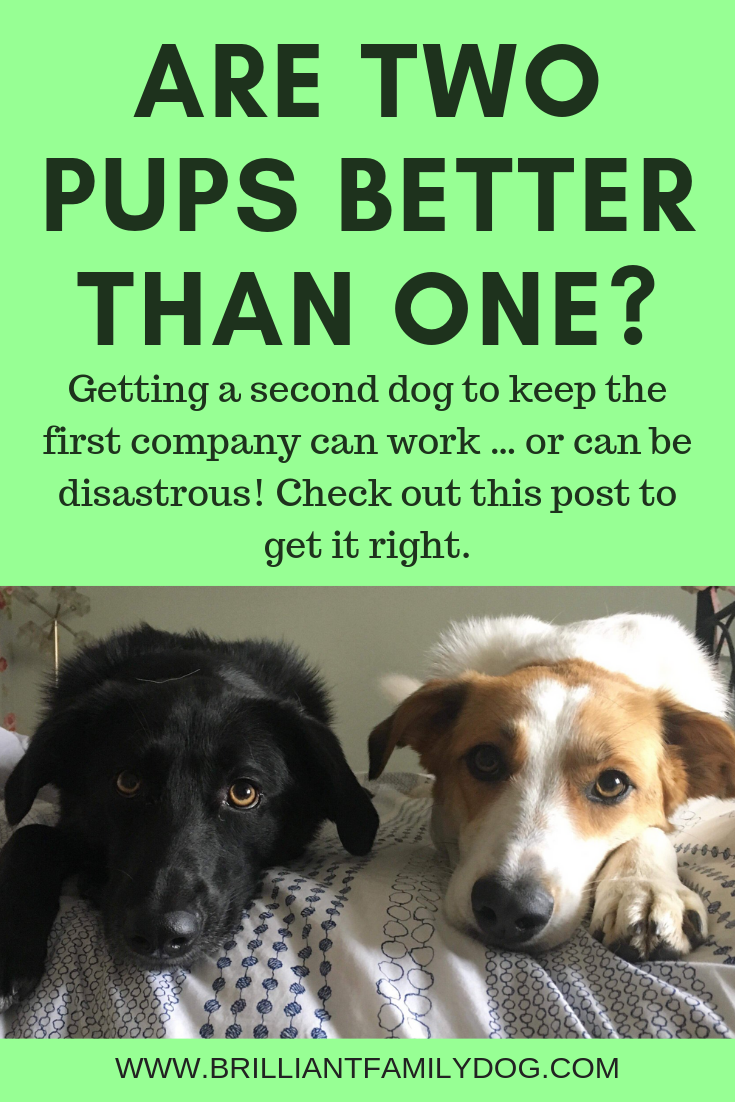
Are two puppies better than one?

Make sure your dogs get as much attention as they need while you focus on your new dog! Juggling the needs of individual dogs in a multi-dog household takes skill and thought | FREE EMAIL COURSE |  #newpuppy, #twodogs, #littermates, #reactivedog, #d…

People often come to me with problems with their two (or more) dogs.

They tell me they got two dogs usually for one of these reasons:

  • The first puppy was so cute and adorable they just had to get another.

  • They’re at work all day and feel guilty about the dog being alone.

  • They just thought it would be twice as much fun.

  • They got one for each child and mum ended up with both of them …

  • They were pressured into it by the “breeder” (this is a common puppy farm ploy) and were sorry for the puppy being left behind.

So there often wasn’t too much thought involved, and little prior research!

More commonsense tips to be found in this free 8-lesson email course to get you started with your dog

THIS FREE ECOURSE IS A BONUS FOR YOU WHEN YOU SIGN UP TO RECEIVE EDUCATIONAL EMAILS AND OCCASIONAL OFFERS FROM ME. YOU CAN UNSUBSCRIBE AT ANY TIME.
Privacy Policy

Now I’m not suggesting that you shouldn’t have two or more dogs - as long as you have the time for them. I have four, and I know lots of people with two+ very happy dogs.

 But what you need to know is that it isn’t necessarily plain sailing!


You can’t just get another dog or pup and toss it into the mix and let it sink or swim! There could be lasting bad fallout from this. Either the older dogs (who never asked for another dog in the family) are pestered mercilessly till their temper frays and they snap at the youngster. Or - possibly worse - the two dogs become such firm friends that the newer dog has no relationship with you whatsoever, and is wild.

Keep ‘em apart!

What many people don’t realise is that you have to rear the new dog largely separate from the present incumbent.

This is fairly easy with a puppy as they’re on a completely different sleep and feeding schedule from your older dog, and need to be kept to limited space for sleep and housetraining purposes. Walks should be solo so that you can keep up your relationship with your older dog and develop one with the newcomer. Yes, it requires double the work, but you end up with two dogs who enjoy each others’ company, but enjoy you most of all!

To find out exactly how to introduce a new puppy into your household of one or more dogs, read this post

Littermates

But the big trouble comes when people get two puppies at once. Or they get another puppy when the first is only a few months old.

They expect them to entertain each other, to save them the bother of doing it themselves. They let them roll and scrap all day long. They leave them more or less alone together. When the lunatics begin to take over the asylum, they don’t know who is responsible for which misdemeanour. So they either ignore the poor behaviour and let it develop and grow, or they punish both puppies just to be sure, to be sure.

They don’t know how much either pup is sleeping, how much he’s eating, and who is producing which poo (important to keep an eye on this for health reasons).

In any relationship, one tends to make the decisions and the other tends to follow. What will happen to your shyer pup if you lose the bolder one? It could take years for the remaining dog to recover from the loss.

So can I get a second dog?

Broadly speaking, yes - if you follow these guidelines:

  • Your first dog should already have reached maturity - 1 to 2 years old for most dogs. The larger the breed, the slower they are to mature.

  • You must follow a program of relationship-building between the two dogs, and each dog and you. This takes TIME! Follow the guidance in this post

  • You need to focus most of your attention on the new puppy for his critical first year. Have you enough time to go round?

  • Before you even consider adding another dog in to your home, read this series of posts on how to choose the right dog for you.

  • If you fall for your heart’s or your child’s or the puppy salesperson’s nagging and get two littermates - you really have your work cut out! Follow the guidance in the linked post. Sleep the puppies in separate crates, maybe separate rooms, feed separately, walk separately, go on socialisation outings separately, separate handlers in puppy class - or separate classes, play separately, and so on. Of course they can interact with each other, but a good rule of thumb is to allow ⅓ the amount of time for playing together as you can give each individual puppy. Yup. That means they get to play together for 20’ in the day, perhaps 5’ at a time, as long as you can give each dog 1 hour of your time. And that play must always be actively supervised!

Still want to get two puppies?? 

There is a way to make the introduction of a second dog into your home work well. Juggling the needs of individual dogs in a multi-dog household takes skill and thought | FREE EMAIL COURSE |  #newpuppy, #twodogs, #littermates, #reactivedog, #dogtrai…

Follow these guidelines and you’ll end up with two well-balanced, and possibly well-trained dogs (that depends entirely on how much time you put into training them!), who respond to you.

And for more helpful and dog-friendly advice - on what to do with the critters once you have them! - get our free 8-part email course here.


More commonsense tips to be found in this free 8-lesson email course to get you started with your dog

THIS FREE ECOURSE IS A BONUS FOR YOU WHEN YOU SIGN UP TO RECEIVE EDUCATIONAL EMAILS AND OCCASIONAL OFFERS FROM ME. YOU CAN UNSUBSCRIBE AT ANY TIME.
Privacy Policy