Double standards for dog owners?

Here’s something to puzzle over. I had the unedifying experience of someone trying to explain to me that the use of pain-giving equipment on dogs was perfectly acceptable.

“I don’t use force, I only correct,” he said blithely, going on to explain how he used choke collars, prong collars and electric shock collars (which he calls ‘remote collars’ to make them sound ok):

“I make it a positive experience for the dog,” he went on, “It’s just a way of communicating with the animal that they understand.”

😱   😱   😱   🥵


Well - where to begin?!

There’s so much wrong here that it’s hard to know where to start.

What about this question: “How can pain ever be ‘a positive experience for the dog’?”

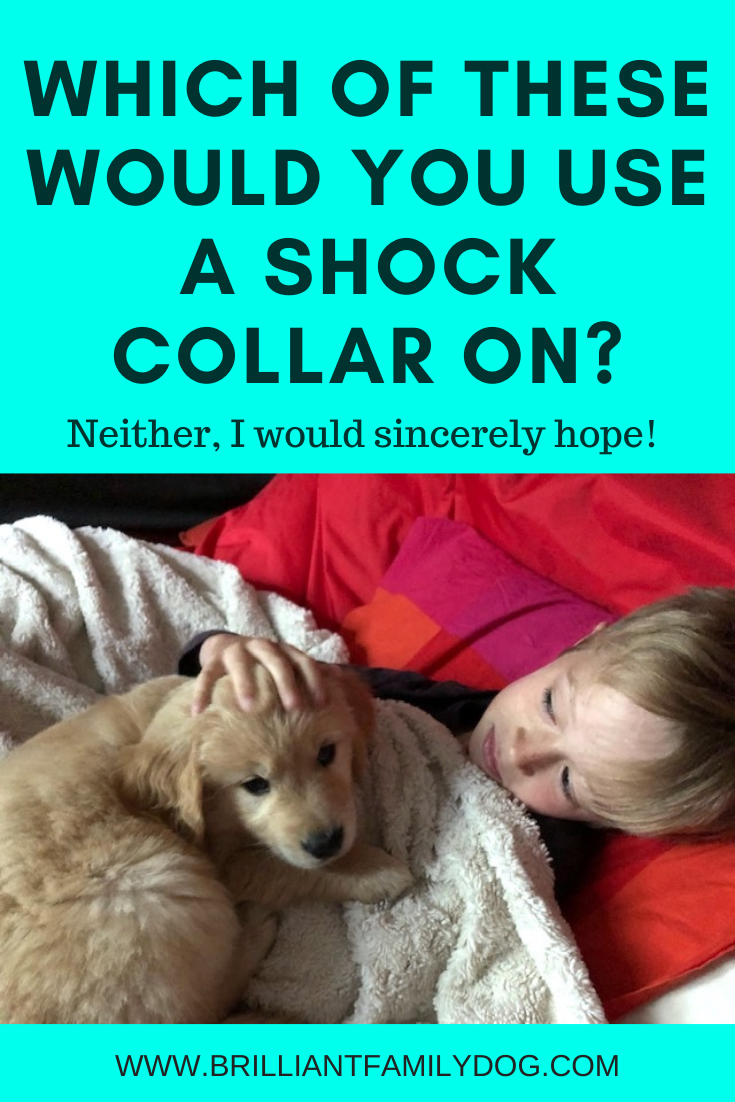
And how about this one: “Do you beat children too, and give them electric shocks?”

I did ask those questions - and they were, naturally, unanswered. I just got more flannel about how to “use correctly” these instruments of torture. And that “positive reinforcement makes dogs nervous”. 😮


My thoughts on this “way of communicating”

“It’s just a way of communicating with the animal that they understand,” he said.

Yes, I would understand if you stuck sharp metal things into my neck and exerted pressure.  

And yes, I would understand if you gave me an electric shock.

But what would I understand?

◆          I would understand that I was a victim.

◆          I would understand that apart from avoidance there was nothing I could do in the face of this barrage of pain.

◆          I would understand that you don’t like me, don’t understand me, and have no intention of learning about my feelings.


This all leads to learned helplessness, disengagement, and no learning beyond fear.

Is that how we want to live with another creature? A creature we’ve invited into our home to share our life? Is that how we treat our children, our work colleagues, our friends?

It’s true that in the very early days (long, long ago!) I tried choke chains, because that was the thing back then. But for the great majority of my life I’ve used nothing stronger than a soft collar, and usually only a properly-fitted harness.

I am happy to say that in all the many years I’ve been training dogs, I’ve never been bitten.

I’m proud of my dogs’ achievements, and even prouder of what my students have achieved. Dogs who were on the brink of being ‘rehomed’ are now loyal and much-loved companions.

“It was as if a light bulb had been turned on in my head.” - a happy client

What’s more, this way of treating the other creatures we live with spills over into better decisions at home and at work with them thar humans too!

Once you give someone - be it a child, a dog, or a spouse - a choice, you get willing engagement and active problem-solving.

And you can sleep at night.


Find out how to teach your dog without any need for punishment and nasty collars!

Here’s a FREE WORKSHOP to get you started.


Dog reactivity - what actually is it?


This post was first published on positively.com and reprinted with permission 


Got a reactive dog? A fearful, anxious, or aggressive dog? A dog who barks and lunges at everything she sees? This is just for you!

My three books on Growly Dogs - Essential Skills for your Growly but Brilliant Family Dog - are full of strategies and techniques to help you with your difficult dog, and I thought I’d give you a chapter from Book 1: Why is my dog so growly? to get you started on the road to change.


Chapter 1: Reactivity - what is it

“What do we mean by this word “reactivity”? Basically, it means that your dog is reacting to his environment, but that instead of being able to assess the situation calmly, make good judgements, and move on, he’s stuck in “See dog: bark!”

You may think your dog is weird - that one moment he’s a happy dog inside the house, and as soon as you step outside he turns into a snarly monster. Imagine you’re enjoying tea and cake at a friend’s house. You’re happy and relaxed. Then your friend takes you to see his reptile collection (Oh no!! Exactly what makes your skin crawl!). In that room full of snakes and lizards, do you feel as comfortable as you were in the tea-and-cake room? And when he opens the cage and offers you one to hold ... that’s when you may panic and need to get out of the room.

Have you ever felt anxious and jittery for some reason? Worried about an interview, perhaps, or waiting for news from the hospital. Every bang or squeak makes you jump! Imagine living in that state all the time.

And at the bottom of this is usually FEAR. The reason your dog is making such a hullabaloo at the sight of another dog (or person, bike, jogger, car, plastic bag, you-name-it) is because she’s trying to keep it away from her. Putting on an Oscar-winning display of teeth, claws, and noise usually does the trick.

The other person or dog may think, “This is a nasty dog, I’m outa here,” or you - in your embarrassment and confusion - take the dog away, or dive into someone’s driveway till the other has passed. Either way, for your dog, the barking and lunging worked! The threat is no longer there!

Sometimes this response is totally misunderstood by the owner, who says, “He drags me towards every dog because he wants to play”.

In a later chapter we’ll be looking in detail at Dog Body Language. It’s possible you are not recognising some of the things your dog is telling you! It will be much clearer when you’ve learnt his sophisticated method of communication.


“Dogs do what works” 

I will be saying this over and over again. Your dog doesn’t have a secret agenda to terrify the neighbourhood; she has no wish to fight with every dog she sees. All she wants is for the thing that’s coming at her to go away. And she’s discovered that her fear reaction of barking and prancing often works. So that’s what she’ll keep doing.

Until ... we show her another way to get the same result! Without anxiety, distress, and disarray.

Your dog is not aggressive, nasty, vicious - any of the names that passers-by may give her. She’s just afraid.

If this comes as a surprise to you, have a look at other aspects of your dog - around the house for instance. Does she jump at loud bangs? Does she bark at visitors? Is she deeply suspicious of any new object in her environment, creeping up slowly to inspect it on tippy-toes with outstretched neck? Does she get distressed when she’s left alone? Is it hard to brush her, or trim her feet?

All these can also be indicators of an anxious dog who is more likely to react to strange dogs, people, or things, when out.

And keep in mind that your dog can be afraid of anything at all. While many reactive dogs are reactive to other dogs, there are plenty who are just fine with other dogs, but terrified of traffic, or tractors, or people, or children ...


But my dog’s friendly!   

Another reason some dogs become reactive is frustration. They may really want to meet every dog or person in the world and expect a good outcome. This may work when they’re off-lead and able to get away (more about that later on), but it may also come apart quite quickly when the other dog doesn’t welcome the intrusion, or is much bigger and bolder than your dog first thought.

Off-lead this can result in a panic response where your dog snaps and barks before running away. There is scope for this to go badly wrong, if the other dog joins in the fray. On-lead the frustration grows very quickly, as the dog does not have the freedom to do what he wants, and little impulse control to deal with these feelings. So he barks and lunges towards the other dog.

The symptoms are the same as for the fear-barker - though the underlying cause is slightly different. This dog’s actions are often misunderstood by his owner, who fears they have an aggressive dog.

The frustrated dog may have poor social skills, racing up to a strange dog and hurling himself in their face, or on top of them. Imagine someone doing that to you in the street: you’d have a thing or two to say, I’m sure!

He may be stuck in puppyhood, thinking that racing up to every dog is ok. This dog needs to learn manners, just as our children do. We wouldn’t accept behaviour from a teenager or adult that we’d accept from a three-year-old child. It would be most inappropriate. And yet many owners think it’s ok that their dog should jump up at every dog they see, just because they think he’s friendly.


Jekyll on-lead, hyde off-lead? 

I find a lot of people saying to me that their dog is only reactive on-lead, and that off-lead “he’s fine!”

I can only say that I’ve never seen a dog-reactive dog who is “fine” off-lead. 

A little study of dog body language will reveal a lot of signs of discomfort in this dog. The only advantage of being off-lead is that the dog can get away before things get out of hand. And because this is not possible when he’s on-lead, we get the “fight or flight” result: b-a-r-k-i-n-g.”

It’s hard to do this alone - but you don’t have to! You can choose to work directly with me and my team of highly-qualified trainers. Start with the free Masterclass for Growly Dogs here


To read more of this book, go to www.brilliantfamilydog.com/growly-books where you’ll find all three books, available on Amazon in ebook and paperback - and a box-set of all of them at once!


Are you expecting too much of your dog?


I often hear from people who say,


“My dog nearly pulls me over on walks - he just won’t walk nicely”

  Or

“My puppy is 5 months old and STILL won’t pee outside! There’s mess all over the house.”

Or this one:

  “As soon as I let my dog off the lead he runs off. What can I do?”


Can you see a common thread to these cries for help?

You got it!

They’re all expecting the dog somehow - miraculously - to know what they expect of it. Wouldn’t that appear to be a teeny-tiny bit unreasonable?

We invite an animal of another species into our home, and expect it to know all the rules - automatically.

Why, we wouldn’t even expect a human guest to know that! To know which chair to sit in, how you behave at mealtimes, what subjects are taboo.

But somehow, our poor dog is expected to .. just know.

How to progress?

So how do we deal with those queries above?


Walking nicely on the lead

“My dog nearly pulls me over on walks - he just won’t walk nicely”

A thorough grounding in showing that you represent all good things, followed by a detailed program on how to walk nicely on lead is what’s wanted here. It’s not something that comes naturally to an eager young dog. And if the pulling is tolerated in a puppy (it often is), as the puppy becomes a full-grown dog, walks become a battleground, and the pulling has become a habit.

All habits can be broken - and this one is pretty easy to rectify, once you know how! You can start with our free Workshop on getting your Dog to LISTEN


Housetraining your puppy

“My puppy is 5 months old and STILL won’t pee outside! There’s mess all over the house.”

Now here is another confused dog. Think for a moment - how much work do you have to put into potty-training a child? Does it come overnight? Does the child know what to do? Does he just learn all by himself? Of course not! It requires patience and clarity.

So it is with your puppy. Puppies have a natural desire to keep the nest clean. And with a good breeder who has the right set-up you can see this happening from the age of about 3 weeks.

This is yet another reason to source your new companion carefully. There are FAR too many “greeders” who are just churning out puppies in their puppy farm or puppy mill with the least amount of care required just to keep them alive till they’ve got the money in their fat little hands.

So you need to have a reliable housetraining program from a good source. And hey! Isn’t it just amazing that you’re in the right place for just this! Here it is.

No more puddles! No more squabbles. No more frustration, for either of you.


My dog won’t come when called

And as for this one:

“As soon as I let my dog off the lead he runs off. What can I do?”

There’s a very quick and smart answer to that!

Don’t let your dog off lead till you’ve taught a stunning recall!

It’s obvious when you look at it coldly. How should the dog know that giving him his freedom means he has to pay attention to you unless you’ve already taught him?

Before you’re letting your dog run wild, he should already think the sun shines from your face, and want to be near you as much as possible. This doesn’t happen overnight - any more than for the other questions here. It’s a relationship you nurture slowly and carefully from the first day your new dog or puppy arrives with you.

It’s what it’s all about!

That companion you want, who will keep you company, be trustworthy and reliable, and be a credit to you: that takes time - and work! - to develop.

Here’s your shortcut to a stunning recall!


Where can I start with my new dog?

And for all these things, and a whole lot more you had no idea you could teach your dog, here’s a great place to start


How much does a dog's breed predict his behaviour?


I’m always saying that “There is more difference between individual dogs than between breeds.”  

Defining a person by his ancestry is called racism. And in defining a dog by the set of his ears or tail, the length of his legs, coat-colour, or any of the other cosmetic changes developed in the last couple of hundred years since breeds became a thing - you are being, shall we say, “breedist” ;-)

This saying has long been known amongst those who study dog behaviour. Especially those who work with dogs, and whose eyes and mind are open.

(Sadly there are a lot of so-called dog experts who’ve never studied anything in their lives. Their minds are made up and they do not wish to be confused by the facts.)

And it’s good to see a paper released recently which confirms what the more discerning amongst us already knew.

The researchers studied 18,000 dogs, with DNA sequencing for 2,000 of them. They included purebred dogs, mixed-breed dogs, purpose-bred working dogs, and village dogs, to give a full picture.

And their main conclusion was this:

“Behavioral traits are subtly differentiated in modern breeds. Furthermore, breed offers only modest value for predicting the behavior of individual dogs. For more heritable and more breed-differentiated traits, like biddability, knowing breed ancestry can make behavioral predictions somewhat more accurate in purebred dogs. For less heritable, less breed-differentiated traits, like agonistic threshold, which measures how easily a dog is provoked by frightening, uncomfortable, or annoying stimuli, breed is almost uninformative.”


In other words …

Breed or type is not a predictor of behaviour in an individual.

They go on to say:

“Among behavioral traits, biddability—how well dogs respond to human direction—was the most heritable by breed but varied significantly among individual dogs. Thus, dog breed is generally a poor predictor of individual behavior and should not be used to inform decisions relating to selection of a pet dog.”

There you have it! Like people, dogs are individuals, and ancestry has little impact on how they will behave.

Your Retriever may be gun-shy. Your Whippet may be lazy. Your Border Collie may be dumb. Your guard breed dog may be so afraid of his own shadow that he couldn’t guard a thing.


The trouble is …

We think we know it all! We look at our dog when he does something we may not like, and say, “Typical terrier,” or “Just like a poodle!” or “Labradors are all the same.”

But the fact is, we are seeing what we expect to see. It’s called Confirmation Bias - that you see confirmation of your beliefs wherever you look, with no sound basis in fact!

For instance, if you think red cars have suddenly become all the rage, you’ll see them everywhere. “There!” you say, “Red cars are really popular right now.”

As the paper puts it:

“In purebred dogs, cultural breed stereotypes affect the perception of a dog’s behavior and thus may alter a dog’s environment.”

If you expect red cars to show up, you’ll see them - you may even go to places where there are likely to be more of them (Ferrari showroom, anyone?).

And if you expect your Dachshund to bark, then you will get used to his barking, assume that it’s part of his make-up, and accommodate his expected behaviour, not realising that he’s actually barking because he’s afraid, and you can help him!

Worse still, if you think that your Beagle will run off - because “Beagles do” - you won’t actually bother to train a solid recall from the start. You’ll confirm your perception of the dog’s behaviour being a result of his breed, by allowing him to run off!


Are you blaming your dog’s ancestry for what you haven’t taught him?

If you think that there’s a smidgin of truth in this, I recommend you have a look at the paper, then you can play around with their behaviour predictor and see just how accurate your perception of your dog’s behaviour is!

As Dr Elinor Karlsson of the University of Massachusetts, one of the authors, says:

“Owners should pay much less attention to all the stories about what their dog’s breed ancestry says about their behaviour and personality, and pay attention to the dog sitting in front of them.”

… which brings me to another of my favourite sayings:

Always work with the dog in front of you, rather than the dog you wish you had.


And for a totally individualised program of how to get your dog to listen - and yes, that includes Beagles! - watch our free Workshop here.


How long should my puppy walk?


This is a GREAT question! And there are lots of things for you to consider.  

Here’s some generally-accepted wisdom, but the devil is in the detail! Take these guidelines with a b-i-i-i-i-g pinch of salt.

A general guide for exercising puppies is to allow them one to two sessions of five minutes walking for each month of age, so for example, a four month old pup could enjoy walks of 20 minutes at a time, once or twice a day. Blue Cross

The UK Kennel Club actually gives suggested walk duration for adults of all the different dog breeds here: https://www.thekennelclub.org.uk/search/breeds-a-to-z/, though I would certainly argue with some of their recommendations!

What kind of puppy do you have?

There are large breed puppies, toy puppies, highly active puppies, working breeds you plan to work, and working breeds you don’t want to work.

All puppies need care taken of their joints. And this is essential for the large, slow-maturing, breeds. The growth plates don’t close in the joints till maturity, and this can be as late as 2 years old for larger dogs.

And of course your tiny Chihuahua doesn’t want the legs run off him.

All puppies should be lifted in and out of the car to start with, and larger breed puppies will need a step to climb in and out of the car safely when they’re too big for you to lift.


Lead walking vs free running

There is a huge difference between tramping the streets on a lead, and free running and playing on a suitable surface.

I would limit hard-surface walks for your puppy - pavement, road, hard-baked and frozen ground - to as little as possible. Keep him on soft, grassy, surfaces, and avoid slippery surfaces like the plague.

You also have to consider your puppy’s type - coat, length of muzzle, paw-shape - and check the weather, especially when it’s hot.

Whether it’s a roadwalk or free play, all the time your puppy is learning, so all the time you need to be teaching!

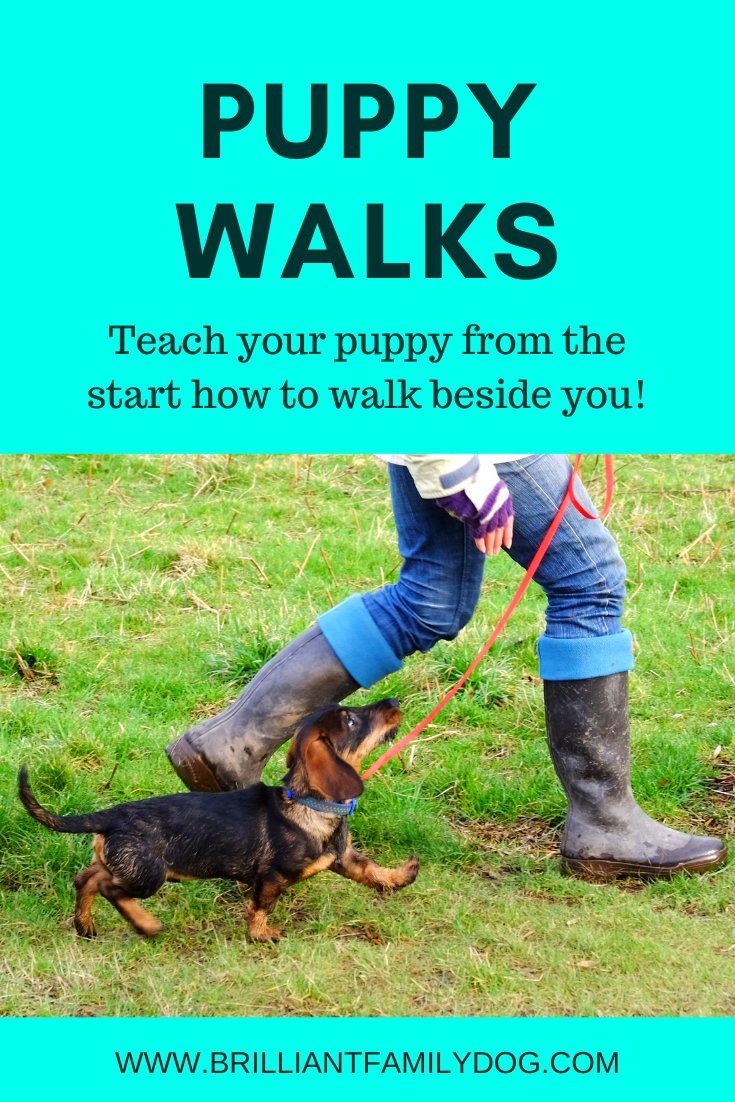
Don’t expect your puppy to KNOW how to walk on lead! We have to teach him. Walking nicely beside you on lead does not come installed. It’s an add-on. 

Start as you mean to go on, with non-aversive equipment, like a harness and medium-length lead rather than a collar - and never use an extendable lead, which just teaches your dog to pull, leaving you with more work to do later when your little scrap is a hefty beast able to haul you along and pull you over!

Follow a good, kind, loose lead walking program and teach your puppy in the house before expecting him to have any understanding when he’s in the thick of it - sights, sounds, and smells bombarding him on all sides.


Exploring and socialisation for your puppy

Right now what he needs is mental stimulation, and free exercise: playing with you in the garden, running, jumping, rolling over … Any roadwalks are purely for exploration, not route-marches!

Take care if you have older dogs though. Most older dogs are kind and will adapt their play to a young puppy. But if you’re out and about and there are dogs racing around, don’t let your puppy join in! There’s a high chance of him overdoing it, or annoying the older dogs.

Playing with a similar size, age, breed or type, of puppy can be very helpful. Puppy-puppy play is another of those areas where you need some knowledge before jumping in, so be sure you’re getting tuition from a qualified professional force-free trainer on this tricky subject. There can be serious fallout from unregulated puppy play.


Who is the walk for?

And always keep in mind who this walk is for! You may have got a dog because you want to keep fit and get out and about, but you’ll have to wait for your puppy to develop before you can start tramping over moor and mountain.

For a puppy, walks are for exploring and socialising - discovering the world and all that’s in it in a way that doesn’t make him afraid. Always allow him to check things out at a distance, rather than dragging him over to meet people or other dogs.


Consistency is key

It’s better to have regular small amounts of exercise to develop the strength in those bones and muscles, rather than a huge long tramp at the weekend and very little the rest of the time.

If you are planning on employing a dog walker - be sure that they are professionally qualified and know what’s right for a puppy. Quiz them thoroughly. Damage done now can result in costly pain and vet bills later on.

Remember that swimming, paddling, and climbing stairs or logs, managing new surfaces (large gravel, pea gravel, mud, forest floor) - all coming under the general heading of Puppy Gym - and learning simple tricks, are also exercise!


Do I really have to wait?

Yes. You do. This time of limited and carefully-guided exercise will pass soon enough, as you and your puppy learn new skills together to fit you for your long life ahead.

And you’ll be rewarded with a more contented, healthier dog for the rest of his days.


Want more help for your new puppy? We’d love to show you more!

Watch our free Workshop on Getting your Dog to LISTEN, here


What are the most effective dog treats?


We receive thousands of marketing messages every day. We’re exhorted to buy foods which have “value added”, i.e. processed, ready-to-eat, convenience foods.

We KNOW (really! We all know!) that fresh foods are w-a-a-a-a-y cheaper to purchase, and are w-a-a-a-a-y healthier - without all those preservatives, additives, treatments. But they need a bit of work to turn into meals.

So it’ll be no surprise to the discerning reader that the same thing happens with dog foods. We’re bombarded with marketing messages and glossy images of glossy dogs bouncing all over the place. I talk about how to choose an appropriate diet for your dog here and here.

But the same marketing bombardment happens with dog treats.

Not only do you have to be equally discerning about what you put inside your dog in terms of nutrition, but there are other considerations.

Unless you’re just dishing out treats for no reason, you need to choose your dog treats carefully!


Training treats

And nowhere is this more important than the treats you choose to use in training your dog.

There are various factors you have to consider. And I outline most of them for you in my books. But for those of you who are yet to discover the joy of these books (seriously - people LOVE them! Just look at the hundreds of reviews on Amazon), here is an excerpt for you from Essential Skills for your Growly but Brilliant Family Dog: Books 1-3: Understanding your fearful, reactive, or aggressive dog, and strategies and techniques to make change

Chapter 2

Rewards - what, how, when?

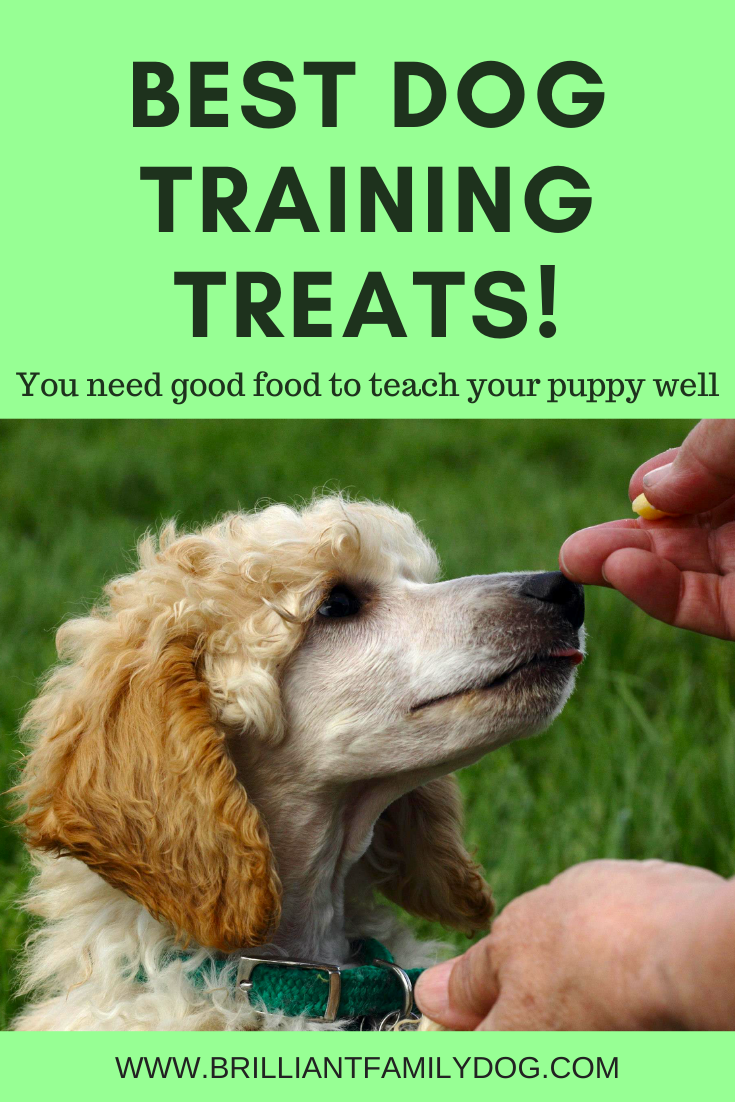
Rewarding your dog with something he really likes is essential to this easy method of training. This may be with a game of chase, tugging with a toy, racing after a ball, being given his dinner bowl, a cuddle, or a tasty treat. It’s up to you to find out just what your dog likes (as opposed to what you think he likes) and reward him appropriately when he makes a good choice.

Treats are not a moral issue. They are a means to an end. The end is your dog responding to you and working with you. If employing a few bits of cheese means that my walks are enjoyable and my dog is calm and happy, then that seems a good deal to me. I only give my dogs a treat when they’ve done something I like: I aim to get through a lot of treats every day!

The treats need to be very tasty - your dog has got to really want them! And you don’t want her chewing and chomping on a biscuit for so long that she forgets what she earned it for. So the treat needs to slip down quickly and make your dog think, “Wow! How can I get some more of that?” Your dog needs to know what you like and what does not work with you.

So every time she does something you like, you can mark it by saying, “YES!” and giving her a treat. There is no need for your dog to sit in order to receive a treat. Some dogs think that sitting and begging is the only way to earn a treat, so they sit and beg and annoy at every opportunity. If you are crystal clear about what your dog is doing that is earning the reward (by saying YES), then he will know what actions to repeat, and what doesn’t pay. The sitting, begging dog has no idea what causes these random treats to appear.

When you mark an action, you want to mark as the dog is doing it. If you are marking a Sit, for instance, you need to say Yes as the bum is going to the floor. If you wait till your dog has already sat, she’s now gazing out of the window and thinking of something else. That’s not what you want to mark! As the sheepdog trainer John Holmes told us, you need to catch your dog with his mind down the rabbit-hole, not wait till he is down the rabbit-hole, when it’s too late. You want to catch your dog thinking about sitting.


Good treats

  • Cheese

  • Sausage

  • Ham

  • Chicken

  • Frankfurter

  • Salami

  • Homemade sardine, tuna, or ham cookies

  • Freeze-dried 100% meat treats

  • Dried sprats

  • Dehydrated liver, heart, lung, etc

.. real food in other words. Ideally, they slip down quickly so your dog wants more. Cut them into small, pea-size treats.

OK treats                    

  • High-quality grain-free commercial treats

Fairly rubbish treats

  • Your dog’s usual kibble - She gets it anyway. Why should she have to work for it?

  • Cat biscuits

  • Dog biscuits

  • Stuff of unrecognisable composition sold as pet treats

  • Anything you wouldn’t put in your own mouth

Do you work more enthusiastically for £60 an hour or for 50p an hour? Quite so. Your dog is the same. Be sure the treats you’re offering are worth working for!


So you can see it’s not just the quantity of treats you dish out (huge number when you’re working on something new or working against fear), but the quality is critical!

And before you suggest this may work out more expensive - think again! Look at the pack of commercial treats you are thinking of buying, and look at the weight vs the price. There is no contest with fresh foods!

So not only will you be making your training more effective - for which your fearful dog will profoundly thank you - but you’re making a tiny dent in your wallet!

Choose wisely.

And to get started with helping your Growly - reactive, anxious, fearful - dog, watch our free Masterclass here. Lots of lessons to get you started on a new path!


By the way, for English readers, here’s a load of money off a super food I regularly use and here’s another where you can get a big discount using this link - they provide high-quality fishy treats and foods, which are firm favourites with my crew!