When you change, your dog will change too

Reactive dog, aggressive dog, fearful dog, dog behavior | It’s not the dog that has to change! Change your own mindset and change your dog!  | FREE EMAIL COURSE | #aggressivedog, #reactivedog, #dogtraining, #growlydog | www.brilliantfamilydog.com

I wrote recently about how a small change in your own mindset can trigger a dramatic change in your dog’s behaviour - without any “dog training” at all!

And I wanted to revisit this as it’s such an important - and little understood - part of the puzzle.

While we say “My dog is this, my dog does that,” it’s all about the dog. The dog is perceived as the problem. But the fact is that it’s the perception that is wrong!

Once people change their way of thinking and talking about their dog, they get massive change without having to do a thing.

Not only dogs …

As a child I was curious, questioning, always challenging what I was served up as gospel truth. So naturally, teachers didn’t like this and saw me as a threat (yes, even aged three …). So I was labelled “difficult”. I was the naughty child. 

This “knowledge” about me was passed on in reports and staff meetings, so that all new teachers were instantly brought up to speed with this troublemaker, instead of forming their own opinions from facts. The other children began to look to me for a response in new situations: I had a reputation to live up to! 

So my entire school life was coloured by a few instances in kindergarten and junior school - perpetuated despite the fact that I grew and changed. I came to believe these opinions myself. And then had to work through adulthood to shed this nonsense and develop my true self. (I can tell you that making prize-winning drawings and writing bestselling books was definitely not something those teachers foresaw for me!)

Back to dogs again

We have a much shorter time with our dogs - they simply don’t live long enough for us to spend years labelling them and predicting their poor behaviour based on our wrong assumptions.

And these wrong assumptions can creep into every corner of our lives with our dogs. 

Whenever you say “She always does this,” or “She never does that,” you are placing a permanent label on your dog. You are fixing in your mind that she cannot change, that she’s hardwired to behave in a certain way. 

Back to children - there’s a big difference between “You are an untidy child,” and “Your room is in a mess.” Or “You are a bad boy,” and “Was that a good thing to do?”

Focussing on the doing rather than the doer takes blame and finger-pointing out of the picture, leaving the way clear to solutions and change.

And while we look at the behavior rather than the perpetrator, we see that nothing could be further from the truth than the belief that your dog is hardwired to behave in a set fashion. It doesn’t matter how long your dog has been doing a certain thing - you can change it! 

  • She’s afraid of things? You can make her environment less scary while you countercondition her to better responses.

  • She’s boisterous and impulsive? You can teach impulse control and show her that she can get what she wants when she does what you want. There’s no need for confrontation, ordering about, “commanding”, having a battle over anything.

  • She annoys you by barking noisily, chewing the furniture, messing up the house? Manage! Train! Once you realise that these things are just what the dog IS DOING, and not what the dog IS, you can change it all.

Reactive dog, aggressive dog, fearful dog, dog behavior | It’s not the dog that has to change! Change your own mindset and change your dog!  | FREE EMAIL COURSE | #aggressivedog, #reactivedog, #dogtraining, #growlydog | www.brilliantfamilydog.com

The secret of change is to focus all of your energy
Not on fighting the old
But on building the new


“Socrates” by Dan Millman


I learn a lot from my students, as well as from my dogs!

I’m delighted to watch my online students develop. The penny drops! They see where they have gone wrong in the past, not helped their dog. Sometimes they have unwittingly followed bad advice from the multitude of awful “trainers” and tv personalities out there, and actually made things worse.

But today is a new day! 

Tear off a new sheet!

Start from where you are and head forward!

It’s a joy seeing things improve for them without their needing extra gadgets, lockdown, extreme control.

They see that opposition is just as unhelpful in their relationship with their dog as it is in their relationship with a friend or spouse. Embracing their friend’s likes and dislikes is part of the friendship. Empathy for their fears and foibles is essential to a strong bond.

And a new life opens up for them with their dog, whom they can now view with different eyes. 


Check out this email course that will get you started on the change!

THIS E-COURSE IS A BONUS FOR YOU WHEN YOU SIGN UP TO RECEIVE EDUCATIONAL EMAILS AND OCCASIONAL OFFERS FROM ME. YOU CAN UNSUBSCRIBE AT ANY TIME.
Privacy Policy

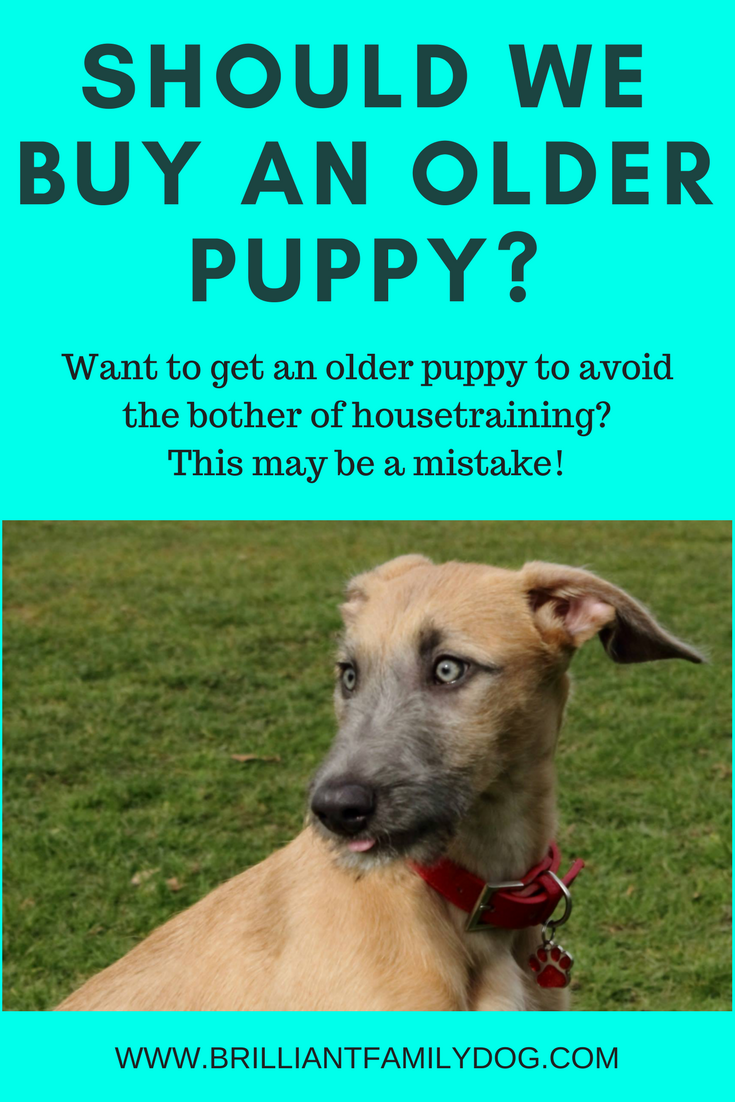


Should I get an older puppy?

Dog training, new puppy, puppy training | Should you get an older puppy? You may think you’re avoiding problems, but you may be making more for yourself!  | FREE GUIDE | #newpuppy, #housetraining,  #puppytraining, #dogbehavior | www.brilliantfamilyd…

“We don’t want to be bothered with housetraining, so we’ll get an older puppy,” she said, talking about getting her first dog.

“Oh, please don’t!” was my reply.

Housetraining is very simple if you know what you’re doing. 

So don’t let fears about that put you off. Your house won’t be ruined, there won’t be poo everywhere. 

If you follow this Guide to Errorless Housetraining closely your 8-week-old puppy will be clean and dry by 10-15 weeks of age at the latest. Just a few weeks in a lifetime with your dog. It’s a very short time and you’ll be building a bond with your puppy as you go (because there’s no crossness or telling-off in this method). 

Get your free guide to Errorless Housetraining and have it all done in a week or two!

This guide is a bonus for you when you choose to receive educational emails and occasional offers from me. You can unsubscribe at any time.


You should know three things

1. Poor-quality breeders (or greeders, as I prefer to call them) will have puppies left over long after they should have gone to their new home. 8 weeks is the correct age for that. So these pups - who could be any age, really - have been kept in a bare shed with a gang of other pups for months on end. They have had no socialisation (and no housetraining either!) and they may find it very difficult to adjust to a normal family life. Unwitting buyers may be told the pup is months younger than he actually is. Read up on how to recognise a puppy farm/puppy mill and don’t get caught by these chancers. Do you really want to take on this unsocialised, mentally neglected, pup?

2. Some competitive breeders produce litter after litter in their big operation, and pick pups to “run on” to see if they’ll shape up as potential prizewinners. Once these pups have got to six months or so they decide which one to keep and sell the rest - usually to ill-prepared purchasers who responded to an advert for a “puppy”. These dogs may have lived only with one breed of dog, kennelled in a big run of kennels. Some of the worst cases of fear or aggression I have to work with have come this route. Do you really want to take on a ticking time bomb?

3. Adolescence (5-14 months roughly) is the commonest age for dogs to be dumped in rescue shelters. (Don’t worry, I know that some dogs end up in shelters through absolutely no behavioural fault of their own.) So you have to be prepared that your chosen dog may need a lot of work to repair. People got a fluffy puppy. They may have housetrained it, who knows? They certainly didn’t do anything else they should, because now they’re abandoning their pet because … he’s unruly, he’s too strong on the lead, he runs off, he barks at other dogs, whatever. This is all because of their neglect in rearing and training their puppy properly. While giving a home to an abandoned dog is a laudable and kind thing to do, you owe it to your family to get the most suitable pet possible. Is this mixed-up, neglected, confused dog really right for your home?

Tell me, (apart from exceptional cases where perhaps the caring owner died) where will you get a puppy who has been carefully and sensitively housetrained, is now six months old, lovingly trained and socialised - and yet someone wants to get rid of him?

I know some of you will write to tell me just that. And you struck lucky! I’m delighted to hear your happy story.

Dog training, new puppy, puppy training | Should you get an older puppy? You may think you’re avoiding problems, but you may be making more for yourself!  | FREE GUIDE | #newpuppy, #housetraining,  #puppytraining, #dogbehavior | www.brilliantfamilyd…

Possibly there was a genuine reason for the owner parting with the dog, or possibly you found a breeder who genuinely loves dogs (I know that sounds crazy) and who did all the work necessary to produce a sound and confident young dog.

Housetraining is a brief interlude, quickly done, soon passed. If you choose to skip it and get an older puppy there is a possibility you could be dealing with its other problems long after the housetraining period is over.

Watch our free Workshop to get your dog to listen, and find out just how much of the learning is for you!

Once you change what you’re doing, your dog will automatically change. Exciting!

Your puppy’s first day home!

Puppy, New puppy, Puppy training, Bringing puppy home | 12 ways to make your puppy homecoming work like a dream! | FREE PUPPY GUIDES | #newpuppy, #dogtraining, #puppytraining | www.brilliantfamilydog.com

“How do I ensure the most successful first day home? I want Finn to feel like this is home but I also want to start off on the right foot, from the moment we pick him up and the long drive home.” Maria

What an excellent question, Maria! You have obviously planned your puppy carefully, and thinking about that exciting first day you have reflected on the importance of getting it right. You’re setting the stage for your new puppy’s life.

For those just starting on this journey, first read my series on How to Choose a Puppy here

Getting things ready at home

1. The most important thing is to make a comfy den for your puppy. Somewhere he can feel at home, somewhere he is fed all his bowl-meals (you’ll be mainly feeding him by hand!), somewhere he is safe and may not be pestered by children, visitors, or other household pets. He needs to be in a quiet place to be able to switch off and sleep properly.

I favour a robust wire crate. It need only be big enough for the size your puppy will be as an adult - big enough for him to stand up, turn round and lie down again, as lying down is mostly what he’ll be doing in there. You can half cover it with a cloth or put it in a cupboard space under the kitchen worktop to make it cosy. And you can use either a custom divider or a big cardboard box to make the space just big enough for your puppy. 

All naps will be taken in this crate, and he can sleep in it at night, in your bedroom. Now you have somewhere where you know your pup is safe and can’t be chewing the telephone wire, peeing on the carpet, or demolishing your furniture. He may protest to start with, but as long as you know he has had his needs met, regard the crate as soundproof - both ways!  He’ll quickly learn that being in the crate means rest and sleep. 

2. For travel you’ll need either the same crate if it’s small enough to move easily, or a custom car crate. Again choose a wire crate - I don’t use a soft crate till I know the dog is content in a crate and won’t chew or attack it. I’m not convinced about the safety of car harnesses and always travel mine in well-built crates with escape hatches on the inside. 

For the journey home you may want to shroud the bottom half of the crate with plastic sheeting on the outside (that pup can't reach) so that any vomit stays inside! Or one of those airline crates that split in half would be excellent for this.

On the day!

Puppy, New puppy, Puppy training, Bringing puppy home | 12 ways to make your puppy homecoming work like a dream! | FREE PUPPY GUIDES | #newpuppy, #dogtraining, #puppytraining | www.brilliantfamilydog.com

3. Take your puppy’s new collar and id tag with you and put it on him before you leave his old home. Better to be sure, in case of accident or drama on the journey home. And puppies are much wrigglier than you may remember - always slip a finger or thumb through his collar when you’re carrying him.

Your pup’s breeder should give you - along with any paperwork - his worming schedule, a blanket that’s been with his mother, a week’s supply of the food he’s been on, a diet sheet - maybe a toy or a bowl. Breeders who care will also give you photos and info about the parents, perhaps some pictures of your puppy when tiny, and the benefit of their experience of puppies of this breed or type. They should also tell you what the pup is used to toiletting on - grass, concrete, gravel …

4. For the journey home, park your puppy in his secure crate with lots of washable bedding or screwed-up paper to make it cosy. Ignore wails and cries, throwing up and peeing in the crate. You need to focus on the road and not get anxious yourself. The journey cannot be avoided so get it over with fast! Gentle music on the radio may help, and covering the crate so he can’t see out of the vehicle will also probably help. Placing the crate in the body of the car, not the back end, will minimise swinging and lurching and maybe prevent carsickness. 

Arriving home

5. If you have eager children at home waiting to greet the puppy, ensure they keep cool and don’t overwhelm this poor scrap. He’ll be exhausted after his journey, and is being constantly bombarded with strange sights and smells and people. 

6. If he’s in a mess from the journey just wipe him over - don’t bathe him now. He needs to keep his own scent and a bath would be too stressful. 

Puppy, New puppy, Puppy training, Bringing puppy home | 12 ways to make your puppy homecoming work like a dream! | FREE PUPPY GUIDES | #newpuppy, #dogtraining, #puppytraining | www.brilliantfamilydog.com

7. You can take him out on a lead to the garden to see if he needs to relieve himself. Don’t worry if he doesn’t. If he’s scared bring him right back in again. Get my Errorless Housetraining Cheatsheet and get it right from the start.

8. Introduce him to his new den, and put his mother’s blanket in there along with some chewables. Feed him a light meal in the crate, try the garden again, and have some gentle play with him before he crashes for the night. Puppies need an astonishing amount of sleep, and a young puppy should only be awake for an hour or so at a time. 

Feeding

9. Stick to the food he’s already on for a week or so, then start to change to a better food. You can research those in advance. Breeders often get free packs of food from canny manufacturers, so you’ll want to improve on that. Here’s a good site which gives you the lowdown on dog food ingredients. It’s geared for the UK market but is very educational and would be well worth a visit wherever you live. 

For a free no-obligation trial of some excellent home-cooked food (UK readers) go to www.butternutbox.com/brilliantfamilydog They provide instructions for how to change your puppy on to a new feed.

The first week

10. By all means have some visitors to admire your new puppy, but be sensible! Give him a day or two without visitors. Then ensure your puppy wants to go forward to greet them. If he hangs back or hides, on no account force people on to him. As you’ve planned so carefully in choosing your pup, he’s likely to have been well-socialised in the litter.

You’ll probably be visiting the vet for a check-over and some jabs. Make this visit as gentle and calm as possible - don’t pass him round the waiting room of ooh-ing and aah-ing people! 

And while he can’t yet go out for “walks” you should certainly take him out and about with you on your errands. He gets used to travelling in the car on short journeys, and you get to carry him about to see new places, things, people, and dogs. He doesn’t need to meet the dogs yet, but he does need to see them. 

11. Build a routine of naps, food, garden visits, play … and more naps. This routine doesn’t have to be timebound, but the order should become predictable. He’ll be on four meals a day to start with, and most of those will be handfed by you, or in a foodtoy - not just slapped in a bowl.

12. Lastly - and importantly! - learn how to teach your new dog. It’s important you find only a force-free trainer to work with, who will have small, calm, classes, and teach only through kindness and love. 

Stuck for a local class that fits this description? No worries! Check out this free Workshop and enjoy training your puppy at home with me, with four specially-selected training videos. It’s much better value than a conventional local puppy class - you can take part for as long as you like!

And for some lessons you can get started on with your new puppy tomorrow morning, check out this mini-course for your puppy


I hope that helps you with your planning, Maria - and I wish more people thought ahead as you have!


Have your puppy sleep ALL NIGHT from the first night! Get this free guide to show you how

THIS FREE ECOURSE IS A BONUS FOR YOU WHEN YOU SIGN UP TO RECEIVE EDUCATIONAL EMAILS AND OCCASIONAL OFFERS FROM ME. YOU CAN UNSUBSCRIBE AT ANY TIME.
Privacy Policy

Hooray for change for your dog! Discard the old labels

Reactive dog, aggressive dog, fearful dog, dog behavior | It’s not the dog that has to change! Change your own mindset and change your dog!  | FREE EMAIL COURSE | #aggressivedog, #reactivedog, #dogtraining, #growlydog | www.brilliantfamilydog.com

I just had the amazing experience of working with over a thousand people in my Free Masterclass Workshop for Growly Dogs

And as ever, I learnt as much as my students did! Only perhaps in different ways. 

These were people who had got a dog in the hope of having a companion they could take anywhere - on country walks, visits to friends and cafes, perhaps as an agility star - and what they got was something very different.

They found themselves dealing with a dog who was naturally shy and fearful, or who had had bad learning experiences which coloured his reactions to anything new or different. These dogs continually perplexed their devoted owners, who were doing their best in trying circumstances.
So I was happy to be able to give them some practical advice, along with some thoughts on changing their mindset to help them.

What I learnt was that these people were selfless in their dedication to helping the dog that they got. Not perhaps the dog they had anticipated. But they set themselves to the task of helping this new person in their life with admirable tenacity, continually searching for better answers. And these better answers were what I aimed to give them!


Want to make a start on this change?

Join our free Masterclass and change your dog by changing your mindset!


How will changing my mindset change my reactive dog?

For many, just changing how they thought of their dog made a huge difference in their dog’s behaviour! 

Crazy, eh? But true. 

If you continually refer to your dog as a rescue dog, a problem dog, a difficult dog, trouble, a nuisance, stubborn, you are giving yourself an excuse to fail.

Once you accept that this dog’s history is just that - history, and that he is now your dog, you have to take responsibility for the situation and make some change happen!

The renowned Veterinary Behaviourist Karen Overall says: 

“What we call something matters
because it shapes how we think of it.”

That is SO true! And it’s what many of the Workshoppers found! Changing how they described their dog changed their own perception - and produced some surprising results. 

I’d add to this my own saw:

What you expect is what you get

If you call your dog difficult, annoying, troublesome, a rescue .. You are expecting her to behave in that way. And guess what? She will. Once these students changed their way of seeing their dog, the dog miraculously improved!

Of course this goes for children, spouses and work colleagues too. We are very quick to attribute thoughts and motives to other people. Slow down and question that! And get rid of those labels!

How many of us grew up thinking we were “no good at maths” - or art, or music - because of the careless remark of a teacher in infant school? Perhaps we’ve spent our whole life believing an opinion made in a moment when we were 5 years old! Once we get a label we find it hard to see past it, whether it's on ourselves or someone or thing that we’ve labelled. 

And this applies to your dog just as much as to you. If you think you’re no good at maths because someone once said this, then saying “We can’t walk past another dog without an outburst” is going to result in … yes! an outburst, every time!

It’s not about the dog

Reactive dog, aggressive dog, fearful dog, dog behavior | It’s not the dog that has to change! Change your own mindset and change your dog!  | FREE EMAIL COURSE | #aggressivedog, #reactivedog, #dogtraining, #growlydog | www.brilliantfamilydog.com

So many of the students in the Workshop had positive results, and were proudly posting of their successes, that I realised that this is a big hole in the approach that many people take to dog training. 

They think it’s about making the dog change.

Whereas, in fact, it’s you that has to change!

The added bonus here is that as you remove the labels from your dog, you begin to see her in a new light. You start with a clean slate - just you and your dog. Now you can build that bond so that you know just where you are together - no doubts, no misgivings, no apologies, no blame.

Try it. 

Spend today blitzing your mind for those labels and removing them. Speak and think of your dog as … your dog. Think of the good things that she does, the moments of joy she gives you, and describe her as those instead. 

Expect only the best from her, and you’ll start to get it.


Start the change with your reactive, anxious, aggressive - Growly - dog with our free Masterclass packed with ideas and strategies, all force-free

Free Live 5 Day Workshop for your *Growly* but Brilliant Family Dog

Reactive dog, dog afraid of tv, aggressive dog, fearful dog, dog behavior | How to enjoy watching animal programs on tv without your dog going ballistic! | FREE LIVE WORKSHOP | #aggressivedog, #reactivedog, #dogtraining, #growlydog, #fearfuldog | ww…

I can honestly say I’m blown away by the response to my invitation to a free Live 5 Day Workshop for your Growly but Brilliant Family Dog. 

Well over a thousand people have registered, and most of them are busy introducing themselves and making friends in the private forum.

I decided to offer this week of free training because I see so many people struggling with difficult dogs. They love their dog and they often have no idea why she’s acting so awkward when out and about.

This isn’t helped when it’s a rescue dog with little back-up from the people who homed the dog with them. If you’re new to owning a dog, a rescue dog with a traumatic past is not necessarily the best introduction to this exciting and privileged new world of interacting with another species! 

There is so much misinformation about - from describing the dog as “dominant”, “stubborn”, “obstinate”, or even “he’s doing it to annoy you”. There are many self-proclaimed experts about who say “he just needs to learn his place”, “you need to be harder on him”, or “you need to use this or that (nasty) gadget to get results,” showing you something that wouldn’t have found house-room in The Inquisition.

So don’t flounder about wondering who to listen to.

Listen to your own instincts.

If it’s suggested you do something nasty to the dog in your care - whom you love! - follow your heart and firmly say “No”. We don’t need to beat or punish our children, and we don’t need to do it to the animals we choose to give a home to either. 

But he does seem stubborn!

Want to know what your dog really thinks? He’s not stubborn - he’s afraid. Afraid to go forwards, afraid to incur your displeasure, afraid of the world. But it’s fear, not stubbornness. Or dominance, or any of that other nonsense put about by people who are talking through their hats.

This post may help you with all of that.

If you feel tempted to describe your dog in a negative way, try looking at it from another angle. Instead of labelling him as difficult, stubborn, whatever ... try fears, is anxious, worries ...

And you may be surprised to know that it’s not so much months of hands-on training that will change your shy, reactive, anxious, aggressive - growly - dog into the companion you want. A lot of it is in your own head!

Have a look at this recent email from a reader:

“Firstly thank you for your wonderful book, it has really helped me understand the reason why my little girl Bess reacts the way she does.

Just by reading your first growly dog book, I have realised that she is terrified of strangers. We are working on the steps and I am slowly seeing huge improvement.”

Now it was Bess’s owner who changed her view and got success. Bess didn’t have to change at all!

A simple change in your own outlook and behaviour can have marvellous results in the way your dog responds.

And that’s what people are learning in this Workshop!

As Karen said:

"One of the best things I have done, the workshop taught me so much."

How do I get in on this?

Come and join our free 5 Day Video Workshop and learn. There were well over a thousand people from all round the world already happily meeting, encouraging and enthusing each other in the private group. Friendships were made that will last. 

What do they have in common? A desire to make life with their difficult dog better without doing anything nasty. At all. They all understand how alone you can be, and people are already feeling less isolated with their dog.

While the Workshop is specifically geared for those of you with reactive, anxious, fearful, aggressive - Growly! - dogs, in fact anyone will learn a lot about how to build a relationship with their dog. And they’ll also have a lot more empathy for the Growly Dog owner who they may have disdained previously as being inadequate and unable to control their dog.

As you’ll discover, it’s not about control!


Start the change with your reactive, anxious, aggressive - Growly - dog with our free Masterclass packed with ideas and strategies, all force-free


UPDATE:

This Workshop is now over, but look! Here’s a free Masterclass for you to enjoy - plenty of lessons to get started with straight away ...

Yes, you and your dog can now watch animals on tv!

Reactive dog, dog afraid of tv, aggressive dog, fearful dog, dog behavior | How to enjoy watching animal programs on tv without your dog going ballistic! | FREE LIVE WORKSHOP | #aggressivedog, #reactivedog, #dogtraining, #growlydog, #fearfuldog | ww…

Time for an update on Coco and his animals-on-tv fear obsession!

Two years ago I wrote a post here called "I'd like to watch animals on tv in peace!" explaining how we were working on Coco’s tv fears. He’d come a long way at that stage, but still needed help to cope.

Now look at today’s photo! He’s watching Flyball from Crufts. 

Those of you familiar with Flyball competition will know that this fast and frantic - but highly-skilled - activity involves dogs flying at speed over jumps, catching a ball and racing back with it, all accompanied by people screaming and frenetic barking. Earplugs needed. 

Coco was able to lie completely relaxed on my lap and watch the programme. The difference between now and two years ago is that he needed no input from me to achieve this calm and curious state. He no longer needs training or help in this area - he can cope entirely by himself. He has learned that he has no need to be afraid of the beasties on the screen, even when they're growling and coming towards him.

It’s a great example of how you can change so many things your dog annoys you with. No need to put up with something you don’t like! And, of course, in this case Coco was seriously afraid, so we had to help him.

If you’re prepared to put the time in you can change almost anything

Most people will make a half-hearted effort, possibly doing the wrong thing anyway by chastising the dog, and then give up. You need to know what you’re doing, how to do it, when to do it, and work out a program to achieve the results you want.

Reactive dog, dog afraid of tv, aggressive dog, fearful dog, dog behavior | How to enjoy watching animal programs on tv without your dog going ballistic! | FREE LIVE WORKSHOP | #aggressivedog, #reactivedog, #dogtraining, #growlydog, #fearfuldog | ww…

And there are lots of grades of result that may suit you. You may like the dog to take himself out of the room. So you teach him that as soon as an animal appears on tv, he heads through the door for a treat. (You can start by just chucking some hard treats clattering through the doorway.) You may like him to lie in a certain bed which prevents him seeing the screen: problem avoided! Or you may like him to stay calm and enjoy the program with you.

First deal with the fear

The first thing you have to address, however, is the fear! No-one can learn anything while they’re afraid. I used Desensitisation and Counter-Conditioning (DS/CC) and it slowly but surely worked. 

Want to know how to do this? Come and join our free Masterclass and learn. Well over a thousand people from all around the world already joined the first Workshop, happily meeting, encouraging and enthusing each other in the private group. Friendships were made that will last. 

While the Workshop is specifically geared for those of you with reactive, anxious, fearful, aggressive - Growly! - dogs, in fact anyone will learn a lot about how to build a relationship with their dog.

Head over to the registration page and join us!


Is your dog throwing up more challenges than you anticipated? Watch our free Masterclass and find how to change things fast!

Here’s another blog that you might want to read:

I’d like to watch animals on TV in peace!