Puppy Socialisation in Lockdown

You can still rear a well-balanced puppy, even in these difficult times. Brilliant Family Dog is committed to improving the lives of dogs | FREE COURSES | #newpuppy, #dogtraining, #newrescuedog, #puppytraining, #dogbehavior, #reactivedog, #fearfuldo…

You got yourself a new puppy and you want to be sure you’re doing everything right! And one of the things people tell you is to pay close attention to the mysterious Puppy Socialisation.

And I know from my inbox that some of you are concerned how all this social distancing and lockdown will affect your socialisation program with your puppy or your new rescue dog.

I’m going to take a look at this with you and give you some reassurances that your dog won’t be ruined for the rest of his life!

Right now, it seems we’ve stepped into a movie - of the kind I never like to watch!

We have no idea what’s going to happen next, and we aren’t even sure there’ll be a happily-ever-after, like in the movies.

But you know what?


We never know what’s going to happen next!


We never know what will happen tomorrow, next week, next month - next year.

No idea.

That’s how we are all the time!

It’s just that collectively everyone has this pushed to the front of their mind right now. There’s lots of potential to get stressed, overwhelmed, panicky.

But that’s not going to help you be your best self, your healthiest self. And it sure won’t help your family and . . . your dog!

So how about focussing on NOW and what you can do. Instead of a future which you can’t possibly predict, and what you can’t do?

You can take a leaf out of your dog’s book for this.

He is blissfully unaware of anything different - except that everybody’s now home!

See how he lives in the moment. He is confident that food will arrive at the proper time. That fun and games will happen even if you can’t take him on your normal walks.

He is content to take life as it comes and enjoy the moment. Let’s do that too!

Every cloud has a silver lining

And spend some time thinking about all the plus sides of this lockdown, and whatever social restrictions you’re experiencing.

Now I know this affects people differently - essential workers are still working, and regulations are different in different countries, depending on the strength and focus of our administrations.

But for most people, they’re beginning to enjoy daily living with their loved ones - perhaps for the first time in decades!

  • They are spared the nightmare commute to their jobs - which many of them hate!

  • They can take a hand in bringing their own children up without a carer or teacher taking their place.

  • Employers are finding that relinquishing control and working with their staff from home actually works!

  • Some people are learning to cook, some are learning to garden, to enjoy a new form of exercise, to read more, to learn a new skill.

  • Many are taking this opportunity to sign up to a course on something they’ve wanted to do for ages - but never had the time.

  • And self-employed workers are using their resilience and drive to adapt their services and offerings to a new world.

  • And of course, it seems the environment is loving it!


I see the seeds here for huge social change if we can grab this opportunity!


But how will this isolation affect your young puppy?

You can still rear a well-balanced puppy, even in these difficult times. Like everything else, “socialisation” begins at home. Brilliant Family Dog is committed to improving the lives of dogs | FREE COURSES | #newpuppy, #dogtraining, #newrescuedog, …

In general you need to remember the purpose of "socialisation". It's actually a shorthand for “socialisation, familiarisation, and habituation”. That means getting used to absolutely everything they’re going to come across in our world, from carpets to cuckoo clocks, from collars to cars . . . sounds, voices, our body language, their body language . . . and not being bothered by it.

So seeing and meeting other dogs and people are only a part of this.

It’s the whole experience of the puppy’s life which feeds into this. All resulting in a rounded character with loads of GOOD experiences.

Look at the way some unfortunate children grow up. Think of abandoned street children, living from hand to mouth, uncared for, facing plenty of cruelty. They grow up with all manner of problems to work on to try and put their lives right.

These kids meet loads of other people! But unless the experience of meeting each person is a good one, it’s not contributing to a calm and confident child.

The same is true with dogs. The interactions with humans and dogs (horses, sheep, slippery floors, and those cuckoo clocks) need to be GOOD experiences.

There is one well-known trainer who advocates “pass the puppy”. That the puppy should be passed round a large group of strangers, and that this would be good for socialisation.

I would never want to inflict that ordeal on a puppy or a child!

A long time ago I had a collie pup called Tip. She was a naturally retiring dog, though a great worker. I’ll always remember the look on her face when a visitor grabbed this 8-week-old puppy and held her close.

Tip’s eyes were silently pleading “HELP” to me. I now know never to let this kind of thing happen. It certainly was a damaging experience for this sensitive young pup.

So be aware that it is the QUALITY of interactions rather than the QUANTITY which will form a confident outgoing character in your dog, without triggering any fears.

It’s about teaching your pup to accept novelty with curiosity, not fear.

If your family is home with you, they can help by acting differently, walking differently, adopting a different tone of voice.

If you’re alone, you can dress up to "become" new people. You may have safe friends with or without dogs you can meet up with while maintaining distance.

Remember that while dogs can’t contract this virus, they could transfer it on their coat from your hands to someone else. So social distancing for your dog too. Or latex gloves . . .

Puppy choice!

It won’t surprise those of you who know me to hear me say that it’s all about choice!

Your puppy has to CHOOSE to approach a person or dog, not be forced, grabbed, handled without their permission.

You need to do a lot of work providing this rounded experience:

  • Puppy handling

  • Different sounds

  • Different surfaces

  • Different locations

  • Different weather!

These, along with Puppy Gym and Tricks will all help your pup feel comfortable in her own skin. This is what “socialisation” is really about. Making a confident, capable, curious, dog.

This is all here for you in the Brilliant Family Dog Academy - carefully illustrated with dozens of videos.

And walking in different places, even if you're limited right now, is important - as ever you can carry your pup till he's able to put his feet on the road.

One thing that will need careful attention while you’re at home is teaching him how to cope with your absence without distress. This is hugely important for any puppy - especially now, if you’re isolated. So short absences - even to the next room - must be built in from the start, and gradually extended. 

You can still rear a well-balanced puppy, even in these difficult times. Like everything else, “socialisation” begins at home. Brilliant Family Dog is committed to improving the lives of dogs | FREE COURSES | #newpuppy, #dogtraining, #newrescuedog, …

And what about my older dog?

If you’re unable to leave your home with your older dog, then now is the time to devise new and exciting games to entertain her. Think of scent games, Hide and Seek with the children, or with you. Find the named object out of three. You can bury toys and treats in a box full of smaller boxes, plastic bottles, and other safe objects, for your dog to rummage through.

Leave all those delivery cardboard boxes outside the house for three days to decontaminate, then you can bring them in to hide things in for scent games . . . and this will be part of your Puppy Gym for your young puppy.

Some of you already have a great repertoire of “rainy day fun” games. Do add them in the comments, and share your expertise and ingenuity!

Refresh your Retrieve and see just what a difference it makes in your daily life, when your dog can fetch your shoes, stack the dinner bowls, put her toys away . . .

No retrieve? Get Fetch it! and learn fast. It’s such fun and it will make a massive difference, turning your bored dog into a valuable assistance dog.

Will my dog get fat?

If you’re worried about your older dog getting her usual exercise, think of new ways to get her (and you!) moving.

There’s no need to worry with your puppy. Just bouncing about in the house Is plenty of exercise for a pup.

But for your older dog you’ll have to be inventive! And maybe cut her food back a little to ensure she doesn’t become tubby.

If you have a garden, you can play fetch, chase, and run about till her sides are heaving and her eyes gleaming!

You can make a mini agility course! With bamboo canes and clothes pegs to rest the cross bar on. Just ensure the jumps will collapse safely if your dog hits them. Start very small - just a step over - and slowly raise the jumps a little.

If you can’t get out at all apart from toilet breaks, what can you do inside?

  • If you have a treadmill, you can adapt this for your dog. If money is not a problem, buy a special dog one!

  • How about carefully going up and down stairs? No jumping steps allowed!

  • How about fast hide and seek games, using the whole house?

  • Can you use a corridor for recalls and retrieves?

  • How about a step for your dog to step up and over?

  • Balancing on books or cushions.

  • Twisting, turning, going through an old hula hoop . . .

  • Tricks! Dance moves!

Youtube is full of ideas - check out the Dancing with Dogs videos from Crufts. You’re sure to find something you can do with your dog and you can be sure too that the training is hard physical and mental work for him - just what you need if you’re restricted.

If you have the whole family at home, this is a time to involve them in your dog’s training. And if you’re alone at home - thank your lucky stars you have such a wonderful companion!

No feelings of isolation for you!

Our dogs can most certainly help us in these tricky times. Know that when we come out the other end, you’ll have used your time so wisely that you’ll have a new and wonderful relationship with your dog.

And don’t worry about him not seeing other dogs! As long as all his experiences are happy ones, where he gets to choose the level of interaction, and he’s experienced lots of different things - he’ll feel confident and ready to explore and accept novelty.

Here are some more ideas for you to work on -
especially within our present limits!

THIS FREE GUIDE IS A BONUS FOR YOU WHEN YOU SIGN UP TO RECEIVE EDUCATIONAL EMAILS AND OCCASIONAL OFFERS FROM ME. YOU CAN UNSUBSCRIBE AT ANY TIME.
Privacy Policy

Distancing - for dogs and us

You can use what you know about social distancing for humans and apply it for your reactive dog. Brilliant Family Dog is committed to improving the lives of dogs | FREE COURSES | #newpuppy, #dogtraining, #newrescuedog, #puppytraining, #dogbehavior, …

We’re beginning to feel like our reactive dogs!

We feel beleaguered, trapped, attacked.

We’re learning to be afraid of other people …

Well, let’s keep things in proportion. We’re not afraid of other people per se, but of coming into close contact with them.

Personal space

Dogs are ahead of us here, because the dog’s personal space is so much larger than ours. Our natural comfortable distance is a metre or so away from the person we’re talking to, if we don’t know them well. There are global variations on this distance, of course - different cultures have different social norms.

And our own natural feelings have to some extent been over-ridden by what we have to put up with on a normal day. Think rush hour public transport!

There are many upsides in this crisis, and not having to squash into a bus or tube train at rush hour has got to be up there near the top!

So keeping two metres away from people entails making an effort and keeping it in your mind the whole time.

Help from your Growly Dog!

And here’s where your Growly Dog can help you: she is all too keen to keep her distance from other dogs and people - and maybe bikes, toddlers, and cars as well.

So work together on this, and keep your distance too!

Having a small understanding of how she views the world - as a dangerous, threat-filled, place - could make all the difference to how you protect her.

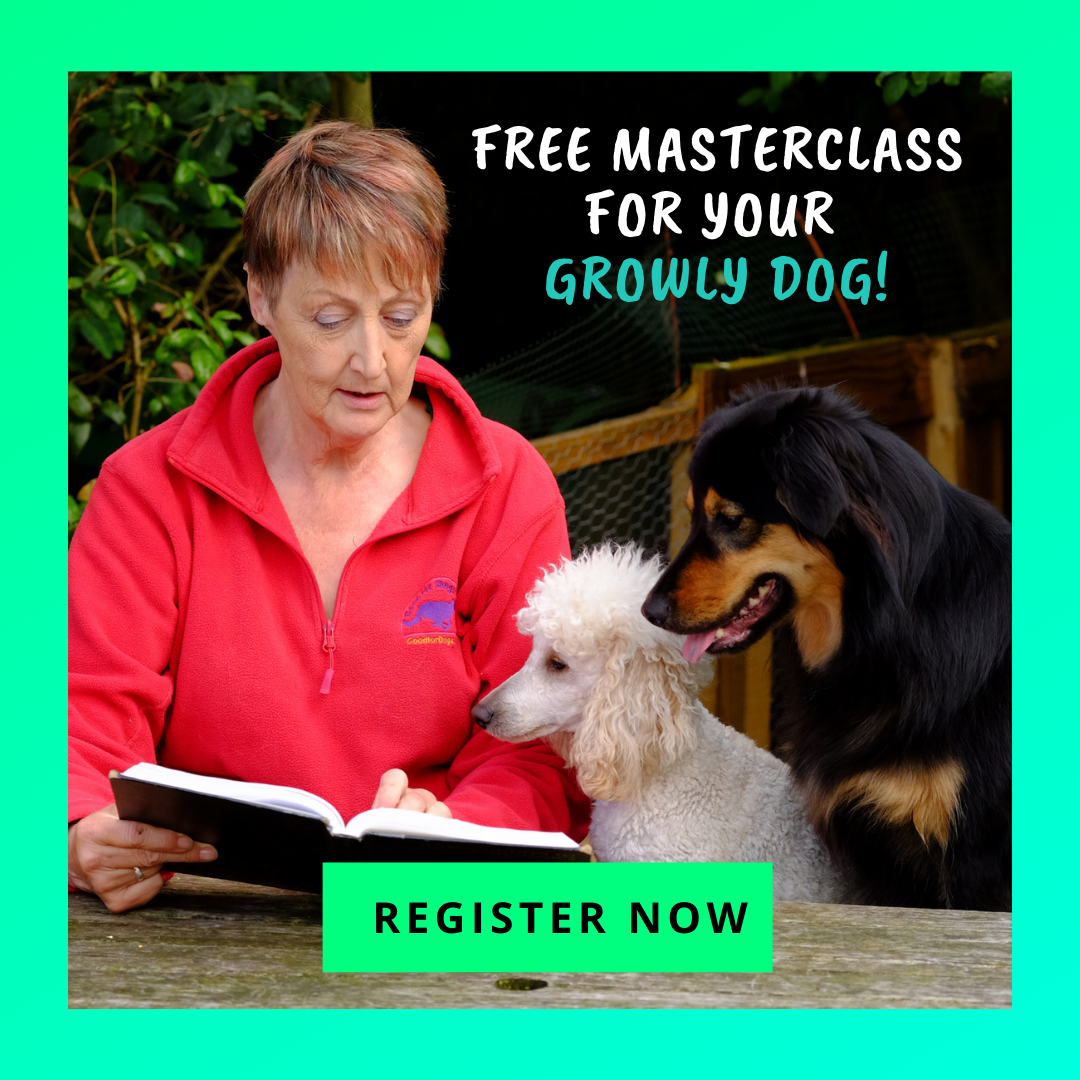
This is why I’ve made a free Masterclass for you: so that you can learn so much to help your dog!

Time off

Many of us are in enforced isolation right now. And this is just heaven for your Growly fella! One of the first things I ask new Growly Dog students to do is to give their dog a “cortisol holiday” - a complete break from all the things that terrify him on a daily basis, to allow the hormone levels to stabilise.

Usually five days of home confinement makes a considerable difference to the anxious, reactive, dog. A noticeable difference.

Now is an ideal opportunity to give your anxious dog that break. And while you find new ways to exercise and amuse him in the home, you can detach yourself from all these worries and anxieties too.

While you’re at home you don’t have to remember to avoid people. You don’t have to view others with fear. You can switch off the things that worry you (yes, I mean the constant news updates, social media, alarmists in general) and enjoy some peace with your now-calmer dog.

Teach him some tricks!

Teach him to fetch!

Have some fun!

I know that many of you with Growly Dogs suffer from feelings of isolation. But right now you’re exactly where you need to be!

I am sure that another upside from this crisis is that people have a space in which to reflect and look at their own life critically.

Instead of being bundled along in the daily grind, holding everything together - working hard not to drop a ball - many people are stepping off their treadmill for the first time in years!

So this is a wonderful opportunity to reassess exactly where you are in life:

  • Is it exactly where you want to be?

  •  Are there changes you’d love to make?

  • What’s stopping you making those changes over the next few months?

Here’s a little exercise for you:

  1. Write down the top three values you want to live your life by

    (e.g. adventure, integrity, connection, spirituality, nature, joy . . .)

  2. Beside each of your three, write down how far you are now living your life by them. You can use a scale of 1-10 if that helps, with 1 being not at all, and 10 being totally.

  3. Now look at what you’ve written!

Is this how you want it to be?

  • Yes: fantastic!

  • No: what are you going to do to change things?

Comment below or email me and tell me how this went for you!

Want to know how to start the change with your dog?

Join our free masterclass

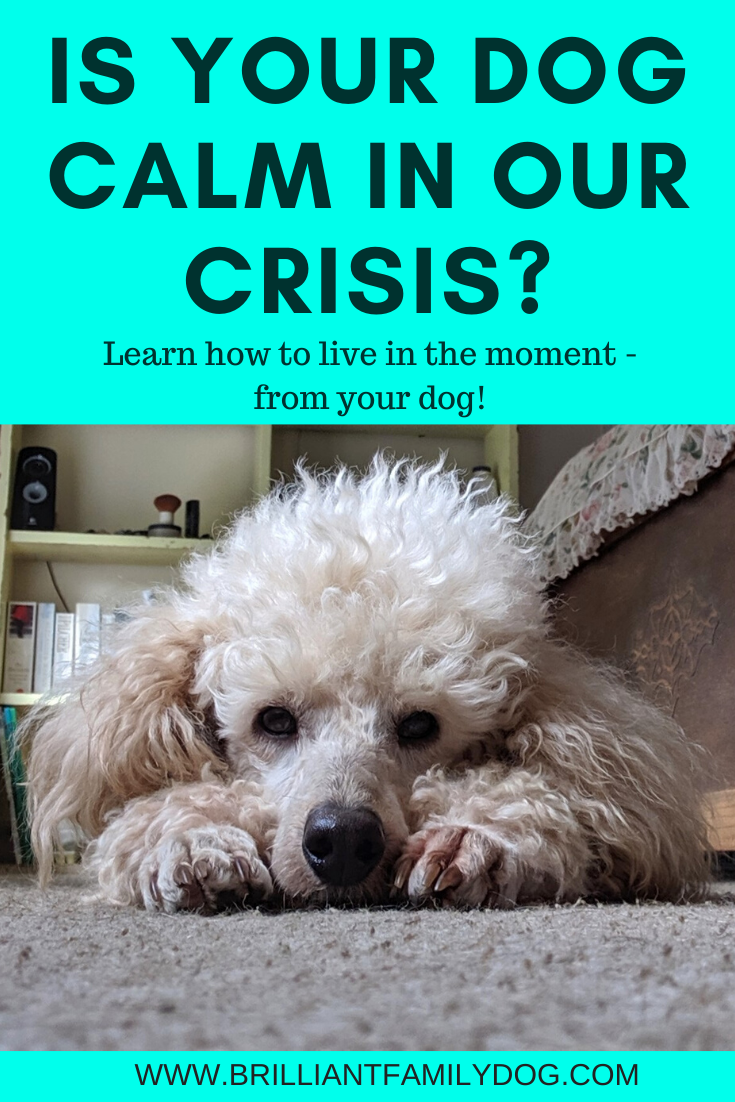
See how calm your dog is?

Brilliant Family Dog is committed to improving the lives of dogs - and that means improving the lives of their owners too! Here are some words to help you and your dog through this health crisis | FREE COURSE | #newpuppy, #dogtraining, #newrescuedog…

Look at your dog.

Is he worrying about rampant viruses? Or is he just contentedly being a dog? Is he getting anxious about what just may happen in the future, or is he happy with where he is right now?

We can learn from our pets. For a start we can enjoy their world-view and consequent feelings of normality and continuity.

And we can observe that worrying about things changes nothing!

For more harmony with your dog, get our free email course!

  THIS FREE ECOURSE IS A BONUS FOR YOU WHEN YOU SIGN UP TO RECEIVE EDUCATIONAL EMAILS AND OCCASIONAL OFFERS FROM ME. YOU CAN UNSUBSCRIBE AT ANY TIME.
Privacy Policy


Security and safety

We all need a sense of security (as Maslow defined in his Hierarchy of Needs), and the panic and fears being whipped up by some parts of the media and social media are counter-productive!

Continually being in an anxious state lowers your immunity and maintains damaging stress.

Choose one or maybe two news sources that you trust, and check them just once a day. You do not need minute-by-minute reports and all the speculation and catastrophising that goes with them.

When you are talking, ask yourself “Am I making the situation better or worse?” 

We all need a sense of belonging, and isolation measures can make us feel alone and vulnerable.

Brilliant Family Dog is committed to improving the lives of dogs - and that means improving the lives of their owners too! Here are some words to help you and your dog through this health crisis | FREE COURSE | #newpuppy, #dogtraining, #newrescuedog…

Self-sufficiency

I’m no epidemiologist, but I have seen isolation work. When the UK slaughtered millions of farm animals in the last Foot and Mouth outbreak, Ireland was barely touched. Because it is largely a rural economy, there was a united effort from the whole country - instantly - to comply with the sweeping measures brought in to prevent the spread of the disease. The result was that only a couple of flocks in one area were affected. Ireland escaped Foot and Mouth virtually unscathed.

Once we have our safety and belonging needs sorted - by reframing them as virtues not calamities - we can look to being the best version of ourselves.

We manifest into our lives the things we most desire and the things we most fear. (This is physics, not woo-woo - ask Einstein …) Where is your focus?

These things will pass! Do what is recommended by your authorities, look at the upside of isolation (there’s always an upside to everything!)

.. and enjoy some quality time with your soothing, carefree, dog.

Your dog is not so soothing and carefree?
Get our free course here to help you change everything!

THIS E-COURSE IS A BONUS FOR YOU WHEN YOU SIGN UP TO RECEIVE EDUCATIONAL EMAILS AND OCCASIONAL OFFERS FROM ME. YOU CAN UNSUBSCRIBE AT ANY TIME.
Privacy Policy

Can keeping away from other dogs make my dog worse?

Brilliant Family Dog is committed to improving the lives of dogs. And the first thing is to understand that when your dog is afraid, you can’t argue him out of it! You have to know another, better way to calm his fears. Find out how to do it in this…

One of the joys of my work is that I see more and more people starting out on their dog-owning journey using only force-free methods. HOORAY!!

They have dismissed all those noisy “balanced” or shock trainers. They’ve seen through them for what they are: bullies.

They have no wish to treat their dog any differently from the other members of their family.

They’ve got rid of the aversive equipment they were persuaded to spend money on in order to keep their poor dog under ever tighter physical control. They’re ready to rock and roll!


Kudos to these dog-owners for wanting to treat their dog humanely! and not falling for the clever marketing of the tv personality “trainers”


Trouble is, some of the old methods die hard. While the spirit is willing, the new neural pathways have yet to be cut!


❓ “If I treat him when he barks, isn’t he going to think I’m rewarding him for barking?”

❓ “If I let him choose where he wants to sleep, won’t he take over the house and steal my bed?”

❓ “If I let my puppy sleep in my bedroom, will I never be able to get him out?”

❓ “Do I have to carry treats for the rest of my life? When can I get rid of them?” (I dunno - when does your boss stop paying you?) 

And here’s a good one:

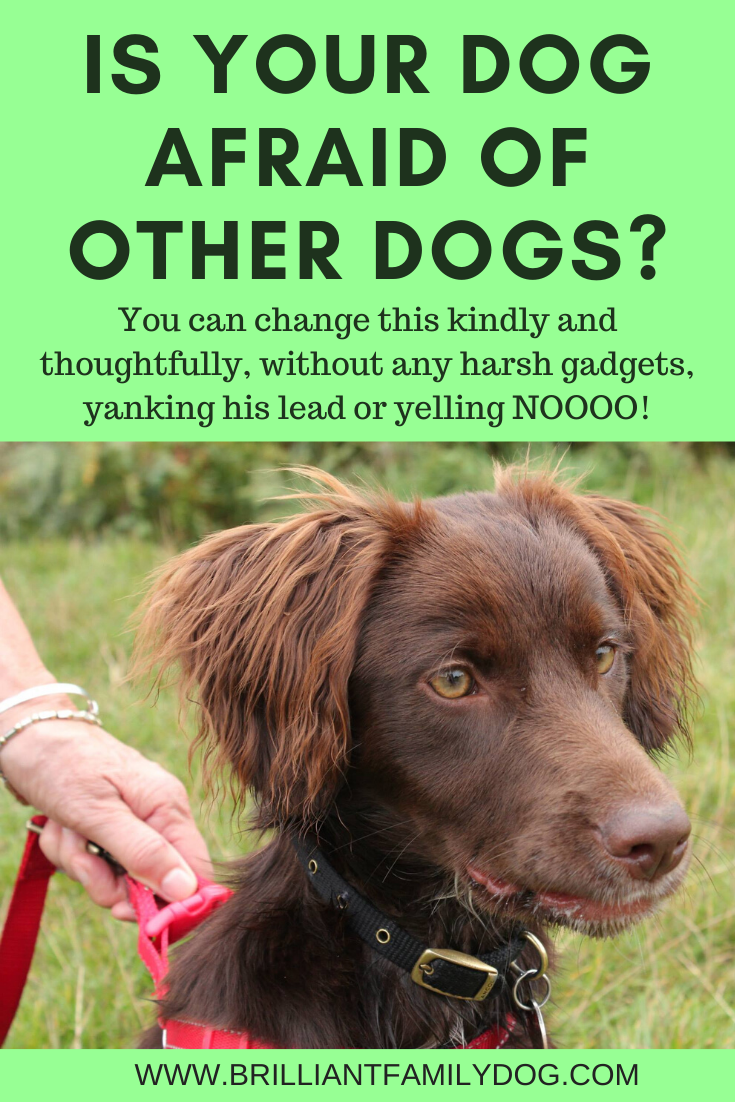
❓ “I’ve done what you told me and we’ve kept our reactive dog away from other dogs. But won’t that make him more afraid of them?” 

It’s great that I frequently get queries from folk who are just starting out on their new force-free journey with their reactive, anxious, aggressive - Growly - dog.

This query comes up surprisingly often.

And it shows that - while they’re doing their best to follow a kinder way - they haven’t yet grasped the reason behind it.

Tell me: Let’s say you were afraid of spiders. I mean terrified. And I made sure to keep you away from them (or them away from you!) as much as possible, so that you didn’t continually get frights and panic attacks, always on full alert, ready to “fight or flee”. How would you feel if, after a few spider-free months, you saw one?

Would you feel exactly the same level of anxiety as you did when you came across spiders all day, every day?

OR

Would you feel less alarmed, having spent months not jumping out of your skin every few hours?

Might you, in fact, be able to look at this spider with curiosity rather than blind panic?

So it is for your dog!

Giving your dog distance from the thing he fears allows all his systems to return to normal levels. Hormones stabilise. Heart rate plummets. Stress levels are down. He is no longer scanning the horizon waiting for a dog to appear. You can actually enjoy a walk together! 

Once you’ve got to this point, you’ve got something you can work with, as opposed to the spinning, lurching, tense ball of fear and noise that you previously got on sight of another dog.

You’ve desensitised your dog from other dogs (at a great distance). Now you can start Phase II of the operation! You can start counterconditioning him to other dogs at a slightly closer distance.

This part requires some skill and a lot more understanding. I go into it in great detail in From Growly Dog to Confident Dog  I’m keen that you should learn this thoroughly so that you get it right from the start!

For now, suffice it to say that you need to associate those distant dogs with the appearance of something really good - turkey, sausage, cheese, liver cake are all winners here - changing the emotional response of your dog to the things he previously feared.

Your dog kicking off at other dogs is the result of how she feels about the sight of a dog approaching. This is how the sequence goes:

Dog appears

Your dog thinks OH NO!

Your dog feels afraid

Your dog barks and lunges and screams to get the other dog to go away

(And I could add - you feel embarrassed, wretched, and helpless.)

So this is where we honour the dog, honour her feelings, and change the actions which are a result of those feelings. 

✅ Yes. Your dog will gradually become more tolerant of dogs in her environment, simply because she no longer has that knee-jerk fear reaction when she sees one.

✅ And YES. Keeping your dog at a safe distance for as long as it takes will help this process.

❎ Nope. She’s not going to feel worse about strange dogs the less she sees them, any more than you’ll feel worse about spiders the less you see of them.


Learn exactly what your Growly Dog is thinking and why he does what he does, with our free email course

THIS E-COURSE IS A BONUS FOR YOU WHEN YOU SIGN UP TO RECEIVE EDUCATIONAL EMAILS AND OCCASIONAL OFFERS FROM ME. YOU CAN UNSUBSCRIBE AT ANY TIME.
Privacy Policy


One dog is such fun: now I want two!

Brilliant Family Dog is committed to improving dogs’ lives - and that starts with bringing up your puppy right. This can be harder when you already have a resident pooch with his own ideas! Find out how to do it in this post | TRAINING PROGRAMS | #n…

“I so enjoy life with you,” says the husband to his wife, “that I’ve decided to get another wife too. You’re going to be such friends!”

Think that will go down well? Well, who knows - there could be occasions where it would. But more often there’s going to be shock and dismay, seething resentment, and possibly worse.

So when you decide that having a dog is such fun that you want to get another, think hard beforehand!

After will be too late.

Dog or Puppy problems? Get your free 8-lesson email course and solve them all painlessly!

THIS FREE ECOURSE IS A BONUS FOR YOU WHEN YOU SIGN UP TO RECEIVE EDUCATIONAL EMAILS AND OCCASIONAL OFFERS FROM ME. YOU CAN UNSUBSCRIBE AT ANY TIME.
Privacy Policy

I’ve had a multi-dog household for many years. I’ve seen dogs absolutely delighted with “their” new puppy. They love it and mother it from the start. Marauding dogs in the park had better not get near their baby!

But far more often introductions have had to be slow and low-key.

Always remember that your dog didn’t choose to have a puppy - you did.  

So you must cause as little disruption to your adult dog’s life as possible. (I say “adult” advisedly. Do NOT get another puppy if your puppy is still .. a puppy. More about that here)

From the very start demonstrate to your dog that the puppy takes second place, and is your own responsibility, not his.

That means:

• Solo walks for both pup and dog

• Separate sleeping arrangements, separate crates, maybe separate rooms

• Separate feeding (essential to start with as the pup will be on four meals a day to your older dog’s one)

Very limited playtime together (two minutes? maybe five?) and always actively supervised

• Special training/cuddle/play times for your older dog when pup is asleep

• Adequate sleep for both

• Zero pestering allowed from pup to adult

I go into more detail on all of this in this post.

If you’re thinking about adding to your doggy family, consider the implications of the list above. You can’t get a new pup and chuck it in with your other dog and expect everything to go well! It is often many months before your adult even accepts the youngster - never mind befriends her.

Don’t underestimate the time this will take!

Brilliant Family Dog is committed to improving dogs’ lives - and that starts with bringing up your puppy right. This can be harder when you already have a resident pooch with his own ideas! Find out how to do it in this post | TRAINING PROGRAMS | #n…

You’ll need to devote a huge amount of time to this. Constant surveillance, separate walks .. It takes dedication to follow through and do this right.

People are sometimes aggrieved when I shatter their vision of their two dogs endlessly wrestling on the floor, wearing themselves out so that walking them isn’t thought necessary. Are you sure you’re not thinking a little along these lines? That the puppy will exercise and amuse your older dog for you? Are you sure?

But think of the outcome of allowing this. The puppy will learn no self-control, no respect for other dogs. He’ll think that all dogs - and maybe people and children too - are his playthings, for him to rag and chew to his puppy-heart’s content.

The older dog will be driven quietly mad at a time when he may be expecting more calm in his life. This could end up with snarls and trouble.

Two youngsters?

If your older dog is still very young himself, be sure to check out this post and think of the natural result of two young dogs finding everything they need in each other and not in you. As a dog trainer I often have to re-educate such dog-owners and show them how they can turn the situation round. It’s not so easy, once these behaviours are established - but it is possible.

Once you’ve got over the first few months though - and if you do it right - you’ll have two dogs who are firm friends and companions, but who always look to you first. Perfect!

Observing the difference in their individual characters will be endlessly entertaining, walks will be double the fun. Your understanding of your canine friends will deepen, you’ll respect the personal wishes of each dog, and all your lives will be the richer for it.

But it comes at a price. Is this a price you’re willing to pay?

Dog or Puppy problems? Get your free 8-lesson email course and solve them all painlessly!

THIS FREE ECOURSE IS A BONUS FOR YOU WHEN YOU SIGN UP TO RECEIVE EDUCATIONAL EMAILS AND OCCASIONAL OFFERS FROM ME. YOU CAN UNSUBSCRIBE AT ANY TIME.
Privacy Policy

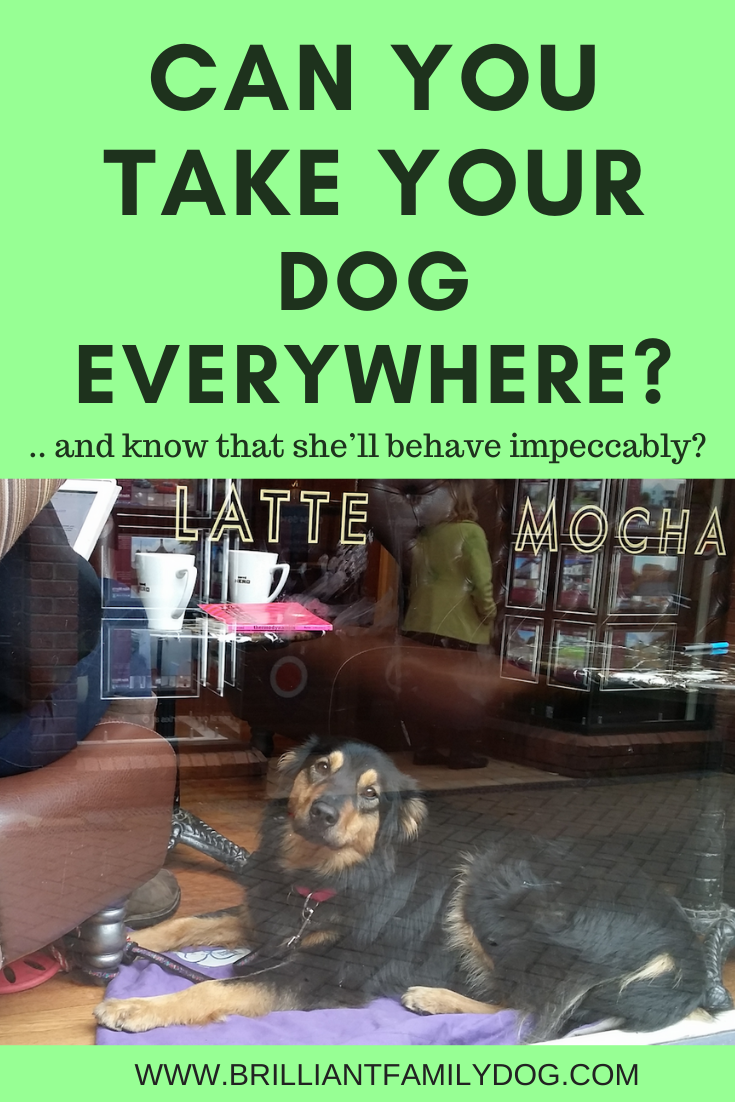
My dog gets to enjoy the coffee shop too!

Learn how to achieve this calm state - with even a previously reactive, anxious, shy, aggressive, dog. Brilliant Family Dog is changing the world, one dog at a time! | FREE BOOK | #newpuppy, #dogtraining, #newrescuedog, #puppytraining, #dogbehavior,…

My dog gets to enjoy the coffee shop too!

I am sitting in the window of our local busy coffee shop, in a comfortable armchair, my coffee on the table beside me. Just inside the full-length window, by my feet, lies Lacy on her mat.

We can both relax after our morning outing - me in my armchair, she on her mat watching the world go by without barking at it.

She’s polished off the liver sausage foodtoy I prepared for her. She’s done a couple of tricks for a fingertip of cream from my coffee. She’s watched comings and goings and is now dozing on the mat, her chin resting on my foot.

She’s popular with the staff who are always pleased to see her. It’s a pleasant way for both of us to unwind after our morning’s work.

You may think this is all fairly unremarkable, but you should know that Lacy started out as a very reactive dog - she would get stressed and barky and appear ferocious at any approach, of dogs or people.

Already got a Growly Dog? A reactive, shy, aggressive dog? Watch our free Masterclass and learn new strategies to change your lives for the better!

So getting her to genuinely relax in a public place is an achievement of which I am proud and which we can both enjoy. A lot of what I teach here at Brilliant Family Dog is geared to growing your puppy’s or dog’s confidence and ability to relax. You can train all the sits in the world, but it’s no good if your dog is panting and gasping and pinging off the walls!

Horses for courses

Many dogs are sufficiently “wired” that they need help to learn this skill - especially with the growing popularity of placing working dogs in pet homes. This is a kind of square-peg/round-hole combo which needs careful management to succeed and not drive everyone - owner and dog - barmy.

Lacy has also gone through all the training I do in my premium programs - naturally, it’s one of the perks of being the boss’s dog! And the results have been as spectacular for her as for so many of my students. “I can’t believe how much our life has changed,” is a common cry after even the first Growly Dog lesson.

An awful lot of this has to do with how we act ourselves, and with our expectations: What you expect, you get! Gaining insight into why your dog does what she does is the way to make changes to accommodate her needs with minimum disruption to your daily life. And that’s the focus of the choice-based training I teach.

It’s a question of growing your confidence so you know what to do in any situation. Being able to settle your dog in a public place and flip her off-switch is a valuable skill.


Here’s a great way to get started with this skill

Calm Down! Step-by-Step to a Calm, Relaxed, and Brilliant Family Dog - in ebook, paperback, or audiobook - will help you to locate this hidden switch!


Don’t go without our free e-course to change life with your Growly Dog!

THIS E-COURSE IS A BONUS FOR YOU WHEN YOU SIGN UP TO RECEIVE EDUCATIONAL EMAILS AND OCCASIONAL OFFERS FROM ME. YOU CAN UNSUBSCRIBE AT ANY TIME.
Privacy Policy