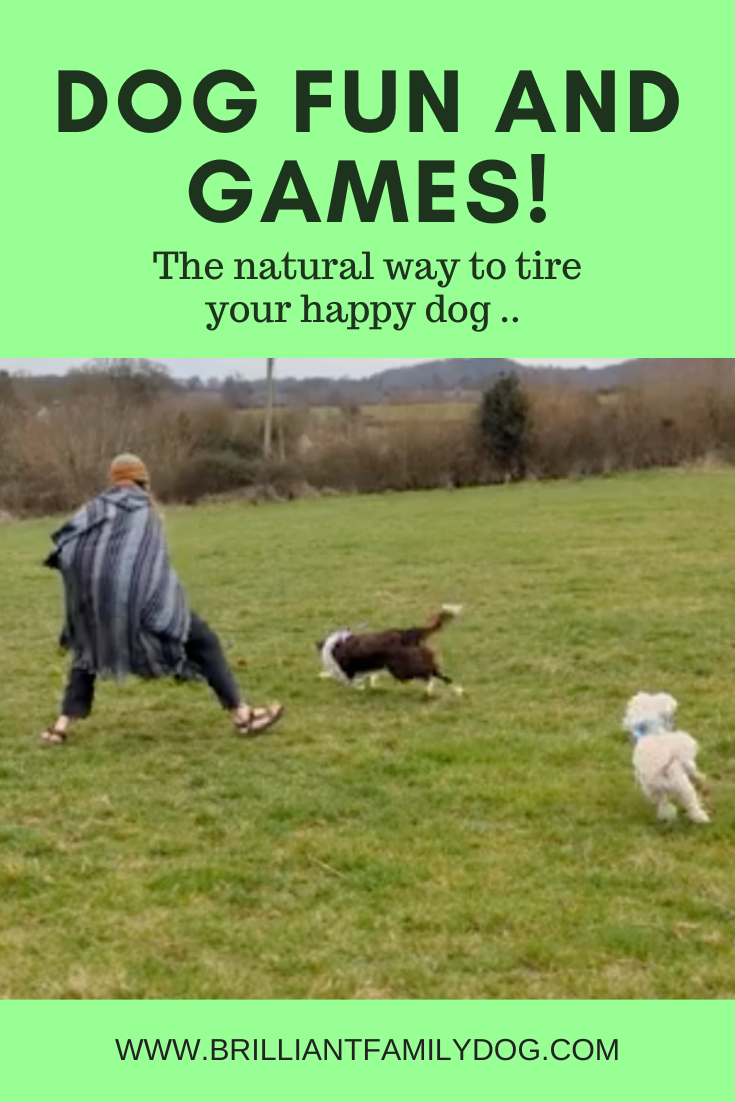
The natural way to use up your dog’s energy

Do you want a surefire way to use up your dog’s excess energy without depleting yours?  

I have the answer for you: the flirt pole!

It’s my go-to for my energetic dogs, and they are all absolutely bananas about it! It harnesses their prey drive - that sequence that all dogs, no matter what breed, have: to stalk, chase, catch, and kill. 

Naturally we don’t want our dogs killing things, so this sequence is often depressed in daily life.

But here’s how you can tap into your dog’s instinctive drive, get him running, teach him impulse control - and have a lot of fun at the same time.

Flirt pole with four dogs


Here I’m playing with four dogs. Note how they all wait their turn on the picnic table, despite bursting with excitement for their go! This isn’t mindless flying about - it’s a way to teach some core principles to your dog, to make life better for both of you. 

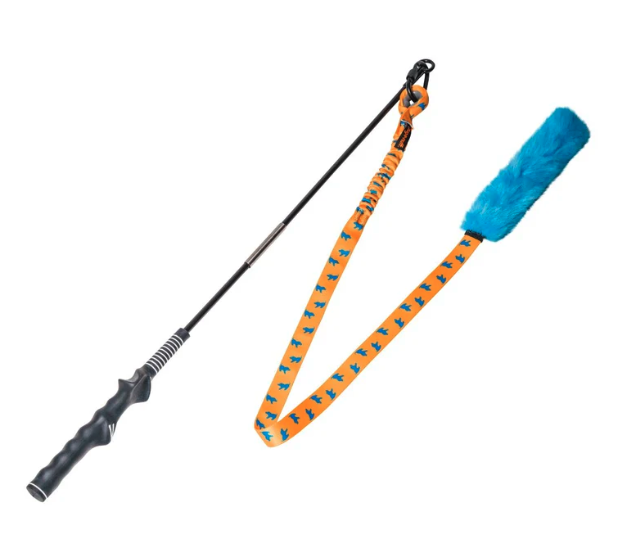
I’m using a lunge whip to which I’ve attached an old teddy bear leg. But if you don’t want a DIY option, have a look at this purpose-built Flirt Pole for dogs

This is what the makers say about it: 

“If you’re looking for a high‑engagement, low‑effort way to help dogs burn energy fast, this is the one. The lightweight pole makes it easy to flick, twist and swoop without tiring your arms, while the reinforced bungee absorbs shock to protect both the dog’s neck and your shoulders.

The lure comes in either squeak or no‑squeak options, both designed with a friction‑free attachment ring so the toy moves naturally without wearing down the pole.

And because the bite zone is blue, one of the colours dogs see best, it helps them stay visually locked on and fully engaged.”

They also point out that it’s “especially helpful for those with high‑energy dogs, limited walking options, or owners who need a low‑effort, high‑impact way to meet their dog’s needs.”

Yes! You can play this game indoors! And I often have. You just need to contain your enthusiasm a little, and ensure your dog is on a carpeted surface, not a shiny one. The last thing you want is your dog slipping and skidding and injuring himself. 

You can certainly play it sitting down. And if you just are too overdone to take your dog on a hike for an hour or two, you’ll find ten minutes with the flirt pole will do the trick. 

Getting your dog started with the flirt pole

Here’s a video of young Cricket the Whippet being introduced to the delights of the flirt pole. Take care with a puppy, that they don’t overdo it.


Teaching impulse control to your dog

You want to be sure your dogs are all good at taking turns and sharing before you embark on flirt pole games with a gang of them all at once! But it can work very well, as you can see here. 


Releasing the prey

Don’t be in too much of a hurry to take the lure back from your dog. He’s worked hard to catch it - let him enjoy his prize for a moment. He may want to trophy it by strutting about carrying it. Or maybe he’s clamped on and simply can’t let go! You can relax the pull on the pole and wait for him to gradually release it. 

If he’s completely overwhelmed and cannot let go (!) simply slip your hand in his collar (so he can’t pull back) and wait. It will gradually be released. 

Here you can see two dogs who struggled to let go of their prize! The reason they’re mouthing it here instead of pulling is because I stopped pulling and waited. If you pull back (animal still alive) they’ll naturally hang on tight. If you stop pulling (animal dead) they can safely release it. 


Let your dog request a game!

There are two ways my dogs can request a game with the flirt pole - one is to stare longingly at the door behind which the flirt pole may be found. And the other is for Yannick - he has a button marked FLIRT POLE. See my recent post Does your dog talk to you?
I wondered at my sanity in giving him this button, but to be fair to the little chap, he doesn’t abuse it (“spam” it) and I always try to comply with his request, or tell him FLIRT POLE LATER, which produces a sigh and collapse onto the nearest bed.

You can get started with your own super-duper state-of-the-art flirt pole in a jiffy, by getting this purpose-made one from Tugenuff.

.. And don’t miss out on the discount offered! 
Dog treats - what gives THE best results?


I’ve had you all looking carefully at what you feed your dog, on a regular basis. You have to combine budgetary restrictions, convenience, health of your dog, poo clean-up, into one answer.  

To get help with this, take a look at www.allaboutdogfood.co.uk Look at the score for what you’re feeding now (hope that’s not too much of a shock!) and then look at the feeds that score 80%+ and see if you can make a change. 

[You don’t live in the UK? No worries - not only are many brands international, but you can list ingredients from your food and get a rating.]

But what about treats? 

But you need to look at everything you feed your dog! Not just what goes in his bowl. 

Treats! 

If you’re actively training your dog, you probably get through a mountain of these. All good. You reward what you like with a small, tasty treat and your dog gives you more of that. 

So what’s in these treats? 

Some commercial treat ingredients lists look like part of the telephone directory - and make as much sense. 

Just like with our own food, try and avoid ingredients you don’t recognise and wouldn’t have in your own pantry.

A lot of these are to prevent deterioration - these packets stay on the shelves for literally years! And while the manufacturer must say if they’re using additives, they’re not obliged to declare what those additives are. 

Use real food!

Wherever possible, use real food:

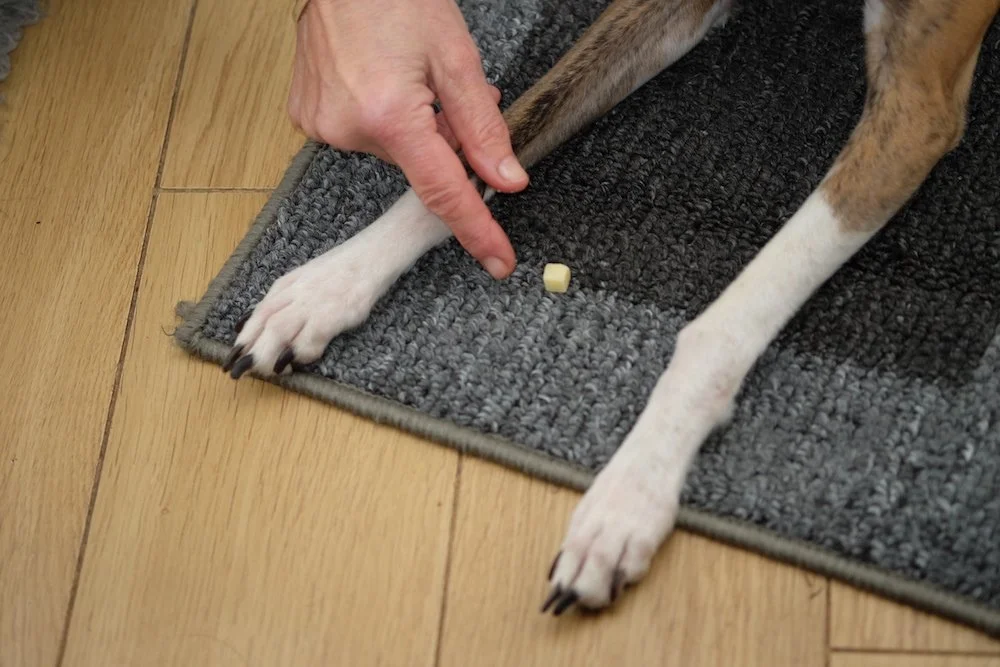
  • Cheese, cut into tiny cubes

  • Sausage

  • Hot dog

  • Cooked chicken/beef etc

  • Dehydrated meats/fish (e.g. dried sprats)

  • Fruit and veg (if your dog will take them!)

  • Meat/fish pate

Yes, I know there are additives in commercial sausages, but we’re talking about tiny quantities in the day. Who can put their hand up that they never have cake, or alcohol?

A little of what you fancy, my grandma told me, does you good!

There’s also squeezy cheese, which is definitely processed, but can be administered one tiny lick at a time. 

What do I use? 

I do use some commercial treats. Sometimes I need something hard that will roll or bounce. Sometimes it’s what I have in my pocket - you need a pouch for cheese etc!

But in the main I use real food. 

I’m limited at the moment with my young dog. He’s the first food-fusspot I’ve ever had! Every other one of my dogs has fallen on anything I offer them as if they’ve been starved. 

Not Yannick. 

He will sniff the offered food slowly and critically. And unless it’s cheese, chicken, or beef, he won’t eat it. 

There are some commercial treats he will eat, so I can still carry some in my pocket. There’s never a time when my dogs cannot earn a treat if they do something I like - requested or not. So some hard treats are handy. 

Many commercial treats are massive, and not useful for constant use in training. I’ve been known to find a good quality treat, tip them all out and cut them in three or four pieces before using them. 

One of my dogs’ favourites would be the Naturally Tasty Lamb Treats - they like the duck and the beef ones too. These have “no nasties”, containing only natural products. Be sure to follow this link first, to get you some free goodies!

Skippers do all fish training treats They’re the perfect size, and pocketable. Check out the special offer for Skippers in the Resources below. 

Once more, you can visit www.allaboutdogfood.co.uk and see how treats rate. There are some very good ones - some of which are very expensive, and some very good ones for the more budget-conscious. 

Those treats you see on every supermarket shelf? They rate from 30% down to 10% in nutritional value. 😳

But there’s a big BUT here. If you break them up small (and your dog will eat them - crucial point!) and they form only a small part of their daily intake … you can get away with it. (Remember that cake and alcohol reference?)

But for the best, consistent, results from your dog, use the heavy artillery!

That’s the natural, real, unadulterated foods. 

Safety note: If you’re handling raw meat, remember to wash your hands after your training session. 

RESOURCES

Commercial dog treat comparison

Butternutbox (free supply of food!)

Skippers (30% off)

Some of these links are affiliate links, meaning I earn a little from your purchase. But rest assured, I ONLY recommend products I use and love myself.


Does your dog talk to you?

I knew from the start that my puppy Yannick was fearful. He found the world a challenging place, full of alarms and frights.

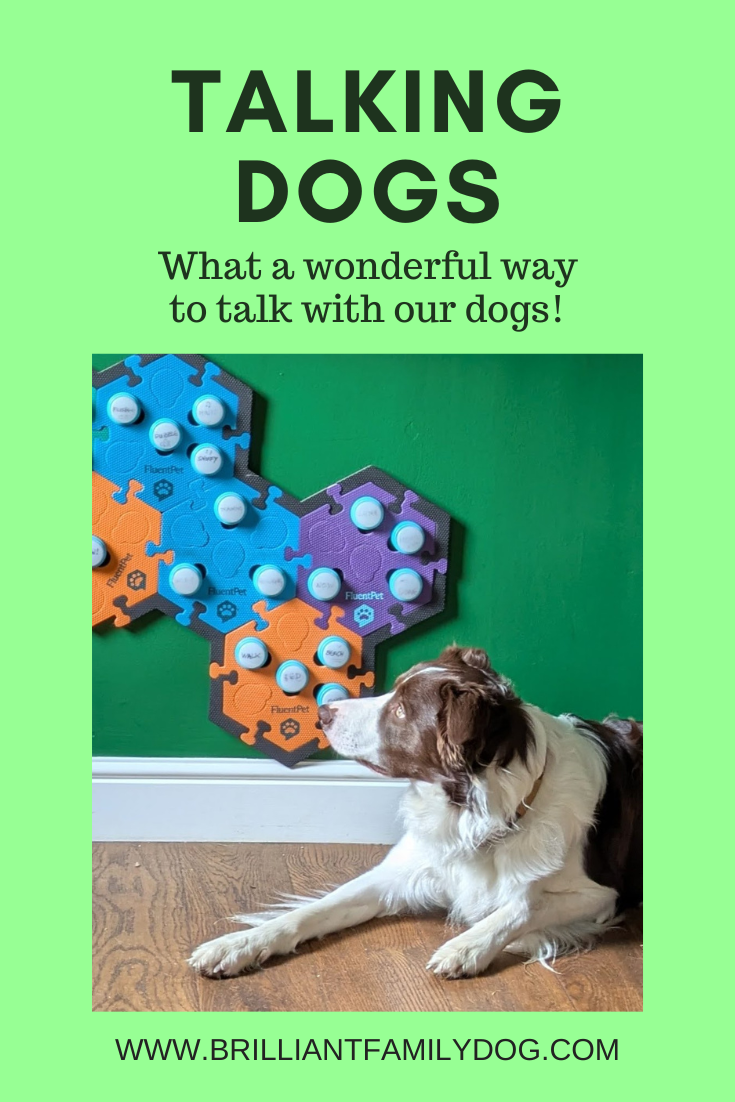
So when I learnt about these talking buttons - where dogs can actually communicate what they are thinking and feeling - I was excited to give them a try. 

They worked a treat!

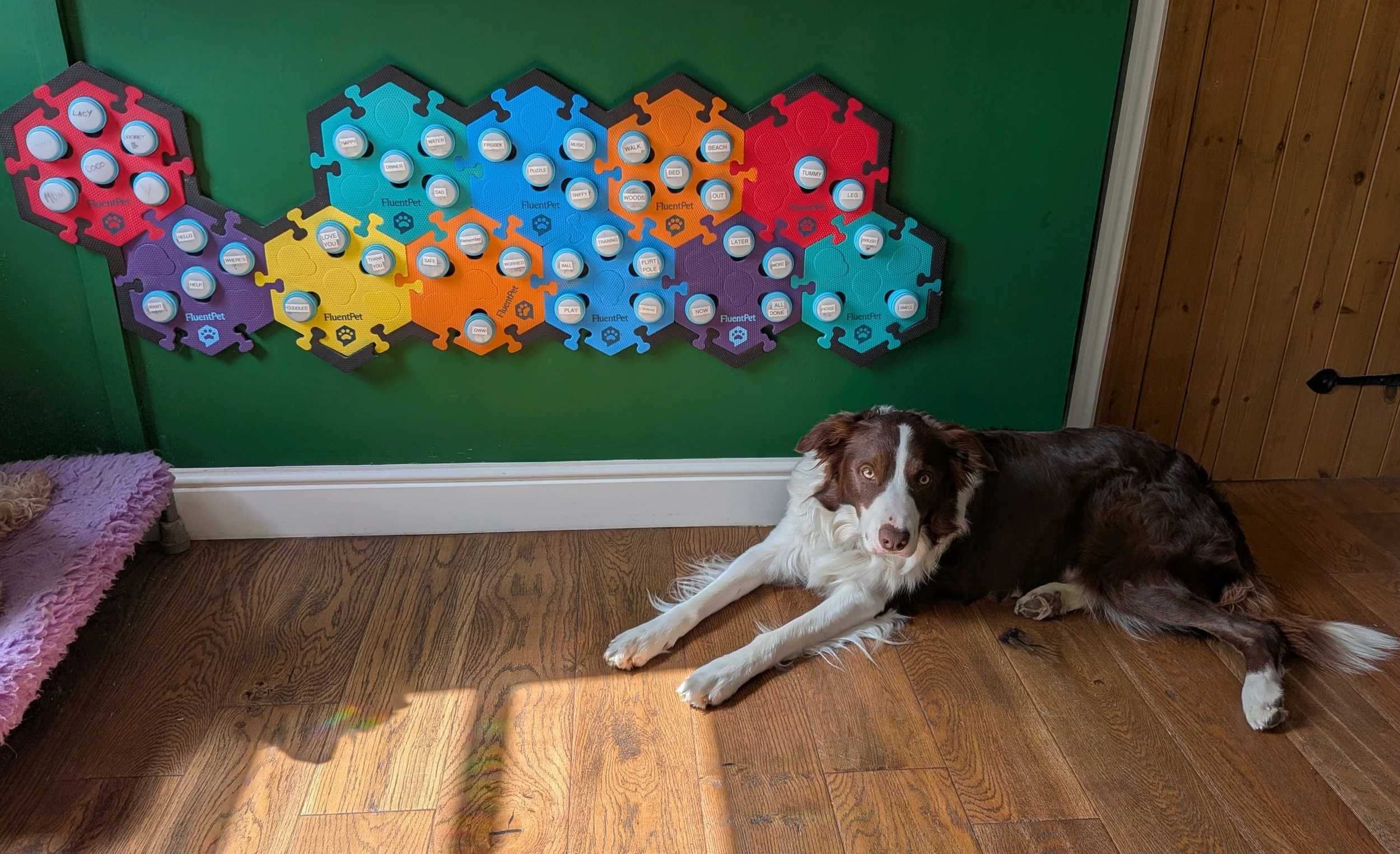
I started with his favourite two things - PLAY and CUDDLES. Once he was able to ask for these, I gradually added more buttons. And as you can see, he has forty-four of them now, many of them used on a daily basis.

Now he’s able to tell me if he’s WORRIED, or he feels SAFE. He can tell me he loves me, or he loves something I’ve done (LOVE YOU). He can express HAPPY and SAD; he can ask for his favourite things - PUZZLE, BEACH WALK, CUDDLES (still!), FLIRT POLE … 

I’m going to show you some videos here of some exchanges between us. Usually I’m WORKING (unavailable) when we’re in his button room, so sometimes there are pauses while I finish a sentence.

▶️ Yannick asks me to sing!

▶️ Yannick notices the heating is noisy (to his sensitive ears)

▶️ Yannick talks through his buttons!

So you can see how my working sessions go! (And who wouldn’t be glad of such charming interruptions?)

I find it a delight that my anxious dog is able to express himself, make observations, and ask for what he wants.

A farewell to his old friend

One very moving episode, which sadly wasn’t captured on camera, was when I was kneeling on the floor ministering to our dying Cricket the Whippet - who Yannick loved dearly. He sat and watched me, then turned to his buttons and pressed SAD.

Now for the sceptics amongst you, maybe he was describing how I was sad. But I am quite sure that he was expressing his own sadness in seeing the gradual decline of his friend. 

Her name is still on his button board, and from time to time he talks about her - CRICKET LOVE YOU - especially if a picture of her appears on the television screensaver carousel.

Do you want to try these excellent buttons for your dog? 

If you’re now dying to unlock your dog’s deepest thoughts and feelings, you can use these buttons too! 

As a Fluentpet Guide I’m able to offer you a discount on any buttons or kits you purchase. It’s a great company, with masses of educational programs (nearly all free) and a thriving community hub. There is solid research going on behind all this. 

Here are some more stories, showing that cats and dogs are equally good at talking with their buttons. 

If this is something that interests you, I can show you how I introduce Yannick to a new button.

Let me know what you think of Yannick's chitchat! I’m dying to hear …

RESOURCES

How do buttons work?

Is there science behind Fluentpet buttons?

How can I teach my dog or cat to talk?

Take a new look at your dog!

I consider feeding one of the most important things for my dogs’ long-term health and longevity. 

So I review their diets frequently.

Back in the day, I always used to feed my dogs once a day, in the evening. But they also had training treats, plates to lick, bones left lying around, the occasional foodtoy, and so on. 

Then when I started taking them on camping trips and we walked so much,

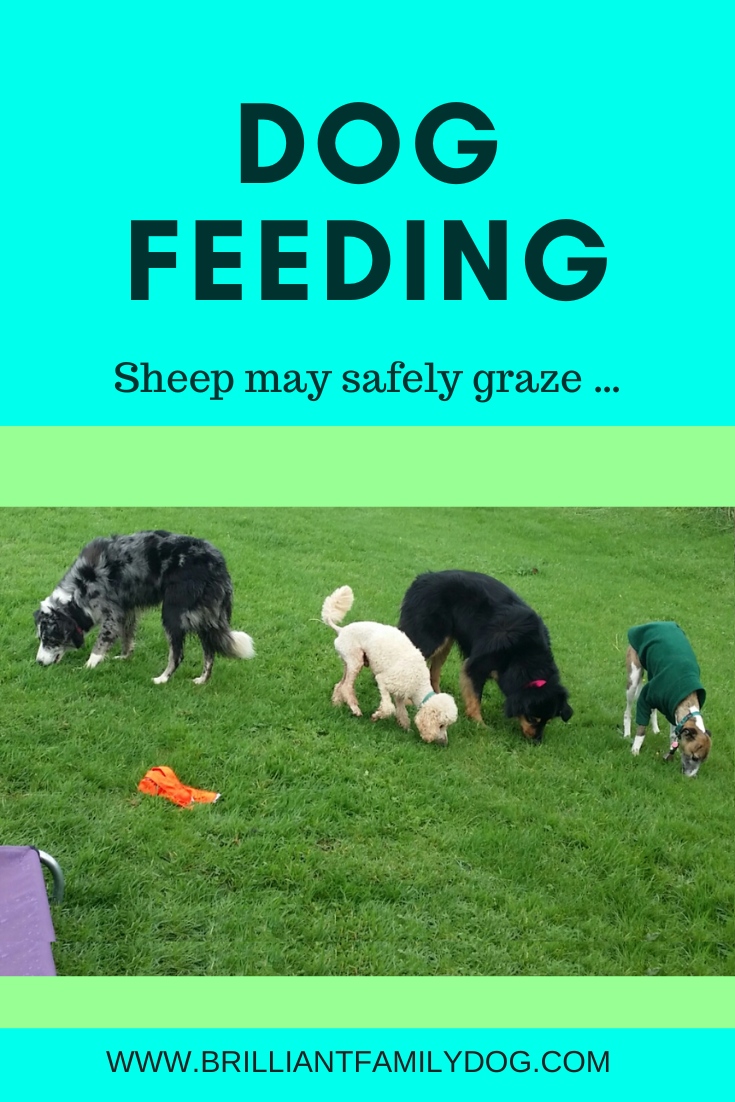
I’d scatterfeed kibble in the grass beside the van for them to snuffle up in the morning, while I got washed and dressed.

Then I started to scatterfeed outside at lunchtime, at home.

This was largely to get Cricket the Whippet out to do her business - I didn’t like her to stay in an armchair for hours and hold it! 

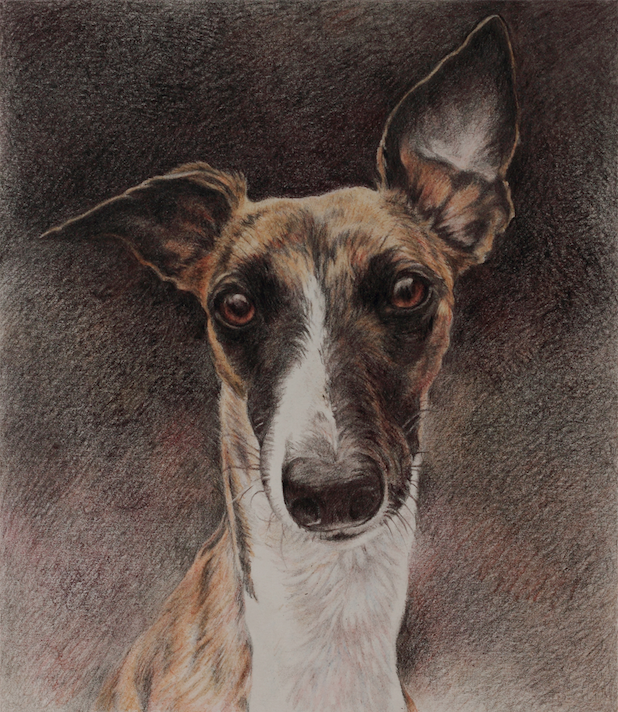
Portrait in coloured pencil by Beverley Courtney

So then, one year, Cricket started to get panic attacks.

She’d be shaking, panting, gasping, her eyes on stalks, desperate to get on my lap … These epidosdes could last for an hour, and they were getting more frequent … 😳

I did a little detective work 🕵🏻‍♀️ - and realised that these attacks happened only in the morning!

Aha! 

So I started to give Cricket a handful of food first thing in the morning.

Immediately, the panic attacks stopped, and we never had another.

What a simple solution!

How can I adapt this discovery to my dog management?

The moral of this story?

We change.

Our dogs change.

We need to observe and adapt.

And not just always do the same as we’ve always done, or what’s always worked for previous dogs. 

“Every dog is a study of one.” - Grisha Stewart

Just as we’re all different, so our dogs are all different. 


For our special dogs …

And it got me thinking about how we could be seeing things in our reactive dogs that could easily be changed by attending to diet and timing.

Along with all the other considerations, of course, such as sleep (you know how I’m always harping on about sleep!), exercise - type and quantity, mental stimulation, and all the rest. 

When did you last look closely at what may have become a comfy habit in caring for your dog? 

It’s so easy to drift along, saying, “This is how it’s always been,” and not noticing that things are changing - for the worse.

It’s like when someone sees your children for the first time in ages and says, “How they’ve grown!”. 

Well, duh, of course they’ve grown! But being with them every day, we don’t notice things that are changing. (And I don’t just mean that their jumpers are too tight.) We change all the time .. all the time.

Experiment with your dog!

So it’s time to start experimenting! Look critically at your daily doings with your dog - especially your reactive dog.

🐶 Would it help to move his walk from the morning to the afternoon?

🐶 Would it be better if he only had walks 3-4 days a week, and another stimulating activity on the other days?

🐶 Should I change his feed, or his feeding schedule (always make dietary changes gradually).

🐶 Should he have more interaction with people and dogs, or less? 

🐶 What new thing can I teach him, to liven up our training sessions? 

🐶 How much deep sleep is he having? (If less than 17 hours deep sleep a day, you need to make changes!)

Our dogs are in our hands. We owe it to them to make their lives the best they can be.

Find out what works for you and YOUR dog!

Puppies and gardens!

Dog safety Brilliant family dog blog


It’s that time of year again! Hooray!

Mud is subsiding, spring is springing, and we want to get out into our gardens.

And if you have a new puppy, you’ll already be spending plenty of time in the garden, monitoring the all-important housetraining!


Need a bit of help with that? 

Here’s a Housetraining Cheatsheet for you. Follow this, to the letter, and you’ll remove all frustration from this valuable bonding time.

But while you’re standing there, on the end of the lead, as your puppy sniffs and circles and tries to focus on what he’s doing, cast a critical eye over your garden.

You need to look for all the puppy hazards!

What’s dangerous for my puppy?

Holes in the fence would be a first thing to check. Though you will not be leaving your puppy alone in the garden for a long time yet, you don’t want to find out the hard way how easily these slippery little creatures can squeeze through the tiniest hole!

Once you’re confident your area is secure, then you’ll want to look at obvious hazards like uncovered water, sharp drops off a path, hanging risks, slippery steps …

Only when you’ve sorted this lot out - and ensured your garden is free of cat-poo - can you turn to the actual things growing in your garden. (After all, your puppy is still heavily supervised when out, still.)

Plants poisonous to dogs

There’s a huge list. 

But I wouldn’t worry too much if your puppy is not one of the few who like to live dangerously by hoovering up gravel and nibbling every leaf or stick.

Don’t panic! 

As I say, your puppy will always be supervised when in the garden (got that yet? 😊 ), so you’ve plenty of time to teach what can be investigated and what not.

The folks at Skippers pet foods have put together a handy list for you …

.. but just before you go there, be sure to sign up here for a 30% discount on all their terrific fishy foods and treats! As you probably know, I only recommend products that I use myself - my dogs get through a lot of Skippers treats and chews! 

And their comprehensive list can be found here, once you’ve clicked that link above. By the way, no rush - you can come back to use that discount any time.

No need to panic over your puppy!

As I say, there’s no need to go overboard and destroy your garden!

Some things may need to be fenced off, if they are really dangerous. Once your pup is older and more sensible and has demonstrated that they don’t chew plants, you can unfence them. 

If you have a laburnum tree, you’re going to have to manage the fall of the seedpods in season. And if you have Yew … perhaps you need to consider removing it

Otherwise, enjoy your garden, enjoy the time you spend out there with your puppy - teaching him how to play with you, and what he needs to avoid.

Just like with small children, you monitor and teach, rather than take dramatic measures!

And if you want specific help with training your new charge, check out our free Workshop here


Puppy Management!

Does your puppy chew everything? Here’s our checklist to ensure he only chews what you want him to chew.  Brilliant Family Dog

I hear all the time about puppies who’ve chewed up shoes; destroyed books; dug up plants; gnawed chair legs … you name it, somebody’s puppy has chewed it.

And my question is always the same:

“Where were you when your puppy was doing all this?”

You see, puppies, like children, are curious. They want to explore this wonderful new world they live in.

And to test anything, it goes in the mouth.

Now, IMAGINE your puppy is a toddler … There are things you wouldn’t let your toddler near!

And now imagine,

  • That shoe = naked electric cable

  • Chairleg = a fire

  • The flowerbeds are bottomless pits

  • The books are poisonous ..

Now, would you let your toddler touch them?

No?

So why do you let your puppy go near them?

If you didn’t want your toddler to get near these dangers, you’d take steps to make them unreachable.

Remove the object from the child’s reach, or remove the child from the area of the object!

❓ Would you leave your toddler to explore the kitchen while you watched tv in the living room?

❓ Would you leave your toddler unsupervised in the garden while you’re indoors on a zoom call?

If you REALLY didn’t want your puppy to destroy your possessions, you’d be serious about it!

How to prevent puppy chewing

The simplest way to prevent chewing is using some kind of containment. That could mean a crate or playpen when you are busy or otherwise unable to supervise.

🐶 Your puppy should always be in the same room/space as you, till trustworthy.

🐶 So he’s either with you - actively supervising - or he’s in his crate or playpen.

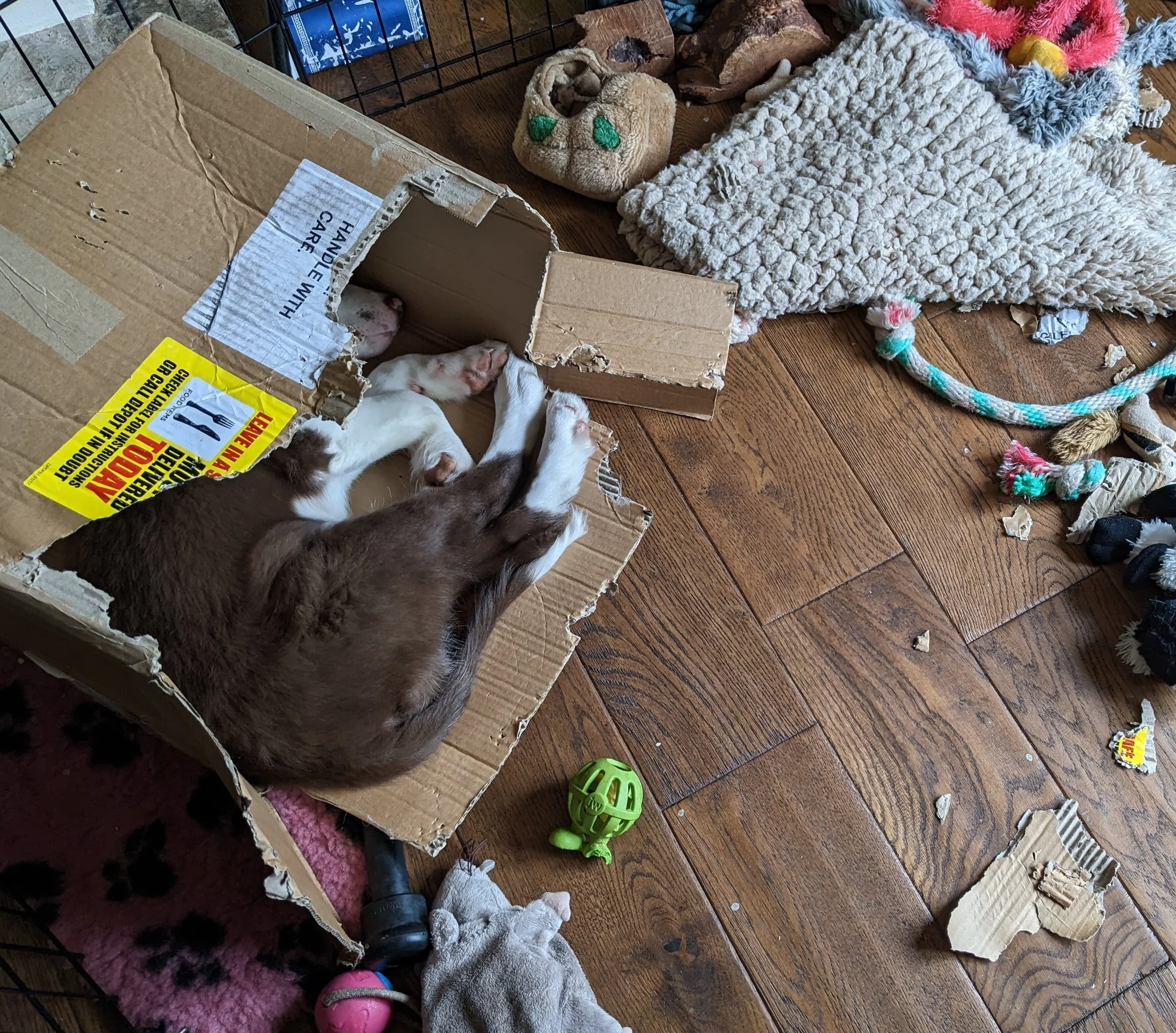
Happy Yannick asleep in the wreckage brilliant family dog

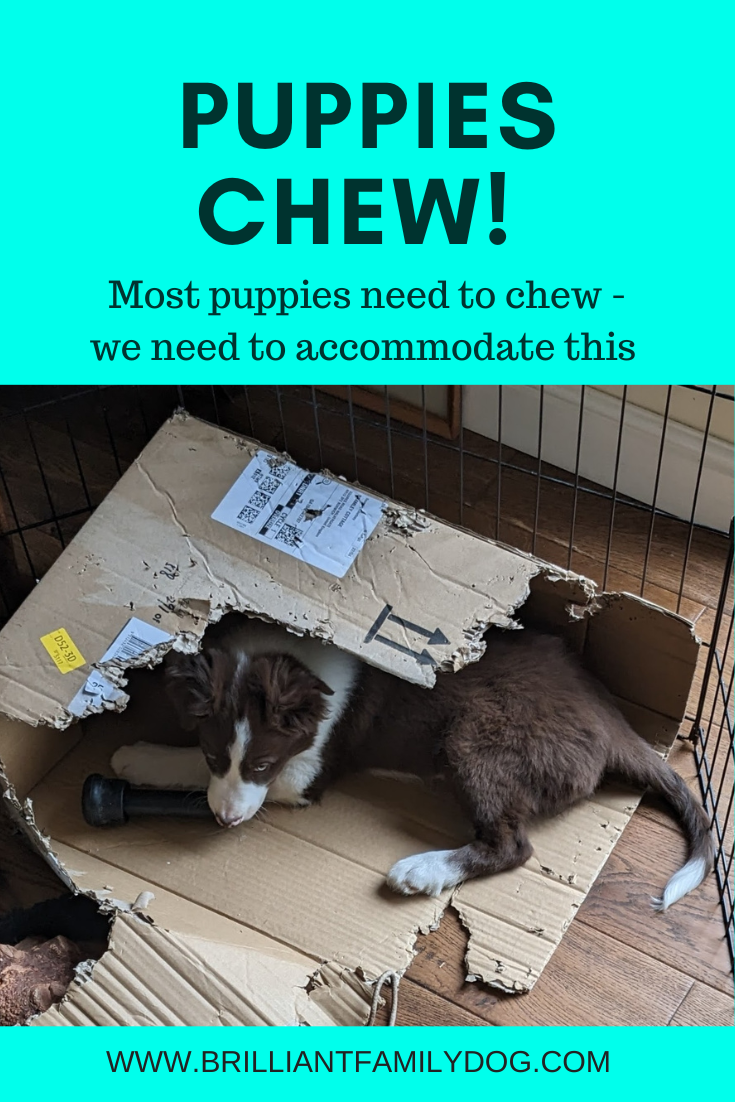
Baby Yannick sleeps peacefully amidst the wreckage in his playpen

And if you have a chewy puppy (some puppies never chew things), be sure to give him plenty of things he can chew, in his playpen. Cardboard boxes are winners here. Raw meaty bones are great. Some dogs like antlers or coffee root.

Don’t use rawhide chews, which are industrial waste and can cause huge problems (aka huge vet bills).

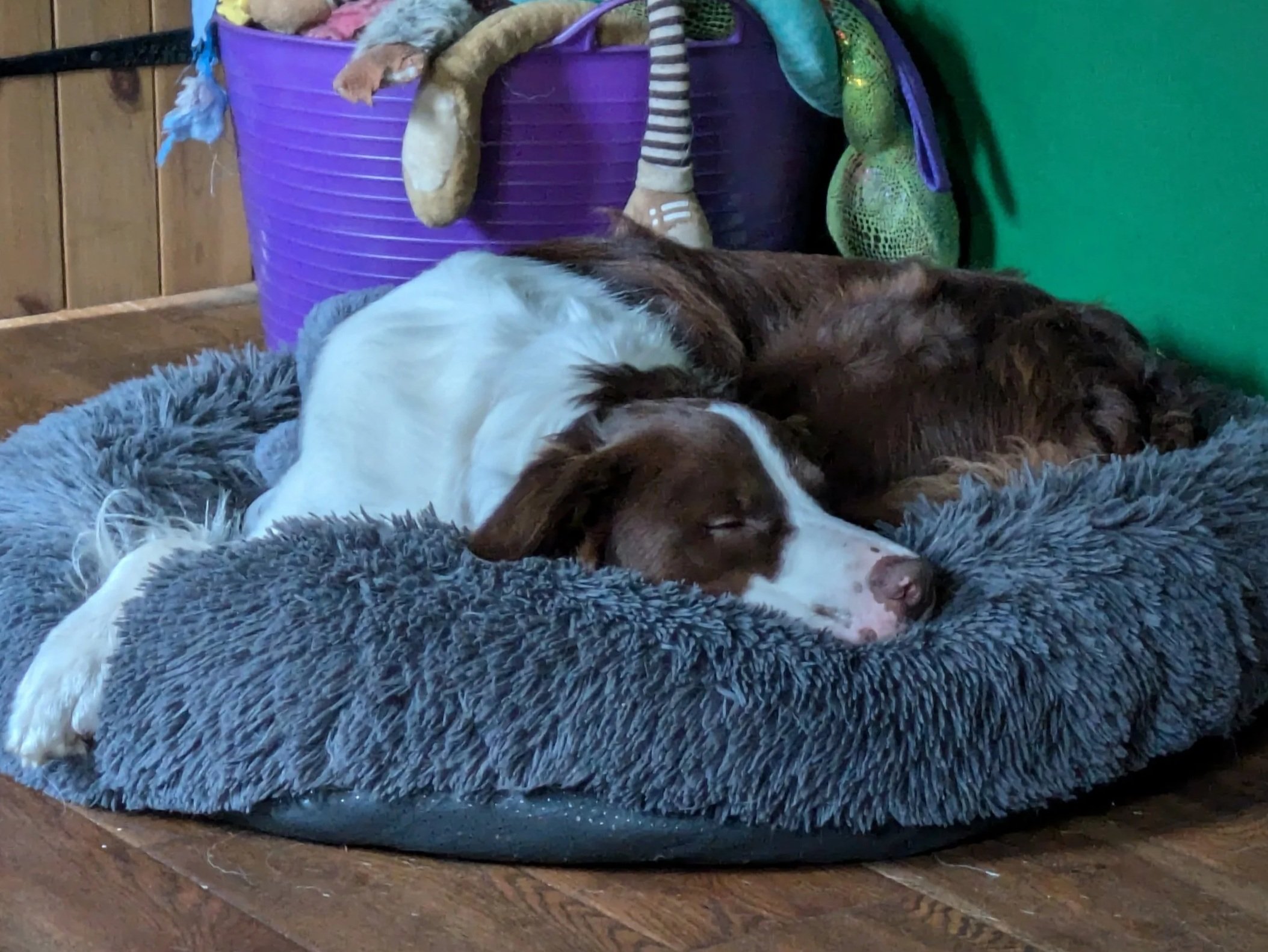
If he wants to chew his bed - then, it’s his bed! Give him something disposable (and safe), like an old blanket. Remove shredded things so he doesn’t swallow them. Save the expensive bed you’re so proud of till he’s able to use it safely.

Babies and toddlers have cradles and cots which can accommodate all kinds of stomach mishaps! They don’t get a “grown-up bed” till they’re more reliable.

And all those expensive toys you bought him? Keep those for when he’s out of the chewing stage. Give him toys you don’t care about. If he needs to chew, then you must provide chewables!

Survive the chewing stage

Yannick never chews anything now!

If your puppy is a chewer, he just is! And you have to work through this stage with him with as little friction as possible. Telling him off will confuse him and raise your blood pressure.

There’s no need!

Just adapt your living arrangements to accommodate your chewer while you teach him to play nicely with your toys, which you put away after the game.

Don’t leave valuable things with your piranha fish!


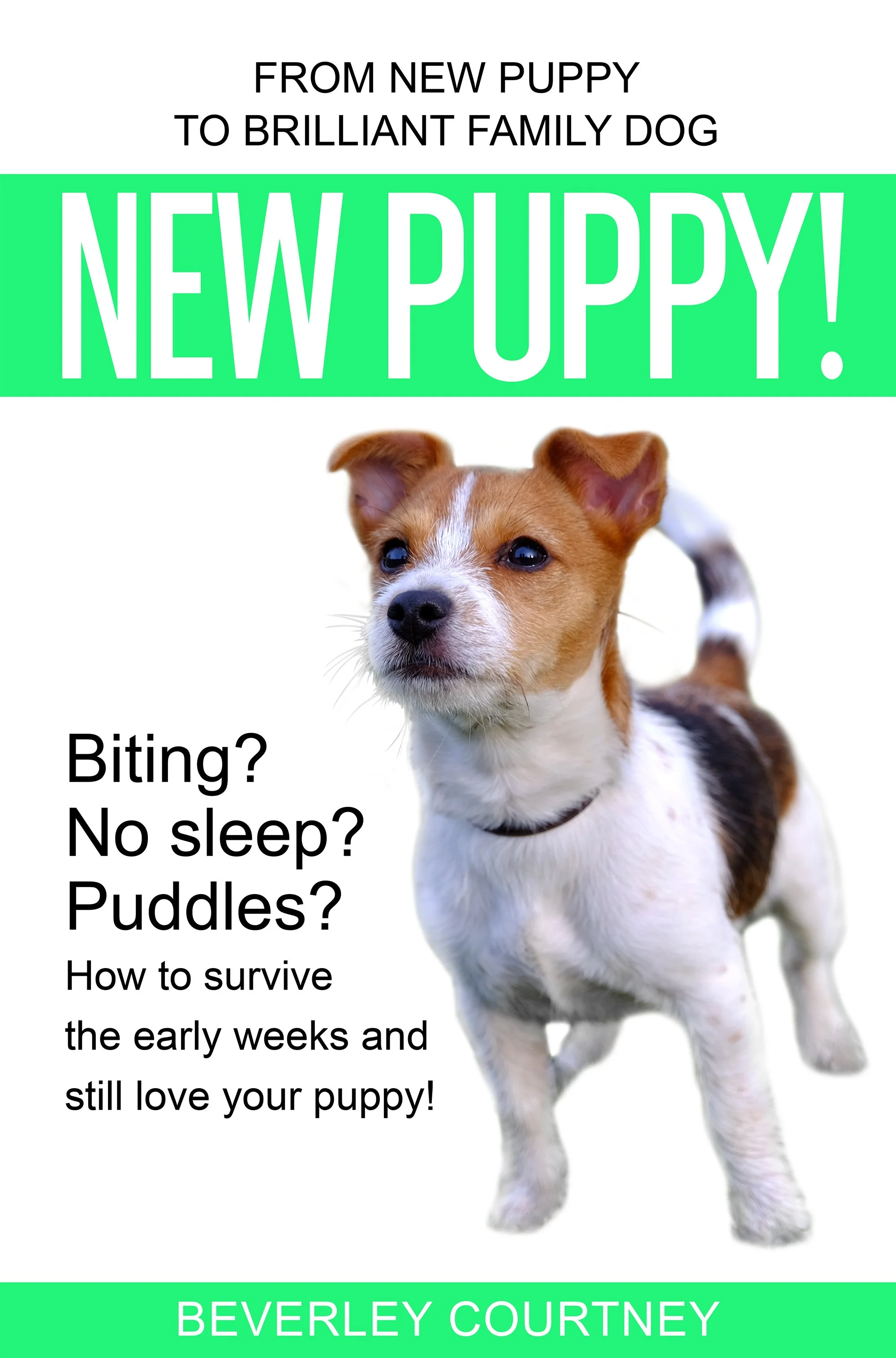
And for more down-to-earth ways to make the first few months with your puppy magical, Read New Puppy!