My dog has taken over my bed - how can I change this?

Does your dog sleep on your bed? That’s fine, if you like it! If you don’t, learn here how to change things without anyone getting upset.  | FREE EMAIL COURSE TOO | #puppytraining, #dogtraining, #newrescuedog, #dogbed, #dogbehavior  | www.brilliantf…

I had a recent query from a reader:

“Hi Beverley, Thanks for your informative emails. My puppy is now 8 months old and has been a joy (mainly) but I made the mistake of letting her sleep on my bed and now she is getting bigger. She’s only a small dog but still takes up a lot of room in the bed! Can you give me some tips how I can train her to sleep in her bed?”

This is an interesting question, and I expect many people are saying right now “Yeah, me too!”

Plenty of ideas in this free 8-lesson email course for changing your life with your dog!


  THIS FREE ECOURSE IS A BONUS FOR YOU WHEN YOU SIGN UP TO RECEIVE EDUCATIONAL EMAILS AND OCCASIONAL OFFERS FROM ME. YOU CAN UNSUBSCRIBE AT ANY TIME.
Privacy Policy


Cute puppies can develop all sorts of habits that you let pass, but as the cute puppy becomes a hairier, muddier, larger person, there may be some things you wish you hadn’t allowed in the first place!

This type of question pre-supposes that an established behaviour can’t be changed without difficulty.

Behaviour is just that - behaviour. It’s something your dog does. (Or something we do, of course, but we’ll stick with dogs for now.) So changing that behaviour to something else is just the same as for any other change you want to make.

It’s not a “mistake”. It just is.

So approach this as you would any new thing you want to teach your dog.

1. Your dog is doing something.

2. Decide what you’d like instead.

3. Teach the new thing.

And, of course, be consistent with the new thing. If it’s no bed, then it’s no bed. Ever.

There’s no absolute right or wrong here. If you like your dog doing something that another person disapproves of - then that’s that person’s problem, not yours. We have enough to deal with in life without taking on other people’s disapproval!

You may have been told by some misguided person that this is the thin end of the wedge and that you have to “be the boss” or the dog will take over your house. This is outdated “pack” nonsense. (And as long as the dogs take over the bills too, that’s ok with me …)

Back to the bed question

And it may be that you’re attaching emotion to this bed question. You may be thinking that you’re spurning your dog if you no longer share your bed with her. But your dog is not attaching emotion to the bed - it’s just comfy! And up to now it has been your preferred sleeping place for her.

I’m assuming that there isn’t a resource guarding element to this question, as it isn’t mentioned at all. If your dog doesn’t want to relinquish her place on your bed, and underlines her wishes with wrinkly lips, immobility, or growling, then you have an entirely different issue. Check out this post for help with that. 

Back to the bed … Many people have their newborn baby in their bedroom, and over time move him to another room. As I mentioned in last week’s post about puppies, things change and evolve naturally.

So time for your pup to move to a “grown-up bed” of her own!

A new bed

Make the new bed very inviting and comfy. Depending on your dog’s breed or type, you may want a flat bed she can stretch out on, or if a whippet, terrier, or other tunnelling breed, a tunnel bed or folded duvet to bundle herself up in will go down well.

Using the matwork from Calm Down!  you can quickly teach “go to bed”. Then you can play the game of:

your bed —> her bed

her bed —> your bed

all on vocal cue.

You may need to be persistent, depending on the comfort level and suitability of the new bed!

And you may find that your dog starts the night happily in her new super-comfy bed, but somehow has snuck onto your bed when you wake in the morning. You’ll just have to be vigilant and ask her to go back to her own bed as soon as you feel the bump and hear the sigh.

My own dogs have individual sleeping arrangements. Cricket the Whippet loves wrapping herself in her duvet, and Coco Poodle has a raised bed which he hops onto at night and remains there till invited off in the morning once I’m up. The others can sleep where they like - though they do have beds provided.

So even in the same household - the same bedroom - you can have different behaviours from the different dogs. As long as their needs are catered for, they’re happy.

There are 6 dogs happily hidden in these beds!

There are 6 dogs happily hidden in these beds!

Getting a new puppy?

Description: Got a new puppy! Wonderful! Now find out how to make your pup the best ever with this post. Lots of resources to get you started fast | FREE GUIDE | #newpuppy, #dogtraining, #puppyandolderdog, #puppytraining, #puppycare, #dogbehavior | …

It’s the time of year when many people start thinking about new life, re-birth, flowers blossoming, trees leafing up. And why not get that warm fuzzy feeling of new baby-ness in your home, with a new puppy! 

Great idea - IF you do a bit of planning.

I love it when people write to me that they will be collecting their puppy next week, next month - even next year - and they’re researching now. Love it!

If you’re getting a new baby in the family, you don’t wait till the birth then start researching, purchasing equipment, and asking advice of friends and relations! It’s in the front of your mind for many months. You have plenty of time to work out how you’re going to manage things.

Many parents will have their newborn sleep in their bedroom with them. They don’t panic that they will have a teenage lout still there in 15 years’ time! They know that things will naturally change, move on.

And so with your puppy. When I advise new owners to have the puppy’s crate in their bedroom to ensure a full night’s sleep, I’m met with cries of “I don’t want a dog in the bedroom!” and “How will I ever get the dog out of my bedroom?”

Wrong (and fairly nonsensical) responses. The question to ask is how to settle the puppy in so that everyone rests at night. Once you achieve that happy state, you can start thinking about where you’d like your adult dog to sleep.

Forward planning!

You don’t want to rush in without at least having an idea of the type of dog you want for your family. And if you’re offered a rescued pup out of the blue, then you’ll know whether this puppy is likely to fit your family or not. You’ll be in a good position to take the puppy or leave it for someone who would be able to give it a more suitable home.

It isn’t our responsibility to try to rescue every abandoned puppy! It’s our responsibility to choose, as far as possible, the right puppy for our home, our family, and our lifestyle.

Of course there is more variation between individual dogs than between breeds. But you’ll get off to a poor start if your idea of exercise is walking from the car to the shop, and you choose a dog bred to tramp the moors for many hours a day, just because you like the look of it. You need to put your realistic head on!

What about my older dog?

Some of you may be introducing a puppy into a household with a resident dog. You’ve so loved your friendly old dog that you’d like to get him a playmate. Do remember that your dog has an opinion too! He may have had nothing to do with the choice process, but he has to handle the fall-out when the puppy arrives. And it may be the last thing he wants - to be harried all the time by a young whippersnapper who he’s reluctant to tell off.

Think how you’d feel if your husband came home with a pretty girl on his arm and said, “I so enjoy having you as my wife I’ve decided to get another - she’ll be a great playmate for you. You don’t mind her sitting in your favourite armchair?” Yeah. Wouldn’t go down too well.

It’s essential to create boundaries to give everyone - including both dogs - peace. You’ll find detailed guidelines in this post.

Brand new to puppies?

Exciting! Lots to learn, love, and enjoy. See what one reader said about New Puppy! From New Puppy to Brilliant Family Dog - How to survive the early weeks and still love your puppy!

“We gave our kids a Westie puppy (8 weeks old) for Christmas. I delayed getting a dog because I didn't grow up with one in our house, and I am frankly intimidated by most dogs. Reading this book ahead of our puppy's arrival helped me feel calm and excited. Even reading the book, I could finally see what "dog" people were so excited by. Since the puppy came, things have been really smooth. We are still working on housetraining (two days later), but he so far he's slept through the night both nights he's been in the house without accident or waking us up. He's incredibly sweet, and I'm so glad I have this method to work with him. I actually told my husband that I wished we had read it before our kids were born as the lessons apply to children as well and took us years to learn as far as the kids go. We are going to take one of the author’s online courses now as a family.” Amazon 5* review

Good preparation PLUS a friendly, clear, force-free, guide had an amazing effect on this family and their new puppy!

The puppy starts growing up …

Yes! In time you’ll be over the baby stage and dealing with an adventurous, boundary-testing, teenage dog (that’s around 6-8 months or so)! You need a whole new set of skills for coping with this - kindly, efficiently, enjoyably. And you’ll be so glad you took the time to lay the foundations so that your dog always looks to you first for information and entertainment.

So check out this puppy page regularly to catch up with the latest educational posts on this blog. And don’t miss the Resources list below, which will give you masses of information for getting started. Many of the posts have a free guide for you!

Do write and tell me about your new puppy, his/her name, age, breed or type, especially personality - and how much you’re enjoying each other. I read every comment and every email. And I love seeing photos! And - who knows? - your puppy may end up as a poster child here or in one of my books (with your permission, of course).

Have your puppy sleep ALL NIGHT from the first night!

This free guide is a bonus for you when you sign up to receive educational emails and occasional offers from me. you can unsubscribe at any time.
Privacy Policy

A puppy meets a carefully-chosen older friendly dog. These early meetings must be managed closely!

A puppy meets a carefully-chosen older friendly dog. These early meetings must be managed closely!

Make a start with our free e-course to deal with lots of your popular puppy problems


How can I connect with my dog’s mind?

How can I connect with my dog’s mind - without losing my own! There are many ways to help your worrisome dog, and we can support you through it all | FREE COURSE! | #newpuppy, #dogtraining, #newrescuedog, #puppytraining, #dogbehavior | www.brilliant…

Teaching people how to understand their dog. This is my aim!

I aim to improve the lot of the dog while employing my particular talents and abilities. I can’t do it all, and there are aspects of dog-help that are quite outside my character. Rescue, for instance. I couldn’t do it. I’d be in a permanent state of meltdown! More power to those who can cover those areas.

So to reach our friend the dog in a meaningful and impactful way, I had to narrow down what I’m good at. And that means teaching people how to get the results they want by showing them a new way to reach their dog’s mind.

Does it work - Yes! 

Do people get good results - OH YES!


My course students are rocking it!

Have a look at a few very recent student comments. Some are from emails to me, but a lot of these come from the vibrant communities set up for the courses. These are a source of continual help and support (and fun!) for the students, who no longer feel isolated or insufficient!

“I think the biggest change is in myself as I feel so much calmer and more confident.” Growly Course

“Me and George always had a special bond but it has just got stronger since starting this course, thankyou thankyou.” Growly Course

“I used to dread taking him out and now I can enjoy it! Thanks Beverley, your training has really made a difference.” Growly Course

“Beverley Courtney, YES, has given us tools to use and I'm forever grateful.” Growly Course

“To be honest, our growly girl is MUCH less growly now!! … my theory is her impulse control is tons better, and also her focusing (on me) when we are out, plus we are BOTH much more relaxed.” Challenging Dog Course

“Hello all, my dog and I continue our slow and comfortable progress, by far improved is our happiness and relaxation together when out and about, I see a shift in his attention … NO has left our vocabulary.” Growly Course

“Your emails and advice are awesome and our 8 month old Lab has grown so beautifully. Your course has taught us so much and training our puppy has been one of the best experiences of my life.”  Free email course

“Thank goodness I found this course and this group. I cannot thank you enough Beverley, I've got lots to learn. It's almost as if my dog already knows it, he has just been waiting for me to catch on hahaha.” Growly Course

Is your dog ready to learn? And do you know how best to teach him, in a dog-friendly way? Find out in this post! | FREE COURSE! | #newpuppy, #dogtraining, #newrescuedog, #puppytraining, #dogbehavior | www.brilliantfamilydog.com

“Your focus on self-improvement for the human and choices for the dog chimes very much with me. Your approach and content has helped me a lot as I was feeling a little low and worried that I couldn’t help Dougie overcome his fears. In 5 days I have seen some big improvements for us both …”  Free Growly Workshop

“I cannot believe, in such a short space of time, how well my Working Cocker Spaniel has responded to lead training. I thought calming this little lady would be impossible to achieve. She's 4 years of age and walking out is completely new to her, hence my doubting I could cope. Now I know I CAN cope!! This new confident feeling propels me to want to do more and more to help her. She's so responsive to your methods - no stress, no hard work, 'simplicity in action'. Thank you!”  Growly Course

“I am really enjoying the 5 day course and have loved the enjoyable time with my young dog with no tricky walks, and more understanding. I have learned a lot and realise how much tension I must have unwittingly passed on to my dog. Thank you for everything so far. You’ve given us a new start.” Free Growly Workshop

“I wanted you all to know how much your support has helped my relationship with my beautifully amazing puppy. Xxx” Wild Puppy Course

“Thank you for sending me such useful materials. You are a breath of fresh air!” free email course

Looking forward to your classes - that non-professionals can understand!” Growly Course

“Think you are a great teacher and loving everything so far”

“I love your methods of teaching us humans and our dogs.”

“Thank you so much. Hunter and I have both really enjoyed the training. I really can’t believe what a difference it has made in such a short time and I really feel like I have a connection with him now.Free Dog/Puppy Workshop

“I've really enjoyed the five days of videos, it’s given me so much to work with. I'm seeing results already and I can see what you teach makes so much sense.” Free Dog/Puppy Workshop


We can’t do it all alone. We need help - we need guidance and we need people who will help us along the path.

◦   When we’re down we need scooping up and setting going again.

◦   When we’re delighted we need someone to share our joy.

◦   And when we doubt ourselves, we need someone we trust to guide us.


I want to change the world - one dog at a time!


Will you join me?


Resources

Challenging Dog Course

Wild Puppy Course

Free Growly Dog Workshop

Free email course? Right here:

Plenty of ideas in this free 8-lesson email course for changing your life with your dog!


  THIS FREE ECOURSE IS A BONUS FOR YOU WHEN YOU SIGN UP TO RECEIVE EDUCATIONAL EMAILS AND OCCASIONAL OFFERS FROM ME. YOU CAN UNSUBSCRIBE AT ANY TIME.
Privacy Policy


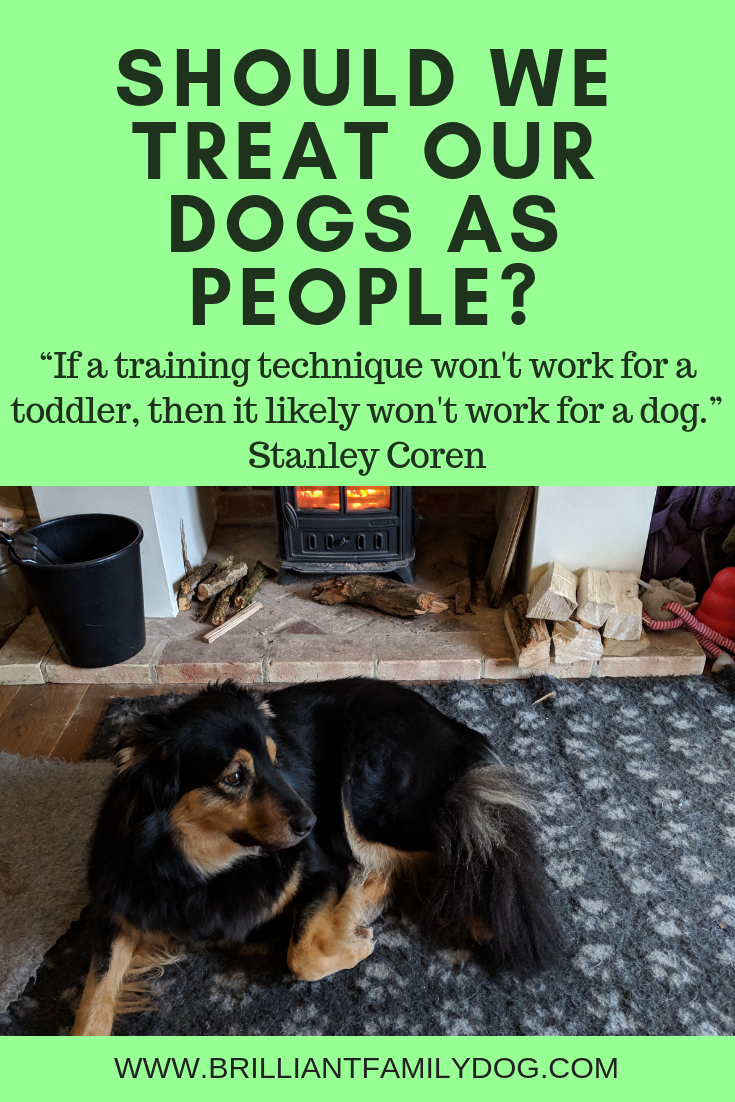
Should we treat our dogs as people?

Should we treat our dogs as people? “If a training technique won’t work for a toddler, then it likely won’t work for a dog.”  | FREE EMAIL COURSE! | #newpuppy, #dogtraining, #newrescuedog, #puppytraining, #dogbehavior | www.brilliantfamilydog.com

I had an interesting email recently:

“I’ve read your book on puppies and loved it. I try to do all positive reward based training and it’s a lot easier now I understand a bit more. Funny how you were always told not to anthropomorphise and yet that is the very basis of modern training.”  Chris

My reply included these words: “You make an interesting point about anthropomorphosis. Dogs are NOT people. But the baby got thrown out with the bathwater ... they're very like small children.“

For me, it’s all about teaching dog-owners empathy with their pet.

And I thought this was a subject which deserved deeper study.

For years people have been exhorted to treat the dog in their home with suspicion. Mistrust. Seeing it as a foreign species that needed to be shouted at, possibly beaten, and at best cajoled into doing what they wanted their dog to do.

So people still turn up at class thinking that’s what they ought to be doing. That the reason their dog is not complying with their every wish is because they’re too soft on them, babying them, anthropomorphising them.

This leads to them doing and saying things which really run counter to their intuition. If you have a creature in your home, whether child or animal, you want to cosset it, cherish it, look after it, get a friendly response from it. This is especially the case for women, traditionally and emotionally the nurturers.

So they’re already conflicted when they come to me for help! They’re trying to live up to this false model that they have to be the leader, show the dog who’s boss, put themselves in a higher position than the dog, all fostered by misguided (ok - just plain wrong) tv programs.

The relief they show when told that they don’t have to do any of those things, that they can be natural around their companion dog, and they can indulge their feelings of warmth towards this creature, is palpable! And it’s often accompanied by huge sighs of relief and visible physical relaxation. They thought they were going to be castigated for not being hard enough, tough enough, for allowing the dog on the furniture and so on and so on. They transform when they are “given permission” to act as they naturally want to.

I use stories from family life all the time to illustrate my points

Plenty of ideas in this free 8-lesson email course for really getting to understand your dog!

THIS FREE ECOURSE IS A BONUS FOR YOU WHEN YOU SIGN UP TO RECEIVE EDUCATIONAL EMAILS AND OCCASIONAL OFFERS FROM ME. YOU CAN UNSUBSCRIBE AT ANY TIME.
Privacy Policy

I use a lot of analogies and stories - usually about people and their children or their colleagues or friends - to demonstrate how the dog feels, and how he thinks. I’m always giving people examples which they will readily understand and can translate to their relationship with their dog. This is one of the reasons my books have developed such a following.

Yes, the dog is not a human being. But don’t you think he knows that? With no opposable thumbs he relies on us for so much in his life - from preparing his dinner to opening the door, lighting the fire, driving the car … He doesn’t need to be “kept in his place”! He’s only too aware of his place already.

There are, of course, areas where the dog is not at all like us. People sometimes worry about dogs being jealous if the same treatment is not offered to all the family pets. You will give a different type of attention to a toddler, a 10-year-old, and a teen or adult. As long as they’re getting what they need, they don’t carp over what the other child is getting.

In the same way, one child may be delighted with his Christmas present that cost only a few pounds, while his brother was given something appropriate for him that cost many more (there you are - I’m doing it again!). Your dog has no knowledge of comparative monetary value. But he does understand attention! And as long as you’re giving your different dogs attention, they’re happy.

A simple example could be walking your puppy without your other dogs because he needs to learn about the world with you, while your older dogs may just want to run around sniffing and playing - too exciting for the pup - and your oldest dog will be happier lying in front of the fire and going on only occasional walks. We don’t have a problem with this kind of individualised care!

Are you treating your dog as a baby? Dressing dogs is fine if it’s for their comfort - but not for our own amusement! | FREE EMAIL COURSE! | #newpuppy, #dogtraining, #newrescuedog, #puppytraining, #dogbehavior | www.brilliantfamilydog.com

Another area - where anthropomorphism could go wrong - is in “dressing” your dog. Two of mine have thin coats and feel the cold. So when the weather is bad they wear a jumper or waterproof which makes them more comfortable and saves me dog-drying time.

But this does not extend to dressing an animal up for our own entertainment:

Anthropomorphic sentiment negates empathy, blinding us to the real animal behind the “character.” 1 Michael Vale and Donna McRae

So those “cute” images of dogs clipped to look like a cartoon character, or wearing strange garb to cause amusement without a thought to their feelings and comfort, are completely counter to my aim of building empathy for the animal.

The experts agree with me!

It’s nice to know that I’m in good company with these ideas.

Wikipedia includes this in its article on the subject:

Anthropomorphism may be beneficial to the welfare of animals. A 2012 study by Butterfield et al. found that utilizing anthropomorphic language when describing dogs created a greater willingness to help them in situations of distress. Previous studies have shown that individuals who attribute human characteristics to animals are less willing to eat them and that the degree to which individuals perceive minds in other animals predicts the moral concern afforded to them. It is possible that anthropomorphism leads humans to like non-humans more when they have apparent human qualities, since perceived similarity has been shown to increase prosocial behavior toward other humans. 2

This demonstrates that seeing your dog as a person, with her own thoughts and desires, means you’ll create a stronger bond and ultimately enjoy a better life with her. I’m pleased to see this is actually creeping onto the statute books of many civilised countries - that animals are sentient beings, not chattels.

 Adam Waytz PhD says:

These simple demonstrations provide preliminary support for why anthropomorphism - the tendency to grant minds to nonhuman things - is so influential for our interactions with the world around us. Perceiving minds gives entities moral rights, responsibilities, and the capacity for social surveillance. As scientific advances reveal extraordinary capacities of nonhuman things, and as questions of personhood become increasingly fuzzy, understanding why "seeing human" matters has never been more important. 3

Further to this is the fact that not only do we think our dogs are like us and can therefore understand us, but they actually can understand us!

Stanley Coren has made an intensive study of dogs and their understanding - particularly of words:

My data led to the conclusion that the average dog can learn to recognize about 165 words and gestures. "Super dogs"—those in the top 20 percent of canine intelligence—can learn 250 or more. … What's more, Chaser [with 1000 words] understands some of the basics of grammar involved in simple sentence construction. 4

He goes on to conclude:

Tests of canine language ability offer a new way of looking at dogs' mental skills. If a problem can't be solved by a 2- to 3-year-old child, then it is not likely that a dog can solve it either.

 And if a training technique won't work for a toddler, then it likely won't work for a dog. —Stanley Coren


 Plenty of ideas in this free 8-lesson email course for learning to understand your dog!

THIS FREE ECOURSE IS A BONUS FOR YOU WHEN YOU SIGN UP TO RECEIVE EDUCATIONAL EMAILS AND OCCASIONAL OFFERS FROM ME. YOU CAN UNSUBSCRIBE AT ANY TIME.
Privacy Policy

a href="https://imgur.com/tk6Pcqf">

I have a difficult dog - How can I get a break?

Help! My dog is busybusy all day long. How can I get him to calm down? | FREE BOOK! | #newpuppy, #dogtraining, #newrescuedog, #doghealth, #dogbehavior, #dogsleep, #overexciteddog | www.brilliantfamilydog.com

If there’s one thing Growly Dog owners know - it’s that sometimes you just need a break!

However much you love your gorgeous darling reactive dog, it has the potential to become wearing. You don’t want your dog to become a burden! So taking a break, whether for work or pleasure, can let you see how the other half lives while reinforcing your good feelings for your dog - Absence makes the heart grow fonder, and all that.

A change can also be a good thing, so holidaying with your pet is way up there on the to-do list for many reactive dog-owners. And it may not be as difficult as you think!

How to get a holiday at all

As I have four dogs, holidays in hotels and b&b’s - though possible in theory - really were not fun. All this changed when I got a campervan and I’m now able to swan off with my dogs to all sorts of interesting places - beaches, forests, fields, moors - and enjoy the trip thoroughly.

No campervan? You can rent one!

There are also many places - certainly in the UK - where you can rent a holiday cottage in the depths of the countryside, and dogs are welcome. They often have a well-fenced garden and ready access to walking country, though you’d need to check that first. For me that’s definitely the second-best thing to the van (well, first-best thing in the depths of winter!), and I’ve been introduced to some great new places to explore that way.

So holidaying with your dog, even a very reactive one, is definitely possible. And I know that lots of people set off with some misgivings, only to find that the whole family has a wonderful stress-free time - including, sometimes much to their surprise, their dog!

What about when I can’t take my reactive dog?

But what happens if you can’t take your dog with you and you have to travel? This was me recently, with a business trip. I was fortunate in that I know an amazing place where dogs - especially reactive dogs - are not just welcome, but thoroughly catered for and pampered. It’s not near me - I have to travel two hours to get there - but is it worth it? Heck, yes!

The comfort I get from knowing my precious dogs are in safe hands, with someone who absolutely understands their needs, their individuality, their fears, is priceless. And, of course, this 5* treatment is not cheap. But how much value do you put on your dog’s safety and your own peace of mind?

Now I know a safe place for them, I need have no qualms about future trips away from them.

Previously I would only be away for a day. Then I’d get a carefully-chosen dog minder to visit them two or three times in the day. I didn’t want them walked, just given a break, let out, and played with. This works very well for me, but is limited to just the one day - and a minder who they’ve met and “approved”!

“My dog is such a tie”

So don’t let the fact that your dog does not strew rose petals and rainbows wherever she goes prevent you from taking a holiday - with or without her.

The time to do your research is now, not five minutes before you want to go. You’ll have time to seek advice, check out the places, and carefully get to know the person who will be caring for your dogs.

You’ll have some searching questions if you’re leaving your dog with someone else, and you need to get those questions answered thoroughly. In the case of the place my dogs stayed at, several visits beforehand are a part of the package, so your dog isn’t dumped in a strange place with strangers, and so that you can check out the carer and the premises.

You can see the bond they developed with Clair in this video of the welcome they gave me on my return. They kept running back to her (with the camera) to tell her the exciting news! This is one of many videos and photos sent to me, most while I was away.


Is your dog throwing up more challenges than you anticipated? Watch our free Masterclassr free Masterclass and find how to change things fast!


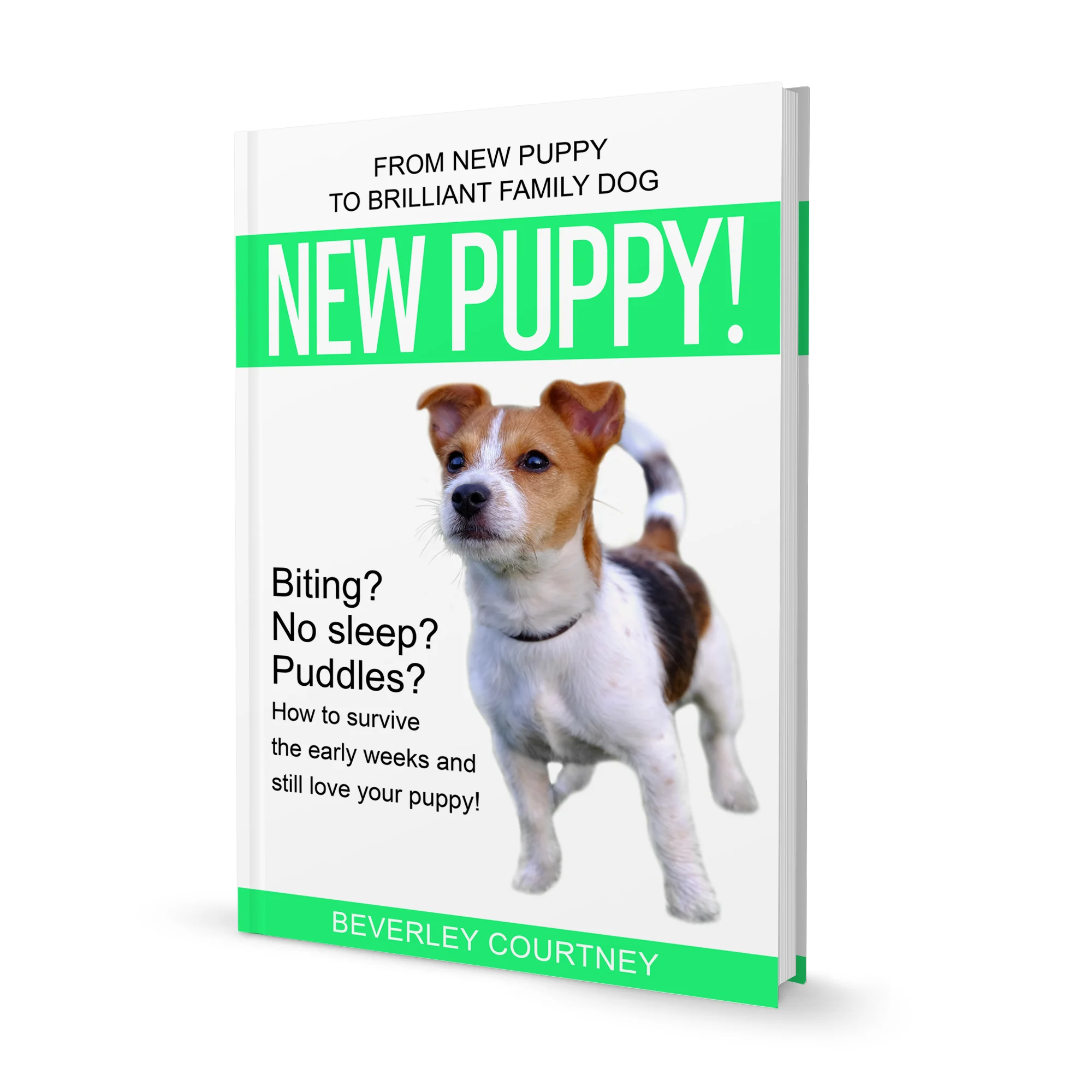
New Puppy!

New Puppy? | Indispensable new book in the popular Brilliant Family Dog book series, taking you step-by-step through sleeping all night, puppy biting, housetraining - the lot! | CLICK FOR DETAILS | #newpuppy, #puppypottytraining, #puppytraining, #pu…

Do you know what the most frequent questions are, here at Brilliant Family Dog?

“How can I stop my puppy biting?” and

 “My puppy is crying all night - how will we ever sleep again?”

And I find in the course of answering these queries - not to mention my experiences from ten years of puppy classes! - that there are many things new puppy-owners just have no idea about. And life would be so much easier if they only knew!

See, for example, what Lisa said about her new Collie x puppy after asking my advice:

“Your advice and encouragement are invaluable! I felt so lost on Monday … it's only Wednesday and it's like a whole different world opened up! Thank you Thank you THANK YOU!”

So I’ve put fingers to keyboard and added another book to the Brilliant Family Dog series of books , designed specially for the ordinary dog-owner in the street - that’s you, most probably. Most people aren’t looking to compete with their dogs, or turn them into performance dogs of some kind.

Most people just want a Brilliant Family Dog they can take anywhere, that will enhance their family lives … not make them ten times worse!

PUPPY BITING? NO SLEEP? PUDDLES?  “New Puppy!” the latest book in the Brilliant Family Dog series of dog-friendly training books will save your sanity and have you loving your puppy again | GET YOUR BOOK NOW | #newpuppy, #puppytraining, #housetraini…

So I’ve written this book with this very much at the front of my mind. You won’t find endless scientific hypotheses, lengthy training programs, or explanations of what is normal for a puppy without telling you what on earth to do about it.

Instead, it tells you what you need to know, and doesn’t waste your time on stuff you don’t need to get confused by.

You get solid advice from the front line. Apart from the thousands of puppies I’ve had the privilege to work with down the years - in classes, on group walks and boarding in my home - there are my own many dogs who all started out with me as young pups.

Every dog is different, and every dog is valuable. Every family is different too - and you are just as valuable! So getting this “marriage” to work needs attention from the outset.

So often a puppy comes into a new home - it’s all excitement and craziness. There’s little structure, and sometimes not so much understanding. Love is wonderful … but you need to be armed with more than love to survive those early weeks without losing your sanity, or your cool - or turning your puppy into a “naughty dog”.

Once you “know your enemy”, you can manage your household in such a way that your puppy never gets to do anything you don’t like! Imagine that! And yes, it is possible.

If your home so far has resembled a war zone, with possessions destroyed, carpets ruined, and garden looking like a building site, it’s only because you don’t yet know this stuff. Get yourself the book - preferably before your next puppy arrives in your home! - and Be Prepared.

And if you have no puppy plans right now, this book would make a marvellous present for someone who’s about to get a puppy, or someone who has those bleeding hands, ripped sleeves, and bags under the eyes that show that they are battling with a fluffy little monster with horns and a forked tail, aka their new puppy.


What’s in the book?

  • Sleep - yours, and your puppy’s

  • Biting - sleeves, children, furniture

  • Puppies and children

  • Socialisation - just what does it mean?

  • Exercise - how often? How much?

  • Feeding - how often? How much? What to feed?

  • Jumping up! - Simple step-by-steps to change this

  • Housetraining - guaranteed recipe for success

  • Stealing and running off and other irksome habits

  • Choosing a puppy - the three key stages

And lots of free resources for the new puppy-owner


Go and check out this page now where you can choose ebook or paperback. And if you live in an Amazon-free zone (they do exist, I’m told!) you can ask your local bookshop to order it. It’s currently at a super-reasonable introductory price.