CAN MY DOG BE STRESSED? - PART 3

This post was first published on positively.com and is reprinted here with permission.
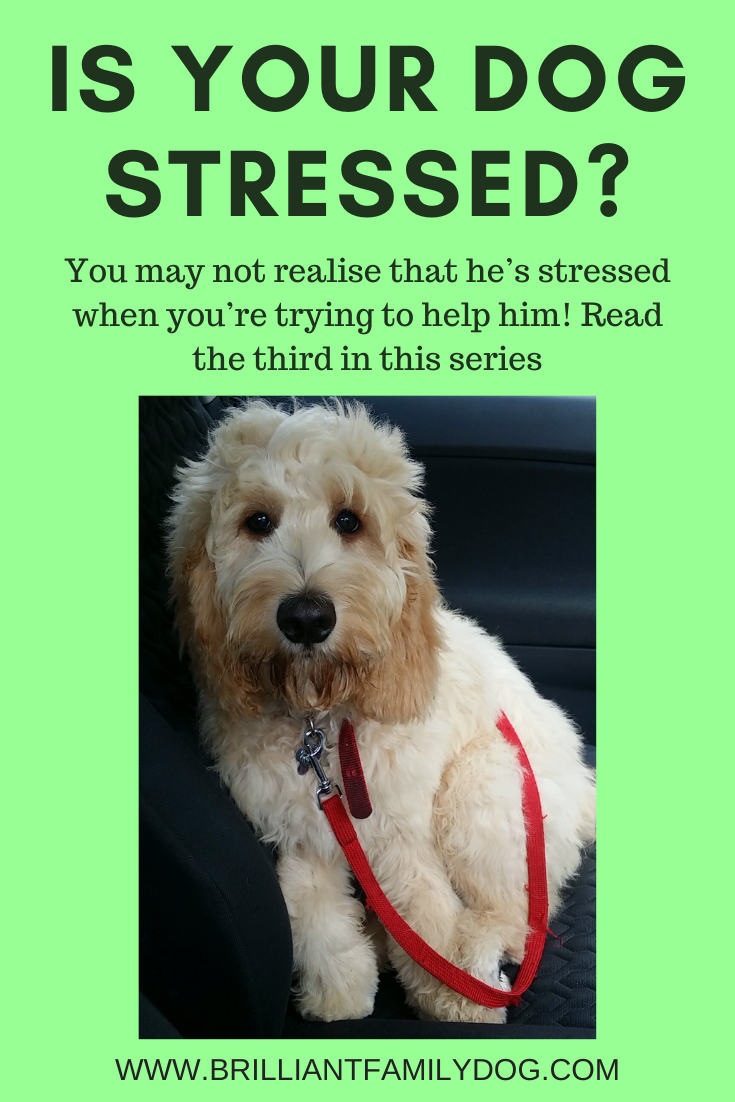
There are lots of stressors in our dogs’ lives - and it can be hard to see them. This third post in the series on dog stress pinpoints day care and dogwalkers. Brilliant Family Dog is committed to improving the lives of dogs and their harassed owner…

Here is the third excerpt from my book - Building Confidence in your Growly but Brilliant Family Dog - which points out an area which will be affecting your dog much more than you may imagine. You may want to read the first and second parts of this series first: Can My Dog Be Stressed? - Part 1 and Can My Dog Be Stressed? Part 2 

While you’re doing your best to improve the situation and you take a look at what may be making things worse, you cannot overlook stress.

  • Stress causes reactions to be exaggerated

  • Stress causes us to snap

  • Stress wears us out

And here’s another area of your dog’s life that could be building stress that may surprise you.

3. Daycare or a dogwalker

A very perceptive reader sent me this query recently: “My question is, what do you think of daycare for dogs? Are the dogs actually happy about it, or do dog owners just like to imagine they are?”

Some dogs love daycare. And some people love holiday camps with group activities. I have to say that’s not my kind of holiday, and I would find it very hard to cope and not one bit enjoyable.

I am not going to tar all daycares and dogwalkers with the same brush. There are some excellent ones, with dedicated and knowledgeable owners and good staff education programs. But I will say that you'll have to do extensive research to find a convenient, local one that is truly a safe place for your anxious dog to learn and develop. 


Management skills

Think of the skills you need as a parent to prevent open warfare in your own household! Then picture a gang of dogs being thrown together for a walk - or all day in a confined area - in the care of people who may have no dog training or behaviour qualifications whatever. “I love dogs” may help, but it’s not a qualification. And given how long it takes us to learn how to care for our own species - and that a lot of what people think about dogs is wrong - you’re going to be lucky to find somewhere safe for your dog.

I was recently shown a promotional video for a daycare by someone who’s been sending her very reactive German Shepherd pup there for months. Even in this 30-second video - meant to show how wonderful the place was - I could see bullying and intimidation of this pup by other dogs, and no one going to her aid. Imagine what this sensitive puppy is subjected to for ten hours a day, five days a week! No wonder her reactivity is already extreme at only six months of age. What the owner thought as “being perfectly happy at daycare” was in fact a dog that spent all day trying to avoid the other dogs (quite impossible with those numbers of loose dogs) - shut down, in other words. Not fine at all.

For many dogs, daycare is viewed with the same suspicion I view that holiday camp!

There are lots of stressors in our dogs’ lives - and it can be hard to see them. This third post in the series on dog stress pinpoints day care and dogwalkers. Brilliant Family Dog is committed to improving the lives of dogs and their harassed owner…

Dogwalkers

If you have a good and responsible dogwalker, you are indeed fortunate! A dogwalker arrived at my regular walking spot recently. She opened her van doors and out flew five or six dogs. One planted his feet on my chest while the others hurtled around the roadside car park alarming other dogs before heading off on their walk. After 20 minutes she returned and drove away again. Would you be happy paying good money for that level of care every day?

My personal solution to an enforced absence from home is to have someone I trust to come in to let the dogs out in the garden and play with them for a while during the day. A “walk” is not needed.

If anything goes wrong in a daycare or with a dogwalker, you will be paying for that for years - possibly the rest of your dog’s life. You can spend time observing at a potential daycare. If they don’t like you quietly watching - move on. Think hard, and do a lot of homework, before handing your dog over.

Regardless of where you live, there will be fantastic, dedicated dogwalkers and daycare facilities that truly put the needs of the dogs in their care above all else. So seek out those above-and-beyond caretakers, and you and your dog will certainly reap the rewards!

Here are excerpt 1 and excerpt 2

Did you find this excerpt interesting? Here's what Book 3 looks like!

Or you can choose to get all three books at once, in paperback or ebook.

For a free e-course to help remove the stress from your life, and your dog’s life go to www.brilliantfamilydog.com/growly


And to get started straight away with lessons to help your Growly Dog, watch our free Masterclass for Growly Dogs

I’ve tried everything to change my dog …

Our dogs are living, sentient, beings, and can always change. But you have to know the science-backed methods to achieve this - without any force, fear, or intimidation!  Brilliant Family Dog is committed to improving the lives of dogs and their har…


I hear this loads!

◆           “I’ve tried everything …”

◆           “I tried this once and it didn’t work”

◆           “Nothing will change my dog.”


And I can tell you that you are mistaken. This should be music to your ears! There is a way forward, an end to your present frustration. Let’s have a look at these statements, one by one:


1. “I’ve tried everything …”

There are so many different methods in the world to train your dog - you can’t possibly have tried all of them! And there an awful lot you shouldn’t try at all, as they’ll actually make your dog worse. There are sadly, still many “dog trainers” and “dog behaviourists” who are - to put it bluntly - talking through their hats.

They dwell in a murky past where we are in control, and our dogs must do our bidding - or else. It’s the same mentality that used to beat children for naughtiness or “impure thoughts”. It’s been discredited for so long now, that I wonder which stone these people have been lurking under, that they have completely missed all the scientifically-backed discoveries about how our dogs’ minds actually work, and how we can get them to work in our favour.

You may have been misled by one of these people. It’s very hard for the “ordinary dog-owner in the street” to recognise them. And you went along with their suggestions, trying to do your best for your dog, only to discover that these actions made you feel sick, and made your dog worse into the bargain. Already afraid of the world, he’s now afraid of you - his only ally.

This comment from a student is something I see all too often:

“I never went back [to the class] but feel guilty to this day at having exposed him to that extreme and relentless intimidation, and not speaking up there and then.”

On the one hand it’s good because now this person has found a better way. But on the other hand it’s sad that they still feel guilty about it. I was able to reassure this person:

“We can only do our best with the information we have at the time. And you were doing your best. Sadly, those ideas are still prevalent in many places. So start from where you are. Don't worry about what went before.” 

This student is now enjoying working with her dog, not against him, and seeing real progress. “We love the games - so effective!”

Even if you work with trainers who genuinely espouse positive reinforcement, if you’re “trying everything”, it suggests that what you’re trying isn’t working! If you’re struggling with a dog who you can’t connect with, or who is overcome with fear or fury when out on a walk, then you need someone who has worked through all this already, and who can guide you through a structured program to achieve the change you desire.

Guess who?

Not got a Growly Dog, just a naughty one?

Check out our free Workshop on getting your dog to LISTEN!

2. “I tried this once and it didn’t work”

Can you guess what I’m going to say here?!

BABY STEPS! 👣 🐾

We didn’t learn Calculus in Kindergarten. We started by counting buttons. Only gradually did we get the results we now have in arithmetic (and yes, you can do sums, even if you don’t like them much!).

Learning a new process to work through with your dog is just the same. It’s not something you can try, inexpertly, once - then dismiss. You need to commit to making the effort your dog deserves. Only by working through the given steps and assessing your progress can you say whether something “worked” or not.

This is where the value of having a teacher working with you really scores! Just throwing information at someone is not going to help them get it. People hunt all over the internet without discernment or direction, ill-equipped to assess or judge the source of the information (see my point under no.1 above) - of course they end up confused! And this is why my books are filled with troubleshooting advice for individual dogs, and my courses have a strong element of personal coaching to help you interpret and get the best out of the lessons.

You need patience! Rome wasn’t built in a day! It’s the gradual accumulation of knowledge and experience that is the answer you seek.

Don't judge each day by the harvest you reap but by the seeds that you plant. Robert Louis Stevenson

Rollo winter sunset trimmed.png


3. “Nothing will change my dog”

This is possibly the saddest of all. Your dog is a living being! And like you, she can change.

I have seen “hopeless cases” become much-loved family pets. I have seen dogs about to be re-homed, puppies about to be returned to the breeder, who are still in their homes to this day, thanks to their owners making a last-ditch attempt to find answers.

I’m appalled when I hear of dogs being thrown out of training classes for being too disruptive, too difficult, too dog. This demonstrates not only a lack of ability on the part of the class trainer, but a complete absence of willingness to help someone and their troubled dog.

This I see as my mission in life! I have never turned a dog away from any class of mine, and I never will. As a church-going friend put it, “The church is for sinners, not for saints.”

So please don’t think that as you’ve tried things before that didn’t work; you tried something new - full of enthusiasm - only to find it let you down; that your dog cannot change. It simply means that up to now you haven’t found the help you need.

I would love to give you that help, and those of you with Growly Dogs may be excited to find what I have for you in just a few days’ time. Today is a new day!


And to get started straight away with lessons to help your Growly Dog cope with our world, watch our

free Masterclass for Growly Dogs

It's not the dog, it's you! A simple way to stop leash reactivity

What you do with the lead is just as important as what your dog does, when she sees something that worries her. Read this post for the lowdown! Brilliant Family Dog is committed to improving the lives of dogs and their harassed owners through books …

First published on positively.com and reprinted here with permission

Well, the dog started it.

But now you are making it worse (although you really, really don’t mean to).

What am I talking about?

It’s when you’re walking your dog, and your charming, delightful, sweet family dog transforms into a nasty, snarling, barking hooligan.

Just because she spotted another dog.

It’s utterly baffling to you - you feel embarrassed and frustrated. You love your dog and you hate the looks people are giving you, down their noses, clearly thinking your dog is horrible!

I know, because I’ve been there too.

But there is light at the end of this particular tunnel. It may have started recently or it may have been going on (and getting steadily worse) for ages. Either way, breathe a sigh of relief, because we can change things!

Let me explain first why your dog is doing what she’s doing.


Aren’t all dogs meant to be friendly?

Even the mildest dog can have a fear-reaction to something - and Spaniels, Labradors, you-name-its, are just as likely as any other breed to become fearful of dogs or people.

It may be something new, something invading her space, something that is sending out danger signals. It’s how both we and the dog deal with this that will dictate whether this now becomes a new behaviour pattern or whether your dog says “Ah well,” and moves on.

Dogs have an intricate body language of which many of us are blissfully unaware. Just like us, they don’t launch into a strong reaction to something - they start with subtle signals and work their way up if those signals are ignored.

Dogs don’t bite “out of the blue” - it’s just that no-one noticed them politely saying “Excuse me, but I’m not happy about the way you’re staring at me.”

Just as you would shuffle away if a stranger sat close beside you on a bus, a dog will avert his gaze, turn his head away, turn his body away, lick his lips, yawn - amongst other things - to show that he’s anxious and he’s not a threat to the other dog.

If that stranger on the bus persisted in leaning on you, you wouldn’t pull a knife on him! Depending on your personality you may get up and move, you may shout, you may appeal for help from the other passengers. You would gradually escalate your response as you found that your polite signs were not working - only when you feel seriously threatened does your knife come out!

So if another dog is staring at your dog - even worse, coming straight towards her - your dog will be going through her entire repertoire of calming signals in an attempt to persuade the dog that she’s not a threat and the other dog should stop advancing right now. If her messages are not heeded, then she has no option but to bring out the heavy artillery and “shout” at the other dog, putting on an immense display of power and fury and teeth to keep him away.

So when we walk our dog along the road and see another walker and dog coming the other way, we are putting our fearful dog in a difficult position.

Use our simple, dog-friendly, strategies to make walks happier for both of you. Brilliant Family Dog is committed to improving the lives of dogs and their harassed owners through books and online learning | FREE TRAINING | #aggressivedog #dogtrainin…

If we then do what so many people do, consciously or unconsciously - that is to tighten the lead as soon as you see the dog - you are a) telling your dog that something is about to happen and you are anxious, and b) preventing her from giving any of her calming body signals! It’s hard to look shy and inconspicuous if someone is holding your head up in the air.

Read this post all about Dog Body Language

Keep your distance!

Add to this that dogs have a very strong idea about personal space. As indeed do we - only a dog’s personal space is way bigger than ours! The more frightened she is, the bigger her worry area will become, until a dog appearing in the far distance can be enough to trigger an outburst.

So while we may feel comfortable walking towards another person along a narrow pavement hemmed in by hedges and parked cars, your anxious dog will most definitely not feel comfortable! Heading in a straight line towards a strange dog is both rude and threatening for your dog (and for the other dog, too).

We are unwittingly stirring up a situation by expecting our dogs to conform to our social norms.


So what can I do?

Once you appreciate that your dog is not being nasty or suddenly turning aggressive - rather she is afraid - you can see things from her perspective.

Dogs do what works. And up to now, barking and lunging on the lead has worked, to an extent. Either the other owner thinks “That’s a nasty dog,” and moves away, or you - in your embarrassment and confusion - get outa there yourself.

So quite often, barking and making a to-do have caused the progress towards another dog to stop.


Action Steps

So here’s a plan:

  1. Avoid narrow paths, alleyways, and “tunnels” - be they tunnels of fences and parked cars, or tunnels of bracken and hedgerow.

  2. Walk in the middle of fields, rather than hugging the hedge.

  3. As soon as you see another dog, your first response should be to relax your hands, exhale, and look around for an exit strategy - the exact opposite of what is probably happening now (clutching the lead with a vice-like grip, sharp intake of breath, rising panic, trying to make your dog sit . . .)

  4. Calmly and cheerfully ask your dog to turn with you (be fun and exciting, not anxious and stern), and head away: cross the road, go down a turning - in some way get away from the advancing dog.

  5. Congratulate your dog (and yourself!) warmly for the calmness you’ve both shown in the face of a big challenge.

6. Let your dog know that she never has to meet another dog again, as you will always move away.

7. Remember that Distance is Your Friend.


With this plan in hand there’ll be no need for you to walk only at The Hour of The Difficult Dog. You’ll no longer be avoiding other dogs - rather you’ll be positively looking out for them so you can practice your new-found skills. 

Yes, I did say that - it’s really true!

And if you don’t believe me, see what Scruffy the Jack Russell Terrier’s owners said:

“Scruffy used to become frantic and scrape at the floor to get towards any dog he saw, even at a great distance. This was embarrassing and stressful. He is now able to look at other dogs and move away with us to continue his walk. This is a massive improvement in just a few weeks. It means that we no longer avoid dogs, but in fact go out looking for them so that we can work on his training.”

And the world will begin to see your lovely, affectionate and clever dog as you see her.

You may think I’m oversimplifying this, but if half the team gets it together then this is a great start and can stop things going further downhill.


Give this plan a try and tell me in the comments below what you have found.

Oh, and If your dog has bitten, you should acclimatise her to love wearing a basket muzzle to ensure that everyone is safe.


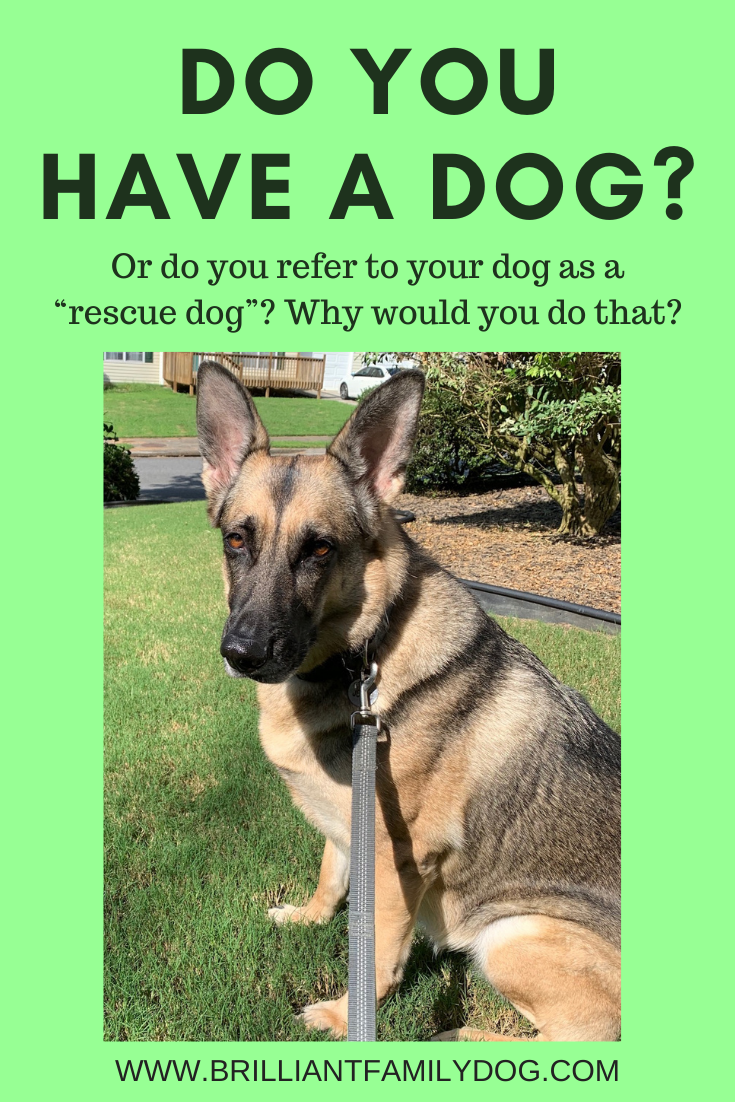
Do you have a dog, or a “rescue dog”?

Labelling someone or something is a way to shirk responsibility for how they are or how you can affect their behavior. Brilliant Family Dog is committed to improving the lives of dogs and their harassed owners through books and online learning | FRE…


There’s so much of what we do with our dogs that is down to us. Often the dog doesn’t have to do a thing - it’s a question of changing our mindset.

“When you change the way you look at things, the things you look at change.” Wayne Dyer

 AND THEN you can change the way you find solutions.

Many of you write to me and introduce your dog as a “rescue dog”. I hear it all the time.

NO!

As soon as that dog comes through your door, he’s YOUR dog! His history - if you have the truth, which is not all that likely - may be useful in unravelling a few of his mysteries.

But what went before is not of much help to us now.

We start from where we are

You have to ask yourself why you refer to your dog as a Rescue Dog?

Is it because of the sympathetic “Ahhh” you get from other people?

Or are you perhaps saying that anything bad he does is not your fault?

Supposing you had an adopted daughter. Would you introduce her as “This is Miranda. She’s adopted.”

NOOOO! Of course you wouldn’t!

You’d say “this is Miranda, she loves swimming.”

If you say “she’s adopted,” you’re abdicating responsibility for how she is.

You’re saying you didn’t have anything to do with her earlier life so you can’t be blamed for her poor behaviour.

Can that be why you maintain that your dog is a rescue dog? Even after all these years? Some of you have had your “rescue dog” for 5 - 8 - 10 years!

The celebrated Veterinary Behaviourist Karen Overall says:

“What we call something matters because it shapes how we think of it.” Karen Overall

 You don’t want to think of your daughter as a changeling for all of her life. And you don’t need to see your dog as a “rescue”, or give him any more labels to explain away his behaviour as something carved in stone. 

What words can I use?

I’ll often suggest a different wording to describe something. This is entirely because I want you to SEE it differently. 

Maybe you call your dog stubborn, or obstinate, or dominant, or just plain difficult?

Every time we pin a label on our dog we are making another judgment.

There are a number of trendy new labels doing the rounds at the moment - which suggest that your dog is fixed in his responses - unchangeable because that’s the way he is. That he’s born with a certain mindset or outlook on life, and is incapable of change.

This is as absurd as thinking Miranda can never grow up to be a fulfilled human being because she had a rocky start.

How many shy children, for example, grow up to become public speakers, or capable professionals?

I mention shy, reactive, anxious, or aggressive dogs. These are all very different! Your dog may be one and not any of the others.

Now it does help to have something to indicate that the dog doesn’t necessarily behave as people expect dogs to.

Growly Dogs (don’t we love ‘em!)

This is why I use the term GROWLY. It describes a symptom rather than a disease.

It describes what the dog is DOING, not what the dog IS.

I’m going to say that again, to be sure that you GET IT: 

It describes what the dog is DOING, not what the dog IS.

It doesn’t ascribe motive or reason - it simply says that growly - uncomfortable - is how this dog may respond.

So I’d like you to take a look at all the labels you attach to your dog. What they are, when you use them, and - most importantly - WHY?

If you truly want to change how things are with your Growly Dog - or any dog, for that matter - you won’t want to stick him in a box, seal it, stamp it, and say “That’s it.”

The way is always open for us to change, and changing our perception is the first step.


For more help with changing your thinking, check out www.beverleycourtney.com/blog/the-winds-will-blow


Want to leave your dog’s history behind and start a new life together? Start with this free Masterclass, and talk to me in the chat. I WILL understand you, and I will respond and help you as best I can.


Want to know your biggest mistake?

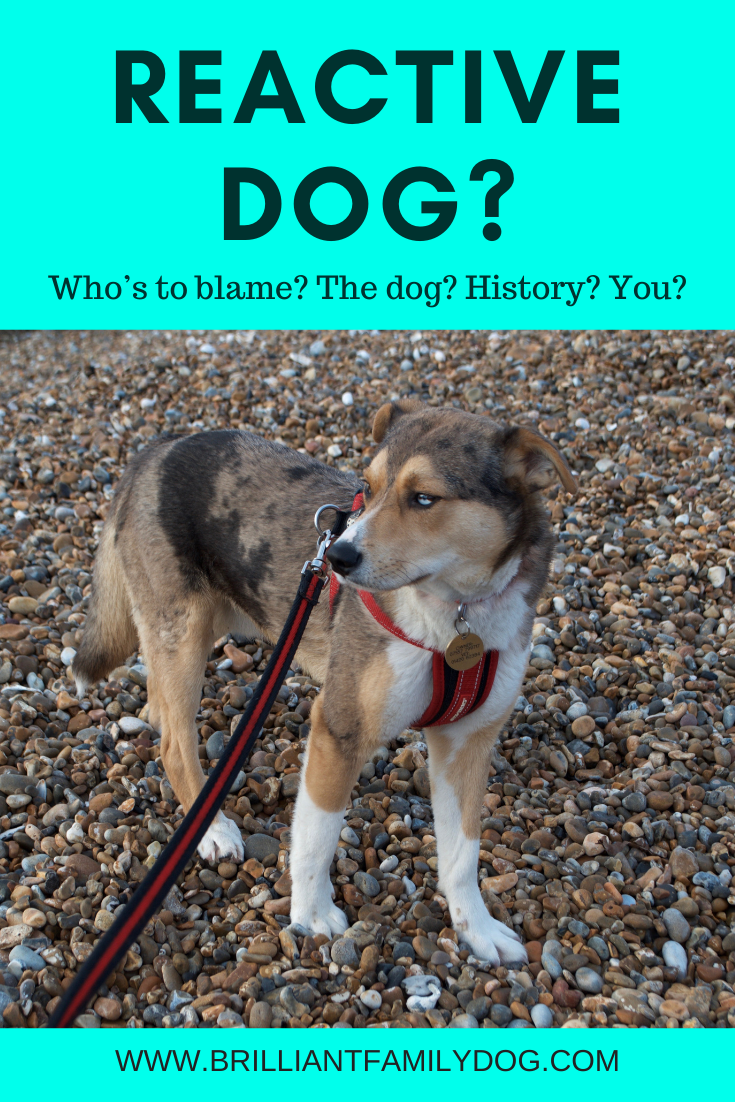
Blaming anyone or anything for your dog’s worrisome behavior is counter-productive! Blame will get you nowhere! What you need are concrete strategies to make the changes you want, together with your dog. Brilliant Family Dog is committed to improvin…

Want to know your biggest mistake? 

It's thinking your difficult dog's behaviour is All. Your. Fault.

Don't you know that blaming yourself is not going to help one bit? or blaming the shelter, that dog in the park, your family, or your dog!

The only thing that will move you forward is understanding. Understanding what's going on with your Growly Dog, and knowledge. Knowing how to change it.

It's really as simple as that!

Loadsa money

But people try to make it appear complex and difficult, to make you think you can't do it on your own, that you have to pay them loadsa money to do things to your dog, giving you methods without explaining anything to you - the person the dog lives with! - as if your dog is broken and needs fixing.

Some trainers will suggest methods that go against your better judgment, your heart.

You got your dog as a companion, to love, to nurture, to share your life - not to punish and abuse.

I'm here to tell you that it is all absolutely unnecessary

There's no need to resort to mediaeval practices - things that are not allowed to be done to people! - in order to get your dog to behave.

In fact, the longer you're asking whywhywhy, beating yourself up, questioning yourself, and trying to put extreme tactics in place, the longer your dog will remain unchanged.

Some of the things you'll be told to do to your dog will actually make her worse. You see, many people, including - sadly - many so-called "dog trainers", think that your dog is being difficult, stubborn, aggressive, wilful - you name it.

Whereas in fact your dog is just AFRAID! 

Your dog is not bad, she’s just afraid.

Do things look different now?

Suppose that you were afraid of spiders. If I shut you in a room full of spiders would you be LESS afraid, or confirmed in your belief that spiders are all BAD?

I know how I’d feel!

But you’ll be relieved to know that you can carry on loving your dog. 

You can continue to see her as your companion. Someone to look after and protect.

And you can still get the change you want, so that your dog - whether anxious, hyper, shy, aggressive - or just plain GROWLY - can become easier to walk, easier to handle, easier to trust - easier to love again.

Hear what Elle said about her damaged rescue dog who was getting steadily worse with several dog trainers:

The reactive dog owner needs to exercise the greatest care in choosing a trainer! Many “dog trainers” will make your dog worse. You need a force-free trainer who has a specific understanding of reactive, shy, anxious, aggressive, Growly Dogs. Brilli…

“Thanks to you and your thorough, kind, humane and effective methods, we have come a long, long way. I never dreamed that we would have been able to come as far as we have. I am thrilled. 

Thanks to you, we are a beautiful work in progress and we have been able to establish an abiding, deep, and loving bond of trust which brings us joy each and every day…”


Want to restore your bond of trust with your dog and make it “abiding, deep, loving, and joyful”?

 I’ll be bringing you more over the upcoming weeks, so stay tuned.

 We can do this together! 


And to get started straight away with lessons to help your Growly Dog cope with our world, watch our

free Masterclass for Growly Dogs


The past is ancient history

The past is ancient history: what happened yesterday is as gone as what happened a thousand years ago. Going over and over it won't change it. Today is our only reality. Brilliant Family Dog is committed to improving the lives of dogs and their hara…


What happened yesterday is as gone as what happened a thousand years ago. Going over and over it won't change it. Today is our only reality.

There’s no “What if”s and “What did he mean by that”? There's only what happened - and that's gone now. Your perception will change as you pore over it and your version of what happened may be very different from someone else's version.

But here's the danger point.

You may ascribe all sorts of reasons and causes:

🧑🏼‍🦰 Did he do that because he doesn't like me?

🧑🏼‍🦰 Did she say that because it's true?

🧑🏼‍🦰 Is it because I'm no good?

🧑🏼‍🦰 Ugly?

🧑🏼‍🦰 Too young?

🧑🏼‍🦰 Too old?


And if it's about your dog:

🐶 Is he doing that on purpose?

🐶 Is he being stubborn?

🐶 Is he defying me?

🐶 Is he scheming against me?

🐶 Does this mean I'm a useless dog owner?


Our minds can run away with us, but it doesn't alter what happened.

We can only operate in the present moment. That's the only time we have.

Our thoughts create our feelings and it doesn't matter if those thoughts are right or wrong, as long as they help you.

Better questions lead to better answers!

So try starting with some better questions:

❓Could I have done anything differently?

❓Did my dog act this way from fear?

❓Does my dog need more help from me and how can I help him more?

Whenever we ask a negative question, we tend to get a negative answer. "Am I a useless owner?" Yes, you must be, since you ask.

So only ask questions which will bring you helpful answers! Then you can be sure your thoughts are helpful ones.

How does all this affect your relationship with your dog? Just the same as your relationship with anyone else!

If you ascribe evil motives to something your dog is doing, then you are naturally going to blame him and think that he lies there in his basket dreaming up new and terrible ways to shame you.

Of course he doesn’t! He's just a dog. He just does.

You know that really?

So don't let your mind run away helter-skelter with a lot of unhelpful nonsense.

Something happened. That's all. And it's up to us what we make of it. If we want to make it a big thing - a drama - then we're going to feel bad, upset, worried. But if we just see it as something that happened, see it as information for us, we can learn from it and move on.

So rather than “I’m a useless dog-owner with a difficult dog who doesn't like me”. how about “Oh, my dog barked at that dog. I will avoid dogs for a few days to give him a break.”

Dwelling in the past is not conducive to moving forward with fresh eyes, fresh ears and new experiences.

I'm on a mission to change the world, one dog at a time. Will your dog be one of them?

If this line of thinking chimes with you, have a look at my other blog at www.beverleycourtney.com/blog - I think it may appeal to you!