Dogs are more resilient than we may think!

A friend had to rush her 7-year-old agility dog to the emergency vet recently. He had to stay in for loads of tests (I guess they’re insured!) and the vet was very glum about his prognosis.

Talking informally to a vet she does agility with, however, gave a very different story. That vet, giving a private opinion, reckoned her dog would be up and working again in no time.

And indeed he’s back home after a few days and the owner’s having difficulty keeping him quiet!

Vets are naturally gloomy, on the whole. The younger the vet, I find, the gloomier. Older, more experienced, vets have more actual history to draw on. 

This is partly because vets see a lot of sick dogs.

And it’s partly to do with their insurance and litigation fears.

But they do see the worst cases, with the worst outcomes.

Lacy had a stroke

My Lacy, who is now 15, had her third or fourth (I forget) stroke a few months ago. She could barely totter, head all crooked.

We didn’t trouble the vet.

10 days later she was trotting ahead of me on walks. And a few days after that she was able to do the stairs unsupervised. 

Dogs have their own agenda. 

They don’t worry ahead to how their life may change. 

They just know they want to get from here to over there, and they get on with it. 

Naturally we have to defer to our vet’s knowledge. If you ask their advice you should listen!

But take their gloomiest predictions with a pinch of salt.

Let nature decide.

And enjoy your dog while you can. 

Dogs Learn Fast!

We have to make the time to TEACH our dogs

Zig Ziglar said (amongst many other brilliant things):

If you’re not willing to learn, no one can help you. 

If you’re determined to learn, no one can stop you.

Never a truer word, and all that!

We are learning all the time. 

Our dogs are learning all the time.

So .. what are we learning?

For many of us, it’s the convoluted plot of the latest tv drama, or the scores of our favourite sports team, the latest fads and fashions, a spat on social media .. 

Our dogs? Ooh, they’re learning to bark at .. anything, to raid the bin, chew up shoes, dig holes in the garden, bounce on visitors ..

We and our dogs have massive brains!

And if we don’t train these brains, we are missing out on a whole lot of life.

Let’s look at dogs specifically, as you don’t need me to lecture you on the timewasting we all get sucked into in our digital age 😳.

Our dogs are a clean sheet. They’re ready to learn, and learn they will. And it’s down to us to ensure they’re learning what we want them to learn. 

And that means we have to learn ourselves.

Back to Zig: 

If you’re not willing to learn, no one can help you. 

If you’re determined to learn, no one can stop you. 


If you’re not willing to learn, you can’t help your dog!

If you’re determined to learn, you won’t stop teaching your dog!

There are few things more rewarding than watching your dog work out a problem you’ve presented him with.

Watching the wheels turn, as he thinks hard.

Then seeing the light bulb over his head as he works it out, and solves the problem!

Then (this is where the magic happens) you are teaching him to think for himself - so next time he sees that or a similar problem, he’s able to apply his learning and solve this new thing too!

See Coco working on stacking beakers in this video:

He’s worked out how to pick up the slippery plastic beaker, how to lift it without dropping it, he can drop it into place in the stack, and he can choose the next beaker (with a little guidance). And when he makes a mistake, see how he’s able to correct it to get the desired result.

This is in fact a useful skill. Coco has become “Dogbowl Monitor” and collects and stacks the dog bowls after meals. Very useful! 

He also picks up screwed up or discarded paper that has missed the bin and puts it in for me. 

How do I teach this to my dog?

It’s a gradual building up of confidence (in your dog, and in your ability to teach successfully) which means your dog will enjoy trying to work things out. 

You can’t teach it overnight, unless you have already successfully taught your dog to do lots of the component parts. In this case, picking things up, hold, select, put down carefully (not flinging or dropping), listening to you ..

There’s a whole host of things your dog will learn before clever tricks like this.

And where better to learn than in the Brilliant Family Dog Academy! 

But just before you rush off to enrol .. Hold your hosses! I’m diving into the Black Friday spirit with something very special for you if you haven’t yet joined our lovely Academy. 

Take a deep breath, bookmark this page, and watch your inbox (and Brilliant Family Dog facebook and instagram pages) for news of what’s coming .. Only a few more days!

Are you determined to learn?

This could be your chance to have your dog clearing up the wrapping paper on Christmas Day!


Dogs are individuals

Dog are Individuals

I wrote a piece recently about my struggles with Yannick - slowly building his confidence while keeping him safe.

This resonated with a number of people, who wrote to say they were glad that I - as a professional dog trainer - had admitted to this, as trainers usually speak as if it’s all easy:

“Do this, five minutes later you’ll have the perfect dog!”

Now we know deep down, that that is far from the truth!

How training really works for the challenging dog

Do this, repeat repeat repeat, adapt, repeat, modify, repeat … and eventually you’ll have a dog who can cope with life without a meltdown - and actually enjoy it!

It’s a bit like having children. 

We get the one we’re given.

And however carefully you may source your dog, we get the dog we’re given. 

I know this well, as my first dog was a Battersea puppy rescued from the street who became a Working Trials Champion, and Yannick’s pedigree is bristling with champions of one sort and another, and a string of excellent breeders who give their pups a great start. 

Just like children in the same family - same parents, same environment, same upbringing … chalk and cheese! 

There is more variation between individuals than between breeds.


Or as Grisha Stewart (inventor of BAT) put it, “Every dog is a study of one.”

You need to lower your expectations for a while, and accept anything you’re being offered which is even a tiny step in the right direction.

Expecting too much will lead to disappointment, disillusionment, and a disaffected dog.

But the joyous thing about having a challenging dog is that you create a far greater bond by working so hard with them.

You find out all their quirks and foibles and love them all the more.

Sometimes we may look at someone who has an easy dog, never any trouble, (perhaps not as big a character???) and we may envy them.

But look what we’ve got instead! 

We’re the winners.


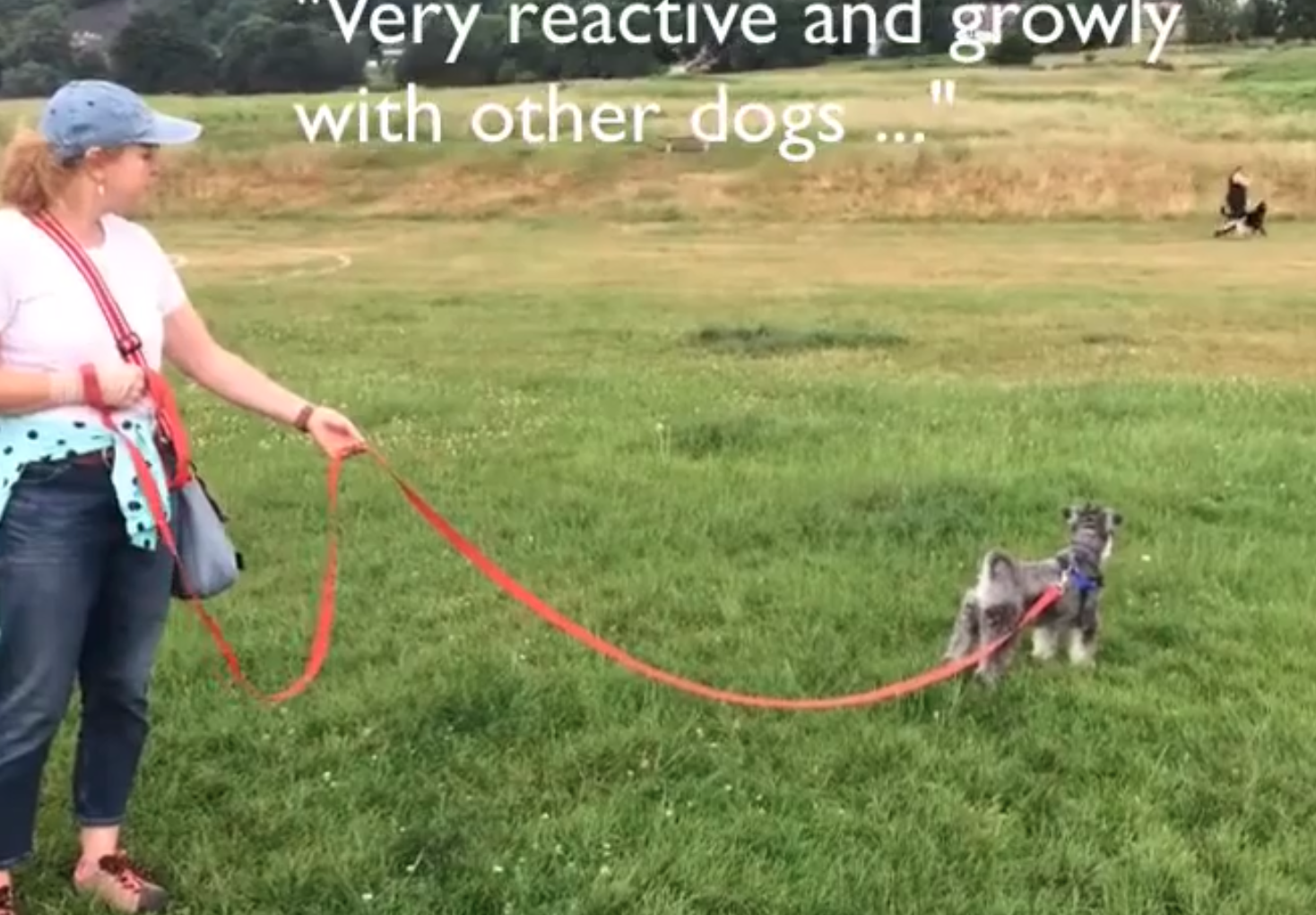
If you're blessed with a dog who finds life a challenge, check out this Masterclass for Growly Dogs, that has lessons that will help you both.

Time off for you and your dog

I had my first cold in six years a while ago - and boy, did it hit me!

So I had to cut dogwalks right down.


🚶🏼No walks for a couple of days.

🚶🏼🚶🏼Then ten minutes for the youngster.

🚶🏼🚶🏼🚶🏼Next day 15 minutes for the other two

🚶🏼🚶🏼🚶🏼🚶🏼🚶🏼Eventually back up to normal!


But the point is - nobody died!

No dogs got upset. No dogs climbed the walls - I wouldn’t have had the strength to do anything about it anyway!

Everyone was fine. Lots of cuddles, a few gentle games.

All was well.

Time for a break for both you and your dog?

So.

There is no need to feel worried if for some reason your dog isn’t getting the walks they’re used to.

We take care of them, and we know we have to stop walks when they are overwhelmed, injured, or unwell.

We have to take care of us too!

If we’re overwhelmed, injured, or unwell - then maybe walks need to go.

Of course, if you live in beautiful countryside and the weather is wonderful, and you have calm, non-reactive dogs, then it could be just what the doctor ordered.

But, if you’re blessed with a Growly Dog … then give it a miss till you’re feeling stronger.

We’re approaching the busiest and silliest season of the year. Maybe you’ll have a lot going on, with extra financial strain, visitors, travelling …

Don’t make your life harder!

The days are short, more dogs are out in a much smaller window of daylight.

As long as there is some entertainment or stimulation for your dog (and visitors and travelling are plenty of entertainment and definitely plenty of stimulation!) then you’re ok.

Perhaps some puzzles (lickimat, kong, cardboard boxes and tubes with treats inside, actual doggy puzzles).

A bit of Focus Game .. (Don’t know the Focus Game? Ooh - you need to check out the Brilliant Family Dog Academy: start here!)

Have you got a good retrieve? Now is the ideal time to teach it! You can teach the basics sitting or lying down - the dog will be doing the work. Here’s how

Then get back on the sofa.

Together.

Stand up for your dog!


Stand up for your growly dog!

Be your dog’s ambassador!

And stand up for yourself while you’re at it! 😊

People will make hurtful remarks to you when your dog kicks off. 

🐾 Maybe he didn’t come back when you called and that annoyed them.

🐾 Maybe he barked frantically as they passed by with their dog.

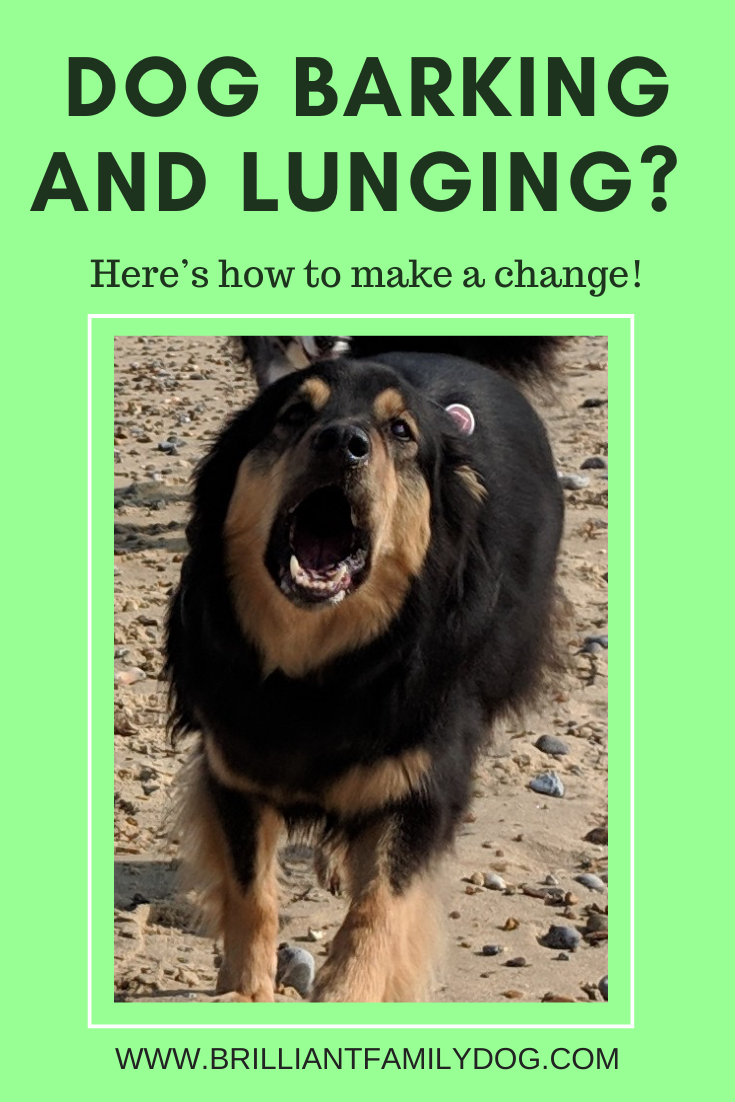
🐾 Maybe he lunged at their off-lead dog who was in his face.

These people may be know-it-alls who think they could manage things better.

Or they may be blustering because their dog is out of control and caused the immediate issue!

Either way, usually this takes the form of 


🐾 “You should show that dog who’s boss”

🐾 “Don’t let him get away with that”

🐾 “Be the leader” and other such tosh

All punitive, bossy, stuff.

And none of it applies to you!

Glide on, regardless. 

Because YOU know that what you’re doing is right for YOUR dog.

YOU know that your dog is not, as they say, giving you a hard time, he’s having a hard time.

You know how lovely your dog is at home!

They don’t. They have no idea. And they certainly don’t want to be told.

So, say

“Thank you, I’ll keep that in mind”

OR

“Thanks - I’m off now”

OR

“That’s an interesting point of view …”

OR

just give them a cheery wave as you smile and depart.

You can dismiss them with politeness, and then toss their words out of your mind.

You don’t need them!

Some folk are honest enough to say that it was only when they got their fifth dog that they found out what reactivity was about. Up to then their dogs had been easy, compliant, no bother.

Our dog may be plenty of bother!

(But how rewarding he is for all that.)

We build an unbreakable bond with our growly dogs. We love them with a passion, and they love us with equal devotion.

Enjoy your dog. And pay these people no heed.

Would a stranger say to you,

“You shouldn’t let your husband do that”

Or

“You should keep your children in their place”?

They’d better not!

And you’d disregard their nonsense straight away. None of their beeswax.

Treat these hurtful remarks about your dog with the same contempt.

You’re doing fine!

And if you think you’re not doing fine, and they may have a point, watch our free Masterclass for Growly Dogs and learn some techniques you can put into practice straight away.


What does your dog fear?

Yannick took several minutes to study these new roadworks on our road before venturing nearer. You can see from his shadow how outstretched his neck was.

You don’t throw your frightened toddler into the deep end of the pool. You start by sitting on the steps of the baby pool, your toddler on your lap, and - after many sessions - eventually your child will be wanting to join the other children in the shallow end of the big pool. 

Lessening fears and building confidence is a lengthy process achieved by slow desensitisation to the fear and gradual exposure to cause of that fear in small steps.

But we are human!

We are impatient! 

“Oh, so I introduce my fearful puppy to another dog and it’ll all be fine!”

Nooooooo. 

Not like that.

Confronting the fear full on right off the bat is called “flooding” and is known to make the fear worse!

There’s a right and wrong way to do this, and it seems that even experienced dog trainers can get it wrong if they don’t understand it. 

I recently heard a dog trainer with quite a following, who normally follows a kind training method, reveal her mistake with her dog-fearful puppy.

She took her puppy to a new hall, positioned another owner and puppy at the other end, came in and closed the door behind them.

Chaos! The puppy was terrified and shrieked and they had to decamp fast.

Credit to that trainer for publicly admitting her mistake.

Overwhelming the dog

What went wrong?

  • It was a new environment for her puppy

  • It was an enclosed space - no escape!

  • It was an artificial setup

  • It was all or nothing


What should she have done (and I believe did do after her realisation)?

  • Choose a familiar place, though not on your own property

  • An open outdoor space! No close boundaries of hedges or walls

  • Seeing the other dog at a distance as a natural occurrence on a normal walk

  • Plenty of opportunity to retreat and regroup 

How to desensitise your fearful dog or puppy

It took a while for puppy Yannick to work his way towards this “goat” in the garden centre

Just how difficult is it to work this system? 

It’s easy! 

All you need is foresight, access to an open space with little opportunity of close contact with other dogs, and somewhere where there aren’t too many dogs, especially off-lead ones.

This may require a bit of research to find a suitable place and a good time to go there.

And it may take quite a while to build your dog’s confidence so they can say, “Hey-ho, another dog. Not to worry.”

But you can achieve this much faster, and without making simple novice errors, by joining us in From Growly Dog to Confident Dog.

You see I’ve been there before you, and so have my carefully-picked team of trainers. 

We know how you feel! 

And we know how to make life better for you and your dog.

Kick off with this free Masterclass and remember to start in “the baby pool”!


RESOURCES:

“Flooding is rarely used, and it can be dangerous.” https://www.simplypsychology.org/flooding.html


Flooding is “highly traumatic for patients and causes a high level of anxiety” https://www.tutor2u.net/psychology/reference/treating-phobias-flooding